

Note: This article contains affiliate links. If you click on these links and make a purchase, I may earn a small commission at no extra cost to you. This helps support my research and content. Read my full affiliate disclosure here.
Choosing the right bloom fertilizer changes how your flowering plants perform through the season. The right formula provides the nutrients that push buds to open fuller, extend bloom duration, and keep plants vigorous without burning foliage. This guide reviews seven carefully shortlisted bloom fertilizers suited to a range of garden situations, from containers and patio pots to perennial beds and hanging baskets. We evaluated products for their nutrient balance, application ease, and how they behave in real garden settings. Read on to see which options match your feeding schedule and planting style before the product list below.
Top Picks at a Glance
| Best Overall The best all-around choice for most situations | Jack's Classic 10-30-20 Blossom Booster Water-Soluble Fertilizer, 4 lb |  |
| Best Quality Built to a higher standard if you want something more solid | FoxFarm Big Bloom Liquid Plant Food, 32 fl oz |  |
| Best Value The sweet spot between price and what you get | Miracle-Gro Water Soluble Bloom Booster Flower Food, 4 lb |  |
| Best Budget The cheapest option that still gets the job done reliably | Miracle-Gro Water Soluble Bloom Booster Flower Food, 10-52-10, 1 lb |  |
| Highest Rated A top-rated pick with lots of positive feedback | FoxFarm Tiger Bloom Liquid Plant Food (1 pint) |  |
| Most Popular A crowd favorite that many people choose with confidence | FoxFarm Soil Liquid Trio Pack (Big Bloom, Grow Big, Tiger Bloom) |  |
| Best Seller A high-volume bestseller chosen again and again | TPS Nutrients Orchid Fertilizer Bloom Boosting Liquid Plant Food, 8 oz |  |
Jack's Classic 10-30-20 Blossom Booster Water-Soluble Fertilizer, 4 lb

| Item Form | Powder |
|---|---|
| Application Method | Spray or Mix with Water |
| Target Species | Flowering Plants |
| Mixing Ratio | 10-30-20 |
| Unit Count | 64 Ounce |
Jack's Classic 10-30-20 Blossom Booster is a powdered, water-soluble fertilizer designed to promote bigger, more colorful blooms on flowering plants. You mix the powder with water and apply as a foliar spray or root feed; a measuring spoon is included for accurate dosing. The high phosphorus middle number makes it effective during bud set and bloom cycles, and added micronutrients support strong roots and foliage while reducing the need for additional supplements. Directions allow regular feeding every 7 to 14 days or lighter houseplant applications, and the formulation is described as having a high safety factor to minimize burn when used as directed. Because it is a concentrate in powder form, a small container yields many gallons of feed, which is convenient for balanced gardeners managing multiple containers or beds. The product is focused on flowering plants, so it is not a complete multi-stage program for all plant types and requires correct mixing and scheduling to avoid overfeeding.
Best for: Gardeners who prioritize stronger, more prolific blooms and want a concentrated, professional-grade booster they can use on bedding plants, containers, and garden flowers with regular feeding.
Less Ideal for: People seeking a single all-season fertilizer for foliage growth or seedlings, or gardeners who prefer premixed liquid feeds rather than measuring and mixing powder concentrates.
- High bloom-focused NPK (10-30-20) supports more and brighter flowers
- Water-soluble powder concentrates stretch a small package into many gallons of feed
- Includes measuring spoon for precise, repeatable mixes
- Can be used as foliar spray or root drench for flexible application
- Added micronutrient package supports overall plant health during flowering
- Formulation is specialized for flowering stages and not intended as an all-purpose, year-round feed
- Requires careful mixing and scheduling to avoid over-application
- No coverage area or exact application volumes provided on package beyond basic directions
Verdict: A concentrated, micronutrient-enhanced bloom booster that reliably increases flower size and color when mixed and applied on a regular feeding schedule.
FoxFarm Big Bloom Liquid Plant Food, 32 fl oz

| Item Form | Liquid |
|---|---|
| Specific Uses For Product | Plant Food |
| Coverage | Medium |
| Liquid Volume | 32 fluid ounces |
| Mixing Ratio | 4 tbsp per gallon of water |
FoxFarm Big Bloom is a concentrated liquid plant food designed to boost flowering and fruit development. It is typically mixed at 4 tablespoons per gallon of water and applied every other watering, or delivered via hose-end sprayer or drip systems for regular feeding. The formula relies on organic inputs such as earthworm castings and bat guano, which promote quick nutrient uptake and encourage bigger blooms, stronger seed set, and improved flavor in fruits and vegetables. Practical benefits include easy mixing, compatibility with common irrigation setups, and a medium coverage suitable for garden beds, containers, and small orchards. Because it is low in NPK numbers, Big Bloom performs best as a bloom/fruit booster rather than a complete base fertilizer, so gardeners should pair it with a higher-nitrogen feed during vigorous vegetative growth. Users should also observe local regulations about phosphorus use and take care to avoid runoff. For growers focused on enhancing flower size and fruit quality, this product provides a reliable, easy-to-use organic bloom feed.
Best for: Gardeners aiming to maximize flower size and fruit quality who want an easy-to-apply organic bloom booster for regular feeding.
Less Ideal for: Those seeking an all-in-one primary fertilizer for rapid vegetative growth or users in areas where phosphorus-containing fertilizers are restricted.
- Concentrated liquid that's easy to mix and apply with watering systems
- Contains organic inputs like earthworm castings and bat guano for nutrient-rich feeding
- Formulated specifically to support flowering and fruit development
- Suitable for use across beds, containers, and irrigation systems
- Low NPK numbers mean it is not a complete feed for heavy vegetative growth
- Contains phosphorus which may be restricted by some local regulations
Verdict: Choose Big Bloom when your priority is bigger, more abundant flowers and better-tasting fruit delivered in an easy-to-use organic liquid feed.
Miracle-Gro Water Soluble Bloom Booster Flower Food, 4 lb

| Item Form | Powder |
|---|---|
| Application Method | Water Soluble |
| Target Species | flowers |
| Mixing Ratio | 1 tablespoon per gallon |
This Miracle‑Gro Bloom Booster is a water‑soluble powder designed to promote bigger, more colorful blooms on annuals and perennials. It mixes easily in a watering can (mixing ratio 1 tablespoon per gallon for outdoor use) and can also be used with a garden feeder to treat multiple containers and flower beds. The high phosphorus 10-52-10 formulation is the notable feature for encouraging bud set and more abundant flowers, and it delivers results quickly because nutrients dissolve and reach roots fast. Typical use is every 7 to 14 days during the growing season, which makes it convenient for regular maintenance of flowering groundcovers like creeping phlox or mixed container displays. Limitations include the frequent reapplication schedule compared with slow‑release granular fertilizers and the focused bloom‑boosting formula which is not balanced for leafy growth or nonflowering plants. It is best used as a periodic flowering supplement alongside a basic all‑purpose feed or when you specifically want to increase bloom production.
Best for: Gardeners who prioritize frequent, visible flowering results and want an easy soluble booster to use on spring and summer bloomers such as creeping phlox in beds and containers.
Less Ideal for: Those seeking a low‑maintenance, slow‑release fertilizer for foliage development or for primarily nonflowering perennials should consider an all‑purpose or slow‑release option instead.
- High phosphorus 10-52-10 formula to encourage bud formation and more blooms
- Water‑soluble powder that dissolves quickly for fast nutrient uptake
- Works with a watering can or Miracle‑Gro Garden Feeder for flexible application
- Clear mixing directions (1 tablespoon per gallon) make dosing straightforward
- Requires feeding every 7–14 days rather than long‑term slow release
- Specialized bloom formula may not support vigorous leafy growth for nonflowering periods
Verdict: Choose this bloom booster when you want a fast‑acting, water‑soluble fertilizer that reliably increases flower production in creeping phlox and other bloom‑focused plantings.
Miracle-Gro Water Soluble Bloom Booster Flower Food, 10-52-10, 1 lb

| Item Form | Liquid |
|---|---|
| Application Method | Water Soluble |
| Coverage | 500 square feet |
| Target Species | all blooming plants |
| Mixing Ratio | 1 tablespoon/gallon (1.5 tsp for indoor plants) |
This Miracle-Gro bloom booster is a water-soluble plant food designed for flowering annuals and perennials, and it is typically mixed into a watering can or used with a garden feeder. The 10-52-10 formula supplies a high phosphorus dose aimed at increasing bud set and flower production, and it starts working quickly through root and foliar feeding when applied as directed. Practical features include a simple mixing ratio (1 tablespoon per gallon for outdoor use, reduced rate for indoor plants) and compatibility with the Miracle-Gro garden feeder for easy coverage up to about 500 square feet per refill. For gardeners focused on colorful displays, the concentrated phosphorus and repeat feeding schedule (every 7 to 14 days during bloom) deliver noticeably fuller flower shows. Limitations are that it is specifically a bloom booster rather than an all-purpose fertilizer and should be used only during bud set and bloom to avoid nutrient imbalance; following label rates is important to prevent overfeeding. For basic container or bedding displays, it is an easy-to-use option that targets bloom performance without complicated application steps.
Best for: Gardeners who want an affordable, straightforward booster to increase flower production on annuals and container displays and who plan to feed regularly during the bloom period.
Less Ideal for: Those seeking an all-in-one, season-long fertilizer or a slow-release product for hands-off maintenance should look elsewhere.
- High phosphorus 10-52-10 formula to promote more blooms and better bud set
- Water-soluble for quick uptake and easy mixing in a watering can or garden feeder
- Clear mixing instructions with lower indoor rate to reduce risk of burning when used as directed
- Covers a substantial area per feeder refill, useful for beds and multiple containers
- Focused on bloom boosting rather than providing a balanced, all-season nutrient program
Verdict: If you want an inexpensive, easy-to-use booster that reliably increases blooms on annuals and containers, this is a strong, no-frills choice.
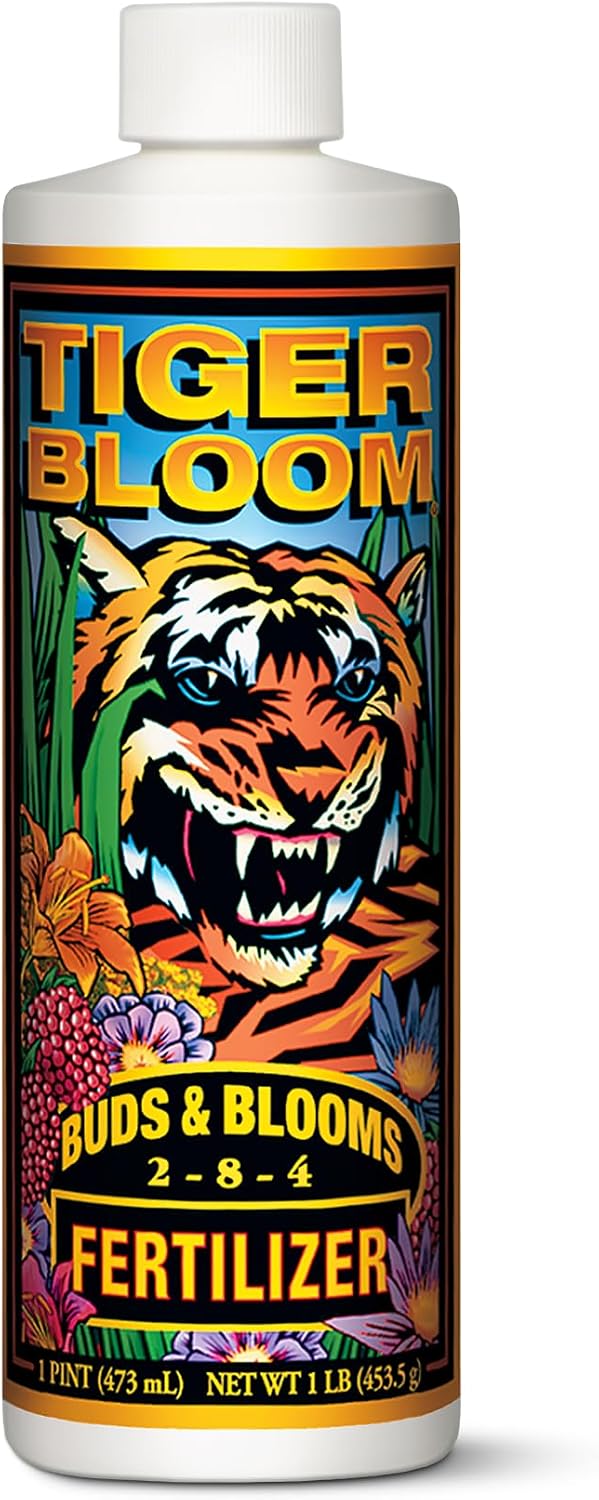
FoxFarm Tiger Bloom Liquid Plant Food (1 pint)
| Item Form | Liquid |
|---|---|
| Specific Uses For Product | Hydroponic |
| Application Method | Watering; Foliar spraying |
| Target Species | Flowering Plants |
| Mixing Ratio | 1:200 or 1:300 |
Tiger Bloom is a liquid, high-phosphorus fertilizer designed to push plants into a strong flowering and fruiting phase. You mix a small amount into the irrigation water or use it as a foliar spray and apply from first signs of flowering through harvest. The 2-8-4 formula and included micronutrients support bud set and larger blooms, and the concentrate mixes at 1:200 to 1:300 for routine feeding or 2 to 4 teaspoons per gallon for heavier feeding. It works in both soil and hydroponic setups and is formulated for quick nutrient uptake and stable micronutrient availability during storage. Practical benefits include flexible application methods, suitability for intensive flowering cycles, and a small bottle that lasts when used at recommended dilutions. Important limitations are that it is bloom-focused rather than an all-purpose feed so it may not meet vegetative needs, and the phosphorus content means users near waterways should follow local regulations to avoid runoff issues.
Best for: Serious growers who prioritize maximizing flower and bloom performance and want a concentrated, fast-acting bloom booster for soil or hydroponic environments.
Less Ideal for: Casual gardeners seeking a single all-purpose fertilizer for every growth stage or those managing turf or non-flowering lawns where phosphorus restrictions apply.
- High phosphorus NPK (2-8-4) concentrated for stronger bud development
- Works in soil and hydroponic systems for versatile use
- Liquid concentrate mixes easily for foliar or watering applications
- Formulated for quick nutrient uptake and stable micronutrient availability
- Focused on flowering so it is not a balanced all-stage fertilizer
- Contains phosphorus which may be restricted near waterways
Verdict: Choose Tiger Bloom when you need a concentrated, fast-acting bloom booster to maximize flower and fruit production.
FoxFarm Soil Liquid Trio Pack (Big Bloom, Grow Big, Tiger Bloom)

| Brand | FoxFarm |
|---|---|
| Item Form | Liquid |
| Unit Count | 48 Fluid Ounces |
| Specific Uses For Product | Plant Food |
| Coverage | Organic |
The FoxFarm Soil Liquid Trio Pack combines Big Bloom, Grow Big, and Tiger Bloom into a simple program for indoor gardeners who want strong vegetative growth followed by bigger blooms and fruit. Typical use is stage-based: Grow Big during vegetative growth to push leafy development, Big Bloom as an all-purpose supplement across cycles, and Tiger Bloom once buds form to encourage multiple bud sites and fuller flowers. The liquids are concentrated and greenhouse-tested for consistency, so measured feedings integrate easily with regular watering schedules. Practical benefits include a complete, complementary nutrient progression and formulations designed to keep micronutrients available in storage. Important limitations are that these are general-purpose concentrates rather than precision NPK formulations for specialty crops, and users who want exact nutrient ratios or automated dosing systems will need extra equipment and testing. Safety precautions such as keeping away from children and pets and wearing protective clothing are required when handling concentrated liquids.
Best for: Indoor growers who prioritize measurable performance and want a simple, stage-based feeding plan to push vigorous growth and larger blooms without building their own nutrient lineup.
Less Ideal for: Growers seeking exact NPK control, automated dosing integration, or a fertilizer tailored to a single specialist crop should consider lab-formulated or hydroponic-specific options instead.
- Three complementary formulas cover vegetative growth, bloom support, and fruiting in one kit
- Concentrated liquid form mixes readily for regular indoor feedings
- Greenhouse-tested formulations deliver consistent performance across batches
- Suitable for a wide range of indoor plants including houseplants, herbs, and vegetables
- Not a precision nutrient program for specialty or hydroponic crops
- Concentrated liquids require careful measuring and handling to avoid overfeeding
Verdict: For indoor gardeners who want a proven, stage-based liquid feeding program to boost vegetative growth and maximize blooms, this trio delivers a ready-made performance pathway.
TPS Nutrients Orchid Fertilizer Bloom Boosting Liquid Plant Food, 8 oz

| Item Form | Liquid |
|---|---|
| Application Method | foliar spray |
| Coverage | Medium |
| Target Species | orchids |
| Unit Count | 8 Fluid Ounces |
This 8 oz TPS Nutrients orchid fertilizer is a liquid, foliar-spray plant food designed specifically to support flowering and root health in indoor orchids. It delivers a kelp-enriched nutrient mix meant to encourage new bloom spikes and richer color in foliage, and the liquid form absorbs quickly when applied as a spray. Typical use is straightforward: dilute per the included mixing guidance and spray the leaves and growing medium on a routine schedule to support blooms and root uptake. Its compact bottle is convenient for hobbyists and small collections and the product focuses on flowering results rather than heavy vegetative growth. Limits to consider are the small unit size for larger collections and the lack of detailed NPK ratios on the main listing, so users who track exact fertilizer balance may want to supplement with a general-purpose orchid feed or test mixes first. For cautious growers, the foliar method reduces waste and can be spot-applied to individual plants.
Best for: Buyers who want a simple, bloom-focused foliar feed for indoor orchids and prefer a ready-to-use liquid that is easy to apply to individual plants.
Less Ideal for: Growers managing large collections, greenhouse operations, or those who require exact NPK ratios for strict fertilization schedules should consider bulk or fully specified alternatives.
- Formulated specifically for orchids to encourage bloom spikes and flowering.
- Kelp-enriched liquid promotes root health and nutrient uptake.
- Foliar spray application allows quick absorption and targeted feeding.
- Compact 8 fl oz bottle is easy to store and handy for small collections.
- Small 8 oz volume may require frequent repurchasing for multiple plants.
- Product listing does not provide a full NPK breakdown in the visible details.
Verdict: A convenient kelp-enriched foliar liquid that makes it easy to boost orchid blooms and support root health in small indoor collections.
Choosing the Right Bloom Fertilizer: Key Factors to Consider
Nutrient Ratio and Targeted Macronutrients
Flowering-focused fertilizers usually emphasize middle and high phosphorus with balanced potassium to support bud formation and bloom longevity. Look for clear N-P-K numbers and ingredient lists that show where the emphasis lies. A higher phosphorus number does not guarantee bigger flowers if nitrogen is too high; excess nitrogen promotes foliage over blooms, so the ratio matters.
Also consider secondary nutrients like magnesium and calcium. Magnesium supports chlorophyll and can deepen petal color in some species, while calcium helps cell integrity and reduces tip burn in tender blooms. The overall nutrient profile affects not only initial bloom set but how long flowers last and how well the plant recovers between flushes.
Application Method and Frequency
Different gardeners prefer granular, water-soluble, or slow-release formats depending on planting style. Water-soluble feeds offer quick uptake and visible results within a week but require regular dosing and careful measurement to avoid salt buildup. Granular and slow-release options reduce feeding frequency but may deliver nutrients too slowly for gardeners wanting rapid bloom boosts before an event.
Application frequency also affects scheduling. Many bloom fertilizers are applied every one to four weeks when plants are actively flowering. Excessive frequency raises salt concentration in the root zone, while infrequent feeding may not supply enough phosphorus during peak bud development.
Compatibility With Containers and Hanging Baskets
Plants in containers have limited soil volume and different watering rhythms, so fertilizers for potted plants should have lower salt indices and clear dilution instructions. Fast-release, high-salt concentrates can concentrate between waterings and damage roots. Liquid formulas designed for frequent, low-dose feeding usually work well in pots and hanging baskets where you can water through and leach salts occasionally.
Consider how the fertilizer behaves when the substrate dries quickly. Slow-release granules may continue delivering nutrients even when the potting mix is dry, but some formats require moisture to activate. Choose a product whose activation and longevity match your container watering habits.
Plant Safety and Burn Risk
Fertilizer burn is a real issue for sensitive annuals and newly established perennials. Products with high soluble salt content or imprecise dosing recommendations increase the chance of leaf scorch, stunted growth, or bud drop. Safe formulas provide explicit dilution rates for young plants, established shrubs, and container use.
Check for guidance on applying during cool versus hot weather. Many fertilizers advise against heavy feeding in extreme heat when evapotranspiration is high because salts concentrate faster and roots are stressed. A gardener-focused product will include cautions and mitigation steps, such as flushing the soil with water after a heavy feed.
Speed of Action and Visual Results
Some gardeners need immediate visual improvement for an event or peak season, while others prefer steady support for continuous bloom. Water-soluble feeds and foliar applications show quicker color and bud development because nutrients are rapidly available. Slow-release forms provide steadier nutrition that reduces sudden growth spurts and the need for frequent handling.
Consider how quickly you want to see results and whether your planting scheme tolerates rapid growth. Fast action can encourage lush but short-lived flowering, while slower delivery often produces more sustained bloom cycles.
Environmental Impact and Runoff Risk
Fertilizer applied in gardens and containers can leach into drainage and local waterways, especially with heavy watering or overapplication. Formulas with balanced release profiles and clear guidance on amount and timing lower runoff risk. Products that recommend low-dose, more frequent feeding can reduce single-event nutrient spikes.
Also consider organic or mineral-based options if you are managing pollinator habitat or sensitive planting areas. These often release nutrients more slowly and can improve soil biology over time, though they may not offer the immediate bloom boost that synthetic water-soluble feeds provide.
When to Start Feeding for Best Bloom Timing
Begin supplemental feeding when you see the first active growth and before heavy bud set. For spring and summer bloomers, start in early growth so plants have the phosphorus and potassium available when buds form rather than waiting until flowers appear. For repeat-blooming shrubs and perennials, a light feed after the first flush can encourage additional blooms later in the season.
- Time the first application with active root growth, not dormancy.
- Avoid heavy feeding during extreme heat; apply in cooler morning hours.
- For event timing, use a water-soluble boost 7 to 14 days beforehand for quicker uptake.
Foliar Feeding Versus Root Feeding
Foliar sprays deliver nutrients quickly and can correct short-term deficiencies or give a fast color and bloom lift. They work best as a complement to regular root feeding rather than a replacement. Spray in the cool part of the day to avoid leaf scorch and use formulations labeled for foliar use to ensure proper concentration.
- Use foliar spray for fast correction of deficiencies.
- Root feeding supplies sustained nutrients and builds reserve in the soil.
- Alternate foliar and root feeds for steady support without overload.
Adjusting Feed Rates for Different Flower Types
Tender annuals, tropicals, and small-stature container plants are more sensitive to concentration and often need lower, more frequent doses. Larger perennials and established shrubs tolerate higher rates but may not respond well to constant high nitrogen. Bulb flowers often benefit from higher phosphorus during initial growth but require reduced feeding after foliage dies back to avoid weakening the bulb.
- Lower doses and more frequent feeding for small pots and young plants.
- Higher but less frequent applications for established shrubs and large perennials.
- Reduce feeding to dormant or post-blooming bulbs to protect storage organs.
Combining Bloom Fertilizer With Soil Amendments
Fertilizers provide soluble nutrients but do not replace soil structure or organic matter. Adding compost or well-rotted organic matter improves water retention, nutrient-holding capacity, and root health, making fertilizer uptake more efficient. If you use mineral or organic fertilizers, balance them with occasional soil tests to avoid micronutrient imbalances.
- Use compost to improve moisture retention and reduce salt concentration.
- Match supplemental fertilizer with existing soil fertility from previous amendments.
- Test soil periodically if you rely on heavy feeding to track nutrient buildup.
Storing and Handling Fertilizer Safely
Keep fertilizers in a cool, dry place and reseal containers after use to prevent caking and moisture activation. Store granules and soluble powders separately from liquids to avoid contamination. Use gloves and measure carefully to avoid overapplication; small differences in dose can matter for sensitive ornamentals.
- Store in original, labeled containers in a dry spot.
- Avoid mixing different formulations unless instructions permit.
- Label any diluted solutions with date and concentration and discard leftovers after the recommended window.
How We Chose the Best Bloom Fertilizer
Our selection focused on formulas and real-garden usability rather than brand recognition. We prioritized bloom fertilizers with clear N-P-K labeling and specific phosphorus or potassium emphasis designed to support flowering. Consistent dosage instructions and flexible application methods were important so the product works in containers, beds, and hanging baskets. We also considered solubility and salt index because high-salt fertilizers can scorch fine-rooted ornamentals. Evaluation criteria included nutrient ratio clarity, application versatility, plant safety, and real-world bloom outcomes such as bud set and flower retention. We excluded formulations intended solely for lawns, general-purpose all-season feeds without bloom-specific balance, and products that lack clear labeling or safe usage directions. The final list highlights fertilizers that performed well on those dimensions and fit common gardener timelines and setups.
FAQ
How often should I fertilize flowering annuals for continuous bloom?
Often weekly to every two weeks with a mild water-soluble bloom formula produces steady flower supply. Frequency depends on your soil or potting mix and the fertilizer concentration; use lower concentrations more often for containers and light mixes.
Can I use a general-purpose fertilizer to encourage more blooms?
General-purpose fertilizers may promote foliage at the expense of flowers if they are high in nitrogen. For more blooms, choose a formulation with higher middle and end numbers that target bud formation and flower maintenance.
Is foliar feeding safe for all flowering plants?
Foliar feeding is safe for many ornamentals when done in the right concentration and during cool parts of the day. Avoid foliar sprays on very tender leaves or in hot, sunny conditions to reduce the risk of scorch.
Will feeding during hot weather harm my plants?
Feeding in extreme heat can increase burn risk because salts concentrate in the root zone and plants are stressed. Apply in cooler mornings or evenings and consider lower concentrations during heat waves.
How can I prevent fertilizer burn in containers?
Use lower concentration feeds more frequently, occasionally flush pots with water to leach salts, and follow the product's dilution guidance for young and small-rooted plants. Choosing formulas designed for container use also reduces risk.
Do organic bloom fertilizers work as quickly as synthetic ones?
Organic options often release nutrients more slowly because they rely on microbial activity to break down material. They can improve soil biology and sustain blooms over time but may not provide the rapid bloom boost synthetic water-soluble feeds deliver.
Final Verdict
Prioritize a bloom fertilizer that matches your planting style and timing goals. If you need quick, visible results before an event, a water-soluble, phosphorus-emphasized feed used at safe dilution is usually the fastest route. For steady, low-maintenance flowering, choose lower-salt or slow-release options better suited to containers and established beds. Balance feeding frequency, salt management, and watering habits to avoid burn while encouraging repeat blooms. Use the evaluation criteria above to match a product to your containers, perennials, or annual displays so you get bigger, longer-lasting flowers without unnecessary risk.
