

Note: This article contains affiliate links. If you click on these links and make a purchase, I may earn a small commission at no extra cost to you. This helps support my research and content. Read my full affiliate disclosure here.
Picking the right succulents for terrariums changes how that little glass ecosystem looks and performs. In a confined, often more humid microclimate, some succulent species stay compact, resist rot, and keep their color while others quickly stretch, rot, or demand daily attention. This guide covers seven top short-listed succulents suited to terrarium living and explains the traits that make each a good match. You will find practical notes on light, watering, and maintenance plus the evaluation criteria used to shortlist these plants. Read on to match a succulent type to your terrarium size, light situation, and maintenance style.
Top Picks at a Glance
| Best Overall The best all-around choice for most situations | Fat Plants San Diego 10 Assorted Live Succulent Cuttings |  |
| Best Quality Built to a higher standard if you want something more solid | Altman Plants 2" Live Succulent Pack, Assorted (6-Count) |  |
| Best Value The sweet spot between price and what you get | Shop Succulents Endless Summer Mini Succulent Plants, 20-Pack |  |
| Best Budget The cheapest option that still gets the job done reliably | The Succulent Cult 10 Assorted Live Succulent Cuttings |  |
| Highest Rated A top-rated pick with lots of positive feedback | Fat Plants San Diego 10 Mini Assorted Live Succulent Cuttings |  |
| Most Popular A crowd favorite that many people choose with confidence | Altman Plants 20-Pack Live Succulent Assortment (2" Pots) |  |
| Best Seller A high-volume bestseller chosen again and again | Shop Succulents Collectors Pack — Live Mini Succulent Plants, Pack of 20 |  |
Fat Plants San Diego 10 Assorted Live Succulent Cuttings

| Indoor Outdoor Usage | Indoor, Outdoor |
|---|---|
| Other Special Features of the Product | Drought Tolerant |
| Sunlight Exposure | Partial Sun |
| Moisture Needs | Little To No Watering |
| Included Components | Succulent & Cactus soil mix |
These 10 assorted live succulent cuttings are sold as unrooted pieces meant for propagation, terrariums, fairy gardens, and small planters. You receive a hand-selected mix of varieties and sizes that can be rooted in well-draining cactus and succulent soil or started in a propagation tray. The listing notes they are drought tolerant, prefer bright light with partial sun, and need very little watering once established. Practical care guidance is included: use soil with 50 to 70 percent mineral grit, pick containers with drainage, water deeply then wait for the soil to dry, and bring plants indoors if freezing is expected. The pack is convenient for hobbyists who want a quick, low-maintenance way to expand a collection or create DIY displays, and the included soil mix helps beginners get started. Limitations are that cuttings arrive unrooted so they need time and some basic propagation technique to establish, and the exact species and sizes vary by order, so results are not identical between packs.
Best for: A balanced buyer who wants an easy way to start multiple succulent plants for crafts, small containers, or to bulk up a collection and who values variety and low ongoing care.
Less Ideal for: People who want fully potted, ready-to-display plants or who need a guaranteed specific species or uniform appearance.
- Hand-selected assortment of succulents suitable for propagation and craft projects
- Includes succulent and cactus soil mix to simplify initial planting
- Low maintenance once rooted due to drought-tolerant varieties
- Can be used indoors or outdoors and moved inside if freezing temperatures occur
- Cuttings are unrooted on arrival and require propagation time and basic care skills
- Variety and exact appearance are not guaranteed and may change seasonally
Verdict: A simple, low-maintenance way to propagate multiple succulents at once for DIY displays and small container gardens.
Altman Plants 2" Live Succulent Pack, Assorted (6-Count)

| Indoor Outdoor Usage | Indoor, Outdoor |
|---|---|
| Other Special Features of the Product | Compact, Drought Tolerant, Low Maintenance |
| Sunlight Exposure | Full Sun |
| USDA Hardiness Zone | 10, 9 |
| Moisture Needs | Little To No Watering |
This 6-pack from Altman Plants provides six individually potted, fully rooted 2-inch succulents chosen from a wide roster of hardy genera. The plants arrive dry in plastic nursery pots to avoid shipping rot and are ready to be watered and placed in bright, sunny locations indoors or outdoors in suitable climates. Typical uses include starting a small container garden, filling a terrarium, creating party favors, or adding desk decor; the mixed assortment ensures visual interest without duplicates. Notable features are the plant breeder's large variety pool, drought-tolerant varieties that need minimal watering, and handpicked selections that simplify initial care for beginners. Practical benefits include quick establishment in pots or arrangements and low maintenance for users who want attractive plants without frequent watering. Limitations are the small 2-inch pot size at purchase, which means many buyers will need to replant to larger pots as the succulents grow, and the exact varieties are randomized so you cannot choose specific cultivars.
Best for: Buyers who want a dependable, low-maintenance starter collection of attractive succulents for easy displays, gifts, or small container gardens without fussing over exact plant selection.
Less Ideal for: Gardeners seeking large, mature specimens or those who need specific named cultivars for a curated collection should look elsewhere.
- Six fully rooted, handpicked succulents delivered dry to reduce shipping damage
- Assorted varieties provide color and textural contrast for displays
- Drought-tolerant and low-maintenance, suitable for busy or beginner plant owners
- Versatile for indoor or outdoor placement in appropriate light conditions
- Plants arrive in small 2-inch nursery pots and will need repotting as they grow
- Specific varieties are randomized so you cannot select exact cultivars
Verdict: Choose this six-pack if you want a worry-free, handpicked assortment of small, drought-tolerant succulents that are ready to grow into decorative pots or arrangements.
Shop Succulents Endless Summer Mini Succulent Plants, 20-Pack

| Expected Blooming Period | Spring to Summer |
|---|---|
| Sunlight Exposure | Partial Sun |
| Unit Count | 20 Count |
| Item Type Name | Succulent |
This 20‑pack of Endless Summer mini succulents delivers a ready‑to‑use assortment of small, hardy plants that work well for terrariums, favors, and clustered displays. Each plant ships in a 2" grow pot so you can inspect, acclimate, and pot them into a terrarium substrate or arrange them directly in shallow displays. The collection emphasizes low water needs and partial sun tolerance, which suits the enclosed, bright but indirect light conditions common to terrariums. Practical benefits include minimal daily care, variety across species for visual interest, and a guaranteed health on arrival so you can replace any plants that do not survive transit. Limitations to expect are natural variation in species versus the photos and occasional repeats in the assortment, so you may not get twenty distinct varieties. Also the small grow pots mean you will likely need to replant into terrarium soil for long‑term growth and stability.
Best for: Buyers who want a convenient, low‑effort way to populate terrariums or small displays with a variety of hardy succulents and prioritize ease of setup and reliable arrival condition.
Less Ideal for: Gardeners seeking specific rare varieties or larger, established specimens for immediate full‑size displays should look elsewhere.
- Ready‑sized 2" plants in grow pots make setup and inspection easy
- Low‑maintenance succulents suited to infrequent watering and indirect light
- Varied assortment adds texture and color for terrarium composition
- Seller quality guarantee covers plant health on arrival
- Assortment may include repeat species and will vary from product photos
- Plants arrive in small pots and generally need replanting for long‑term stability
Verdict: A convenient 20‑plant kit that gives terrarium builders an easy, low‑maintenance assortment of small succulents ready for potting and display.
The Succulent Cult 10 Assorted Live Succulent Cuttings

| Indoor Outdoor Usage | Indoor |
|---|---|
| Sunlight Exposure | Partial Sun |
| Soil Type | Well draining |
| Moisture Needs | Little To No Watering |
| Number of Pieces | 10 |
These succulent cuttings arrive as small, rootless pieces from a rotating selection of species, packed to be used for terrariums, mini gardens, or to start new potted plants. Typical use is to let the cut ends callus for a few days and then place them in well-draining soil or propagation medium to encourage rooting. Notable features include a mix of varieties so you get visual variety, low moisture needs that make them low-maintenance once established, and care guidance that emphasizes partial sun and avoiding direct sunlight during acclimation. The practical benefits are easy customization for DIY displays, suitability for busy indoor spaces, and low ongoing watering needs. Important limitations are that the cuttings arrive without roots or pots so some propagation skill and supplies are required, variety is random so you cannot pick specific species, and small size means some patience is needed for visible growth. For someone comfortable with basic propagation this is an inexpensive way to bulk up a collection or create mixed displays, but expect hands-on setup and a short learning curve for best results.
Best for: Buyers who want an affordable way to create mixed succulent displays or expand a collection and who are willing to propagate cuttings and provide basic aftercare.
Less Ideal for: People who want mature, ready-to-display potted succulents or who prefer to choose exact species and colors for a curated arrangement.
- Includes ten assorted varieties for diverse visual interest
- Low watering needs make established plants easy to maintain
- Arrives live and ready for propagation into pots or arrangements
- Small cuttings are well suited to terrariums, mini gardens, and DIY projects
- Cuttings are shipped without roots or soil, requiring propagation effort
- Varieties are randomly selected so specific species are not guaranteed
Verdict: A budget-friendly way to get ten live succulent cuttings for DIY projects or to propagate into a mixed indoor collection when you are comfortable rooting cuttings yourself.
Fat Plants San Diego 10 Mini Assorted Live Succulent Cuttings
| Indoor Outdoor Usage | Indoor, Outdoor |
|---|---|
| Other Special Features of the Product | Drought Tolerant |
| Sunlight Exposure | Partial Sun |
| Moisture Needs | Little To No Watering |
| Unit Count | 10 Count |
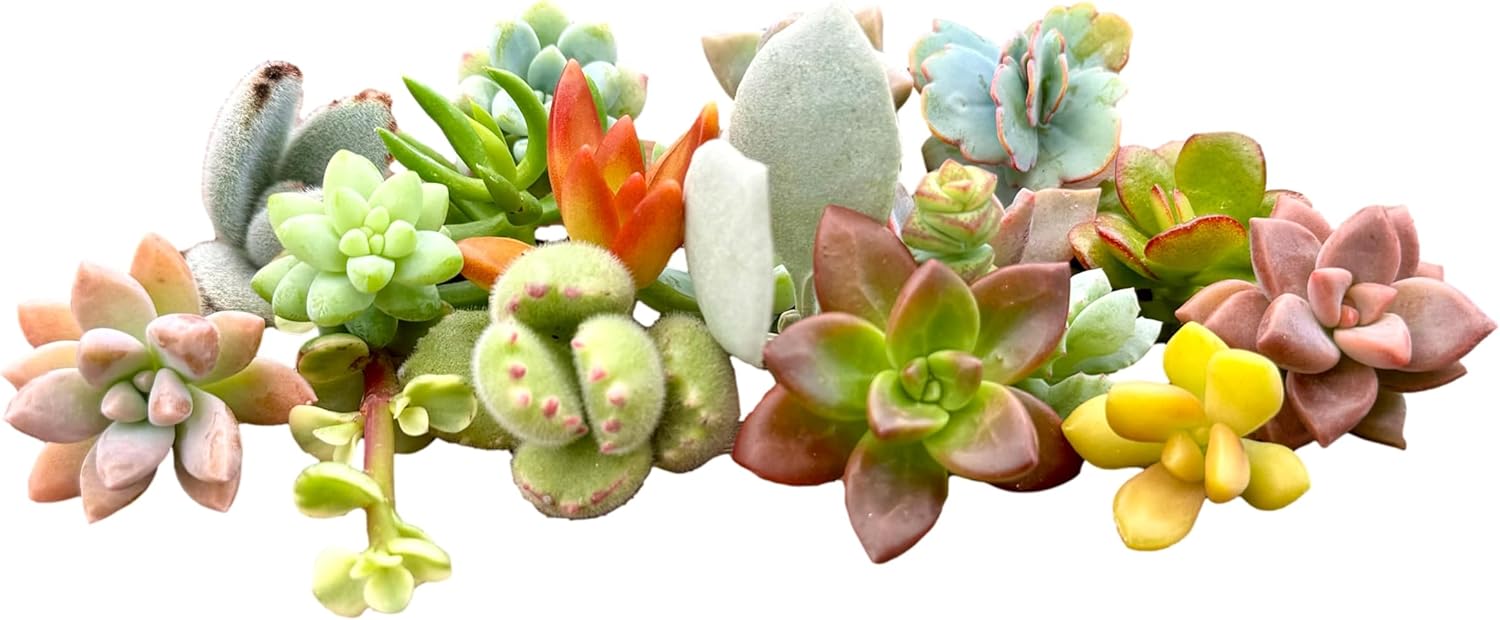
These are unrooted mini succulent cuttings sold as a mixed assortment for propagation and small-pot displays. Buyers use them to start individual plants in tiny pots, assemble dish gardens, or add to terrariums and craft projects. The cuttings arrive hand-selected in a variety of shapes and colors and are recommended for beginners because succulents establish easily when given bright light, fast-draining cactus mix, and infrequent watering. The product care notes explain how to pot with mineral grit and to water only when the soil is fully dry, which helps prevent rot. Because the items are unrooted, you will need to pot and nurse them to get established roots, so expect a short period of extra attention while they callus and root. Variety and seasonal availability mean you may not get specific species shown in photos, but the assortment makes it easy and affordable to fill several small pots or test different forms before committing to larger plants.
Best for: Buyers who want an inexpensive way to fill many small pots or try propagating succulents without committing to larger plants, and who enjoy hands-on potting and propagation.
Less Ideal for: People who need mature, flowering plants right away or who prefer a guaranteed specific species for a themed display.
- Comes as a ten-count assortment so you can populate multiple small pots or try different varieties.
- Drought-tolerant live succulents that suit low-water, low-maintenance displays once established.
- Hand-selected mix provides visual variety for tiny planters, terrariums, or craft projects.
- Care guidance included for potting mix and watering helps beginners succeed.
- Cuttings are unrooted on arrival so they require initial potting and monitoring until roots form.
- Assortment is seasonal so specific varieties are not guaranteed and may differ from photos.
Verdict: A budget-friendly way to populate small pots and practice propagation with a variety of easy-care succulent cuttings.
Altman Plants 20-Pack Live Succulent Assortment (2" Pots)
| Indoor Outdoor Usage | Indoor, Outdoor |
|---|---|
| Moisture Needs | Little To No Watering |
| Sunlight Exposure | Full Sun |
| USDA Hardiness Zone | 5 |
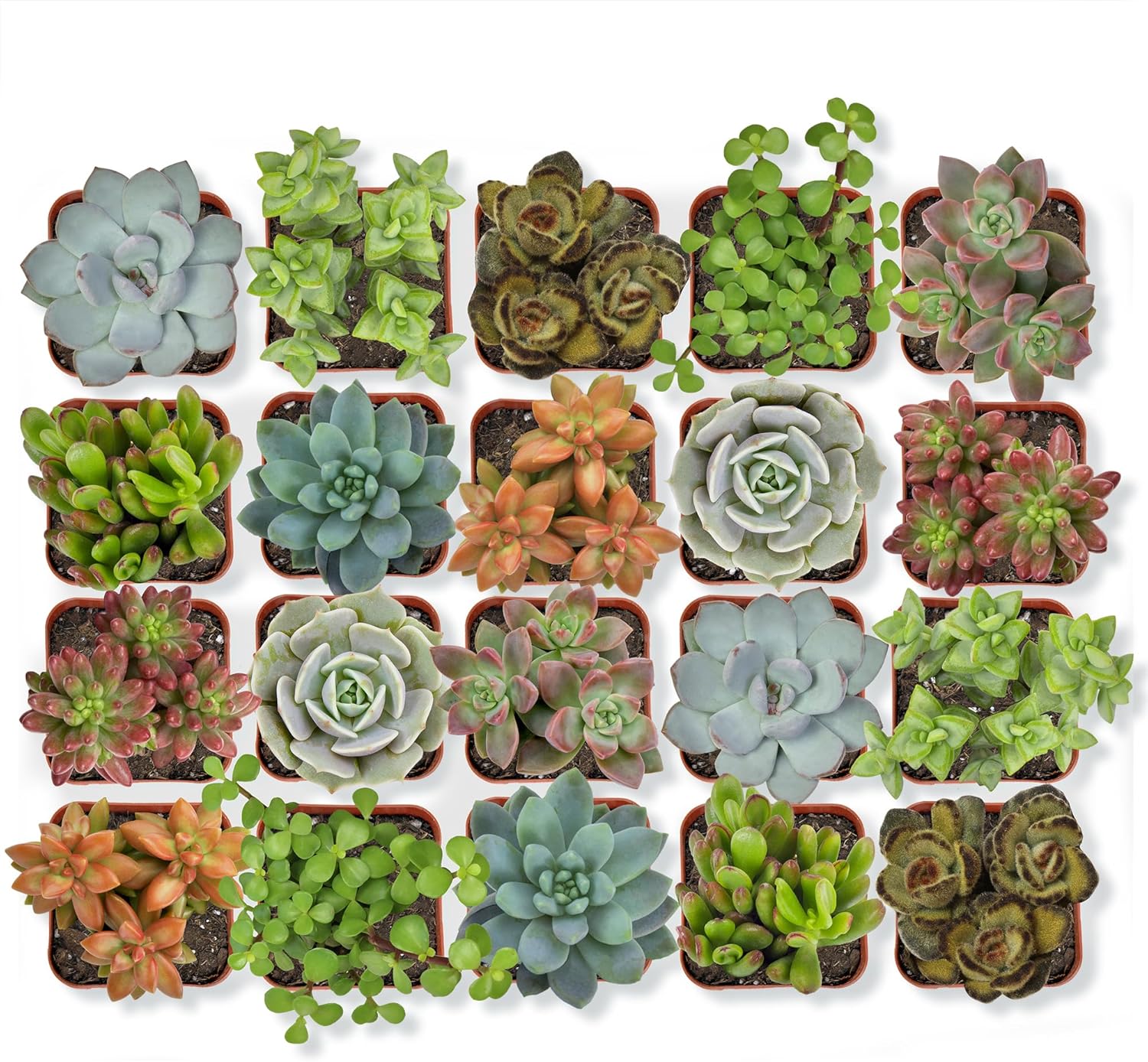
This 20-pack from Altman Plants delivers a varied selection of 2" succulents intended for starting container displays, terrariums, or gifting. Each pack contains ten paired varieties such as Echeveria, Crassula, Sedum and others, so you get color and texture variety without sourcing plants individually. The plants are grown to be drought tolerant and prefer bright light and sandy, well-draining media, which makes them easy to place in small pots or mixed container gardens. Practical benefits include low watering needs, year-round interest, and visibly healthy nursery-rooted stock suited to DIY arrangements. Limitations to note are the small nursery pot size, so plan to pot up into larger containers for long-term growth, and full sun preferences mean some indoor spots may require very bright light or supplemental light. For container projects these give a quick, coordinated start but expect to replant or group them for mature displays.
Best for: Buyers who want a reliable, low-maintenance way to start multiple container displays or DIY succulent projects and who value visible social proof that the mix performs well for other gardeners.
Less Ideal for: Gardeners seeking mature, display-size specimens or those who need plants for consistently low-light indoor spots should consider larger, sun-tolerant varieties or shade-adapted houseplants instead.
- Twenty individually potted succulents provide immediate variety for mixed container arrangements
- Pairs of ten different varieties make it easy to create balanced, symmetrical plantings
- Low watering needs and drought tolerance reduce maintenance for container growers
- Suitable for both indoor and outdoor container use when given bright light
- Plants come in 2" nursery pots and will need repotting for sustained growth
- Many varieties prefer full sun, which can limit bright indoor placement options
Verdict: A convenient, low-maintenance 20-pack that gets container succulent projects started quickly with a variety of ready-to-pot plants.
Shop Succulents Collectors Pack — Live Mini Succulent Plants, Pack of 20

| Expected Blooming Period | Spring to Summer |
|---|---|
| Sunlight Exposure | Partial Sun |
| Unit Count | 20 Count |
This collectors pack delivers twenty small, 2" live succulent plants in individual grow pots intended for decorative projects and terrariums. The assortment emphasizes variety with no repeated species, which makes it useful for building a mixed mini garden or filling multiple terrarium compartments. These succulents are described as low-maintenance: they prefer bright indirect light, infrequent watering with the soil allowed to dry between waterings, and good air circulation. For terrarium use the small size and diversity are advantages because they fit compact displays and create visual interest without large root systems. Limitations to note are seasonal variation in appearance and possible substitutions in species, so the exact plants may differ from photos. Also, because succulents generally do best with drier conditions and airflow, fully sealed high-humidity terrariums may stress some species unless ventilation is provided. The pack comes with a satisfaction guarantee for plant health on delivery which should reassure buyers who want low-risk, ready-to-use plants for small indoor displays.
Best for: Buyers who want an easy, low-risk way to assemble a diverse mini succulent display or populate several small terrariums without sourcing individual plants.
Less Ideal for: People seeking specific named varieties or exact color matches or those who prefer fully enclosed humid terrariums without ventilation.
- Twenty individual 2" succulents provide immediate variety for terrariums or favors
- Curated collectors selection avoids duplicate species for a diverse display
- Described low-maintenance care: bright indirect light and infrequent watering
- Small size fits compact terrarium layouts and tabletop arrangements
- Species and appearance may vary seasonally and may not match listing photos
- Not suited to sealed, high-humidity terrariums without added ventilation
Verdict: A convenient, low-maintenance way to get twenty small, varied succulents ideal for building or filling terrariums and mini displays.
Choosing the Right Succulents for Terrariums: Key Factors to Consider
Compactness and Mature Size
Succulents that remain small and form tight rosettes or clumping mats are best for terrariums because they fit in limited soil volume and avoid needing frequent repotting. Larger, tall, or trailing species can quickly outgrow the glass and shade smaller plants.
Consider both the plant's typical mature size and its growth rate. A slow-growing compact species will maintain its proportion in a terrarium for seasons, whereas a fast grower may demand pruning or moving to a container with more space.
Humidity Tolerance and Rot Resistance
Terrariums often trap moisture and raise relative humidity compared with open pots. Choose succulents that tolerate occasional higher humidity and have fleshy leaves with good epidermal defenses to resist fungal rot. Varieties with thicker cuticles, tighter leaf arrangement, or naturally xeric origins often handle brief humidity spikes better.
Avoid species known to develop stem or leaf rot at the first sign of persistently damp soil. Good drainage and a well-draining substrate are still essential, but species-level tolerance reduces risk when airflow in the glass is limited.
Light Requirements and Color Response
Most succulents need bright light to keep compact form and color. In terrariums, light may be filtered through glass or placed farther from windows. Select species that thrive in bright indirect light or can tolerate variable light without etiolation.
Also consider how color responds to light. Some succulents develop stronger pigment or deeper hues under higher light, while others stay green and stable. Pick plants whose color and patterning remain attractive in the light conditions you can provide.
Watering Frequency and Drought Hardiness
Inside a terrarium the watering rhythm differs from open containers because evaporation is reduced. Opt for succulents that withstand longer dry periods between waterings and are forgiving of light overwatering mistakes. Plants that demand very precise, frequent watering are poor terrarium choices.
Understand whether a species has seasonal shifts in water needs. Some do best with a dry winter rest that is hard to simulate in a closed glass environment; choose species with steady, low water requirements when possible.
Root System and Soil Volume Needs
Terrariums offer shallow soil depth and limited lateral space. Succulents with shallow, fibrous root systems or compact crowns adapt better than those needing deep anchoring roots. Consider how much substrate depth the plant needs to anchor itself and access nutrients.
Plants that can thrive in a thin layer of well-draining mix will be easier to establish and less likely to suffer root problems in small glass containers.
Maintenance, Pruning, and Propagation
Routine care in a terrarium should be simple. Favor succulents that tolerate occasional pruning, produce offsets, or root easily from leaves for quick replacement. Ease of propagation matters because terrariums sometimes require trimming to manage size or replacing parts damaged by rot.
Also consider pest susceptibility and the practicalities of treating problems inside glass. Species that respond well to simple interventions are better suited to containerized, lower-airflow environments.
Preparing a Terrarium Environment
Start by planning drainage and airflow for the glass vessel. Even open terrariums benefit from a layer of coarse substrate or a small drainage zone to keep roots from sitting in moisture. A porous, well-draining potting mix designed for succulents reduces the chance of rot.
Positioning the terrarium matters. Place it where it receives bright indirect light for most of the day. If natural light is limited, a low-profile grow light on a timed schedule will keep succulents compact and colorful without overheating the glass.
- Use a shallow, fast-draining mix with grit, perlite, or coarse sand.
- Provide short periods of fresh air exchange if the terrarium is closed.
- Avoid placing the terrarium in direct midday sun behind glass to prevent leaf scorch.
Planting and Spacing Techniques
Leave enough room between individual plants to allow air circulation and to reduce contact that can spread rot. Plant slightly above the surrounding soil line when possible so water drains away from stems. Compact rosettes should be clustered but not crowded.
When arranging combinations, group plants with similar light and water needs. Mixing a moisture-tolerant succulent with one that strictly prefers very dry conditions increases the risk of failure for one or both.
- Start with fewer plants than the space allows to prevent overcrowding as they grow.
- Anchor plants gently with small stones or pins until roots establish in thin soil.
Watering Strategy for Glass Containers
Water sparingly and infrequently. Use a moisture-first approach: check the substrate depth and odor before adding water. When you water, apply small amounts directly to the soil rather than misting leaves to reduce rot risk.
Allow the top layer of substrate to dry between waterings. In closed terrariums, intervals can be much longer than in open pots, so err on the side of dryness and monitor plant turgor and leaf shriveling as cues.
- Use a syringe or small pipette for precise watering.
- Avoid overhead watering when plants are crowded to prevent trapped moisture on leaves.
Lighting Adjustments and Seasonal Care
Adjust light intensity with distance and diffusion. If leaves start to stretch, increase light; if they bleach or scorch, reduce direct exposure. The ideal is bright, even indirect light that mimics a sheltered rock ledge or windowsill with filtered sun.
Seasonal changes affect growth rate. Reduce watering in cooler months and watch for slowed growth, which is a normal rest period for many succulents.
- Rotate the terrarium periodically to prevent one-sided growth.
- Supplement with artificial light during short winter days if the plants show signs of stretching.
Troubleshooting Common Terrarium Issues
Yellowing, mushy leaves are often a sign of excess moisture or poor drainage. Remove affected tissue promptly and increase airflow. If rot is localized, prune back to healthy tissue and allow the wound to dry before resuming normal watering.
Pest outbreaks are less common in sealed glass but can occur. Isolate the container, remove infested debris, and treat carefully with gentle measures that will not overly wet the substrate or damage delicate leaves.
- Quarantine new plants before adding them to a terrarium.
- Use small physical cleaning tools, like a soft brush, to remove dust without wetting foliage.
How We Chose the Best Succulents for Terrariums
We shortlisted succulents based on attributes that matter in closed or partially open terrariums rather than general outdoor performance. Key evaluation criteria included compactness and growth habit, susceptibility to rot in humid conditions, light-range tolerance for bright indirect settings, ease of care for low-frequency watering, and aesthetic longevity so plants keep color and form in small containers. We also considered seedling survival and propagation ease because replacements should be straightforward for hobby growers. Plants were excluded if they reliably grow too large for small glass vessels, require direct outdoor conditions, or need daily misting and high airflow to avoid fungal problems. We filtered out species that demand a strict dormancy schedule that is impractical inside glass. The final list favors species and varieties that reliably perform in limited soil volume and variable humidity while remaining visually appealing and easy to maintain.
FAQ
Can all succulents live in a terrarium?
Not all succulents suit terrarium conditions. Many prefer dry, airy environments and will rot in a closed, humid container. Choose species known for compact growth and some tolerance to raised humidity.
How often should I water succulents in a terrarium?
Water much less frequently than for open pots. Check that the top layer of substrate is dry before watering. In a mostly closed terrarium this can mean several weeks between small, targeted waterings depending on light and temperature.
Do terrarium succulents need fertilizing?
Fertilize sparingly. Small terrarium soil volumes hold limited nutrients, so a very diluted, infrequent feed during the active growing season is usually sufficient. Overfertilizing can encourage leggy growth and more frequent repotting.
Is a closed or open terrarium better for succulents?
Open terrariums are generally safer for most succulents because they allow airflow and lower humidity. Closed terrariums can work if you select humidity-tolerant, compact species and manage watering and ventilation carefully.
How do I replace a plant that outgrows the terrarium?
Gently remove the plant, trim excess roots, and replant the remainder in a larger pot outdoors or in an open container. Replace with a smaller, slow-growing succulent or propagate a leaf or offset to preserve the aesthetic.
Final Verdict
For terrariums prioritize succulents that stay small, tolerate occasional humidity, and root in shallow substrate. Balance light needs with the container position and choose plants that are forgiving of infrequent watering. Decide which traits are most important for your setup: low watering frequency, strong rot resistance, or striking color. Use those priorities to pick a species that will remain healthy and visually pleasing in a glass environment.
