

Note: This article contains affiliate links. If you click on these links and make a purchase, I may earn a small commission at no extra cost to you. This helps support my research and content. Read my full affiliate disclosure here.
When you spend time on trails, in tall grass, or moving through leaf litter, the right tick repellent for hiking can mean the difference between an enjoyable trip and a post-hike health headache. You want protection that lasts through sweat and movement, but also something comfortable to wear against skin or fabric. This guide shortlists seven top options suited to backpacking, day hikes, and multi-day treks and explains the practical tradeoffs gardeners and outdoor enthusiasts should weigh. Below you will find focused evaluations that consider how long protection lasts, how a formula behaves with sweat and layering, and whether it is gentle enough for frequent use. Read on to see which repellents match your hiking routine and terrain exposure.
Top Picks at a Glance
| Best Overall The best all-around choice for most situations | Sawyer SP657 Permethrin Insect Repellent Spray for Clothing & Gear, 24 oz |  |
| Best Quality Built to a higher standard if you want something more solid | Ranger Ready P2Pak Permethrin 0.5% + Picaridin 20% Insect Repellent (Scent Zero, 8 oz) |  |
| Best Value The sweet spot between price and what you get | Ranger Ready Picaridin 20% Insect Repellent Spray, Scent Zero, 3.4 oz (2-Pack) |  |
| Best Budget The cheapest option that still gets the job done reliably | OFF! Deep Woods Dry Insect & Mosquito Repellent Spray, 2.5 oz |  |
| Highest Rated A top-rated pick with lots of positive feedback | OFF! Deep Woods Tick & Mosquito Repellent Spray, 6 oz (25% DEET) |  |
| Most Popular A crowd favorite that many people choose with confidence | Repel 100 Insect Repellent Pump Spray, 4 oz (98% DEET) |  |
| Best Seller A high-volume bestseller chosen again and again | OFF! Clean Feel Picaridin Insect & Mosquito Repellent Spray, 5 oz |  |
Sawyer SP657 Permethrin Insect Repellent Spray for Clothing & Gear, 24 oz

| Active ingredient | 0.5% Permethrin |
|---|---|
| Application type | Trigger Spray |
| Duration | Up to 6 weeks or 6 washings |
| Item model number | SP657 |
This Sawyer SP657 permethrin spray is made to add a protective layer to clothing and outdoor gear rather than to be applied to skin. You spray garments, socks, shoes, sleeping bags, or tents from about 6 to 8 inches away and let them dry; the active ingredient bonds to fabric fibers and remains effective for up to six weeks or six washings. In practice it is useful for camping, backpacking, hunting, and backyard use because it targets ticks and mosquitoes and is formulated not to stain or damage fabrics. Notable features include an odorless finish after drying and clear application directions with an EPA-recommended amount per outfit. The main limitation is that it treats fabrics only and must be reapplied after the stated time or laundering; it also degrades with UV exposure so heavy sun can shorten protection. For those wanting comprehensive bite protection you will still want a skin-applied repellent in addition to treating gear.
Best for: Buyers who prioritize proven, gear-focused protection against ticks and mosquitoes and want an evidence-backed way to reduce bite risk while spending time outdoors.
Less Ideal for: People who need an on-skin repellent or a solution that provides continuous protection without periodic re-treatment of clothing and gear.
- Bonds to fabric fibers for up to six weeks or six washings, providing long-lasting protection on treated gear
- Formulated not to stain or damage clothing, tents, or outdoor equipment
- Odorless after drying, so treated items do not carry a strong scent
- Effective against ticks, mosquitoes, and more than 55 other insect types according to product description
- Only for use on clothing and gear, not for direct application to skin
- Protection degrades with UV exposure and requires reapplication after laundering or the six-week window
Verdict: Treat clothing and gear with this permethrin spray for a proven, long-lasting layer of protection against ticks and mosquitoes during outdoor activities.
Ranger Ready P2Pak Permethrin 0.5% + Picaridin 20% Insect Repellent (Scent Zero, 8 oz)

| Active ingredients | Picaridin 20%, Permethrin 0.5% |
|---|---|
| Protection duration (body) | Up to 12 hours |
| Protection duration (clothing) | Up to 5 washings or 40 days sun exposure |
| Application | 360-degree trigger spray |
This P2Pak pairs a picaridin body spray with a permethrin clothing spray to cover both skin and gear against ticks, mosquitoes, and other biting insects. In practice you spray the picaridin directly on exposed skin for up to 12 hours of protection and use the permethrin on clothing, shoes, and outdoor gear, letting treated items dry for two hours before wearing. Notable features include a scent-free formulation, a 360-degree trigger for reach, and permethrin’s claimed durability through up to five washings or prolonged sun exposure. The combination is practical for day trips, yard work, and longer outdoor outings because it defends both the body and fabrics without greasy residues or obvious odor. Limitations to note: permethrin must not be applied to skin and requires outdoor application and drying time, and the product contains active insecticidal ingredients so users should follow safety directions carefully around young children and pets. For someone seeking broad, long-lasting coverage without DEET smell, this kit covers both personal and clothing protection in a single package.
Best for: Pregnant women and caregivers who prioritize a DEET-free, broad-coverage approach and want both skin and clothing protection for everyday outdoor activities.
Less Ideal for: Those who prefer a single spray for both skin and clothing or who want to avoid any insecticidal treatments on garments should consider alternatives.
- Combines picaridin for skin and permethrin for clothing to cover both exposure routes
- Picaridin 20% offers up to 12 hours of protection from ticks and mosquitoes
- Permethrin 0.5% treatment remains effective through multiple washings or extended sun exposure
- Scent-free, non-greasy formula suitable for users who dislike strong smells
- 360-degree trigger spray aids coverage in hard-to-reach areas
- Permethrin is for fabrics only and requires outdoor application and a two-hour drying period before wearing
- Contains active insecticide ingredients that require following safety directions around children and pets
Verdict: If you want DEET-free, full-coverage mosquito and tick protection for both skin and clothing during pregnancy, this paired picaridin-plus-permethrin kit is a practical all-in-one choice.
Ranger Ready Picaridin 20% Insect Repellent Spray, Scent Zero, 3.4 oz (2-Pack)

| Active ingredient | Picaridin 20% |
|---|---|
| Protection duration | Up to 12 hours (mosquitoes and ticks) |
| Format | Non-aerosol spray |
| Pack size | 2 x 3.4 oz |
This two-pack of Ranger Ready Picaridin 20% is a body-worn spray designed for multi-hour outdoor use. The formula repels mosquitoes and ticks for up to 12 hours and other biting pests for shorter periods, making it suited to full-day hikes or multi-activity outings. It sprays as a non-aerosol mist, goes on dry and non-greasy, and is formulated to avoid staining or damaging clothing and gear. The Scent Zero finish reduces odor, which is useful for hunters and anyone who prefers a low-profile repellent. Because it is picaridin-based rather than DEET, it is suitable for family use including children over one year and people who avoid DEET. The 3.4 oz bottles are small enough to carry in a daypack or car, and the two-pack lets you keep one at home and one in your kit. The main limitations are small bottle size if you need long trips without resupply and that spray coverage requires careful application to clothing and exposed skin like any body-worn repellent.
Best for: Hikers and practical outdoor enthusiasts who want a DEET-free, long-lasting body repellent they can carry for day hikes and regular outings and who prioritize low odor and gear-safe application.
Less Ideal for: Backpackers on multi-day trips who need large-volume coverage or users who prefer clothing-treated, non-skin alternatives for tick protection.
- Picaridin 20% formulation provides long-lasting tick and mosquito protection up to 12 hours
- Goes on dry and non-greasy so it does not stain clothing or damage gear
- Scent Zero formulation minimizes odor for low-profile outdoor activities
- Two 3.4 oz bottles let you keep one in a daypack and one at home for convenience
- Small 3.4 oz bottles may not supply enough repellent for extended multi-day trips
Verdict: A compact, DEET-free picaridin spray that gives long-lasting, low-odor tick and mosquito protection ideal for day hikes and routine outdoor use.
OFF! Deep Woods Dry Insect & Mosquito Repellent Spray, 2.5 oz
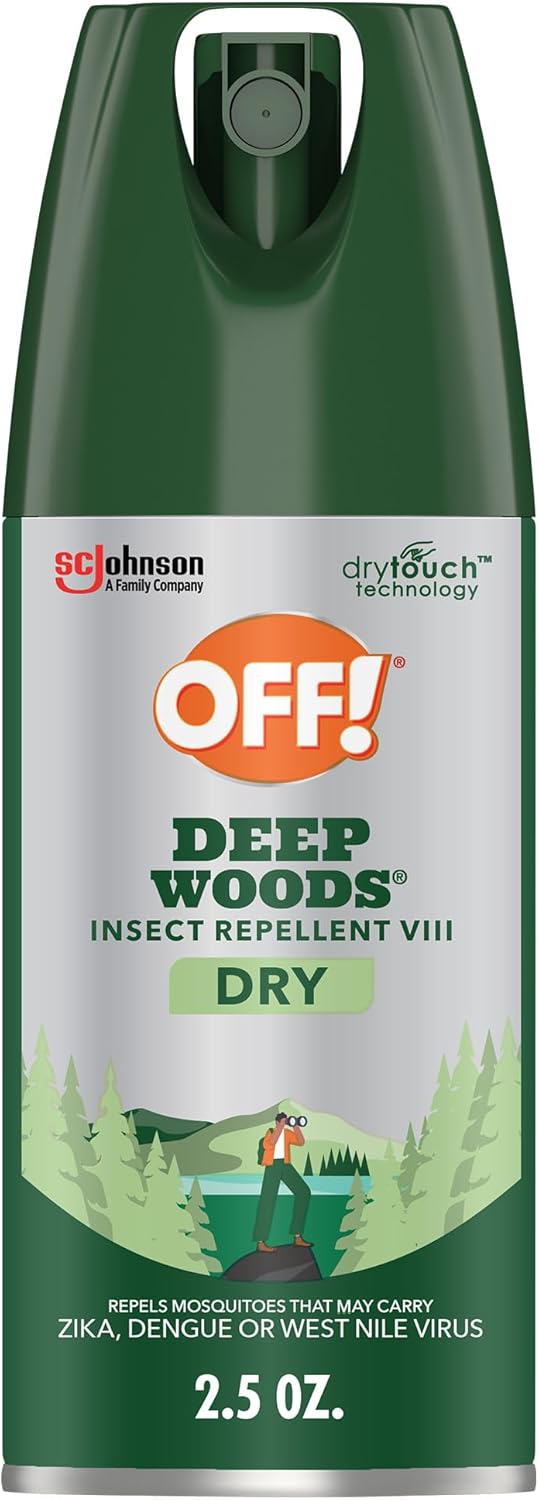
| Active ingredient | 25% DEET |
|---|---|
| Form | Aerosol spray |
| Long-lasting protection | Up to 8 hours |
| Indications | Hunting, fishing, camping, backpacking |
OFF! Deep Woods Dry is a compact aerosol repellent formulated with 25% DEET for multi-hour protection against mosquitoes, ticks, biting flies, gnats, and chiggers. In use you spray from about 6 to 8 inches to cover exposed skin or outer clothing; the formula is designed to feel powder-dry rather than oily, so it is comfortable for active outdoor pursuits like hiking, fishing, or hunting. The label claims up to eight hours of protection, making the small can useful for single-day trips or to keep in a pack. Practical benefits include reliable coverage for areas where disease-carrying mosquitoes and ticks are a concern and easy application to clothing openings like cuffs and socks. Important limitations are the strong warnings on eye irritation and flammability, and the need to avoid certain fabrics and surfaces listed on the label. Because it contains DEET, users should follow label directions for application on children and wash treated skin after returning indoors.
Best for: Buyers who want an effective, no-fuss repellent for day hikes, fishing, or hunting and prioritize affordable, portable protection over fragrance-free or non-DEET alternatives.
Less Ideal for: People looking for fragrance-free, DEET-free, or non-aerosol options and those who need a repellent specifically formulated for very young children or frequent daily reapplication.
- Contains 25% DEET for proven multi-hour protection against mosquitoes and ticks
- Powder-dry, non-greasy formula that is comfortable for active outdoor use
- Compact 2.5 oz aerosol is portable for day trips and fits in a pack or pocket
- Label indicates protection against insects that may carry Zika, Dengue, West Nile, and Lyme disease
- Aerosol is extremely flammable and must be kept away from heat and open flame
- Can irritate eyes and may cause skin reactions in rare cases
- Not suitable for some synthetic fabrics and painted or leather surfaces
Verdict: A small, budget-friendly DEET aerosol that delivers proven, long-lasting protection for adults on active outdoor trips.
OFF! Deep Woods Tick & Mosquito Repellent Spray, 6 oz (25% DEET)

| Active ingredient | DEET 25% |
|---|---|
| Form | Aerosol spray |
| Net weight | 6 oz |
| Protects against | Ticks, mosquitoes, biting flies, gnats, chiggers, fleas |
OFF! Deep Woods Tick & Mosquito Repellent is an aerosol DEET spray designed to give extended protection in high‑risk outdoor settings. With 25% DEET as the active ingredient, it targets ticks (including species associated with Lyme disease), mosquitoes, biting flies, gnats, chiggers and fleas. You apply it as a mist to exposed clothing and skin from a hand‑held can; the aerosol format makes coverage quick and easy for hiking, camping, hunting, or yard work. The formula is described as dry and non‑greasy and does not leave noticeable staining, which helps when applying over clothing or gear. Practical benefits include a trusted active ingredient concentration for multi‑hour protection and a convenient size for packing in a daypack. Important limitations are that it contains DEET so it should be used according to safety directions, avoided on sensitive areas like eyes, and not used on infants; reapplication may be needed for extended multi‑day exposure or after heavy sweating. Aerosol delivery is convenient but may spray onto unintended surfaces if used in windy conditions.
Best for: Buyers who prioritize reliable, proven protection when spending time in tick‑ and mosquito‑prone areas and want a fast, easy application for outdoor activities.
Less Ideal for: People seeking DEET‑free repellents, parents looking for an option specifically formulated for infants, or users who prefer non‑aerosol delivery methods.
- Contains 25% DEET for proven, multi‑hour protection against ticks and mosquitoes
- Aerosol spray delivers quick, even coverage for clothing and exposed skin
- Dry, non‑greasy formula that does not noticeably stain clothing
- Portable 6 oz size fits in a daypack or field kit
- Contains DEET so it requires careful use and is not suitable for very young children or sensitive skin
- Aerosol cans can drift in wind and may overspray nearby surfaces
Verdict: Choose this spray when you need a reliable, DEET‑based repellent that delivers fast, multi‑hour protection against ticks and mosquitoes.
Repel 100 Insect Repellent Pump Spray, 4 oz (98% DEET)

| Active ingredient | DEET 98.11% |
|---|---|
| Protection duration | Up to 10 hours |
| Form | Pump spray |
| Net volume | 4 oz |
Repel 100 is a small, travel-friendly pump spray formulated with 98.11% DEET for heavy-duty insect protection. You apply it to exposed skin or outer clothing to repel mosquitoes that can carry Zika, West Nile, Dengue and other viruses, as well as ticks, gnats, biting flies, chiggers and fleas. The 4-ounce bottle is convenient to carry in a daypack and the manufacturer claims up to 10 hours of protection in severe conditions, which makes it suitable for long hikes, camping, and extended outdoor work. Practical features include a pump spray for controlled application and clear label directions about avoiding sensitive areas and washing treated skin afterward. The main limitation is the very high DEET concentration, which requires careful use around children, and can damage some materials and finishes, so you need to avoid contact with plastics, leather, watches and certain fabrics. Users who want a milder or scented repellent should consider lower DEET percentages or alternative active ingredients.
Best for: Buyers who prioritize maximum, long-duration insect protection for extended outdoor activities and want a compact, easy-to-carry repellent for severe conditions.
Less Ideal for: People looking for low-DEET, fragrance-free, or natural alternative repellents and those who need a product safe for frequent use on children or on delicate gear.
- Very high DEET concentration for strong, long-lasting protection in severe insect conditions
- Compact 4 oz pump bottle that is easy to carry for travel and day trips
- Effective against a wide range of pests including mosquitoes, ticks, biting flies, chiggers and fleas
- Label provides specific use and safety directions for clothing, children, and post-exposure washing
- High DEET content can damage plastics, leather, painted or varnished surfaces and some synthetic fabrics
- Not suitable for users seeking low-odor or natural ingredient repellents
Verdict: Choose Repel 100 when you need compact, maximum-strength DEET protection for long outdoor outings in severe insect conditions.
OFF! Clean Feel Picaridin Insect & Mosquito Repellent Spray, 5 oz

| Active ingredient | Picaridin 20% |
|---|---|
| Form | Aerosol spray |
| Protection claim | Up to 8 hours |
| Fragrance | Fragrance-free |
OFF! Clean Feel is a lightweight, fragrance-free aerosol repellent that uses 20% picaridin to protect against mosquitoes, ticks, and biting flies. It is intended for everyday outdoor use: shake, spray from about 6 to 8 inches onto exposed skin, then spread evenly with your hands. The formula goes on clear, dries quickly, and is described as non-greasy and non-sticky, so it is comfortable for yard work, walks, or social outdoor time. The aerosol delivery makes coverage fast and convenient for adults. Manufacturer directions recommend reapplying about every 90 minutes as needed, and the product claims up to eight hours of protection in typical use. Important practical limits are typical aerosol considerations: avoid inhaling the spray, do not apply directly to the face, and it is not for children under six months. People with very sensitive skin should patch test first since prolonged contact can cause reactions in some individuals.
Best for: Adults who want an easy-to-apply, DEET-free repellent that feels light on skin and provides reliable everyday protection during outdoor activities.
Less Ideal for: People shopping for repellent for infants or those who prefer pump sprays or lotions for precise application should consider other formats.
- Uses 20% picaridin, an effective DEET-free active ingredient against mosquitoes, ticks, and biting flies
- Fragrance-free, non-greasy formula that dries quickly and goes on clear
- Aerosol spray covers skin evenly and is quick to apply for everyday outdoor activities
- Aerosol format requires care to avoid inhalation or overspray and is not suitable for direct face application
- Contains ingredients that may cause skin irritation or allergic reactions in some users
Verdict: A dependable, fragrance-free picaridin aerosol that delivers long-lasting, easy-to-apply protection for adults seeking a low-feel alternative to DEET.
Choosing the Right Tick Repellent for Hiking: Key Factors to Consider
Protection Duration and Coverage
How long a repellent protects you per application is central to hiking use. Longer-duration formulas reduce the need to stop and reapply on the trail, which is useful on long hikes or when you are far from water and supplies. Consider both the advertised hours and how environmental factors like heavy sweating, high humidity, or repeated rubbing from packs shorten that window.
Coverage also matters. Sprays that provide a fine, even mist will cover exposed skin and pant cuffs more reliably than spot treatments. If you plan to treat clothing, check whether the product is intended for fabric application and how long it retains efficacy after multiple wears and washes.
Active Ingredient and Efficacy Against Ticks
Different active ingredients work in different ways and have different expected protection times. Some ingredients are registered and well-studied for tick deterrence, while others provide partial or situational protection. When choosing, match the active ingredient profile to the level of tick exposure you expect on local trails.
Also consider tick species in your area. Some repellents perform better against the types of ticks common to your region. Look for formulations with documented efficacy for outdoor, trail-related exposure rather than indoor or structural pests.
Skin Sensitivity and Formulation Type
Trail users vary in skin sensitivity. Lotions, sprays, and wipes differ in how they feel and how likely they are to cause irritation. A lotion or pump formula can be gentler for people with sensitive skin, while aerosol sprays may irritate breathing or eyes for some hikers.
If you hike frequently, skin compatibility becomes more important because repeated applications increase the chance of irritation. Consider fragrance-free or low-odor formulations if scent attracts insects or bothers companions on multi-day trips.
Compatibility With Clothing and Gear
Many hikers rely on treating clothing as well as skin. Some repellents bond to fabric fibers and provide long-lasting protection through multiple wears, while others leave oily residues or transfer to pack straps and sleeping items. A product that is safe for synthetic hiking fabrics and breathable layers will preserve the performance and lifespan of your gear.
Also consider how the repellent affects grip on trekking poles, camera gear, and hydration pack straps. Sticky or greasy residues can be a nuisance on trail tasks and camp chores.
Sweat and Water Resistance
Hiking involves perspiration and sometimes rain, stream crossings, or heavy dew. A repellent that holds up to moisture will maintain protection better than one that washes off quickly. Water-resistant formulations are especially important for summer hikes and strenuous routes.
Pay attention to how a product performs after heavy exertion. Some repellents lose effectiveness rapidly with significant sweating; others are formulated to remain active through moderate moisture exposure.
Application Convenience and Carrying Practicality
On the trail, simple, compact packaging makes reapplication realistic. Pump bottles and wipes can be handy at a trailhead or rest stop, while large aerosols may be impractical to carry. Consider whether you prefer a product that treats both skin and clothing, or a two-product approach where a clothing treatment lasts long and a skin product handles exposed areas.
Think about filling sizes, how easy the spray is to aim around facial areas, and whether the product complies with any transport limits you expect to encounter during travel to trailheads.
How Different Formulations Perform on Trails
Sprays, lotions, wipes, and clothing treatments each behave differently during a hike. Sprays quickly cover exposed skin and pant cuffs, but aerosol drift can mean a portion of the applied product never lands where you want it. Lotions often feel less volatile and can be better for precise coverage around the wrists and neck.
Wipes are convenient for spot reapplication and for hikers who want minimal fuss. Clothing treatments are designed to adhere to fabric fibers and provide protection even when you are sweating; these are useful for long outings when you want the convenience of treating gear rather than frequent skin reapplication.
- Sprays: fast coverage, good for multiple hikers but watch drift
- Lotions: precise application, often gentler on sensitive skin
- Wipes: portable and tidy for quick touch-ups
- Clothing treatments: long-lasting on fabric, reduce need for skin reapplication
Practical Tips for Applying Repellent Before and During Hikes
Apply repellent to exposed skin and pant cuffs before leaving the trailhead. Let skin-applied products dry before zipping packs or layering clothing to avoid transfer. For clothing treatments, follow instructions on fabric type and drying time to ensure bonding.
Reapply strategically. If a product claims eight hours of protection but you expect heavy sweating, plan a mid-hike touch-up. Use wipes for quick applications on hands and face-appropriate areas rather than respraying near eyes and mouth.
- Pre-treat socks and pant cuffs to reduce ticks climbing onto exposed skin
- Avoid spraying directly on the face; apply to hands and then spread carefully
- Allow treated clothing to dry fully before wearing for best fabric binding
Managing Repellent Use With Other Trail Gear
Think about how repellent interacts with base layers, gaiters, and insect-protective clothing. A repellent that bonds to synthetic hiking fabrics can extend protection without affecting breathability, but heavy residues can soil delicate liners or reduce moisture-wicking performance.
For multi-day treks, place treated garments in a separate compartment from sleeping materials to prevent transfer. If you use poles or camera straps, wipe residues off those contact points to maintain grip and prevent buildup on electronics.
- Store freshly treated clothing away from sleeping bags and tent fabrics
- Remove sticky residues from grips and straps to keep gear functional
- Consider gaiters or high socks as an additional physical barrier alongside repellents
Local Tick Species and Seasonal Considerations
Tick activity varies by region and season. Spring and early summer are peak times in many areas, but some species remain active into fall. Knowing local tick behavior helps you choose how aggressive your repellent strategy needs to be on a given hike.
Adjust application frequency and whether you treat clothing based on expected exposure. In areas with dense tick populations, combine a long-lasting clothing treatment with a skin-applied repellent for layered protection.
- Check local tick activity before extended trips
- Use layered approaches in high-risk areas: clothing treatment plus skin repellent
- Reassess strategy for wet-weather hikes when some formulas may wash off
Safe Use and Storage While Backpacking
Store repellents away from food and open water containers. Keep caps secure to avoid leakage in your pack and to protect other gear from transfer. For aerosols, keep them out of direct sun and high heat.
When hiking with others, apply repellents before placing items in shared spaces like car trunks or van floors to prevent contamination. Rinse hands after application if you plan to handle food, first aid gear, or sensitive equipment.
- Keep bottles upright and sealed to prevent leaks
- Avoid storing repellents inside sleeping bags or near food
- Rinse or wipe hands before handling communal items after applying repellent
How We Chose the Best Tick Repellent for Hiking
We selected products based on criteria that reflect real-world hiking conditions and user priorities. First, we prioritized protection duration because hikers often need multi-hour defense without reapplication. Second, we evaluated active ingredient effectiveness against common ticks found in trail environments and how that translates into practical minutes or hours of protection. Third, we considered skin compatibility and formulation type so products suit different tolerances and can be used by people who sweat heavily or wear layers. Fourth, we assessed application convenience including spray reach, aerosol vs pump behavior, and compatibility with clothing and gear. Finally, we looked at environmental behavior such as residue on fabric and whether the repellent is suitable for use around campsites and gear. We excluded products that are designed only for livestock or are narrowly intended for indoor pest control rather than personal outdoor use. We also left out repellents requiring specialized licensing or professional application. The shortlist reflects options that balance duration, safety, and trail-ready convenience for typical hikers.
FAQ
How often should I reapply tick repellent while hiking?
It depends on the product and conditions. Many formulas advertise multi-hour protection, but heavy sweating or rain can shorten that time. As a rule, plan a mid-hike check and reapply if you have been sweating heavily or after contact with water.
Can I treat my hiking clothes and expect protection through multiple trips?
Some clothing treatments bind to fabric fibers and provide protection through several wears and washes, while others last only a few outings. Follow product guidance on number of washes and drying recommendations to get consistent results.
Are sprays better than wipes for trail use?
Sprays give fast, broad coverage and are useful for treating pant cuffs and exposed limbs. Wipes are neater and ideal for quick reapplications. Which is better depends on how much gear you want to carry and whether precise application or broad coverage is your priority.
Is there a safe repellent option for frequent hikers with sensitive skin?
Yes. Look for formulations labeled for sensitive skin, fragrance-free, or those with lotion bases rather than strong aerosols. Patch testing before long hikes can help avoid irritation from repeated application.
Do repellents interfere with waterproof or breathable clothing?
Some repellents can leave residues that affect the hand feel of fabrics, but properly formulated products designed for clothing treatment should not compromise breathability. Avoid heavy, oily products directly on technical base layers to preserve moisture-wicking performance.
Should I treat gear like packs and straps with repellent?
Treating pack straps and high-contact areas can reduce tick transfer, but avoid saturating areas that need grip or could contact food and sleep items. Wipe off excess to keep equipment functional.
Final Verdict
When choosing a tick repellent for hiking, prioritize protection duration and how the product behaves with sweat and layering. Balance that with skin compatibility and whether you need to treat clothing or only exposed skin. For frequent hikers, a layered approach using a durable clothing treatment plus a skin-applied product for exposed areas often provides the best tradeoff between convenience and continuous protection. Decide based on the terrain, typical hike length, and your skin sensitivity. Focus on formulations that match your activity level and the environmental conditions you expect so you can enjoy trails with more confidence.
