

Note: This article contains affiliate links. If you click on these links and make a purchase, I may earn a small commission at no extra cost to you. This helps support my research and content. Read my full affiliate disclosure here.
A good digging fork makes the hardest parts of garden work easier: breaking compacted soil, lifting root balls, and turning compost. The right tool keeps you productive and protects plants during planting and bed preparation. This guide shortlists the top digging forks for garden, each chosen for real-world durability and comfort so you can pick a tool that matches your soil, body, and workflow. We evaluated ergonomics, tine strength, shaft materials, and overall handling to find options that perform in heavy clay, loam, and frequently used vegetable beds. Below are the top picks and what matters when choosing a digging fork for everyday garden tasks.
Top Picks at a Glance
| Best Quality Built to a higher standard if you want something more solid | TABOR TOOLS J59A 4-Tine Steel Digging Fork with D-Handle |  |
| Best Value The sweet spot between price and what you get | HANTOP 4-Tine Forged Garden Digging Fork with Fiberglass Handle, 43 in |  |
| Best Budget The cheapest option that still gets the job done reliably | Truper 4-Tine Spading Fork with 30-inch Wood D-Handle |  |
| Highest Rated A top-rated pick with lots of positive feedback | Fiskars 4-Prong Spade Fork for Hard, Stony Soils (120 cm) |  |
| Most Popular A crowd favorite that many people choose with confidence | COSITA 44-Inch Pitch Fork with Fiberglass Handle, 4-Tine Garden Fork |  |
| Best Seller A high-volume bestseller chosen again and again | VEVOR 4-Tine Forged Digging Fork with 45" Fiberglass Handle |  |
TABOR TOOLS J59A 4-Tine Steel Digging Fork with D-Handle

| Brand | TABOR TOOLS |
|---|---|
| Model | J59A |
| Head Finish | Black Oxide |
| Shank Type | Straight |
| Point Style | Diamond Point |
The TABOR TOOLS J59A is a purpose-built digging fork for heavy garden and small-farm work. Its forged high-carbon steel head and welded steel shaft are made to resist bending and splitting, so you can pry into compacted or rocky ground, lift compost, or dig potatoes without worrying about a broken handle. The four tines and diamond point profile penetrate and loosen soil efficiently, while the anti-corrosive black finish helps resist rust in regular outdoor use. The D-handle gives a secure grip and solid leverage for levering and lifting, which is helpful when double-digging new beds or working through roots. The tool is noticeably heavier than lightweight consumer forks, which translates into more digging power but can be tiring for long periods. It also lacks a wooden or cushioned grip, so gloved use is recommended for comfort. For gardeners who need a durable, no-nonsense fork that stands up to tough soil and frequent use, this model delivers reliable performance.
Best for: Gardeners and small-scale farmers who need a robust, long-lasting digging fork for tough soil, compost turning, and regular heavy use and who prioritize durability over lightweight tools.
Less Ideal for: Casual gardeners who prefer very lightweight tools for frequent short tasks or people who need an ergonomic cushioned handle for extended repetitive work.
- Forged high-carbon steel head and hardened construction resist bending in tough or rocky soil
- Welded steel shaft is more durable than wood or fiberglass handles
- Anti-corrosive black finish helps protect the head from rust
- D-handle provides secure grip and good leverage for lifting and turning soil
- Heavier overall weight can cause fatigue during extended use
- No padded or ergonomic grip which may reduce comfort for long sessions
Verdict: Buy this fork if you want a virtually unbreakable, professional-grade digging tool built to handle compacted and rocky garden soil.
HANTOP 4-Tine Forged Garden Digging Fork with Fiberglass Handle, 43 in

| Head material | 1050MN steel |
|---|---|
| Handle material | Fiberglass |
| Grip material | PP D-shaped grip |
| Tines | 4 tines |
This 4-tine digging fork is built for tough garden tasks: the one-piece forged 1050MN steel head and four sturdy tines penetrate compacted soil, lift sod and move compost or mulch without bending. The 43-inch fiberglass handle keeps the tool relatively light while resisting weathering and delivers shock resistance compared with straight wooden handles. A D-shaped non-slip PP grip gives secure two-handed control and room for a gloved hand, which helps on longer jobs like digging perennials or harvesting root crops. Practical benefits include durable construction for repeated backyard and small-farm use and a shape that makes levering and prying roots easier than with a spade. Limitations are that the longer handle adds reach but can be awkward in very tight beds, and the fiberglass shaft can be less repairable than a simple wooden haft if damaged. For buyers prioritizing a sturdy, long-lasting fork on a budget this model covers the essentials without extra frills.
Best for: Gardeners and small-scale growers who need a durable, no-frills digging fork that handles heavy soil and frequent use without a high upfront cost.
Less Ideal for: Gardeners who primarily work in very tight beds, pots, or containers where a short-handled tool or hand fork would be more maneuverable.
- One-piece forged 1050MN steel head for strength and durability
- Four sturdy tines designed to penetrate compacted soil and lift sod or compost
- Fiberglass handle resists weathering and keeps overall weight moderate
- D-shaped non-slip PP grip allows secure two-handed control, including with gloves
- Long 43-inch handle can be awkward when working in tight raised beds or small containers
- Fiberglass handle is less easily repaired in the field compared with wooden handles
Verdict: A budget-friendly, heavy-duty forged digging fork that gives reliable performance for tough backyard digging and soil turning.
Truper 4-Tine Spading Fork with 30-inch Wood D-Handle

| Handle Material | Wood |
|---|---|
| Head Material | gray-steel |
| Head Size | 4 tines |
| Included Components | 4 Tines, 30 Inch Wood & Steel D-Handle |
The Truper 4-tine spading fork is a straightforward, workmanlike digging fork built for routine garden and landscaping tasks. The forged steel head and four tines give good penetration and leverage for breaking up compacted soil, lifting compost, and aerating beds, while the 30-inch wood D-handle provides a secure two-handed grip for controlled digging and levering. In typical use you stand on the tines to drive them in, then pry and lift material or loosen roots and clods. The wood D-grip is comfortable and intuitive for gardeners who prefer traditional handles, and the durable steel head is sized to handle repeated use without bending. Important limitations are the wooden handle, which can wear or crack over many seasons if left exposed to moisture, and the fixed head-handle design that means repairs require replacement parts rather than interchangeability. For gardeners who value a proven, simple tool that performs core digging and compost-moving chores, this is a reliable option; those who need a lighter-weight or fully replaceable-handle system may prefer alternatives.
Best for: Gardeners who want a dependable, no-frills digging fork for regular bed preparation, compost turning, and soil aeration and who prefer traditional wooden-handled tools.
Less Ideal for: People who need a lightweight fork for long periods of overhead work or who want a modular tool with an easily replaceable or composite handle.
- Forged steel 4-tine head for strong penetration and leverage in compacted soil
- 30-inch wood D-handle offers a secure two-handed grip for controlled digging
- Sturdy construction suited for routine garden and landscaping work
- Simple, traditional design that is easy to use without special technique
- Wood handle can degrade over time if exposed to moisture and heavy use
- Handle and head are fixed, so individual part replacement requires buying replacement components rather than swapping modular parts
Verdict: A durable, traditional spading fork that reliably handles breaking up soil and moving compost for everyday garden work.
Fiskars 4-Prong Spade Fork for Hard, Stony Soils (120 cm)

| Material Type | Metal |
|---|---|
| Handle Material | Plastic |
| Blade Material | Alloy Steel |
| Grip Type | Ergonomic |
| Item Type Name | Garden fork |
This Fiskars 4-prong spade fork is built for heavy-duty digging in compact or stony garden soil. The forged alloy-steel head and four sharp tines let you penetrate, loosen, and lift soil or rake out stones and deep-rooted weeds with less shoveling. The 120 cm total length and wider D-handle position you for a more upright, back-friendly working posture while giving good leverage for prying in dense ground. An ergonomic grip helps control the tool when aerating lawns or moving debris. Construction uses high-quality steel tines matched to a durable plastic handle, so the tool balances strong digging performance with relatively low maintenance. The main downsides are that the plastic handle is less robust than a full steel or hardwood shaft for extreme leverage tasks and the tool is focused on digging rather than delicate or precision work. For gardeners who need a reliable, hard-soil digging fork that reduces strain during repeated use, this model delivers consistent performance.
Best for: Gardeners who prioritize a dependable, low-maintenance digging tool for breaking up compact or stony soil and who value tools that reduce back strain during repeated use.
Less Ideal for: Those needing a lightweight fork for fine, container, or precision planting work or buyers who prefer an all-metal or hardwood shaft for maximum leverage.
- Forged alloy-steel 4-prong head designed to penetrate and loosen compact, stony soils.
- Ergonomic wider D-handle and grip that promote a more upright, back-friendly working posture.
- Long 120 cm length provides solid leverage for prying and lifting heavy soil.
- Durable construction with low maintenance metal tines and a plastic handle suited for regular garden use.
- Plastic handle is durable but can flex more than steel or hardwood shafts under very heavy leverage.
- Product is geared toward heavy digging and is less suitable for delicate tasks or tight, confined spaces.
Verdict: Choose this Fiskars spade fork when you want a reliable, ergonomic digging tool built to loosen hard, stony garden soil with minimal fuss.
COSITA 44-Inch Pitch Fork with Fiberglass Handle, 4-Tine Garden Fork

| Manufacturer | COSITA |
|---|---|
| ASIN | B0DWXF8TM3 |
| Item Weight | 4.49 pounds |
| Customer Reviews | 4.3 out of 5 stars |
The COSITA 44-inch pitch fork is a straightforward long-handled digging and turning tool built around a heat-treated 4-tine steel head and a shock-absorbing fiberglass shaft. It is typically used for moving and aerating compost, mulch, straw, leaves, and other loose organic material on small farms or in backyard beds. The steel head is hardened to resist bending and corrosion, and the D-grip plus balanced weight distribution make it comfortable for prolonged use. The fiberglass handle reduces vibration compared with wood and stays weather-resistant without splintering. Assembly is tool-free and the reinforced joint keeps the head stable under normal loads. The fork is not intended for breaking compacted clay or digging in hard ground where a single-tined digging fork or spade would be better. For routine turning and lifting of organic material this pitch fork offers a durable, low-maintenance option that minimizes user strain and holds up to regular use.
Best for: Buyers who want a reliable, low-maintenance long-handled fork for routine turning and moving of compost, mulch, straw, and leaves and who prioritize comfort and durability over aggressive digging performance.
Less Ideal for: People who need a tool for breaking hard-packed soil, rocks, or intensive excavation should choose a dedicated digging fork or spade instead.
- Heat-treated 4-tine steel head resists bending and corrosion for heavy-duty use
- Fiberglass handle absorbs shock and resists splintering or warping
- Ergonomic D-grip and balanced weight distribution reduce hand and shoulder fatigue
- Tool-free assembly with a reinforced joint for a stable connection
- Not suitable for digging in compacted soil or clay where a sturdier digging fork is required
Verdict: A durable, comfortable long-handled pitch fork that makes turning and moving compost and mulch easier without the upkeep of a wooden handle.
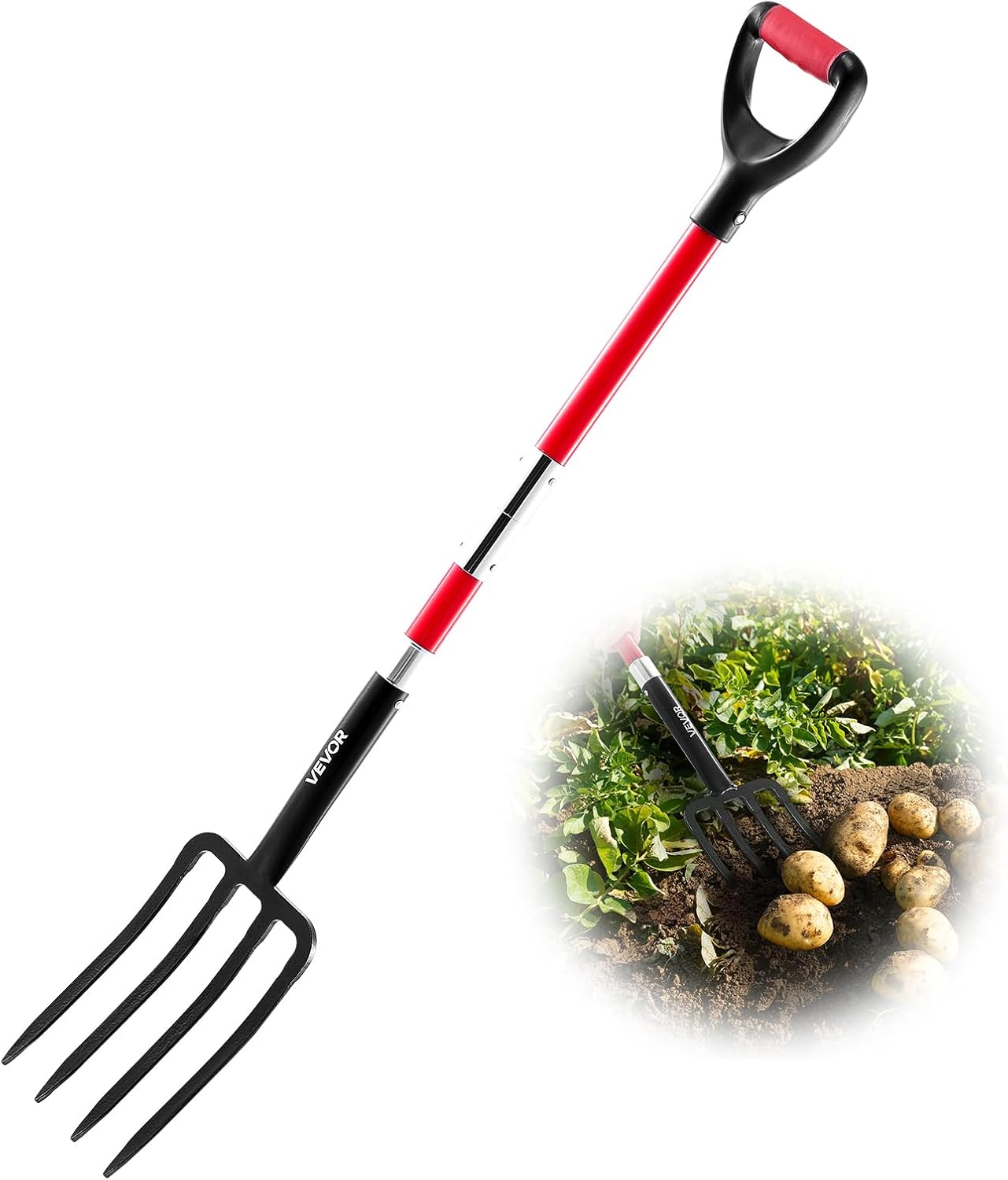
VEVOR 4-Tine Forged Digging Fork with 45" Fiberglass Handle
| Handle material | Fiberglass |
|---|---|
| Head construction | Forged steel |
| Tine count | 4 |
| Grip style | Y-shaped ergonomic |
This VEVOR digging fork pairs a forged steel 4-tine head with a fiberglass shaft and Y-grip to deliver a durable, comfortable garden tool for regular use. It is typically used for breaking compacted soil, lifting root crops, turning compost, and weeding in beds where leverage and tine strength matter. The reinforced connection between head and handle and the forged construction reduce wobble and the risk of bending under load, while the fiberglass handle resists swelling, rot, and cracking that wooden handles can suffer. The ergonomic Y-grip and non-slip surface make it easier to hold in wet conditions and help reduce hand fatigue during extended sessions. Because it is built for strength, the fork is best where robust leverage is needed rather than delicate work in tight pots. Assembly is straightforward and the 45-inch length gives good reach and control for most backyard tasks, though users who prefer very lightweight tools or need a short-handled fork for raised beds may find it larger than ideal.
Best for: Gardeners who prioritize a durable, low-maintenance tool that stands up to frequent digging and compost turning and want a comfortable grip for longer tasks.
Less Ideal for: People who mainly work in tight containers, raised beds, or want the lightest possible tool for very small-scale or delicate planting.
- Forged steel head and reinforced connection resist bending and wear under heavy use
- Fiberglass handle resists water damage and avoids swelling or cracking like wood
- Ergonomic Y-grip with non-slip surface reduces hand fatigue and improves control
- Versatile for digging, loosening soil, turning compost, and lifting root crops
- Relatively long and sturdy design is heavier than lightweight short-handled forks
Verdict: A rugged, low-maintenance digging fork built for gardeners who need reliable strength and a comfortable grip for regular heavy-duty soil work.
Choosing the Right Digging Fork for Garden: Key Factors to Consider
Tine Design and Strength
Tines are the working end of a digging fork, so thickness, shape, and how they are attached to the shaft determine how well the tool penetrates compacted soil and lifts root balls. Thicker, forged tines resist bending when you pry under sod or break up clay, while slightly tapered tines slide between roots without tearing them.
Look for tines that are solidly welded or forged into a single head rather than riveted plates that can loosen. The number of tines matters too: three or four tines offer a balance between soil release and lifting capacity. Wider spacing helps when working in heavier soils or compost, while closer tines are better for root work and finer soils.
Handle Comfort and Shape
Handle shape and material affect comfort during repetitive tasks. A comfortable grip reduces hand fatigue and helps maintain control when levering. Smooth wooden handles absorb shock and can be reshaped, while fiberglass or composite handles resist moisture and splitting.
Grip diameter, presence of a cushioned sleeve, and a secure end cap for two-handed leverage all matter. Consider the handle profile for your hand size and whether you prefer a straight shaft or a T/hook-style top for additional pulling leverage. A well-fitted grip is especially important if you spend long sessions turning compost or transplanting large perennials.
Shaft Length and Leverage
Shaft length determines how much leverage you have and whether you must bend your back while digging. Longer shafts increase leverage and reduce stooping, but can be heavier and harder to maneuver in tight beds. Shorter shafts are more precise for raised beds and container work.
Measure the shaft so you can stand upright while using the fork; a good fit reduces lower back strain. Also consider shaft stiffness: a shaft that flexes under load wastes energy and can make digging feel inefficient.
Corrosion Resistance and Finish
Digging forks are regularly exposed to moist soil, fertilizer, and compost, so surface finish and material choice affect how long the tool stays serviceable. Powder-coated or enamel finishes protect steel from rust, while stainless or well-treated steel resists pitting in acidic soils.
Also consider how easy it is to clean soil and sap from the tines after use. A simple finish that resists caking and allows wiping down will reduce maintenance and prolong life. Some finishes can be repaired with a light sanding and protective oil if chips occur.
Weight, Balance, and Intended Use
The ideal weight depends on your garden tasks. Heavier forks can break up tough ground and pry roots with less effort, but they fatigue you faster during extended use. Lighter forks are easier for raised beds and frequent changes of position, but may lack the mass to penetrate compacted clay.
Balance between head and handle affects control. A forward-weighted fork drives tines with less force from your arms, while a more balanced tool offers finer control. Match the fork's build to the job: heavy-duty ground preparation, general bed maintenance, or delicate root lifting.
Best Fork Types for Different Garden Soils
Soil texture changes how a fork performs. In heavy clay you want sturdy, slightly wider tines that resist bending and break clods rather than cutting through them. In sandy or loamy soils narrower tines work fine and help lift material cleanly without excessive soil retention.
For mixed beds or compost turning, consider forks with fewer, stronger tines that pass through dense material more easily. Where roots are dense, a fork with closely spaced tines will remove plants without shredding root systems.
- Clay soil: thicker, widely spaced tines for prying and breaking clods
- Loam and sand: narrower tines for clean lifting and less soil retention
- Compost and mulch: robust tines with some spacing to reduce clogging
Ergonomics to Reduce Back and Shoulder Strain
Proper posture matters when using a digging fork. Choose a shaft length that lets you work standing upright and use your legs and hips rather than bending at the waist. A comfortable grip and the option to use two hands for levering reduce stress on shoulders.
If you have mobility issues or a history of back pain, look for a shaft profile or handle style that supports a more vertical wrist angle and allows you to apply downward force without cranking your back.
- Select a shaft length appropriate for your height
- Use a two-handed technique for leverage when prying roots
- Take breaks and switch tasks to avoid repetitive-strain fatigue
Maintaining Your Digging Fork
Regular maintenance keeps a fork working longer. After each use, knock off loose soil and rinse if needed, then dry to limit corrosion. Sharpening is rarely required, but a light filing can remove burrs and help tines penetrate more easily.
Treat wooden handles with linseed oil or a similar preservative to prevent drying and splitting. Inspect welds and the head-to-shaft junction frequently; early detection of loosening or cracks stops small issues from becoming failures.
- Clean and dry after use to prevent rust
- Oil wooden handles seasonally
- Check head-to-shaft connections and repair promptly
Using a Digging Fork Properly
For breaking ground, place the tines into the soil and step down on the head or push with your foot while keeping the shaft vertical. Use a rocking or levering motion to lift and break the soil apart rather than forcing the fork sideways, which can bend tines.
When lifting root balls or perennials, insert the tines deep and lift with the shaft angled slightly back to cradle roots. For compost turning, work in layers and avoid overloading the fork to prevent bending.
- Drive tines straight in and use leg power for leverage
- Avoid twisting motions that stress tines
- Lift in manageable loads to protect both the tool and plant roots
Storage and Winter Care
Store forks in a dry, ventilated place and hang them to keep tines off the floor. If left outdoors, cover metal parts or bring the tool inside for winter to prevent accelerated corrosion. A quick wipe and light oiling before storage will keep metal surfaces in good condition.
When storing multiple tools, separate wooden handles to avoid contact dampening that causes mold or softening. Proper storage extends life and keeps tools ready for spring.
- Hang tools to avoid damp contact
- Wipe and lightly oil metal before long-term storage
- Keep wooden handles conditioned to prevent cracking
How We Chose the Best Digging Fork for Garden
We selected digging forks that perform in typical garden conditions, focusing on the attributes that matter most to home gardeners. Our evaluation prioritized tine strength and construction materials to ensure forks can penetrate compacted soil and lift roots without bending. We examined handle comfort and shaft length to reduce back strain and improve leverage during repetitive digging. Corrosion resistance and finish were included because forks spend time in damp soil and compost; a durable finish extends usable life. Weight and balance were assessed to make sure the tools feel controllable during prolonged use. We also considered maintenance needs and replaceability of parts when applicable. Items were excluded if they were designed only for decorative use, too small for standard beds, or built primarily for light indoor potting. We filtered out forks with unverified build claims or unusual designs that do not suit gardening tasks like turning compost or lifting perennial root balls. The resulting list focuses on tools that combine robust tines, ergonomic handling, and garden-ready durability.
FAQ
What tine spacing is best for lifting root-bound perennials?
Closer tine spacing usually performs better for lifting root-bound plants because it supports the root ball more evenly and reduces tearing. If your beds are mostly planted with perennials, look for forks with three or four tines placed relatively close together.
How long should the shaft be for someone 5 feet 8 inches tall?
A shaft length that lets you stand mostly upright while the tines reach the soil is best. For someone roughly 5 feet 8 inches, a medium-length shaft in the mid-range of common sizes is typically comfortable, but test posture if possible to avoid stooping.
Can a digging fork be used to mix compost and soil amendments?
Yes. A robust digging fork is excellent for turning and mixing compost because the tines pass through material with less surface area than a shovel. Use short, controlled lifts to blend materials without overloading the tool.
How do I prevent a fork from rusting when I store it outside?
Store the fork off the ground in a covered, ventilated spot and wipe the metal parts dry before storage. Applying a light coat of oil to metal surfaces helps block moisture and slows corrosion if the tool must be stored in less-than-ideal conditions.
Is a wooden handle better than fiberglass for garden forks?
It depends on priorities. Wooden handles absorb shock, feel warm in hand, and can be reshaped, while fiberglass resists moisture and splitting and is lower maintenance. Choose based on how much maintenance you want to perform and how the handle feels during extended use.
Final Verdict
Choosing the right digging fork comes down to matching tine strength, handle ergonomics, and shaft length to the types of soil and tasks you do most. Prioritize sturdy tines and a comfortable grip if you regularly work heavy ground, and favor lighter, well-balanced forks for raised beds and frequent transplanting. Consider corrosion resistance and maintenance needs as part of your long-term plan. With the right tradeoffs, a single garden-ready digging fork can perform years of tough work while protecting your back and plants.
