

Note: This article contains affiliate links. If you click on these links and make a purchase, I may earn a small commission at no extra cost to you. This helps support my research and content. Read my full affiliate disclosure here.
Gardenias are prized for glossy evergreen leaves and fragrant blooms, but they need the right feeding approach to look their best. Choosing the correct fertilizer for gardenia bush matters because gardenias prefer slightly acidic soil and a steady supply of the nutrients that support flowering and leaf color. In this guide we shortlisted seven top options suited to gardenia culture and typical garden situations. We evaluate each pick on nutrient balance, acidity impact, and how easy it is to apply and schedule so you can pick a feeding plan that fits your routine. Read on for practical guidance and the key traits that make certain fertilizers work well on gardenias.
Top Picks at a Glance
| Best Overall The best all-around choice for most situations | FOLLOWIN Gardenia Liquid Fertilizer 3-1-2, 21 fl oz |  |
| Best Quality Built to a higher standard if you want something more solid | Cz Garden 4-8-8 Azalea, Camellia, Gardenia & Evergreen Fertilizer (4 lb resealable pouch) |  |
| Best Value The sweet spot between price and what you get | TPS Nutrients Liquid Bush Fertilizer, 32 fl oz |  |
| Best Budget The cheapest option that still gets the job done reliably | ASTEVORA 8-4-8 Granular Fertilizer for Acid-Loving Plants (12 oz) |  |
| Highest Rated A top-rated pick with lots of positive feedback | HiThrive Gardenia Liquid Fertilizer, 16 oz (Makes 96 gal) |  |
| Most Popular A crowd favorite that many people choose with confidence | TPS Nutrients Gardenia Liquid Fertilizer, 8 oz |  |
| Best Seller A high-volume bestseller chosen again and again | Perfect Plants Gardenia Liquid Fertilizer (8 fl oz) |  |
FOLLOWIN Gardenia Liquid Fertilizer 3-1-2, 21 fl oz

| Item Form | Liquid |
|---|---|
| Target Species | Gardenia |
| Unit Count | 21 Fluid Ounces |
| Mixing Ratio | 1:100 to 1:300 |
This FOLLOWIN liquid fertilizer is aimed at improving foliage color and bloom set in gardenias by delivering a 3-1-2 NPK blend plus seven EDTA-chelated micronutrients. It is used as a root-zone drench rather than a foliar spray: measure one capful per 1.6 gallons (recommended dilution 1:100 to 1:300), mix, and pour onto the soil every other watering during the growing season. The calibrated cap and quick-dissolve formula make dosing consistent and easy, and the chelated iron, magnesium and other elements help correct common nutrient deficiencies in acidic soils. Practical benefits include low odor for indoor use, clear mixing with no residue, and enough concentrate to make roughly 48 gallons of feed. Important limitations are that it is a concentrated liquid so improper dilution can harm roots and it is targeted to acid-loving species rather than general-use feeding for all ornamentals.
Best for: Gardeners who prioritize measurable performance and predictable results for gardenias or other acid-loving shrubs and want a concentrated, easy-to-dose feed to correct nutrient deficiencies and boost blooms.
Less Ideal for: Casual plant owners who prefer an all-purpose fertilizer for mixed beds or those who do not want to measure and dilute a concentrate for each application.
- 3-1-2 NPK ratio tailored to gardenias for improved leaf color and bud formation
- Seven EDTA-chelated micronutrients (including iron and magnesium) remain plant-available in acidic soils
- Calibrated integrated cap simplifies repeatable dosing without extra measuring tools
- Quick-dissolve, low-odor liquid mixes clear and distributes evenly through the root zone
- One 21 fl oz bottle yields about 48 gallons of solution for multiple seasons of feeding
- Concentrated formula requires careful dilution to avoid root burn
- Designed specifically for acid-loving plants so it is less appropriate for neutral or alkaline-loving species
Verdict: Choose this concentrated 3-1-2 liquid fertilizer when you want a performance-focused, easy-to-dose feed that corrects micronutrient deficiencies and promotes richer foliage and better bud set in gardenias.
Cz Garden 4-8-8 Azalea, Camellia, Gardenia & Evergreen Fertilizer (4 lb resealable pouch)

| NPK | 4-8-8 |
|---|---|
| Intended plants | Azalea, Camellia, Gardenia & Evergreens |
| Package | 4 lb resealable pouch |
| Country of origin | USA |
This 4-8-8 blend is designed specifically for acid-loving shrubs and is a straightforward option for feeding gardenias and similar plants. You apply it as a granular fertilizer around the root zone according to package directions, and the resealable pouch makes measuring and storing the product convenient between feedings. The 4-8-8 NPK ratio supplies modest nitrogen with higher phosphorus and potassium to support flowering and root development, while added micronutrients help address common trace nutrient needs in acid soils. Because it is formulated for azaleas, camellias, gardenias and evergreens, it fits into regular spring and summer feeding schedules for established shrubs and can be used in beds or containers where acid pH is present. Limitations include that the package is relatively small for larger gardens and the label does not list guaranteed analysis beyond the NPK numbers shown here, so heavier feeders or users needing exact micronutrient percentages may prefer a larger or fully specified product. For targeted performance on gardenias, this is a practical, easy-to-use choice for routine feeding.
Best for: Gardeners who prioritize reliable flowering performance for gardenias and similar acid-loving shrubs and want a convenient, ready-to-use granular feed for regular maintenance.
Less Ideal for: Large-scale plantings or growers who need bulk quantities or a fully specified fertilizer analysis for precision nutrient management.
- NPK ratio tailored for acid-loving shrubs to support blooms and root strength
- Resealable 4 lb pouch for easy pouring and storage
- Includes micronutrients to address common trace element needs
- Manufactured in the USA
- Small 4 lb package may require multiple purchases for larger gardens
- Detailed micronutrient guaranteed analysis is not provided in the listing
Verdict: A compact, ready-to-use 4-8-8 granular fertilizer that makes it easy to boost blooms and root health in gardenias and other acid-loving shrubs.
TPS Nutrients Liquid Bush Fertilizer, 32 fl oz

| Brand | TPS NUTRIENTS |
|---|---|
| Item Form | Liquid |
| Specific Uses For Product | Plant Growth |
| Target Species | Shrubs and Bushes |
| Unit Count | 32 Fluid Ounces |
This 32 fl oz liquid bush fertilizer from TPS Nutrients is made to be a regular feed for hedges, ornamental shrubs, and landscape bushes. It supplies a balanced nutrient mix with added calcium, magnesium, and kelp in a nitrate-based liquid for quick uptake through roots and foliage. Typical use is straightforward dosing during the growing season and applying evenly to soil or as a foliar spray for faster absorption. Practical benefits include faster visible leaf growth, denser branching that helps maintain hedge shape, and support for root health that improves winter hardiness and resilience. The liquid format makes application and mixing predictable compared with slow-release granules, but it does require a regular schedule to maintain results. There is no detailed N-P-K breakdown on the label provided here, so gardeners who need exact nutrient ratios or specialized formulations may want additional information before committing. For everyday hedge maintenance this product delivers convenient, concentrated nutrition that helps keep shrubs full and vigorous.
Best for: Gardeners who want a simple, dependable liquid feed to keep hedges and ornamental shrubs consistently full and healthy and who prefer predictable, repeatable applications.
Less Ideal for: People seeking a precise N-P-K specification for tailored nutrient management or those who prefer one-time granular slow-release fertilizers for low-maintenance feeding.
- Liquid formula allows faster nutrient uptake and easy mixing for regular feeding
- Contains added calcium, magnesium, and kelp to support root strength and overall plant vigor
- Formulated specifically for shrubs and bushes to encourage denser branching and fuller foliage
- Concentrated 32 fl oz size suitable for multiple applications across a small to medium hedge
- No explicit N-P-K ratio listed in the provided product details, so exact nutrient balance is unclear
- Requires repeated applications during the season rather than a single slow-release treatment
Verdict: A reliable liquid feed that helps hedges and ornamental shrubs develop fuller foliage and stronger roots when used as a regular maintenance fertilizer.
ASTEVORA 8-4-8 Granular Fertilizer for Acid-Loving Plants (12 oz)

| Item Form | Granules |
|---|---|
| Specific Uses For Product | For acid-loving plants; enhances bloom vibrancy and acidifies soil |
| Application Method | Spread evenly to soil and water thoroughly |
| Target Species | azaleas, camellias, hydrangeas, magnolia trees, evergreens, blueberries, gardenias, rhododendrons |
ASTEVORA 8-4-8 is a small-format granular fertilizer designed for acid-loving plants such as gardenias, azaleas, hydrangeas, camellias, rhododendrons and blueberries. You apply it by sprinkling the granules around the plant canopy, lightly mixing into the topsoil and watering; the manufacturer recommends three feedings a year for steady results. The formula delivers primary nutrients (8% N, 4% P, 8% K) plus added magnesium, iron and manganese to help prevent yellowing in plants that prefer acidic soil. It is described as a slow-release, bio-solid product with beneficial microbes intended to support soil life and reduce the need for frequent applications. Practical benefits for gardenias include improved foliage color and more consistent blooms without complex dosing, and the 12 oz size is convenient for smaller beds or container-grown plants. Limitations are the small unit size for larger gardens and the need to follow safety precautions during handling because it is a concentrated granular fertilizer. For cautious gardeners, the clear directions and slow-release behavior make it straightforward to use safely.
Best for: Gardeners who want an easy, low-maintenance fertilizer specifically for gardenias and other acid-loving plants and prefer straightforward instructions and predictable, slow-release feeding.
Less Ideal for: Large-scale gardeners or those with many plants who need bulk coverage should choose a larger package or professional-grade supply.
- Balanced 8-4-8 NPK with added magnesium, iron and manganese to help prevent chlorosis in acid-loving plants
- Slow-release granules meant for three applications per year, reducing application frequency
- Formulated to acidify soil and support plants that prefer lower pH, like gardenias and hydrangeas
- Simple application method suitable for beginners: sprinkle, mix lightly, and water
- Only a 12 oz package which may be insufficient for larger gardens
- Contains concentrated fertilizer granules that require protective handling and care around pets and children
Verdict: A simple, slow-release granular fertilizer tailored to gardenias and other acid-loving plants for reliable color and bloom improvement with minimal fuss.
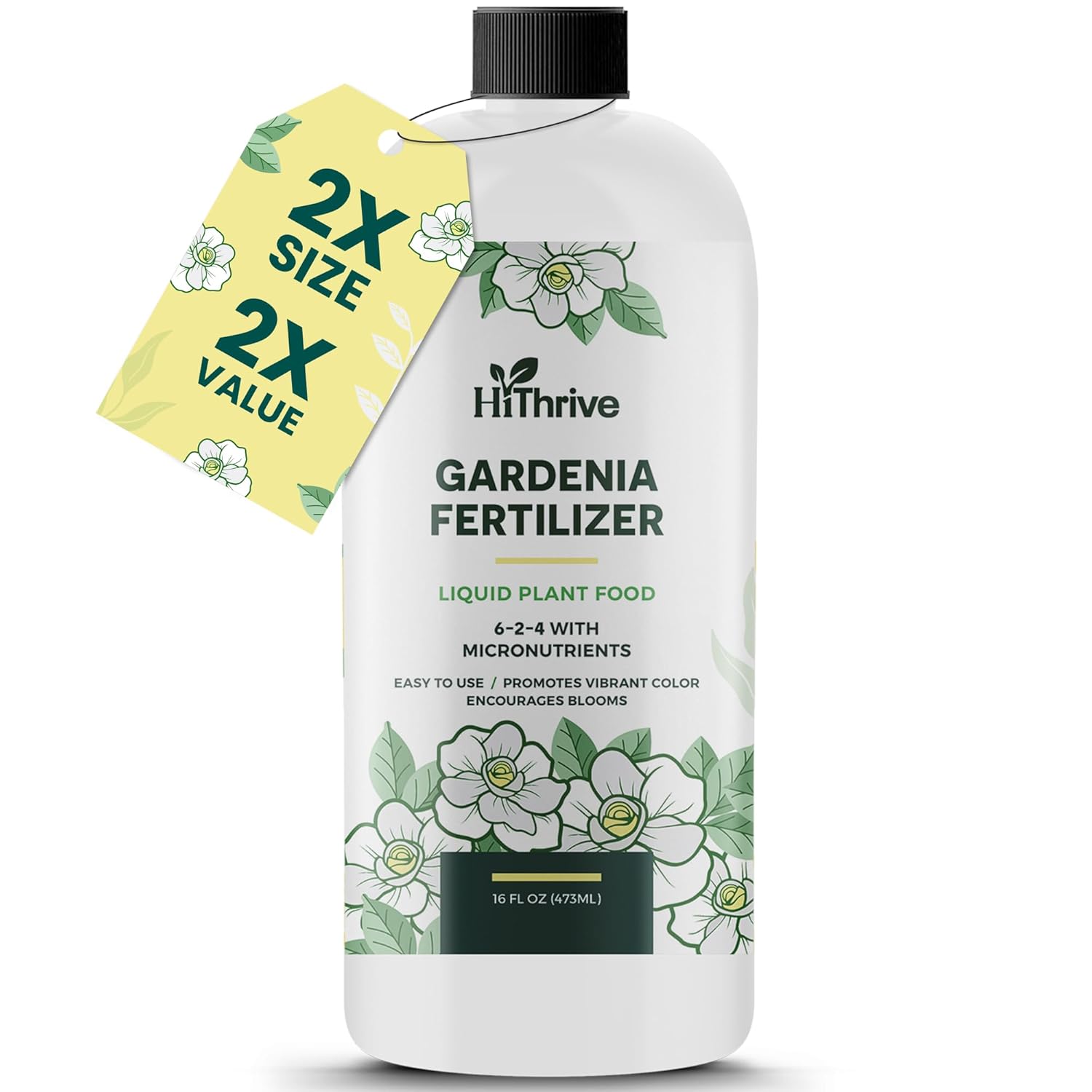
HiThrive Gardenia Liquid Fertilizer, 16 oz (Makes 96 gal)
| Item Form | Liquid |
|---|---|
| Coverage | Flowering Bushes and Indoor Plants |
| Liquid Volume | 16 fluid ounces |
| Mixing Ratio | 1 teaspoon per gallon of water |
HiThrive Gardenia Liquid Fertilizer is a water-soluble 6-2-4 formula designed for regular feeding of gardenias and similar flowering bushes. You mix the concentrate at the recommended rate (1 teaspoon per gallon for standard feeding or 2 teaspoons per gallon for deficiency correction) and apply with each watering either to the soil or by bottom-watering. The formula includes macro- and micronutrients such as calcium, magnesium, iron, copper, manganese and zinc, which helps address common yellowing and nutrient-deficiency symptoms while supporting leaf growth and flowering. The 16 oz bottle stretches to 96 gallons of feed, making it convenient for repeat applications across seasons. Because it is liquid and water-soluble, it dissolves quickly and is easy to measure for repeatable doses. Limitations are that it is a general-purpose acid-loving plant feed rather than a tailored slow-release product, so regular application is required to maintain results and users must follow dilution guidance to avoid overfeeding sensitive plants.
Best for: Gardeners who want a straightforward, measurable liquid feed to boost growth and flowering in gardenias and other acid-loving shrubs and who prioritize consistent, repeatable feeding over one-time products.
Less Ideal for: People who prefer a low-maintenance slow-release fertilizer or who only want an occasional feed; those seeking a product with built-in soil pH modification should look elsewhere.
- Balanced 6-2-4 NPK geared toward vigorous leaf growth and flowering
- Includes micronutrients (Ca, Mg, Fe, Cu, Mn, Zn) to correct common deficiencies
- Water-soluble concentrate mixes easily and allows precise dosing
- Yielding 96 gallons from a 16 oz bottle provides good coverage for multiple feedings
- Requires frequent application since it is a soluble feed rather than slow-release
- No pH adjustment information provided for particularly acid-sensitive soils
Verdict: A concentrated, easy-to-measure liquid feed that reliably promotes greener leaves and bigger blooms in gardenias when used as a regular part of feeding.
TPS Nutrients Gardenia Liquid Fertilizer, 8 oz

| Item Form | Liquid |
|---|---|
| Specific Uses For Product | Plant Food |
| Coverage | Medium |
| Target Species | Gardenia, Camellia, Rhododendron |
This 8 oz liquid fertilizer from TPS Nutrients is formulated specifically for gardenias, camellias, and rhododendrons and is meant to be mixed and applied to container or in-ground plants. It supplies balanced nutrition suited for acid-loving shrubs, which helps reduce leaf yellowing, promote glossy foliage, and encourage more abundant blooms when used as directed. The liquid form makes dosing and foliar feeding straightforward for small gardens or patio containers, and the product description emphasizes root health to improve water and nutrient uptake. Practical benefits include easy mixing for spot treatments and suitability for both outdoor beds and potted specimens. Limitations are the small 8 oz bottle size, which means frequent repurchase or multiple bottles are necessary for larger plantings, and the need to follow safety guidance to avoid skin or eye contact when handling concentrated solution. For gardeners who prefer targeted, plant-specific feeding, this fertilizer is convenient and focused, but those managing many shrubs may prefer a larger-volume option.
Best for: Gardeners growing gardenias in containers or small beds who want a targeted, plant-specific fertilizer and prefer a liquid feed they can control precisely.
Less Ideal for: People managing large landscapes or many shrubs who need bulk or slower-release feeding options.
- Formulated specifically for gardenias and other acid-loving shrubs
- Liquid concentrate is easy to mix and apply to containers or beds
- Claims to reduce leaf yellowing and promote glossy foliage
- Supports root development to improve water and nutrient uptake
- Small 8 oz bottle may not be economical for larger gardens
- Requires careful handling to avoid skin and eye contact
Verdict: A small, easy-to-use liquid fertilizer tailored to gardenias that delivers targeted nutrition for healthier foliage and better blooms.
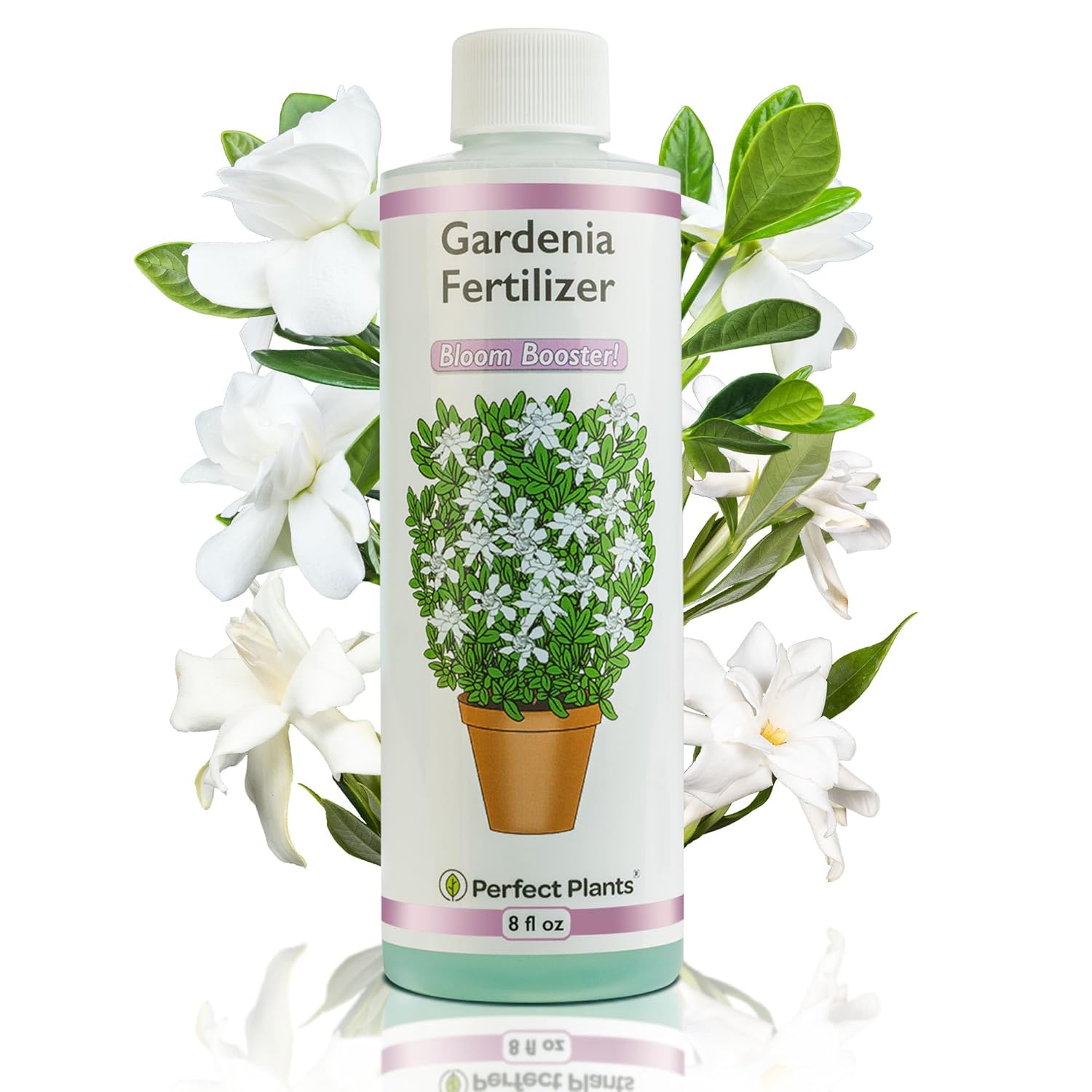
Perfect Plants Gardenia Liquid Fertilizer (8 fl oz)
| Item Form | Liquid |
|---|---|
| Application Method | Water |
| Target Species | Gardenia |
| Unit Count | 8 Fluid Ounces |
Perfect Plants Gardenia Liquid Fertilizer is a concentrated liquid plant food intended to boost blooms and deepen foliage color on gardenias and similar flowering shrubs. It is mixed with water and applied at each watering, delivering immediately available NPK nutrients plus trace elements like calcium, iron, and zinc. Typical use is regular feeding during the growing season at the package dilution of one teaspoon per gallon, which gardeners can adjust slightly for plant response. The resealable 8 ounce bottle is handy for indoor potted gardenias or small landscape specimens and keeps the concentrate usable between feedings. Practical benefits include quick uptake compared with granular feeds and a formula tailored to flowering plants to encourage more consistent blooms. Important limitations are the small bottle size for larger gardens and the need to follow dilution directions carefully to avoid overfeeding; it is not a slow-release product so you must maintain a feeding schedule. For balanced gardeners wanting a targeted liquid bloom booster, this is an easy-to-use option.
Best for: Gardeners who want an easy, targeted liquid feed to improve bloom frequency and foliage color on potted or small landscape gardenias and prefer a straightforward mix-and-water routine.
Less Ideal for: People managing large gardenia hedges or extensive beds who need long-lasting, low-maintenance feeding solutions or larger-volume fertilizers.
- Formulated specifically for flowering plants to encourage more consistent blooms
- Liquid concentrate provides nutrients that are quickly available to roots
- Includes trace elements (calcium, iron, zinc) in addition to NPK
- Resealable bottle preserves concentrate between uses
- Small 8 fl oz bottle may require frequent repurchasing for larger plantings
- Not a slow-release fertilizer so it requires regular applications to maintain effects
Verdict: A simple, targeted liquid bloom booster ideal for potted gardenias and small plantings that need quick nutrient uptake to improve flowering.
Choosing the Right Fertilizer for Gardenia Bush: Key Factors to Consider
Nutrient Ratio and Flowering
Gardenias respond to a specific balance of macronutrients. A fertilizer with moderate nitrogen supports healthy leaf growth while adequate phosphorus and potassium encourage bud formation and sturdy stems. Too much nitrogen can produce lush foliage at the expense of blooms, so looking for a formula tuned toward flower production will influence results.
When comparing products, check both the primary N-P-K numbers and whether any phosphorus or potassium is supplied in readily available forms. This factor matters because a product that promotes buds and holds blooms will be more valuable than one that only greens up leaves.
Acidifying Capacity and pH Management
Gardenias prefer slightly acidic soil, usually around pH 5.0 to 6.0. Some fertilizers include acidifying ingredients such as ammonium sulfate, sulfur, or chelated iron that help maintain or lower pH over time. If your soil trends neutral to alkaline, choosing a fertilizer with acidifying capacity can prevent chlorosis and improve nutrient uptake.
Relying solely on fertilizer to correct very high pH is not ideal, but consistent use of an acidifying feed paired with occasional pH testing will keep gardenias healthier. Consider whether the product will be used in containers or in-ground, as container media often drift toward higher pH faster and may benefit more from acidifying feeds.
Release Type and Feeding Frequency
Fertilizers come as water-soluble, granular controlled-release, spikes, and liquid concentrates. Water-soluble feeds give rapid uptake, which is useful for correcting deficiencies or pushing blooms quickly. Controlled-release granules and spikes deliver nutrients gradually and reduce the number of applications needed each season.
Decide how hands-on you want to be. Frequent liquid feeding can produce quick responses but requires regular attention. Slow-release options lower maintenance and reduce the risk of overfeeding, which is helpful for gardeners who prefer a set-and-forget approach or who manage many plants.
Application Method and Garden Situation
Where you grow gardenias-containers, raised beds, or mixed borders-shapes the best fertilizer form. Containers benefit from water-soluble formulas or timed-release granules designed for potting mixes because media drain faster and nutrients leach out. In-ground plantings can take advantage of granular and slow-release choices that work with soil biology.
Also consider how the fertilizer is applied. Granules are easy to broadcast or work into the surface, while liquids are best for foliar or drench feeding. If you need a low-labor option, choose a form that matches your garden setup to avoid wasted product and uneven feeding.
Salt Index and Root Safety
Gardenias are somewhat sensitive to salts and root injury. High-solubility fertilizers with high salt indices increase the risk of root burn, especially in containers where salts concentrate. Look for products with lower risk of salt buildup or follow recommended dilution rates to protect roots.
This factor matters because repeated salt stress can cause leaf scorch, tip burn, and reduced flowering. If you irrigate irregularly or have hard water, prefer feeds designed to minimize salt accumulation and flush containers periodically to prevent buildup.
Micronutrients and Iron Availability
Aside from macronutrients, micronutrients like iron, manganese, and magnesium influence leaf color and flower set. Iron availability is especially important in slightly alkaline soils where gardenias often show chlorosis. Chelated iron or formulations that include accessible micronutrients help maintain deep green foliage and prevent yellowing between veins.
Consider whether your soil tests show micronutrient deficiencies. Choosing a fertilizer that supplies or preserves iron and related trace elements reduces the need for separate corrective treatments and supports consistent blooming.
Feeding Schedule for Peak Bloom
Establishing a feeding rhythm is key to getting regular blooms. For actively growing gardenias, a common approach is alternating a balanced, acidifying feed every four to six weeks with lighter maintenance applications. If you use a water-soluble fertilizer, plan for more frequent, diluted feedings during the growing season. For slow-release products, follow the label interval but consider a light midseason liquid boost if blooms lag.
Monitor plants after feeding. Leaves that suddenly yellow or show burned tips can indicate over-application. Adjust the schedule rather than doubling down on fertilizer when results are slow; timing and consistency often beat heavier one-off doses.
- Start feeding in early spring as new growth appears and taper in late summer.
- Container-grown gardenias usually need more frequent feeding than in-ground specimens.
- Pause or reduce feeding in colder months when growth slows.
Soil Testing and pH Troubleshooting
Before committing to a long-term feeding program, test your soil or potting mix pH. A simple pH meter or test kit reveals whether acidity is within the preferred range. If pH is too high, an acidifying fertilizer helps, but severe alkalinity may require soil amendments such as elemental sulfur or peat-based mixes when repotting.
If leaves show iron chlorosis-yellowing between veins while veins remain green-target iron availability. Some fertilizers include chelated iron while other corrective products are applied as foliar sprays or soil drenches. Regular pH checks during the growing season prevent gradual drift toward alkalinity.
- Test pH in spring and midseason for containers; test less frequently for well-established beds.
- Use acidifying feeds progressively and retest pH rather than applying aggressive corrective treatments repeatedly.
Working with Containers Vs In-Ground Gardenias
Container gardenias face faster nutrient depletion and pH changes than in-ground plants. Choose readily available feeds for pots, and flush containers occasionally to remove salts. Potting mixes that include organic matter help buffer pH and supply slow-release nutrients between feedings.
In-ground gardenias benefit from amendments that improve organic content and water retention. A balanced program that combines occasional spring incorporation of organic matter with season-long feeding will keep shrubs vigorous without over-relying on soluble fertilizers.
- Repot containers every two to three years with fresh acidic potting mix and restart a moderate feeding program.
- For in-ground plantings, top-dress with compost in spring and use granular feeds to maintain nutrition.
Organic Vs Synthetic Options
Organic fertilizers release nutrients more slowly and also contribute to soil structure as microbes break them down. They are gentler on roots and reduce the risk of salt buildup. Synthetic fertilizers provide predictable nutrient ratios and rapid correction of deficiencies, which can be useful when blooms are delayed or chlorosis appears.
Choosing between organic and synthetic approaches depends on how quickly you need results and how much time you spend on soil management. Many gardeners combine both strategies-using organic soil amendments for long-term health and occasional synthetic boosts when plants need a fast response.
- Organic feeds improve soil biology but may show results more slowly.
- Synthetic feeds allow precise control of N-P-K and pH-impacting components.
Common Application Mistakes to Avoid
Over-application is a frequent error that causes leaf scorch and reduced flowering. Always follow label rates and dilute concentrates as recommended. Applying granular fertilizers too close to the trunk or stem can also stress roots; distribute evenly around the root zone and incorporate lightly if the soil surface is compacted.
Ignoring water quality can undermine feeding efforts. Hard water raises pH in containers over time. When possible, use rainwater or slightly acidic irrigation for container gardenias and flush pots periodically to remove excess salts.
- Do not apply fertilizers to dry soil; water first to reduce root stress.
- Avoid weekly high-strength applications; consistent moderate feeding is safer.
How We Chose the Best Fertilizer for Gardenia Bush
We focused on the product attributes that directly affect gardenia health and flowering. Selection criteria emphasized nutrient formulation, specifically the ratio of nitrogen, phosphorus, and potassium plus the presence of acidifying elements such as ammonium or sulfur that help maintain the low pH gardenias prefer. Release profile was another central filter, because fast-release fertilizers give a quick green-up while controlled-release formulas provide steady nutrition and reduce application frequency. Solubility and ease of application mattered for gardeners who feed in pots or beds; water-soluble options offer quick correction while granules and spikes suit lower-maintenance routines. We also assessed salt index and risk of root burn to avoid products that stress sensitive roots, plus any additional micronutrients known to aid flower set and leaf color. We excluded broad, generic garden fertilizers with no acidifying component and products lacking clear nutrient labeling. Final choices reflect a balance of acidification effect, feeding cadence, and safety for container and in-ground gardenias.
FAQ
How often should I feed a gardenia bush?
Feeding frequency depends on fertilizer type. Water-soluble feeds are typically applied every two to four weeks during the growing season, while slow-release granules often only need application every three to four months. Adjust frequency for container plants, which usually need more regular feeding.
Can I use a generic houseplant fertilizer on gardenias?
Generic fertilizers may green up leaves but might not provide the acidifying effect or correct N-P-K balance gardenias prefer. If using a general feed, choose one with lower nitrogen and supplemental acidifying components or pair it with regular pH checks to avoid chlorosis.
What signs indicate my gardenia needs fertilizer?
Look for reduced flowering, pale or yellowing leaves, and slow new growth. These symptoms often point to nutrient shortages or pH-related iron unavailability. Confirm with a soil test before increasing fertilizer intensity to avoid overfeeding.
Is it safe to feed gardenias in winter?
Gardenias typically slow growth in cooler months, so feeding can be reduced or paused during dormancy. Applying fertilizer when plants are not actively growing risks salt buildup and root stress. Resume regular feeding in spring when new growth starts.
Should I use foliar feeding for quick correction?
Foliar feeding can supply micronutrients like iron fast and often helps correct mild deficiencies quickly. It is a short-term fix and does not replace a balanced soil feeding program. Use foliar sprays as a supplement when leaves show specific symptoms.
How does water quality affect fertilizer choice?
Hard water can raise container media pH and reduce nutrient availability for acid-loving plants. If you have hard water, consider acidifying fertilizers or occasional use of rainwater. Flushing containers periodically helps remove accumulated salts from irrigation.
Final Verdict
Prioritize a fertilizer that supports flowering while helping maintain the slightly acidic soil gardenias require. Balance nutrient ratio, acidifying capacity, and release profile with your garden situation-containers usually need more frequent, soluble feeds while in-ground shrubs do well with slow-release options and organic amendments. Watch for signs of overfeeding and for pH-driven nutrient deficiencies, and adjust your program rather than increasing rates. With a feeding plan that matches your maintenance style and the plant's acidity needs, you can reliably encourage fuller blooms and healthier evergreen foliage.
