

Note: This article contains affiliate links. If you click on these links and make a purchase, I may earn a small commission at no extra cost to you. This helps support my research and content. Read my full affiliate disclosure here.
Growing peppers in containers concentrates both opportunity and responsibility. Potted soil holds limited nutrients and dries faster than garden beds, so the right fertilizer keeps plants vigorous, flowering, and setting fruit through the season. This guide covers seven well-chosen fertilizer options suited to peppers in pots, with picks that favor steady feeding, straightforward application, and nutrient profiles that support blooms and fruit development. Below you will find short product summaries plus explanation of why each approach works in a container setting. We evaluate nutrient ratios, delivery method, ease of use, and how forgiving each fertilizer is for busy container growers.
Top Picks at a Glance
| Best Overall The best all-around choice for most situations | Leaves & Soul Pepper Liquid Fertilizer 5-1-5 Concentrate, 8 oz |  |
| Best Quality Built to a higher standard if you want something more solid | Greenway Biotech Pepper & Herb Fertilizer 11-11-40 Powder, 1 lb | 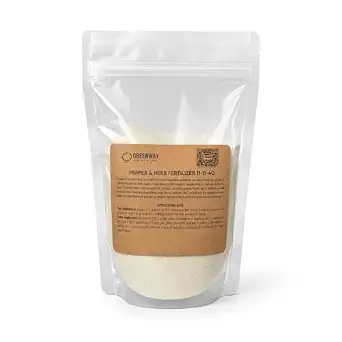 |
| Best Value The sweet spot between price and what you get | Osmocote Smart-Release Plant Food Plus Outdoor & Indoor, 1 lb |  |
| Best Budget The cheapest option that still gets the job done reliably | Jobe's Organic Tomato Fertilizer Spikes 6-18-6, 54 Spikes (3-Pack) |  |
| Highest Rated A top-rated pick with lots of positive feedback | Miracle-Gro Water Soluble All Purpose Plant Food, 1.5 lb |  |
| Most Popular A crowd favorite that many people choose with confidence | Miracle-Gro Water Soluble All Purpose Plant Food, 3 lb |  |
| Best Seller A high-volume bestseller chosen again and again | TPS NUTRIENTS Indoor Plant Food Liquid Fertilizer, 8 fl oz |  |
Leaves & Soul Pepper Liquid Fertilizer 5-1-5 Concentrate, 8 oz

| Unit Count | 8 Fluid Ounces |
|---|---|
| Item Form | Granules, Liquid |
| Application Method | Dilute with water and apply to plants |
| Target Species | pepper |
Leaves & Soul Pepper Liquid Fertilizer is a concentrated 5-1-5 liquid plant food made for peppers at all growth stages. You dilute 2 tablespoons per gallon of water and apply the solution to the soil every 2 to 4 weeks (or monthly during cooler months). The balanced NPK supports foliage and fruiting while added micronutrients help overall vigor. Its liquid format absorbs quickly into the root zone, which is convenient for potted peppers where nutrient availability can fluctuate. The small 8 oz bottle is easy to store and makes measuring simple for small container gardens or a few patio plants. Limitations to plan for: the bottle is concentrated so careful measuring is required to avoid overfeeding, and an 8 oz container will only serve a modest number of plants before needing replacement. Also, while labeled for peppers, gardeners should still monitor soil moisture and drainage because feeding cannot compensate for poor water management. For container growers who want a straightforward, pepper-focused feed, this product is an easy-to-use option.
Best for: Ideal for hobbyists with a few potted pepper plants or small patio gardens who want a simple, pepper-specific feeding routine and predictable results.
Less Ideal for: Not the best choice for large vegetable plots or growers who prefer slow-release granular fertilizers and want a longer-lasting supply.
- Balanced 5-1-5 NPK suited to both vegetative growth and fruiting of peppers
- Concentrated liquid formula mixes easily and is fast absorbing for quick root uptake
- Clear dilution instructions (2 tbsp per gallon) make dosing straightforward for container use
- Compatible with indoor and outdoor potted peppers and other garden vegetables
- Small 8 oz bottle provides limited supply for multiple or large containers
- Concentrated formula requires careful measuring to avoid over-application
Verdict: A compact, easy-to-mix liquid concentrate that delivers pepper-focused nutrition for small container gardens.
Greenway Biotech Pepper & Herb Fertilizer 11-11-40 Powder, 1 lb

| Item Form | Powder |
|---|---|
| Specific Uses For Product | Hydroponic |
| Coverage | peppers and herbs |
| Liquid Volume | 200 gallons |
| Mixing Ratio | 0.5 Pounds per 100 Gallons of Water |
This 11-11-40 powder from Greenway Biotech is built to push flowering and fruit set on hot and sweet peppers while also enhancing essential oil production in herbs. It dissolves fully in room-temperature water so you can use it as a soil drench, foliar spray, or in hydroponic systems without clogging emitters. The formula includes EDTA-chelated iron, manganese, zinc and copper plus boron and molybdenum, which helps keep micronutrients available across a broad pH range and reduces the chance of lockout. Directions cover side-dressing, foliar feed, and reservoir dosing so it adapts to backyard beds, containers, and NFT or DWC setups. Practical benefits include a high potassium level to support capsaicin and fruit development and a concentrated powder format that treats many gallons per pound. Important limitations are that accurate dosing requires a scale for small-plant applications and that a single 1 lb package is intended for focused use rather than season-long feeding of large plantings.
Best for: Serious pepper growers focused on maximizing fruit size, heat, and yield who use targeted feeds or run hydroponic systems and want a performance-minded, pH-tolerant nutrient.
Less Ideal for: Casual gardeners who prefer low-effort granular feeds or pre-mixed liquid fertilizers intended for whole-season broadcasting across very large beds.
- High potassium ratio (40%) that supports flowering, fruit development, and capsaicin production in hot peppers
- EDTA-chelated micronutrients (Fe, Mn, Zn, Cu) plus boron and molybdenum to reduce nutrient lockout across pH 4–9
- 100% water soluble powder that dissolves cleanly for soil drench, foliar spray, and hydroponic systems without clogging
- Concentrated formula stretches a small package to treat large volumes of water for targeted feeding
- Requires precise measuring (scale or careful teaspoons) for correct dilution on small plants
- 1 lb package may be small for growers with many plants or multiple growing seasons
Verdict: Choose this concentrated, chelated 11-11-40 powder when you want a performance fertilizer that boosts pepper flowering, fruit set, and capsaicin production in soil or hydroponic systems.
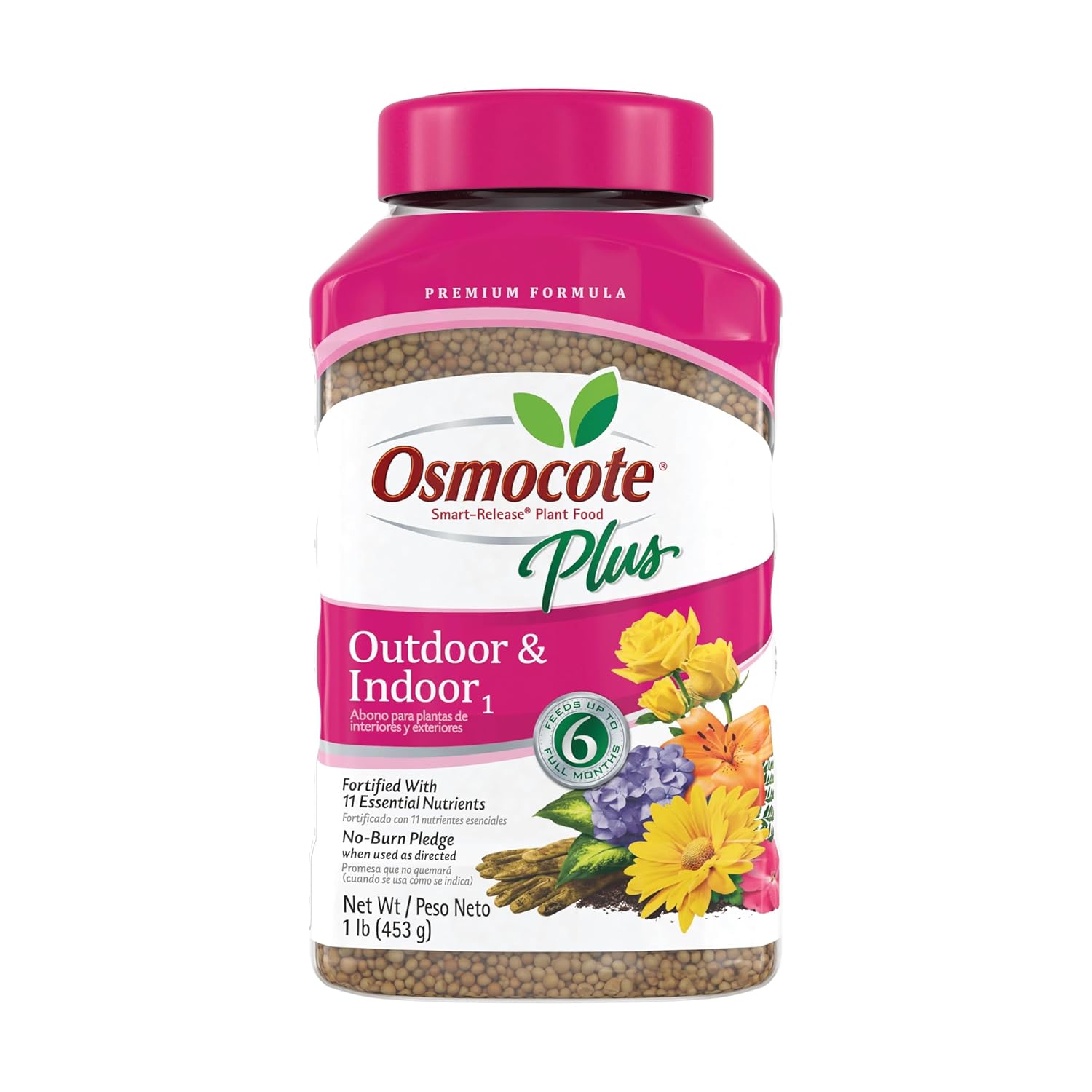
Osmocote Smart-Release Plant Food Plus Outdoor & Indoor, 1 lb
| Item Form | Granules |
|---|---|
| Specific Uses For Product | Plant Food |
| Application Method | sprinkle around the base and work into the soil |
| Unit Count | 16 Ounce |
Osmocote Smart-Release Plant Food Plus is a resin-coated granular fertilizer designed to deliver steady nutrition to a wide range of plants for up to six months from a single application. You apply it by sprinkling the recommended scoop into the top inch or so of potting mix for containers or around plants in garden beds, then watering to activate the coating. The product contains 11 essential nutrients and is formulated to release based on soil temperature, which helps reduce overfeeding and supports consistent bloom and foliage performance in hanging baskets. Its no-burn pledge makes it easy to use at the recommended rates for mixed annuals, trailing plants, and container veggies. Limitations are that coverage is modest from a 1 lb. container so frequent use on many large baskets will require buying more, and release timing still depends on temperature so plants in cool, shaded spots may receive nutrients more slowly than those in warm sun.
Best for: Gardeners who prioritize steady, low-maintenance feeding for hanging baskets and containers and want consistent bloom and foliage without frequent fertilizing.
Less Ideal for: Those who need immediate, short-term nutrient boosts or precise liquid feeding schedules for plants that demand fast correction.
- Resin-coated granules provide controlled release of nutrients for up to six months
- Formulated with 11 essential nutrients suitable for a wide variety of plants
- No-burn pledge when used as directed reduces risk of damaging roots in containers
- Simple sprinkle-and-water application works well for hanging baskets and pots
- 1 lb container covers a limited area so multiple baskets will need additional product
- Release rate depends on temperature so nutrient delivery can be slower in cool conditions
Verdict: An easy, low-maintenance slow-release fertilizer that keeps hanging baskets fed for months with minimal effort.
Jobe's Organic Tomato Fertilizer Spikes 6-18-6, 54 Spikes (3-Pack)

| Item Form | Sticks |
|---|---|
| Specific Uses For Product | Root Development |
| Application Method | Insert spikes around the plants |
| Mixing Ratio | 6:18:6 |
These Jobe's Organic fertilizer spikes are pre-measured, slow-release sticks intended to be pushed into the soil around tomato and other vegetable plants to feed roots steadily for up to eight weeks. You insert spikes at planting or early season and they release a 6-18-6 N-P-K blend plus secondary minerals to support root development, flowering, and fruit set without mixing or liquid feeding. For potted peppers the spikes provide an easy, low-mess way to maintain consistent nutrition between feedings and reduce the need for frequent soluble fertilizers. The main benefits are convenience and predictable nutrient delivery in small containers or individual pots. Limits to be aware of are the fixed N-P-K ratio and release period, which may not match every stage of pepper growth, and that spikes are single-use so you must reapply during a long season. Also placement matters in pots to avoid crowding roots or touching stems. For gardeners on a budget these come in a large multi-pack that stretches across many plants, making them a practical choice for maintaining pepper plants in pots with minimal effort.
Best for: Ideal for budget-minded gardeners who want an easy, low-maintenance way to feed individual pepper plants in pots without frequent liquid fertilizing.
Less Ideal for: Not the best choice for growers who prefer custom nutrient schedules, fertigation, or continuous soluble feeding across mixed plantings.
- Slow-release sticks deliver steady feeding at the root zone for up to eight weeks
- Pre-measured, mess-free application requires no mixing or measuring
- Includes secondary minerals (calcium, magnesium, sulfur) in addition to N-P-K
- Large 54-spike pack covers multiple potted peppers or seasons
- Fixed 6-18-6 ratio may not suit all growth stages or specific nutrient needs
- Single-use spikes require periodic reapplication during long growing seasons
Verdict: A convenient, low‑mess slow‑release option that stretches a budget while keeping potted pepper plants steadily fed.
Miracle-Gro Water Soluble All Purpose Plant Food, 1.5 lb

| Item Form | Powder |
|---|---|
| Application Method | Watering Can |
| Target Species | For all flowers, vegetables, trees, shrubs and houseplants |
| Mixing Ratio | 24-8-16 |
Miracle-Gro Water Soluble All Purpose Plant Food is a powder concentrate you mix with water to give a quick nutrient boost to flowers, vegetables, houseplants, shrubs and trees. It is typically dissolved in a watering can or used with a compatible garden feeder to soak soil at the base of plants, delivering nitrogen-heavy nutrition that shows effects faster than granular fertilizers. Notable features include an easy scooping method for indoor and outdoor dosing, compatibility with containers and in-ground planting, and clear directions for feeding every one to two weeks. In practice this makes the product a convenient option when you want visible growth and greener foliage quickly, and the 1.5 lb container covers roughly 600 sq. ft. Important limitations are that it is a fast-release, high-nitrogen formula best used as a regular quick feed rather than a long-term slow-release solution, and it requires careful measuring to avoid overfeeding. For routine maintenance combine with good watering and follow the label to avoid nutrient imbalance.
Best for: Buyers who prefer proven, easy-to-use feeding routines and want noticeable growth quickly for a variety of garden and houseplants, guided by established usage directions and broad user experience.
Less Ideal for: Gardeners seeking a single, long-term slow-release solution or those who prefer organic or low-nitrogen fertilizers for sensitive plantings should consider alternative products.
- Water-soluble powder starts working quickly at the roots when mixed and applied
- Clear, simple dosing for indoor and outdoor use with included scoop guidance
- Suitable for a wide range of plants including vegetables, flowers, shrubs and houseplants
- Covers a large area from a small container (about 600 sq. ft. per 1.5 lb)
- Fast-release formula means benefits are short-term compared with slow-release granular fertilizers
- Requires precise measuring and regular reapplication to avoid overfeeding
Verdict: A reliable, fast-acting water-soluble plant food for gardeners who want easy, repeatable feeding and quick visible results.
Miracle-Gro Water Soluble All Purpose Plant Food, 3 lb

| Item Form | Powder |
|---|---|
| Application Method | Mix with water in a watering can |
| Fertilizer Analysis (N‑P‑K) | 24-8-16 |
| Unit Count | 48 Ounce |
| Coverage | Feeds approximately 1,200 sq. ft. |
Miracle‑Gro Water Soluble All Purpose Plant Food is a powdered NPK 24‑8‑16 formula that dissolves in water to give plants a quick nutrient boost. You mix measured scoops into a watering can and apply to the soil at the base of plants every 7–14 days for outdoor use or every 14 days for houseplants. Notable features include a high nitrogen content for leafy growth, compatibility with containers and in‑ground beds, and guidance for use with a Miracle‑Gro Garden Feeder for larger areas. In practical terms this is a fast‑acting feed that encourages bigger, greener foliage and works well in regular maintenance of perennials like hostas. Limitations are that it is a fast‑release fertilizer rather than a slow‑release option, so it requires regular reapplication and careful measuring to avoid overfeeding. Also, the 24‑8‑16 balance is geared toward vegetative growth, so it is not optimized if you want to prioritize flowering or bloom boosting.
Best for: Buyers who want a reliable, fast‑acting feed to maintain lush, leafy perennials and container plants and who value proven products with broad user endorsement.
Less Ideal for: Gardeners seeking a single, long‑lasting granular fertilizer or a bloom‑focused formula should consider alternative slow‑release or high‑phosphorus products.
- Water‑soluble powder mixes easily for quick uptake by roots
- High nitrogen formula promotes robust leafy growth ideal for shade plants
- Clear mixing and application instructions for both indoor and outdoor use
- Suitable for containers and in‑ground gardens and compatible with garden feeders
- Requires frequent applications so it is not a low‑maintenance, slow‑release option
- High nitrogen ratio is less suitable when the primary goal is more flowers than foliage
Verdict: A fast‑acting, water‑soluble fertilizer that reliably produces bigger, greener hosta leaves when used as directed.
TPS NUTRIENTS Indoor Plant Food Liquid Fertilizer, 8 fl oz

| Item Form | Liquid |
|---|---|
| Specific Uses For Product | Plant Food |
| Application Method | Watering can |
| Mixing Ratio | 2:1 (oz/gallon) or 1:64 (tbsp/gallon) |
TPS NUTRIENTS Indoor Plant Food is a concentrated liquid fertilizer made for regular use with houseplants. You mix the measured dose into water and apply it with your usual watering can; the label gives an easy mixing ratio for household use. Its kelp-enriched formula is pitched at improving leaf color, encouraging steady new growth, and supporting root health, so expect glossier foliage and more frequent leaf production when plants are fed consistently. The 8 fl oz bottle is portable and fits on a plant shelf or utility area, and the liquid form dissolves readily for even application. It is intended for medium coverage and labeled as gentle for weekly feeding, which simplifies care for busy owners. Important limitations are that this is a small bottle meant for regular top-up feedings rather than long-term bulk use, and it assumes you will follow dilution directions to avoid overfeeding. Keep it away from children and pets and avoid skin or eye contact when handling.
Best for: Plant owners who want a simple, low-effort weekly fertilizer to keep indoor foliage vibrant and encourage steady new leaf growth. Good for people who prefer an easy liquid mix applied during regular watering routines.
Less Ideal for: Gardeners needing a bulk or multi-season fertilizer for outdoor beds or large collections should consider larger-capacity or specialized products instead.
- Liquid concentrate mixes easily for even application with a watering can
- Kelp-enriched formula aimed at improving foliage color and encouraging new growth
- Gentle enough for weekly feedings according to product guidance
- Clear mixing instructions for home use
- Small 8 fl oz volume limits how many plants you can feed before repurchasing
- Not formulated or labeled for outdoor or large-scale garden use
Verdict: A convenient kelp-enriched liquid concentrate that makes weekly feeding easy for anyone who wants healthier, more vibrant indoor foliage.
Choosing the Right Fertilizer for Peppers in Pots: Key Factors to Consider
Nutrient Ratio and Timing
Peppers grown in pots benefit from fertilizer programs that change emphasis through the season. Early on, moderate nitrogen supports leaf and stem growth so plants can build a framework. As buds form, higher phosphorus and potassium help promote flowering and convert flowers to healthy fruit. A single product that offers a balanced N-P-K for all stages can work if applied conservatively, but many container gardeners use an initial maintenance ratio followed by a bloom or fruiting formula.
Understanding the label numbers lets you adjust frequency and concentration. Because pots contain limited soil, feed intervals and strength matter more than in-ground crops. Look for fertilizers with clear guidance for container use so you can shift timing without guesswork.
Delivery Method and Application Frequency
How the fertilizer is delivered affects convenience and plant response in containers. Slow-release granules provide a steady supply and reduce the chance of sudden nutrient spikes, which can be helpful for busy gardeners or when watering is inconsistent. Water-soluble and liquid feeds give fast, measurable results but require regular application and accurate dilution to avoid overfeeding. Foliar feeds can correct minor deficiencies quickly but are a supplement, not a replacement for root feeding.
Choose a delivery method that fits how often you water and how closely you monitor plants. If you prefer low-maintenance care, select a slow-release option with a proven release span. If you want rapid correction or to push fruiting, a soluble feed used on a consistent schedule can deliver targeted results.
Salt Accumulation and Drainage
Salt buildup is a common container-growing hazard. Fertilizers add soluble salts that can concentrate near roots as water evaporates and drains. High salt levels cause leaf-tip burn, reduced water uptake, and poor fruit set. Products with high salt indices or unclear application instructions raise the risk in smaller pots.
Monitor pots for white residue on the soil surface and flush containers periodically by watering thoroughly until water runs freely from drainage holes. Selecting lower-salt formulations or alternating feeds with plain water flushes helps prevent gradual accumulation. Also consider pot size and media choice because larger volumes of growing medium dilute salts more effectively.
pH Sensitivity and Micronutrients
Peppers prefer a slightly acidic to neutral pH, and pH affects nutrient availability. Some fertilizers alter substrate pH over time, which can lock out micronutrients like iron, zinc, and manganese that are crucial for healthy foliage and fruit development. Fertilizers that include chelated micronutrients or are formulated with pH-stable ingredients help reduce the need for extra interventions.
If you notice yellowing between veins or slow growth despite regular feeding, check substrate pH and consider a feed that supplies missing micronutrients. Regular, light applications of a balanced fertilizer often prevent micronutrient deficiency in container-grown peppers.
Concentration Control and Ease of Measurement
Because containers have limited soil, small dosing errors are magnified. Fertilizers that come with measuring tools and clear container-specific mixing rates reduce the risk of over-concentration. Conversely, vague instructions or recommendations only for in-ground use increase the chance of fertilizer burn or nutrient imbalance.
Look for labels with container-size guidance or products that list grams or teaspoons per gallon or liter. Liquid concentrates with measuring caps, pre-measured sachets, or timed-release granules designed for container volumes make routine feeding simpler and safer for peppers in pots.
Compatibility with Watering Practices
How you water influences fertilizer behavior. Frequent shallow watering can keep salts near the soil surface, whereas deeper watering helps leach excess salts. Some fertilizers work better with light, frequent applications while others are intended for less frequent, heavier watering. Consider if you hand-water daily, use drip systems, or depend on rain under cover, and pick products whose instructions align with that routine.
Also think about tap water quality. Hard or high-alkaline water can interact with fertilizers, altering pH and leaving mineral deposits. When water quality is variable, choose forgiving fertilizers and incorporate periodic leaching into your care routine.
Why Container Peppers Need Different Feeding
Potted peppers sit in a confined volume of media that warms and dries faster than garden soil. Nutrients are used up quickly and can be lost with frequent watering. That concentrated environment makes timely feeding and appropriate fertilizer selection essential for steady growth and fruiting.
Container-specific feeds are formulated or dosed to reduce the chance of nutrient spikes and salt stress. They help keep plants productive without frequent corrective measures.
- Smaller root zone equals faster nutrient depletion
- Drainage and leaching happen more often in pots than beds
- Container feeds account for limited media volume and higher feeding frequency
Feeding Schedules for Different Growth Stages
Match feeding to the plant stage: light maintenance applications when seedlings develop true leaves, then switch to bloom-friendly formulations as buds form. For slow-release options, pick a product with a release period that covers the active growth window so you do not need to reapply at critical moments.
When using soluble fertilizers, establish a routine: for example, a weak feed every one to two weeks early on and a slightly stronger schedule when fruiting increases demand. Adjust frequency based on plant vigor and signs of deficiency or excess.
- Seedling to vegetative: moderate nitrogen, low-to-moderate frequency
- Pre-bloom to fruit set: increase phosphorus and potassium, monitor calcium and magnesium
- Peak fruiting: maintain steady feeding while avoiding over-fertilization
Container Media and Fertilizer Interaction
Not all potting mixes hold nutrients the same way. Soilless mixes drain faster and often require more frequent feeding, while mixes with compost or slow-release amendments supply nutrients over time. Choose a fertilizer strategy that complements your chosen media.
If your mix contains long-term amendments, you may only need supplemental feeding. Conversely, sterile soilless mixes benefit from regular soluble feeds or periodic controlled-release granules to maintain nutrient levels throughout the season.
- Soilless mixes typically need more frequent feeding
- Organic-rich mixes may reduce feeding frequency but can vary in nutrient release
- Consider mixing a small amount of slow-release granules into the pot at planting for extended nutrition
Managing Common Deficiencies in Container Peppers
Yellowing leaves, poor flowering, or blossom drop commonly signal nutrient or water stress. Nitrogen deficiency shows as overall pale foliage and slowed growth, while calcium or magnesium shortfalls often affect fruit quality and blossom-end disorders. Identifying symptoms early and choosing a fertilizer that addresses those specific needs helps prevent yield loss.
Rather than increasing blanket nitrogen when problems appear, diagnose whether the issue is pH, watering, or a specific nutrient. Targeted feeds or foliar treatments can be an efficient way to correct a deficiency without upsetting the plant with excess nutrients.
- Yellowing between veins may indicate iron or magnesium issues
- Blossom drop often relates to stress from heat, water, or insufficient phosphorus
- Brown spots on fruit tips can signal calcium deficiency
Practical Tips for Applying Fertilizer in Pots
Always measure carefully and dilute according to container-specific instructions. When using granular products, avoid piling them against the stem; disperse evenly across the soil surface or mix lightly into the top inch. After applying concentrated feeds, water thoroughly to help distribute nutrients into the root zone and reduce localized salt concentrations.
Schedule periodic flushing by watering heavily until runoff appears, especially midseason, to prevent salt buildup. Keep a simple log of feed dates and plant responses so you can refine timing and concentration from year to year.
- Use measuring tools for liquid concentrates
- Avoid over-applying near stems to reduce burn risk
- Flush pots occasionally to remove accumulated salts
How We Chose the Best Fertilizer for Peppers in Pots
We shortlisted products based on criteria that matter in container pepper culture. First, nutrient balance was key: peppers need adequate nitrogen early for foliage, then higher phosphorus and potassium during bloom and fruit set. We prioritized formulas whose N-P-K and secondary nutrient profiles match that seasonal shift. Second, delivery method was evaluated because container growers need predictable, mess-free feeding. Slow-release granules, water-soluble formulations, and liquid feeds all behave differently in pots, so we selected options across those types. Third, ease of application and dosing clarity were important. Pots magnify the effects of overfeeding, so we favored fertilizers with clear rates and forgiving concentration ranges. Fourth, salt buildup and drainage behavior were considered; products that minimize salt accumulation or that pair with leaching guidance scored better. We excluded specialty amendments intended only for soil amendment in beds and products lacking clear nutrient analysis. The final list reflects those filters: nutrient match for peppers, practical delivery for containers, straightforward dosing, and manageable salt and moisture behavior.
FAQ
How often should I feed peppers in pots?
It depends on the fertilizer type. Slow-release products can feed plants for several weeks to months, while water-soluble or liquid feeds are typically applied every one to two weeks. Adjust frequency based on plant vigor, pot size, and the specific product instructions.
Can I use the same fertilizer for seedlings and mature pepper plants?
You can, but seedlings need lower concentrations of nutrients. Many gardeners use a milder, balanced feed for young plants and switch to a bloom-boosting or higher phosphorus formulation as peppers begin to flower and set fruit.
What signs show my potted peppers need fertilizer?
Common signs include slow growth, pale or yellowing leaves, reduced flowering, and poor fruit set. However, similar symptoms can be caused by watering errors or pH problems, so check moisture and test substrate pH before increasing fertilizer strength.
Is there a risk of over-fertilizing peppers in containers?
Yes. Containers magnify dosing errors and raise the risk of salt burn. Use labeled container rates, start with slightly weaker mixes if unsure, and flush pots if you see leaf-tip burn or white residue on the soil surface.
Should I change fertilizer if my tap water is hard?
Hard water can interact with some feeds and affect pH. If you have very hard or alkaline water, choose fertilizers that include chelated micronutrients or are formulated to be pH-stable, and consider occasional leaching with filtered or rainwater if problems appear.
Can foliar feeding replace regular soil feeding for container peppers?
Foliar feeding supplies nutrients quickly and can correct minor deficiencies, but it is not a substitute for regular root-zone fertilization. Use foliar feeds as a supplement when you need fast correction or when root uptake is temporarily reduced.
Final Verdict
For peppers in pots, prioritize a fertilizer plan that balances steady nutrient supply with precise dosing. Match the delivery method to your watering habits and choose formulas that support bloom and fruit development while minimizing salt buildup. Remember to monitor plant symptoms, flush containers occasionally, and adjust concentrations for pot size and media. With attention to nutrient ratios, application clarity, and salt management, you can reliably boost flowering and harvest from container-grown peppers.
