

Note: This article contains affiliate links. If you click on these links and make a purchase, I may earn a small commission at no extra cost to you. This helps support my research and content. Read my full affiliate disclosure here.
If you grow white hydrangeas, the right fertilizer helps keep blooms pure, full, and long-lasting without encouraging excessive leafy growth. White varieties respond differently than colored types because you are aiming for bright, clean flower heads rather than affecting pigment. This guide covers the top-picked fertilizers for white hydrangeas and explains how each type supports bloom size, plant vigor, and soil balance. We shortlisted seven fertilizers suited to the needs of white hydrangeas and evaluated them on nutrient formulation, effect on bloom production, and influence on soil pH and long-term soil health. Read on for practical guidance to match fertilizer type to your planting situation and maintenance routine.
Top Picks at a Glance
| Best Overall The best all-around choice for most situations | Miracle-Gro Water Soluble All Purpose Plant Food, 1.5 lb |  |
| Best Quality Built to a higher standard if you want something more solid | Happy Hydrangeas Fertilizer (7-3-3) Powder – 12 oz |  |
| Best Value The sweet spot between price and what you get | Bloom City Acid-Loving Plant Fertilizer, Liquid Soil Acidifier, 32 oz |  |
| Best Budget The cheapest option that still gets the job done reliably | Gardenera 8-4-8 Acidic Fertilizer for Hydrangeas (8 oz) |  |
| Highest Rated A top-rated pick with lots of positive feedback | GreenGro Acid Loving Organic Fertilizer 5-5-3, 4 lb |  |
| Most Popular A crowd favorite that many people choose with confidence | TPS Nutrients Hydrangea Liquid Fertilizer, 8 oz |  |
| Best Seller A high-volume bestseller chosen again and again | Miracle-Gro Water Soluble Bloom Booster Flower Food, 5.5 lb |  |
Miracle-Gro Water Soluble All Purpose Plant Food, 1.5 lb

| Item Form | Powder |
|---|---|
| Application Method | Watering Can |
| Target Species | For all flowers, vegetables, trees, shrubs and houseplants |
| Mixing Ratio | 24-8-16 |
Miracle-Gro Water Soluble All Purpose Plant Food is a powder concentrate you mix with water to give a quick nutrient boost to flowers, vegetables, houseplants, shrubs and trees. It is typically dissolved in a watering can or used with a compatible garden feeder to soak soil at the base of plants, delivering nitrogen-heavy nutrition that shows effects faster than granular fertilizers. Notable features include an easy scooping method for indoor and outdoor dosing, compatibility with containers and in-ground planting, and clear directions for feeding every one to two weeks. In practice this makes the product a convenient option when you want visible growth and greener foliage quickly, and the 1.5 lb container covers roughly 600 sq. ft. Important limitations are that it is a fast-release, high-nitrogen formula best used as a regular quick feed rather than a long-term slow-release solution, and it requires careful measuring to avoid overfeeding. For routine maintenance combine with good watering and follow the label to avoid nutrient imbalance.
Best for: Buyers who prefer proven, easy-to-use feeding routines and want noticeable growth quickly for a variety of garden and houseplants, guided by established usage directions and broad user experience.
Less Ideal for: Gardeners seeking a single, long-term slow-release solution or those who prefer organic or low-nitrogen fertilizers for sensitive plantings should consider alternative products.
- Water-soluble powder starts working quickly at the roots when mixed and applied
- Clear, simple dosing for indoor and outdoor use with included scoop guidance
- Suitable for a wide range of plants including vegetables, flowers, shrubs and houseplants
- Covers a large area from a small container (about 600 sq. ft. per 1.5 lb)
- Fast-release formula means benefits are short-term compared with slow-release granular fertilizers
- Requires precise measuring and regular reapplication to avoid overfeeding
Verdict: A reliable, fast-acting water-soluble plant food for gardeners who want easy, repeatable feeding and quick visible results.
Happy Hydrangeas Fertilizer (7-3-3) Powder – 12 oz

| Item Form | Powder |
|---|---|
| NPK | 7-3-3 |
| Application Method | Mix with water and apply to soil and roots |
| Mixing Ratio | 4 g per liter (15 g per gallon) |
| Target Species | hydrangeas |
This powdered 7-3-3 fertilizer is designed to boost growth and blooms on hydrangeas and similar acid-loving shrubs by supplying nitrogen, potassium, and a suite of chelated micronutrients plus humic material. It is mixed with water (mixing ratio 4 g per liter or about 1 tablespoon per gallon) and applied to soil and roots at planting and on a repeat schedule that starts every 14 days for a month then shifts to every four weeks. Practical benefits include targeted nutrition for bloom development and foliage vigor, good uptake from chelated minerals, and handy powder dosing that lets you tailor concentration for different stages. The formula is also presented as compatible with azaleas, rhododendrons, camellias, gardenias, and magnolias. Important limitations are that it is a soil drench only so foliar feeding is not supported and you must follow the dosing schedule to avoid overfeeding; gardeners seeking an all-in-one granular slow-release or a liquid foliar spray will need a different product. For best results use in the recommended timing and avoid applying during the heat of the day.
Best for: Gardeners focused on maximizing bloom size and foliage health for hydrangeas who are willing to follow a regular liquid-drench feeding routine and fine-tune application rates.
Less Ideal for: Casual gardeners who prefer one-and-done granular or slow-release products or those who need a foliar spray option for quick corrective feeding.
- Plant-specific 7-3-3 formula tuned for hydrangeas and other acid-loving shrubs
- Includes chelated micronutrients and humic substances to improve nutrient uptake
- Powder form allows precise dosing and easy mixing with water
- Clear application schedule provided for active growth and maintenance
- Intended only for soil/root application and not safe for foliar use
- Requires regular reapplication on a schedule rather than a single slow-release feeding
Verdict: Choose this product if you want a performance-focused, plant-specific liquid-drench fertilizer to maximize blooms and vigor on white hydrangeas.
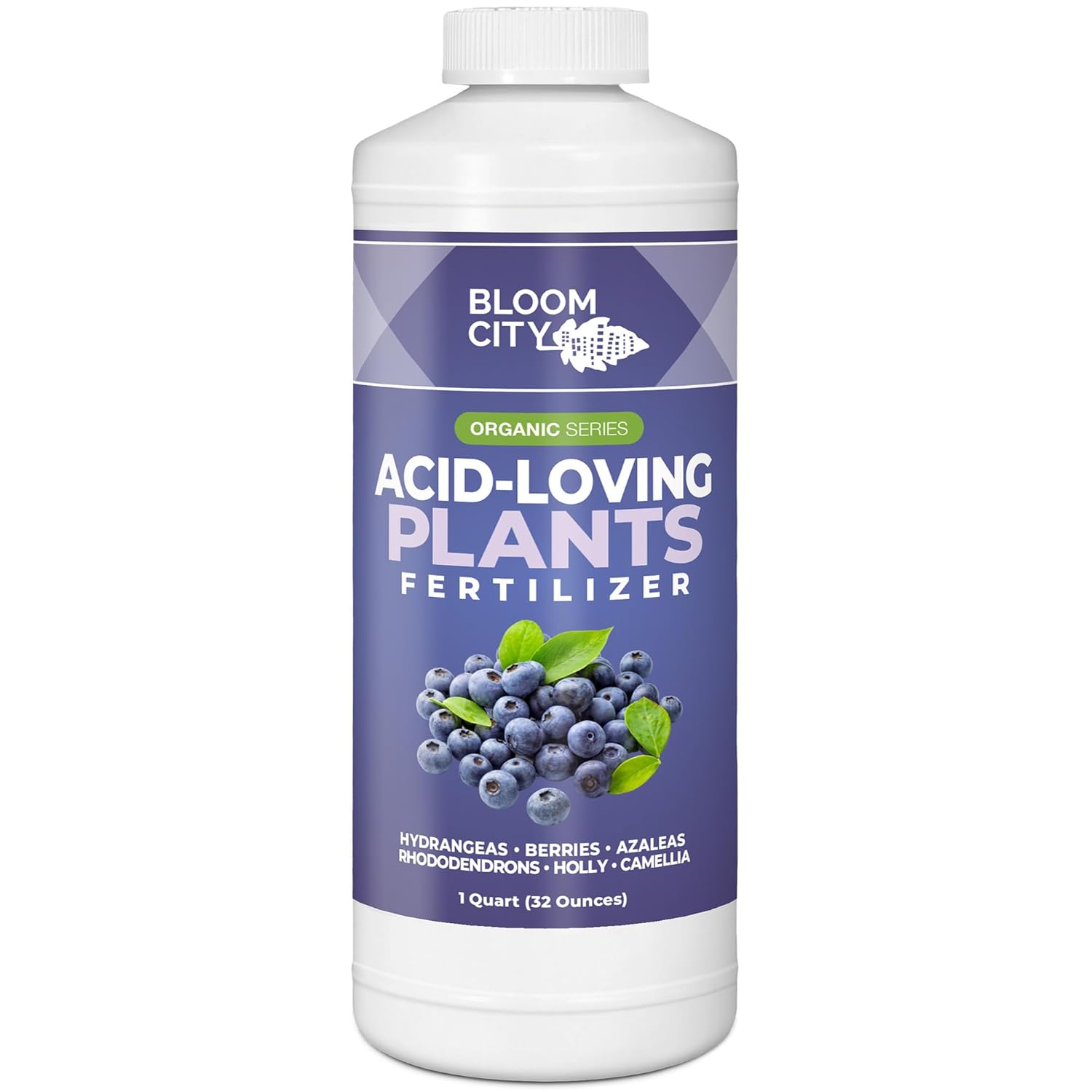
Bloom City Acid-Loving Plant Fertilizer, Liquid Soil Acidifier, 32 oz
| Item Form | Liquid |
|---|---|
| Specific Uses For Product | Organic |
| Target Species | blueberries, azaleas, rhododendrons, grapes, raspberries |
| Unit Count | 32 Fluid Ounces |
This Bloom City liquid formula is designed specifically for acid-loving plants and is used by diluting and applying to the soil around hydrangeas, azaleas, blueberries and other plants that prefer lower pH. In practice it acts as both a nutrient feed and a mild soil acidifier to keep nutrients available in acidic soils, which supports stronger roots and more consistent foliage and bloom development. The product is a ready-to-mix 32 fl oz liquid that integrates easily into regular feeding schedules for container or garden beds and is labeled as organic-sourced ingredients. Practical benefits include targeted nutrition for specialty plants and simple application for routine maintenance. Important limitations are that specific mixing ratios are on the packaging only and it should be used only on acid-loving species to avoid harming neutral- or alkaline-preferring plants.
Best for: Gardeners seeking a straightforward, plant-specific fertilizer for hydrangeas and other acid-loving ornamentals who prioritize easy application and plant-safe ingredients.
Less Ideal for: Gardeners growing neutral- or alkaline-preferring plants or those who need a universal all-purpose fertilizer for a wide range of species.
- Formulated for acid-loving plants so it supports nutrient availability in low pH soils
- Liquid form mixes and applies easily for both containers and garden beds
- Contains organic-sourced inputs aimed at safer use around families and pets
- Supports root strength and consistent foliage which can improve bloom potential
- Mixing ratio and specific application instructions are not listed in the provided details and must be checked on the bottle
- Not appropriate for plants that prefer neutral or alkaline soils
Verdict: Choose this liquid Bloom City formula when you want a simple, plant-safe fertilizer that targets hydrangeas and other acid-loving plants to boost root health and bloom potential.
Gardenera 8-4-8 Acidic Fertilizer for Hydrangeas (8 oz)

| Item Form | Granules |
|---|---|
| Specific Uses For Product | Hydrangeas |
| Coverage | Acid-loving plants (indoor & outdoor) |
| Unit Count | 8 Ounce |
This Gardenera 8-4-8 granular fertilizer is made for acid-loving shrubs and flowers and is intended to boost bloom color and vigor in plants such as white hydrangeas. You apply by sprinkling the granules around the root zone and watering; the sulfur-coated urea and added iron gradually release nutrients for up to three months. That steady feeding helps maintain the slightly acidic soil hydrangeas prefer and supports fuller flowering without frequent reapplication. Practical benefits include easy, no-mix application, suitability for both containers and garden beds, and ingredients aimed at lowering pH while supplying nitrogen and potassium. Limitations to expect are the small 8 ounce size, which means it covers only a few plants before needing replacement, and the need to follow safety guidance when handling granular fertilizers. Also it is a general acidifying formula rather than a targeted color-shifting product, so results on flower tint may be moderate and gradual rather than immediate.
Best for: Gardeners who want an easy, low-maintenance fertilizer to maintain healthy white hydrangeas and other acid-loving shrubs without frequent refeeding.
Less Ideal for: Those seeking a large-coverage product for many plants or an aggressive pH-altering treatment to rapidly change bloom color should consider larger or specialized alternatives.
- Balanced 8-4-8 nutrient ratio suitable for promoting blooms and foliage.
- Contains iron and sulfur to help acidify soil for acid-loving plants.
- Slow-release granules feed plants for up to three months, reducing application frequency.
- Simple sprinkle-and-water application works in containers and beds without mixing.
- Small 8 ounce unit covers only a few plants before needing more product.
- Not formulated specifically to force rapid color change in hydrangea blooms.
Verdict: A convenient, slow-release acidic granular fertilizer that helps keep white hydrangeas healthy and in bloom with minimal fuss.
GreenGro Acid Loving Organic Fertilizer 5-5-3, 4 lb

| Item Form | Granules |
|---|---|
| Specific Uses For Product | Acid-loving plants, Indoor & Outdoor use |
| Target Species | Acid-loving plants |
| Unit Count | 64 Ounce |
This 5-5-3 granular fertilizer is designed for spring feeding of hydrangeas and other acid-loving plants by providing balanced nutrients while gradually lowering soil pH with elemental sulfur. It is typically applied by mixing the recommended amount into the soil at the plant base or into container media and watered in; the label gives clear rates for garden and pot use and schedules for repeat applications. Notable features are the inclusion of mycorrhizal fungi, beneficial bacteria, and biochar, which support root extension, nutrient availability, and microbial habitat in addition to the fertilizer itself. For gardeners looking for a dependable spring booster that also nudges pH toward the range bigleaf hydrangeas prefer, this product combines feeding and biological soil support in one bag. Limitations to keep in mind are that pH changes are gradual so immediate color shifts are not guaranteed and repeated applications can push soil acidity too low if overused, so following the directions and testing soil pH periodically is important.
Best for: Gardeners who want a reliable, no-fuss spring fertilizer that both feeds hydrangeas and slowly acidifies soil while supporting soil biology.
Less Ideal for: People who need immediate pH changes or those who prefer separate specialized soil amendments and microbial inoculants rather than a combined product.
- Formulated to lower soil pH gradually with elemental sulfur for acid-loving plants
- Contains mycorrhizae, beneficial bacteria, and biochar to improve root access and soil biology
- Clear application rates for both in-ground and container hydrangeas
- Balanced 5-5-3 N-P-K to provide steady spring nutrition
- pH adjustment is gradual and requires repeated applications and monitoring to reach target acidity
Verdict: A practical spring choice for hydrangea growers who want steady feeding plus gradual pH lowering and improved soil biology in one product.
TPS Nutrients Hydrangea Liquid Fertilizer, 8 oz

| Item Form | Liquid |
|---|---|
| Application Method | Dilute in water and apply to soil |
| Coverage | Medium |
| Mixing Ratio | 1:200 |
| Unit Count | 8 Fluid Ounces |
This 8 oz liquid fertilizer is made specifically for hydrangeas and is mixed into water at a 1:200 ratio for monthly applications from early spring through late summer. It supplies balanced, fast-absorbing nutrients intended to encourage fuller blooms, richer flower color, stronger leaf and stem growth, and healthier root development. Typical use is diluting 5 mL per gallon of water and applying to soil around garden beds or container plants; the small concentrated bottle is convenient for spot treatments and patio pots. Practical benefits include targeted nutrition for acid-loving shrubs, an easy dilution guide, and a fast-absorbing liquid formula that reduces mess compared with granular feeds. Limitations are the small 8 oz volume, which means multiple bottles are needed for larger gardens, and the product assumes plants are not drought stressed when applied. You must follow safety instructions like wearing gloves and avoid use on dry plants. For spring feeding routines this product fits into a simple monthly schedule and pairs well with routine watering and soil care.
Best for: Gardeners who want a simple, targeted monthly fertilizer to boost hydrangea blooms and foliage in beds or patio containers and prefer a fast-absorbing liquid feed.
Less Ideal for: People managing large landscapes who need bulk fertilizer or those seeking an all-purpose feed for non-acid-loving plants.
- Formulated specifically for hydrangeas and other acid-loving flowering shrubs
- Fast-absorbing liquid that is easy to dilute and apply
- Clear mixing ratio and monthly application schedule for spring through summer
- Suitable for both garden beds and containers
- Small 8 oz bottle may not be economical for large gardens or many plants
- Not intended for use on drought-stressed or dry plants
Verdict: A concentrated, easy-to-use liquid feed that simplifies monthly spring-to-summer care for hydrangeas and patio shrubs.
Miracle-Gro Water Soluble Bloom Booster Flower Food, 5.5 lb

| Item Form | Powder |
|---|---|
| Application Method | Mix with water |
| Target Species | Flower |
| Mixing Ratio | 1:Water |
Miracle‑Gro Water Soluble Bloom Booster is a powdered, water‑mix fertilizer designed to be dissolved and applied every 7 to 14 days to flowering plants. It carries a high middle number NPK (10‑52‑10) so it delivers an extra boost of phosphorus to encourage bud set and larger blooms, and it can be used for in‑ground beds, containers and indoor flowering plants when diluted to the package directions. The included mixing guidance and scoop make it straightforward to dose for small containers or larger garden areas, and one 5.5 lb container covers a substantial area. Practical benefits include fast uptake when watered in at the base of plants and compatibility with common feeders or a watering can. Limitations are that the concentrated phosphorus focus is for flowering performance rather than overall foliage growth and it requires regular reapplication through the blooming season rather than a single slow‑release feed. Also users should follow safety directions when handling and avoid overfeeding sensitive or newly transplanted plants.
Best for: Gardeners who prioritize showy, frequent blooms and want a product they can apply regularly to flower beds and containers during the flowering season.
Less Ideal for: People looking for an all‑season, low‑maintenance slow‑release fertilizer or those who need a balanced feed for foliage and establishment of new transplants.
- High phosphorus NPK (10-52-10) targets bud set and bloom production
- Water‑soluble powder mixes quickly for fast feeding and easy use in a watering can or garden feeder
- Suitable for both in‑ground beds and container flowering plants including roses and hydrangeas
- Covers a large area from a single 5.5 lb container when used to label directions
- Requires frequent applications during bloom period rather than providing long‑term slow release
- Formulation focuses on flowering so it is less balanced for leafy growth or general maintenance
Verdict: Choose this bloom booster if your goal is bigger, more frequent flowers by feeding a high‑phosphorus, fast‑acting soluble fertilizer during bloom season.
Choosing the Right Fertilizer for White Hydrangeas: Key Factors to Consider
Nutrient Ratio and Timing
White hydrangeas need a nutrient balance that encourages flower development without promoting excessive vegetative growth. A fertilizer with moderate nitrogen, adequate phosphorus, and sufficient potassium supports bud set and strong stems. Timing matters: feed in early spring as shoots emerge and again after the first round of blooms to support repeat flowering. Avoid heavy late-summer nitrogen that can delay hardening off before winter.
Steady, predictable nutrient release helps prevent sudden growth flushes that reduce the number or quality of blooms. Consider the planting situation: containers often need lighter, more frequent feeding, while established in-ground plants benefit from seasonal, slow-release applications.
Soil pH and White Flower Integrity
While white hydrangeas are not used to demonstrate blue or pink shifts, soil pH still affects leaf health and overall bloom appearance. Extremely acidic or alkaline soils can stress plants, causing smaller or off-colored petals and reduced flower longevity. Choose fertilizers that do not noticeably acidify or alkalize the root zone unless your soil test indicates a specific correction is needed.
Regular soil testing and amendments are a practical approach. If you need to adjust pH, make changes gradually and monitor plant response over months rather than making aggressive corrections that could shock roots.
Release Pattern and Frequency
Controlled-release or slow-release fertilizers provide a steady feed that supports consistent bud development without promoting a foliage-heavy flush. Water-soluble feeds produce faster results and can be useful to correct deficiencies quickly or to encourage bloom production during the flowering season.
Match release pattern to maintenance habits. If you prefer fewer applications, choose slow-release granules applied once in spring. If you like to feed lightly and often, liquid or water-soluble feeds let you tailor nitrogen and bloom-boosting phosphorus through the season.
Organic Vs Synthetic Formulations
Organic fertilizers release nutrients more slowly and improve soil structure and microbial life over time. They are gentler and reduce the risk of salt buildup, which is useful in containers and heavy-feeding soils. Synthetic fertilizers offer predictable nutrient numbers and quicker availability, which can be helpful when a rapid response is needed for bloom improvement.
Consider long-term soil health and your gardening preferences. Many gardeners use a combination approach: organic amendments for baseline soil fertility and occasional synthetic or water-soluble boosts during key bloom periods.
Application Method and Accessibility
How you apply fertilizer affects where nutrients go and how much reaches the root zone. Granular products are often broadcast or placed in a ring, which suits established shrubs. Water-soluble fertilizers can be applied with a hose-end feeder or as a root drench for containers. Foliar feeds provide a rapid supplement but are not substitutes for root nutrition.
Choose a product that fits your typical gardening routine and site constraints. If access to water is limited, a slow-release granular may be more practical than frequent liquid applications.
Impact on Bloom Size and Longevity
The right fertilizer improves not just the number of blooms but also their size and how long they stay attractive. Adequate phosphorus supports bud formation and larger flower heads, while potassium strengthens stems and helps plants resist stress. Avoid overfeeding nitrogen, which can lead to more leaves at the expense of flowers.
Think about bloom timing as well. Some formulations help encourage a strong first flush, while others support sustained re-blooming. Match the product to whether you prioritize a single spectacular display or extended flowering.
Soil Testing and Correction
Start with a simple soil test to identify nutrient deficiencies and pH. A baseline test tells you whether phosphorus or potassium is lacking and whether the soil is within a healthy pH range for hydrangeas.
If test results show problems, correct them gradually. Work in organic matter to improve structure and nutrient retention, and apply targeted amendments based on the test rather than guessing.
- Collect samples from the root zone about 3 to 6 inches deep.
- Test in spring or early fall for the most actionable data.
- Adjust amendments over several months and retest annually.
Fertilizing Containers Versus In-Ground Plants
Containers dry and deplete nutrients faster than in-ground beds, so container-grown white hydrangeas often need lighter, more frequent feeding. Use diluted water-soluble feeds every 2 to 4 weeks during the growing season for potted plants.
Established in-ground hydrangeas benefit from fewer, targeted applications. A spring application of slow-release granular fertilizer and a midseason top-dress of compost or an additional feed can keep shrubs productive without overdoing foliage.
- Containers: frequent, low-strength liquid feed.
- In-ground: seasonal slow-release and organic top-dress.
Timing Fertilizer for Peak Blooms
Feed in early spring when new growth appears to support bud initiation. For many hydrangeas, a second, lighter feeding after the first major bloom helps sustain additional flower production later in summer.
Avoid heavy late-summer fertilization that encourages tender growth vulnerable to frost. Plan your last significant feed early enough for plants to harden off before cold weather.
- Spring: primary feed at shoot emergence.
- After first bloom: light boost to encourage rebloom.
- Late summer: avoid high-nitrogen feeds.
Using Organic Matter and Mulches
Incorporating compost or well-rotted manure improves soil water retention, nutrient supply, and microbial health. Organic matter buffers nutrient availability and promotes deeper root development, which supports larger, longer-lasting blooms.
A 2 to 3 inch layer of mulch helps stabilize soil temperature, retain moisture, and supply slow-release nutrients as it breaks down. Keep mulch a few inches away from the trunk to prevent rot.
- Use coarse, well-aged compost for beds.
- Replace or refresh mulch annually for consistent benefits.
Common Fertilizer Application Mistakes
Too much nitrogen is the most common error. Excess nitrogen produces lush foliage but fewer and smaller blooms. Follow label rates or conservative feeding plans rather than doubling doses in the hope of faster results.
Another frequent mistake is applying fertilizer directly against stems or roots, which can cause burns. Apply evenly across the root zone and water in according to product instructions.
- Do not pile granular fertilizer against stems.
- Avoid over-frequent high-strength liquid applications.
How We Chose the Best Fertilizer for White Hydrangeas
We selected fertilizers based on criteria gardeners can verify and rely on in the landscape. Key evaluation points included the nutrient ratio and form, because the right balance of nitrogen, phosphorus, and potassium affects leaf versus flower growth. We checked how fertilizers influence soil pH and alkalinity since white hydrangeas are sensitive to extremes that can dull or discolor blooms. Release pattern was another filter: slow-release and controlled-release formulas reduce the risk of nitrogen spikes that favor foliage over flowers. Ease of application mattered for real-world use by homeowners who fertilize beds, containers, or foundation plantings. Finally, we considered organic content and long-term soil health to favor options that support microbial activity without synthetic salt buildup. We excluded granular mixes intended only for turf or general-purpose tree and shrub feeds that do not match hydrangea bloom needs. Products with unclear nutrient labels or unspecified release schedules were also removed. The remaining selections reflect combinations of nutrient balance, predictable bloom response, soil safety, and straightforward application that gardeners can rely on.
FAQ
How often should I fertilize white hydrangeas?
Frequency depends on the product. Slow-release granules usually need one application in spring, with an optional light feeding after the first bloom. Water-soluble feeds can be used every 2 to 4 weeks for containers or when a quick boost is necessary.
Can I use general-purpose fertilizer on white hydrangeas?
You can, but choose a formula with moderate nitrogen and reasonable phosphorus to support blooms. General-purpose mixes that are high in nitrogen may encourage foliage over flowers, so adjust rates or use a bloom-focused plan.
Will changing soil pH affect the whiteness of hydrangea flowers?
Soil pH has less effect on white varieties than on colored types, but extreme pH can stress plants and affect petal quality. Maintain a balanced pH and correct significant acidity or alkalinity gradually.
Are organic fertilizers good for hydrangeas?
Organic fertilizers are beneficial for long-term soil health and reduce the risk of salt buildup. They release nutrients more slowly, which supports steady growth and can improve bloom quality over multiple seasons.
Will too much fertilizer damage hydrangeas?
Yes. Over-fertilizing, especially with high-nitrogen products, can burn roots, create weak growth, and reduce flower production. Stick to recommended application rates and monitor plant response.
What should I do if my hydrangeas are producing lots of leaves but few blooms?
Check your fertilizer regime and soil test results. Excess nitrogen or insufficient phosphorus can cause lush foliage and poor flowering. Reduce nitrogen inputs, apply a bloom-supporting feed, and ensure the plant is getting adequate light and water.
Final Verdict
Prioritize a balanced nutrient plan, predictable release pattern, and attention to soil pH when choosing a fertilizer for white hydrangeas. Match the product form to your planting situation: liquids for containers and quick fixes, slow-release for low-maintenance in-ground shrubs. Consider organic amendments for long-term soil health and use bloom-focused feeding to encourage larger, longer-lasting white flower heads. Focus on steady, appropriate feeding rather than heavier doses. By aligning fertilizer type, timing, and application method with your site conditions and maintenance routine, you can consistently produce healthy plants with showy white blooms.
