

Note: This article contains affiliate links. If you click on these links and make a purchase, I may earn a small commission at no extra cost to you. This helps support my research and content. Read my full affiliate disclosure here.
If you manage a pond, shoreline, or small lake, choosing the right lake weed killer matters for water clarity, recreational use, and habitat health. The wrong product can leave persistent residues, damage desirable plants, or fail to reach dense beds of submerged species. This guide covers seven shortlisted lake treatments that are commonly used for aquatic vegetation control and explains the practical differences a gardener or land manager should expect in the field. We evaluated options on how well they treat different weed types, how long they remain active in water, and how easy they are to apply and measure. Read on to understand the tradeoffs and which product traits matter most for your lake conditions before you inspect the product details below.
Top Picks at a Glance
| Best Overall The best all-around choice for most situations | SePRO Sonar RTU Ready-to-Use Aquatic Herbicide, 1 Quart |  |
| Best Quality Built to a higher standard if you want something more solid | Syngenta Tribune Fast‑Acting Aquatic Herbicide, 128 fl oz |  |
| Best Value The sweet spot between price and what you get | Airmax Ultra Pondweed Defense Aquatic Weed & Plant Killer, 1 Quart |  |
| Best Budget The cheapest option that still gets the job done reliably | Hi-Yield Killzall Aquatic Herbicide, 32 oz |  |
| Highest Rated A top-rated pick with lots of positive feedback | Sonar A.S. Liquid Aquatic Herbicide, 8 oz |  |
| Most Popular A crowd favorite that many people choose with confidence | Airmax Shoreline Defense Emergent Weed Control Herbicide, 1 Quart | 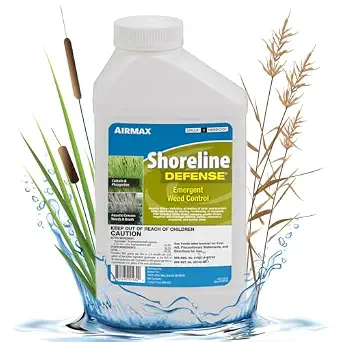 |
| Best Seller A high-volume bestseller chosen again and again | ALLIGARE Diquat Dibromide Aquatic Herbicide, 32 fl oz |  |
SePRO Sonar RTU Ready-to-Use Aquatic Herbicide, 1 Quart

| Unit Count | 32 Fluid Ounces |
|---|---|
| Formulation | Liquid |
| Coverage | 1 quart treats 1/8th of an acre for the season |
SePRO Sonar RTU is a ready-to-use liquid herbicide designed for treating nuisance aquatic plants in ponds and small lakes. You apply it from the shoreline by pouring measured doses into the water, so no boat, sprayer, or mixing is required. The active ingredient, fluridone, is systemic and translocates through stems, leaves, and roots to stop photosynthesis, producing visible plant decline over six to twelve weeks and providing season-long control for many species including duckweed. The product covers roughly 1/8 acre per quart for a season and is labeled for recreational waters with no swimming, fishing, or livestock restrictions after application. Practical benefits are ease of use for DIY pond owners, professional-grade active chemistry, and a multi-week residual that reduces repeat treatments. Limitations are the slow kill time that requires patience, and documented best results in waters about 4 feet deep or deeper, so shallow or heavily infested systems may need follow-up or alternate approaches.
Best for: Pond and small-lake owners who want a professional-strength, low-effort herbicide they can apply from shore and who accept a multiweek timeline for results.
Less Ideal for: People needing fast knockdown of heavy surface mats or those managing very shallow or highly turbid waters should consider faster-acting or mechanical controls instead.
- Ready-to-use formula requires no mixing, spray gear, or boat so it is simple to apply from shore
- Contains fluridone, a systemic active ingredient known for season-long control of duckweed and other aquatic plants
- Label allows immediate swimming, fishing, boating, and livestock access after application
- Covers about 1/8 acre per quart for the entire season, reducing the need for frequent reapplication
- Plant decline is slow and can take six to twelve weeks before full effect is visible
- Best performance is reported in waters about 4 feet deep or greater, so effectiveness may vary in shallow ponds
Verdict: Pick Sonar RTU if you want a ready-to-use, professional aquatic herbicide that you can apply from shore for season-long control of duckweed and other pond weeds.
Syngenta Tribune Fast‑Acting Aquatic Herbicide, 128 fl oz

| Unit Count | 128 Fluid Ounces |
|---|---|
| Item Form | Liquid |
| Coverage | submerged, emergent, and floating aquatic weeds |
| Active Ingredients | Diquat dibromide |
Syngenta Tribune is a one‑gallon liquid herbicide built for quick knockdown of a broad range of aquatic weeds such as duckweed, watermeal, and pondweed. Its active ingredient, diquat dibromide, works on contact to stop photosynthesis and desiccate plant tissue within minutes, so you see visible decline fast. Typical use is direct application to affected water when weeds are actively growing and water is not muddy or windy; the product is intended for ponds, lakes, drainage areas and similar settings. Practical benefits include rapid results, coverage of submerged and floating species, and a formulation designed for aquatic use that is described as safe for surrounding soil and wildlife when used per label. Important limitations are that it is non‑selective so it will affect broadleaf aquatic plants generally, it requires careful timing and application conditions for best efficacy, and proper safety precautions and label adherence are essential. This product is best for users who need decisive, fast control of visible aquatic weed outbreaks and who can follow labeled application rules.
Best for: Buyers who prioritize rapid, effective control of visible aquatic weed outbreaks in ponds or small lakes and who are comfortable following label directions for timed, targeted applications.
Less Ideal for: People seeking a selective, slow‑acting management strategy or those who cannot meet the labeled application conditions or safety handling requirements.
- Fast contact action that halts photosynthesis and desiccates plant tissue quickly
- Formulated to treat submerged, emergent, and floating aquatic weeds
- Concentrated 128 fl oz volume suitable for treating larger areas
- Designed for aquatic use with label directions for ponds, lakes, docks and drainage areas
- Non‑selective active ingredient will affect a wide range of aquatic plants, not individual species only
- Effectiveness reduced in muddy or windy conditions and when weeds are not actively growing
Verdict: Choose Tribune when you need fast, decisive knockdown of a broad range of aquatic weeds in ponds or lakes and can apply it according to label directions.
Airmax Ultra Pondweed Defense Aquatic Weed & Plant Killer, 1 Quart

| Unit Count | 32 Fluid Ounces |
|---|---|
| Coverage | 5000 square_feet |
| Item Form | Liquid |
| Active Ingredients | Herbicide |
Airmax Ultra Pondweed Defense is a 32 fl oz liquid herbicide designed to treat nuisance and invasive aquatic plants across ponds and small lakes. You apply it with a tank sprayer, coating actively growing submerged, floating, and emergent weeds; the product is fast acting and weeds typically brown and die within 7 to 10 days. It covers up to 5,000 sq ft per bottle and is compatible with Airmax Treatment Booster Plus surfactant to improve contact. The label emphasizes fish safety when used as directed and lists common target species such as hydrilla, watermilfoil, coontail, and pondweed. Practical benefits include straightforward spray application, broad-spectrum control, and a coverage rate that fits many small to medium water bodies. Important limitations are that some emergent infestations may need repeat treatments and duckweed or watermeal control can be only temporary in slow-moving water. Also follow regional restrictions and label directions for safe use around fish and pets.
Best for: Buyers who want a practical, easy-to-apply herbicide to manage common pond and lake weeds across small to medium water bodies and prioritize measurable, season-long control.
Less Ideal for: Not the best choice for large lakes needing professional aquatic management programs or for users seeking an organic or non-herbicidal approach.
- Broad-spectrum activity against submerged, floating, and emergent aquatic weeds
- Fast visible results with browning and die-back within about 7–10 days
- Covers up to 5,000 sq ft per 32 fl oz bottle for decent per-bottle area treated
- Formulated for spray application so it works with standard tank sprayers
- Label states safe for game fish and common pond fish when used as directed
- May require repeat applications for heavy or early-season emergent growth
- Temporary control of duckweed and watermeal in slow or stagnant water
Verdict: A practical, fast-acting liquid herbicide that gives reliable broad-spectrum control of common pond weeds with one 32 fl oz bottle treating up to 5,000 sq ft.
Hi-Yield Killzall Aquatic Herbicide, 32 oz

| Unit Count | 32 Ounce |
|---|---|
| Item Form | Liquid |
| Active Ingredients | Glyphosate |
| Coverage | Full |
Hi-Yield Killzall is a concentrated liquid herbicide formulated for use in non-crop and aquatic settings to control annual and perennial grasses, broadleaf weeds, and woody brush. You mix the 32 oz concentrate with water per the label and spray foliage thoroughly; a single bottle claims coverage up to about one acre when applied at label rates, so it suits larger patches of lake-edge vegetation. The active ingredient is glyphosate, which provides systemic control of weeds rather than just a burn-down effect. Practical benefits include a clear label with mixing directions and a liquid form that is easy to load into a sprayer for spot treatments or blanket applications. Important limitations are that it is for non-crop use only so follow restrictions for aquatic environments and wildlife habitat, and effectiveness depends on correct mixing and thorough foliar coverage. Users should also observe local regulations for applying glyphosate near water and take appropriate protective measures during mixing and spraying.
Best for: Buyers looking for a cost-effective, concentrated herbicide to treat large or recurring weed problems along lake edges or other non-crop aquatic sites who are willing to follow label restrictions and application steps.
Less Ideal for: People seeking an organic, contact-only, or immediate visual burn-down product or homeowners who cannot meet local regulatory requirements for aquatic herbicide use.
- Concentrated 32 oz bottle covers up to roughly one acre when mixed per label
- Contains glyphosate for systemic control of grasses, broadleaf weeds, and woody brush
- Liquid concentrate mixes easily for use in handheld or backpack sprayers
- Label includes specific mixing and application directions for non-crop and aquatic sites
- Contains glyphosate and is subject to use restrictions near water and wildlife habitat
- Requires proper mixing and thorough foliar coverage for reliable control
Verdict: A budget-friendly concentrated glyphosate herbicide well suited for treating larger lakeside or non-crop weed infestations when applied according to label directions.
Sonar A.S. Liquid Aquatic Herbicide, 8 oz

| EPA approved | Yes |
|---|---|
| Bottle size | 8 oz |
| Treated area | 1/4 acre pond up to 6 ft deep |
| Application method | Bucket-mix and pour directly into pond |
Sonar A.S. is a concentrated, systemic aquatic herbicide designed for homeowners and small-pond stewards who need a reliable solution for duckweed, watermeal, hydrilla, milfoil, and similar invasive weeds. The product is mixed in a five-gallon bucket and poured directly into the pond, so no specialized spraying equipment is required. Its systemic action helps prevent rapid die-off and oxygen depletion by controlling weeds over time rather than causing a sudden kill. The 8 ounce bottle treats about a quarter-acre pond up to 6 feet deep, which makes it convenient for small lakes, farm ponds, and ornamental water gardens. It is EPA approved and labeled as safe for fish and wildlife when used as directed, which is important for preserving pond ecosystems. Limitations include its single-concentrate format—larger bodies of water require multiple bottles or repeat treatments—and state shipping restrictions that can affect availability in some regions. Users should follow dosing instructions closely to match pond size and depth for predictable results.
Best for: Buyers who prioritize a predictable, fish-safe method to manage invasive pond weeds in small lakes, farm ponds, or water gardens and who want a low-equipment DIY approach.
Less Ideal for: Not a good fit for managers of large lakes or heavily infested waters who need high-volume treatment or immediate rapid die-off for short-term clearance.
- Systemic action reduces risk of sudden oxygen depletion by controlling weeds over time
- Simple bucket-mix application requires no spraying equipment
- EPA approved and labeled safe for fish and wildlife when used as directed
- Concentrated 8 oz bottle treats up to 1/4 acre pond up to 6 feet deep for small-pond convenience
- Single small bottle size means multiple bottles or repeat treatments are needed for larger or heavily infested waters
- Shipments are restricted to certain states which may limit purchasing options
Verdict: A compact, fish-safe systemic herbicide that gives reliable, low-equipment control of invasive weeds in small ponds and water gardens.
Airmax Shoreline Defense Emergent Weed Control Herbicide, 1 Quart

| Unit Count | 32 Fluid Ounces |
|---|---|
| Coverage | 10000 Square Feet |
| Item Form | Liquid |
| Active Ingredients | Herbicide |
Airmax Shoreline Defense is a concentrated liquid herbicide designed to kill emergent shoreline weeds such as cattails, phragmites, pond grasses and other shore vegetation. You dilute it in a tank sprayer and apply directly to actively growing foliage, where it is absorbed and translocated to the roots for longer-term control. The product is intended for use in fresh and brackish water around docks, beaches, ponds, ditches and similar shorelines, and the label notes it can be used with a surfactant to improve leaf coverage. Airmax states that when used according to directions there are no water use restrictions and it will not harm fish or other aquatic animals. Practical benefits include a concentrated formula that treats a large area per quart and simple spray application that targets tough emergent plants. Important limitations are that results depend on correct timing and coverage, repeated applications may be necessary for dense stands, and users must follow label directions precisely to meet safety and legal requirements for aquatic herbicide use.
Best for: Buyers who need a targeted, professional-strength solution for persistent emergent shoreline weeds and prioritize proven effectiveness and safety guidance.
Less Ideal for: People looking for an immediate nonchemical or manual control method or those unwilling to follow aquatic herbicide label directions and local regulations.
- Concentrated formula covers large shoreline areas from a single quart
- Specifically formulated for emergent aquatic weeds like cattails and phragmites
- Designed for use in fresh and brackish water with no stated water use restrictions when used per label
- Absorbed through foliage to kill roots for longer-term control
- Effective results require correct dilution, timing, and thorough spray coverage
- May need multiple treatments for dense or re-sprouting infestations
Verdict: A concentrated, shoreline-focused glyphosate treatment for lake and pond owners who need dependable control of tough emergent weeds.
ALLIGARE Diquat Dibromide Aquatic Herbicide, 32 fl oz

| Unit Count | 32 Fluid Ounces |
|---|---|
| Item Form | Liquid |
| Coverage | weed and moss control |
| Active Ingredients | Diquat dibromide |
This 32 fl oz ALLIGARE diquat dibromide formulation is a non-glyphosate aquatic herbicide intended for rapid contact control of a wide range of pond and shoreline weeds. Applied as a surface spray or sprayed under water with a nozzle, it works quickly on green plant tissue and is recommended for young, actively growing weeds for the best results. The product advertises control of tough species such as duckweed, hydrilla, and water hyacinth and is described as leaving little residual, allowing replanting after treatment. Practical benefits include fast visible results within hours, versatility for use in ponds, lakes, drainage areas, and landscapes, and a concentrated 37.3 percent active ingredient for reliable knockdown. Important limitations are that it is a non-selective herbicide so it will damage desirable aquatic plants on contact and it requires careful handling and adherence to safety directions to protect people and wildlife. For risk-conscious users, following label directions and local regulations is essential to avoid unintended impacts.
Best for: Buyers who need a fast, reliable solution for controlling visible aquatic weeds and want a product with proven contact action in ponds and shorelines; suitable for homeowners or maintenance crews focused on quick knockdown and restoring water surface clarity.
Less Ideal for: Users who need selective control of individual plants, who manage sensitive habitats with protected species, or who prefer low-impact biological or mechanical methods.
- Fast-acting contact herbicide that produces visible results within hours
- Formulated for aquatic use and labeled for ponds, lakes, drainage areas, and shorelines
- High concentration of diquat dibromide (37.3 percent) for effective control of tough species
- Residue profile described as allowing replanting after application
- Non-selective and will kill desirable aquatic plants on contact
- Requires careful handling and strict adherence to safety and application instructions
- Not suitable where protecting aquatic wildlife or sensitive downstream areas is a priority without professional guidance
Verdict: Choose this product when you need a fast, concentrated aquatic herbicide to quickly knock down widespread pond weeds and restore water clarity.
Choosing the Right Lake Weed Killer: Key Factors to Consider
Type of Target Vegetation
Different lake weeds respond to different control agents. Submerged species like pondweeds and hydrilla often require systemic treatments that move through plant tissue, while floating mats of duckweed or filamentous algae can sometimes be controlled with contact treatments. Emergent plants along the shoreline have a different exposure profile and may need spot-treatment techniques.
Knowing the dominant species in your lake lets you pick a product whose activity matches that biology. Misidentifying vegetation can lead to repeated treatments and frustrated expectations.
Persistence and Breakdown
How long an active ingredient remains effective in water affects both control duration and environmental exposure. Some chemistries degrade quickly and require repeat applications during the growing season. Others persist, giving longer control but increasing the time before treated water supports sensitive uses like some fisheries or irrigation.
Consider seasonal temperature, water chemistry, and expected rainfall when deciding how persistent a treatment should be. Shorter persistence reduces long-term exposure risks but may raise labor needs.
Coverage and Dosing Practicality
Label coverage-how many acres or square feet a container treats-determines how many units you need and how frequently you will apply. Products with concentrated formulations can be economical for large areas but require accurate measurement and mixing. Premeasured or ready-to-use formulations are easier for small properties but may be costlier per treated acre.
Also consider how the product is applied: by hand, with a backpack sprayer, or using a boat-mounted applicator. Ease of measuring and mixing reduces the chance of dosing errors that lead to under- or over-treatment.
Non-target and Wildlife Safety
Aquatic treatments have pathways to affect fish, amphibians, and beneficial aquatic plants. Labels provide restrictions on timing, allowed buffer distances from sensitive habitats, and requirements for aeration or fish handling in heavy kills. Choosing a product with clear, conservative safety guidance helps you protect desirable species and downstream users.
If you manage a lake with a stocked fishery, waterfowl, or downstream water intakes, prioritize products with explicit instructions to minimize impacts and steps to mitigate large fish kills.
Application Method and Equipment Needs
Some lake weed killers require specialized equipment like boat-mounted sprayers or sondes for submersed application. Others can be applied from shore or with simple handheld sprayers. The method affects labor, precision, and the ability to reach offshore beds.
Plan for the gear you already own and whether you can safely mix and apply concentrated products. Simpler application methods reduce the risk of uneven coverage and human error.
Label Compliance and Regulatory Restrictions
Aquatic products are regulated and have specific label requirements that are legally binding. Labels specify allowable uses, maximum application rates, required personal protective equipment, and interval restrictions before recreational use or irrigation. Some active ingredients are restricted in certain jurisdictions or require certified applicator licensing.
Always read the label for permitted uses in your state and follow local rules. Selecting products with clear labeling that match your intended use prevents legal and environmental problems.
Identifying the Weeds in Your Lake
Begin by mapping the types and locations of vegetation. Walk shorelines and use a boat or pole camera to inspect submerged beds. Note whether growth is concentrated near inlets, edges, or distributed across open water.
Documenting species and densities helps determine whether you need broad-spectrum control, targeted spot treatments, or long-term management like nutrient reduction. A simple identification log prevents unnecessary blanket treatments and helps you track response to applications over time.
- Take photos from multiple angles for later comparison
- Flag problem areas for targeted treatment
- Record water depth and substrate where weeds are rooted
Timing Treatments for Best Effect
Timing applications to plant growth cycles improves efficacy. Many submerged plants take up systemic agents most effectively during active growth in late spring and summer. Early-season spot treatments can prevent beds from expanding.
Avoid treating during low oxygen conditions or when heavy die-offs could stress fish populations. Staggered applications and monitoring reduce the risk of large, rapid biomass collapses that deplete dissolved oxygen.
- Treat actively growing plants for systemic uptake
- Avoid large-scale treatments during hottest, lowest oxygen periods
- Plan follow-up spot treatments rather than single broad strokes
Application Techniques for Shoreline and Open Water
Choose an application method that matches target location. Shoreline emergent weeds can often be reached from land with a handheld sprayer, while offshore beds may require a boat-mounted sprayer or broadcast method. Some treatments are formulated for direct placement in mats or for injection into the water column.
Pay attention to mixing ratios and agitation during application to ensure even distribution. Calibrating your equipment on a small test area can prevent over-application and ensure label rates are achievable with your gear.
- Calibrate sprayers before treating large areas
- Use spot treatments for isolated patches to conserve product
- Follow label guidance for mixing and water pH adjustments if specified
Integrating Nonchemical Options
Chemical control often works best as part of an integrated strategy. Mechanical harvesting, hand-pulling, aeration to reduce nutrients, and establishing beneficial shoreline vegetation can reduce the frequency and intensity of chemical treatments.
Address the underlying causes of nuisance growth, such as runoff, high nutrient loads, or shallow areas that warm quickly. Combining tactics can lengthen the interval between chemical applications and improve long-term water quality.
- Use mechanical removal for thick surface mats before chemical treatment
- Improve shoreline buffers to limit nutrient runoff
- Consider periodic dredging or spot-deepening to reduce shallow weed habitat
Measuring Treatment Success and When to Reapply
Monitor treated areas weekly in the first month and monthly thereafter. Look for reduced canopy cover, stem dieback, and improved open-water areas. Some species show rapid decline after treatment, others have delayed symptoms and require patience.
Reapplication decisions should follow label intervals and be based on observed regrowth rather than calendar days alone. Keeping a treatment log with dates, locations, and observed responses helps refine future plans.
- Keep a log of treated sites, dates, and observed results
- Wait label-specified intervals before reapplication
- Assess oxygen and wildlife impacts after major die-offs
How We Chose the Best Lake Weed Killer
We prioritized treatments proven for aquatic use and focused on product attributes that affect real-world lake management. Key evaluation criteria included spectrum of plant control (ability to treat submerged, emergent, and floating species), persistence in water (how long active ingredients remain effective), labeled application coverage (square footage or acreage per unit), and safety guidance for non-target aquatic life and downstream uses. We also considered ease of measurement and application for homeowners and land stewards, and the clarity and completeness of label instructions for buffer zones and re-entry times. We excluded products without clear aquatic labeling, those intended only for terrestrial use, and any formulations lacking dosage or environmental precautions. We did not include experimental or unregistered chemistries. The resulting shortlist favors treatments with documented aquatic efficacy, clear application guidance, and practical coverage rates that match common small-lake and pond scenarios.
FAQ
How long after treatment will I see weeds die back?
It depends on the weed type and product. Contact agents can show effects in days, while systemic treatments may take one to several weeks as the chemistry moves through plant tissues.
Will a lake weed killer harm fish or pets?
Some treatments can affect fish, especially if large amounts of plant biomass die at once and oxygen levels drop. Labels include precautions for fish and pets and specify measures to reduce risks, such as aeration or staggered applications.
Can I use treated lake water for irrigation or livestock?
Restrictions vary by product and intended use. Many aquatic labels have specific wait periods or prohibit certain uses of treated water. Always consult the product label for allowable post-treatment uses.
Do I need a licensed applicator to treat a lake?
It often depends on the active ingredient and local regulations. Some chemistries or application rates require certified applicators, while others are labeled for homeowner or landowner use. Check state rules and label requirements before treating.
What should I do if weeds return quickly after treatment?
Rapid regrowth can indicate incorrect identification, inadequate coverage, or high nutrient inputs. Reassess the species, ensure proper dosing and application method, and consider nonchemical measures to reduce nutrient sources.
Is spot treatment effective for large weed beds?
Spot treating can control discrete patches and reduce overall product use, but very dense or widespread beds may require broader treatment or mechanical removal first to reduce biomass.
Final Verdict
Selecting a lake weed killer is about matching the product traits to the biology of the plants, the size of the infestation, and the environmental sensitivity of the lake. Prioritize agents that target the specific weed types present, offer clear dosing guidance for your acreage, and include conservative safety instructions for fish and downstream uses. Remember that chemical control is one part of a broader management plan that includes mechanical removal and nutrient control. Choose treatments that align with your application skills and equipment, follow label directions, and plan for monitoring and follow-up. That approach will give you the best chance of restoring clearer water while protecting desirable aquatic life.
