

Note: This article contains affiliate links. If you click on these links and make a purchase, I may earn a small commission at no extra cost to you. This helps support my research and content. Read my full affiliate disclosure here.
Kentucky 31 tall fescue is a rugged turf choice, but it still needs the right fertilizer program to stay dense, resist wear, and survive heat and drought. Choosing a fertilizer tailored to Kentucky 31 matters because incorrect nutrient ratios or poor release characteristics can cause spindly growth, shallow roots, or uneven color across your lawn. This guide reviews five shortlisted fertilizers for Kentucky 31 and explains the practical tradeoffs of nutrient balance, timing, and ease of use. We evaluate each product for nutrient formulation and how it performs in real yard conditions, with attention to application convenience and longevity. Read on for clear criteria and gardener-focused advice to help you pick the right fertilizer for your Kentucky 31 turf.
Top Picks at a Glance
| Best Quality Built to a higher standard if you want something more solid | The Andersons PGF Balanced 10-10-10 Granular Fertilizer with Micronutrients and 2% Iron (18 lb, 5,000 sq ft) | 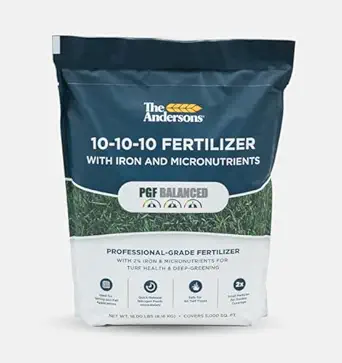 |
| Best Value The sweet spot between price and what you get | GreenView Lawn Food 22-0-4 Granular Fertilizer, 48 lb Bag |  |
| Highest Rated A top-rated pick with lots of positive feedback | AgChimp 24-0-11 Professional Lawn Maintenance Fertilizer, 16 lb |  |
| Most Popular A crowd favorite that many people choose with confidence | Scotts Turf Builder Lawn Food, 12.5 lb |  |
| Best Seller A high-volume bestseller chosen again and again | Scotts Turf Builder SummerGuard Lawn Food with Insect Control (5,000 sq. ft., 13.35 lb) |  |
The Andersons PGF Balanced 10-10-10 Granular Fertilizer with Micronutrients and 2% Iron (18 lb, 5,000 sq ft)

| Item Form | Granules |
|---|---|
| Application Method | spreader |
| Coverage | 5000 square feet |
| Mixing Ratio | 10-10-10 |
| Target Species | Lawns and Gardens |
The Andersons PGF Balanced 10-10-10 is a fine-particle granular fertilizer designed for broad, even coverage across lawns and garden beds. It is typically applied with a broadcast spreader and then watered in to activate the quick-release nutrients. The unusually small particle size means a single 18 lb bag claims coverage up to 5,000 sq ft and helps reduce patchy feeding compared with coarse granules. The formula is balanced for nitrogen, phosphorus and potassium and includes micronutrients plus 2% iron for enhanced greening. It works well for spring and fall applications, for establishing new turf or boosting established lawns, and can be worked into soil for vegetable or flower beds. Users should sweep or blow product off paved surfaces to avoid iron staining and store any leftover in a dry area. Because the fertilizer is quick-release, expect faster visible response but shorter duration between applications than slow-release products.
Best for: Homeowners who prioritize consistent, dependable feeding and want a straightforward granular option that gives quick visible results across lawns and planting beds.
Less Ideal for: Gardeners seeking a long-duration, slow-release feeding program or those who need a no-iron product to avoid any risk of surface staining.
- Very fine particle size for more even coverage and less patchy feeding
- Balanced 10-10-10 formula with added micronutrients and 2% iron for deeper greening
- Suitable for lawns, gardens, trees and shrubs and can be applied at planting or during the season
- Covers up to 5,000 sq ft from a single 18 lb bag when applied as directed
- Quick-release nutrients mean results appear sooner but may require more frequent reapplication versus slow-release formulas
- Contains iron that can stain sidewalks and driveways if not cleaned off immediately
Verdict: Choose this fine-particle 10-10-10 if you want a reliable, fast-acting granular fertilizer that delivers even coverage and deeper greening for summer lawn care.
GreenView Lawn Food 22-0-4 Granular Fertilizer, 48 lb Bag

| NPK | 22-0-4 |
|---|---|
| Form | Granules |
| Coverage | 15,000 sq. ft. |
| Application | Broadcast or drop spreader |
GreenView Lawn Food is a large-format granular fertilizer formulated to promote deeper roots and quicker spring green-up for established lawns. It combines readily available nitrogen with a controlled-release MESA nitrogen technology so you get an initial boost plus up to eight weeks of sustained feeding. Apply with a broadcast or drop spreader at the recommended rate and water in to activate nutrients; the zero-phosphate 22-0-4 formula is suitable for regular maintenance in regions where phosphate is restricted. Practical benefits include stronger drought tolerance from improved root development, consistent color without excessive top growth, and broad coverage from a single 48 lb bag. Limitations to note are that it is intended for broadcast application on growing turf rather than starter use for new seed or specialized turf nutrition programs, and the large bag is best suited to medium or large lawns since storage and precise small-lawn dosing can be awkward. Follow local guidelines and spreader calibration to avoid overapplication.
Best for: Homeowners who want an efficient, low-maintenance spring feeding that promotes root strength and sustained color across medium to large established lawns and who prioritize predictable results over specialized nutrient programs.
Less Ideal for: People establishing new lawns from seed or sod, or those needing a custom nutrient plan for problem turf should consider starter or specialty fertilizers instead.
- MESA controlled-release nitrogen provides an initial feed plus up to eight weeks of sustained nutrition
- High nitrogen 22-0-4 formulation supports faster spring green-up and stronger root development
- Designed for broadcast or drop spreader use to cover large areas efficiently
- Zero-phosphate formula complies with phosphate restrictions and reduces risk to waterways
- Not formulated as a starter fertilizer for new seed or sod
- Large 48 lb bag can be awkward to handle and may be oversized for very small lawns
Verdict: A practical spring maintenance fertilizer that delivers fast green-up and eight weeks of controlled-release feeding for established lawns.
AgChimp 24-0-11 Professional Lawn Maintenance Fertilizer, 16 lb

| N-P-K | 24-0-11 |
|---|---|
| Unit Count | 256 Ounce |
| Application Method | broadcast spreader |
| Item Form | Granules |
| Coverage | Covers 5,000 sq ft |
AgChimp 24-0-11 is a granular lawn fertilizer formulated to deliver both immediate green-up and longer-term feeding for thicker turf. You apply it with a broadcast spreader during active growth periods to cover up to 5,000 sq ft per 16 lb bag. The blend pairs about 24% quick-release nitrogen for fast color and shoot growth with roughly 30% slow-release, polymer-coated nitrogen for steady feeding that reduces spikes and burn risk. Potassium and iron in the formula help with stress tolerance and deeper color, which supports a denser, more resilient lawn over repeated applications. Practical benefits include fewer applications needed compared with straight quick-release products and lower chance of fertilizer burn when used as directed. Limitations are that it is a general maintenance fertilizer rather than a starter or corrective product for severe nutrient imbalances, and results depend on following label rates and proper spreader calibration for even coverage.
Best for: Homeowners who prioritize consistent, reliable lawn maintenance and want a single product that gives immediate color plus controlled long-term feeding to thicken turf over time.
Less Ideal for: Gardeners establishing new seed or sod, or those needing a fertilizer targeted at correcting specific soil nutrient deficiencies should choose a specialized starter or corrective product instead.
- Dual-phase nitrogen (quick + polymer-coated slow release) for fast green-up and sustained feeding
- Includes potassium and iron to improve stress tolerance and deeper greening
- Designed for broadcast spreader application for even coverage up to 5,000 sq ft per bag
- Polymer-coated nitrogen reduces risk of burn and delivers predictable, extended feeding
- Not formulated as a starter fertilizer for new seed or to correct specific nutrient deficiencies
Verdict: Choose this if you want a dependable maintenance fertilizer that gives quick green-up and steady, low-risk feeding to thicken and improve lawn color.
Scotts Turf Builder Lawn Food, 12.5 lb

| Item Form | Powder |
|---|---|
| Specific Uses For Product | Lawn |
| Coverage | 5,000 sq. ft. |
| Mixing Ratio | 32:0:4 |
Scotts Turf Builder Lawn Food is a general-purpose granular fertilizer formulated for use on any grass type to thicken turf and improve root strength. You spread it with a broadcast or drop spreader (Scotts provides recommended settings) and can apply it to wet or dry lawns in spring, summer, or fall. The formula is pesticide-free and emphasizes building deeper roots so the lawn better absorbs water and nutrients, which helps turf resist stress over the season. One 12.5 lb bag covers about 5,000 sq. ft., making it a simple option for small to medium yards or spot treatments. Practical benefits include clear application guidance, compatibility with common spreaders, and the option to water in for faster greening. Limitations are that this single bag covers a modest area compared with larger homeowner bags and it does not include weed control or insect protection, so you may need additional products for comprehensive lawn care.
Best for: Buyers who want a reliable, easy-to-apply granular fertilizer to strengthen and green a small to medium lawn and prefer products with widespread user approval and clear instructions.
Less Ideal for: Homeowners needing one-step weed or pest control, or those with large properties who want a single bag to cover many thousands of square feet.
- Works on all common grass types so one product fits mixed lawns
- Builds stronger, deeper roots to improve water and nutrient uptake
- Clear spreader settings and can be applied to wet or dry turf for flexibility
- Pesticide-free formula suitable when you only want fertilization
- Covers only about 5,000 sq. ft. per bag, requiring multiple bags for larger yards
- Does not include weed or insect control so additional products may be needed
Verdict: A reliable, easy-to-use granular lawn food that builds stronger roots and is a solid choice for feeding small to medium lawns.
Scotts Turf Builder SummerGuard Lawn Food with Insect Control (5,000 sq. ft., 13.35 lb)

| Item Form | Granules |
|---|---|
| Application Method | spreader |
| Coverage | 5000 square feet |
| Specific Uses For Product | Lawn |
| Mixing Ratio | 20:0:8 |
Scotts Turf Builder SummerGuard combines a summer lawn fertilizer with a built-in insect control so you feed and protect turf in a single application. It is designed for broadcast or drop spreader use across up to 5,000 sq ft and contains bifenthrin to target listed pests such as ants, chinch bugs, armyworms, ticks, and spiders. Typical use is a one-time summer application to a dry lawn when insect activity or damage first appears, followed by watering in. The practical benefits are convenience and season-long reinforcement: it supplies nutrients aimed at heat and drought defense while reducing insect pressure that can thin turf. Important limitations are that it is a combined product rather than a targeted insect-only treatment and it requires careful spreader calibration and adherence to timing and re-entry guidance; you should not mix other weed or insect products for at least a week after applying. It is straightforward for DIY homeowners but requires following label directions for safe, effective results.
Best for: Homeowners who want a simple, do-it-yourself summer treatment that both feeds turf and reduces common lawn pests without separate applications.
Less Ideal for: Those who need a targeted pest control program, organic-only gardeners, or users managing large lawns who prefer separate products for fertilizer and insecticide.
- Feeds lawn while providing insect protection in one product
- Formulated to help lawns resist heat and drought during summer
- Covers up to 5,000 square feet per bag for small to mid-size yards
- Granular formula applied with standard broadcast or drop spreaders
- Contains bifenthrin, so users must follow label safety and disposal instructions
- Not intended to be combined with other weed or insect products within seven days
Verdict: Buy this if you want one convenient summer application that feeds your lawn and protects it from common insects at the same time.
Choosing the Right Fertilizer for Kentucky 31: Key Factors to Consider
N-P-K Balance and What Kentucky 31 Needs
Kentucky 31 tall fescue benefits from a fertilizer that favors nitrogen for lush leaf growth while providing balanced phosphorus and potassium for root health and stress tolerance. Nitrogen drives green-up and density, but too much quick-release nitrogen can push rapid top growth at the expense of roots and increase mowing frequency. Phosphorus supports root establishment, especially after renovation or overseeding, while potassium improves drought and disease resistance.
When comparing products, look at the guaranteed analysis and think about the lawn's current condition and soil test results. If a soil test shows adequate phosphorus or potassium, choose a fertilizer with more nitrogen and micronutrients instead of adding unnecessary P or K. A balanced N-P-K tailored to tall fescue growth stages will keep Kentucky 31 healthier across seasons.
Slow-Release Versus Quick-Release Nitrogen
Slow-release nitrogen provides steady feeding, reduced burn risk, and longer intervals between applications. For Kentucky 31, a higher proportion of slow-release nitrogen supports stronger root depth and more uniform color without the flush-and-fade effect of soluble nitrogen. Slow-release formulas are also more forgiving of application timing and weather variability.
Quick-release nitrogen delivers rapid greening and is useful when you need an immediate aesthetic boost, such as before an event. However, repeated use of fast-release forms can stress the turf and demand frequent mowing. Choose a product with a mix of slow- and quick-release nitrogen suited to your maintenance schedule and climate.
Micronutrients and Secondary Elements
Micronutrients like iron, manganese, and zinc support color and metabolic functions in tall fescue, especially when pH or soil texture limits nutrient availability. Potassium and magnesium are important secondary nutrients that help Kentucky 31 tolerate heat, cold, and wear.
A fertilizer that includes some micronutrients can prevent common deficiency symptoms and reduce the need for additional amendments. That said, micronutrient needs vary by soil type and pH, so pair a nutrient-rich product with a soil test to avoid overapplication.
Application Format and Ease of Use
Fertilizers come as granules, liquids, or water-soluble powders, and the format influences how you apply and how evenly nutrients distribute. Granular spreader-applied products are convenient for larger lawns and often include slow-release carriers. Liquid and water-soluble options allow precise dosing and fast uptake but require more equipment and mixing.
Consider your typical maintenance routine, equipment availability, and the size of the area to treat. Products with clear instructions, good spreader compatibility, and forgiving release profiles reduce application mistakes and uneven feeding.
Timing, Frequency, and Longevity
When you apply fertilizer and how often you repeat applications determine turf response over the season. Kentucky 31 typically benefits from a spring and fall feeding schedule, with supplemental applications in summer only when needed for color or recovery. Longevity matters because longer-lasting formulas reduce labor and the chance of overfertilizing.
Check label guidance for recommended intervals and match product longevity to your willingness to apply more often. If you prefer minimal maintenance, a higher slow-release percentage and longer labeled coverage are useful.
Lawn Safety and Environmental Considerations
Fertilizer safety for turf and the surrounding landscape is important. Products with a high proportion of quick-release nitrogen or poorly soluble salts raise the risk of turf burn, runoff, and harm to nearby plants. Look for formulations with lower salt index and clear application rates to minimize stress and environmental impact.
Also consider timing relative to rainfall and irrigation to avoid nutrient runoff. Choosing a product with good slow-release characteristics and following label directions reduces leaching and helps maintain healthy soil biology in your lawn.
When to Feed Kentucky 31 Throughout the Year
Kentucky 31 follows a cool-season growth pattern with peak activity in spring and fall. Plan a heavier feeding in early spring as growth resumes, and a second maintenance application in early fall to support root development going into winter. Avoid heavy nitrogen in the hottest part of summer when tall fescue can become stressed.
Adjust timing based on local climate. In regions with mild winters and extended cool periods, you can spread applications slightly further apart and rely on longer-release fertilizers. Always follow label timing and consider splitting rates to reduce stress on the turf.
- Spring: promote green-up and tiller density
- Early summer: avoid heavy nitrogen during heat stress
- Early fall: support root recovery and winter hardiness
- Late fall: light maintenance feeds if recommended by the product
How to Read Fertilizer Labels and Guarantees
Understanding the guaranteed analysis and slow-release percentage lets you translate bag claims into real-world effects. The N-P-K numbers show primary nutrient percentages per weight, but not all nitrogen is the same. Look for an indicated percentage of slow- or controlled-release nitrogen on the label.
Pay attention to application rates given in pounds per 1,000 square feet and follow spreader calibration guidance. Labels also list secondary nutrients and application cautions that affect timing and safety for Kentucky 31.
- Check slow-release nitrogen percentage
- Follow recommended poundage per 1,000 sq ft
- Note any special watering or reentry instructions
Soil Testing and Matching Fertilizer to Soil Needs
A soil test is the most reliable way to match fertilizer choices to your lawn. Test results indicate pH and nutrient levels so you can prioritize nitrogen, phosphorus, potassium, or specific micronutrients. For Kentucky 31, tests often reveal adequate phosphorus in established lawns, shifting the focus to balanced nitrogen and potassium.
Use test results to avoid unnecessary applications. If pH adjustments are needed, address those separately since pH influences nutrient availability more than higher application rates will compensate.
- Test before making major fertilization changes
- Target deficiencies rather than applying blanket blends
- Adjust rates and timing based on test recommendations
Managing Common Turf Issues with Fertilizer Choices
Different fertilizer approaches help manage problems like thin patches, drought stress, or poor color. For thin areas, a slightly higher phosphorus product timed with seeding can aid establishment, while drought-prone lawns benefit from potassium-rich feeds that improve cellular water retention. If color is the only concern, iron supplements or a balanced product with iron may provide a greener appearance without excess nitrogen.
Avoid overcorrecting with heavy nitrogen applications to mask poor irrigation, mowing, or compaction issues. Fertilizer is a tool that complements cultural practices like proper mowing height, aeration, and watering management for Kentucky 31.
- Thin patches: coordinate fertilizer with seeding and soil prep
- Drought stress: prioritize potassium and slow-release nitrogen
- Color concerns: consider iron-containing formulations
Application Tools and Best Practices
Choose a spreader or sprayer that matches the product format and your lawn size. Broadcast spreaders work well for granular mixes and provide decent coverage when calibrated. Drop spreaders reduce overlap and are useful for precise applications in smaller areas. For liquids, ensure even mixing and steady walking speed to avoid streaking.
Always calibrate your spreader before applying and divide large lawns into pass lines to guarantee uniform coverage. Water lightly if a product requires activation, but avoid heavy irrigation that could move nutrients off-target.
- Calibrate spreader to match label rate
- Overlap passes slightly for consistent coverage
- Water only as recommended to activate slow-release carriers
How We Chose the Best Fertilizer for Kentucky 31
We prioritized nutrients and release profiles that match Kentucky 31 tall fescue needs, favoring formulas that support root development, stress tolerance, and sustained green-up. Our selection focused on N-P-K balance, the presence and type of slow-release nitrogen, and included secondary nutrients that matter for turf vigor. Application format and ease were weighed so products that reduce spreader or watering errors score higher. Longevity of effect was considered; we looked for formulations that provide steady feeding across weeks rather than a sudden flush that demands frequent mowing or watering. We excluded products aimed primarily at cool-season grasses other than tall fescue, specialty blends for lawns with heavy overseeding, and any fertilizers formulated only for spot treatment or container plants. Also removed were options with ambiguous nutrient sources or lacking clear instructions. The criteria that mattered most were nutrient ratio appropriateness, slow-release percentage, secondary micronutrient content, application practicality, and turf safety under heat or drought stress. These dimensions guided our shortlist and scoring approach.
FAQ
How often should I fertilize Kentucky 31 tall fescue?
Typically feed Kentucky 31 twice a year with targeted spring and fall applications. Frequency depends on product longevity; long-release fertilizers may cover the season with fewer applications, while quick-release formulations need more frequent feeding.
Can I use a high-nitrogen lawn fertilizer on Kentucky 31?
High-nitrogen fertilizers boost green growth but can encourage shallow roots and increase mowing. Use higher nitrogen carefully, ideally mixed with slow-release forms and timed outside the hottest months to avoid stress.
Do I need a fertilizer with micronutrients for Kentucky 31?
Micronutrients like iron and manganese help color and metabolic health, especially on soils where pH reduces availability. A product with added micronutrients can be beneficial, but a soil test will tell you if specific supplements are necessary.
Will a slow-release fertilizer prevent turf burn?
Slow-release fertilizers reduce burn risk compared with high rates of quick-release nitrogen, but any fertilizer can cause damage if overapplied or applied during extreme heat. Follow label rates and irrigation guidance to minimize burn.
Should I adjust fertilizer based on local climate?
Yes. In warmer regions with milder winters, adjust timing to avoid hottest months and consider longer-release products. In cooler climates, align applications with peak growth windows in spring and fall.
Final Verdict
Choosing the right fertilizer for Kentucky 31 means matching nutrient ratios, release characteristics, and application format to your lawn conditions and maintenance rhythm. Prioritize a product with an appropriate N-P-K balance, a good proportion of slow-release nitrogen, and sufficient micronutrients if your soil test indicates deficiencies. Weigh convenience against performance: longer-lasting formulas reduce work, while some quick-release blends give fast color when needed. Use soil testing, correct timing, and proper spreader calibration to get the best results for durable, healthy Kentucky 31 turf.
