

Note: This article contains affiliate links. If you click on these links and make a purchase, I may earn a small commission at no extra cost to you. This helps support my research and content. Read my full affiliate disclosure here.
Petunia hanging baskets are a go-to for patios, porches, and balcony gardens because they deliver continuous color with minimal footprint. Choosing the right fertilizer for petunia hanging baskets matters because these containers hold limited soil and nutrients wash out with frequent watering. The right feed keeps flowers abundant, maintains healthy foliage, and prevents the common problems of leggy growth or faded blooms. This guide covers seven shortlisted fertilizer options suited for petunia hanging baskets and explains how we judged them across nutrient balance, application method, and suitability for container conditions. Read on to match a feeding plan to your routine and season.
Top Picks at a Glance
| Best Overall The best all-around choice for most situations | TPS Nutrients Petunia Liquid Fertilizer, 32 oz |  |
| Best Quality Built to a higher standard if you want something more solid | Espoma Flower-Tone Organic Fertilizer, 4 lb. Bag, 2-Pack |  |
| Best Value The sweet spot between price and what you get | ferti-lome All Purpose 20-20-20 Water Soluble Plant Food, 3 lb |  |
| Best Budget The cheapest option that still gets the job done reliably | Jobe's Flower Fertilizer Spikes for Potted Plants and Hanging Baskets, 18 Count |  |
| Highest Rated A top-rated pick with lots of positive feedback | Jack's Classic Petunia FeED Water-Soluble Fertilizer, 1.5 lb (20-6-22) |  |
| Most Popular A crowd favorite that many people choose with confidence | EarthPods Flower & Rose Organic Fertilizer Spikes, 100 Count |  |
| Best Seller A high-volume bestseller chosen again and again | ferti-lome All Purpose Water Soluble Plant Food 20-20-20 (8 oz) |  |
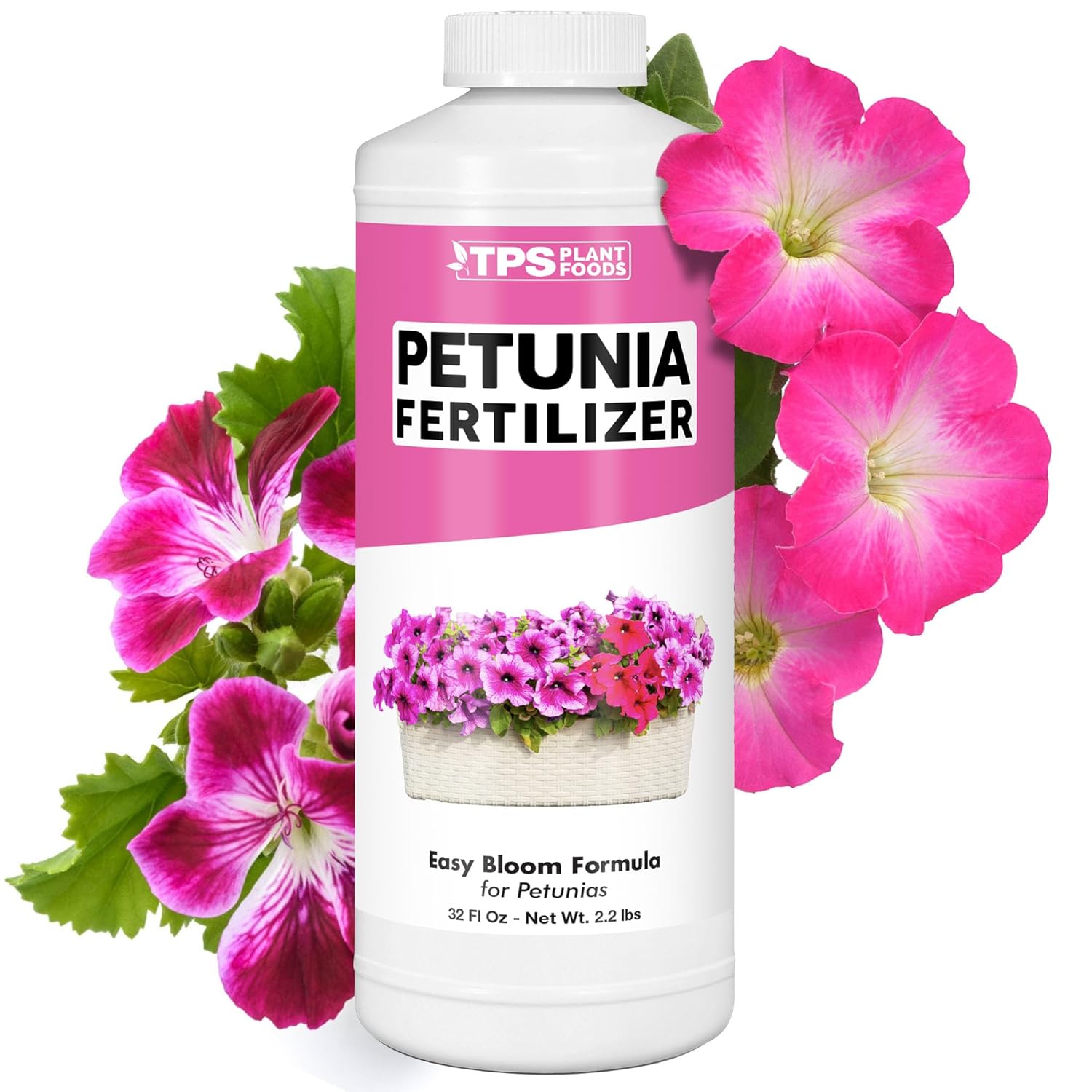
TPS Nutrients Petunia Liquid Fertilizer, 32 oz
| Item Form | Liquid |
|---|---|
| Application Method | Mix with water |
| Coverage | Petunia plants in hanging baskets, containers, or garden beds |
| Target Species | Petunia |
| Liquid Volume | 32 fluid ounces |
This TPS Nutrients petunia fertilizer is a liquid concentrate you mix with water (mixing ratio 2 tablespoons per gallon) to feed petunias in hanging baskets, containers, or beds. It supplies a balanced feed aimed at encouraging repeat flowering, strong root growth, and vibrant color, so you can maintain continuous blooms through the season with routine applications. The liquid form makes it easy to measure and apply through a watering can or hose-end sprayer, and the 32-ounce bottle provides multiple treatments for several baskets. Because it is targeted to petunias, the formulation focuses on bloom performance rather than heavy vegetative growth, which helps keep flowering plants from becoming leggy. Limitations are that it is single-purpose for petunias rather than a universal fertilizer and you must follow the dilution rate carefully to avoid overfeeding. For gardeners who prefer a ready-mix granular or an all-purpose feed for mixed plantings, this is less convenient.
Best for: Gardeners who want a straightforward, bloom-focused feed for petunia hanging baskets and container displays and who prefer a liquid concentrate they can dose precisely.
Less Ideal for: People who need an all-purpose fertilizer for mixed beds or who prefer slow-release granular feeds for low-maintenance care.
- Formulated specifically for petunias to promote repeat flowering and vibrant color
- Liquid concentrate is easy to mix and apply with a watering can or sprayer
- Suitable for hanging baskets, containers, and garden beds for versatile use
- Clear mixing ratio provided (2 tablespoons per gallon) simplifies dosing
- Targeted formulation means it is not a multi-purpose fertilizer for diverse plantings
- Requires careful dilution and regular applications to maintain bloom performance
Verdict: A simple, petunia-focused liquid feed that makes it easy to keep hanging baskets and containers blooming strongly all season.
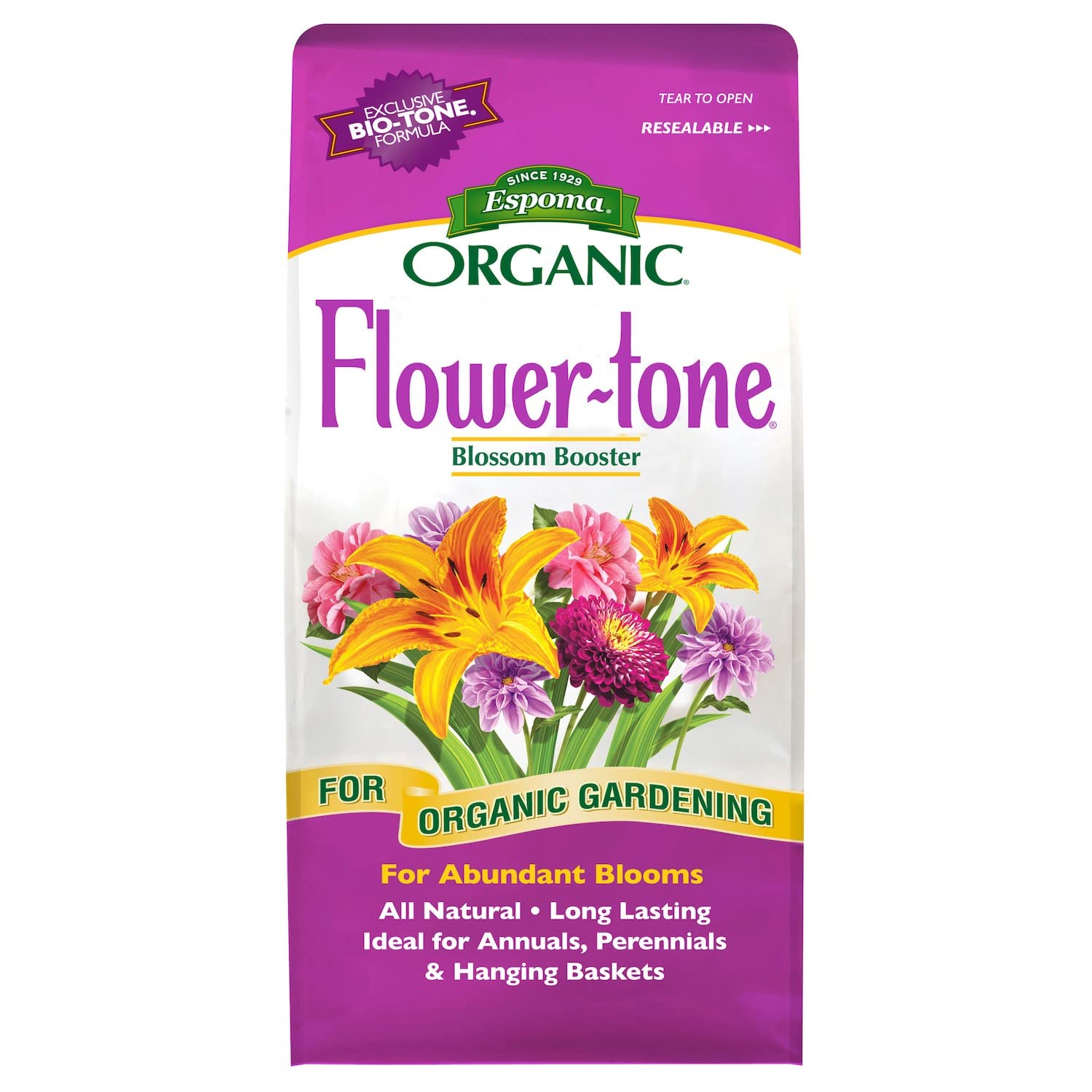
Espoma Flower-Tone Organic Fertilizer, 4 lb. Bag, 2-Pack
| Item Form | Granules |
|---|---|
| Specific Uses For Product | Gardening,Organic,Plant Food |
| Coverage | Medium |
| Target Species | flowers, annuals, perennials, roses |
| Mixing Ratio | 3:4:5 |
Espoma Flower-Tone is an organic granular plant food designed to promote abundant blooms in flowers, perennials, annuals and roses. It is applied directly to the soil around the plant drip line and watered in, with a recommended monthly application during the growing season. The 3-4-5 nutrient ratio with added calcium and the Bio-tone biological formula supply a balanced feed that supports flowering without high nitrogen that would favor foliage over blooms. Because it is granular and labeled for organic gardening, it works well for mixed perennial beds where you want steady, natural nutrient release and compatibility with organic practices. The product comes in convenient 4 pound bags sold as a two-pack for repeat applications. Limitations are that it is a medium-coverage granular feed rather than a fast-acting liquid, so results accumulate over weeks, and you must follow monthly repeat applications for sustained bloom performance.
Best for: Gardeners who want an easy, organic monthly feed to boost blooms in mixed perennial and flower beds and prefer a product that supports soil biology.
Less Ideal for: Growers who need immediate, fast-acting nutrient results or who are managing very large beds where concentrated coverage per application is the priority.
- Organic formula approved for organic gardening and safe for use around flowers and perennials
- Balanced 3-4-5 NPK with added calcium supports bloom production rather than excess leaf growth
- Granular form is easy to apply around drip lines and provides steady nutrient release
- Includes Espoma's Bio-tone biological formula to support soil biology and root health
- Medium coverage means larger beds will require multiple bags for full-season feeding
- Slower to show results compared with liquid or soluble fertilizers
Verdict: A dependable organic granular fertilizer that steadily promotes bigger, healthier blooms in perennial and flower beds when used as a monthly feed.
ferti-lome All Purpose 20-20-20 Water Soluble Plant Food, 3 lb

| Brand | ferti-lome |
|---|---|
| Item Form | Granules |
| Application Method | Soil drench or foliar spray |
| Mixing Ratio | 1:80 |
| Specific Uses For Product | Plant Growth |
The ferti-lome 20-20-20 water-soluble plant food is a concentrated, balanced NPK fertilizer intended for use as a soil drench or foliar spray on potted ornamentals and hanging baskets. You mix the granules into water at the recommended ratios and apply either to the soil or as a foliage feed, which makes it easy to treat petunias, geraniums, impatiens and other annuals that need frequent feeding. Its balanced 20-20-20 formula supports both foliage and bloom development, so you can encourage greener leaves and more plentiful flowers without switching products. Notable features include a clear mixing ratio and specific directions for container and outdoor use, and the water-soluble format lets nutrients reach roots quickly. The main limitations are that it is a general-purpose fertilizer rather than a bloom-boosting high-phosphorus formula and it requires regular applications and careful measuring to avoid overfeeding in small containers.
Best for: Gardeners who want a single, easy-to-mix fertilizer to maintain healthy foliage and steady blooms in petunia hanging baskets and other container ornamentals.
Less Ideal for: Growers seeking a specialized bloom-boosting fertilizer or those who prefer slow-release granular feeds that require less frequent attention.
- Balanced 20-20-20 formula supports both blooms and foliage growth
- Water-soluble granules allow quick nutrient uptake when used as a soil drench or foliar spray
- Clear mixing ratios and application directions for containers and outdoor plants
- Concentrated 3 lb bag covers multiple feedings for hanging baskets and patio pots
- Not specifically formulated as a high-phosphorus bloom booster for peak flowering
- Requires careful measuring and regular applications to avoid nutrient burn in small pots
Verdict: A practical, easy-to-mix balanced fertilizer that keeps petunia hanging baskets healthy with regular feedings.
Jobe's Flower Fertilizer Spikes for Potted Plants and Hanging Baskets, 18 Count

| Unit Count | 18 Count |
|---|---|
| Application Method | Insert into soil |
| Item Form | Sticks |
| Mixing Ratio | 8-9-12 |
Jobe's Flower Fertilizer Spikes are pre-measured, slow-release sticks designed for potted plants and hanging baskets. To use, you push the spikes into the potting mix around the root zone and replace them roughly every eight weeks; the spikes dissolve slowly so nutrients are delivered at the roots rather than washed off the surface. The product uses an 8-9-12 NPK formula aimed at encouraging bloom and foliage development and is sold in an 18-count pack. Practical benefits include a mess-free application, reduced chance of overfertilizing because each spike is pre-measured, and convenience for busy gardeners who want low-maintenance feeding. Limitations are that the fixed NPK ratio and dosing may not suit every plant or growth stage and spikes provide medium coverage so very large baskets or dense plantings may need multiple spikes or more frequent replacement. Also this format does not allow custom blending of nutrients the way granular or liquid feeds do.
Best for: Ideal for budget-minded gardeners who want a low-effort, reliable way to keep hanging flower baskets and potted annuals fed without frequent mixing or measuring.
Less Ideal for: Not a good fit for growers who need precise control of nutrient ratios for specialty plants or for those managing very large or heavily planted baskets that need heavy feeding.
- Pre-measured slow-release sticks for mess-free, root-targeted feeding
- Feeds up to eight weeks per application reducing maintenance frequency
- Convenient insert-into-soil application suitable for hanging baskets and pots
- Formulated 8-9-12 NPK to support blooms and foliage
- Fixed nutrient ratio and dosage limit customization for specific plant needs
- Medium coverage means multiple spikes may be required for large or densely planted baskets
Verdict: A simple, low-maintenance spike feed that keeps hanging baskets blooming with minimal cost and effort.
Jack's Classic Petunia FeED Water-Soluble Fertilizer, 1.5 lb (20-6-22)

| Item Form | Powder |
|---|---|
| Specific Uses For Product | Bloom Production |
| Application Method | Spray |
| Unit Count | 24 Ounce |
Jack's Classic Petunia FeED is a concentrated, water-soluble powder fertilizer designed to produce vigorous green growth and abundant blooms on petunias and other iron-dependent annuals. You mix the measured powder with water using the included scoop and apply as a foliar spray, root drench, or in a continuous feed system, which makes it flexible for hanging baskets, containers, and garden beds. The 20-6-22 NPK ratio targets bloom production while added micronutrients support iron-loving plants and help maintain leaf color. As a powder concentrate it is economical because a small amount yields multiple gallons of feed solution. The product is straightforward to use with clear mixing directions, and the powder form stores compactly between uses. Limitations are that it is a single-purpose bloom formula so it is not a full-season balanced feed for all crops, and careful mixing is required to avoid overfeeding with concentrated solutions. For growers who prioritize strong flowering performance in petunias, this fertilizer delivers focused, professional-grade nutrition.
Best for: Gardeners focused on maximizing flower production from petunias and other iron-loving annuals who prefer a concentrated, professional-style fertilizer for containers and beds.
Less Ideal for: Casual gardeners seeking a single, all-season feed for mixed plantings or those who prefer ready-to-use liquid fertilizers will want a different product.
- High 20-6-22 NPK ratio geared toward bloom production and lush green growth
- Water-soluble powder concentrates make the product economical per gallon of feed
- Includes micronutrients formulated for iron-loving annuals to improve leaf color
- Versatile application as foliar spray, root feeding, or in continuous feed systems
- Specialized bloom formula rather than an all-purpose, balanced fertilizer
- Requires precise measuring and mixing to avoid nutrient burn
Verdict: Choose this concentrated water-soluble formula when you want targeted, professional-grade nutrition to boost blooms and leaf color in petunias.
EarthPods Flower & Rose Organic Fertilizer Spikes, 100 Count

| Item Form | Capsules |
|---|---|
| Specific Uses For Product | Blooming plant food, Bulb food, Container flower fertilizer, Rose fertilizer |
| Application Method | Push into soil near the stem |
| Coverage | Flowers (Roses, Potted Annuals, Perennials, Flower Bulbs, Hanging Baskets) |
| Unit Count | 100 Count |
EarthPods Flower & Rose fertilizer spikes are pre-formed organic capsules you push into moist soil near the stem to feed flowering plants for roughly 14 to 21 days per application. They are designed for potted flowers, hanging baskets, window boxes and garden beds and the pack includes 100 capsules to cover repeated feedings. The slow-release formula delivers bloom-focused nutrients, trace minerals and humates without mixing liquids or producing strong odors on patios. Typical use is simple: press the suggested number of spikes into the root zone and water; directions provide quantity guidelines for small pots up to rose bushes. Practical benefits include easy, mess-free dosing and consistent feeding for plants that need regular bloom support, which is helpful for busy container gardeners. Important limitations are that the product is formulated for flowering plants specifically so it is not a balanced all-purpose feed for foliage-heavy crops and repeat applications are needed every two to three weeks during active bloom periods. Also you must follow placement and quantity guidance to avoid overfeeding in small containers.
Best for: Gardeners who grow geraniums and other flowering plants in pots or hanging baskets and want a simple, low-mess way to maintain steady bloom nutrition with minimal measuring.
Less Ideal for: Growers seeking a single balanced fertilizer for foliage, vegetables, or trees should choose a different product tailored to those plant types.
- Pre-measured capsules make dosing quick and mess-free for container and basket plants
- Slow-release formula feeds blooms and supports root development for 14 to 21 days
- Pack of 100 provides many feedings for multiple pots and seasonal use
- Organic ingredients and added trace minerals suited for bloom-focused nutrition
- Formulated for flowering plants so not ideal as a complete all-purpose or foliage fertilizer
- Requires repeated applications during the growing season to maintain bloom performance
Verdict: If you want an easy, low-mess way to keep geraniums and other potted flowering plants fed for steady blooms, these slow-release organic capsules make regular feeding simple and convenient.
ferti-lome All Purpose Water Soluble Plant Food 20-20-20 (8 oz)

| Item Form | Liquid |
|---|---|
| Application Method | soil drench and foliar spray |
| Target Species | Geraniums, Pansies, Petunias, Impatiens, annuals, perennials, hanging baskets |
| Mixing Ratio | 1:64 (soil), 1:256 (foliar) |
This 8 oz bottle of ferti-lome 20-20-20 is a straightforward, balanced water‑soluble fertilizer for flowering annuals like zinnias. It mixes easily—directions call for 1–2 teaspoons per gallon for soil applications and a much weaker foliar spray—so you can feed plants either through the potting mix or by spraying leaves. The even N-P-K ratio supports steady vegetative growth while supplying phosphorus and potassium for blooms and overall vigor. Because it is liquid and concentrated, small amounts treat many plants and you can apply it every watering or every few days for continuous bloom production. Limitations are the small 8 oz size if you maintain a large planting area and the lack of granular slow‑release option for low‑maintenance schedules. Also it is a general purpose formula rather than a zinnia-specific bloom booster, so some growers may prefer a higher-phosphorus feed when pushing heavy flower set.
Best for: Gardeners who want an affordable, easy-to-mix liquid fertilizer to keep zinnias and other bedding annuals blooming regularly without complicated feeding schedules.
Less Ideal for: Large-scale or low-maintenance gardeners who prefer slow‑release granules or a high‑phosphorus bloom formula tailored specifically for heavy flowering.
- Balanced 20-20-20 formula suitable for foliage and flowering needs
- Water‑soluble concentrate that mixes quickly for soil or foliar feeding
- Concentrated dosing means small bottle treats many plants when mixed correctly
- Small 8 oz bottle may require frequent repurchase for larger beds or repeated use
- Not a high-phosphorus bloom booster if you want to force extra-heavy flowering
Verdict: A compact, easy-to-use 20-20-20 liquid fertilizer that delivers frequent, balanced feeding to keep zinnias blooming without complicated mixing.
Choosing the Right Fertilizer for Petunia Hanging Baskets: Key Factors to Consider
Nutrient Ratio and Release Type
Petunias in hanging baskets benefit from a fertilizer that supports continuous flowering rather than just leafy growth. Look for a formulation with a slightly higher middle number if you want to emphasize blooms, but balanced N-P-K overall avoids legginess. Release type matters because hanging baskets are small and dry out quickly. Water-soluble fertilizers give fast results and let you tune feeding frequency, while slow-release granules reduce labor but may underdeliver in very shallow or fast-draining mixes.
Consider how often you can realistically fertilize. If you water several times a week, a diluted water-soluble feed applied on a schedule can keep nutrients steady. If you prefer set-and-forget, choose a slow-release product rated for containers and designed to release evenly in warm, moist conditions commonly found in summer baskets.
Application Method and Frequency
Application method affects how reliable the feed is in the particular microclimate of a hanging basket. Liquid or water-soluble feeds require regular application-often weekly or every other week-but they compensate for leaching from frequent watering and heavy rainfall. Spike or tablet forms are tidy but can release unevenly in small soil volumes or during droughty spells.
Think about accessibility. Hanging baskets can be hard to reach, so choose a method you will actually keep up with. Slow-release granules are convenient for out-of-reach baskets, while water-soluble feeds suit people who routinely hand-water and can combine feeding with watering.
Salt Index and Root Safety
Container plants are vulnerable to salt buildup because there is no large soil buffer. High-salt fertilizers or over-application can burn roots and reduce bloom set. Choose a fertilizer formulated for containers with a low salt index and follow label rates carefully. For plants that show leaf-tip burn or stunted roots, a flush with plain water can help leach excess salts, but prevention by proper dosing is better.
Also consider gentler formulations if you use slow-release spikes; some granules release salts quickly during the first waterings and can harm young roots. Products labeled safe for containers or for flowering annuals are generally a safer choice for hanging baskets.
Compatibility With Watering Habits
How you water affects nutrient delivery. Frequent, light watering can wash out nutrients quickly so you need a fertilizer that replaces what was lost without causing spikes in concentration. If you soak deeply and less often, slow-release options may be more compatible. Weather matters too: heavy summer rains accelerate leaching, making soluble feeds preferable when rainfall is frequent.
Match fertilizer timing to your irrigation cycle. Apply concentrated feeds right before a deep watering so nutrients move into the root zone. If you rely on drip irrigation or automatic timers, pick a formulation compatible with that system and avoid products that clog emitters.
Plant Stage and Seasonal Needs
Petunias have shifting nutrient needs through their season. At planting and during vegetative growth, they need enough nitrogen to establish foliage. Once flowering begins, they need steady phosphorus and potassium to support bud set and flower longevity. Tailoring your feed to the stage will optimize bloom quantity and quality.
Also account for seasonal temperature. In cooler shoulder seasons, slow-release feeds will act more slowly, while in hot summer weather, water-soluble feeds will be metabolized quickly by the plant and soil microbes. Adjust frequency and concentration across the season to maintain consistent performance.
Formulation Additives and Plant Health
Some fertilizers include micronutrients, chelated iron, or bloom-boosting ingredients that can correct common container deficiencies and enhance color. Micronutrients are important because small soil volumes can become depleted quickly; a balanced trace element package avoids subtle yellowing or poor bud development.
Be cautious with hormone-like or bloom-stimulant additives if you prefer a more natural approach. While they can increase flower production, they may also shorten individual bloom life or shift the overall growth habit. Read labels to confirm what extras are included and whether those extras align with your cultural practices.
Feeding Schedule That Fits Your Routine
Create a feeding schedule based on your typical watering pattern and the fertilizer form you choose. For water-soluble feeds, feed at half strength with each second or third watering during peak bloom to avoid salt buildup. For slow-release granules, follow the product interval but check baskets midseason for signs of nutrient depletion.
Keep a simple calendar or set a reminder on your phone. Consistency matters more than high concentration. A light, regular feeding plan maintains steady bloom production and reduces the risk of fertilizer burn.
- Water-soluble: often every 1 to 2 weeks at reduced strength
- Slow-release: follow manufacturer interval but check monthly
- Liquid concentrates: useful for spot-corrections of deficiencies
How to Apply Fertilizer Without Harming Roots
Avoid applying undiluted concentrate directly onto the root ball or foliage. Dissolve and distribute fertilizer evenly through the soil when watering so it does not create concentrated pockets. If using spikes or tablets, place them around the root zone margin rather than directly on top of roots.
When repotting or refreshing the basket soil, incorporate slow-release granules at the recommended rate into the new mix. That gives a steady baseline feed and reduces the need for early-season liquid applications.
- Dilute water-soluble feeds to half strength for routine maintenance
- Flush with clear water periodically to remove excess salts
- Place granules evenly when repotting to avoid hot spots
Signs Your Basket Needs a Different Feeding Approach
Watch the plant and soil rather than relying only on a calendar. Sparse blooms, yellowing between veins, or leaf tip scorch indicate nutrient imbalance, salt stress, or incorrect application. If blooms are few but foliage is lush, reduce nitrogen and switch to a bloom-focused ratio.
If you notice rapid drooping after feeding, that can signal over-concentration. In that case, flush the container with water and cut back on feed strength or frequency.
- Fewer flowers with lots of green: reduce nitrogen
- Yellow leaves with healthy stems: possible micronutrient deficiency
- Leaf-tip burn: likely salt buildup
Adjusting Fertilizer for Different Petunia Types
Trailing, spreading, and grandiflora petunias have slightly different growth habits and demands. Trailing types in baskets may need more frequent dilute feeding because their media tends to dry faster, while larger, fuller varieties with deeper root zones may tolerate slower-release formulas longer.
Match the feed strength to the cultivar's vigor. For vigorous types, favor bloom-focused feeds that avoid excessive vegetative push. For more delicate varieties, use gentler concentrations and ensure micronutrients are present.
- Trailing types: more frequent, lighter feed
- Compact types: balanced slow-release or regular soluble feed
- Vigorous growers: bloom-focused ratios to avoid legginess
Routine Maintenance That Enhances Fertilizer Effectiveness
Deadheading spent flowers, pruning a lanky runner, and refreshing the top inch of potting mix all improve fertilizer performance by directing plant energy toward new blooms and preventing soil compaction. Clean drainage holes and ensure good airflow; stagnant, waterlogged soil reduces nutrient uptake and can lead to root issues.
Periodic repotting or adding fresh potting mix midseason replenishes organic matter and resets the root environment so fertilizer behaves predictably.
- Deadhead regularly to encourage more blooms
- Refresh potting mix annually or midseason if needed
- Maintain good drainage to prevent root stress
How We Chose the Best Fertilizer for Petunia Hanging Baskets
We shortlisted fertilizers that suit the specific demands of petunia hanging baskets: small, fast-draining containers that need steady nutrition without salt buildup. Selection focused on measurable, garden-relevant attributes: nutrient ratio and release type, ease and frequency of application, salt index and safety for container roots, compatibility with common watering schedules, and physical form that works in hanging baskets (liquid, water-soluble, spikes, or slow-release granules). We prioritized products that support continuous flowering through higher phosphorus and balanced nitrogen without encouraging excessive foliage at the expense of blooms. We excluded fertilizers intended solely for lawns, heavy-feed vegetables, or formulations that require large soil volumes to avoid misleading suitability for hanging baskets. We also filtered out formulas with vague nutrient claims and those that demand complex mixing that most casual container gardeners will not follow. The resulting picks balance bloom-oriented nutrition, predictable delivery, and gardener-friendly application.
FAQ
How often should I feed petunias in hanging baskets?
It often depends on the fertilizer type. Water-soluble feeds are typically applied every one to two weeks at reduced strength, while slow-release granules may only need application once at planting or midseason. Adjust frequency based on bloom performance and watering habits.
Can I use a regular garden fertilizer in hanging baskets?
Regular garden fertilizers are not always ideal because they may be formulated for larger soil volumes and can build up salts in small containers. Use formulations labeled for containers or annuals and follow recommended rates to avoid root burn.
What are signs of fertilizer burn in container petunias?
Common signs include leaf-tip browning, sudden wilting after feeding, and reduced new growth. If you suspect burn, flush the basket with clear water to dilute salts and pause feeding until plants recover.
Should I change fertilizer type midseason?
You can switch based on plant response. Moving from a general-purpose feed to a bloom-focused formula as flowers set is common. If you change form from slow-release to liquid, monitor for signs of overfeeding and adjust rates accordingly.
Do I need to adjust feeding in rainy weather?
Yes. Heavy rain increases leaching, which can wash nutrients from the small soil volume. In persistently wet conditions, use more frequent dilute liquid feed or check plants for signs of nutrient loss before increasing concentration.
Are micronutrients important for petunia baskets?
Often they are. Small soil volumes can quickly show deficiencies in iron, manganese, or other trace elements, which affect leaf color and bud set. A balanced fertilizer that includes micronutrients or occasional foliar feeding can correct those issues.
Final Verdict
Pick a feeding approach that fits how you water and how often you can service hanging baskets. Prioritize a nutrient balance that favors bloom set, a delivery form that suits your access and watering frequency, and a product with a low salt index to protect roots. Tradeoffs are real: convenience often means slower response, while fast-acting soluble feeds demand regular attention but deliver quick results. Choose based on your maintenance rhythm and the petunia type you grow. With the right balance of nutrients, timing, and basic basket care, you will sustain abundant, long-lasting blooms throughout the season.
