

Note: This article contains affiliate links. If you click on these links and make a purchase, I may earn a small commission at no extra cost to you. This helps support my research and content. Read my full affiliate disclosure here.
If you need to clear leaves, grass clippings, or light debris without the weight and fuss of a gas machine, a lightweight corded leaf blower can be the right tool. You want something easy to handle for extended periods, with enough airflow to move wet or packed leaves and a corded motor that runs continuously without recharging. This guide covers seven shortlisted options that excel in real garden use and explains the practical differences that matter when you are doing paths, patios, lawns, or beds. We evaluated each blower on airflow, weight and handling, noise and vibration, and build durability so you can pick an option that reduces fatigue while still getting the job done. Read on for the criteria we used and the buying factors to consider before you choose a blower for your yard.
Top Picks at a Glance
| Best Overall The best all-around choice for most situations | BLACK+DECKER LB700 7-Amp Corded Handheld Leaf Blower |  |
| Best Quality Built to a higher standard if you want something more solid | WORX WG520 600 CFM Turbine Corded Electric Leaf Blower |  |
| Best Value The sweet spot between price and what you get | MAXLANDER 7-Amp Handheld Electric Leaf Blower |  |
| Best Budget The cheapest option that still gets the job done reliably | SENIX 6 Amp Corded Electric Leaf Blower (260 CFM, 155 MPH) |  |
| Highest Rated A top-rated pick with lots of positive feedback | CRAFTSMAN CMEBL710 Corded Axial Leaf Blower (9 Amp) |  |
| Most Popular A crowd favorite that many people choose with confidence | Sun Joe SBJ597E Corded Electric Leaf Blower, 6-Amp |  |
| Best Seller A high-volume bestseller chosen again and again | BLACK+DECKER BEBL750 Corded Electric Handheld Leaf Blower |  |
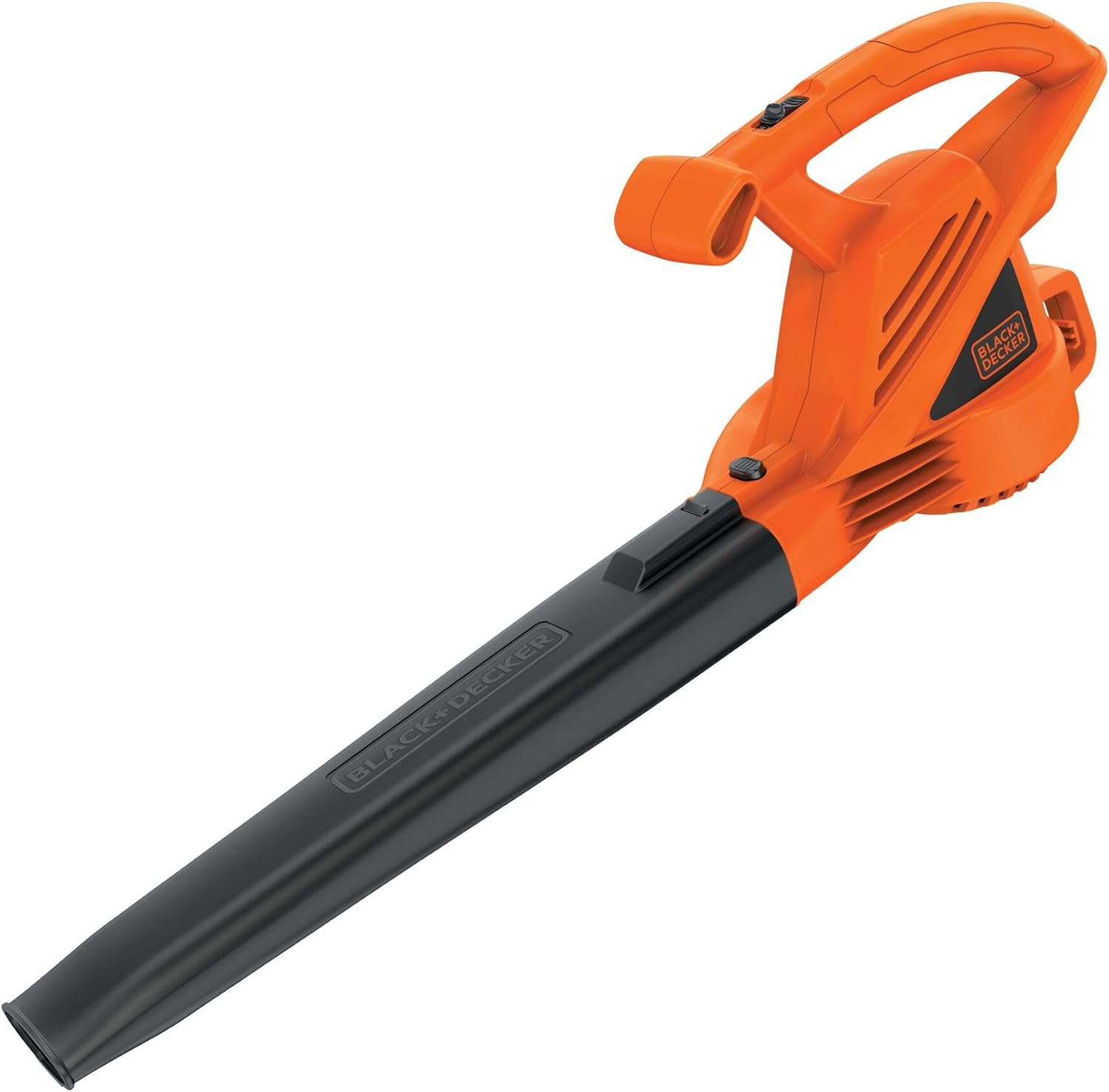
BLACK+DECKER LB700 7-Amp Corded Handheld Leaf Blower
| Power Source | Corded Electric |
|---|---|
| Form Factor | Handheld |
| Air Flow Capacity | 180 cfm |
| Speed | 180 miles_per_hour |
| Included Components | (1) LB700 blower, (1) Blow tube |
The BLACK+DECKER LB700 is a compact, corded handheld leaf blower built for fast, one-handed cleanup around yards, driveways, and patios. Its 7-amp motor produces air speeds up to 180 mph and an airflow rating of 180 cfm, which powers away leaves, small twigs, and grass clippings without dragging out larger equipment. At about 4.4 pounds the unit is easy to maneuver for extended periods and the included blow tube focuses airflow for more effective clearing. Built-in cord retention helps avoid accidental unplugging during use. The corded design means continuous runtime and steady power but requires access to an outlet or extension cord and limits mobility compared with battery models. The blower is best for homeowners who want a reliable, lightweight tool for routine debris removal rather than heavy-duty property maintenance. Controls are straightforward and the simple construction keeps maintenance minimal, though users seeking variable speed or vacuum/mulch features will need a different model.
Best for: Buyers who prioritize a proven, easy-to-use blower for routine cleanup and want a lightweight tool backed by many user experiences and reliable performance.
Less Ideal for: Large properties or users who need cordless mobility, adjustable speeds, or a vacuum/mulch combination in a single machine.
- Lightweight 4.4 lb design makes one-handed use and longer sessions comfortable
- 7-amp motor with up to 180 mph and 180 cfm moves leaves and debris quickly
- Cord retention prevents accidental unplugging during use
- Simple, no-frills operation with minimal maintenance
- Corded power limits range and requires an extension cord for larger yards
- No variable speed control or vacuum/mulching function
Verdict: A light, well‑known corded blower that delivers strong airflow for fast, no‑frills yard cleanup.
WORX WG520 600 CFM Turbine Corded Electric Leaf Blower

| Power Source | Corded Electric |
|---|---|
| Air Flow Capacity | 600 cfm |
| Maximum Speed | 110 miles_per_hour |
| Additional Features | Adjustable Speed, One-hand Operation |
The WORX WG520 is a corded, handheld leaf blower built for homeowners who want steady, no-fuss power for regular yard maintenance. Its 12 amp motor and TURBINE fan design produce up to 600 CFM and 110 MPH, which moves leaves, grass clippings, and light debris quickly across lawns, driveways, and patios. Two-speed variable control lets you dial back airflow for detail work near flowerbeds and boost it for open areas or larger piles. The tapered hyper-stream nozzle focuses airflow for stronger pushing power while the lightweight, one-hand design reduces fatigue during longer sessions. Because it is corded, you get continuous run time without battery swaps or gas maintenance, though the cord limits reach compared with cordless or gas models. It is quieter than many gas blowers and simple to start and maintain. If you need a reliable, high-airflow blower for routine seasonal cleanup and everyday yard tasks, the WG520 balances performance and ease of use effectively.
Best for: Buyers who prioritize dependable, high-airflow performance for regular yard cleanup and want a low-maintenance tool that runs continuously without charging or fuel.
Less Ideal for: Those who need cordless portability for large properties or professionals who require the extended range and run-time of gas-powered units.
- High maximum airflow (600 CFM) for fast clearing of leaves and debris.
- Two-speed variable control for precise low-speed work and high-power clearing.
- Continuous corded power avoids battery charging and gas maintenance.
- Hyper-stream tapered nozzle concentrates airflow for stronger pushing force.
- Lightweight one-hand design reduces user fatigue for longer tasks.
- Cord restricts reach and requires access to an outdoor outlet for extended areas.
- Not suitable where cordless portability or gas-level range is required.
- Heavier yard tasks like blowing very wet, heavy debris may require multiple passes.
Verdict: Choose the WG520 if you want a powerful, low-maintenance corded blower that clears leaves quickly with reliable continuous power.
MAXLANDER 7-Amp Handheld Electric Leaf Blower

| Motor | 7 AMP |
|---|---|
| Max air speed | 155 MPH |
| Max airflow | 350 CFM |
| No-load speed | 14000 RPM |
The MAXLANDER 7-amp handheld electric blower is a compact corded tool built for quick, low-effort yard cleanups. It produces up to 155 MPH and 350 CFM, enough power to move dry leaves and debris from driveways, patios, and garage floors. The unit is lightweight and portable, making it easy to maneuver for short tasks and to reach tight corners; it comes with two nozzles, a flat tip for concentrated airflow on dust and small debris and a round tip for larger leaves. Because it is corded, it delivers consistent power without recharge downtime, but the cord limits mobility compared with battery or gas models. The blower is best for homeowners who want an inexpensive, easy-to-store tool for routine leaf and debris clearing rather than heavy-duty yard work. Noise and long-run ergonomics are typical of small electric blowers, so expect adequate but not professional-grade comfort during extended use.
Best for: Buyers who prioritize a compact, no-fuss tool for routine yard tidying and want reliable corded power for short to medium jobs around driveways, patios, and small lawns.
Less Ideal for: People who need full-day use on large properties, off-grid operation, or professional-strength blowing power should consider larger gas or high-capacity battery models instead.
- Strong 7-amp motor delivering up to 155 MPH and 350 CFM for effective leaf clearing
- Lightweight design that is easy to carry and maneuver for quick tasks
- Two interchangeable nozzles for targeting dust or moving larger leaves
- Corded power provides consistent performance without battery swaps
- Cord restricts range and requires access to an outdoor outlet or extension cord
- Not intended for heavy professional use or large properties
Verdict: A lightweight, corded blower that delivers solid airflow for fast, everyday leaf and debris cleanup around small yards and hard surfaces.
SENIX 6 Amp Corded Electric Leaf Blower (260 CFM, 155 MPH)

| Power | 6 Amp, 120V |
|---|---|
| Air volume | 260 CFM |
| Air speed | 155 MPH |
The SENIX 6 Amp corded electric leaf blower is a simple, wallet-friendly tool for quick outdoor cleanups. Its 120V motor produces up to 260 CFM of air volume and 155 MPH of air speed, which is enough to move leaves, grass clippings, and light debris from lawns, sidewalks, and driveways. The unit is lightweight and designed for one-handed use, so it is easy to carry during short sessions and creates less fatigue than bulkier gas models. Being corded, it provides consistent power with low vibration and no emissions, but you will be limited by cord length and need an outdoor outlet or an extension cord rated for outdoor use. Notable features include straightforward plug-and-play operation and a 3-year limited warranty for basic coverage. If you want a compact blower for routine seasonal tidy-ups without the maintenance of gas engines, this model is a practical choice; if you need heavy-duty debris clearing or cordless mobility, a different class of blower would be more appropriate.
Best for: Buyers who want an affordable, easy-to-use blower for regular home yard and driveway tidying and who prefer a low-maintenance electric tool over gas models.
Less Ideal for: People who need cordless convenience, long-reach mobility, or high-power performance for large properties and heavy wet debris should consider other options.
- Produces up to 260 CFM and 155 MPH for effective clearing of leaves and light debris
- Lightweight one-handed design reduces fatigue during short cleanup tasks
- Corded electric motor offers consistent power with low vibration and no emissions
- Backed by a 3-year limited warranty
- Corded design restricts mobility and requires a properly rated outdoor extension cord
- Not intended for heavy-duty debris or professional landscaping jobs
Verdict: A lightweight, budget-friendly corded blower that delivers reliable power for routine home leaf and debris cleanup.
CRAFTSMAN CMEBL710 Corded Axial Leaf Blower (9 Amp)

| Power Source | Electric |
|---|---|
| Form Factor | Handheld |
| Air Flow Capacity | 450 cfm |
| Noise Level | 71 db |
| Speed | 140 miles_per_hour |
The CRAFTSMAN CMEBL710 is a straightforward corded handheld blower built for efficient yard cleanup. Its 9 amp axial motor produces up to 140 MPH and 450 CFM, which moves large amounts of leaves and grass clippings quickly on driveways, sidewalks, and lawns. A two-speed switch helps you dial back power for lighter tasks or boost it for compacted piles, and the built-in scraper loosens wet or stubborn debris without switching tools. The blower is lightweight and includes an integrated VERSATRACK hook for tidy garage storage. Because it is corded, you get consistent power for longer jobs without battery swaps, though you will be limited by cord reach and need to manage an extension. Noise is moderate at the listed 71 dB, and the simple handheld form makes the unit easy to maneuver but not ideal for very large properties where a backpack or cordless model might be more convenient. For homeowners who value steady power and simple, reliable performance for routine fall and seasonal cleanups this blower is a practical choice.
Best for: Homeowners who want a reliable, no-fuss corded blower for routine yard and driveway cleanup and who prioritize steady power over cordless convenience.
Less Ideal for: People with very large properties or those who need cordless freedom and long runtime should consider backpack or battery-powered alternatives.
- High air volume: 450 CFM moves large piles and speeds up cleanup
- Two-speed switch provides control for light or heavy tasks
- Built-in scraper helps remove wet or stuck debris without extra tools
- Consistent corded power avoids battery runtime limits
- Integrated VERSATRACK hook for convenient storage
- Cord restricts mobility and requires extension cords for larger yards
- Handheld design can be tiring for extended use on very large properties
Verdict: Choose this corded CRAFTSMAN blower if you want steady, high-volume power and simple, tool-free cleanup for typical home yards.
Sun Joe SBJ597E Corded Electric Leaf Blower, 6-Amp

| Power Source | Corded Electric |
|---|---|
| Voltage | 120 volts |
| Air Flow Capacity | 260 cfm |
| Maximum Speed | 155 miles_per_hour |
| Form Factor | Handheld |
The Sun Joe SBJ597E is a compact corded electric leaf blower designed for quick, everyday outdoor cleanup. It is used primarily for sweeping leaves and light debris from patios, driveways, decks and small lawns. The 6-amp motor produces a maximum airspeed of 155 MPH and an airflow of 260 CFM, which is strong enough to move dry leaves and grass clippings without complicated setup. Its handheld form factor and 3.9 pound weight make it easy to carry and maneuver for short jobs, and the instant-start corded design means you do not worry about batteries or recharging. Notable features include an anti-vibration design and included front and rear blower tubes for focused airflow. Practical benefits are straightforward: low maintenance, consistent power for as long as you stay connected to an outlet, and fast cleanup for small- to medium-sized properties. Important limitations are its corded power source, which restricts range, and modest CFM that may struggle with heavy, wet debris or large yards where a higher-capacity machine would be faster.
Best for: Buyers who want an inexpensive, no-fuss blower for quick cleanup around patios, driveways and small yards and who prioritize low weight and steady corded power over long range.
Less Ideal for: Homeowners with large properties, heavy wet leaves, or who need cordless mobility should consider more powerful or battery/backpack models instead.
- Lightweight handheld design (3.9 lb) that reduces fatigue during short sessions
- Consistent corded power for unlimited run time while plugged in
- 260 CFM airflow and 155 MPH speed suitable for moving dry leaves and small debris
- Anti-vibration construction and instant-start operation for simple, comfortable use
- Corded operation limits reach and requires an extension cord for larger yards
- Airflow and power are modest compared with backpack or higher-amp models, so heavy or wet debris can be difficult to clear
Verdict: A lightweight, budget-friendly corded blower that delivers dependable power for routine small-yard cleanup.
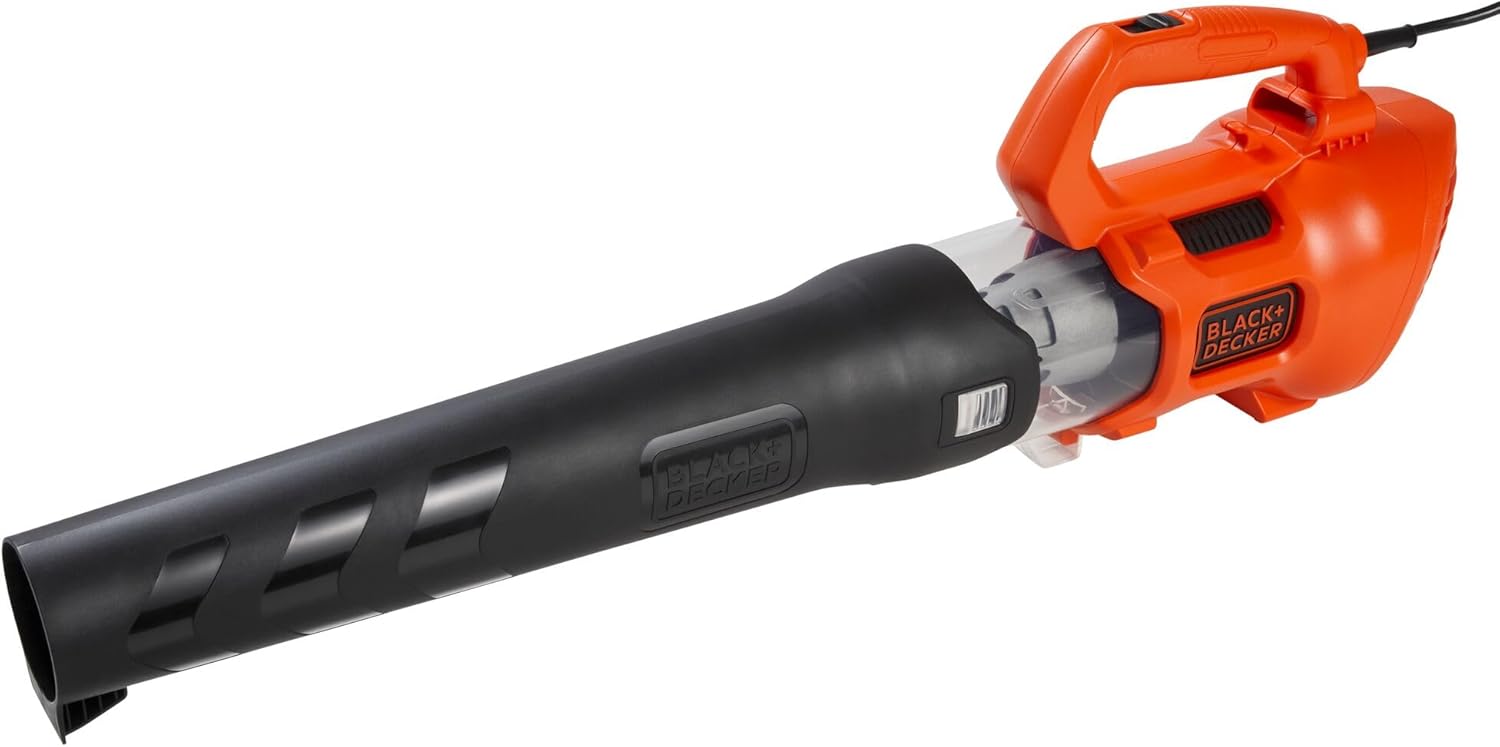
BLACK+DECKER BEBL750 Corded Electric Handheld Leaf Blower
| Power Source | Corded Electric |
|---|---|
| Form Factor | Handheld |
| Air Flow Capacity | 450 cfm |
| Speed | 140 miles_per_hour |
| Noise Level | 75 db |
The BLACK+DECKER BEBL750 is a corded handheld leaf blower designed for straightforward yard cleanup around sidewalks, driveways and small-to-medium lawns. It produces strong airflow—up to 450 CFM at as much as 140 MPH—while two-speed settings let you dial back power for delicate areas like flower beds or step up for heavier debris. The blower is compact and lightweight, with ergonomic grips and built-in cord retention for safer continuous use and a scraper on the nozzle to loosen stuck leaves. Because it is corded, you get consistent power for longer jobs without worrying about battery life, but you are limited by cord reach and need an outdoor outlet or extension. Noise is moderate for this class at about 75 dB, and the unit is best for homeowners who want efficient, low-fuss clearing without gas maintenance. Expect good performance on paved surfaces and light to medium yard debris; very large properties or wet, heavy material may require a more powerful or backpack-style machine.
Best for: Homeowners who want a practical, no-fuss electric blower for routine cleanups—those who prioritize consistent power and low maintenance over cordless convenience. It suits users who want an easy-to-handle tool for sidewalks, driveways and small-to-medium lawns.
Less Ideal for: Large properties, professional landscapers, or anyone who needs untethered cordless mobility for extended jobs should consider more powerful backpack or battery systems.
- Strong airflow up to 450 CFM and 140 MPH for efficient clearing of leaves and grass clippings
- Two-speed control for choosing lower power around plants or higher power for heavy debris
- Lightweight, ergonomic handheld design reduces operator fatigue during typical yard tasks
- Cord retention feature prevents accidental unplugging during use
- Built-in scraper helps remove stuck or wet leaves from hard surfaces
- Corded power limits range and requires an outlet or extension cord for larger yards
- Not intended for heavy commercial use or prolonged jobs on very large properties
Verdict: A lightweight, no-fuss corded blower that gives reliable high airflow and simple two-speed control for efficient home yard cleanups.
Choosing the Right Lightweight Corded Leaf Blower: Key Factors to Consider
Airflow and Airspeed
Airflow volume and tip airspeed determine what debris the blower can move and how quickly. Higher CFM (cubic feet per minute) helps shift large piles and thick wet leaves, while higher MPH concentrates force for packed or damp material. For general yard work you want a balance: enough airflow to move piles in fewer passes, and sufficient airspeed to dislodge material from cracks and grass.
Choosing a blower with adjustable output or multiple speed settings provides flexibility between light tasks and heavier clearing without forcing you to upgrade. Pay attention to manufacturer airflow ratings but also consider real-world reports of how the blower performs on wet material and in windy conditions.
Weight, Grip, and Ergonomics
A lightweight corded blower should reduce arm and shoulder fatigue during extended use, but the distribution of mass matters as much as the number on the scale. A well-balanced blower with a comfortable handle and natural wrist position lets you work longer and makes precision tasks like blowing debris out of flower beds easier.
Look for molded grips, trigger placement that allows single-handed variable speed control, and a design that keeps the center of gravity low. Also consider whether the blower can be used comfortably in both right- and left-handed positions and whether the handle design interferes with common chores like raking or sweeping.
Cord Management and Power Reliability
Because corded blowers rely on mains power, cord length, strain relief, and plug orientation affect usability. Short cords limit reach and force frequent repositioning or use of extension cords, while poorly designed strain relief can wear on the cable and create a safety hazard. Choose models with clear recommendations for extension cord gauge and maximum length.
Also consider motor cooling and continuous-run design. Corded blowers intended for outdoor use should have adequate ventilation so they can run for long sessions without overheating. Check for basic safety features such as thermal protection to prevent motor damage during heavy use.
Noise Levels and Vibration
Even corded electric blowers can be loud, and sustained noise contributes to hearing fatigue and neighbor complaints. Lower noise units let you work earlier or later in the day without causing disruptions. Vibration from the motor and housing also affects comfort and can accelerate hand fatigue or numbness during long tasks.
Consider models with rubberized mounts, vibration-damping handles, or speed settings that let you dial down noise when full power is unnecessary. If you have hearing concerns, plan to use hearing protection and prioritize quieter designs.
Nozzle Design and Accessory Options
Nozzle shape and included attachments influence how precisely you can direct airflow. Narrow, tapered nozzles increase airspeed for stubborn debris in cracks, while wider nozzles cover more area for open lawns and large piles. Brushless motor models often come with better accessory fit and more stable output, though corded designs vary widely.
Accessory options such as tube extensions, concentrator nozzles, or integrated vac/sweep attachments expand a blower's usefulness. Evaluate whether the attachments are easy to fit and store and whether they hold up to repeated outdoor use.
Durability and Maintenance
A blower used outdoors will face dust, grit, and occasional knocks. Durable housing, reinforced nozzle joints, and easily accessible intake screens make a big difference in longevity and maintenance time. Replaceable filters or simple access panels for cleaning and debris removal reduce the chance of motor strain or failure.
Also consider warranty terms and the availability of replacement parts. A repairable, well-supported blower that tolerates regular outdoor wear will save time and money over repeated replacements.
When a Lightweight Corded Blower Is the Right Choice
A lightweight corded blower fits gardeners who need continuous run time without batteries and who work within reach of an outlet or a safe, properly sized extension cord. It suits patio cleanup, sidewalk and driveway sweeping, and small-to-medium lawns where portability matters more than high-end power.
These machines are not ideal for very large properties without easy access to power or for jobs that require the highest possible airspeed for compacted debris. For many homeowners focused on comfort and ease of use, the corded option offers predictable performance and lower maintenance than fuel-powered alternatives.
- Good for frequent, short-to-medium tasks where weight savings matter
- Best when continuous power is preferred over battery recharge management
- Less suitable for remote sites with no mains access
Safe Extension Cord Practices
Extension cords are a common necessity for corded blowers. Match the cord gauge to the blower's amperage requirements and keep length as short as practical to avoid voltage drop. Thicker gauge cords reduce power loss and reduce the risk of overheating.
Route the cord away from the work area to avoid tripping or accidentally directing airflow into the cord. Inspect cords for cuts or damage before each use and avoid coiling while the tool is running to help cooling.
- Use 12-gauge cord for longer runs when recommended
- Uncoil the cord fully during use
- Keep the cord behind you while working
Noise-Reduction Strategies
To lower perceived noise, start at lower speed settings and only raise output when needed. Work in short bursts rather than continuous high-power passes and position yourself so the blower exhaust vents face away from bystanders.
Wearing hearing protection is the single most effective way to protect your ears. If neighborhood restrictions are a concern, choose quieter speed ranges or plan cleanup times within allowed hours.
- Use variable speed to control output and noise
- Wear hearing protection during extended sessions
- Work from the upwind side to keep exhaust away from people
Maintaining Your Corded Blower
Regular maintenance keeps a corded blower operating reliably. Clean intake screens and vents to prevent clogging with leaves and grit. Wipe down the housing after wet work and store the unit in a dry place away from freezing temperatures.
Check the power cord and plug for wear and replace any damaged parts promptly. Lubricate moving nozzle joints if the design recommends it and follow the manufacturer's guidance for service intervals.
- Clean intake vents after each heavy use
- Store indoors or under cover to protect electrical components
- Inspect cord and plug frequently for damage
Using a Blower Without Blowing Valuable Material Away
When working near mulch, potting soil, or newly planted beds, reduce speed and use short, controlled bursts to avoid displacing soil. A narrow nozzle concentrates airflow and can be harsher on loose material, so switch to a wider nozzle or lower speed when working near plants.
For edging and cleanup along beds, aim the airflow parallel to the edge to pull debris away without digging into soil or damaging plant roots.
- Use lower speed near beds and potted plants
- Aim parallel to edges for gentle cleanup
- Consider hand tools for delicate areas
How We Chose the Best Lightweight Corded Leaf Blower
We selected products based on practical performance attributes that matter during everyday yard and garden cleanup. Core evaluation criteria included measured airflow and speed to judge debris-moving ability; overall weight and handle ergonomics to estimate user fatigue during longer jobs; corded motor reliability and continuous-run durability for predictable operation; noise and vibration to assess comfort and neighborhood impact; and nozzle design and accessory fit for targeted control and versatility. We prioritized in-field usefulness over marketing claims. Products that lacked basic safety features, had poorly documented electrical specifications, or used fragile chassis materials were excluded. We also filtered out models intended only for very light indoor use or that required complex assembly that would limit straightforward outdoor operation. The final short list balances power and portability so gardeners can compare machines that actually perform in paths, lawns, driveways, and garden beds.
FAQ
How far can I expect to reach with a corded leaf blower from a single outlet?
Reach depends on your extension cord length and gauge. Using the correct gauge for the blower's amperage preserves power; longer runs often require a thicker cord. Plan for outlet placement or use a heavy-gauge extension cord to maintain performance.
Are lightweight corded blowers powerful enough for wet leaves?
Many corded blowers have enough airflow to move damp leaves, but very wet or compacted piles may need multiple passes or higher airspeed. Adjustable speed settings help you apply the right force without overworking the motor.
What maintenance does a corded blower need compared with battery or gas models?
Corded blowers generally need less maintenance than gas models because there is no fuel system. Routine tasks include cleaning intake screens, inspecting the power cord, and keeping vents clear. There is usually no battery to manage, but electrical connections should be checked periodically.
Will a corded blower reduce my noise impact compared with a gas blower?
Corded electric blowers are typically quieter than gas models, though they still produce noticeable noise. Choosing a model with lower decibel ratings and using lower speed settings will reduce impact on neighbors.
Can I use a corded blower for gutter cleaning?
A corded blower can help dislodge loose debris from gutters when used from a safe platform, but use a narrow nozzle or a gutter-specific attachment for more control. Take care to avoid pushing debris into downspouts and follow ladder safety best practices.
Final Verdict
Prioritize the combination of airflow and handling that matches the scale of your yard. If you often work long sessions or have many tight spaces, favor models that balance CFM and ergonomics to reduce fatigue. For intermittent light cleanup, a lighter blower with modest airflow may be the most comfortable and practical choice. Balance cord management and noise considerations against raw power when deciding. The right lightweight corded blower will let you clear patios, paths, and small lawns quickly while keeping operation simple and low maintenance.
