

Note: This article contains affiliate links. If you click on these links and make a purchase, I may earn a small commission at no extra cost to you. This helps support my research and content. Read my full affiliate disclosure here.
Picking the right dark brown mulch affects more than curb appeal. The material you choose changes moisture retention, soil temperature, and how quickly beds need replenishing. In many yards a rich brown mulch also highlights plant colors and keeps beds tidy longer. This guide covers a short list of top dark brown mulch options selected for garden durability, colorfastness, and soil benefits. We explain the practical differences you will notice in the garden and outline the evaluation points used to shortlist these products so you can choose the best option for your beds, borders, and containers.
Top Picks at a Glance
| Best Overall The best all-around choice for most situations | SuperMoss Coco Mulch Small Bale (200 cu in), Natural |  |
| Best Value The sweet spot between price and what you get | GARDENWISE Premium Brown Wood Mulch (0.2 cu ft) |  |
| Best Budget The cheapest option that still gets the job done reliably | Gardenera Brown Mulch Cover — 1 Quart |  |
| Highest Rated A top-rated pick with lots of positive feedback | Hull Farm Cocoa Bean Shell Mulch, 2 Cubic Feet |  |
| Most Popular A crowd favorite that many people choose with confidence | Rio Hamza Trading Pine Bark Mulch Nuggets, 8 Quarts (All Natural) |  |
SuperMoss Coco Mulch Small Bale (200 cu in), Natural

| Brand Name | SuperMoss |
|---|---|
| Number of Packs | 4 |
| Volume | 200 cubic inches |
| pH | 5.7 – 6.24 |
SuperMoss Coco Mulch is a small bale of coconut-based soil amendment marketed for garden beds and containers. It hydrates quickly and holds more water than many peat-based mixes, which helps keep roots moist in raised beds between waterings. Because it is pH neutral and free of common soil-borne diseases, it can be blended into existing bed soil or used as a top layer to improve aeration and crumb structure. The mini-sizes make it easy to carry and store, and the product is described as long lasting when kept dry. It is not a complete potting mix on its own for larger plantings, so plan to amend with compost or fertilizer for nutrients. Also handle with care to avoid dust inhalation during mixing. For gardeners looking for a renewable, tidy alternative to peat, this coco mulch is convenient and effective for improving moisture retention in raised beds and containers.
Best for: Gardeners who need an affordable, renewable amendment to improve moisture retention and aeration in raised beds or containers and prefer something easy to carry and store.
Less Ideal for: Large-scale vegetable growers or those who want an all-in-one potting mix without additional amendments should consider bulk coir or ready-mixed soils instead.
- High water retention compared with peat, reducing watering frequency
- pH neutral and free from common soil-borne diseases
- Compact, easy-to-store bale format suitable for small jobs and containers
- Improves aeration and root vigor when mixed into bed soil
- Not a complete, nutrient-rich potting mix and needs compost or fertilizer for feeding plants
- Small volume per bale may require multiple bales for larger raised beds
- Can produce dust during handling so light respiratory caution is advised
Verdict: A compact, renewable coco mulch that boosts moisture retention and aeration in raised beds and containers, ideal for budget-conscious gardeners who want a tidy, easy-to-store amendment.
GARDENWISE Premium Brown Wood Mulch (0.2 cu ft)

| Brand Name | GARDENWISE |
|---|---|
| Included Components | Brown Wood Mulch |
| Item Type Name | Mulch |
| Manufacturer | Summit Sales Company LLC |
| Volume | 0.2 cubic feet |
This small bag of GARDENWISE brown wood mulch is designed for finishing garden beds, mulching around shrubs, and topping indoor or patio containers. The wood pieces provide a natural dark-brown look and act as a surface barrier that reduces weed emergence while helping the soil hold moisture and moderate root temperatures. Because the product comes in a compact 0.2 cubic foot package it is convenient for touch-ups, small beds, or potted plants where large bulk bags are unnecessary. Expect quick cosmetic improvement and reduced watering frequency in mulched areas. The main limitation is the small volume per bag, which makes it inefficient for large landscapes unless you plan to buy many bags; also the product listing does not include particle size distribution or proof of dye stability for very dark color, so color fade over seasons is possible. For small-scale projects this is an easy, ready-to-use option that performs the basic functions homeowners expect from decorative wood mulch.
Best for: Someone who prioritizes efficient, no-fuss improvements to small beds, borders, and containers and prefers buying small, on-demand quantities rather than bulk deliveries. Ideal for homeowners maintaining tidy planting areas or apartment gardeners refreshing planters.
Less Ideal for: Not a good choice for landscapers or homeowners who need to cover large areas quickly or want a guaranteed long-lasting dyed dark color without checking product specs.
- Natural wood texture gives a clean, dark-brown finish to beds and pots
- Helps retain soil moisture and moderates root temperature
- Suppresses weed growth by covering soil surface
- Small 0.2 cu ft bag is convenient for touch-ups and container gardening
- Very small volume per bag makes it impractical for large areas without purchasing many bags
- No specification of dye stability or particle size which may affect long-term color and appearance
Verdict: A handy small-bag option for refreshing small beds and containers with dark brown wood mulch without committing to bulk quantities.
Gardenera Brown Mulch Cover — 1 Quart

| Brand Name | Gardenera |
|---|---|
| Unit Count | 1 Count |
| Item Type Name | Brown Mulch |
| Volume | 1 quarts |
Gardenera Brown Mulch is a 1-quart natural mulch intended for small garden beds, containers, and indoor plantings where a tidy top layer and moisture retention are desired. It is applied by spreading a thin, even layer around plant bases to reduce evaporation and block light from weed seeds. The product emphasizes natural ingredients and colorfastness so it maintains an attractive brown tone under sun exposure. Practical benefits include easier watering schedules thanks to reduced surface drying and less time spent weeding for small-scale projects. Because this listing is a single 1-quart unit, it is best used for touch-ups, potted plants, or trialing color and texture before committing to larger quantities. Limitations are the small volume provided and the need to avoid piling mulch against stems to prevent rot. For larger beds you will need multiple bags or a bulk alternative, but for spot use and decorative finishes this mulch performs as advertised.
Best for: Buyers looking for an inexpensive, small-quantity mulch to refresh containers, finish planter beds, or try a product before buying larger quantities.
Less Ideal for: Gardeners who need to cover large landscape areas or who prefer bulk bags for regular seasonal replenishing should consider larger-volume options.
- Designed to conserve soil moisture and reduce watering frequency
- Formulated to suppress weeds by blocking sunlight at the soil surface
- Natural ingredients and colorfast finish suitable for indoor and outdoor use
- Handy 1-quart size good for potted plants, small beds, or trial use
- Small 1-quart volume requires many units to cover even modest garden beds
Verdict: A convenient, budget-friendly 1-quart brown mulch best suited for containers, small beds, and trying out color and moisture-retention benefits before buying larger quantities.
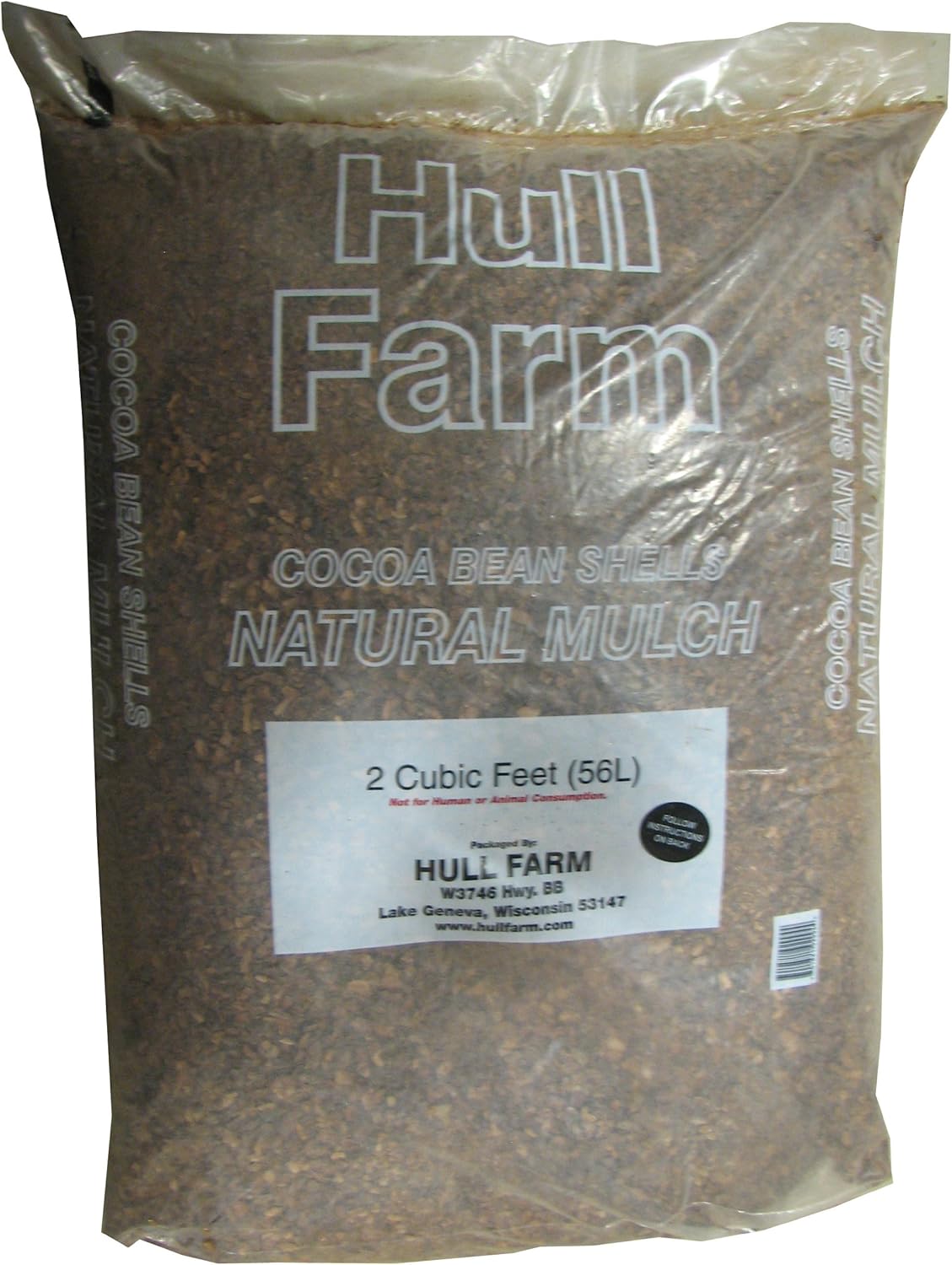
Hull Farm Cocoa Bean Shell Mulch, 2 Cubic Feet
| Brand Name | Hull Farm |
|---|---|
| Model Name | 50150 |
| Material | Plastic |
| Package Weight | 12.72 kg |
Hull Farm Cocoa Bean Shell Mulch is a bagged organic mulch made from cocoa bean shells marketed for landscape beds. It is typically applied as a 1 to 3 inch layer around ornamentals or edibles to suppress weeds, conserve soil moisture, and improve appearance; the shells also slowly break down and provide a small nutrient contribution with an approximate analysis near 2.5-1-3. The product is easy to spread from the 2 cubic foot bag and leaves a fine, attractive textured surface that is less likely to mat than some other fine mulches. Because it is organic it will decompose over time, so plan to replenish annually or as needed. Note that cocoa shell mulch can attract pets if they are tempted to eat it and should be used with care around animals and children; also its small particle size means it can compact in heavy rain and may require light fluffing. For gardeners looking for an attractive, nutrient-contributing mulch that supports moisture retention and weed suppression, this is a practical option for tomato beds when used correctly.
Best for: Gardeners who prioritize plant performance and want a decorative organic mulch that also contributes modest nutrients and conserves moisture for productive beds such as tomatoes.
Less Ideal for: Those with pets that scavenge mulch or gardeners who prefer an inert, longlasting inorganic mulch that will not decompose over a season.
- Adds a mild, slow-release nutrient contribution (approx. 2.5-1-3) as it breaks down
- Fine, attractive texture that spreads evenly and helps retain soil moisture
- Sold in a manageable 2 cubic foot bag for easy handling and targeted application
- Less likely to mat compared with very fine composts, maintaining surface airflow
- Can attract pets or wildlife that may chew or eat the shells
- Small particles can compact after heavy rain and may need occasional fluffing
Verdict: Choose this cocoa shell mulch when you want an attractive organic mulch that helps retain moisture and gives tomatoes a light nutrient boost as it decomposes.
Rio Hamza Trading Pine Bark Mulch Nuggets, 8 Quarts (All Natural)

| Brand Name | Rio Hamza Trading |
|---|---|
| Unit Count | 256 Square Feet |
| Item Type Name | Potting Soil |
| Volume | 8 quarts |
| Ingredients | All natural pine shavings |
These 100% natural pine bark nuggets are small half-inch pieces intended as a top dressing or soil amendment for containers, bonsai, terrariums, and beds. You can sprinkle them as a decorative layer over potting mix to reduce surface evaporation and discourage pests, or blend a portion into heavy soil to increase aeration and reduce waterlogging around roots. The product emphasizes chemical-free bark with a red-brown look that tidies planters and complements evergreen plantings like arborvitae. An 8-quart bag covers modest container projects and provides enough to refresh a single large pot. Because the nuggets are coarse, they persist on the surface and do not compact quickly, which helps long-term drainage but means they will not break down fast to enrich soil. Also the bag size is small for landscape-scale mulching, so this is best for focused use around specimens rather than blanket beds. For someone managing moisture around ornamental evergreens, these nuggets work as an attractive, low-maintenance surface mulch.
Best for: A buyer who prioritizes plant safety and wants visible social validation will appreciate a chemical-free, attractive mulch for protecting root zones of specimen shrubs or container arborvitae and for tidying planters.
Less Ideal for: Not a good fit for someone needing bulk mulch for wide beds or wanting a fast-breaking organic amendment to quickly enrich soil.
- Made from 100% natural pine bark with no added chemicals
- Half-inch nuggets improve soil aeration and reduce surface compaction
- Durable, coarse texture provides long-lasting decorative top dressing
- Versatile for indoor pots, bonsai, terrariums, and small outdoor containers
- Small 8-quart bag is insufficient for mulching large landscape areas
- Coarse nuggets decompose slowly and provide limited short-term nutrient addition
Verdict: Choose these pine bark nuggets when you want a chemical-free, long-lasting decorative mulch to improve drainage and keep arborvitae planters looking tidy.
Choosing the Right Dark Brown Mulch: Key Factors to Consider
Material Type and Processing
The base material-whether hardwood, softwood, cedar, cypress, or recycled wood-sets expectations for longevity and how the mulch decomposes. Hardwood mulches tend to last longer and release nutrients more slowly, while softwoods break down faster and may need topping up sooner.
Processing matters too. Shredded mulch hugs soil and resists wind displacement, while chunkier bark provides long-lasting decorative texture. Dyed mulches use a coating that can improve color uniformity but you should know whether the dye is plant-safe and how it weathers.
Colorfastness and Fade
Dark brown mulch is chosen for its visual impact, so how well the pigment holds up under sunlight and rain is important. Pigment quality and application method determine how quickly a mulch will gray out or lighten, which affects how often you must replace it to maintain appearance.
Consider whether a mulch uses natural bark tones or added dye. Natural colors will patina over time but avoid coating residues, while dyed mulches often preserve the initial look longer but can leach pigment onto walkways when wet.
Breakdown Rate and Soil Interaction
Different mulches decompose at different speeds, influencing how often you need to refresh beds and how the mulch alters soil structure. Fast-breaking materials feed soil and improve organic matter quickly but reduce the duration of coverage.
Slower-decomposing mulches protect soil moisture and suppress weeds for longer stretches, making them preferable for low-maintenance beds. Think about whether you want a mulch that actively feeds soil each season or one that primarily functions as a longer-term ground cover.
Particle Size and Coverage
The size and uniformity of mulch particles affect how well the material lies flat, resists wind, and sheds water. Fine, shredded textures form a tight layer that limits weed growth but can compact and restrict water infiltration if applied too thickly.
Larger bark nuggets create air pockets that help water flow and reduce compaction, but they may not suppress small weeds as effectively and can look uneven in small plantings. Choose a particle size that suits your bed scale and planting density.
Ease of Installation and Maintenance
How easy a mulch is to spread and how it performs during routine gardening tasks will shape daily use. Lightweight, consistently shredded products are easier to rake and contour around plants, while heavy or irregular chunks take more effort to position and may shift with foot traffic.
Maintenance considerations include how the mulch interacts with edging, how often you need to top-dress, and whether it requires special handling to avoid staining paved surfaces.
Environmental and Safety Considerations
Sourcing and additives matter for sustainable gardening. Mulches made from locally sourced, natural wood reduce transport impact, while recycled municipal wood can introduce contaminants if not processed correctly.
Check whether dyes or stabilizers are labeled as non-toxic and whether the product includes fillers that could alter soil pH. Also consider the risk of weed seeds or pests in poorly processed materials and whether the manufacturer discloses treatment methods.
Using Dark Brown Mulch in Different Garden Zones
Match the mulch style to the planting area. In ornamental beds and foundation plantings a fine, uniform dark brown mulch creates a refined backdrop that highlights foliage and flowers. Around trees and shrubs, thicker chunks or coarser bark resist erosion and hold up under occasional foot traffic.
For vegetable gardens and annual beds, you may prefer a lighter, more quickly breaking option that contributes organic matter during the growing season. On slopes choose coarser particles or combine mulch with landscape fabric to reduce washout.
- Ornamental beds: fine shredded dark brown for neat appearance
- Trees and shrubs: coarser bark for durability
- Vegetable plots: faster-breaking organic mulch to feed soil
- Slopes: coarser texture or anchoring methods to prevent erosion
How Mulch Color Affects Garden Design
Dark brown mulch deepens contrast with bright foliage and can visually ground a garden design, making lawn edges and planting outlines look crisp. Use darker mulch to make light-colored flowers and variegated leaves pop.
Remember that color shifts over time. A dark brown that fades to a lighter hue will change the planned effect, so plan refresh cycles accordingly or choose materials known for better color retention if long-term appearance is a priority.
- Dark brown enhances contrast with pale blooms
- Consider long-term color stability when planning seasonal displays
Managing Mulch Around Plants and Soil Health
Lay mulch in a donut shape around trunks and stems rather than piling it directly against bark to avoid moisture-related issues. Maintain a 1 to 3 inch depth near crowns of perennials and a deeper 2 to 4 inch layer for general weed suppression, adjusting by plant type and soil drainage.
Monitor soil moisture after applying mulch. While mulch conserves water, in poorly drained soils it can hold too much moisture and increase disease risk. Test drainage and reduce thickness if soils remain saturated.
- Keep mulch away from direct contact with stems and trunks
- Adjust depth by plant sensitivity and drainage
- Check soil moisture after application and revise thickness if needed
Seasonal Care and When to Replenish
Inspect mulch each spring for compaction, signs of breakdown, and color fading. Rake to restore an even layer and add a top dressing if coverage has thinned. Replace only the amount needed rather than stripping the entire bed to preserve soil organisms.
In areas with heavy winter precipitation or strong sun, expect faster color loss and more frequent light top-ups. For soils that benefit from added organic matter, plan a yearly refresh with a material that decomposes at a rate that matches your maintenance schedule.
- Spring inspection for compaction and thinning
- Top dress lightly rather than full replacement when possible
- Adjust refresh frequency to local climate and desired look
Preventing Common Problems with Mulch
Address dust, staining, and compaction proactively. Sweep regular visitor paths to remove loose granules that can stain hardscapes when wet. Use edging to keep mulch in planting areas and stop migration onto walkways.
If you spot uneven decomposition or mold on the surface, thin the layer and improve air circulation. Replace heavily compacted mulch and consider switching particle sizes to improve aeration and water infiltration.
- Use edging to contain mulch
- Sweep hardscapes to prevent staining
- Thin and replace compacted or moldy mulch layers
How We Chose the Best Dark Brown Mulch
We evaluated options by focusing on the attributes that matter in ordinary garden use. Our selection criteria prioritized material type and processing, colorfastness and fading resistance, particle size and consistency, organic breakdown rate and soil benefits, and ease of installation and maintenance. We also considered environmental sourcing and whether the mulch contains additives that affect plants or local ecosystems. Products were excluded if they lacked clear ingredient or processing information, if they were formulated primarily for decorative rather than horticultural use, or if they used questionable dyes without disclosure. We favored mulches with consistent particle size for even coverage, stable pigments that resist fading under sun and rain, and materials that break down at a predictable pace to feed soil without requiring constant replacement. Practical concerns such as dust, staining potential on hardscapes, and how neatly a mulch lays around plant stems were also part of our review framework.
FAQ
How deep should I lay dark brown mulch around beds and trees?
Generally lay 2 to 4 inches for most beds to suppress weeds and conserve moisture, and 1 to 3 inches near crowns and perennials to avoid suffocating roots. Keep mulch pulled back from trunks and stems to prevent rot.
Will dyed dark brown mulch stain patios or walkways?
Some dyed mulches can leave temporary pigment on hard surfaces when wet or during initial rains. Prevent this by installing edging, keeping a small gap between bed edge and paved areas, and sweeping any stray mulch promptly.
How often will dark brown mulch need topping up?
Frequency depends on material and climate. Fast-breaking mulches may need annual topping, while long-lasting bark nuggets can remain effective for two to three years before significant replacement is needed.
Is dark brown mulch safe for vegetable gardens?
Many natural dark brown mulches are safe for vegetable plots, especially when well-composted or used as a surface layer. Avoid mulches with uncertain additives or unprocessed municipal wood when working near edible plants.
Will dark brown mulch affect soil pH or nutrients?
Most wood-based mulches have minimal short-term impact on soil pH when applied as a surface layer. Over time they add organic matter. If you are concerned about nitrogen tie-up during decomposition, use compost or aged mulch that has started to break down.
Final Verdict
Choose a dark brown mulch based on how you balance appearance and garden upkeep. If long-lasting color and low maintenance are priorities, favor coarser, stable materials that resist rapid breakdown. If soil improvement is your main goal, select a faster-decomposing organic mulch and plan for more frequent top dressing. Weigh colorfastness, decomposition rate, and particle size against the specific needs of your beds and local climate. Prioritize safe, well-processed materials and match depth and application technique to plant types for the best long-term results.
