

Note: This article contains affiliate links. If you click on these links and make a purchase, I may earn a small commission at no extra cost to you. This helps support my research and content. Read my full affiliate disclosure here.
Choosing the right commercial potting soil for a Christmas cactus matters because these epiphytic succulents need a mix that drains quickly but still holds enough moisture between waterings. Get the wrong mix and stems can go limp or develop root rot; get the right mix and the plant will set buds and stay compact. This guide covers six carefully shortlisted commercial potting soils suited for Christmas cactus growing conditions, with attention to drainage, aeration, nutrient balance, and root health. Below we explain what we evaluated and why each shortlisted product fits common indoor and greenhouse situations.
Top Picks at a Glance
| Best Overall The best all-around choice for most situations | Rosy Soil Cactus & Succulent Potting Mix, 4 Quart |  |
| Best Quality Built to a higher standard if you want something more solid | Soil Sunrise Christmas Cactus Potting Soil Mix (8 Quarts) |  |
| Best Value The sweet spot between price and what you get | Omitgoter Succulent & Cactus Potting Soil Mix, 10 qt |  |
| Best Budget The cheapest option that still gets the job done reliably | Doter Christmas Cactus Potting Soil Mix, 1 qt |  |
| Highest Rated A top-rated pick with lots of positive feedback | rePotme Christmas Cactus & Succulent Potting Mix, 2-Quart |  |
| Most Popular A crowd favorite that many people choose with confidence | Soil Sunrise Christmas Cactus Potting Soil Mix (4 Quarts) |  |
Rosy Soil Cactus & Succulent Potting Mix, 4 Quart

| Unit Count | 64 Ounce |
|---|---|
| Ingredients | Biochar,Pumice,Mycorrhizae,Sand,Pine Bark Fines,Compost |
| Style Name | Cactus & Succulent |
This 4 quart Rosy Soil cactus and succulent mix is built for growers who need consistently fast-draining media. The chunky blend of pumice, sand, pine bark fines and biochar keeps the mix airy so roots do not sit in water, while added mycorrhizae and worm castings supply biological activity that supports steady root growth without synthetic fertilizers. Typical use is repotting small-to-medium cacti and succulent pots or refreshing the top few inches of established containers; the resealable bag makes it easy to store between jobs. Practical benefits include reduced risk of root rot, less frequent repotting from compacted soil, and improved transplant success for drought-tolerant species. Because the formula is peat-free it drains more quickly than peat-heavy mixes but may require slightly more frequent watering in very dry indoor conditions. The 4 quart size suits a few plants at a time rather than large collections, so performance-focused growers managing many specimens will need multiple bags.
Best for: Growers who prioritize drainage and root performance for cacti and succulents and want a biologically active, peat-free mix for repotting individual plants or small collections.
Less Ideal for: People who need large volumes of soil at once or who prefer a moisture-retentive mix for tropical houseplants should look elsewhere.
- Chunky, pumice- and bark-based texture promotes rapid drainage and prevents compaction
- Includes mycorrhizae and worm castings to support root health without synthetic fertilizers
- Peat-free formula reduces water retention and environmental impact
- Resealable bag keeps remaining mix fresh between uses
- Small 4 quart volume means multiple bags are required for larger collections or frequent repotting
- Faster drainage can lead to more frequent watering in very dry indoor environments
Verdict: Choose this mix when you need a fast-draining, biologically active peat-free soil that reliably reduces soggy roots for cacti and succulents.
Soil Sunrise Christmas Cactus Potting Soil Mix (8 Quarts)

| Ingredients | Peat moss, pine bark, pumice, worm castings, perlite, lime |
|---|---|
| Volume | 8 quarts |
| Unit Count | 1 Count |
| Style Name | Bark,Peat Moss,Potting Soil Mix |
This Soil Sunrise mix is designed specifically for tropical holiday cacti, combining peat moss, pine bark, pumice, perlite, worm castings, and lime to create a moisture-retentive yet well-aerated medium. Use it for repotting or planting Christmas cactus varieties in containers indoors or outdoors where moderate humidity is present. The peat and bark help the mix hold enough water for rainforest-style cacti while perlite and pumice improve drainage to reduce the risk of root rot. Worm castings add slow-release nutrients and the lime helps stabilize pH, so plants get steady feeding without frequent fertilizer. The bag is small enough for single repots or refreshes for one to two medium pots, and the ingredient list is simple and chemical-free. Limitations are the volume per package if you need multiple large pots and the need to handle the product with basic PPE since peat and dust can irritate skin and lungs. For growers who want a ready-made, cactus-specific blend that mimics natural conditions, this is a practical, plant-focused option.
Best for: Houseplant owners who want a ready-made, cactus-specific potting mix tuned to holiday cacti and prioritize practical, plant-focused results over DIY blending.
Less Ideal for: Gardeners needing bulk soil for many large containers or outdoor beds should choose larger-volume or landscape-grade products instead.
- Blended for tropical holiday cacti with peat, bark, perlite and pumice to balance moisture retention and drainage
- Contains worm castings for natural nutrient enrichment and lime for pH stability
- 100% natural ingredients with no synthetic additives
- Formulation reduces risk of root rot while supporting aeration and healthy root growth
- 8 quart bag is modest volume and may require multiple bags for several or larger pots
- Peat-based mixes can compress over time and may need periodic refreshing or repotting
Verdict: A purpose-built, chemical-free potting mix that gives Christmas and other holiday cacti the moisture balance and nutrients they need without extra work.
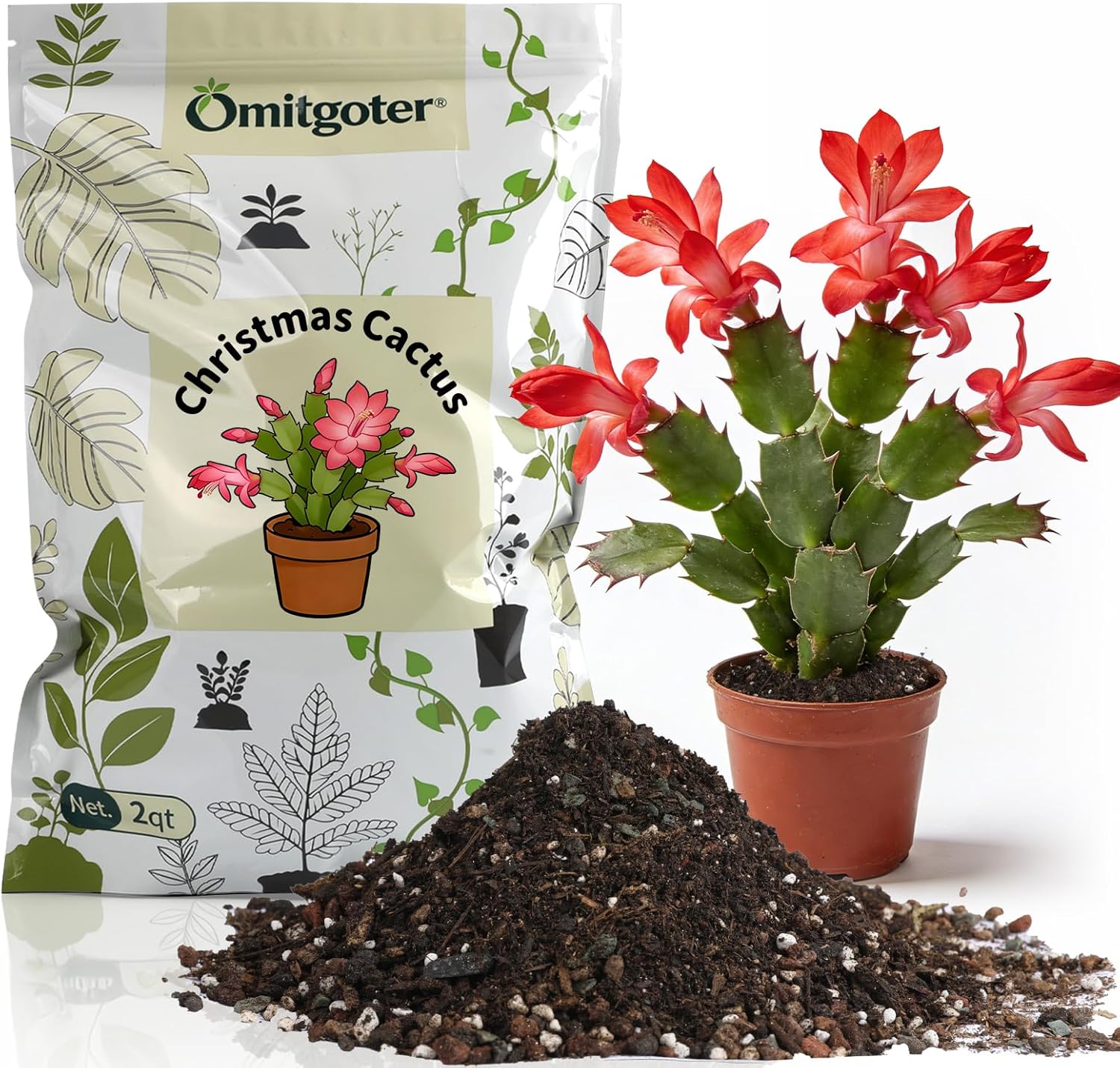
Omitgoter Succulent & Cactus Potting Soil Mix, 10 qt
| Brand | Omitgoter |
|---|---|
| Volume | 10 quarts |
| Unit Count | 128 Ounce |
This Omitgoter mix is a purpose-made potting soil for Christmas cactus and other succulents that prioritizes drainage and aeration. It combines volcanic rock, perlite, pumice, peat, coconut coir, horticultural sand, and wood chips to create a fast-draining, airy medium that helps prevent root rot and supports oxygen flow around roots. Use it straight from the bag for repotting, container plants, or small terrariums without needing to blend amendments yourself. Practical benefits include pH balance tuned for desert and epiphytic succulents and a lightweight texture that encourages firmer root systems and better bloom performance. Limitations are that it is a smaller 10 quart volume, so larger collections will need multiple bags, and the peat content means it will gradually compress over time and may require occasional refreshing or top-dressing. For growers wanting a ready-made, low-fuss substrate tailored to Christmas cactus, this mix removes the guesswork while still performing like a custom blend.
Best for: Buyers who want a low-effort, ready-made substrate that reliably supports Christmas cactus and similar succulents without mixing amendments themselves.
Less Ideal for: Those managing large collections or landscaping projects who need bulk soil or growers preferring fully peat-free professional mixes should look elsewhere.
- Designed specifically for cacti and succulents with a fast-draining, aerated texture
- Ready-to-use blend eliminates the need to mix perlite, sand, or bark separately
- Contains pumice/perlite and horticultural sand to reduce waterlogging and root rot risk
- pH-balanced formula suited to epiphytic and desert-adapted plants
- 10 quart bag is small for repotting many plants or larger pots
- Includes peat which can compress over time and may need refreshing
Verdict: A convenient, plant-specific potting mix that delivers the drainage and aeration Christmas cactus needs without any DIY blending.
Doter Christmas Cactus Potting Soil Mix, 1 qt

| Brand | Doter |
|---|---|
| Unit Count | 32 Ounce |
| Item Type Name | Garden soil |
| Volume | 1 quarts |
This 1 qt Doter potting mix is tailored for Christmas cactus and similar indoor succulents, combining coconut coir, perlite, bark, and organic amendments to balance water retention with airflow. Gardeners typically use it for repotting or topping up small containers and for starting potted Christmas cactus that need slightly more moisture-holding capacity than gritty cactus mixes. Notable features include chunky perlite and pine bark for improved drainage, horticultural charcoal for freshness, and added organic nutrients and worm castings to support root development and blooming. In practice the mix holds enough moisture to prevent rapid drying while still letting excess water pass through, which helps prevent root rot in periodically watered indoor plants. The 1 qt size is convenient for small pots and trial repots but means you may need multiple bags for several plants. This is a straightforward, plant-focused mix that saves time compared with blending your own components, though it is sold in a small volume so larger collections will want to buy multiple units or mix with coarser additives for extra grit.
Best for: Buyers who want an inexpensive, ready-made soil that supports healthy flowering Christmas cactus and who have a small number of pots to maintain.
Less Ideal for: Large-scale growers, collectors with many plants, or gardeners who prefer to custom-blend exact component ratios should look for larger or more specialized mixes.
- Formulated for Christmas cactus and similar indoor succulents, so plant needs are considered
- Contains perlite and bark for improved drainage and aeration
- Includes organic amendments like worm castings and charcoal to support root health and reduce odors
- Ready-to-use mix that saves time compared with assembling individual components
- Small 1 qt volume means frequent purchases for multiple plants or full repots
- No detailed ingredient percentages or pH provided for precision mixing
Verdict: A practical, ready-to-use small-batch potting mix that balances moisture retention and drainage for budget-minded Christmas cactus owners.
rePotme Christmas Cactus & Succulent Potting Mix, 2-Quart

| Brand Name | rePotme |
|---|---|
| Unit Count | 64 Ounce |
| Volume | 2 quarts |
This rePotme potting mix is a small-batch, ready-to-use soil designed for Christmas cactus and other succulents. It arrives fresh in a resealable bag and is formulated to be free-draining so roots do not sit in moisture, which helps prevent rot in epiphytic and succulent plants. Typical use is straightforward: fill pots, repot plants, or top-dress containers with a lightweight medium that encourages quick drainage and air around roots. Notable features include the hand-blended preparation and a recipe aimed at succulents and cacti, which means you can use it immediately without amending for better drainage. Practical benefits are ease of use for routine repotting, reduced need for extra additives, and a compact bag size that is convenient for hobbyists and small collections. Limitations are the small 2-quart volume, which makes it better suited for small pots or trial repots rather than large-scale repotting projects, and limited specification detail about exact components or fertilizer content, so users who need precise soil recipes may want a lab-analyzed mix.
Best for: Buyers who want a reliable, ready-to-use succulent mix for routine repotting of small pots and who value freshness and convenience over custom soil recipes.
Less Ideal for: Gardeners needing bulk quantities for many plants or who require a precisely measured, laboratory-analyzed soil blend for specific nutrient control.
- Formulated for succulents and Christmas cactus to promote quick drainage and reduce root rot risk
- Hand-blended in small batches for freshness
- Resealable 2-quart bag that is ready to use out of the package
- Only 2 quarts, so multiple bags are required for larger repotting jobs
- Does not list detailed ingredient percentages or nutrient analysis
Verdict: A fresh, hand-blended, ready-to-use potting mix that reliably provides the drainage Christmas cactus needs for small-scale repotting.
Soil Sunrise Christmas Cactus Potting Soil Mix (4 Quarts)

| Volume | 4 quarts |
|---|---|
| Ingredients | Peat, bark, pumice, worm castings, perlite, lime |
| Unit Count | 1 Count |
This 4-quart Soil Sunrise mix is tailored to Christmas, Easter, and Thanksgiving cacti by combining peat moss, pine bark, perlite, pumice, worm castings, and lime. It is used for planting and repotting holiday cacti in pots or containers where the plants need both moisture retention and good aeration. The peat and bark help hold humidity-loving tropical cactus roots, while perlite and pumice improve drainage to reduce the risk of waterlogged root systems. Worm castings add slow-release nutrients and the added lime helps stabilize pH for steady growth and reliable bloom cycles. Practical benefits include an all-natural ingredient list and a texture that makes repotting and top-ups easy without heavy amendments. Important limitations are the small 4-quart size, which is best for a few small pots rather than larger repotting jobs, and the need to follow safe handling advice to avoid inhaling dust and to wear gloves when mixing.
Best for: Buyers who want a ready-made, plant-specific soil that simplifies potting and repotting Christmas and other holiday cacti for reliable indoor flowering.
Less Ideal for: Gardeners who need large-volume soil for many plants or commercial repotting projects should choose bulk mixes instead.
- Formulated specifically for holiday tropical cacti with a rainforest-style blend
- Balanced particle mix (peat, bark, perlite, pumice) for both moisture retention and drainage
- Includes worm castings for natural nutrient support and lime for pH balance
- Small 4-quart volume limits use to a few small pots or top-dressing rather than multiple large repots
- Contains peat which some gardeners avoid for sustainability concerns
Verdict: If you want a small, ready-to-use, cactus-specific potting mix that balances moisture retention and drainage for reliable holiday cactus blooms, this blend delivers.
Choosing the Right Commercial Potting Soil for Christmas Cactus: Key Factors to Consider
Drainage and Runoff
Christmas cacti are epiphytic and need potting soil that sheds excess water quickly. A mix with coarse particles like pumice, perlite, or chunky bark allows gravity to move water away from roots and prevents saturated pockets.
Fast drainage reduces the risk of root rot and helps stems stay firm. In practice this means the surface may dry faster than in a typical houseplant mix, so you will likely water more frequently but with smaller amounts. When assessing a commercial mix, look for stated particle sizes or ingredient lists that emphasize coarse mineral components rather than only fine peat or compost.
Moisture Retention
While drainage is crucial, Christmas cactus also needs moisture between waterings to avoid shriveled stems and poor bud formation. The ideal mix balances porous components with organic matter that holds plant-available moisture without turning soggy.
Peat, coir, and well-aged compost can provide that buffering, but they must be present at moderate levels. A commercial soil that lists both coarse aeration components and a modest proportion of moisture-retentive organics will maintain stable hydration for several days in typical indoor temperatures.
Root Aeration and Structure
A stable, airy structure keeps fine roots healthy and encourages new root growth. Ingredients that resist compaction over time, such as pumice, orchid bark, or perlite, maintain pore space as watering cycles compress softer material.
Good structure also improves oxygen availability around roots, which supports nutrient uptake and reduces anaerobic zones that can harbor root pathogens. For container culture, prefer mixes formulated to retain their texture over multiple seasons so you do not need to repot as frequently.
Nutrient Profile and Feeding
Christmas cactus benefits from a balanced nutrient supply that supports flowering without excessive vegetative stretch. Commercial potting soils vary widely: some include slow-release fertilizer, others are lightly amended or nutrient-free to let you control feeding.
Consider whether you prefer a ready-to-use mix with low-level slow-release nutrients or a cleaner inert mix that you feed on a set schedule. Also pay attention to the nutrient release duration and whether the mix leaches quickly under frequent watering, which affects how often you need to fertilize.
pH and Mineral Content
Christmas cactus generally prefers a slightly acidic to neutral pH for best nutrient availability and bud set. Commercial mixes should specify pH range or use components that naturally sit in that band.
Excess soluble salts from over-fertilized mixes or certain composts can stress plants and inhibit blooming. Look for clear labeling about salt control or low soluble salt content, especially if you rely on municipal tap water or fertilize regularly.
Long-Term Stability and Cleanliness
A good commercial mix stays free-draining and resists breakdown for at least a couple of growing seasons. Components that decompose rapidly will increase water retention and compaction over time, forcing earlier repotting or root pruning.
Also consider the cleanliness of the mix: weed seeds, wood-boring organisms, or high microbial loads can be an issue for indoor plants. Commercial manufacturers that kiln-dry or otherwise treat components reduce these risks. Packaging that indicates sterilization or quality control is a positive sign.
How Potting Mixes Behave in Containers
Container environment changes how a mix drains and holds water compared with garden beds. Pots have limited soil volume and roots quickly use available moisture, so particle size and container depth change the watering cadence for a Christmas cactus.
Shallow containers accelerate drying from the surface; deep pots keep more moisture around the lower roots. Choose a mix whose moisture retention matches the pot size you plan to use and expect to water a little more often in smaller pots.
- Coarse particles speed drainage and reduce surface crusting
- Organic components moderate moisture but can compact if too fine
- Container material affects evaporation rate; terracotta dries faster than plastic
Adjusting Mixes for Local Water and Climate
Hard tap water or mineral-rich irrigation can raise salt levels in the root zone over time. If your water is hard, look for a mix with low initial soluble salts and flush pots periodically to avoid buildup.
In dry, heated indoor environments the top layer of any mix will dry quickly. Adding a bit more organic matter or using a slightly deeper pot helps buffer moisture. Conversely, in very humid or cool rooms, favor extra drainage components to avoid long periods of soggy soil.
- Flush pots occasionally if you notice white crust or stunted growth
- Increase pumice or perlite content slightly in humid climates
Repotting Timing and Soil Refresh
Christmas cacti do not need annual repotting; typically every two to three years is sufficient unless roots have filled the container. When the mix compacts or drainage slows, it is time to refresh the soil.
When repotting, gently loosen root masses and replace spent mix with fresh commercial potting soil tailored for succulents or epiphytes. Keep the plant no deeper than it was previously planted to avoid stem rot.
- Inspect roots for firmness and absence of mushy tissue
- Refresh top two inches of soil annually if full repotting is not needed
Feeding Schedule with Commercial Mixes
If your chosen commercial mix includes slow-release fertilizer, you may only need light liquid feedings during the growing season. For inert mixes, plan a regular liquid feeding schedule at half-strength during active growth and bud formation.
Avoid heavy feeding in late fall because excessive nitrogen can reduce flower set. Monitor plant response and adjust frequency rather than increasing concentration if growth seems weak.
- Use a balanced fertilizer formulated for flowering houseplants during bloom initiation
- Reduce or stop feeding during the plant's rest period to promote bud development
DIY Tweaks to Commercial Mixes
Gardeners often adjust commercial potting soil to match their exact needs. Small additions of coarse pumice or orchid bark can improve aeration, while a handful of coconut coir can increase moisture buffering without compacting as quickly as peat.
If you plan to mix amendments, do so sparingly and test how the combined mix behaves in your typical pot and room conditions before repotting prized specimens.
- Add 10 to 30 percent coarse amendment for extra drainage
- Pre-wet mixes and observe drainage before potting to avoid surprises
How We Chose the Best Commercial Potting Soil for Christmas Cactus
We focused on attributes that matter specifically to Christmas cactus culture rather than general potting mixes. Selection began with commercially available potting soils designed for cacti, succulents, or epiphytes and those marketed for indoor flowering houseplants. From that pool we applied a performance-first filter: mixes had to demonstrate a balance of rapid drainage and moderate moisture retention, a loose structure that resists compaction over time, and a pH range compatible with bud set. We also prioritized mixes containing stable, inert aeration components such as coarse pumice, perlite, or bark rather than only fine peat. Nutrient content and slow-release feeding profiles were assessed to ensure enough food for bloom development without forcing excessive vegetative growth. Particle size distribution, organic matter level, and salt content were considered because they affect watering frequency and root health. We excluded garden soils, straight potting composts aimed at heavy feeders, and mixes with very high peat fines that compact quickly. Also filtered out mixes lacking clear ingredient transparency or that rely solely on water-retentive polymers. The resulting shortlist focuses on real-world gardener needs: drainage and aeration, moisture buffering, plant-friendly nutrition, long-term stability, and pH suitability. These criteria align with the scoring labels used in our product scorecards.
FAQ
How often should I repot a Christmas cactus?
Usually every two to three years or when the mix compacts and drainage slows. Repot sooner if roots are crowded or show signs of rot. Gently check the root ball during the growing season to assess whether a refresh is needed.
Can I use regular potting soil for a Christmas cactus?
Regular potting soil often contains finer organic matter that holds too much water and may compact. If you use it, amend with coarse material like perlite or bark to improve drainage and aeration. A mix formulated for succulents or epiphytes is usually safer.
Should I pick a mix with fertilizer included?
It depends on whether you prefer a ready-to-use option or want full control over feeding. Mixes with low-level slow-release fertilizer reduce early-season feeding needs, while inert mixes let you apply a targeted liquid fertilization schedule.
What signs indicate the soil is holding too much moisture?
Symptoms include soft or discolored stems, persistent wilt despite dry surface, and slow growth. You may also notice a sour or musty smell from the potting mix. If these appear, improve drainage and inspect roots for rot.
Is peat or coir better for Christmas cactus?
Both provide moisture retention, but coir drains and decomposes more slowly than peat, making it a more sustainable choice for many gardeners. Either should be balanced with coarse aeration components to avoid compaction.
How does pot size affect potting soil choice?
Smaller pots dry faster and benefit from mixes with slightly higher moisture retention. Larger pots retain more water and need mixes with higher drainage capacity to prevent saturated pockets around lower roots.
Final Verdict
Choose a commercial potting soil that balances rapid drainage with enough moisture buffering to support bud set and steady growth. Prioritize mixes with coarse, stable aeration components, a modest proportion of moisture-retentive organics, and a pH suitable for flowering. Expect to adjust feeding based on whether the mix includes slow-release nutrients, and plan to repot when the structure degrades. With those tradeoffs in mind, you can pick a mix that reduces watering headaches and encourages reliable bloom performance.
