

Note: This article contains affiliate links. If you click on these links and make a purchase, I may earn a small commission at no extra cost to you. This helps support my research and content. Read my full affiliate disclosure here.
Picking the right potting soil matters more for a Japanese maple grown in a container than for the same tree in the ground. In pots the root zone is limited, moisture and nutrients change faster, and soil structure determines how well roots breathe without drying out. This guide covers seven shortlisted potting soil blends suited specifically for Japanese maple in container, with attention to drainage, acidity, and long-term structure. We evaluated mixes for water retention versus aeration, acidity and nutrient balance, and how each behaves in a real patio or balcony setting. Below are the factors we used to judge blends and practical notes to help you pick the right mix for your pot size and climate.
Top Picks at a Glance
| Best Overall The best all-around choice for most situations | FoxFarm Ocean Forest Potting Soil, 12 Quart |  |
| Best Quality Built to a higher standard if you want something more solid | Bonsai Outlet Deciduous Bonsai Soil Blend (2 Quarts) |  |
| Best Value The sweet spot between price and what you get | Coast of Maine Bar Harbor Blend Potting Soil, 16 qt |  |
| Best Budget The cheapest option that still gets the job done reliably | Espoma Organic Potting Soil Mix, 8 qt |  |
| Highest Rated A top-rated pick with lots of positive feedback | FoxFarm Ocean Forest Potting Soil, 1.5 cu ft |  |
| Most Popular A crowd favorite that many people choose with confidence | Miracle-Gro Organic Outdoor Potting Mix, 16 qt. |  |
| Best Seller A high-volume bestseller chosen again and again | Back to the Roots Premium Organic Potting Mix, 6 Quart |  |
FoxFarm Ocean Forest Potting Soil, 12 Quart

| Item Form | Granules |
|---|---|
| Specific Uses For Product | Dry Fertilizer |
| Coverage | 4.8 sq ft |
| Mixing Ratio | 1:1 |
FoxFarm Ocean Forest is a pre-mixed potting soil that combines aged forest products, sandy loam and sphagnum peat moss with organic amendments like fish meal, crab meal and earthworm castings. It is sold ready to use straight from the bag for planting in containers, seed starting or top dressing; the manufacturer recommends no additional nitrogen fertilizer for the first 30 days. The mix has a light, aerated texture that promotes drainage while still retaining moisture, and the built-in micronutrients make it practical for growers who want strong early growth without immediate feeding. Practical benefits include easy pot filling, good root zone aeration for roses in containers, and built-in organic fertility to support blooms. Limitations to consider are that the bag is best for containers or small beds only and heavier feeders may need supplemental feeding after the initial month; users should also follow handling precautions to avoid skin or eye irritation.
Best for: Gardeners who want a high-quality, nutrient-rich potting medium to get container roses or plant starts off to a strong, flowering start and prefer a ready-made organic blend.
Less Ideal for: Large in-ground rose beds or landscapers needing bulk soil amendments should look for bulk garden soil or custom rose mixes instead.
- Ready-to-use out of the bag so you can pot immediately
- Organic amendments (fish meal, crab meal, earthworm castings) supply early nutrients
- Light, aerated texture that supports drainage and root development
- pH adjusted for optimal nutrient uptake per product description
- Pack size (12 qt) covers a small area and may require multiple bags for several roses
- No long-term feeding provided after the first 30 days so additional fertilizer is needed for sustained heavy bloom
Verdict: Choose this soil if you want a ready-made, organically amended potting mix that jump-starts container roses and seedlings with good drainage and early fertility.
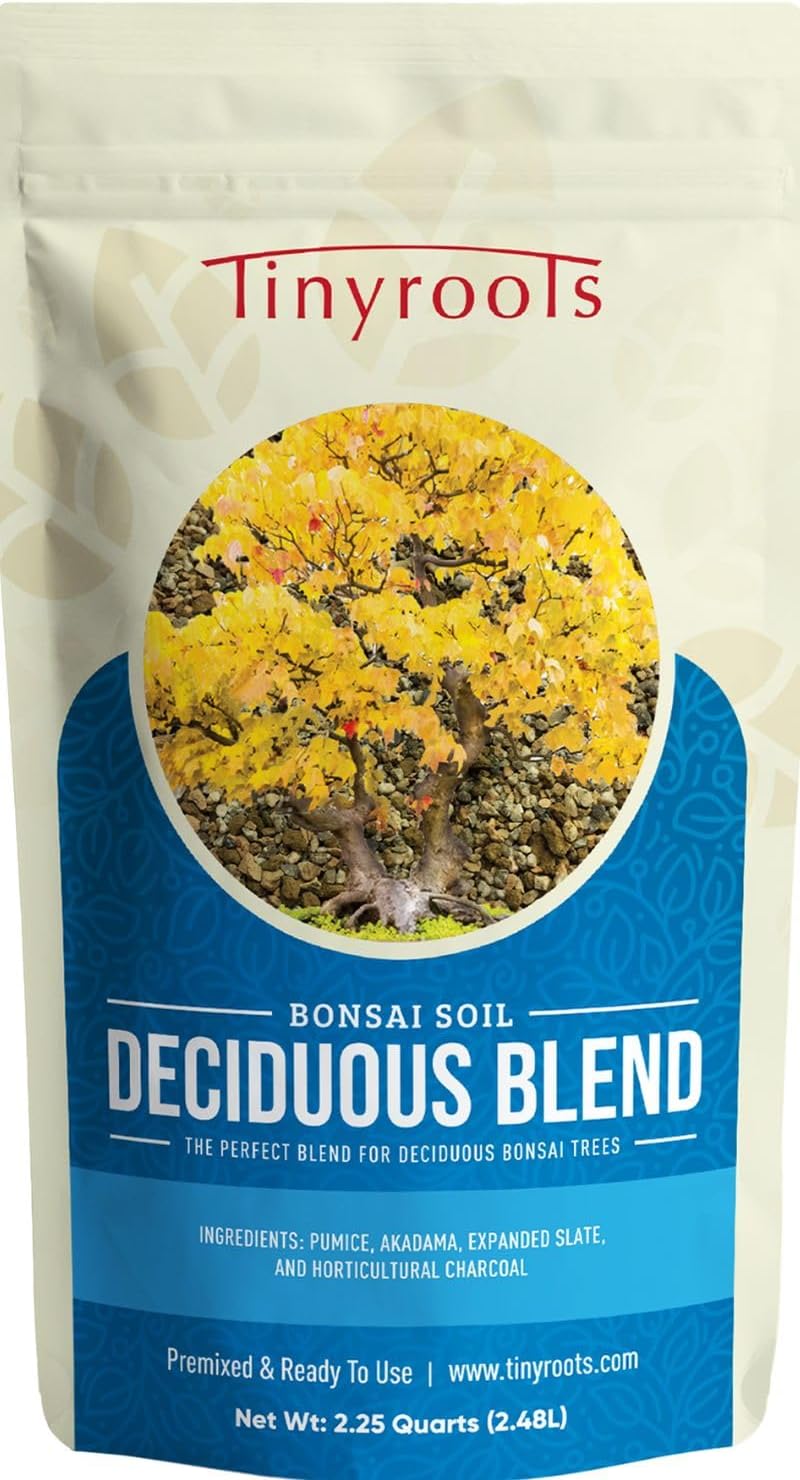
Bonsai Outlet Deciduous Bonsai Soil Blend (2 Quarts)
| Volume | 2 quarts |
|---|---|
| Style Name | Deciduous Blend |
| Unit Count | 74.5 Ounce |
This two-quart bonsai soil is a ready-to-use, pre-sifted substrate designed for deciduous bonsai such as Japanese maple, hornbeam, and elm. The mix uses akadama, pumice, expanded slate, and horticultural charcoal to create a coarse, fast-draining medium that supports healthy root development and reduces water retention issues common with garden soils. Because it is pre-mixed and pre-sifted, it saves time for growers who prefer not to source and screen individual components. Practical benefits include improved aeration, clearer drainage paths, and a stable particle structure that helps prevent compaction during watering. The small two-quart volume is convenient for repotting a single tree or topping up soil in a finished bonsai but means multiple bags are needed for larger projects or several trees. Buyers should also expect an inorganic-dominant texture that requires regular fertilization for nutrient needs because it does not hold much organic matter. For someone managing Japanese maples, this blend provides a reliable, hobbyist-friendly substrate that streamlines routine repotting and care.
Best for: Gardeners who want a ready-made, high-drainage substrate for repotting or maintaining Japanese maples and other deciduous bonsai without mixing components themselves.
Less Ideal for: People who prefer an all-organic, moisture-retentive potting mix or who need large quantities for many trees should consider other substrates or bulk blends.
- Pre-sifted mix saves time and avoids dust and fines
- Coarse particle blend promotes fast drainage and good aeration
- Formulated specifically for deciduous bonsai species including Japanese maple
- Contains horticultural charcoal which can help with soil freshness and root health
- Small 2-quart bag may require multiple purchases for several trees
- Low organic content means you must fertilize regularly for nutrients
Verdict: A convenient pre-sifted bonsai soil that delivers the fast drainage and structure Japanese maples need, without the hassle of mixing components yourself.
Coast of Maine Bar Harbor Blend Potting Soil, 16 qt

| Volume | 16 quarts |
|---|---|
| Unit Count | 512 Ounce |
| Main ingredients | Peat moss, compost, perlite, seaweed |
| OMRI Listed | Yes |
Coast of Maine Bar Harbor Blend is a 16 quart, all-purpose potting soil designed for container-grown plants, hanging baskets and patio planters. The mix combines sphagnum peat moss, composted manure, perlite, aged bark and sea-derived amendments such as lobster and kelp meal to improve structure, drainage and slow-release nutrition. In practice it holds moisture better than straight peat while still offering aeration from perlite, so potted shrubs or blueberry transplants will get steadier water retention without becoming waterlogged. The compost and shell meals provide organic, slow-release nutrients that reduce how often you need to feed new plantings. Because it is formulated as a general potting mix rather than an acid-specialty soil, gardeners who need strongly acidic media for mature blueberries should plan to acidify or blend this with ericaceous amendments. The bag size is convenient for small raised beds or multiple planters, and the OMRI listing and natural inputs make it a good pick for gardeners prioritizing organic soil building.
Best for: Gardeners who want an organic, ready-to-use potting mix for container-grown shrubs and small blueberry transplants and who prioritize steady moisture retention and natural fertility.
Less Ideal for: Growers looking for a pre-acidified, specialty blueberry soil for mature plants or those who need bulk quantities for large in-ground plantings should look elsewhere.
- OMRI-listed organic ingredients support living soil and long-term fertility
- Perlite and aged bark improve drainage and aeration for container plants
- Contains slow-release natural amendments (lobster, kelp, compost) to reduce feeding frequency
- Formulated to retain moisture without becoming compacted, helping steady growth in pots
- Not formulated specifically for acid-loving plants so pH adjustment may be required for blueberries
- 16 qt bag is useful for containers but may be small for larger in-ground or full-size raised beds
Verdict: A sustainably made, organic potting blend that gives container blueberries steady moisture and natural slow-release nutrition when you need a ready-to-use mix.
Espoma Organic Potting Soil Mix, 8 qt

| Brand Name | Espoma |
|---|---|
| Unit Count | 256 Ounce |
| Volume | 8 liters |
| Style Name | Mix |
Espoma Organic Potting Soil Mix is a ready-to-use, organic container mix designed for indoor and outdoor pots, including vegetables and herbs such as jalapenos. It blends sphagnum peat moss, humus and perlite to give a light, well-draining texture while added earthworm castings, alfalfa meal, kelp meal and feather meal supply slow-release nutrients. The included Myco-Tone mycorrhizae can help young roots establish and improve nutrient uptake, which is useful when starting pepper seedlings or repotting into larger containers. Typical use is filling 1–5 gallon pots or containers, planting transplants, and topping up as plants grow. Because it is formulated without synthetic fertilizers, you get a more natural fertility baseline but may need to supplement with a balanced organic fertilizer for heavy-feeding pepper plants during peak fruiting. The 8 quart volume is convenient for small batches and container gardening but means you will need multiple bags for several plants. For jalapenos this mix provides the drainage, structure, and organic matter peppers prefer while supporting steady growth with minimal prep.
Best for: Home gardeners who grow jalapenos in containers and want an organic, ready-made mix that supports healthy root development and steady growth without DIY blending.
Less Ideal for: Large-scale growers or those who prefer a single bag to supply many plants should consider larger volume commercial mixes or bulk soil options.
- Organic formula with peat moss, humus and perlite for good drainage and aeration
- Contains earthworm castings and plant meals for slow-release organic nutrients
- Includes Myco-Tone mycorrhizae to help root establishment and nutrient uptake
- Suitable for both indoor and outdoor container vegetables and herbs
- Small 8 qt volume requires multiple bags for several pepper plants
- No synthetic fertilizer included so extra feeding may be needed for heavy fruiting
Verdict: A convenient organic potting mix that gives jalapeno plants good drainage, natural fertility, and beneficial mycorrhizae for strong container growth.
FoxFarm Ocean Forest Potting Soil, 1.5 cu ft

| Brand Name | FoxFarm |
|---|---|
| Item Type Name | Potting Soil |
| Volume | 1.5 cubic feet |
| Item Weight | 1.5 pounds |
| Style Name | Potting, Garden |
FoxFarm Ocean Forest is a pre-mixed potting soil intended for containers, houseplants, and garden use that is ready to use straight from the bag. It combines aged forest products, sphagnum peat moss, perlite and sandy loam to give a light, aerated texture with good drainage while retaining moisture. Organic amendments such as fish meal, crab meal and earthworm castings supply slow-release nutrients and biological activity, which helps seedlings and established plants develop vigorous roots without immediate fertilizing. For container Japanese maple it provides a well-draining but moisture-holding medium that supports root health and reduces compacting compared with plain garden soil. Important limitations are that exact nutrient analysis and pH are not listed on the label and the bag contains a relatively small volume, so you may need multiple bags or to top-dress larger containers. Also follow the safety guidance for handling to avoid skin or eye irritation.
Best for: Buyers who prioritize a dependable, ready-made potting mix to establish and maintain healthy container trees and shrubs, especially when they want a consistent, biologically active medium without mixing amendments themselves.
Less Ideal for: Growers who need precise pH control or labeled fertilizer analysis for specialty crops or who prefer to customize mixes from raw components.
- Ready-to-use mix with no pre-amendment required
- Light, aerated texture that improves drainage in containers
- Contains organic amendments (fish meal, crab meal, earthworm castings) for sustained fertility
- Includes perlite and sandy loam to balance moisture retention and aeration
- Bag volume is modest at 1.5 cubic feet, so larger containers require multiple bags
- No specific pH or guaranteed N-P-K values provided on the product listing
Verdict: A reliable, ready-to-use potting soil that brings good drainage and organic fertility to container-grown Japanese maples.
Miracle-Gro Organic Outdoor Potting Mix, 16 qt.

| Volume | 16 qt. |
|---|---|
| Item Highlight | Plant Soil For Outdoor Container Plants, Contains Quick-Release Natural Fertilizer, OMRI Listed |
| Manufacturer | Scotts Miracle Gro |
This 16 qt. Miracle-Gro Organic Outdoor Potting Mix is designed specifically for outdoor container plants and is useful for planting strawberries in pots. The mix contains responsibly sourced peat and upcycled green waste and includes a quick-release natural fertilizer that feeds for up to two months, which helps young strawberry plants establish and start producing. It is OMRI listed so it fits an organic container-gardening approach. Typical use is to partially fill a 12-inch pot, set the plant with a loosened root ball, add more mix, and water thoroughly; a single bag is sized to fill about one 12-inch container. Practical benefits include moisture retention suitable for exposed pots and a built-in starter nutrient charge so you may not need immediate additional feeding. Important limitations are that nutrients last about two months so plan a feeding schedule for fruiting plants and that peat-based mixes can compact over time, so repotting or refreshing the soil biannually is recommended for continued vigor.
Best for: Gardeners who want an organic-ready potting mix for outdoor container strawberries and prefer a product that gives an initial nutrient boost while simplifying first-season care.
Less Ideal for: Growers who need a long-term, self-sustaining soil blend for mature strawberry beds or those who avoid peat entirely should consider alternatives.
- OMRI listed and made with responsibly sourced peat suitable for organic container gardening
- Includes quick-release natural fertilizer that feeds plants for up to two months
- Formulated to retain moisture for outdoor containers exposed to sun and wind
- Contains upcycled green waste and is locally crafted to reduce transport distance
- Fertilizer effect is limited to about two months so additional feeding is needed for ongoing fruiting
- Peat-based mix can compact over time and requires bi-annual repotting to refresh structure
Verdict: A convenient OMRI-listed container potting mix that gives outdoor strawberry starters an organic nutrient boost and good moisture retention for the first months.
Back to the Roots Premium Organic Potting Mix, 6 Quart

| Unit Count | 192 Fluid Ounces |
|---|---|
| Volume | 6 quarts |
| Item Highlight | Peat-free potting soil for outdoor plants, indoor plants, vegetables, herbs and flowers |
| Made in | USA |
Back to the Roots Premium Organic Potting Mix is a small-batch, all-purpose soil designed for indoor and outdoor container plants, including flowers, herbs, and vegetables. The 6 quart bag contains a peat-free blend made from upcycled plant matter and wood fines, with added organic plant food, yucca extract to help retain and regulate moisture, and dolomitic limestone to stabilize pH. In practice this mix is easy to use straight from the bag for potting annuals and bedding plants or for refreshing topsoil in containers. Its light, well-draining texture helps roots establish without becoming waterlogged while still holding enough moisture for frequent flowering plants. Because it is organic and made in the USA, it suits growers who want a lower-carbon-footprint option. Limitations are the small bag size for larger projects and that very heavy feeders or long-term container plantings may need periodic fertilization or larger volumes of soil to maintain vigor.
Best for: Buyers who want a safe, organic, ready-to-use potting mix for potted flowers and small container gardens and prefer products with predictable performance and lower environmental impact.
Less Ideal for: Gardeners planning large-scale repotting, heavy-feeding perennials, or long-term container plantings that require bulk soil or extended nutrient release.
- Peat-free organic formula made from upcycled plant matter and wood fines
- Includes yucca extract for improved moisture retention and control
- Dolomitic limestone added to help balance soil pH for flowering plants
- Light, well-draining texture suitable for container-grown flowers and annuals
- Small 6 quart bag is not economical for large pots or multiple containers
- Does not include slow-release fertilizer strong enough for long-term heavy feeders
Verdict: A reliable, peat-free organic potting mix that delivers predictable moisture control and pH balance for potted flowers and small container gardens.
Choosing the Right Potting Soil for Japanese Maple in Container: Key Factors to Consider
Drainage Versus Water Retention
Container-grown Japanese maples need a balance between free-draining particles and components that hold moisture. Too much water retention invites root rot, especially in cool or shaded locations. Too much drainage causes rapid drying and stress during hot weather.
Look for mixes that include chunky inorganic components such as grit, pumice, or coarse sand combined with fibrous organics. Those coarse pieces create air spaces so roots can breathe while the organic fraction stores usable moisture. In practice, you will still need to adapt watering frequency to pot size and exposure; a well-structured mix reduces but does not eliminate the need for monitoring soil moisture.
pH Stability and Acidity Buffering
Japanese maples prefer slightly acidic soils, typically in the pH range of about 5.5 to 6.5. A container mix should either be naturally acidic or able to maintain that acidity over time. Materials like aged pine bark or composted hardwood can help buffer pH gently, while lime should be avoided unless a test shows the mix is too acidic.
Stability matters because frequent watering, fertilizing, and decomposition of organic matter will shift pH. Choosing a mix with known acidic or neutral components reduces pH swings and the need for corrective treatments. If you need to adjust pH later, use targeted, slow changes rather than strong chemical treatments that stress roots.
Nutrient Profile and Slow-Release Feeding
A good container potting mix provides a baseline nutrient supply tailored for woody ornamentals rather than heavy-feeding annuals. Too much soluble fertilizer can burn fine roots, while too little will stunt growth and reduce leaf color.
Favor mixes that include low-concentration slow-release fertilizer or stable organic fertilizers that break down gradually. This reduces the frequency of top-dressing and the risk of salt buildup. Remember containers isolate root systems, so periodic testing and occasional light feeding are part of a sound maintenance routine.
Particle Size and Structure Longevity
Particle size determines how long a mix maintains its structure. Finer, peat-heavy mixes tend to compact and hold water like a sponge, while mixes with larger bark pieces, pumice, or perlite keep porosity longer. For a small tree in a pot, structural longevity supports root health across seasons and reduces the need for frequent repotting.
Consider how quickly organic fractions decompose. Faster decomposition requires more frequent soil refreshes or top-ups. For long-term stability, blends with a higher proportion of inert aggregates and coarse bark are preferable. This keeps roots from becoming waterlogged and makes irrigation more predictable.
Pot Size and Container Material Interaction
The right soil mix depends on pot size and what the container is made of. Small pots heat and dry faster; they benefit from mixes that hold slightly more moisture. Large pots buffer moisture better but can suffer from cold, wet soil in winter if drainage is poor.
Container material matters too. Unglazed clay wicks moisture and will dry the root zone faster than plastic or resin. Match mix water retention to the container tendency. If you repot between container types, expect to adjust watering and possibly amend the soil with additional grit or moisture-holding elements accordingly.
Adjusting Mixes for Climate and Exposure
Microclimate plays a big role in how a potting mix performs. In hot, dry climates you can afford a slightly more open mix because evaporation is high and root systems benefit from quick drainage. In cool, wet climates prioritize drainage even more to prevent prolonged saturation around roots.
- For exposed, sunny rooftop or balcony sites, add more water-holding organic material or use larger pots to increase soil volume.
- For shaded or protected spots use coarser particles to maintain aeration since evaporation will be slower.
- When moving a tree indoors for winter, monitor moisture closely; indoor air and heating change water needs.
Repotting Schedule and Soil Refreshing
Japanese maples in containers rarely need annual repotting, but the soil should be checked every two to three years. Look for signs of compaction, poor drainage, or a mat of roots at the surface indicating root-bound conditions. Refreshing the top third of soil or carefully loosening the root ball can restore aeration without a full repot.
- When repotting into the same container, replace at least one third of the soil with fresh mix to restore nutrients and structure.
- Avoid burying the graft union or planting too deeply; keep the root flare near the soil surface.
- If the soil smells sour or drainage has slowed, it is a sign the mix has broken down and needs replacement.
Irrigation Tips for Container Maples
Consistent, measured watering is more important than frequent light sprinkling. Water deeply until it runs from the drainage holes, then allow the top portion of soil to begin drying. How fast this happens depends on pot size and the mix. Use a moisture probe or the finger test to check below the surface rather than guessing from the top layer.
- Mulch the soil surface with shredded bark or leaf mold to slow evaporation without sealing the surface.
- Avoid letting pots sit in standing water; elevate containers on pot feet or a tray that allows drainage.
- During heat waves, water in the morning and consider shading the pot to reduce stress on leaves and roots.
Top-Dressing and Winter Care
A light top-dress of compost or an acid-loving shrub fertilizer in spring refreshes nutrients without disturbing roots. In colder climates, protect the root ball by insulating the pot or moving containers to a sheltered area; soil that remains waterlogged and cold can harm roots even if the mix is otherwise suitable.
- Add a 1 inch layer of well-rotted compost in early spring instead of replacing the whole fill.
- In winter, raise pots off cold surfaces and wrap porous containers with bubble wrap to reduce freeze-thaw stress.
- Hold off on heavy feeding late in the season; allow the tree to harden off for winter.
How We Chose the Best Potting Soil for Japanese Maple in Container
Our selection focused on blends that meet the specific cultural needs of Japanese maple in containers. We prioritized soil performance in confined root volumes and excluded generic bagged soils formulated only for houseplants or vegetable beds. Editorial filters emphasized practical garden outcomes rather than marketing claims. Key evaluation criteria included drainage and aeration, because container roots need oxygen as well as moisture; pH stability and acidity buffering, since maples prefer slightly acidic conditions; nutrient profile and slow-release feeding to avoid frequent refeeding; organic matter quality and decomposition rate to maintain structure over a season; and water-holding capacity relative to pot size and exposure. We also checked physical texture and suitability across common container materials and sizes. We excluded mixes that rely primarily on peat without amendment, or those intended only for seed starting, because they either collapse over time or lack the nutrients and structure needed for a small tree. The final list favors blends that keep roots healthy, resist compaction, and support predictable watering routines.
FAQ
How acidic should potting soil be for a Japanese maple in a container?
A slightly acidic range around pH 5.5 to 6.5 is ideal. Most mixes with a good portion of aged pine bark or composted hardwood fall into that range, but if you are unsure, test the soil and adjust slowly using sulfur or acidic organic amendments.
Can I use regular garden soil in a container for a Japanese maple?
Regular garden soil is generally too dense for containers and will compact, reducing aeration and drainage. Use a purpose-made potting mix or amend garden soil heavily with coarse aggregates and organic matter if container use is unavoidable.
How often should I fertilize a container Japanese maple?
Usually a light feeding in spring, with a follow-up midseason if growth looks weak, is sufficient when the mix includes slow-release nutrients. Avoid heavy late-season feeding; in most cases one or two measured applications per growing season are enough.
Will peat-based mixes work for Japanese maples in pots?
Peat-based mixes can work if balanced with coarse bark and inorganic grit to improve aeration and prevent compaction. Relying on peat alone tends to hold too much water and breaks down over time, so it is best used as one component rather than the entire mix.
What is the best pot size for a young container Japanese maple?
Start with a pot that gives several inches of soil around the root ball and room for a season or two of growth. A slightly larger pot buffers water fluctuations, but avoid oversized pots that retain too much moisture and delay drying between waterings.
How do I tell if the soil needs replacing?
Replace or refresh soil when drainage slows, the mix smells sour, or a dense root mat appears at the surface. Also consider replacement every two to four years depending on the mix stability and how quickly organic components decompose.
Final Verdict
For container-grown Japanese maples, prioritize a potting mix that balances drainage and moisture retention while maintaining slight acidity. Focus on particle size and structural longevity so roots have oxygen and predictable moisture between waterings. Tradeoffs exist: mixes that hold more water reduce daily watering but risk saturation in cool conditions, while coarser mixes need more frequent irrigation in heat. Choose based on your pot size, container material, and local climate. Emphasize drainage and pH stability first, then match moisture-holding characteristics to exposure and your watering routine. That approach helps you pick a mix that keeps a potted Japanese maple healthy and colorful for years.
