

Note: This article contains affiliate links. If you click on these links and make a purchase, I may earn a small commission at no extra cost to you. This helps support my research and content. Read my full affiliate disclosure here.
Cockroaches in an apartment are not just unpleasant; they can spread allergens and make shared living spaces feel unsafe. Picking the right roach trap for apartments matters because many units require low-toxicity approaches, slim profiles for narrow gaps, and placements that hide traps from pets and children. This guide shortlists six top-rated roach traps for apartments and explains how we evaluated them across bait effectiveness, placement flexibility, and safety. Read on to understand the tradeoffs so you can choose an option that fits your building rules and living situation.
Top Picks at a Glance
| Best Overall The best all-around choice for most situations | HOY HOY Trap-A-Roach 2-Pack (10 Traps) — Baited Glue Roach Traps |  |
| Best Quality Built to a higher standard if you want something more solid | Catchmaster Cockroach Glue Traps, 6-Count |  |
| Best Value The sweet spot between price and what you get | TRAP A PEST Sticky Indoor Roach Traps, 18 Pack |  |
| Best Budget The cheapest option that still gets the job done reliably | Roach Motel Roach Trap, 2 Count |  |
| Highest Rated A top-rated pick with lots of positive feedback | Catchmaster XL Extra-Strength Centipede & Spider Glue Traps, 20-Pack |  |
| Most Popular A crowd favorite that many people choose with confidence | Combat Max 12-Month Roach Killing Bait Stations, 18 Count |  |
HOY HOY Trap-A-Roach 2-Pack (10 Traps) — Baited Glue Roach Traps

| Unit Count | 10 Count |
|---|---|
| Target Species | Cockroach |
| Made in | Japan |
The HOY HOY Trap-A-Roach 2-pack is a baited glue-trap system intended for indoor roach control in kitchens, bathrooms, basements and similar spaces. Each trap uses a textured foot mat to help roaches lose debris from their legs, a four-part bait array to attract picky feeders, and a super-sticky wavy glue that holds insects in place for at least a month after the protective cover is removed. Traps are simple to deploy along baseboards, behind appliances or inside cabinets and can also be used in cars. Practical benefits include an enclosed sticky surface that reduces handling and a design focused on common roach food preferences, which increases catch rates without poisons. Limitations are inherent to glue traps: they do not eliminate nests or eggs, require regular replacement, and will only intercept pests that cross the trap path. Also the product is targeted specifically at cockroaches so users needing broad-spectrum pest control should combine it with other measures.
Best for: Buyers who want a non-chemical, low-hassle way to reduce visible roach activity in indoor spaces and who prioritize proven, widely used products backed by user experience.
Less Ideal for: People facing large infestations, recurring nesting, or who need a single solution for multiple pest types should consider professional treatment or multi-target products instead.
- Special four-part bait tailored to roach feeding preferences to improve attraction
- Textured foot mat and wavy super-sticky glue increase capture reliability
- Safe for use around homes with kids and pets when placed as directed
- Trap remains effective for at least one month after protective paper is removed
- Only intercepts roaming roaches and will not remove nests or eggs
- Requires periodic replacement and monitoring to maintain effectiveness
Verdict: A pet- and kid-friendly glue-trap system that reliably intercepts roaming cockroaches using targeted bait and extra-sticky adhesive.
Catchmaster Cockroach Glue Traps, 6-Count

| Unit Count | 6 Count |
|---|---|
| Material Type | Paper |
| Target Species | Cockroach |
| Recommended Uses For Product | Indoor |
Catchmaster's 6-pack of cockroach glue traps offers a straightforward, pesticide-free way to reduce roach activity in an apartment. Each paper board is pre-coated with a strong adhesive and can be laid flat along baseboards, folded into a U shape, or formed into a tunnel to reach narrow gaps behind appliances. The traps are scented to increase attraction and are intended for indoor use, where they work as a monitoring and capture tool rather than an instant extermination solution. Practical benefits include easy placement, no baiting required, and low mess since caught insects remain on the board. Important limitations are that they are single-use and only capture pests that physically contact the glue, so heavy infestations may require multiple placements and complementary methods. Also exercise caution around curious pets or children because the adhesive can catch non-target animals. For apartment dwellers who want a low-odor, low-skill option to monitor and reduce roach presence, these glue boards are a reliable component of an integrated approach.
Best for: Apartment residents who prioritize fast, low-effort pest control and want a pesticide-free, easy monitoring solution to reduce roach activity indoors.
Less Ideal for: People facing large or established infestations who need a systemic or professional control strategy or those who cannot safely place adhesive traps around pets or children.
- Ready to use with no baiting or setup required
- Flexible placement options (flat, U-shape, or tunnel) to access baseboards and tight gaps
- Extra-strength adhesive and prescented attractant increase capture rates
- Pesticide-free design suitable for apartments and sensitive indoor spaces
- Single-use paper boards can require frequent replacement in active infestations
- Adhesive can pose a hazard to pets or non-target animals if not placed carefully
Verdict: A compact, ready-to-use adhesive trap pack that gives apartment residents an easy, pesticide-free way to monitor and reduce cockroach activity.
TRAP A PEST Sticky Indoor Roach Traps, 18 Pack

| Unit Count | 18 Count |
|---|---|
| Item Type Name | Cockroach Trap with bait |
| Material Type | Paper |
| Target Species | Spider |
These TRAP A PEST sticky roach traps are simple adhesive traps sold in an 18-count pack for indoor use. Each trap is paper-based with a peel-to-expose glue surface and a small bait pouch; you fold the trap into a canopy and set it flat along walls, behind appliances, or other roach pathways. The non-toxic, odor-free glue makes them safe for use in living spaces where pets and children are present when placed out of reach. The canopy design and instructions aim to reduce escapes by forcing insects into the strong adhesive. In practice they are best used as part of a bait-and-capture routine: deploy multiple traps in likely areas and check or replace them regularly. Limitations include single-use paper construction and no long-lasting lure built into the trap, so maintenance and replacement are required for ongoing infestations. For quick, low-toxicity monitoring and supplemental control in kitchens, pantries, and basements these traps are a practical, easy-to-use option.
Best for: Buyers who want a low-toxicity, easy-to-use way to monitor and reduce crawling pests in kitchens, pantries, and other indoor spaces and who prioritize practical, low-effort solutions.
Less Ideal for: Homes facing large or established infestations that need professional-strength baits or long-lasting pesticide solutions should consider more intensive control methods.
- Non-toxic, odor-free adhesive suitable for indoor use around living areas
- Canopy fold design helps prevent insects from escaping the glue
- Easy to set up with peel-and-place assembly and included bait pouch
- Pack of 18 provides enough traps for multi-room monitoring and short-term control
- Paper construction and single-use design require frequent replacement for ongoing problems
- No long-lasting lure included so effectiveness declines without regular rebaiting or replacement
Verdict: A straightforward, non-toxic 18-pack of adhesive traps that lets you quickly monitor and reduce indoor roach activity with minimal setup.
Roach Motel Roach Trap, 2 Count

| Unit Count | 2 Count |
|---|---|
| Target Species | Cockroach, Cricket, Scorpion, Spider |
| Material Type | Plastic |
| Number of Pieces | 1 |
Roach Motel is a basic, pesticide-free adhesive trap designed to capture roaches and other crawling insects such as crickets, spiders and scorpions. The trap is best placed along walls, in corners, under sinks and behind appliances where insects travel; a built-in lure attracts pests and a strong glue keeps them stuck so you do not have to handle dead bugs. Each unit hides captured insects from view and can remain active for weeks, making maintenance low-effort. Because it contains no active chemicals it is safer around food prep areas and households wanting to avoid sprays, but it will not reduce heavy infestations on its own and requires placement in multiple hotspots for good coverage. The plastic construction is lightweight and disposable, so replacement is the main ongoing cost but the two-count pack offers a ready start for treating common indoor problem areas.
Best for: Buyers who want an inexpensive, low-chemical way to reduce occasional roach and crawling insect activity in kitchens, bathrooms and basements and prefer a tidy, hands-off solution.
Less Ideal for: Homes with heavy or established infestations that need immediate population knockdown or professional intervention should look to baits or insecticide treatments instead.
- Contains no pesticides or active chemical ingredients
- Attractive lure plus strong adhesive traps a range of crawling pests
- Conceals dead insects for cleaner appearance
- Low maintenance once positioned, works continuously for weeks
- Won't eliminate large infestations by itself and needs multiple placements
- Disposable plastic design requires periodic replacement
Verdict: A low-cost, pesticide-free adhesive trap that quietly captures common crawling pests and keeps dead insects out of sight.
Catchmaster XL Extra-Strength Centipede & Spider Glue Traps, 20-Pack

| Unit Count | 20 Count |
|---|---|
| Target Species | Spider, Cricket, Ant, Roach |
| Power Source | manual |
| Number of Pieces | 20 |
These Catchmaster XL glue traps are ready-to-use adhesive boards intended to intercept crawling insects in indoor spaces. You tear along the perforation to separate and place the printless boards along baseboards, in garages, basements, or apartment pathways where roaches and other pests travel. The product emphasizes an extra-strength adhesive and a presented attractant so insects stick quickly without added bait, and the larger XL size gives broader coverage per board. Practical benefits include pesticide-free operation, simple placement against walls or along entry routes, and a 20-count supply that supports repeated deployment for ongoing monitoring and control. Limitations are that glue traps only catch insects that physically contact the board, so they work best as part of an overall apartment strategy rather than as a lone solution for heavy infestations. Also, glue boards need periodic replacement when full or dusty and must be placed where children and pets cannot touch them.
Best for: Buyers who prioritize a reliable, low-maintenance way to monitor and reduce crawling insect activity in apartments and want a pesticide-free option they can deploy quickly.
Less Ideal for: Not a good choice for people needing a single-product fix for severe infestations or for households that cannot secure traps away from children or curious pets.
- Extra-strength adhesive designed to prevent escapes for effective single-catch results
- Ready-to-use boards require no baiting or setup
- Large XL format covers more pathway area per trap
- Pesticide-free and mess-free option suitable for sensitive indoor spaces
- 20-count pack supports ongoing monitoring and placement in multiple locations
- Only captures insects that cross and contact the board so it will not eliminate hidden or flying pests
- Requires safe placement and regular replacement to remain effective
Verdict: A dependable, pesticide-free glue board pack for apartment owners who want simple, ready-to-use monitoring and control of crawling pests.
Combat Max 12-Month Roach Killing Bait Stations, 18 Count
| Item model number | 234005196204 |
|---|---|
| Manufacturer | Combat |
| Active ingredient | Fipronil |
| Quantity | 18 bait stations |
| Intended duration | Up to 12 months per station |
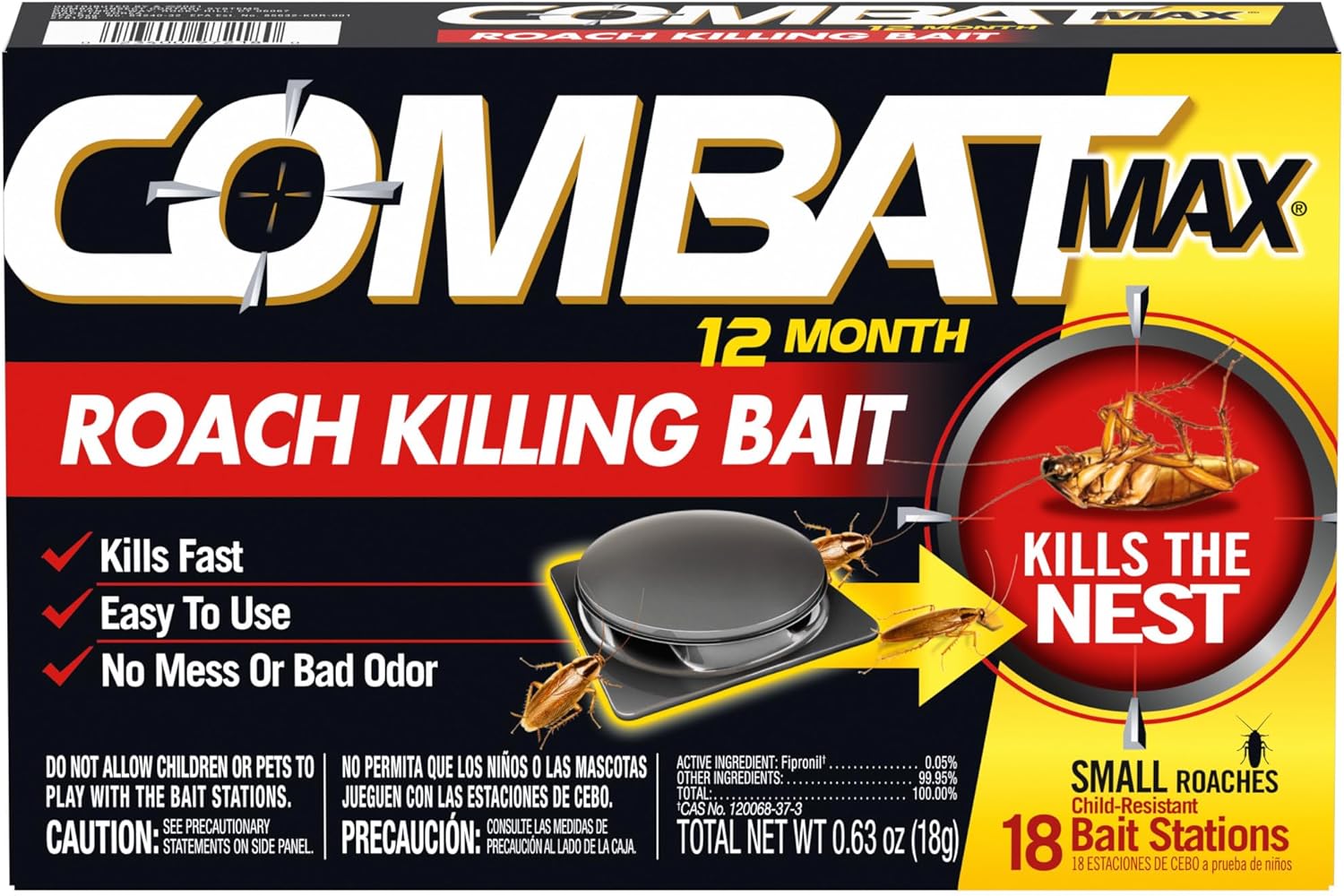
Combat Max 12-Month Roach Killing Bait uses fipronil in compact, child-resistant stations to lure small roaches, let them feed, and carry the bait back to the nest to spread the kill. Typical use is simple: place the prefilled stations in warm, dark, moist areas such as under sinks, behind appliances, and inside cabinets where roaches forage. The product promises quick knockdown within hours and continuous residual action for up to a year, so you can set and leave the stations rather than reapplying frequently. The bait is odorless and mess-free, which makes it suitable for kitchens and living areas, and the small entry holes help limit access to children and pets. Limitations are that it targets small roaches specifically and requires complete placement in all infestation hotspots to be most effective; heavy or widespread infestations may still need complementary methods. You should also replace stations annually to maintain protection.
Best for: Buyers who want a low-effort, long-lasting roach control solution they can place and forget around kitchens, bathrooms, and utility areas to reduce re-infestation risk.
Less Ideal for: Those facing large heavy infestations across many rooms or needing immediate control of large roach species should consider professional treatment or additional contact sprays and baits.
- Ready-to-use, mess-free bait stations require no activation
- Fast-acting fipronil formula begins working within hours
- Long residual protection up to 12 months per station
- Child-resistant design with small entry holes for safer placement
- Odorless and vapor-free so suitable for indoor living areas
- Formulated for small roaches so may be less effective against larger species
- Requires placing stations in all key harborages to achieve the ripple-effect elimination
Verdict: A set-and-forget indoor roach bait that delivers fast kill and up to a year of residual protection, ideal for pragmatic homeowners seeking low-maintenance control.
Choosing the Right Roach Trap for Apartments: Key Factors to Consider
Bait Type and Longevity
The bait determines whether roaches are drawn into the trap and whether the lure remains effective over days or weeks. Apartment infestations often involve a steady influx from shared spaces, so choose baits formulated to stay potent in variable humidity and temperatures.
Long-lasting bait reduces the need for frequent replacement, which matters when access to storage or disposal is limited. Some baits rely on food-based attractants while others use pheromone or insecticide-augmented lures. Consider how bait longevity fits your tolerance for ongoing maintenance and how often you can check traps.
Trap Size and Placement Options
Apartment living constrains where you can put traps. Slim-profile traps fit in baseboard gaps and behind appliances, while low-profile stations tuck under sinks and behind furniture. Larger traps may hold more captures but can be harder to hide and may draw attention from neighbors or landlords.
Think about ingress points such as door thresholds, kitchen cabinets, plumbing penetrations, and HVAC returns. A trap that can be mounted vertically, laid flat, or slid into crevices offers the most flexibility for tight rental spaces.
Containment and Disposal
After a roach is captured, the trap should prevent escape and simplify disposal. Closed bait stations that enclose bait and carcasses reduce the chance of secondary spread and scent that could deter other roaches from entering. Sticky traps catch but can make inspection and cleanup messy if they lack designated disposal features.
For apartments, choose traps that allow you to remove and seal the used trap quickly. This minimizes handling and potential contact with captured pests and any insecticidal residues, which is especially important in shared laundry or trash areas.
Safety Around People and Pets
Many renters prefer methods that limit exposure to insecticides. Traps that place bait inside a sealed station lower the risk to children and pets compared with loose bait or open gels. Even so, review placement and locking mechanisms to ensure curious pets cannot access contents.
Consider whether your household includes crawling children, curious cats, or scent-sensitive roommates. Low-toxicity or mechanical trapping approaches can satisfy strict lease rules or personal safety preferences while still reducing roach activity.
Visibility and Odor
Visible traps or strong bait odors can cause concern among neighbors or roommates. Discreet designs reduce complaints and are less likely to be tampered with in shared spaces. Odor is also a practical matter: strong-smelling baits may attract roaches but make living areas unpleasant.
Look for low-odor formulations and traps that hide the bait. If odor control is important, balance attractiveness with discretion to avoid creating a nuisance in small apartment layouts.
Inspection and Maintenance Requirements
Tenants need traps that are simple to check and maintain on a schedule they can manage. Clear inspection windows, easy-to-open disposal compartments, and long bait life cut down on visits and effort. Complicated assemblies or traps that require special tools are impractical for most renters.
Also consider how often traps should be replaced to remain effective and whether replacement parts or bait refills are readily available within your area. Practical maintenance lowers the chance of traps becoming sources of odor or secondary pest attraction.
Where Roaches Enter Apartments
Understanding common entry points helps you place traps where they will intercept roaches. In apartments, pests often move along shared walls, through gaps around plumbing and electrical lines, under doors, and in ductwork. Entry can also come from packages, grocery bags, or secondhand furniture.
When setting traps, follow visible trails or dark edges where droppings or smear marks appear. Focus on the perimeter of kitchens and bathrooms, behind appliances, and next to trash storage. Targeting likely pathways is more effective than random placement in a small unit.
- Check under sinks and behind dishwashers where moisture draws roaches
- Place traps near exterior doors and balcony thresholds
- Monitor along baseboards in the kitchen and behind upholstered furniture
Discreet Placement Strategies
Tenants often need to hide traps from view while maintaining accessibility. Use shallow traps along baseboards, tuck stations into cabinet corners, or hide units behind furniture legs. Velcro strips or double-sided tape can secure slim traps to the back of appliances without drilling.
Rotate placement if you see no captures after a week. Moving a trap a few inches can make a big difference by aligning it with an active run rather than an unused crevice.
- Start with multiple small stations in suspected pathways before consolidating
- Avoid placing traps where cleaning routines will knock them over
- Keep traps out of reach of pets and children while remaining easy to check
Combining Traps With Sanitation
Traps work best when paired with good sanitation. Remove food residues, secure garbage, and fix leaks that create moisture. Clutter offers shelter for roaches, so reducing hiding spots improves trap catch rates and speeds up control.
Even with traps in place, routine cleaning and sealing of entry gaps reduce reinfestation pressure from adjoining units and communal areas. Think of traps as part of an integrated approach rather than a standalone cure.
- Store food in sealed containers and do not leave pet food out overnight
- Empty indoor trash regularly and clean sticky spills promptly
- Use caulk or foam to seal gaps around pipes and baseboards where possible
When to Alert Management or Pest Control
If traps show heavy or continuous catch over several weeks, the infestation may extend beyond your unit. In multiunit housing, neighboring units or shared spaces often harbor sources that require coordinated treatment.
Inform building management if you suspect wider infestation so they can inspect communal areas and coordinate mitigation. Documentation of trap catches and dates is helpful when discussing the issue with landlords or property managers.
- Report persistent activity despite proper trap placement
- Share photos or a simple log of trap captures to support requests
- Ask about building-level treatments or inspection of shared plumbing chases
Disposal and Replacement Best Practices
Handle used traps carefully to avoid spreading odors or residues. Many stations are designed to be sealed before disposal; use that feature whenever possible. If a trap is disposable, seal it in a bag before placing it in building trash to minimize attraction during collection.
Replace baits or entire traps according to manufacturer guidelines or when catches decline. Regular replacement keeps bait attractive and prevents traps from becoming a source of odor or mold in humid locations.
- Wear gloves when handling heavily soiled traps and wash hands afterward
- Store replacement bait in a sealed container away from food
- Check traps weekly during active seasons and monthly once activity drops
How We Chose the Best Roach Trap for Apartments
We selected traps that address typical apartment constraints: limited space, shared walls, and the need for low-toxicity control. Our editorial filters favored trapping methods with proven bait chemistry, physical designs that conceal or fit into tight spots, and options rated for safety around pets and people. Key evaluation criteria included bait attractiveness and longevity, trap placement flexibility for corners and gaps, containment reliability to prevent carcass escape, and low human or pet exposure to active ingredients. We also considered ease of inspection and cleanup so tenants can maintain traps without specialized tools. We excluded bulk or commercial-grade devices intended for structural pest professionals, and we left out passive sticky sheets without targeted bait when they lacked containment features. Products had to be suitable for indoor residential use and practical for tenants in multiunit housing.
FAQ
Are roach traps safe to use in apartments with pets or children?
Many roach traps are designed to limit exposure by enclosing bait inside a station. These are usually safer around pets and children than loose bait. Still, place traps out of reach and choose lockable stations if you have curious pets or toddlers.
How long does bait remain effective in indoor traps?
Bait longevity depends on formulation and apartment conditions. Some baits stay attractive for several weeks, while others lose potency faster in high humidity. Check traps regularly and replace bait or traps as recommended.
Can traps alone eliminate a roach problem in an apartment?
Traps can reduce visible activity and catch many roaches, but they often work best as part of broader measures such as sanitation and sealing entry points. Severe or building-wide infestations may require coordinated interventions beyond tenant-level traps.
Where should I put traps if I have no access behind appliances?
Focus on accessible runways like the edges of cabinets, under sinks, along baseboards, and near trash or plumbing penetrations. Slim traps and adhesive strips can be tucked into narrow gaps without moving heavy appliances.
How often should I check and replace traps in an apartment?
Check traps at least once a week during active infestations to monitor catch rates. Replace bait or disposable units when catches slow or after the manufacturer-recommended duration, typically every few weeks to a couple of months.
Final Verdict
In apartments, practicality and safety guide the best choice of roach trap. Prioritize traps that offer strong bait attraction while fitting discreetly into tight spaces and keeping bait inaccessible to pets and children. Pair traps with sanitation and sealing efforts to reduce reinfestation pressure. Decide based on your tolerance for maintenance, how visible you can allow traps to be, and whether the problem appears limited to your unit or is building-wide. That focus will help you pick a trap that controls roaches effectively without creating new issues in shared living spaces.
