

Note: This article contains affiliate links. If you click on these links and make a purchase, I may earn a small commission at no extra cost to you. This helps support my research and content. Read my full affiliate disclosure here.
A properly chosen soaker hose can transform how you irrigate turf by delivering slow, deep watering that reduces evaporation and runoff. For lawns, distribution uniformity, hose length, and material longevity matter because they determine how evenly your grass roots develop and how often you have to replace or repair the hose. This guide covers six shortlisted soaker hoses selected for common lawn setups, from small urban yards to larger suburban lawns. We evaluate each option for flow consistency, durability, ease of installation, and compatibility with typical garden water systems. Read on to see which features matter most for your lawn and how the picks match those needs.
Top Picks at a Glance
| Best Overall The best all-around choice for most situations | LINEX Sprinkler Soaker Hose 50 ft (2-Pack) |  |
| Best Quality Built to a higher standard if you want something more solid | MIXC 100ft Thickened Soaker Hose with Copper Connector |  |
| Best Value The sweet spot between price and what you get | Hourleey Flat Soaker Hose 100 ft – Linkable Dual-Layer Drip Hose |  |
| Best Budget The cheapest option that still gets the job done reliably | Winisok 50 ft Soaker Hose (50 ft x 2 Pack) |  |
| Highest Rated A top-rated pick with lots of positive feedback | Pine Tree Tools Linkable Flat Soaker Hose, 50 ft |  |
| Most Popular A crowd favorite that many people choose with confidence | Gilmour 50' Flat Weeper Soaker Hose |  |
LINEX Sprinkler Soaker Hose 50 ft (2-Pack)

| Material Type | Polyvinyl Chloride (PVC) |
|---|---|
| Maximum Pressure | 60 psi |
| Number of Flutes | 3 |
| Unit Count | 1 Count |
The LINEX Sprinkler Soaker Hose is a hybrid flat hose that can act as a low-flow soaker or a gentle sprinkler depending on water pressure and how it is laid out. It uses a unique three-tube configuration and removable end caps so you can join the two 50 ft pieces to reach 100 ft or connect to other hoses. The hose lies flat on the ground to stay tangle-free and comes with a large set of steel trapezoidal stakes to keep it in place. At normal pressures (up to 60 psi) it produces a 3 to 6 foot spray pattern, making it useful for new sod, garden beds, shrubs, and tight planting areas where targeted, low-impact watering is preferred. Practical benefits include easy unrolling and storage, a combination of sprinkler and soaker performance in one product, and included stakes and end-cap hardware. Limitations are typical of PVC flat hoses: it sits on the surface rather than buried, can be vulnerable to lawn mower damage if not removed, and performance depends on household water pressure and correct placement.
Best for: Home gardeners who want one reliable hose that covers new sod, garden beds, and shrubs with adjustable gentle watering and who value easy setup and included stakes.
Less Ideal for: People who need buried drip irrigation, high-pressure impact sprinklers for large lawns, or a permanent in-ground system for long-term automated irrigation.
- Hybrid design functions as both a soaker and a light sprinkler for flexible watering
- Two 50 ft hoses can be joined to extend reach without special fittings
- Includes numerous steel stakes to secure the hose flat against soil
- Flat, kink-resistant profile is easy to unroll and stores compactly
- PVC flat hoses sit on the surface and should be removed or protected from lawn equipment
- Spray pattern and soak performance depend on household water pressure
Verdict: Choose this if you want a single, easy-to-install hose that doubles as a soaker and a light sprinkler for targeted lawn and garden watering.
MIXC 100ft Thickened Soaker Hose with Copper Connector

| Unit Count | 100 Feet |
|---|---|
| Nominal Wall Thickness | 1 millimeters |
| Material Type | Brass, Polyvinyl Chloride (PVC) |
| Maximum Pressure | 50 psi |
This MIXC soaker hose is built for steady, low-flow irrigation of vegetable beds and other planted areas. It uses a doubled wall thickness (1 mm) compared with many economy hoses, which reduces punctures and wear when dragged across rough ground. The hose includes brass/copper-style metal connectors and aluminum locking rings that hold fittings tightly and help prevent leak-prone plastic joints. A longer swivel handle on the connector makes attaching and turning the hose easier in tight spaces. In practice you lay it through rows or around raised beds and run low pressure water into it; the built-in seepage holes wet soil slowly and evenly without runoff. Important limitations to plan for are water-pressure sensitivity and recommended run length: the manufacturer advises keeping pressure below 50 psi and testing in 50 ft sections because flow falls off toward the far end. The hose is aimed at routine garden irrigation rather than high-pressure use or very long continuous runs, and you should use the included washers and a pressure regulator for the most reliable performance.
Best for: Gardeners who prefer a durable, low-maintenance soaker hose for regular vegetable bed irrigation and value reliability over lowest cost.
Less Ideal for: People who need to irrigate very large areas from a single long continuous hose run or who require frequent high-pressure flushing for emitters.
- Thicker 1 mm wall resists punctures and abrasion compared with typical 0.5 mm soaker hoses
- Metal (brass/copper) connector and aluminum locking rings reduce connection leaks and breakage
- Long swivel-handle connector eases attachment and prevents hose twisting during use
- Designed for slow, even seepage that minimizes runoff and conserves water
- Recommended maximum pressure and run length limit suitability for long continuous runs without additional supply/pressure management
- Flow can decrease toward the far end of a long lay so multiple sections or splitters may be needed for larger gardens
Verdict: Choose this hose if you want a tougher, leak-resistant soaker hose built for dependable vegetable garden irrigation.
Hourleey Flat Soaker Hose 100 ft – Linkable Dual-Layer Drip Hose

| Material Type | Nylon |
|---|---|
| Item Length | 100 feet |
| Maximum Pressure | 150 psi |
| Included Components | Soaker Hose, Stake |
The Hourleey Flat Soaker Hose is a 100 foot, linkable drip hose intended for garden beds and landscaped rows where steady, low-volume watering is needed. It delivers water through evenly spaced holes along a dual-layer PVC and nylon construction so moisture soaks into the root zone instead of spraying the surface. Typical use is laying the hose along beds, staking it in place, connecting multiple lengths end-to-end, and running at the recommended working pressure for even output. Notable features include a kink-resistant flat profile that tucks under mulch, a fabric cover to resist clogging, and stakes for straightforward placement. Practical benefits are clear water savings when compared with open hoses and less hand-watering for seedlings and vegetables. Important limitations are that it is meant for cold water only and performs best within the suggested 60–80 PSI range; pressure outside that range can affect drip consistency. Also the flat profile may be harder to repair than standard round soaker hoses if punctured.
Best for: Gardeners who prioritize efficient, low-maintenance irrigation for beds or vegetable rows and want a product that can be extended and tucked under mulch for consistent root watering.
Less Ideal for: People who need a hose for frequent high-pressure or hot-water tasks or who prefer a round, easily repairable soaker hose for heavy-duty rough use.
- Delivers water directly to roots for efficient irrigation and reduced evaporation
- Linkable end-to-end design makes it easy to extend coverage across beds
- Dual-layer PVC and nylon construction offers kink resistance and durability
- Fabric-covered design helps reduce clogging and allows under-mulch placement
- Requires appropriate water pressure to maintain even drip performance
- Not rated for use with hot water
Verdict: Choose this hose if you want a water-saving, linkable soaker system that delivers steady root-zone irrigation across long garden beds.
Winisok 50 ft Soaker Hose (50 ft x 2 Pack)

| Item Length | 50 feet |
|---|---|
| Nominal Wall Thickness | 0.125 inches |
| Outside Diameter | 0.75 inches |
| Maximum Pressure | 60 psi |
| Item Weight | 2 kg |
This Winisok soaker hose is a simple drip-irrigation solution for watering garden beds, lawns, and raised planters. It is constructed with a PVC inner tube reinforced by fabric and a cloth cover so it resists leaks and can lie buried or run along the soil surface. The hose connects with standard 3/4" threaded fittings so you can attach it to an outdoor faucet or link several lengths to cover larger beds. It is meant to operate under moderate pressure and the manufacturer warns to keep pressure below 60 psi; in practice you start with low pressure and increase slowly to prevent kinks and ensure even seepage. The hose is lightweight and flexible, making it easy to position and store, and its uniform water seepage can reduce surface evaporation and cut watering time. Expect typical limitations of economical PVC soakers: it will be less puncture resistant than heavy rubber hoses and may require occasional repositioning or protection from sharp objects to avoid damage.
Best for: Buyers who want an affordable, easy-to-deploy drip option to save water and automate watering for garden beds and small lawns. Good for gardeners prioritizing cost and simplicity over heavy-duty durability.
Less Ideal for: People needing a rugged, long-term underground irrigation backbone or frequent commercial use should choose heavier-duty tubing or professional drip lines instead.
- Delivers slow, uniform seepage to hydrate roots and reduce surface evaporation
- Cloth-covered PVC construction improves leak resistance compared with simple porous tubing
- Standard 3/4" threaded fittings allow easy connection to faucets and to chain multiple lengths
- Flexible and lightweight for easy placement, burial, and storage
- Not rated for high-pressure use and can kink if water pressure is raised too quickly
- PVC construction is less durable against punctures and abrasion than heavier rubber options
Verdict: An inexpensive, easy-to-use soaker hose that cuts watering time and water loss, making it a smart budget choice for home garden beds and small lawns.
Pine Tree Tools Linkable Flat Soaker Hose, 50 ft

| Item Length | 50 feet |
|---|---|
| Included Components | Flat Drip Hose |
| Brand Name | Pine Tree Tools |
This flat soaker hose supplies slow, steady water directly at the soil line to reduce runoff and evaporation and keep root zones consistently moist. It is typically laid along rows, around plants, or through narrow beds and can be used above ground or lightly covered with mulch to hide the line. The hose is flexible and flat for easy placement and storage, and it is linkable to standard garden fittings so you can extend runs or add timers and end caps for hands-free watering. Practical benefits include targeted watering for vegetables, flower borders, tree rings, and raised beds, simpler setup than buried drip lines, and compact roll-up storage between seasons. Important limitations are that it relies on surface placement so it is more exposed to sun and mechanical damage than buried tubing, and output depends on your water pressure so very long linked runs may need pressure regulation for even flow.
Best for: Gardeners who prioritize dependable, low-maintenance irrigation for beds and raised planters and want a simple, extendable system they can set up quickly.
Less Ideal for: People who need fully concealed or professional subsurface drip systems or those who want precision emitters for individual plants.
- Delivers slow, uniform drip watering along the length to reduce evaporation and runoff
- Flat, flexible design lays neatly in narrow beds and rolls up compactly for storage
- Linkable to standard fittings so runs can be extended or combined with timers
- Durable construction intended to resist kinks and leaks for season-long use
- Surface placement leaves the hose exposed to sunlight and physical wear compared with buried drip tubing
- Water distribution over long linked runs can become uneven without proper pressure management
Verdict: Choose this hose if you want a reliable, easy-to-install surface soaker that delivers consistent root-zone watering and can be expanded with standard fittings.
Gilmour 50' Flat Weeper Soaker Hose
| Material Type | Vinyl |
|---|---|
| Item Length | 50 feet |
| Nominal Wall Thickness | 0.0625 inches |
| Outside Diameter | 0.63 inches |
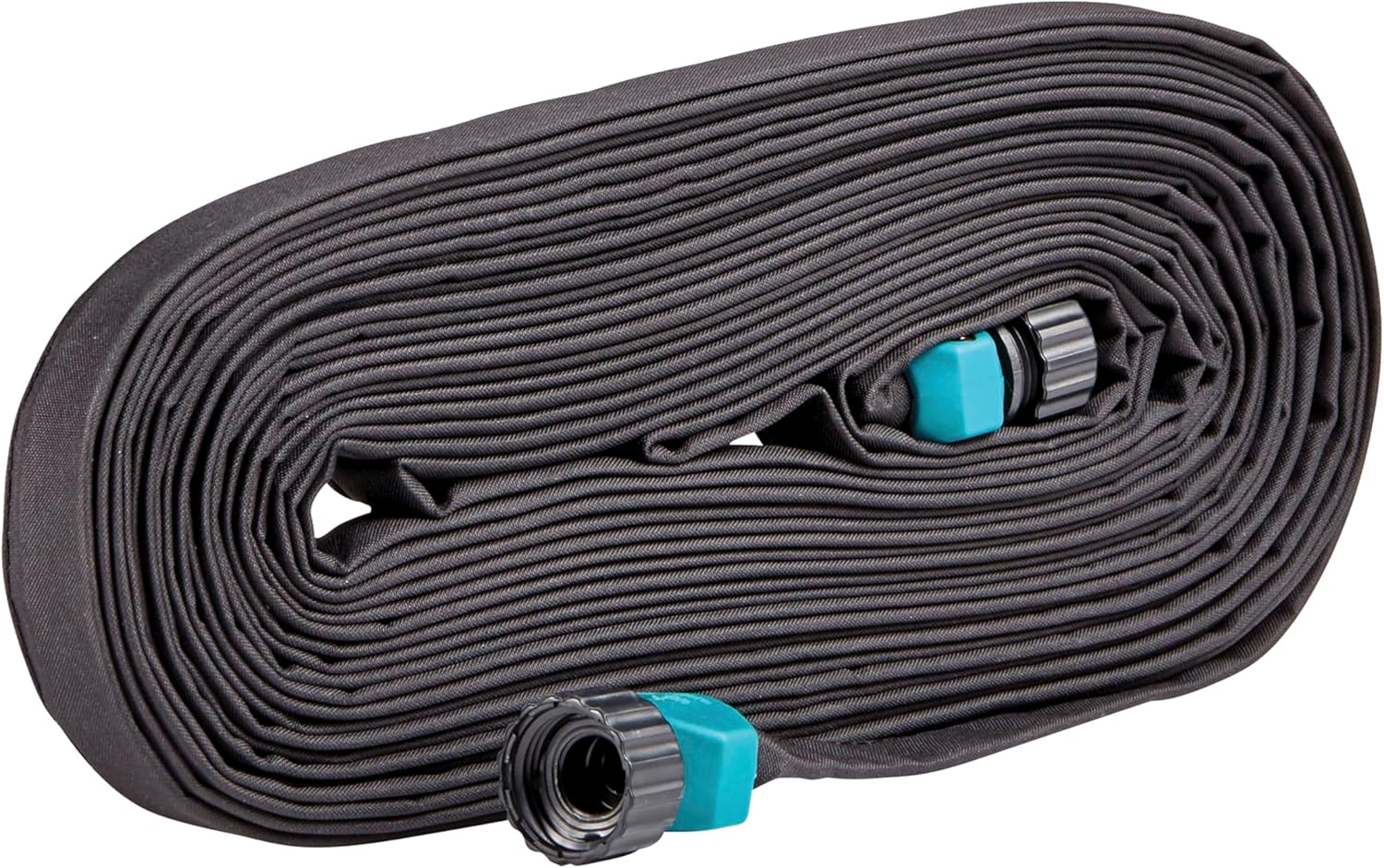
The Gilmour 50' Flat Weeper Soaker Hose is a lightweight, vinyl soaker hose that waters plants by seeping moisture through a fabric jacket directly into the soil. It is typically laid along planting rows or buried shallowly under mulch so water reaches roots without wetting foliage or pathways. Notable features include a clog-resistant fabric cover and a flat profile that makes rolling and winter storage simple. Being made from 100% recycled vinyl and described as UV resistant, it is intended for repeated seasonal use and can be linked to additional hoses to create a longer DIY drip system. Practical benefits are water savings from targeted delivery and easier placement in narrow beds where sprinklers would waste water. Limitations to expect are the usual for vinyl soaker hoses: it is not intended for high-pressure use and can be punctured by sharp tools or heavy foot traffic, and performance depends on even water pressure along the length so very long runs may deliver uneven soaking without splitters or a faucet regulator.
Best for: Gardeners who prioritize reliable, water-efficient irrigation for beds and vegetable rows and who prefer a simple, low-tech solution that is easy to install and store.
Less Ideal for: People who need high-pressure irrigation, frequent heavy-duty use, or a permanent buried drip system should consider reinforced or commercial-grade drip tubing instead.
- Delivers water directly to roots through a fabric jacket for efficient, low-waste watering
- Clog-resistant fabric cover helps maintain consistent seepage over time
- Flat, flexible design rolls up for compact, easy seasonal storage
- Made from recycled vinyl and marketed as UV resistant for seasonal durability
- Not designed for high-pressure applications and can give uneven watering on very long runs
- Vinyl construction can be damaged by sharp objects or heavy foot traffic
Verdict: A straightforward, water-saving soaker hose that makes efficient root watering and seasonal storage easy for home garden beds.
Choosing the Right Soaker Hose for Lawns: Key Factors to Consider
Water Distribution Uniformity
Even moisture distribution is the core purpose of a soaker hose on turf. A hose that emits water inconsistently will create patches of overwatered and underwatered grass, leading to uneven growth and disease susceptibility. Uniform output depends on internal pore size and placement, as well as how the hose handles your household water pressure.
When assessing uniformity, consider whether the hose maintains similar seepage from end to end without requiring multiple spigots or frequent rerouting. For larger lawns, look for designs that preserve consistent flow across extended lengths or plan to run zones to avoid pressure drop.
Material Durability and UV Resistance
Soaker hoses sit on turf and are exposed to foot traffic, mower blades, sunlight, and occasional chemical contact from fertilizers. Materials that resist UV degradation and abrasion will last longer and need fewer replacements. Look for hoses made from thicker, reinforced materials or with protective outer layers designed to tolerate sun exposure.
Durability also affects how well the hose stands up to being coiled and uncoiled each season. Hoses that crack or harden quickly lead to leaks and uneven watering, so longevity is a key cost and maintenance consideration for lawn applications.
Flow Rate Compatibility With Lawn Watering
Different lawns and regions have varying watering needs and typical household water pressures. The hose must work with your existing pressure and any irrigation controller or timer you use. A hose with too-high flow can saturate low spots and cause runoff, while too-low flow may not deliver enough water for established turf in hotter climates.
Check manufacturer flow recommendations and, when possible, choose a hose designed to perform well at common residential pressures. For larger lawns, plan zones or use multiple hoses to achieve the right application rate without overtaxing the supply.
Ease of Installation and Layout Flexibility
Installing a soaker hose on a lawn should be quick and minimally disruptive. Consider how easy it is to lay out curves, secure the hose in place, and connect to a faucet or timer. Hoses that are flexible and come with simple connectors or stakes save time and reduce the chance of leaks at join points.
Layout flexibility matters for lawns with irregular shapes, slopes, or landscape features. A hose that kinks or resists gentle curves will be harder to position and may require more fittings, which increases leak risk.
Clogging Resistance and Ease of Maintenance
Soaker hoses can clog from mineral buildup or debris, particularly if they are used with non-filtered water or placed where soil can enter the pores. Clogging reduces output and creates uneven watering patterns that stress grass. Choose hose types known for resisting interior blockage or that can be flushed easily.
Maintenance considerations include how simple it is to flush the line, clean connections, and repair small punctures. A hose that is hard to maintain will demand more time each season and can shorten its effective lifespan.
Length, Customization, and Connection Options
Matching hose length to lawn size avoids excessive joins and reduces pressure loss. Many lawns benefit from buying an appropriate length or buying a couple of manageable sections rather than one extremely long run. Look for hoses that offer straightforward connectors, adapters for timers, and options to trim or cap ends.
Customization also includes whether the hose can be buried lightly under mulch or turf to hide it and reduce UV exposure. Choose connection systems that minimize leak points and allow easy reconfiguration as lawn layouts change.
How Soaker Hoses Behave On Different Lawn Types
Fine-textured cool-season lawns and thick warm-season grasses absorb water differently. For dense turf, slower seep rates applied for longer durations encourage deep root growth without surface pooling. In contrast, sandy soils drain quickly and may need shorter, more frequent runs to keep soil moisture consistent.
Sloped lawns need particular attention. Placing hoses along contours or running shorter sections on a slope prevents heavy saturation at the downhill end and reduces runoff. In clay soils, you may need to run hoses at lower flow rates for longer to allow water to infiltrate rather than sit on the surface.
- Clay soils: run longer, lower-flow cycles to reduce pooling.
- Sandy soils: shorter, more frequent applications prevent leaching.
- Slopes: use contour layout or zone runs to prevent runoff.
Setting Run Times and Frequency for Turf Health
Soaker hoses apply water slowly, so total run time and scheduling are crucial. A common approach is to water less often but for longer sessions that wet the root zone to 4 to 6 inches. Use a soil probe or screwdriver to check moisture depth. Water early in the morning to minimize evaporation and to allow turf to dry before night, reducing disease risk.
If you use a mechanical or digital timer, program multiple short runs with soak periods between them if you notice surface pooling. Adjust run times seasonally; increase duration in peak summer and reduce it during cooler, rainy periods.
- Aim to wet 4 to 6 inches for established turf.
- Water in the morning for best disease prevention.
- Use staggered cycles on compacted soils to improve infiltration.
Installing and Securing Soaker Hoses on Lawn
Lay the hose directly on the turf surface and secure it with landscape stakes to prevent movement from foot traffic or lawn care equipment. Keep the hose close to the soil surface so water soaks in rather than running off. Avoid burying deeply in turf unless you plan for seasonal removal and replacement.
When connecting multiple sections, use quality fittings that resist leaks and check connections for drips after the system runs. If trimming a hose to fit, cap the cut end properly to maintain even pressure along the remaining length.
- Use stakes to prevent shifting and reduce damage from mowers.
- Check all fittings after first run and seasonally for leaks.
- Trim and cap cleanly to preserve even pressure across the hose.
Seasonal Care and Winter Storage
At the end of the watering season, flush the hose to clear mineral deposits and allow it to dry before storing it coiled in a cool, shaded place. Leaving a soaker hose exposed to freeze-thaw cycles can cause cracking and premature failure. If you plan to leave the hose in place over winter, choose a material rated for freeze resistance.
Inspect your hose at the start of each season for blockages, abrasions, or brittle sections. Repair small leaks with appropriate patching supplies rather than replacing the entire line when possible.
- Flush to remove sediment before storage.
- Store coiled in shade to protect from UV and temperature extremes.
- Repair small punctures to extend service life.
Common Installation Mistakes to Avoid
Overextending a single long hose run without accounting for pressure loss can cause the far end to underperform. Break larger lawns into zones or use multiple shorter runs to maintain even wetting. Another frequent mistake is laying hoses too close to mower blades or traffic paths, which leads to accidental damage.
Using unfiltered water in areas with high sediment without periodic flushing accelerates clogging. Finally, failing to secure connections properly or skipping test runs before leaving the system unattended can result in wasted water and patchy turf.
- Avoid single excessive-length runs that cause pressure drop.
- Keep hoses away from regular mower paths and high foot traffic.
- Flush occasionally if source water contains sediment.
How We Chose the Best Soaker Hose for Lawns
We prioritized factors that directly affect lawn moisture distribution and long-term reliability. Main evaluation criteria included water distribution uniformity under typical municipal water pressure, material durability against sun and soil contact, connection and installation ease for running across turf, and compatibility with standard garden timers and spigots. We also considered hose length and customization options to fit common lawn sizes without excessive joins, plus resistance to kinking and clogging, which affects maintenance frequency. We excluded specialty irrigation lines intended for raised beds or greenhouse misting and any hoses that require complex emitters or professional installation. We focused on consumer-grade soaker hoses suitable for do-it-yourself lawn irrigation and those that provide predictable output across a range of water pressures. The result is a shortlist that favors even watering, reliable construction, and straightforward setup for typical lawn care routines.
FAQ
Can I use a soaker hose on a newly seeded lawn?
Often it is better to wait until new seedlings are established enough to tolerate gentle surface contact. Very light, frequent watering methods are usually recommended for germination. Once grass has developed several true leaves and a beginning root system, a soaker hose can be used to encourage deeper root growth.
How long should I run a soaker hose for a typical lawn?
Run times depend on soil type and desired wetting depth. A common target is to wet the root zone to 4 inches, which may require 30 to 90 minutes depending on flow rate and soil. Check with a probe and adjust duration as needed.
Will a soaker hose cause runoff on slopes?
It can if applied too quickly. On slopes, use lower flow rates, shorter runs, or contour placement to reduce runoff. Breaking the area into smaller zones and running multiple cycles helps water infiltrate rather than run downhill.
How do I prevent a soaker hose from clogging?
Use a filter if your water source has sediment and flush the line periodically. Elevating the hose slightly during flushing and inspecting connectors for debris also helps. Choosing hoses with larger, evenly distributed pores reduces clogging risk.
Can I leave a soaker hose on the lawn all season?
Many gardeners leave hoses in place for a season, but prolonged UV exposure and foot traffic can shorten lifespan. Periodic inspection, rotating layout, and protecting hoses from mower damage will extend usable life.
Is it better to bury a soaker hose under mulch or leave it exposed?
Burying lightly under mulch reduces UV exposure and hides the line, which can improve aesthetics and longevity. However, burying under turf can make seasonal removal and inspection harder. Choose based on maintenance preferences and whether you need to shift layout often.
Final Verdict
For lawn irrigation, prioritize hoses that deliver consistent seepage, resist UV and abrasion, and match your household water pressure. Think about how length, connections, and maintenance needs fit your lawn size and irrigation schedule. Tradeoffs are common: faster application rates shorten run time but raise runoff risk, while thicker, more durable hoses last longer but may cost more in setup effort. Choose a soaker hose setup that balances distribution uniformity and durability for your lawn type. Focus on installation simplicity and maintenance access so you can keep turf evenly watered with minimal fuss.
