

Note: This article contains affiliate links. If you click on these links and make a purchase, I may earn a small commission at no extra cost to you. This helps support my research and content. Read my full affiliate disclosure here.
If you keep backyard chickens, the right compost bin changes how quickly manure becomes usable soil amendment and how much time you spend managing smell and pests. A compost bin built for chicken manure needs good containment, reliable airflow to reach high temperatures, and access for turning and removing finished compost. This guide covers six shortlisted compost bins that fit that use case, and explains the criteria we used to evaluate containment, aeration, durability, and ease of handling. Read on to find the style and features that suit your coop size and management routine before you pick a bin.
Top Picks at a Glance
| Best Overall The best all-around choice for most situations | Maygrove 53-Gallon Dual-Chamber Compost Tumbler with 360° Rotation |  |
| Best Quality Built to a higher standard if you want something more solid | FCMP Outdoor 37-Gallon Dual-Chamber Tumbling Composter |  |
| Best Value The sweet spot between price and what you get | GEOBIN Backyard Compost Bin, Expandable Plastic Composter |  |
| Best Budget The cheapest option that still gets the job done reliably | JupiterForce 80 Gallon Garden Compost Bin (Polypropylene) |  |
| Highest Rated A top-rated pick with lots of positive feedback | DIAMONDFORGE 43‑Gal Dual‑Chamber Tumbling Compost Bin |  |
| Most Popular A crowd favorite that many people choose with confidence | VIVOSUN Outdoor Tumbling Composter, Dual-Chamber 43 Gallon |  |
Maygrove 53-Gallon Dual-Chamber Compost Tumbler with 360° Rotation

| Capacity | 53 gallons |
|---|---|
| Material Type | Polypropylene + Steel |
| Shape | Cylindrical |
This Maygrove 53-gallon dual-chamber tumbler is built for steady, low-effort backyard composting. You load kitchen scraps and chicken manure into one chamber while the other side finishes, then spin the drum using an ergonomic gear-assist handle and internal mixing bars to aerate and blend materials without manual turning. Adjustable air vents and a sturdy polypropylene drum combined with a steel frame let you control airflow and moisture to reduce odors and speed breakdown. Extra-wide sliding doors make adding waste and harvesting finished compost simple, and reinforced legs and dual-direction brakes keep the unit stable when full. Assembly is mostly snap-together with minimal screws so setup is quick. Important limitations for chicken manure: the tumbler has ventilation but no built-in heating, so hot, highly nitrogenous loads like fresh poultry manure need careful mixing with carbon-rich bedding and may require more frequent turning or resting between loads to avoid ammonia and odor. The 53-gallon capacity suits medium household gardens but may need more frequent management if you compost large quantities of manure.
Best for: Gardeners who want a low-maintenance, continuous compost system that handles mixed household waste and moderate amounts of chicken manure with regular attention to carbon balance and aeration.
Less Ideal for: Small-scale livestock keepers or homesteaders who regularly generate large volumes of raw poultry manure and need high-capacity or thermally insulated systems for rapid pathogen-killing.
- Dual-chamber design allows continuous loading and curing without interrupting the composting cycle
- 360° rotating drum with mixing bars and gear-assist handle makes aeration effortless
- Adjustable vents let you manage airflow and moisture to reduce odors
- Extra-wide sliding doors simplify loading fresh material and harvesting finished compost
- Polypropylene drum on a steel frame resists rust and UV for outdoor durability
- No active heating or insulated chamber so achieving high temperatures with wet or fresh poultry manure may require careful recipe and monitoring
- 53-gallon capacity may be small for households producing large amounts of chicken manure
Verdict: A user-friendly dual-chamber tumbler that lets balanced gardeners compost kitchen scraps and moderate amounts of chicken manure continuously with minimal physical effort.
FCMP Outdoor 37-Gallon Dual-Chamber Tumbling Composter
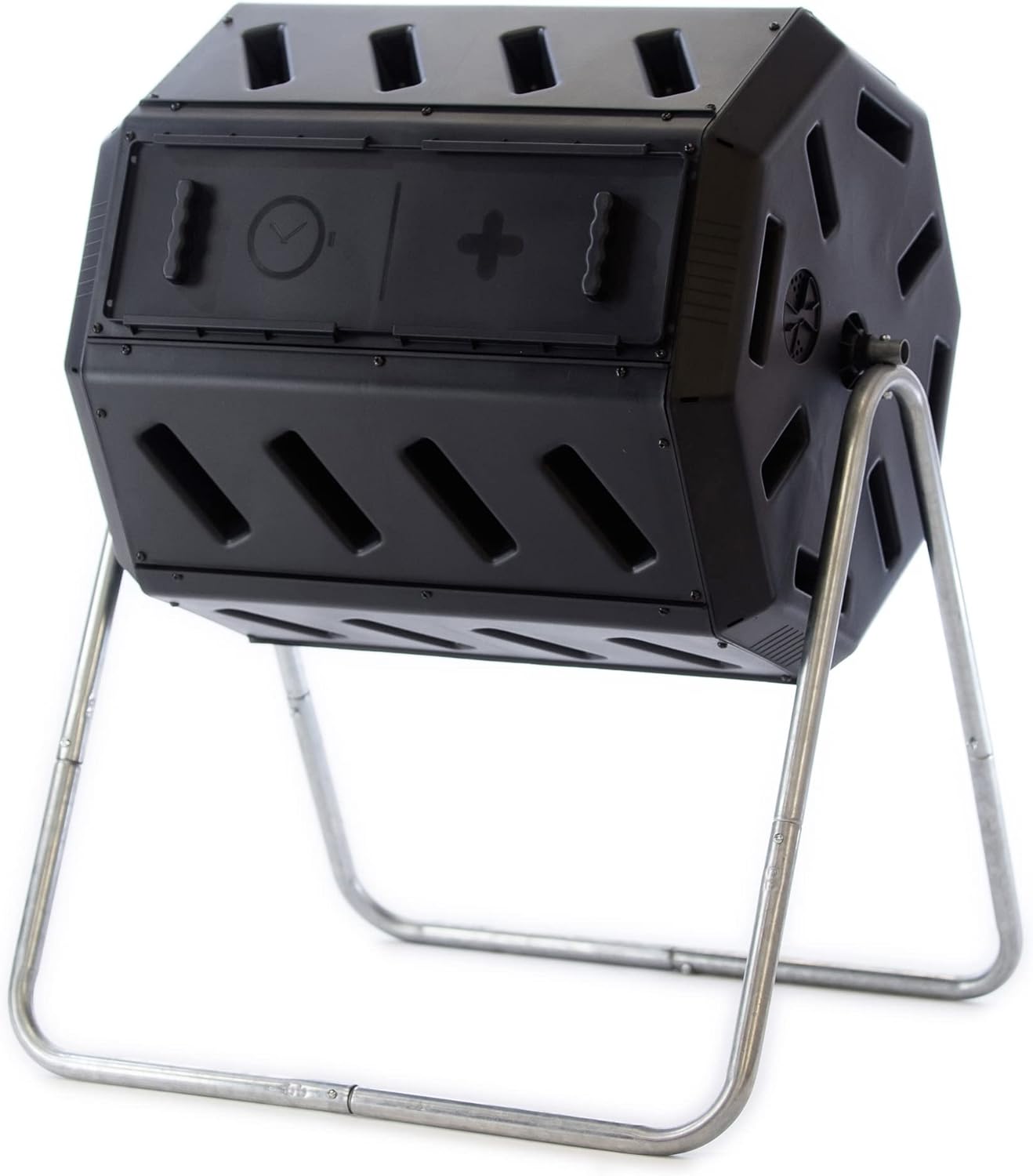
| Capacity | 37 gallons |
|---|---|
| Material Type | Polypropylene (PP) |
| Item Type Name | Tumbling Composter |
| Chambers | Dual |
The FCMP Outdoor 37-Gallon Dual-Chamber Tumbling Composter is a user-friendly rotating bin that lets you process kitchen scraps and yard waste without turning a pile by hand. Its two chambers let you fill one side while the other finishes curing so you can maintain a steady supply of finished compost. The molded fins and ergonomic handholds make tumbling simple, and built-in aeration holes help oxygenate the load for faster decomposition. The drum is made from UV-inhibited, BPA-free polypropylene recycled plastic and sits in a powder-coated steel frame intended to resist corrosion outdoors. In practice this composter is simple to use for small to medium gardens: add balanced “greens” and “browns,” tumble a few times every few days, and remove finished material through the access door. Limitations to note are the 37-gallon capacity, which may be small for very large yards, and that composting speed still depends on feedstock balance and ambient temperature, so you will not get instant results in cool climates.
Best for: Gardeners who want a low-maintenance, continuous composting solution for small to medium yards and value easy tumbling and regular access to finished compost.
Less Ideal for: People with very large properties, commercial gardens, or those who need high-volume composting fast should consider larger or stationary systems instead.
- Dual-chamber design supports continuous composting so one side can cure while you add fresh material to the other
- Ergonomic deep fins and handholds make the barrel easy to rotate without heavy lifting
- Aeration holes and internal fins improve airflow and help break up clumps for faster decomposition
- Constructed from UV-inhibited, BPA-free polypropylene with a corrosion-resistant steel frame for outdoor durability
- 37-gallon capacity may be limiting for very large gardens or heavy yard waste producers
- Performance depends on proper feedstock balance and warm conditions, so it is slower in cool climates
Verdict: Choose this composter if you want an easy-to-use dual-chamber tumbler that delivers continuous, low-effort composting for a small to medium backyard.
GEOBIN Backyard Compost Bin, Expandable Plastic Composter

| Capacity | 216 gallons |
|---|---|
| Material Type | Plastic |
| Shape | Cylindrical |
The GEOBIN Backyard Compost Bin is a lightweight, cylindrical plastic composter designed for straightforward backyard use. It assembles quickly with a few closure keys and expands to increase capacity, so you can start with a small footprint and add volume as your kitchen scraps and yard waste grow. The open-structure design gives excellent ventilation, which helps speed up decomposition when you layer greens and browns and turn the pile occasionally. Because it is low-tech and portable, it is easy to move, empty, or reassemble if you relocate it in the yard. The practical benefits are its affordability, ease of setup, and versatility for beginners and experienced gardeners who want a no-fuss system. Limitations are that it is a basic ring-style bin with no insulated walls or built-in access door, so it will not retain heat as well as tumblers or insulated bins and requires manual turning and occasional maintenance to keep the process active.
Best for: Budget-conscious gardeners who want a low-cost, low-effort way to compost yard trimmings and kitchen scraps without complicated setup.
Less Ideal for: People who need fast, high-temperature composting or a bin with a convenient bottom access door for frequent harvests should consider other designs.
- Expandable capacity up to 216 gallons (listed) to handle increasing compost volume
- Very easy assembly with simple closure keys
- Lightweight and portable for repositioning or storage
- Good ventilation that helps organic material break down faster
- No insulated walls or built-in access door for easy compost removal
- Basic plastic construction offers less heat retention than enclosed designs
Verdict: A very affordable, easy-to-assemble composter that gives budget gardeners a simple, expandable solution for backyard composting.
JupiterForce 80 Gallon Garden Compost Bin (Polypropylene)

| Capacity | 80 gallons |
|---|---|
| Material Type | Polypropylene (PP) |
| Compost Completion Time | 4 to 5 weeks |
This JupiterForce compost bin is a basic, budget-friendly outdoor composter designed to turn kitchen scraps and yard waste into usable soil over several weeks. It assembles without tools and sits directly on the ground so you load materials through the top lid, rely on molded ventilation panels for airflow, and retrieve finished compost via a sliding bottom door. The molded polypropylene construction makes the unit lightweight and weather resistant while the included gloves are a helpful touch for handling material. Because it lacks a base, the bin depends on contact with soil and moisture for decomposition and will be easiest to use on bare ground rather than a hard patio. The relatively large 80 gallon capacity means less frequent emptying for small to medium gardens, but the plastic construction is basic compared with heavier-duty metal or insulated tumblers, so it will not retain heat as well in cold climates. For gardeners who want an inexpensive, simple way to compost and collect finished material, this does the job with minimal fuss.
Best for: Gardeners on a tight budget who need an easy, low-maintenance way to compost kitchen scraps and yard waste and who will place the bin on soil or garden beds.
Less Ideal for: People who need a compost system for a paved patio, require rapid high-heat composting year-round, or prefer heavy-duty insulated tumblers for faster results.
- Generous 80 gallon capacity reduces how often you need to empty it
- Tool-free assembly makes setup quick and straightforward
- Top lid plus sliding bottom door simplifies loading and removing finished compost
- Molded ventilation on each side improves airflow to speed decomposition
- Lightweight, weather-resistant polypropylene construction resists rot and rust
- No integrated base so it must sit on soil to compost efficiently
- Plastic construction offers limited insulation so composting slows in cold weather
Verdict: A simple, inexpensive 80‑gallon polypropylene composter that lets budget-minded gardeners turn yard and kitchen waste into usable compost with minimal setup.
DIAMONDFORGE 43‑Gal Dual‑Chamber Tumbling Compost Bin

| Capacity | 43 gallons |
|---|---|
| Material Type | Metal, Polypropylene (PP) |
This DIAMONDFORGE tumbling composter is built for straightforward, reliable backyard composting of kitchen and garden waste, including manure when managed properly. It uses a dual‑chamber design so you can actively compost in one side while adding fresh material to the other, supporting a continuous workflow. The barrel rotates 360 degrees on a steel frame, making it easy to mix contents without heavy lifting and promoting even decomposition. Aeration fins and precision vents improve airflow to speed breakdown and reduce odors, and the polypropylene body with steel support is weather resistant for year‑round outdoor use. Capacity is 43 gallons, which is suitable for small flocks or household waste streams, and assembly is advertised as quick. Limitations: the 43‑gal volume is moderate so very large quantities of chicken manure will require frequent turning or multiple batches, and proper carbon balance and pasteurization steps are still needed when composting fresh manure to ensure pathogen reduction.
Best for: Gardeners who prioritize a dependable, low‑effort composting system for small to medium amounts of manure and kitchen waste and who want a continuous supply of finished compost without frequent heavy handling.
Less Ideal for: Large‑scale poultry keepers or those wanting to process bulk manure quickly should look for a larger commercial tumbler or static hot compost system.
- Dual‑chamber design allows continuous composting cycles without emptying the whole unit
- 360° rotating barrel makes mixing and aeration easy without manual digging
- Aeration fins and vents improve airflow to speed decomposition and limit odors
- Steel frame with polypropylene body provides weather resistance for outdoor use
- 43‑gallon capacity is modest for large amounts of chicken manure or multiple coops
- Requires correct carbon to nitrogen balance and heat management for safe manure composting
Verdict: A weather‑resistant, dual‑chamber tumbler that reliably produces compost with minimal manual mixing, ideal for small to mid‑size chicken manure runs.
VIVOSUN Outdoor Tumbling Composter, Dual-Chamber 43 Gallon
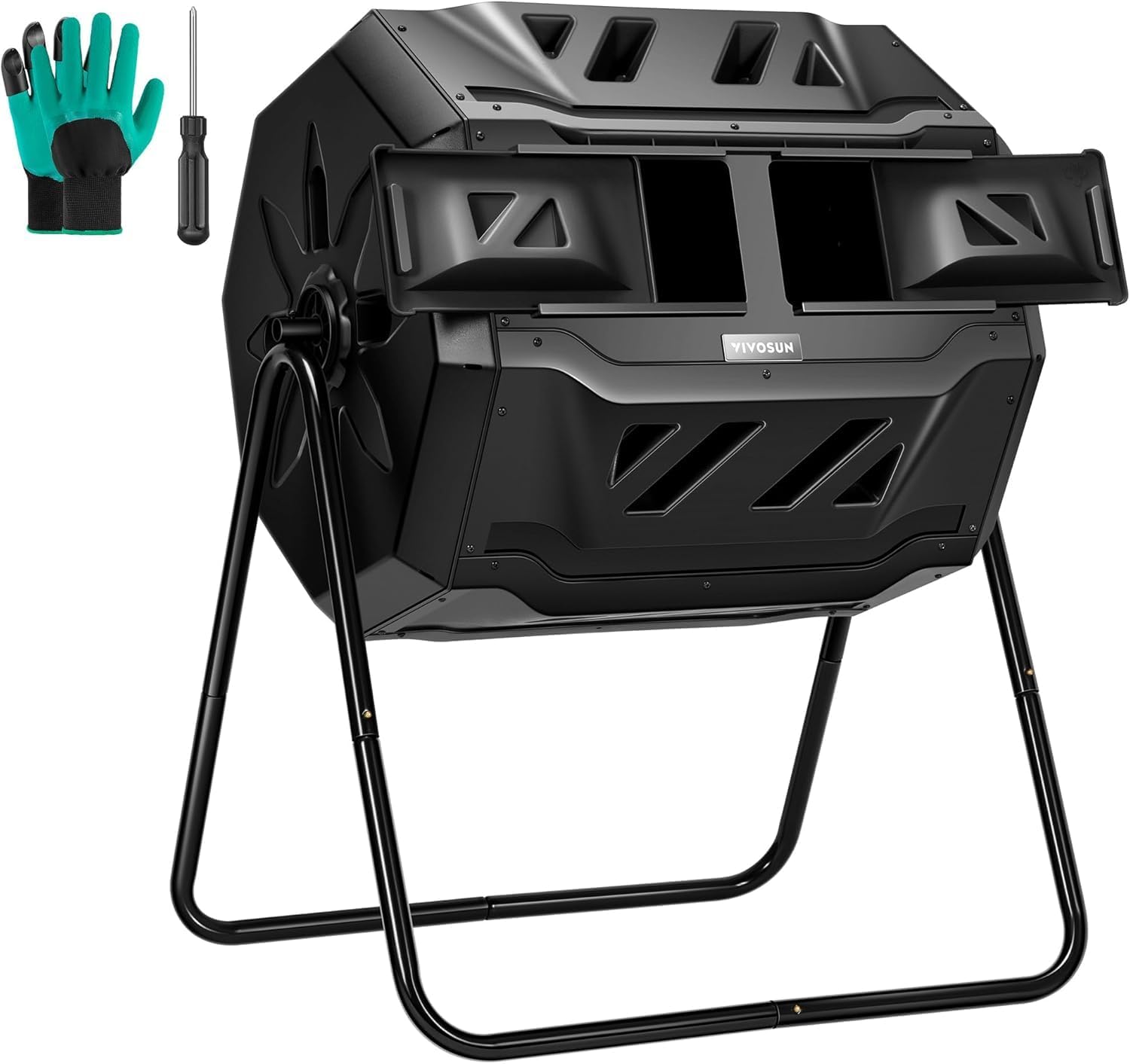
| Material Type | galvanized steel |
|---|---|
| Capacity | 43 gallons |
This VIVOSUN tumbling composter is a practical backyard unit built around two rotating chambers so you can add fresh waste to one side while the other finishes breaking down. The 360 degree tumbling design with deep internal fins makes turning the pile simple and helps break up clumps without digging. Ventilation slots around the drum promote airflow for aerobic decomposition, and the metal frame with a PP plastic barrel is designed to resist corrosion and outdoor weathering. It comes with waterproof garden gloves and small digging claws to make loading and aerating easier. At 43 gallons it is sized for a family garden or vegetable patch but is compact enough for a patio or small yard. Limitations to note are that it requires occasional manual turning to maintain activity and that the plastic drum means it will warm less in cold climates than insulated models, so composting speed will vary by season. Assembly and placement on a level spot are also important for smooth rotation.
Best for: Gardeners who want a hands-on, efficient system to produce regular batches of compost without digging a pile and who prioritize continuous output and easy turning.
Less Ideal for: People who need a completely hands-off hot composter or who compost only very large volumes; those in very cold climates seeking year-round rapid breakdown should consider insulated or electric options.
- Dual chambers let you load new material while another batch finishes, ensuring continuous compost production
- 360 degree tumbling with deep fins makes mixing and aeration easy without manual digging
- Galvanized steel frame and PP plastic barrel designed for outdoor durability and corrosion resistance
- Ventilation slots support aerobic breakdown for faster, less smelly composting
- Plastic drum offers less insulation than insulated or fully metal units, slowing composting in cold weather
- Requires manual turning and regular management to maintain heat and moisture for fast results
Verdict: If you want steady, manageable batches of compost with easy tumbling and continuous use, this dual-chamber VIVOSUN tumbler delivers practical, durable performance.
Choosing the Right Compost Bin for Chicken Manure: Key Factors to Consider
Containment and Pest Resistance
Good containment prevents neighborhood animals and scavengers from digging into fresh manure and bedding. For chicken manure that can attract rodents and flies, look for secure lids, fine mesh or solid walls at the base, and designs that close tightly but still allow occasional inspection.
Containment also helps control runoff during heavy rain. A bin that sits on the ground without a solid base may leak nutrient-rich liquid into soil nearby, so consider how the bin seals and whether a raised floor or removable tray is needed for your site.
Airflow and Ventilation
Chicken manure compost needs steady oxygen to heat up and break down quickly. Bins with adjustable vents, perforated walls, or removable panels make it easier to balance air exchange and moisture, helping reach thermophilic temperatures that reduce pathogens.
Too little ventilation leads to soggy, smelly compost; too much can dry the pile out. Features that permit staged aeration, such as removable cores or vents you can close seasonally, give you more control as the pile matures.
Access for Turning and Removal
Turning helps mix bedding and manure, aerate the pile, and distribute moisture and heat. Bins designed with front or side access, removable tops, or split compartments make mechanical or manual turning simpler and reduce the time you spend wrestling with compacted material.
Also consider how finished compost is extracted. A bin with a bottom hatch or a compost-ready chamber speeds harvesting without disturbing active sections.
Material Durability and Weather Resistance
Manure produces ammonia and moist heat that can corrode some materials. Durable plastics, galvanized metal, or rot-resistant wood treatments hold up better to repeated wetting and microbial activity.
Exposure to sun, freezing and thawing, and repeated wetting cycles also matters. Choose materials and finishes that resist cracking, warping, and rust so the bin remains secure and functional for multiple seasons.
Capacity and Size Relative to Flock Output
A bin must match how much manure your birds produce and how often you want to empty it. Too small a bin means frequent transfers and incomplete heating; too large a bin can be hard to manage and may not heat evenly.
Estimate weekly manure plus bedding volume for your flock and choose a bin that allows staged additions or multiple compartments to maintain active and curing sections.
Moisture Management and Drainage
Chicken manure compost tends to get wet quickly when mixed with bedding or exposed to rain. Bins with drainage options, absorbent bedding strategies, or the ability to add carbon-rich material help avoid anaerobic zones that smell and slow decomposition.
Consider how you will control moisture in winter and during heavy rain. Removable trays, raised floors, or the ability to shelter the bin under a lean-to or tarp are practical features that improve management.
Composting Safety With Poultry Manure
Chicken manure can contain pathogens and parasite eggs that are reduced by sustained high temperatures. To lower risk, aim for composting practices and bin features that enable thermophilic stages, thorough mixing, and adequate time for curing before garden use.
Keep fresh manure separate from finished compost and avoid using immature material on food crops unless you allow an appropriate composting and waiting period. Also use gloves and wash hands after handling active piles.
- Maintain pile temperatures through layering and turning
- Cure finished compost for several months before application to edible gardens
- Store fresh manure away from vegetable beds until composted
Managing Odor and Neighborhood Concerns
Proper balance of carbon bedding, oxygen, and moisture minimizes strong ammonia smells. A well-vented bin and periodic turning prevent anaerobic pockets that create foul odors.
Position the bin downwind from living areas and consider adding a biofilter of wood chips or straw to trap odors during active turning phases.
- Add carbon-rich bedding like straw or shredded paper to absorb ammonia
- Turn more often during warm weather to speed decomposition and reduce smell
- Use a lid or tight-fitting cover to limit fly access
Site Selection and Floor Options
Choose a level, well-drained spot for your bin that is convenient to the coop. A hard, slightly elevated base helps prevent sinking and keeps scavengers from burrowing underneath.
If you expect heavy rainfall, consider a raised floor or a bin with a removable tray to capture leachate. Placing a bin on concrete or compacted gravel makes it easier to scrape out finished compost and reduces pest access.
- Avoid low spots where water pools
- Leave room for turning tools and wheelbarrow access
- Situate bins with some shade to moderate extreme heat that can dry piles
Bedding and Carbon Balancing Strategies
Mixing the right amount of carbon bedding is essential when composting manure. Materials like straw, wood shavings, or shredded cardboard absorb moisture and create air pockets that encourage aerobic breakdown.
Adjust carbon additions based on smell and pile wetness. A dusty, dry pile needs moist green material; a soggy, ammonia-smelling pile needs more carbon and turning to reintroduce air.
- Start piles with a base layer of coarse carbon to improve drainage
- Keep a supply of dry carbon bedding near the coop for easy mixing
- Monitor and adjust carbon each week during active composting
Winter Composting Tips
Cold weather slows microbial activity and makes it harder to reach pathogen-reducing temperatures. Increase pile size, insulate the bin with straw bales or a blanket, and minimize turning to preserve heat during the coldest stretches.
If you need finished compost in winter, plan ahead in warmer months or maintain a sheltered, insulated bin designed to retain heat. Keep moisture balanced so the pile does not freeze solid.
- Build larger, denser piles before winter to retain heat
- Use darker-colored bins or add insulation to increase warmth
- Limit heavy turning during cold spells to avoid heat loss
How We Chose the Best Compost Bin for Chicken Manure
We selected compost bins that perform well specifically with chicken manure and the realities of small-flock care. Our evaluation focused on four to six concrete dimensions that matter to gardeners and poultry keepers: containment and pest resistance, ventilation and airflow for thermophilic composting, access for turning and removal, material durability against moisture and ammonia, and capacity versus typical flock output. We favored units that allow controlled moisture management and can reach or maintain temperatures that reduce pathogen and parasite risk when managed correctly. We excluded open piles, non-contained systems like simple windrows, and units lacking any practical way to turn or remove material. We also filtered out bins with construction that is clearly unsuited to outdoor, wet, or ammonia-rich conditions. The final selection balances safety, hygienic handling, and practical performance for people turning chicken manure into garden-ready compost.
FAQ
How long does chicken manure need to compost before it is safe to use in the vegetable garden?
It often depends on temperature and turning schedule. Under thermophilic conditions, active composting that reaches high temperatures for several weeks followed by a curing period of a few months is usually recommended before applying to vegetable beds.
Can I compost chicken manure in cold climates?
Yes, but cold slows decomposition. Increasing pile size, insulating the bin, and reducing how often you turn the pile in deep winter helps maintain heat. Alternatively, compost through the warmer months and store finished material for winter use.
Will a covered compost bin stop flies and odors?
A tight-fitting cover reduces fly access and limits rain, which helps control odors. Proper carbon balance and regular turning are still essential to prevent anaerobic pockets that attract flies and create strong smells.
Do I need a special bin base to prevent nutrient runoff?
A raised floor or removable tray helps capture leachate and prevents nutrient-rich liquid from soaking directly into the ground. If runoff is a concern, choose a bin that offers drainage control or place it on an impermeable pad.
How often should I turn a chicken manure compost pile?
It depends on moisture and temperature. During active heating phases, turning every one to two weeks helps maintain oxygen levels. If the pile is stable and curing, less frequent turning is fine.
Is it safe to mix turkey or other poultry manure with chicken manure?
Mixing poultry manures is usually safe and can help balance nitrogen levels. Treat the combined material the same way: add carbon bedding, monitor moisture, and ensure adequate heating and curing before garden use.
Final Verdict
When choosing a compost bin for chicken manure, prioritize containment that prevents pests, ventilation that supports thermophilic stages, and practical access for turning and harvesting. Match capacity to your flock size and select durable materials that withstand moisture and ammonia. Expect tradeoffs between ease of access and insulation; smaller bins are easier to manage but may need more frequent attention, while larger insulated systems hold heat better but require more effort to turn. Focusing on these priorities will help you convert coop waste into safe, useful compost with fewer headaches.
