

Note: This article contains affiliate links. If you click on these links and make a purchase, I may earn a small commission at no extra cost to you. This helps support my research and content. Read my full affiliate disclosure here.
Growing annuals in pots concentrates both reward and responsibility. Containers dry faster, nutrients wash out with every watering, and potted plants rely entirely on the gardener for steady feeding. Choosing the right fertilizer for annuals in pots affects bloom count, plant vigor, and how often you need to tend containers. This guide highlights seven shortlisted fertilizers chosen for common container conditions and gardener routines. We evaluate each option on practical criteria like nutrient balance for flowering plants and ease of application so you can pick a feeding plan that fits your schedule and potting style.
Top Picks at a Glance
| Best Overall The best all-around choice for most situations | Miracle-Gro Watering Can Singles All Purpose Plant Food, 24 Packets |  |
| Best Quality Built to a higher standard if you want something more solid | Osmocote Smart-Release Plant Food Plus Outdoor & Indoor, 1 lb |  |
| Best Value The sweet spot between price and what you get | Miracle-Gro Water Soluble Bloom Booster Flower Food, 10-52-10, 1 lb |  |
| Best Budget The cheapest option that still gets the job done reliably | Jobe's Flowering Plant Fertilizer Spikes, 50 Count (10-10-4) |  |
| Highest Rated A top-rated pick with lots of positive feedback | Jack's Classic 20-20-20 All Purpose Water-Soluble Fertilizer (24 oz) | 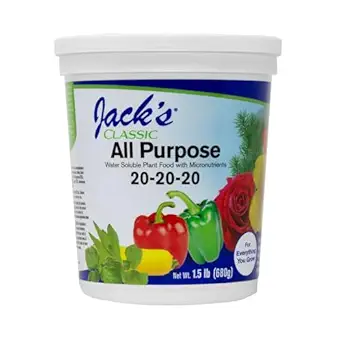 |
| Most Popular A crowd favorite that many people choose with confidence | Miracle-Gro Water Soluble All Purpose Plant Food, 1.5 lb |  |
| Best Seller A high-volume bestseller chosen again and again | TPS NUTRIENTS Indoor Plant Food Liquid Fertilizer, 8 fl oz |  |
Miracle-Gro Watering Can Singles All Purpose Plant Food, 24 Packets

| Number of Packs | 24 |
|---|---|
| Unit Count | 10.24 Ounce |
| Item Form | SOLID |
| Application Method | watering can |
| Mixing Ratio | 1 teaspoon per 1 gallon of water |
Miracle-Gro Watering Can Singles are single-use, pre-measured fertilizer packets intended to make feeding roses and other garden plants simple and reliable. To use, tear a packet into a watering can, add the specified amount of water, then apply the solution while watering; the manufacturer recommends feeding every 7 to 14 days during active growth. The packets remove measuring errors and mess, which helps prevent accidental overfeeding. Because the formula is labeled for all flowers, vegetables, trees and shrubs, it fits into regular rose care routines for bloom and bush development. Practical benefits include instant solubility, clear application instructions for outdoor and indoor containers, and consistent coverage per packet for about 10 sq. ft. of garden. Limitations are that you must keep up with the every-1–2-week schedule for best results and that the product is sold as a general-purpose feed rather than a rose-specific bloom booster, so dedicated rosarians seeking targeted NPK ratios might prefer a specialized rose fertilizer.
Best for: Gardeners who want a low-risk, no-mess way to feed roses and mixed flower beds as part of routine watering and prefer simple, foolproof dosing.
Less Ideal for: Specialist rose growers seeking a targeted bloom-boosting formula or those who want a single, slow-release application instead of frequent liquid feedings.
- Pre-measured packets eliminate measuring and reduce mess and dosing errors
- Water-soluble formula mixes quickly in a watering can for immediate application
- Labeled for use on flowers, roses, shrubs, trees and vegetables so it suits mixed beds
- Clear directions for indoor and outdoor application and coverage per packet
- General all-purpose formula rather than a rose-specific NPK for bloom boosting
- Requires regular reapplication every 7–14 days to maintain results
Verdict: If you want a safe, fuss-free way to feed roses while you water, these pre-measured soluble packets make regular feeding simple and consistent.
Osmocote Smart-Release Plant Food Plus Outdoor & Indoor, 1 lb

| Item Form | Granules |
|---|---|
| Specific Uses For Product | Plant Food |
| Application Method | sprinkle around the base and work into the soil |
| Unit Count | 16 Ounce |
Osmocote Smart-Release Plant Food Plus is a resin-coated granular fertilizer designed to deliver steady nutrition to a wide range of plants for up to six months from a single application. You apply it by sprinkling the recommended scoop into the top inch or so of potting mix for containers or around plants in garden beds, then watering to activate the coating. The product contains 11 essential nutrients and is formulated to release based on soil temperature, which helps reduce overfeeding and supports consistent bloom and foliage performance in hanging baskets. Its no-burn pledge makes it easy to use at the recommended rates for mixed annuals, trailing plants, and container veggies. Limitations are that coverage is modest from a 1 lb. container so frequent use on many large baskets will require buying more, and release timing still depends on temperature so plants in cool, shaded spots may receive nutrients more slowly than those in warm sun.
Best for: Gardeners who prioritize steady, low-maintenance feeding for hanging baskets and containers and want consistent bloom and foliage without frequent fertilizing.
Less Ideal for: Those who need immediate, short-term nutrient boosts or precise liquid feeding schedules for plants that demand fast correction.
- Resin-coated granules provide controlled release of nutrients for up to six months
- Formulated with 11 essential nutrients suitable for a wide variety of plants
- No-burn pledge when used as directed reduces risk of damaging roots in containers
- Simple sprinkle-and-water application works well for hanging baskets and pots
- 1 lb container covers a limited area so multiple baskets will need additional product
- Release rate depends on temperature so nutrient delivery can be slower in cool conditions
Verdict: An easy, low-maintenance slow-release fertilizer that keeps hanging baskets fed for months with minimal effort.
Miracle-Gro Water Soluble Bloom Booster Flower Food, 10-52-10, 1 lb

| Item Form | Liquid |
|---|---|
| Application Method | Water Soluble |
| Coverage | 500 square feet |
| Target Species | all blooming plants |
| Mixing Ratio | 1 tablespoon/gallon (1.5 tsp for indoor plants) |
This Miracle-Gro bloom booster is a water-soluble plant food designed for flowering annuals and perennials, and it is typically mixed into a watering can or used with a garden feeder. The 10-52-10 formula supplies a high phosphorus dose aimed at increasing bud set and flower production, and it starts working quickly through root and foliar feeding when applied as directed. Practical features include a simple mixing ratio (1 tablespoon per gallon for outdoor use, reduced rate for indoor plants) and compatibility with the Miracle-Gro garden feeder for easy coverage up to about 500 square feet per refill. For gardeners focused on colorful displays, the concentrated phosphorus and repeat feeding schedule (every 7 to 14 days during bloom) deliver noticeably fuller flower shows. Limitations are that it is specifically a bloom booster rather than an all-purpose fertilizer and should be used only during bud set and bloom to avoid nutrient imbalance; following label rates is important to prevent overfeeding. For basic container or bedding displays, it is an easy-to-use option that targets bloom performance without complicated application steps.
Best for: Gardeners who want an affordable, straightforward booster to increase flower production on annuals and container displays and who plan to feed regularly during the bloom period.
Less Ideal for: Those seeking an all-in-one, season-long fertilizer or a slow-release product for hands-off maintenance should look elsewhere.
- High phosphorus 10-52-10 formula to promote more blooms and better bud set
- Water-soluble for quick uptake and easy mixing in a watering can or garden feeder
- Clear mixing instructions with lower indoor rate to reduce risk of burning when used as directed
- Covers a substantial area per feeder refill, useful for beds and multiple containers
- Focused on bloom boosting rather than providing a balanced, all-season nutrient program
Verdict: If you want an inexpensive, easy-to-use booster that reliably increases blooms on annuals and containers, this is a strong, no-frills choice.
Jobe's Flowering Plant Fertilizer Spikes, 50 Count (10-10-4)

| Unit Count | 50 Count |
|---|---|
| NPK | 10-10-4 |
| Application Method | Spikes |
| Target Species | Flowering Plant |
Jobe's flowering plant fertilizer spikes are pre-measured sticks you push into potting mix to deliver slow-release nutrition directly to the roots. Intended for indoor flowering houseplants, the 10-10-4 NPK blend supplies balanced nitrogen, phosphorus, and potassium plus secondary elements like calcium and magnesium to support foliage and blooms. Typical use is simple: insert spikes at planting or into established pots and replace them about every 60 days, which reduces mess and the risk of overfertilizing. The spikes are convenient for busy or budget-conscious gardeners because one 50-count pack covers multiple pots and removes the need to mix liquids or granulars. Important limitations are that spikes deliver a steady low-dose feed rather than quick corrective treatments, so they are less useful when plants need an immediate boost or when precise watering/fertilizer timing is required. Also, because they contain phosphorus, check local rules before using on outdoor beds in areas with runoff restrictions.
Best for: A gardener who wants a low-effort, no-mess feeding routine for potted flowering plants and prefers an affordable, set-and-forget approach to keep blooms and foliage healthy.
Less Ideal for: Growers who need fast-acting liquid fertilization for acute deficiencies or who manage large outdoor beds where phosphorus restrictions apply should consider other formulations.
- Pre-measured slow-release spikes eliminate measuring and reduce mess
- Balanced 10-10-4 NPK suitable for encouraging blooms and general growth
- Easy application: insert at the root zone and replace every 60 days
- Includes secondary nutrients (calcium and magnesium) that support overall plant health
- Not suitable for delivering a rapid nutrient correction when plants show acute deficiency
- Contains phosphorus which may be restricted for outdoor use in some areas
Verdict: If you want an inexpensive, low-effort way to keep potted flowering plants fed and flowering, these pre-measured slow-release spikes are a practical pick.
Jack's Classic 20-20-20 All Purpose Water-Soluble Fertilizer (24 oz)

| Item Form | Powder |
|---|---|
| Specific Uses For Product | Plant Growth |
| Coverage | All |
| Mixing Ratio | 0.22 |
Jack's Classic 20-20-20 is a professional‑grade, water‑soluble powder fertilizer intended for general feeding of indoor and outdoor plants. You dissolve the measured spoonfuls in water and apply as a root drench or foliar spray every 7 to 14 days, or use weaker mixes for seedlings and cuttings. The even 20-20-20 NPK formula promotes quick green‑up and leaf expansion, while included micronutrients support overall plant health. Because it is a powder concentrate, a small tub makes multiple gallons of feed, which is convenient for regular maintenance across beds, containers, and ornamentals. The product ships with a measuring spoon and clear directions, so it is easy to dose consistently. Limitations to note are that it is a generalist formula rather than crop‑specific booster, so plants with specialized needs may do better with targeted blends, and it requires careful handling and dilution to avoid overfeeding. Protective handling is recommended since the powder can irritate skin and eyes.
Best for: Gardeners who want a reliable, easy-to-use all‑around fertilizer for regular maintenance of outdoor beds, containers, and ornamentals and who value predictable, balanced nutrition.
Less Ideal for: Growers seeking a specialized bloom booster or a fertilizer tailored to a single crop should choose a targeted formula instead.
- Balanced 20-20-20 NPK supports fast green-up and leaf growth across many plant types
- Water‑soluble powder stretches farther than comparable liquid feeds so one tub makes multiple gallons
- Usable as both foliar spray and root feed for flexible application
- Includes measuring spoon and clear mixing directions for consistent dosing
- Added micronutrients reduce need for separate supplements
- General all-purpose formula is not optimized for bloom or fruit boosting
- Requires accurate measuring and dilution to avoid fertilizer burn
Verdict: A straightforward, professional‑grade balanced fertilizer that delivers reliable, easy-to-dose nutrition for maintaining healthy outdoor plants.
Miracle-Gro Water Soluble All Purpose Plant Food, 1.5 lb

| Item Form | Powder |
|---|---|
| Application Method | Watering Can |
| Target Species | For all flowers, vegetables, trees, shrubs and houseplants |
| Mixing Ratio | 24-8-16 |
Miracle-Gro Water Soluble All Purpose Plant Food is a powdered, water-soluble fertilizer formulated to deliver fast nutrition to a broad mix of plants. You mix the powder into a watering can or a garden feeder and apply every 1 to 2 weeks depending on whether plants are indoors or out. The 24-8-16 NPK ratio supplies a strong nitrogen boost for leafy growth along with phosphorus and potassium to support flowering and fruit set. For pepper growers this means it can help produce vigorous plants and encourage fruit development when used at the recommended strengths. Notable features include clear mixing guidance for both indoor and outdoor use and compatibility with container and in-ground plantings. Practical benefits are quick uptake by roots and flexible application options. Important limitations are the high nitrogen proportion, which can favor foliage over fruit if overused, and the need to follow dilution instructions to avoid nutrient burn. This product is best used as a regular boost within a balanced feeding plan rather than the only fertility source for long-term soil health.
Best for: Home gardeners looking for an affordable, easy-to-use boost to support vigorous pepper plant growth and quick results in both containers and garden beds.
Less Ideal for: Growers who want a low-nitrogen or slow-release fertility plan for long-term soil building should consider specialized or organic alternatives.
- Water-soluble powder that feeds plants quickly through the roots
- Clear mixing instructions for indoor and outdoor applications
- Broadly labeled for use on flowers, vegetables, trees, shrubs and houseplants
- Feeds approximately 600 sq. ft. from the 1.5 lb container
- High nitrogen ratio may encourage foliage more than fruit if used too frequently
Verdict: A budget-friendly, fast-acting soluble fertilizer that gives bell pepper plants a regular nitrogen-rich boost to promote vigorous growth and quicker results.
TPS NUTRIENTS Indoor Plant Food Liquid Fertilizer, 8 fl oz

| Item Form | Liquid |
|---|---|
| Specific Uses For Product | Plant Food |
| Application Method | Watering can |
| Mixing Ratio | 2:1 (oz/gallon) or 1:64 (tbsp/gallon) |
TPS NUTRIENTS Indoor Plant Food is a concentrated liquid fertilizer made for regular use with houseplants. You mix the measured dose into water and apply it with your usual watering can; the label gives an easy mixing ratio for household use. Its kelp-enriched formula is pitched at improving leaf color, encouraging steady new growth, and supporting root health, so expect glossier foliage and more frequent leaf production when plants are fed consistently. The 8 fl oz bottle is portable and fits on a plant shelf or utility area, and the liquid form dissolves readily for even application. It is intended for medium coverage and labeled as gentle for weekly feeding, which simplifies care for busy owners. Important limitations are that this is a small bottle meant for regular top-up feedings rather than long-term bulk use, and it assumes you will follow dilution directions to avoid overfeeding. Keep it away from children and pets and avoid skin or eye contact when handling.
Best for: Plant owners who want a simple, low-effort weekly fertilizer to keep indoor foliage vibrant and encourage steady new leaf growth. Good for people who prefer an easy liquid mix applied during regular watering routines.
Less Ideal for: Gardeners needing a bulk or multi-season fertilizer for outdoor beds or large collections should consider larger-capacity or specialized products instead.
- Liquid concentrate mixes easily for even application with a watering can
- Kelp-enriched formula aimed at improving foliage color and encouraging new growth
- Gentle enough for weekly feedings according to product guidance
- Clear mixing instructions for home use
- Small 8 fl oz volume limits how many plants you can feed before repurchasing
- Not formulated or labeled for outdoor or large-scale garden use
Verdict: A convenient kelp-enriched liquid concentrate that makes weekly feeding easy for anyone who wants healthier, more vibrant indoor foliage.
Choosing the Right Fertilizer for Annuals in Pots: Key Factors to Consider
Nutrient Ratio and Bloom Support
Annual flowers typically respond best to fertilizers with a higher phosphorus number relative to nitrogen and potassium, because phosphorus helps set and sustain blooms. However, too much phosphorus will not fix poor watering or light conditions, so choose a balanced formulation that emphasizes bloom support without starving leaves.
For containers, soluble or slow-release formulas both work if the N-P-K fits flowering needs. Read label ratios and pick a product designed for flowers rather than a generic all-purpose fertilizer when the goal is more blooms rather than just green growth.
Release Type and Feeding Frequency
Release type determines how often you must feed. Water-soluble fertilizers deliver nutrients immediately and are good for correcting deficiencies or giving a quick bloom boost, but they require regular reapplication because frequent watering leaches nutrients from pots.
Slow-release granules or coated prills provide steadier nutrition over weeks to months, reducing labor and the risk of salt buildup from frequent feeding. Consider how often you want to feed and how much hands-on time you have when choosing release type.
Salt Index and Container Safety
Containers are more prone to salt accumulation because there is less soil to dilute salts from fertilizers. A high salt index fertilizer can cause leaf burn and root stress in pots, especially if irrigation is irregular or water quality is high in salts.
Look for formulations marketed as safe for containers or with instructions that emphasize leaching and re-potting intervals. Using controlled-release products and occasionally flushing pots with clear water helps manage salt buildup.
Formulation and Ease of Use
How a fertilizer is presented affects whether you will actually use it correctly. Granules and spikes are low-effort but must be applied at the right depth and spacing. Water-soluble powders and liquids require measuring and mixing but allow precise control over dose and timing.
If you prefer minimal weekly chores, choose a long-duration granular product. If you like to tune feeding for heavy bloom periods, a soluble feed may be more satisfying. Consider storage, measuring tools, and whether the instructions fit your routine.
Compatibility With Potting Mix and Soil Biology
Potting mixes vary by composition-peat-based, coir-based, or blends with compost and perlite-and that affects nutrient retention and microbial activity. Some fertilizers include micronutrients or beneficial microbes that interact well with living potting mixes.
Check label guidance for use in container soils and whether the product recommends pairing with organic matter or specific water pH ranges. A fertilizer that plays well with your potting medium will release nutrients more predictably and support stronger root systems.
Application Safety and Environmental Considerations
Fertilizer handling safety matters when you work with many small pots near patios or play areas. Granules can be dusty and concentrates require careful measuring. Think about the safety of household members and pets, and follow label directions for storage and spill cleanup.
Also consider runoff: frequent overfeeding and heavy irrigation can send nutrients into storm drains. Choosing lower-dose, slow-release options and using targeted application reduces environmental impact while keeping plants healthy.
Timing Fertilizer With Bloom Cycles
Annuals have predictable active growth and flowering windows. Start feeding shortly after transplanting or when new growth appears, then maintain a consistent schedule during the main bloom period. Increasing the frequency or slightly boosting concentration can often trigger an extra flush of flowers, but avoid doubling doses without guidance.
Toward the end of the season, taper feeding to help plants wind down naturally. For containers kept indoors or in protected spots, adapt timing to local light and temperature rather than calendar dates.
- Begin feeding once plants are established in new pots
- Maintain steady nutrition through peak bloom
- Reduce feeding as flowering slows late in the season
Feeding Small Pots Versus Large Containers
Smaller pots dry and lose nutrients faster, so they often need more frequent, lighter feedings than larger containers. Large urns hold more moisture and buffer salts, allowing for less frequent applications of controlled-release granules.
Adjust concentration and frequency by pot size: use lower-strength soluble feeds for small pots and reserve stronger or longer-acting formulations for larger containers.
- Small pots: light, frequent soluble feeds
- Medium pots: alternate soluble and slow-release
- Large containers: longer-acting granules work well
Balancing Micronutrients and pH
Macronutrients drive growth and blooms, but micronutrients like iron, magnesium, and manganese prevent subtle deficiencies that reduce flower quality. Many potting mixes can oxidize or bind micronutrients over time, making periodic chelated micronutrient applications useful.
Also monitor water and potting mix pH, because pH affects nutrient availability. If plants show yellowing without leaf loss, suspect a micronutrient issue or pH imbalance rather than a problem you can fix by adding more NPK.
- Consider occasional micronutrient supplements
- Test pH if persistent yellowing occurs
- Use chelated forms when targeting specific deficiencies
Practical Tips for Applying Fertilizer in Containers
Measure carefully and follow label directions for container sizes. Over-application is a common cause of burned roots and stunted growth in pots. When using granules, mix them into the potting mix at planting or place them evenly on the surface and water thoroughly.
For soluble feeds, dilute to recommended concentrations and water plants with the solution until runoff appears. Occasionally flush containers with plain water to remove built-up salts and refresh the root zone.
- Always measure rather than estimate doses
- Water in slow-release granules after application
- Flush pots monthly if you fertilize frequently
Organic Versus Synthetic Options for Containers
Organic fertilizers release nutrients as microbes break them down, which can improve soil biology and reduce salt buildup. They tend to act more slowly and require an active microbial population in the potting mix. Synthetic fertilizers provide predictable, immediate nutrients and are useful when plants show clear feeding needs.
Choose based on your gardening priorities: use organic feeds to build healthier mix over time, or synthetic feeds when you need quick, controllable bloom responses. Both approaches can work well in containers if applied correctly.
- Organics improve soil biology but act slower
- Synthetics give predictable, quick nutrient boosts
- Mix approaches if you want both steadiness and control
How We Chose the Best Fertilizer for Annuals in Pots
We focused on fertilizers that suit the unique needs of flowering annuals grown in containers. Selection began with options formulated for bloom production and container use, then narrowed by clear, measurable attributes relevant to potted plants. Key evaluation criteria included nutrient ratio and availability, how steadily nutrients release over time, ease and frequency of application, and compatibility with typical potting mixes and watering habits. We excluded products intended only for edibles, lawn care, or large-scale landscape use because their nutrient profiles and application methods do not translate well to small pots. We also filtered out formulations that require complex mixing or specialist equipment. The final shortlist reflects products that deliver bloom-focused nutrients, predictable feeding schedules, and straightforward application for home gardeners.
FAQ
How often should I fertilize annuals in small patio pots?
Small patio pots often benefit from lighter, weekly or biweekly soluble feeds during active growth. Alternatively, a single application of a short-duration slow-release formula at planting can reduce chores, but expect to supplement midseason if blooms fade.
Can I use houseplant fertilizer on outdoor flowering pots?
Houseplant fertilizers can work if the nutrient ratio suits flowering plants, but check that the product is appropriate for outdoor conditions. Some houseplant feeds are formulated for foliage and may not encourage abundant blooms.
Will slow-release granules cause salt buildup in containers?
Some slow-release products can contribute to salt accumulation if overdosed or if pots are rarely flushed. Use recommended amounts, water thoroughly after application, and occasionally flush pots to dilute salts.
Should I change fertilizer when moving annuals from indoor to outdoor exposure?
You may need to adjust feeding intensity to match increased light and growth outdoors. Start with a balanced feed and increase bloom-focused nutrients if plants respond with heavier flowering. Monitor for stress and adjust gradually.
How do I correct a suspected micronutrient deficiency in container annuals?
Begin by testing soil pH and examining symptoms. If pH is in range, use a chelated micronutrient supplement or a fertilizer that includes trace elements. Apply according to label directions and watch for recovery over a few weeks.
Is it safe to combine organic and synthetic fertilizers in the same pot?
Combining can be safe and effective if you adjust doses downward to avoid overfeeding. Organics slowly release nutrients that complement the immediate availability of synthetics. Pay attention to label guidance and plant response.
Final Verdict
Choosing the right fertilizer for annuals in pots is about matching nutrient delivery to container dynamics. Prioritize a bloom-supportive N-P-K, a release type that fits how often you water and check plants, and a formulation with a low risk of salt buildup. Balance convenience against control: long-acting granules reduce chores, while soluble feeds let you fine-tune bloom performance. Use the criteria above to weigh tradeoffs and pick a feeding approach that gives consistent, vibrant containers all season.
