

Note: This article contains affiliate links. If you click on these links and make a purchase, I may earn a small commission at no extra cost to you. This helps support my research and content. Read my full affiliate disclosure here.
Picking the right fertilizer for chilli plants matters because peppers respond quickly to the nutrient mix and feeding rhythm you choose. In containers, raised beds, or in-ground rows, the wrong balance can produce lush foliage but few fruits, or weak stems and blossom drop. This guide covers seven shortlisted fertilizers that suit a variety of growing situations for chilli plants and explains how we evaluated them. You will get practical notes on nutrient ratios, ease of application, and suitability for container versus garden soil so you can match a fertilizer to how you grow peppers.
Top Picks at a Glance
| Best Overall The best all-around choice for most situations | Growth Technology GT Chilli Focus Liquid Fertilizer (250 ml) |  |
| Best Quality Built to a higher standard if you want something more solid | Big A Pepper Fertilizer — 13.5 oz Organic Powder for Peppers |  |
| Best Value The sweet spot between price and what you get | Gardenera Liquid Power Peppers Fertilizer Concentrate, 8 fl oz |  |
| Best Budget The cheapest option that still gets the job done reliably | TPS Nutrients Pepper Fertilizer Liquid Plant Food, 8 oz |  |
| Highest Rated A top-rated pick with lots of positive feedback | Growth Technology Chili Focus Liquid Fertilizer (300ml) |  |
| Most Popular A crowd favorite that many people choose with confidence | Growth Technology Chili Fertilizer (liquid) |  |
| Best Seller A high-volume bestseller chosen again and again | Leaves & Soul Pepper Fertilizer Liquid Plant Food, 5-1-5 Formula, 8 oz |  |
Growth Technology GT Chilli Focus Liquid Fertilizer (250 ml)

| Item Form | Liquid |
|---|---|
| Specific Uses For Product | Hydroponics |
| Application Method | Dilution in water |
| Target Species | Chilli |
| Mixing Ratio | 5 ml/L |
Growth Technology GT Chilli Focus is a 250 ml liquid plant food formulated to support steady vegetative growth, flowering, and fruit set in chillies and similar vegetables. It is used by diluting into water (manufacturer recommends about 5 ml per liter) and applying either in a hydroponic reservoir or with each routine watering for potted and in-ground plants. Notable features include a balanced mineral profile aimed at encouraging strong foliage and reliable flowering and explicit compatibility with both hydroponic and soil-based systems. The small bottle is convenient for hobbyists and those growing in containers or indoor setups, and the mixing ratio makes it easy to dose consistently. Practical benefits are predictable feeding across propagation, vegetative and fruiting stages and a formula described as low-risk for fertilizer burn when used as directed. The main limitations are the modest bottle size if you manage a larger plot and the lack of a full NPK breakdown on the label, which limits precision tuning for advanced growers seeking exact nutrient ratios.
Best for: Home gardeners and small-scale growers who want a single, easy-to-use liquid feed to support chillies and similar vegetables across indoor and container setups. It suits growers who prioritize convenience and consistent feeding over precise nutrient formulation.
Less Ideal for: Large-scale growers or hobbyists who need bulk quantities or exact NPK analysis for customized feeding programs should consider larger or more specifically quantified fertilizers.
- Formulated specifically for chillies, peppers and tomatoes so it targets common needs of those crops
- Works in both soil and hydroponic systems for flexible use
- Simple dilution dosing (5 ml/L) that is easy to apply with routine watering
- Balanced nutrient approach supports foliage, flowering and fruiting without frequent risk of fertilizer burn
- 250 ml volume may be small for medium to large outdoor plots
- No explicit NPK breakdown provided for precise nutrient management
Verdict: A convenient, hydroponics‑compatible liquid feed tailored to chillies and related vegetables that makes regular, reliable feeding simple for home and container gardeners.
Big A Pepper Fertilizer — 13.5 oz Organic Powder for Peppers

| Item Form | Powder |
|---|---|
| Specific Uses For Product | Gardening,Plant Food |
| Coverage | Resealable |
| Target Species | pepper |
| Unit Count | 13.5 Ounce |
This powder fertilizer is designed for pepper growers who want a performance-focused organic feed. It is a highly soluble, resealable 13.5 ounce pouch containing a proprietary blend of nutrients including nitrogen, calcium, manganese, kelp, and humic acid aimed at improving pepper size, crispness, and flavor. Typical use is dissolving the powder into water according to package directions and applying during the growing season to outdoor or container pepper plants. Notable features are its pepper-targeted formulation, high solubility for quick uptake, and resealable packaging that helps preserve the mix between uses. Practical benefits include faster nutrient availability compared with granular organics and a blend tuned to support fruit development and root health. Limitations are that nutrient analysis numbers are not listed on the product page so precise dosing and comparison to other performance fertilizers requires following labeled instructions or contacting the maker. Also the 13.5 ounce pouch is best suited to small to medium pepper gardens rather than very large plantings.
Best for: Gardeners who prioritize measurable improvements in pepper performance and want an organic, quick-acting feed for small to medium home pepper plots.
Less Ideal for: Large-scale growers or those who require exact nutrient breakdowns for precision fertilizer programs should consider bulk or lab-analysed alternatives.
- Formula targeted specifically for peppers to support fruit size, flavor, and crispness
- Highly soluble powder for quick nutrient uptake when mixed into water
- Includes organic inputs such as kelp and humic acid to support root health
- Resealable pouch preserves remaining product and reduces moisture exposure
- No detailed N-P-K or full nutrient analysis listed on the product page
- 13.5 ounce pouch may be small for large or commercial pepper plantings
Verdict: If you want an organic, pepper-focused feed that absorbs quickly to boost fruit size and flavor in home gardens, this powder is a strong performance-oriented choice.
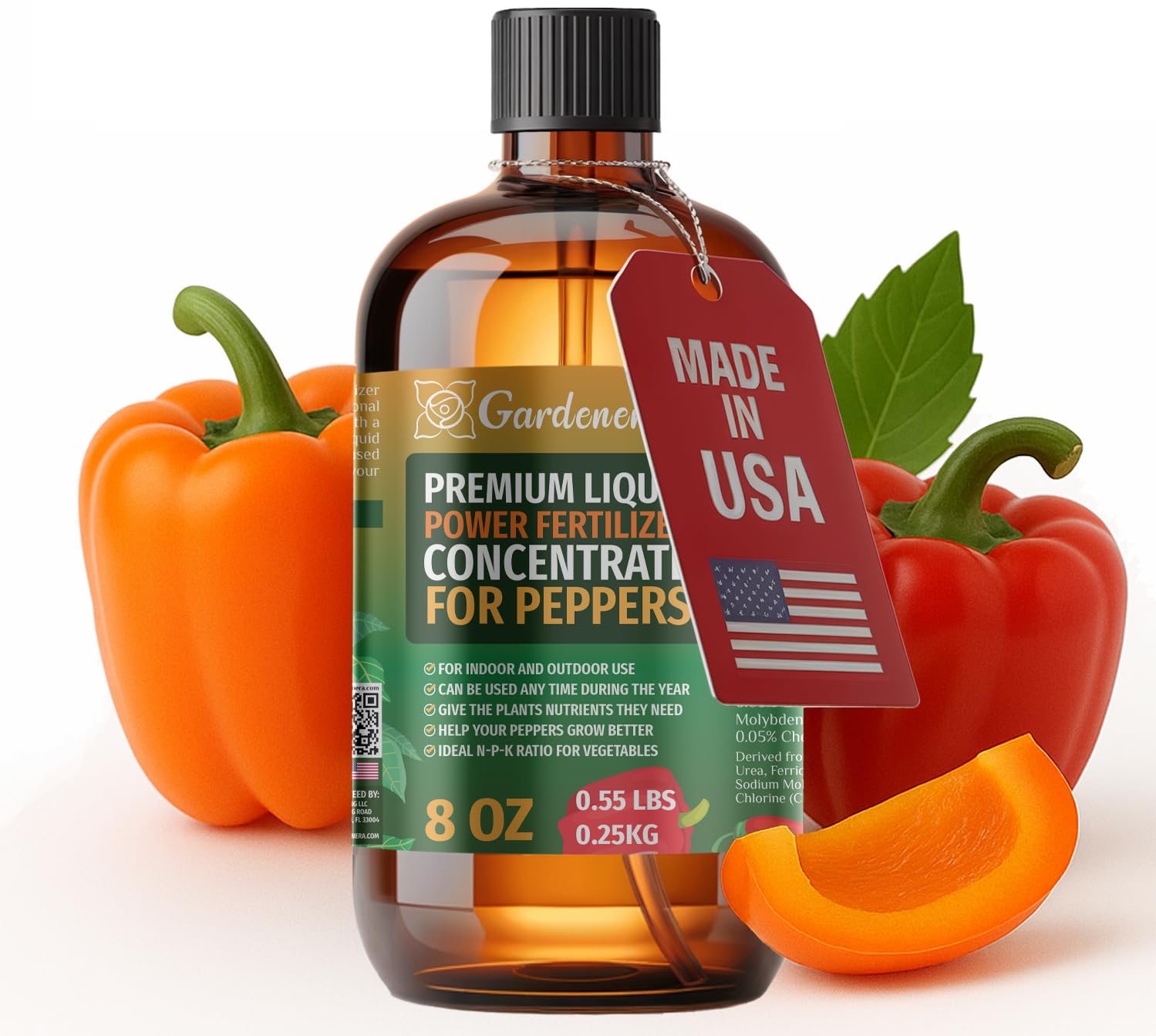
Gardenera Liquid Power Peppers Fertilizer Concentrate, 8 fl oz
| Unit Count | 8 Fluid Ounces |
|---|---|
| Item Form | Liquid |
| Specific Uses For Product | peppers |
| Target Species | peppers |
Gardenera Liquid Power Peppers is a fast-acting liquid concentrate made to feed pepper plants from seedling stage through harvest. You dilute the concentrate and apply it to potted or in-ground peppers to encourage vigorous foliage, stronger roots, more flowers, and larger, better-colored fruits. The formula highlights an NPK balance geared toward fruit production plus chelated micronutrients and organic acids; the product description and low-pH formulation indicate it helps unlock iron and other locked nutrients in alkaline soils and can reduce blossom-end rot and tip burn risk. Practical benefits include quick uptake, improved moisture use, and compatibility with both indoor and outdoor pepper setups. Limitations are the small 8 fl oz size for larger gardens and the very low reported pH which means careful dilution and handling are required to avoid root burn or affecting soil pH over time.
Best for: Gardeners who want a targeted, fast-acting feed to maximize flower and fruit production on chili and sweet pepper varieties in small to medium plantings.
Less Ideal for: Large-scale growers or those who prefer slow-release granular fertilizers and organic-only regimens should consider alternatives better suited to high-volume or organic systems.
- Pepper-specific NPK and micronutrient blend aimed at improving bloom and fruit set
- Low-pH formulation to increase micronutrient availability in alkaline soils
- Fast-acting liquid concentrate suitable for both pots and garden beds
- Claims to improve moisture uptake and stress resistance for fruit quality
- Small 8 fl oz bottle may require frequent repurchasing for larger plantings
- Very low pH means precise dilution and cautious use to avoid harming roots
Verdict: If you want a pepper-specific, fast-acting feed to boost blooms and fruit quality in small to medium chili plantings, this concentrated liquid does the job.
TPS Nutrients Pepper Fertilizer Liquid Plant Food, 8 oz

| Brand Name | TPS NUTRIENTS |
|---|---|
| Unit Count | 8 Fluid Ounces |
| Item Highlight | Supports Blossom Set, Kelp-Enriched Formula, Garden & Container Use |
| Manufacturer | TPS Nutrients |
TPS Nutrients Pepper Fertilizer is a concentrated 8 oz liquid feed designed specifically for pepper plants. It is mixed with water and applied during the growing season to support root strength, healthy foliage, blossom set, and fruit production in both garden beds and containers. The formula includes kelp and nutrients aimed at encouraging flowering and improving yield, so gardeners can expect better fruit set when used as part of a regular feeding schedule. Practical benefits include easy mixing and dosing from a small bottle, suitability for different pepper varieties, and compatibility with container growing where quick nutrient uptake matters. Limitations are that the bottle is small, so frequent applications or larger plots will require multiple purchases, and the product listing does not include a full N-P-K breakdown so exact nutrient ratios are not available to users who follow strict feeding plans. This is best used as a targeted supplement alongside standard soil care rather than a complete soil amendment on its own.
Best for: Gardeners who want a simple, pepper-focused liquid feed to boost flowering and yields in containers or small beds and prefer easy-to-use concentrates over granular regimes.
Less Ideal for: Large-scale growers or those who need complete fertilizer transparency and precise N-P-K control should consider bulk or fully labeled formulations instead.
- Formulated specifically for peppers to support blossom set and fruiting.
- Kelp-enriched formula that aids root health and plant vigor.
- Easy to mix and apply for garden beds and containers.
- Small concentrated bottle is convenient for trialing on different pepper varieties.
- Small 8 oz volume means it may not last for larger gardens without repeat purchases.
- No explicit N-P-K ratio provided in the product details for precise nutrient management.
Verdict: A convenient, kelp-enriched liquid feed tailored to boost flowering and fruit set in chili and bell peppers, ideal for container and small-plot gardeners.
Growth Technology Chili Focus Liquid Fertilizer (300ml)

| Item Form | Liquid |
|---|---|
| Specific Uses For Product | Potting |
| Target Species | Chili Peppers |
| Mixing Ratio | 5ml:1L (young), 10ml:1L (flowering) |
| Included Components | 1 x 300ml Bottle |
Growth Technology Chili Focus is a targeted liquid fertilizer made for chilies and peppers grown in pots, growbags, or open ground. It is used as a concentrated feed that you dilute into water at 5ml per liter for young plants and 10ml per liter once flowering begins, applied weekly. The formula combines mineral salts with humic and fulvic acids to help improve nutrient availability in potting media and support stronger vegetative growth and fruit set. In practice this product is easy to measure and integrate into a regular feeding routine, and the small bottle sizes are convenient for hobby growers or small beds. Because it is a concentrated liquid, it dissolves quickly and can be applied through watering cans or low-pressure irrigation. Limitations are that the 300ml bottle only covers a modest number of plants so frequent purchases or larger sizes may be needed for bigger plots, and users must follow dilution and safety guidance to avoid overfeeding.
Best for: Home gardeners who want a purpose-built, easy-to-use feed for chili and pepper plants and value consistent, stage-specific feeding to maximize fruit production.
Less Ideal for: Large-scale growers or those managing many plants who need bulk fertilizer options and lower per-plant cost.
- Formulated specifically for chili and pepper plants to support flowering and fruit quality
- Clear mixing ratios for vegetative (5ml/L) and flowering (10ml/L) stages
- Contains humic and fulvic acids to improve nutrient uptake in potting media
- Concentrated liquid dissolves quickly and is easy to apply with watering cans or low-pressure systems
- 300ml size is small for larger gardens and may require frequent repurchasing
Verdict: Choose this concentrated liquid if you want a chili-specific feed with clear stage-based dosing to boost flowering and fruit quality in small-scale plantings.
Growth Technology Chili Fertilizer (liquid)

| Brand | Growth Technology |
|---|---|
| Item type | Liquid fertilizer |
| Intended crop | Chili and pepper plants |
| Available sizes | 100 ml, 300 ml, 500 ml, 1 L, 5 L |
Growth Technology Chili Fertilizer is a liquid feed formulated for chili and pepper plants and intended for regular use from early growth through fruiting. You mix the concentrate into water and apply it during routine feeding to supply a balanced blend of nutrients aimed at promoting vigorous foliage, stronger plants, and more colorful, juicier fruits. The product is notable for being one of the few liquid feeds tailored expressly to chilies rather than general-purpose vegetable fertilizers, which can simplify dosing and timing for growers focused on peppers. Practical benefits include easier foliar or root feeding compared with granular fertilizers and availability in multiple bottle sizes to match small hobby plots or larger container setups. Limitations are that it is a concentrate that requires correct dilution and regular applications to see results, and it does not list an NPK breakdown on the provided data so buyers who need exact nutrient ratios may need to confirm details before purchase.
Best for: Gardeners growing chilies who want a purpose-made liquid feed and prefer a straightforward, repeatable feeding routine to boost plant vigor and fruit quality.
Less Ideal for: Growers who require exact nutrient ratios for precision fertilizing or those who prefer slow-release granular feeds that need less frequent application.
- Formulated specifically for chili and pepper plants rather than a generic vegetable feed
- Liquid concentrate allows quick uptake via root watering or foliar spray
- Available in multiple bottle sizes to suit single plants or larger plantings
- Supports plant vigor and fruit quality according to product description
- No NPK or detailed ingredient breakdown provided in the product data
- Requires correct dilution and regular applications to be effective
Verdict: Choose this liquid feed if you want a chili-specific fertilizer that simplifies regular feeding to improve plant vigor and fruit quality.
Leaves & Soul Pepper Fertilizer Liquid Plant Food, 5-1-5 Formula, 8 oz

| NPK | 5-1-5 |
|---|---|
| Form | Liquid concentrate |
| Unit Count | 8 Fluid Ounces |
| Target Species | pepper |
| Application | Dilute with water |
Leaves & Soul Pepper Fertilizer is a concentrated liquid plant food designed specifically for pepper varieties and other garden vegetables. You dilute the concentrate (manufacturer recommends 2 tablespoons per gallon) and apply the solution to the soil around the base of plants every 2 to 4 weeks during the growing season. The 5-1-5 NPK balance emphasizes nitrogen and potassium to support foliage and fruit set while a small phosphorus level and added micronutrients support root health and overall vigor. The liquid format absorbs quickly and is convenient for container gardeners or mixed vegetable beds because you can mix only the amount you need. Important limitations are the small 8 oz bottle size, which is best for a few plants rather than large beds, and the need to follow dilution instructions carefully since concentrated liquids can stress plants if overused. For risk-averse gardeners, the product is straightforward to measure and integrate into an established feeding schedule, but consistent watering and monitoring remain necessary to avoid overfertilizing.
Best for: Home gardeners who want a simple, targeted fertilizer to support chilli and other pepper plants and prefer predictable, scheduled feedings they can measure precisely.
Less Ideal for: Large-scale growers or those with many pepper beds who need bulk fertilizer or a slow-release option for less frequent feeding.
- Balanced 5-1-5 NPK tailored to promote foliage growth and fruit development in peppers
- Concentrated liquid formula mixes with water for quick absorption and easy feeding
- Includes micronutrients to support overall plant health beyond primary NPK
- Works for both indoor containers and outdoor garden beds for flexible use
- Small 8 oz bottle may require frequent repurchasing for larger gardens
- Requires careful dilution to avoid overfeeding since the product is concentrated
Verdict: A convenient concentrated liquid fertilizer that makes targeted, regular feeding of chilli and other pepper plants simple and reliable.
Choosing the Right Fertilizer for Chilli Plants: Key Factors to Consider
Nutrient Ratio and Timing
Chilli plants need a nutrient program that supports both vegetative growth and fruit set. Early in the season a slightly higher nitrogen feed encourages strong leaves and stems, but once flowers form you want a shift toward phosphorus and potassium to promote blossom retention and pepper development. Follow label directions for transition timing and avoid continuous high-nitrogen feeding during fruiting.
Timing of feeds matters because peppers are responsive to available nutrients. Regular low-dose feedings or appropriately timed slow-release formulations reduce the risk of blossom drop and uneven fruit set. Consider your climate and growth speed when scheduling applications.
Release Type and Concentration
Fertilizers come as soluble concentrates, granules, and slow-release coated granules. Soluble feeds act quickly and are useful for correcting deficiencies or pushing plants during key growth stages. Granular slow-release products supply nutrients over weeks to months, which lowers maintenance but can complicate precise feeding control.
Concentration affects how easy it is to dose for small container-grown chilli plants. Highly concentrated liquids are economical but easier to overdo; pre-measured granular blends or water-soluble sachets reduce dosing errors for hobby growers.
Compatibility with Containers Versus In-Ground
Container chilli plants have more limited root volume and are more prone to salt buildup and nutrient swings than in-ground plants. Choose formulations labeled safe for potted plants or that specify application rates per gallon or litre. In-ground plots can tolerate larger, longer-release applications but still benefit from targeted feeding during bloom and fruit set.
If you move plants between container and ground during the season, adjust rates accordingly and flush containers periodically to prevent salt accumulation.
Secondary Nutrients and Micronutrients
Beyond nitrogen, phosphorus, and potassium, peppers need calcium, magnesium, and trace elements like iron and boron for steady growth and healthy fruit. Calcium reduces blossom end rot risk and magnesium supports chlorophyll production. Look for formulations that include or can be paired with a calcium source and trace minerals, or plan a complementary foliar feed if the base fertilizer lacks them.
Micronutrient availability depends on soil pH and organic matter; synthetic blends may supply predictable amounts while organic amendments release nutrients more slowly.
Ease of Use and Safety
Practical growers prefer fertilizers that are easy to measure, mix, and apply without making a mess or risking burns to foliage. Clear label directions, pre-measured capsules or tabs, and dust-free granules improve handling. Liquid feeds with dosing caps or soluble sachets are convenient for frequent small applications.
Safety considerations include storage stability and instructions to avoid contact with edible surfaces before harvest when using foliar applications. Choose products whose handling needs match your workflow and safety comfort level.
Feeding Schedules for Different Growing Setups
Your feeding rhythm should match how you grow chilli plants. In small pots you will often feed lightly every one to two weeks with a soluble fertilizer because root volume is limited and nutrients leach quickly. For raised beds and in-ground peppers, a balanced slow-release granular applied at planting plus a light liquid boost during flowering is a reliable approach.
Adjust frequency by observing plant vigor and flower retention. If flowers drop or fruits abort, switch to a formulation with more phosphorus and potassium and pause high-nitrogen feeds until fruiting stabilizes.
- Containers: frequent low-dose soluble feeds, flush periodically
- Raised beds: pre-plant granular base, targeted liquid feeds at bloom
- In-ground: slow-release at planting with seasonal top-dress if needed
Organic Versus Synthetic Options
Organic fertilizers release nutrients more slowly and improve soil biology, which benefits long-term productivity. They are forgiving for home gardeners but may require more frequent applications or complementary sources to supply sufficient phosphorus and potassium during heavy fruiting.
Synthetic fertilizers provide fast, predictable nutrient availability and are useful for correcting shortages or supplying a quick boost during flowering. They require careful dosing to avoid salt accumulation, particularly in containers.
- Organic pros: soil health, lower burn risk, sustained release
- Organic cons: slower action, variable nutrient concentration
- Synthetic pros: precise N-P-K ratios, fast correction of deficiencies
- Synthetic cons: higher burn risk, can alter soil microbiology
Tweaks to Prevent Common Problems
Blossom drop, weak stems, and blossom end rot are common issues for chilli growers. Blossom drop often follows overwatering, sudden temperature swings, or a nutrient imbalance with too much nitrogen. Adjust watering, ensure adequate potassium and phosphorus, and moderate nitrogen during flowering.
Blossom end rot is typically a calcium uptake issue rather than a calcium shortage in the soil. Maintain even moisture, avoid excessive nitrogen, and consider a foliar calcium spray or a calcium-rich amendment if symptoms appear.
- If leaves yellow between veins, check magnesium and iron availability
- If fruits split or abort, monitor water consistency and potassium levels
- If plants are leggy, reduce nitrogen and increase light exposure
Measuring and Applying Feedings Accurately
Accurate dosing keeps chilli plants healthy and prevents nutrient burn. Use measuring spoons, calibrated dosing caps, or pre-measured sachets for liquids. For granular products, follow the per-gallon or per-square-foot guidance on the label and err on the conservative side for small pots.
When applying foliar feeds, do so in the cooler parts of the day to reduce leaf burn and aim for light, even coverage. Always rinse mixing containers and avoid contact with edible fruit surfaces before the spray dries.
- Record your feeding schedule and any changes in plant response
- Dilute concentrates to recommended strengths and double-check units
- Apply foliar sprays early morning or late evening
Pairing Fertilizer with Soil Amendments
Good soil structure amplifies fertilizer effectiveness. Mix compost or well-rotted organic matter into beds before planting to improve nutrient retention and water-holding capacity. For containers, use a high-quality potting mix with added slow-release nutrients to reduce early-season deficits.
If your soil test shows deficiencies, address those with targeted amendments rather than simply increasing the general-purpose fertilizer rate. For example, add lime for low pH or gypsum for sodium-affected soils rather than over-applying N-P-K.
- Use compost at planting for steady nutrient release
- Match amendments to soil test results rather than guessing
- Top-dress containers lightly with organic matter mid-season
How We Chose the Best Fertilizer for Chilli Plants
We prioritized criteria that matter to gardeners growing chilli plants rather than abstract marketing claims. Key evaluation points included nutrient ratio and balance to support flowering and fruiting, application method and frequency for common garden routines, release type and longevity to avoid nutrient burn or frequent feeding, and compatibility with container potting mixes and typical garden soils. We also looked at formulation stability and handling safety so products are easy to measure and apply without contaminating foliage. We excluded specialty blends designed only for commercial greenhouse production or hydroponic systems that are impractical for most home gardeners. We focused on options that suit container growers, small raised beds, and in-ground backyard plots. The scoring emphasized factors you can confirm on the label and verify in your garden: guaranteed N-P-K balance and secondary nutrients, directions per pot size or area, release profile (slow-release vs soluble), and application flexibility for foliar, drench, or top-dress use.
FAQ
How often should I feed chilli plants during the fruiting stage?
Often it depends on the product. For soluble feeds you will usually apply every 1 to 2 weeks at a reduced strength. For slow-release granular formulations a single application at planting with a mid-season top-up is often sufficient.
Can I use a high-nitrogen fertilizer to make my chilli plants bushier?
High-nitrogen feeds encourage foliage growth but can suppress flowering and fruit set if used during bloom. Use higher nitrogen early in the season and switch to a bloom and fruiting formula with more phosphorus and potassium once buds form.
Do chilli plants need calcium supplements to prevent blossom end rot?
Blossom end rot is usually caused by inconsistent moisture and impaired calcium uptake. Maintain even watering and consider a calcium amendment or foliar calcium applications if symptoms persist after cultural fixes.
Is organic fertilizer strong enough for heavy-producing chilli varieties?
Organic fertilizers can support productive plants but may act more slowly and sometimes supply lower immediate levels of phosphorus and potassium. Heavy producers might need complementary amendments or more frequent applications of organic feeds to meet peak demand.
How should I adjust fertilizer rates for potted chilli plants?
Reduce rates for containers because root volume is limited and salts accumulate more quickly. Feed more frequently at lower doses and flush the potting mix occasionally to prevent buildup.
Final Verdict
Choose a fertilizer that matches your growing setup and the stage of the chilli plant. Prioritize a nutrient balance that shifts from moderate nitrogen early to higher phosphorus and potassium during flowering and fruiting, and pick a release profile that fits how often you want to feed. Consider secondary nutrients and ease of application as tiebreakers. When in doubt, start conservatively and watch how plants respond. Adjust feeding based on blossom retention, fruit development, and any deficiency symptoms so you can maximize yield without stressing the plants.
