

Note: This article contains affiliate links. If you click on these links and make a purchase, I may earn a small commission at no extra cost to you. This helps support my research and content. Read my full affiliate disclosure here.
Choosing the right fertilizer for root crops matters because these plants direct much of their energy below ground. The wrong nutrient balance or application timing can stunt roots, cause deformities, or encourage excessive leafy growth at the expense of tuber and root development. This guide focuses on fertilizers suited for root crops and explains the tradeoffs you should expect in a vegetable garden, raised bed, or container planting. We shortlisted six top options that work well in common garden soils and growing situations. Each pick was evaluated on practical gardener-focused criteria like nutrient ratios, ease of application, and how the product interacts with soil life and texture. Read on to find which fertilizer characteristics matter most for carrots, beets, radishes, turnips, and other storage roots.
Top Picks at a Glance
| Best Overall The best all-around choice for most situations | Old Cobblers Farm Wicked Growth 8-16-16 Granular Fertilizer (15 lb) |  |
| Best Quality Built to a higher standard if you want something more solid | Old Cobblers Farm Wicked Growth Seed Potato Fertilizer (8-16-16, 5 lb) | 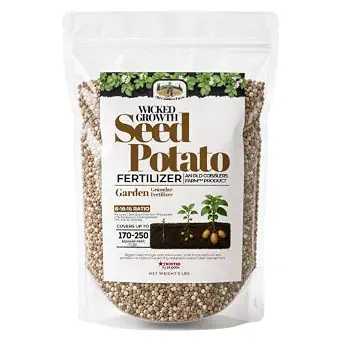 |
| Best Budget The cheapest option that still gets the job done reliably | Brighter Blooms Root Rocket Transplant Fertilizer, 2 oz |  |
| Highest Rated A top-rated pick with lots of positive feedback | Burpee Bone Meal Fertilizer, 3 lb |  |
| Most Popular A crowd favorite that many people choose with confidence | Bonide Root & Grow Concentrate 32 oz |  |
| Best Seller A high-volume bestseller chosen again and again | Dr. Earth Root Zone Starter & Transplant Fertilizer, 4 lb |  |
Old Cobblers Farm Wicked Growth 8-16-16 Granular Fertilizer (15 lb)

| Item Form | Granules |
|---|---|
| Application Method | Broadcast, Side-dress, Or Soil Incorporation |
| Target Species | Root Crops |
This granular 8-16-16 fertilizer is designed for root crops like potatoes, carrots, beets and onions by supplying higher phosphorus and potassium relative to nitrogen to support tuber bulking and root development. It is typically worked into seedbeds at planting or banded beside rows, with a midseason side-dress when tubers begin to size. Notable features include a deliberately lower nitrogen level to avoid excessive foliage, straightforward broadcast, banding or soil incorporation application methods, and coverage guidance so a 5 lb bag treats a small home garden area. In practice the formula helps shift plant energy below ground, making it useful for growers who want bigger roots without thick top growth. Limitations are that it is a straight NPK product without micronutrient detail, so a soil test and supplemental trace element plan may be needed for deficient soils, and the granular form requires careful placement and watering-in to avoid seed or bulb contact. Packaging and handling recommendations mean it should be stored dry and kept away from children and pets.
Best for: Home gardeners and small-scale market growers who prioritize producing larger root crops and want a fertilizer that shifts plant energy to tuber bulking rather than vigorous top growth.
Less Ideal for: Growers seeking an all-in-one complete fertilizer with documented micronutrients or those who prefer liquid feeds or slow-release blends for frequent foliar feeding.
- High phosphorus and potassium balance (8-16-16) targets tuber and root development
- Deliberately lower nitrogen to reduce excessive leafy growth that can limit yields
- Multiple application methods: broadcast, side-dress, or soil incorporation
- Coverage guidance lets gardeners estimate how much area a 5 lb bag will treat
- No micronutrient breakdown provided so additional amendments may be needed
- Granular form requires care to avoid direct contact with seeds or bulbs and must be watered in
Verdict: Choose this 8-16-16 granular fertilizer if your primary goal is to increase tuber and root size by supplying extra phosphorus and potassium while keeping nitrogen modest.
Old Cobblers Farm Wicked Growth Seed Potato Fertilizer (8-16-16, 5 lb)

| Mixing Ratio | 8:16:16 |
|---|---|
| Item Form | Granules |
| Application Method | Mix into soil |
| Target Species | Potatoes |
| Unit Count | 80 Ounce |
This granular fertilizer is designed specifically for potatoes, using an 8-16-16 NPK blend that emphasizes phosphorus and potassium to encourage tuber set and storage quality. You mix it into the soil at planting, side-dress along rows after emergence, and reapply midseason according to the three-stage schedule; a 5 lb bag provides measured coverage for garden rows and many container plantings. The concentrated 40% total analysis means smaller application rates, which helps with precise dosing and reduces bulk handling. Practical features include a clear mixing ratio and container-specific directions for grow bags and pots. Important limitations are that it is a single-purpose, conventional granular feed so it does not replace the need for a soil test or broader nutrient adjustments, and granules must be kept off foliage and watered in after application to avoid burn. For gardeners who value predictable, potato-focused feeding, it simplifies getting nutrients to the tuber zone without complex blending.
Best for: Gardeners who want a straightforward, potato-specific feed and prefer predictable, measured applications to maximize tuber size and storage quality.
Less Ideal for: Growers looking for an all-purpose or organic fertilizer solution or those who need a broad soil amendment based on detailed soil test results.
- High phosphorus and potassium (8-16-16) targets tuber development and storage quality
- Clear three-stage application schedule for planting, side-dressing, and midseason feed
- Suitable for rows, raised beds and containers with specific container dosing
- Concentrated formula reduces the amount of product needed per application
- Single-form granular fertilizer so it cannot correct other soil deficiencies without a soil test
- Requires careful measuring and watering in to avoid localized burn
Verdict: Choose this concentrated, potato-focused granular feed if you want a simple, measured program to boost tuber development and storage quality.
Brighter Blooms Root Rocket Transplant Fertilizer, 2 oz

| Item Form | Granules |
|---|---|
| Specific Uses For Product | Transplanting, transitioning young plants to new containers or ground, rejuvenating soil with nitrogen and phosphorous |
| Application Method | Sprinkle around roots during planting |
| Coverage | Full |
| Target Species | plants |
Brighter Blooms Root Rocket is a small, granular transplant fertilizer designed to give young plants a nutrient boost when moved into new soil or larger containers. You sprinkle the granules around the roots at planting to supply nitrogen and phosphorus that encourage root establishment and initial growth. The packet is compact and aimed at single or small-plot use, so it is convenient for planting individual transplants, seedlings, or a few root crop starts. Practical benefits include easy application, targeted nutrient support during the critical transplant period, and a formulation that also claims improved water management when combined with the brand’s gel. Limitations are the tiny 2 oz size and single-use focus, which means it will not cover large beds without multiple packets and adds ongoing costs for repeated plantings. For gardeners growing small vegetable plots or starting root crops in succession, it is a straightforward option; for larger-scale or long-term fertility needs you will want a bulk fertilizer better suited to ongoing soil fertility management.
Best for: Gardeners working with a few root crop transplants or small vegetable plots who want a simple, ready-to-use transplant fertilizer to help seedlings establish quickly.
Less Ideal for: Growers managing large garden beds, community gardens, or continuous fertility programs who need bulk fertilizer or specific N-P-K ratios for long-term soil management.
- Formulated for transplanting to support root establishment with added nitrogen and phosphorus
- Granular form that is easy to sprinkle around roots during planting
- Small 2 oz packet is convenient for single plants, trials, or small vegetable plots
- Clear directions for use during transitions from containers to ground
- Very small quantity makes it impractical for large beds or repeated applications
- No detailed nutrient analysis (N-P-K breakdown) provided on the listing
Verdict: A handy single-plant transplant fertilizer that helps root crops establish quickly in small plots or when starting seedlings.
Burpee Bone Meal Fertilizer, 3 lb

| Item Form | Powder |
|---|---|
| Specific Uses For Product | Plant Growth, Root Development |
| Coverage | 240 Sqaure Feet |
| Target Species | tomatoes, peppers, and bulbs |
Burpee Bone Meal is a slow-release granular fertilizer designed to boost early root development and flowering in root and bulb crops. Gardeners typically work it into planting holes for bulbs or mix it into soil and potting media when starting seeds or transplanting vegetables like carrots, beets, and onions. The product is OMRI listed for organic gardening and provides phosphorus and calcium that support stronger root systems and better early-season growth. Its fine granular texture makes it easy to apply evenly, and because it breaks down slowly it feeds plants over the season without burning them. Practical benefits include targeted support for root vegetables and an easy application method for beds and containers. Limitations are that it supplies mainly phosphorus and calcium rather than a balanced NPK profile, so it is best used alongside a nitrogen source if foliage development is needed, and results are gradual rather than immediate because of the slow-release nature.
Best for: Gardeners focused on improving root development and bulb planting who prefer organic inputs and want a simple amendment to add at planting or during bed preparation.
Less Ideal for: Growers seeking an all-in-one balanced fertilizer for both foliage and root development or those who need fast-acting, soluble nutrients for immediate correction.
- OMRI listed for organic gardening, suitable for certified organic beds
- Fine granular form that is easy to spread and incorporate
- Provides phosphorus and calcium to encourage strong root and bulb development
- Slow-release action reduces risk of burning plants and supplies season-long support
- Not a complete fertilizer profile so additional nitrogen may be needed for leafy growth
Verdict: A reliable organic bone meal to strengthen roots and jump-start bulbs and root vegetables when added at planting.
Bonide Root & Grow Concentrate 32 oz

| Item Form | Liquid |
|---|---|
| Specific Uses For Product | Root Development |
| Application Method | Pouring directly onto the soil and roots |
| Target Species | fruit, vegetables, flowers, trees, and bedding plants |
| Mixing Ratio | 4:10:3 |
Bonide Root & Grow is a liquid concentrate designed for use when seeding or transplanting to speed early root formation and help plants establish. You dilute the concentrate per label instructions and pour the solution onto soil and roots when potting seedlings, transplanting plugs, or setting out young vegetables and ornamentals. Notable features include an active IBA rooting hormone and a 4-10-3 nutrient ratio that supplies extra phosphorus to support root growth. In practice it can reduce transplant shock and promote quicker, stronger root systems, which is useful for both container-grown seedlings and recently set out bedding plants. Because it is a concentrate, a single 32 oz bottle yields multiple applications, which stretches a limited budget. Important limitations are that it is a specialized root stimulator rather than an all-purpose feed for ongoing growth and it requires careful dilution and label compliance to avoid overapplication.
Best for: Buyers wanting an affordable, concentrated product to give seedlings and recent transplants a stronger start and who prioritize preventing transplant shock over routine feeding.
Less Ideal for: Gardeners looking for a general weekly fertilizer or a balanced feed for mature plants should choose a different product.
- Contains IBA rooting hormone to stimulate root initiation
- 4-10-3 fertilizer ratio provides extra phosphorus for root development
- Concentrated 32 oz bottle yields many applications, good for tight budgets
- Easy to apply by diluting and pouring directly onto soil and roots
- Formulated mainly for root stimulation so not ideal as a regular all-purpose feed
- Requires careful mixing and label reading to use safely and effectively
Verdict: A budget-friendly concentrated root stimulator that helps seedlings and transplants establish faster by combining IBA with a phosphorus‑rich fertilizer.
Dr. Earth Root Zone Starter & Transplant Fertilizer, 4 lb

| Item Form | Rectangular |
|---|---|
| Specific Uses For Product | Organic |
| Coverage | 2000 |
| Target Species | Plants |
| Mixing Ratio | 2:1000 |
Dr. Earth Root Zone Starter is a 2-4-2 granular organic fertilizer designed for use at planting and transplanting to encourage early root development. You apply it at planting or mix into potting media for small containers, then follow up with regular feedings every six weeks; the label lists a mixing ratio for liquid use as well. Key features include 100% organic ingredients, seven strains of beneficial soil microbes and both ecto and endo mycorrhizae to improve nutrient uptake and drought tolerance. In practice it supplies an initial flush of nutrients that continue releasing over months and helps establish healthier root systems for vegetables and transplants. Practical limitations are that it contains phosphorus, so users in regions with restrictions should check local rules, and a 4 pound bag is focused on starter applications rather than season-long feeding for large areas. For gardeners who prefer natural inputs and want microbial support for root crops this makes a reliable first feed.
Best for: Gardeners who prefer organic products and want a reliable, low-risk starter feed to establish strong roots in root crops and transplants.
Less Ideal for: Large-scale growers who need season-long bulk fertilizer or gardeners who must avoid phosphorus-containing products due to local regulations.
- Organic formula with no GMOs, chicken manure, or sewage sludge listed
- Contains multiple beneficial soil microbes and ecto/endo mycorrhizae to aid root establishment
- Provides quick nutrient release with feeding that continues for several months
- Sized and formulated specifically for transplants and planting-time use
- Contains phosphorus which may be restricted for lawn or turf use in some areas
- 4-pound bag is limited for larger beds or multiple plantings
Verdict: Choose this organic starter fertilizer when you want a microbiome-friendly root boost for transplants and root crops to establish strong early growth.
Choosing the Right Fertilizer for Root Crops: Key Factors to Consider
Nutrient Ratio and Timing
The balance of nitrogen, phosphorus, and potassium is the single most important factor for root crops. Too much nitrogen encourages leafy growth and can reduce the size or quality of roots. A moderate nitrogen level with adequate phosphorus and potassium helps seeds germinate, encourages early root formation, and supports carbohydrate storage later in the season.
Timing also matters. Preplant or early-season phosphorus helps root establishment, while careful side-dressing of potassium during root bulking can improve size and storage life. Fertilizers with controlled-release formulas or clear feeding schedules let you match nutrient delivery to the crop's growth stages without overapplying.
Application Method and Practicality
How you apply the fertilizer changes its effectiveness in a garden setting. Granular fertilizers mixed into the seed bed offer steady nutrient availability and are easy to dose for beds and rows. Liquid feeds give quick corrections but require more frequent application and are better for small plots, containers, or foliar feeding early on.
Consider whether the product is suited for broadcast spreading, banding in the seed row, or side-dressing. Ease of measuring and spreading matters for hobby gardeners; products with clear application rates and simple instructions reduce the chance of overfeeding and root damage.
Soil Texture, pH, and Compatibility
Root crops respond differently in heavy clay, loamy garden soil, and sandy mixes. Fertilizer behavior changes with soil texture: sandy soils leach nutrients faster and may need more frequent, lighter applications, while clay holds nutrients longer but may also lock up phosphorus in certain pH ranges.
Check that the fertilizer is compatible with your soil pH and amend accordingly. Some formulas include sulfur or lime components to help adjust pH slightly, while others work best when combined with organic matter to improve nutrient retention and root penetration. Matching product behavior to the physical soil helps avoid weak roots or crumbly, misshapen harvests.
Salt Content and Root Safety
High soluble salt levels can cause root burn, reduce seed germination, and stress young transplants. For root crops planted from seed, choose low-salt or low-soluble formulas and apply at recommended dilutions to avoid damaging delicate root tips. When side-dressing older plants, avoid placing granular fertilizer directly against stems or roots to prevent localized salts from concentrating and causing injury.
Organic amendments and slow-release products typically present lower salt risk, while some synthetic blends can be higher. If you have sensitive seedlings or are working with light, quick-draining mixes, factor salt index into product choice.
Effects on Soil Biology
A healthy soil microbiome supports root development through improved nutrient cycling and pathogen suppression. Fertilizers that feed soil life or at least do not harm beneficial organisms help roots access nutrients more efficiently. Some products contain added organic matter, microbes, or bio-stimulants that encourage fungal and bacterial activity important to root zone nutrient availability.
Conversely, high rates of soluble synthetic fertilizer can temporarily reduce microbial activity if used excessively. For long-term root health and consistent yields, consider how a fertilizer impacts the living soil as part of your selection criteria.
When Root Crops Need Extra Feeding
Root crops typically show their greatest demand for nutrients at two stages: early establishment and bulking. During the first few weeks, modest phosphorus supports strong root initiation and uniform germination. Later, as roots swell and store carbohydrates, potassium becomes more important for size, texture, and storage life.
Look for visual cues before adding fertilizer. Excessive leafy growth, pale foliage, or stunted root development can indicate a nutritional imbalance. Slow, incremental applications are safer than heavy-handed feeding, which can create soft, watery roots or reduce storage quality.
- Apply starter phosphorus at planting if soil test shows low P
- Side-dress potassium during bulking for better size and storeability
- Avoid high nitrogen during bulking to prevent excessive leaf growth
Using Organic Amendments with Fertilizers
Organic matter like compost or well-rotted manure improves soil structure and nutrient-holding capacity, which benefits root crops more than raw soluble feeds alone. Mixing modest amounts of slow-release organic fertilizer into the bed before planting gives steady nutrients and supports microbes that aid root health.
If you rely on synthetic or concentrated blends for targeted nutrients, complement them with organic amendments over time to maintain soil tilth and reduce dependency on repeat applications.
- Incorporate 1 to 2 inches of compost into the topsoil before planting
- Use organic sources for long-term soil building and slow nutrient release
Adjusting Fertilizer Plans for Containers and Raised Beds
Containers and raised beds require different feeding strategies because they contain limited soil volume. Nutrients are used up faster and salts can build up, so lighter, more frequent applications are often preferable. Choose low-salt formulas and flush containers occasionally to prevent accumulation.
In raised beds, layer organic matter and use a balanced base fertilizer at planting. Side-dress carefully and monitor moisture because dry soils concentrate soluble nutrients and increase risk of root damage.
- Prefer water-soluble feeds at low concentration for containers
- Flush pots monthly if using synthetic feeds to avoid salt buildup
Interpreting Soil Tests and Adjusting Applications
A simple soil test is the best way to tailor fertilizer choices to your garden. Tests identify deficiencies in phosphorus, potassium, and pH issues that affect nutrient availability. Use those results to decide whether you need a phosphorus-rich starter, a potassium boost during bulking, or pH amendments to free up locked nutrients.
Avoid guessing with heavy applications; targeted additions based on test results protect root health and reduce wasted nutrients.
- Correct pH first to improve nutrient availability
- Base fertilizer rates on existing soil nutrient levels
Timing Harvest and Fertilizer Cutoff
Cease high-nitrogen feeding several weeks before harvest to encourage roots to finish bulking rather than producing new foliage. For storage crops, a final application of potassium a few weeks before lifting can improve skin set and longevity in storage.
Plan fertilizer timing around expected harvest dates and local growing season length. For quick-maturing root crops like radishes, minimal feeding is usually needed, while slower-growing tubers benefit from staged feeding schedules.
- Stop high-nitrogen inputs 3 to 4 weeks before harvest
- Consider a late potassium feed to improve storage life
How We Chose the Best Fertilizer for Root Crops
We selected fertilizers with root crops in mind by prioritizing attributes that directly influence underground growth and yield. Key evaluation criteria included NPK balance and timing because the relative amounts of nitrogen, phosphorus, and potassium determine whether plants put energy into leaves, roots, or storage organs. We also assessed soil compatibility, meaning how the product interacts with different pH ranges, organic matter levels, and common soil textures gardeners encounter. Application method and ease of use were judged to reflect real-world planting cycles: granular blends for preplant incorporation, side-dress options for in-season feeding, and liquid feeds for quick correction. We considered impact on soil biology by favoring formulas that support microbial activity or are neutral to beneficial organisms. Residual salt levels and the risk of root burn were evaluated to reduce transplant shock and seedling loss. Excluded from the list were fertilizers formulated exclusively for leafy greens or high-nitrogen turf products that drive excessive top growth. Products that required specialized equipment or professional-only application were also left out. The final short list balances practical garden performance, safety for root crop development, and straightforward application for home gardeners.
FAQ
How much nitrogen do root crops need compared with leafy vegetables?
Root crops generally need less nitrogen than leafy greens. Moderate nitrogen supports initial leaf growth for photosynthesis, but excessive nitrogen during the bulking phase reduces root size and storage quality. Aim for balanced feeds with emphasis on phosphorus and potassium as roots mature.
Can I use compost alone instead of a fertilizer for root crops?
Compost supplies a broad range of nutrients and improves soil structure, which benefits root crops. However, compost nutrient levels vary and may not supply the targeted phosphorus or potassium needed for heavy root bulking. Using compost as a base and supplementing with a targeted fertilizer when tests show deficiencies is often most effective.
When is the best time to side-dress root vegetables?
Side-dress when plants have a few true leaves and again during the active bulking phase, following label rates and soil test guidance. Apply fertilizer in bands beside the row rather than directly on top of the roots to avoid burning or localized salt buildup.
Are liquid fertilizers better for seed-started root crops?
Liquid fertilizers offer quick nutrient availability and are useful for correcting early deficiencies in seed-started crops. Use diluted solutions for seedlings to prevent root burn and follow a schedule that matches the crop's growth rate. For steady feeding, combine occasional liquid feeds with a nutrient-rich seed bed.
How do I avoid fertilizer burn on tubers and carrots?
Avoid placing concentrated granular fertilizer in direct contact with roots or seed rows. Use recommended rates, water after application to disperse salts, and prefer low-salt or slow-release products for young plants and sensitive soils. Soil moisture management also reduces burn risk.
Final Verdict
Prioritize fertilizers that support root formation and bulking while protecting soil life. Look for balanced NPK ratios with moderated nitrogen, adequate phosphorus for establishment, and potassium for size and storage. Match application method and timing to your soil type and planting system to avoid root burn and nutrient imbalances. By focusing on nutrient ratios, soil compatibility, and practical application, you can choose a fertilizer that consistently improves root crop yield and storage quality.
