

Note: This article contains affiliate links. If you click on these links and make a purchase, I may earn a small commission at no extra cost to you. This helps support my research and content. Read my full affiliate disclosure here.
If you keep a ponytail palm in a container you need a potting mix that mimics the plant's natural, airy soil so roots stay healthy and rot-free. The right mix balances rapid drainage with enough water-holding pockets to feed the plant between infrequent waterings. This guide shortlists seven top potting mixes chosen for that balance and for suitability in typical home and patio conditions. Below we explain the practical criteria used to evaluate mixes, how each affects root health and watering frequency, and what to expect from these top picks for container-grown ponytail palms.
Top Picks at a Glance
| Best Overall The best all-around choice for most situations | Espoma Organic Cactus Potting Soil Mix, 4 qt |  |
| Best Quality Built to a higher standard if you want something more solid | FoxFarm Ocean Forest Potting Soil, 12 Quart |  |
| Best Value The sweet spot between price and what you get | Miracle-Gro Succulent Potting Mix, 4 qt. |  |
| Best Budget The cheapest option that still gets the job done reliably | Back to the Roots Organic Indoor Potting Mix, 6 Quart |  |
| Highest Rated A top-rated pick with lots of positive feedback | E.B. Stone Organics Citrus & Palm Mix Potting Soil, 1.5 cu ft |  |
| Most Popular A crowd favorite that many people choose with confidence | Miracle-Gro Cactus, Palm & Citrus Potting Mix, 8 qt. |  |
| Best Seller A high-volume bestseller chosen again and again | Back to the Roots Organic Indoor Potting Mix, 12 Quart |  |
Espoma Organic Cactus Potting Soil Mix, 4 qt

| Brand | Espoma |
|---|---|
| Volume | 4 quarts |
| Unit Count | 128 Ounce |
| Contains | Peat moss, humus, perlite, mycorrhizae |
Espoma Organic Cactus Potting Soil Mix is a lightweight, peat-based blend designed to improve drainage and root aeration for container plants. Typical uses include repotting succulents, cacti, and smaller container palms and citrus where fast drainage is important. The mix contains sphagnum peat moss, humus and perlite, plus a mycorrhizal inoculant to support root establishment. In practice this means soil that dries out more quickly than all-purpose mixes, reducing the risk of root rot in drought-tolerant species and helping young palms settle after repotting. Because it is organic and free of synthetic fertilizers, gardeners who prefer natural inputs can use it without adding immediate chemical feeds. Limitations are its small 4 quart volume and peat-heavy base, which may require mixing with coarser materials or regular feeding for larger palms or long-term container culture.
Best for: Buyers looking for an organic, fast-draining potting mix to repot succulents or small container palms and who prefer natural ingredients over synthetic additives.
Less Ideal for: Gardeners needing large volumes for big specimen palms or long-term container culture should choose a coarser, larger-volume mix or blend this with chunky amendments.
- Formulated for drainage and aeration with peat moss and perlite
- Includes mycorrhizae to encourage root growth and establishment
- Organic blend with no synthetic fertilizers or chemicals
- Suitable for repotting succulents, cacti and smaller container palms
- Small 4 quart bag may not be cost-effective for large pots or multiple palms
- Peat-heavy mix can compress over time and may need amendment for long-term container use
Verdict: A compact, organic, fast-draining mix that helps establish roots in succulents and small container palms when you need a natural potting medium.
FoxFarm Ocean Forest Potting Soil, 12 Quart

| Item Form | Granules |
|---|---|
| Specific Uses For Product | Dry Fertilizer |
| Coverage | 4.8 sq ft |
| Mixing Ratio | 1:1 |
FoxFarm Ocean Forest is a pre-mixed potting soil that combines aged forest products, sandy loam and sphagnum peat moss with organic amendments like fish meal, crab meal and earthworm castings. It is sold ready to use straight from the bag for planting in containers, seed starting or top dressing; the manufacturer recommends no additional nitrogen fertilizer for the first 30 days. The mix has a light, aerated texture that promotes drainage while still retaining moisture, and the built-in micronutrients make it practical for growers who want strong early growth without immediate feeding. Practical benefits include easy pot filling, good root zone aeration for roses in containers, and built-in organic fertility to support blooms. Limitations to consider are that the bag is best for containers or small beds only and heavier feeders may need supplemental feeding after the initial month; users should also follow handling precautions to avoid skin or eye irritation.
Best for: Gardeners who want a high-quality, nutrient-rich potting medium to get container roses or plant starts off to a strong, flowering start and prefer a ready-made organic blend.
Less Ideal for: Large in-ground rose beds or landscapers needing bulk soil amendments should look for bulk garden soil or custom rose mixes instead.
- Ready-to-use out of the bag so you can pot immediately
- Organic amendments (fish meal, crab meal, earthworm castings) supply early nutrients
- Light, aerated texture that supports drainage and root development
- pH adjusted for optimal nutrient uptake per product description
- Pack size (12 qt) covers a small area and may require multiple bags for several roses
- No long-term feeding provided after the first 30 days so additional fertilizer is needed for sustained heavy bloom
Verdict: Choose this soil if you want a ready-made, organically amended potting mix that jump-starts container roses and seedlings with good drainage and early fertility.
Miracle-Gro Succulent Potting Mix, 4 qt.

| Brand Name | Miracle-Gro |
|---|---|
| Unit Count | 128 Ounce |
| Volume | 4 quarts |
| Style Name | Succulent |
This 4-quart Miracle-Gro Succulent Potting Mix is formulated for indoor succulent and cactus container gardening and is intended to make repotting simple for hobbyists and casual plant owners. The blend of sphagnum peat moss, processed forest products, and built-in Miracle-Gro plant food gives seedlings and established succulents a loose, moisture-moderating medium that drains more quickly than standard potting soil. Use it to fill an 8-inch pot (one bag typically fills that size), position your plant with a loosened root ball, and water lightly so excess drains from the pot. Notable features include the pre-mixed fertilizer for initial nutrition and a composition that reduces compaction compared with all-purpose mixes. The practical benefits are easier watering management for shallow-rooted succulents and less frequent repotting thanks to recommended two-year refreshes. Limitations are the small bag size for larger collections and that it is peat-based, which some gardeners avoid for sustainability reasons; very arid growers may still prefer coarser, mineral-heavy mixes for maximum drainage.
Best for: Buyers who want an easy, ready-to-use potting mix tailored to indoor succulents and prefer a balanced product that simplifies repotting and early care.
Less Ideal for: Collectors with many large pots or growers who require a coarser, grit-heavy or completely peat-free medium should look for larger or mineral-focused mixes.
- Formulated specifically for succulents and cacti to improve drainage compared with general potting soils
- Includes Miracle-Gro plant food for initial nutrition after potting
- Loose peat-based blend resists compaction and eases root placement when repotting
- One 4 qt. bag fills an 8-inch container, convenient for single-plant repots
- Small 4 qt. volume is insufficient for multiple or larger pots
- Peat-based composition may be undesirable for gardeners seeking peat-free or more mineral-heavy mixes
Verdict: A convenient, plant-food–boosted potting mix that makes repotting and establishing indoor succulents quick and low-effort.
Back to the Roots Organic Indoor Potting Mix, 6 Quart

| Unit Count | 192 Fluid Ounces |
|---|---|
| Item Type Name | Indoor Potting Mix 6qt |
| Item Highlight | Peat-free, 100% organic, made in the USA |
| Ingredients | Coconut Coir, Yucca, Mycorrhizae, Perlite, Horticultural Sand |
This Back to the Roots indoor potting mix is a ready-to-use, 6-quart blend designed for common houseplants such as pothos, monstera and ferns. It combines coconut coir, yucca extract, mycorrhizae, perlite and horticultural sand to improve moisture retention, drainage and root development without peat. In practice it feels light and friable, so it is easy to pot seedlings or repot mature plants and it reduces compaction that can suffocate roots. The added mycorrhizae helps young roots establish and take up nutrients more efficiently while yucca extract helps the mix hold water between waterings, which is convenient for forgetful or busy plant owners. Because it is peat-free and made in the USA, it is a more sustainable choice versus traditional peat-based mixes. Limitations are the small 6-quart size, which means frequent repurchasing for larger collections, and the bag does not include fertilizer so you will need to feed plants separately as they grow.
Best for: Buyers who prioritize low-risk, easy-care houseplant solutions and want an organic, ready-to-use potting mix that reduces watering hassles and supports healthy root growth.
Less Ideal for: Not ideal for gardeners who need large-volume soil for many pots or for those expecting a mix that includes built-in fertilizer for long-term feeding.
- Peat-free organic formula that reduces environmental impact
- Yucca extract improves moisture retention between waterings
- Contains mycorrhizae to support root development and nutrient uptake
- Light, well-draining texture suitable for repotting seedlings and houseplants
- Small 6-quart volume may require frequent repurchasing for larger plant collections
- Does not include fertilizer so additional feeding is necessary
Verdict: A compact, peat-free potting mix that simplifies indoor plant care by holding moisture and boosting root establishment.
E.B. Stone Organics Citrus & Palm Mix Potting Soil, 1.5 cu ft

| Brand Name | E.B. Stone Organics |
|---|---|
| Unit Count | 1536 Ounce |
| Volume | 1.5 cubic feet |
| Style Name | Potting Soil |
E.B. Stone Organics Citrus & Palm Mix is a ready-to-use organic soil blend designed for container and in-ground planting of citrus, palms, avocados and tropical foliage. The mix pairs aged fir bark and pumice to keep the root zone well aerated and fast-draining so plants that dislike soggy feet avoid root rot, while added mycorrhizae improve nutrient and water uptake. It is intended to be used straight from the bag for potting or worked into beds when planting, which simplifies planting and repotting tasks. For gardeners seeking reliability, this blend delivers consistent structure and moisture retention without heavy amendments, and the organic base supports longer-term soil biology. Limitations are the single bag volume of 1.5 cubic feet, which means larger projects will require multiple bags and mixing on site, and it does not list N-P-K numbers or slow-release fertilizer content so supplemental feeding may be needed for heavy-feeding specimens.
Best for: Gardeners who prioritize reliable, low-maintenance potting media for citrus and tropical plants and want a ready-made organic blend that supports healthy roots.
Less Ideal for: People who need large volumes for landscaping projects or who prefer a potting mix with specified fertilizer content and tailored nutrient ratios.
- Formulated specifically for citrus, palms and tropicals to match their root needs.
- Aged fir bark and pumice provide good drainage and aeration to reduce risk of root rot.
- Contains beneficial mycorrhizae to enhance root nutrient and water uptake.
- Ready-to-use bag simplifies repotting or planting without on-site blending.
- Single bag is only 1.5 cubic feet so multiple bags are required for larger trees or beds.
- No detailed fertilizer analysis provided so additional feeding may be necessary for heavy feeders.
Verdict: Choose this mix when you want a consistent, ready-to-use organic soil that promotes healthy, well-aerated roots for citrus and tropical plants.
Miracle-Gro Cactus, Palm & Citrus Potting Mix, 8 qt.
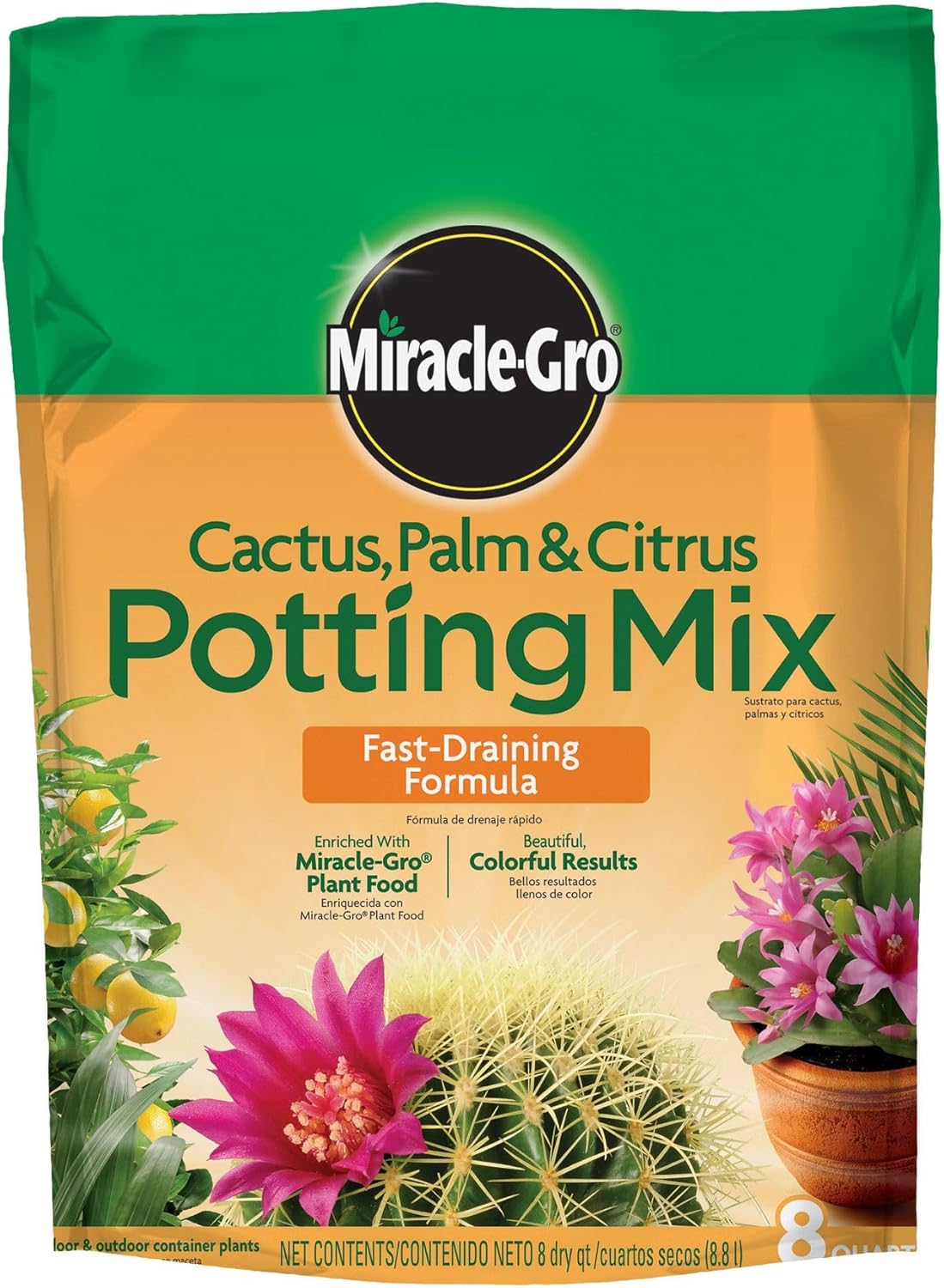
| Brand Name | Miracle-Gro |
|---|---|
| Volume | 8 quarts |
| Unit Count | 1 Count |
This 8-quart Miracle-Gro potting mix is designed for container-grown cacti, palms, and citrus and combines peat moss, sand, perlite, and forest products for faster drainage and reduced compaction. It arrives ready to use and is enriched with Miracle-Gro plant food so newly potted citrus get an initial nutrient boost without immediate fertilizing. Typical use is straightforward: choose a pot with drainage, fill about one third, set the root ball and top up, then water and allow to drain. The formula helps soil dry between waterings, which is important for citrus root health in containers, and one bag is enough for two 8-inch pots. Limitations are the small volume for larger trees and the presence of peat moss if you prefer peat-free mixes; heavier or older citrus will need larger volumes and eventual repotting. For growers wanting a quick, reliable container medium that balances moisture retention with drainage, this mix performs as expected.
Best for: Growers who repot or maintain container citrus and want a ready-to-use mix that balances drainage and initial feeding for healthier root development.
Less Ideal for: Gardeners potting mature or large citrus specimens that need large volumes of soil or those seeking a peat-free or custom mineral-heavy citrus bonsai substrate.
- Fast-draining blend reduces risk of waterlogged roots for container citrus
- Pre-enriched with plant food to give newly potted plants an initial nutrient boost
- Contains perlite and sand to resist compaction and maintain aeration
- Formulated for indoor or outdoor containers so it works across sites
- 8-quart bag is small for larger or multiple citrus containers
- Contains peat moss which some buyers avoid for sustainability reasons
Verdict: A convenient, fast-draining, plant-food–enriched container mix that makes repotting small to medium citrus trees quick and reliable.
Back to the Roots Organic Indoor Potting Mix, 12 Quart

| Volume | 12 quarts |
|---|---|
| Item Highlight | Indoor potting mix for pothos, monstera, ferns |
| Organic | 100% organic |
| Peat-free | Peat-free |
| Origin | Made in the USA |
This indoor potting mix is designed for everyday houseplants and seed starting, offering an organic, peat-free alternative that emphasizes moisture retention and root health. The formula includes yucca extract to help the soil hold water longer and added mycorrhizae to encourage stronger root development and better nutrient uptake. It also uses dolomitic limestone to balance pH and is made without bark or compost to reduce gnats and other indoor pests. Typical use is repotting monsteras, pothos, ferns and similar tropical foliage or refreshing topsoil in indoor containers. Practical benefits include easier watering management for busy or cautious plant owners and a reduced likelihood of pest problems compared with mixes containing coarse bark. Limitations are that the mix is an all-purpose indoor blend rather than a chunky, fast-draining aroid-specific mix, so growers who need very airy media for large root-bound monsteras may want to amend it with perlite, orchid bark, or pumice for extra drainage and airflow.
Best for: Homeowners who prefer a low-risk, easy-care potting mix for common tropical houseplants and want an organic, low-gnat option that reduces hands-on maintenance.
Less Ideal for: Advanced collectors growing very large or high-airflow aroids who need a chunky, fast-draining substrate straight out of the bag.
- Organic and peat-free composition suitable for eco-conscious indoor gardeners
- Yucca extract improves moisture retention for less frequent watering
- Includes mycorrhizae to support root growth and nutrient uptake
- Balanced pH with dolomitic limestone to help nutrient availability
- Not formulated as a very airy aroid mix so may require amendments for large monsteras
Verdict: A reliable, organic indoor potting mix that makes repotting monsteras and other common houseplants low effort and low risk.
Choosing the Right Potting Mix for Ponytail Palm: Key Factors to Consider
Drainage and Percolation
Ponytail palms need a mix that sheds excess water quickly to avoid root rot. Look for a visible proportion of coarse, inorganic components such as pumice, coarse sand, or grit that create channels for water to flow through.
Good percolation also prevents the soil from compacting over time. If particles are too fine or the mix contains high amounts of peat that collapse when wet, the root zone can become dense and oxygen-poor. That makes drainage the single most critical factor when selecting a potting mix for this species.
Aeration and Particle Size Distribution
Root health depends on oxygen reaching the root tips between waterings. A mix with a variety of particle sizes-coarse bits for air pockets and medium fines to support roots-lets the soil breathe while still holding structure.
Avoid mixes that are uniformly fine or heavily compressed. Materials like pumice, perlite, and coarse sand improve aeration. Larger particles also discourage overpacking in pots, which is especially important for the shallow, spreading root habit of ponytail palms.
Moisture Retention Balance
While quick drainage is essential, ponytail palms still need some moisture available between waterings. The ideal mix holds small reservoirs of water near organic particles while letting excess run off.
Stable organic components such as well-composted bark or coir can supply that buffer without retaining water like peat. Balancing inorganic drainage with modest organic retention reduces watering frequency without increasing rot risk.
Organic Matter Type and Longevity
Not all organic ingredients behave the same in containers. Peat packs high water but can compact and acidify over time. Coir and aged bark break down more slowly and keep structure longer.
Choose mixes that list stable organics rather than unnamed 'soil' or 'humus.' Longer-lasting organics mean the mix will perform consistently over seasonal cycles and not collapse into a dense, poorly draining mass after a year or two.
Nutrient Availability and Feeding Strategy
Most potting mixes supply starter nutrients but do not replace a feeding plan. Look for mixes that state a modest initial nutrient charge or include slow-release components that match the plant's slow growth habit.
Excessive preloaded fertilizer can stress a ponytail palm in a small pot. A conservative initial nutrient level paired with a regular, light feeding schedule is the safer approach for steady, healthy growth.
pH and Salt Levels
Ponytail palms prefer a neutral to slightly alkaline root environment. The mix should not be overly acidic or high in soluble salts, which can harm roots and stunt growth.
Inspect ingredient labels for lime-treated components or mention of buffer agents when pH is specified. Avoid mixes that do not disclose salt treatment or that list aggressive fertilizers without guidance for container use.
Preparing a Pot for Repotting Ponytail Palms
When repotting, choose a container with generous drainage holes and a shape that accommodates the plant's bulbous trunk and shallow roots. Clean the pot and position a thin layer of coarse grit or broken terracotta at the bottom only if you need to raise the root zone; the main drainage improvement comes from the mix itself rather than a bottom layer.
Check the old root ball for tightly wound or mushy roots and gently tease them apart. Place the palm at the same soil depth as before; burying the swollen base too deep can retain moisture against the caudex. Fill around roots with the chosen potting mix, firming lightly so air pockets remain but the plant is stable.
- Use a pot one size larger when roots are densely packed.
- Avoid pots with narrow necks that trap excess moisture around the trunk.
- Allow several days in low light after repotting before resuming normal watering.
Mix Add-Ins That Improve Drainage and Structure
You can modify a commercial potting mix to better suit ponytail palms by adding coarse, inorganic materials. Pumice, lava rock, or coarse builder's sand are durable options that do not break down quickly. Perlite is useful but may compact in mixes with too much fine organic matter.
A small proportion of chunky bark or large-grained coir helps the mix retain some moisture without collapsing. When adding amendments, aim for visible, roughly equal volumes of drainage particles and organic buffer for the fastest-draining yet stable balance.
- Add 20 to 40 percent coarse inorganic amendment for faster drainage.
- Avoid fine sand or silt that can fill pore spaces and reduce aeration.
- Mix thoroughly so heavier particles do not settle to the pot bottom.
Watering and Seasonal Care
Ponytail palms tolerate drought better than constant moisture. Water deeply but infrequently, letting the top few centimeters of mix dry before the next irrigation. In winter, reduce watering frequency because lower temperatures and light slow plant uptake.
Monitor soil moisture by weight or with a probe rather than relying solely on the surface. Light and temperature affect drying rates, so adjust water schedule when the palm is on a bright windowsill versus a shaded porch.
- Water deeply until excess drains from the pot bottom.
- Allow the top 2 to 4 centimeters to dry between waterings indoors.
- Increase water slightly during active growth in warm months.
Managing Repotting Intervals and Long-Term Mix Performance
Container mixes for ponytail palms change over time as organics break down and pore space declines. Expect to refresh or repot every 18 to 36 months depending on the mix composition and growth rate. When the mix appears compacted or dries out unevenly, it is time to renew the root environment.
Topdressing with a thin layer of fresh mix will not correct internal compaction, so plan periodic repotting. Choosing mixes with more stable inorganic content extends the window between full repots and preserves consistent drainage.
- Inspect root and soil condition annually.
- Repot into fresh mix when root crowding or compaction is evident.
- Favor mixes with higher inert content to lengthen repotting intervals.
How We Chose the Best Potting Mix for Ponytail Palm
We focused on potting mixes that suit the specific growing habits of ponytail palms: a caudiciform trunk, shallow but spreading roots, and a preference for quick drying between waterings. Our editorial filters prioritized mixes with clearly stated particle composition, documented drainage characteristics, and stable structure over time. We looked for mixes that provide a balance of drainage and moisture retention, measured by ingredient ratios rather than brand claims. Concrete evaluation criteria applied included particle size and aeration, proportion of inorganic drainage components, organic matter type and stability, and initial nutrient content plus slow-release capability. We excluded loose, undefined garden soils, mixes designed solely for succulents without any organic buffer, and any product lacking transparent ingredient lists. Laboratory test data were not required, but we favored mixes with traceable ingredient specifications and clear intended use for container palms or caudiciform plants. These filters produced a shortlist appropriate for typical indoor and outdoor container situations, helping gardeners choose mixes that reduce overwatering risk while supporting healthy, gradual growth.
FAQ
How often should I water a ponytail palm in a well-draining mix?
Often it depends on light and pot size, but with a well-draining mix most indoor ponytail palms need watering every 2 to 3 weeks during active growth and less in winter. Check the top few centimeters of mix and the pot weight to decide.
Can I use a cactus or succulent mix for a ponytail palm?
Sometimes a cactus mix is suitable because it drains well, but many are very lean in organic matter. You may need to add a bit of stable organic material so the plant has some moisture between waterings without risking compaction.
What is the best pot material to pair with a fast-draining mix?
Terracotta and unglazed ceramic pots help moisture evaporate from the sides and speed drying. Plastic holds moisture longer, which can be fine if your mix is extra free-draining or you reduce watering frequency.
Should I add fertilizer to a fresh potting mix when repotting?
Usually choose a mix with modest starter nutrients or none and introduce a light, regular feeding routine after a few weeks. Heavy initial fertilizer can stress newly repotted roots in a small container.
How can I tell if my mix is compacting and needs replacement?
Look for slow drainage, uneven drying, or soil that stays soggy deep in the pot. Root circling and restricted growth are also signs that the mix has lost structure and a repot is needed.
Final Verdict
Choose a potting mix for ponytail palm that prioritizes rapid drainage and good aeration while retaining modest moisture near roots. Focus on particle size distribution and stable organic ingredients rather than high water-holding peat-heavy formulas. Balance your mix choice with pot material and watering routine. When you prioritize percolation and long-term structure, you reduce root-rot risk and give the palm the airy, slightly dry root environment it prefers, making maintenance and repotting needs easier to manage.
