

Note: This article contains affiliate links. If you click on these links and make a purchase, I may earn a small commission at no extra cost to you. This helps support my research and content. Read my full affiliate disclosure here.
Choosing the right medium for starting seeds has a big effect on germination rates and seedling vigor. A dedicated potting mix for seedlings gives loose structure, reliable drainage, and modest nutrients so tiny roots can expand without drowning or burning. This guide covers seven top potting mixes shortlisted for seed starting and early transplant stages. We evaluate mixes on moisture management, nutrient balance, and handling so you can pick one that fits your sowing method and setup. Read on to understand the tradeoffs between water retention, sterility, and texture before you pot up your next tray.
Top Picks at a Glance
| Best Overall The best all-around choice for most situations | Old Potters Germination Mix (24 qt) — Peat Moss with Fine Perlite & Vermiculite |  |
| Best Quality Built to a higher standard if you want something more solid | FoxFarm Ocean Forest Potting Soil, 12 Quart |  |
| Best Value The sweet spot between price and what you get | Burpee Premium Organic Potting Mix with Coco Coir (9 Quart) |  |
| Best Budget The cheapest option that still gets the job done reliably | SunGro Horticulture Organic Seedling Mix (8 Quart) |  |
| Highest Rated A top-rated pick with lots of positive feedback | FoxFarm Ocean Forest Potting Soil, 12 qt (with 2 Plant Tags) |  |
| Most Popular A crowd favorite that many people choose with confidence | Miracle-Gro Indoor Potting Mix for Seed Starting, 8 qt. (2-Pack) |  |
| Best Seller A high-volume bestseller chosen again and again | Back to the Roots Organic Seed Starting Mix — Expanding 12 Quart Block |  |
Old Potters Germination Mix (24 qt) — Peat Moss with Fine Perlite & Vermiculite

| Volume | 24 quarts |
|---|---|
| Unit Count | 768 Fluid Ounces |
| pH range | 5.4 – 6.3 |
| Electrical conductivity | 1.0 – 1.5 mmhos/cm |
This germination mix is built for starting seeds and propagating cuttings with consistent results. Its formula is 80–90% finely milled Canadian sphagnum peat moss combined with fine horticultural perlite and vermiculite to provide a balance of moisture retention and aeration that promotes uniform root development. Calcitic and dolomitic limestone are added to hold the pH in the 5.4–6.3 range and a wetting agent helps the medium rehydrate evenly so you avoid dry pockets in small cells or trays. A mild starter nutrient charge and a modest EC (1.0–1.5 mmhos/cm) give seedlings a gentle early feed without burning young roots. The fine texture makes it well suited to both sub-irrigation and overhead watering systems and to use in seed flats, plug trays, and small pots. Be aware the mix is peat-based, so it will compress over time and may hold more water than soilless mixes with higher perlite content, requiring attention to drainage for long-term potting. For reliable, repeatable seed starts this is a practical, no-nonsense choice.
Best for: Gardeners who prioritize consistent, predictable seed starts and propagation results and want a ready-to-use medium that performs across trays and small pots.
Less Ideal for: Growers looking for an entirely peat-free or very fast-draining mix for succulents or long-term container culture should consider alternatives.
- High peat content for even moisture retention and fine texture ideal for seeds and cuttings
- Added fine perlite and vermiculite improve aeration and uniform water holding in trays
- pH balanced with calcitic and dolomitic limestone for consistent nutrient availability
- Wetting agent promotes quick, even rehydration to reduce dry spots in small cells
- Peat-based formulation can compress and retain more water over time compared with higher-drainage mixes
- Contains a light starter charge but not a complete fertilizer for longer-term growth
Verdict: Choose this germination mix when you need a dependable, fine-textured medium that gives repeatable, uniform seed and cutting starts.
FoxFarm Ocean Forest Potting Soil, 12 Quart

| Item Form | Granules |
|---|---|
| Specific Uses For Product | Dry Fertilizer |
| Coverage | 4.8 sq ft |
| Mixing Ratio | 1:1 |
FoxFarm Ocean Forest is a pre-mixed potting soil that combines aged forest products, sandy loam and sphagnum peat moss with organic amendments like fish meal, crab meal and earthworm castings. It is sold ready to use straight from the bag for planting in containers, seed starting or top dressing; the manufacturer recommends no additional nitrogen fertilizer for the first 30 days. The mix has a light, aerated texture that promotes drainage while still retaining moisture, and the built-in micronutrients make it practical for growers who want strong early growth without immediate feeding. Practical benefits include easy pot filling, good root zone aeration for roses in containers, and built-in organic fertility to support blooms. Limitations to consider are that the bag is best for containers or small beds only and heavier feeders may need supplemental feeding after the initial month; users should also follow handling precautions to avoid skin or eye irritation.
Best for: Gardeners who want a high-quality, nutrient-rich potting medium to get container roses or plant starts off to a strong, flowering start and prefer a ready-made organic blend.
Less Ideal for: Large in-ground rose beds or landscapers needing bulk soil amendments should look for bulk garden soil or custom rose mixes instead.
- Ready-to-use out of the bag so you can pot immediately
- Organic amendments (fish meal, crab meal, earthworm castings) supply early nutrients
- Light, aerated texture that supports drainage and root development
- pH adjusted for optimal nutrient uptake per product description
- Pack size (12 qt) covers a small area and may require multiple bags for several roses
- No long-term feeding provided after the first 30 days so additional fertilizer is needed for sustained heavy bloom
Verdict: Choose this soil if you want a ready-made, organically amended potting mix that jump-starts container roses and seedlings with good drainage and early fertility.
Burpee Premium Organic Potting Mix with Coco Coir (9 Quart)

| Item Form | Powder |
|---|---|
| Specific Uses For Product | Plant Growth, Root Development, Seed Development, Soil Conditioning |
| Coverage | 9 Qt Container |
| Liquid Volume | 9 quarts |
Burpee Premium Organic Potting Mix is a ready-to-use container soil designed for indoor and outdoor pots, seed starting, and raised bed containers. The mix combines coco coir for improved aeration and moisture retention with a nutrient blend that feeds plants for up to three months, making it useful for establishing seedlings or repotting established vegetables, herbs, and ornamentals. It is OMRI listed, which suits organic growers, and the bag is sold in a convenient 9-quart size that fits most small to medium containers. Practical benefits include reduced watering frequency thanks to the coir component and a balanced medium that promotes root development and germination. Limitations are the small bag size for larger projects and that it supplies nutrients for only a limited period, so longer-term containers will need supplemental fertilizer. The mix is powdery and light, so it is easy to handle but may compress over time in deep pots and benefit from occasional loosening.
Best for: Gardeners who want a compact, ready-made organic potting mix that reduces maintenance and supports reliable seed starting and container growth.
Less Ideal for: Those establishing large beds or filling many large containers at once should choose bulk soil or larger bags instead.
- OMRI listed organic blend suitable for organic container gardening
- Coco coir improves moisture retention while maintaining good aeration
- Includes slow-release nutrients that feed plants for up to three months
- Light, easy-to-handle texture ideal for seed starting and repotting
- 9-quart bag is small for larger containers or multiple pots
- Nutrient supply is temporary so additional fertilizer is required for long-season crops
Verdict: A compact OMRI-listed potting mix with coco coir that simplifies seed starting and short-term container growing by improving moisture balance and early root development.
SunGro Horticulture Organic Seedling Mix (8 Quart)

| Brand Name | SUN GRO |
|---|---|
| Style Name | Peat Moss |
| Volume | 8 quarts |
SunGro Horticulture Seedling Mix is a fine-textured, peat-based starting mix formulated to germinate seeds in flats, pots, and plug trays. It contains sphagnum peat moss, perlite for lightness and drainage, and an organic wetting agent to promote even water absorption, which helps maintain consistent moisture for small seeds. The mix also includes a silicon-enriched additive called RESiLIENCE intended to support stronger seedlings and reduce wilting during establishment. Typical use is filling trays or small pots, keeping the medium evenly moist but not waterlogged, then transplanting seedlings once roots are established. Practical benefits include predictable moisture retention, a clean fine texture that allows delicate roots to develop, and OMRI listing for organic onion transplants and other edible starts. Limitations are its small 8 quart volume for larger onion seed programs and that peat-based mixes dry out faster than heavier soils, so frequent monitoring is required; it also provides limited long-term nutrients so potting up into a richer mix or fertilizing before transplant is necessary.
Best for: Gardeners who want an organic, predictable seed starting medium for small to medium onion seed batches and who prioritize reliable germination over bulk volume.
Less Ideal for: Commercial growers or anyone starting very large quantities of onion seedlings should choose larger-volume or more nutrient-dense starting media.
- Fine, light texture suitable for delicate seed germination
- Organic wetting agent promotes uniform water absorption
- OMRI listed so safe for organic edible starts
- Contains perlite for improved drainage and root aeration
- Small 8 quart bag may not be cost-effective for starting large onion batches
- Peat-based mix has low long-term nutrient content and needs fertilizing before transplant
Verdict: A reliable OMRI-listed seed starting mix that delivers even moisture and a fine texture ideal for producing healthy onion seedlings in small home gardens.
FoxFarm Ocean Forest Potting Soil, 12 qt (with 2 Plant Tags)

| Brand Name | FoxFarm |
|---|---|
| Unit Count | 144 Ounce |
| Item Highlight | Light, Aerated Texture with Fish Meal, Crab Meal, Earthworm Castings |
| Volume | 12 quarts |
FoxFarm Ocean Forest is a pre-mixed potting soil built from aged forest products, sandy loam and sphagnum peat moss, amended with organic inputs like fish meal, crab meal and earthworm castings. It is designed to be used straight from the bag for container-grown plants and seedlings, providing a light, well-aerated texture that helps drainage and root development. Typical use is filling pots or raised beds for starts, houseplants and container vegetables or berries; the included plant tags make labeling varieties and planting dates easier. The nutrient-rich formula supplies an initial fertility boost so you can delay heavy nitrogen feeding while young plants establish. On the downside the 12 quart bag is relatively small for larger blackberry plantings in-ground or for filling many large containers and you may need to supplement specific soil pH or long-term fertility requirements for mature brambles. For container blackberries this mix gives an easy, reliable start but plan on larger volumes or soil amendments for permanent beds.
Best for: Gardeners who want a reliable, plug-and-play potting mix to start container blackberries or seedlings and value a nutrient-rich, well-aerated medium that reduces early feeding needs.
Less Ideal for: Growers preparing large in-ground blackberry beds or those needing specific soil pH control should choose bulk soil or amend based on a lab test rather than rely on this bag alone.
- Ready-to-use blend with organic amendments for immediate planting
- Light, aerated texture that promotes drainage and root growth
- Contains fish meal, crab meal and earthworm castings for early nutrient support
- Includes plant tags for easy labeling of varieties and planting dates
- 12 quart bag size is limited for larger plantings or multiple containers
Verdict: Use this nutrient-rich, aerated potting mix to give container or young blackberry plants a strong, low-effort start.
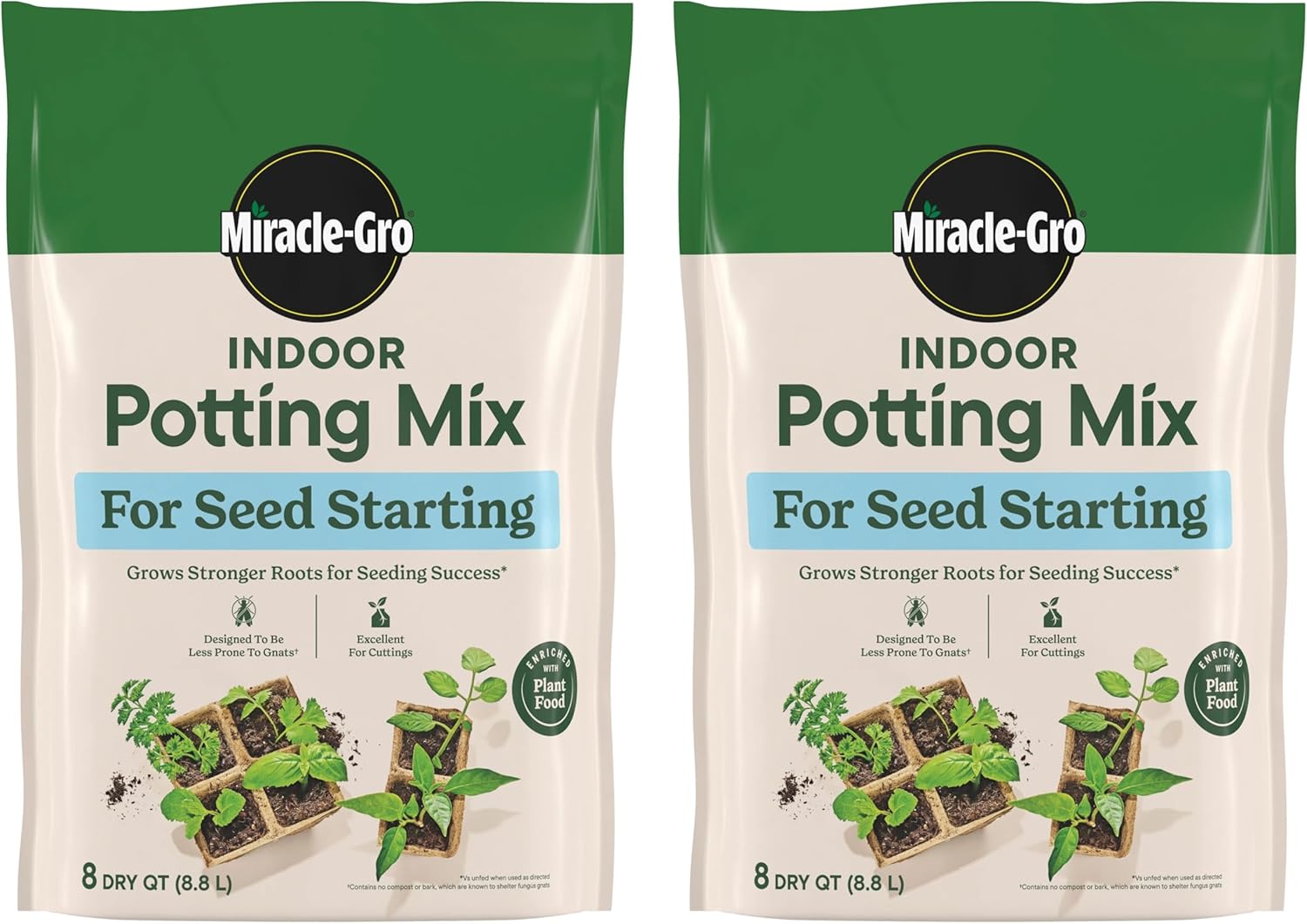
Miracle-Gro Indoor Potting Mix for Seed Starting, 8 qt. (2-Pack)
| Brand Name | Miracle-Gro |
|---|---|
| Item Type Name | Potting Mix |
| Number of Packs | 2 |
| Volume | 8 quarts |
This two-pack of Miracle-Gro Indoor Potting Mix is designed specifically for starting seeds and rooting cuttings indoors. The blend is lightweight and pre-enriched with plant food so seedlings get a nutrient boost during early root development, and the manufacturer says it yields stronger roots compared with unfed mixes when used as directed. It is intended for vegetables, flowers, and herbs and works well in cell trays and small containers; one 8 qt. bag will fill roughly three 72-cell trays. Notably, the formula omits compost and bark, which helps lower the chance of fungus gnat infestations in damp seed-starting setups. Use it by filling trays or pots, keeping the mix evenly moist, and shielding newly sown seeds from direct sun until germination. Important limitations are standard for enriched mixes: it contains fertilizer (so handle carefully) and it is a seed-starting medium rather than an all-purpose potting soil for mature plants, so you will likely transplant seedlings into a different mix or amend soil later.
Best for: Buyers who want a low-effort, indoor seed-starting medium that supports faster root development and reduces common pest risks while following proven seed-starting practices.
Less Ideal for: Gardeners who need a permanent potting soil for mature container plants or who prefer fully organic, compost-rich mixes should consider alternatives.
- Lightweight, ready-to-use formula tailored for seed germination and cuttings
- Pre-enriched with plant food to support early root and seedling growth
- Excludes compost and bark to reduce habitat for fungus gnats
- Comes as a two-pack so you have enough mix for multiple trays
- Contains fertilizer which requires careful handling and storage
- Intended for seed starting so not formulated as long-term potting soil for mature plants
Verdict: A practical, low-risk seed-starting mix that boosts early root growth and reduces fungus gnat risk, making it a reliable choice for indoor vegetable seedlings.
Back to the Roots Organic Seed Starting Mix — Expanding 12 Quart Block

| Volume | 12 quarts |
|---|---|
| Item Type Name | Seed Starting Mix |
| Unit Count | 384 Fluid Ounces |
| OMRI Listed | Yes |
| Peat Free | Yes |
This compressed seed starting mix is a coir-based block that expands to 12 quarts of loose, ready-to-use seedling soil after adding water. It is designed for starting seeds, potting up seedlings, and amending small pots for herbs, vegetables, and flowers. Notable features include an OMRI-listed organic formulation, balanced pH and low electrical conductivity to support nutrient uptake, and compact storage compared with bulky soil bags. In practice the block is easy to hydrate and fluffs up quickly, producing a light, airy medium with good water retention and aeration for root development. The convenience of a single expanding block and beginner-friendly handling makes it a reliable choice for cautious gardeners who want predictable results without mixing multiple ingredients. Limitations are that it is a single-purpose starter mix rather than an all-in-one fertilized potting soil and larger projects will need multiple blocks, so plan quantities ahead.
Best for: Practical gardeners who want a reliable, easy-to-use organic starter medium for small-scale seed trays, pots, and indoor seedlings and who prioritize predictable, low-fuss results.
Less Ideal for: Gardeners needing a ready-to-use, fertilized all-purpose potting soil for large container gardens or immediate long-term container plantings should consider an enriched potting mix instead.
- Expands to 12 quarts from a compact compressed block for easy storage and transport
- OMRI-listed organic and peat-free formulation suitable for organic growing
- Neutral pH and low electrical conductivity support seedling nutrient uptake
- Light, fluffy texture promotes good aeration and root development
- Simple to hydrate and use, friendly for beginners and low-effort setups
- Sold as a bare starting mix without added fertilizer for later stages
- Single block size requires purchasing multiple units for larger seed batches
Verdict: A compact, OMRI-listed organic seed starter that reliably expands into a light, neutral-pH medium for predictable, beginner-friendly seed starting.
Choosing the Right Potting Mix for Seedlings: Key Factors to Consider
Texture and Particle Size
Seedlings need a fine, uniform texture so tiny roots can find their way through the mix without having to negotiate large chunks. A medium with mostly small particles and a modest amount of larger pore-forming material gives stable support for stems and cotyledons while still allowing root penetration.
Coarse or chunky mixes can leave air pockets that dry out root hairs or make it hard to maintain even contact between seed and soil. Conversely, mixes that are too fine and compactable will reduce oxygen around the root zone and increase damping-off risk. Look for a balance that stays loose when moist and crumbles easily when squeezed.
Moisture Retention
Young seedlings require consistent moisture but are highly sensitive to both flooding and drought. A potting mix for seedlings should hold enough water to keep the root zone evenly damp between light waterings without remaining saturated.
Components like coconut coir or peat alternatives provide water-holding capacity without turning into a soggy paste. The ideal mix wicks water toward roots while letting excess drain away. Understanding how long a mix stays evenly moist in your climate and container size helps you plan watering frequency and avoid stress during early development.
Drainage and Aeration
Good drainage prevents standing water and low-oxygen pockets that lead to root rot and diseases common in seed trays. Aeration supports healthy root respiration and encourages a fibrous root system rather than a weak, shallow mass.
Ingredients such as perlite or coarse sand create pores that let excess water escape and air to circulate. For seed starting, these should be present in modest amounts so the mix retains moisture but does not compact under repeated watering. Drainage also interacts with container choice; cell trays and small pots need mixes that shed surplus water quickly.
Nutrient Charge
Seedlings do not need heavy fertilization out of the gate. A mix that is completely inert forces early fertilizing, while a heavily charged mix can burn tiny roots and cotyledons. The best seed-starting mixes have a light, balanced nutrient profile or a minimal starter charge designed to support the first true leaves without producing overly rapid, leggy growth.
Consider whether you prefer to control feeding with diluted fertilizer after germination or rely on a modest precharged mix for a few weeks. Either choice is acceptable, but matching nutrient charge to your watering and lighting strategy prevents early nutrient stress.
Sterility and Cleanliness
Disease pressure is high in the humid microclimates of seed trays. Using a sterile or pasteurized mix reduces the risk of fungal and bacterial pathogens that cause damping-off and other early losses. Clean mixes also limit weed seeds and pests that compete with seedlings.
Sterility matters most when you are sowing large numbers or working in cool, damp conditions. If you reuse mixes or add garden compost, be aware of the increased microbial load and take steps such as pasteurization or careful inspection to minimize problems.
Handling and Consistency
How a mix behaves during potting affects speed and success in a busy seed-starting routine. A consistent, dust-free mix fills cells evenly, compresses slightly for good seed contact, and does not clump in wet conditions. Easy-to-handle mixes reduce mess and waste and make it simpler to calibrate sowing depth and water application.
Consistency also affects long-term predictability. If batches from the same supplier vary widely in moisture-holding or texture, your watering schedule and seedling performance will be inconsistent. Choose mixes with stable formulation or from sources that list component ratios clearly.
When to Use a Dedicated Seedling Mix
A dedicated seedling mix is best when you are starting small-seeded varieties, sowing in flats or tiny cells, or aiming for quick, uniform germination. These mixes reduce transplant shock and give seedlings the light, well-aerated environment they need to develop strong roots before being moved to larger pots or the garden.
If you are transplanting directly into larger pots or sowing large seeds that tolerate richer soils, you can adjust your approach. For most hobby gardeners starting vegetables and flowers indoors, a seedling-specific mix streamlines early care and reduces common failures.
- Use seedling mixes for small seeds and high-density sowing.
- Switch to a more nutrient-rich potting mix at first true-leaf stage or at transplant.
How Container Choice Affects Mix Performance
The same mix will behave differently in cell trays, peat pots, or small plastic pots. Shallow trays dry faster and need mixes with better moisture retention, while deeper pots tolerate mixes that drain more freely. Consider container volume and drainage holes when choosing a mix so watering frequency stays manageable.
For reusable trays, pick a mix that drains well to avoid standing water in tray bottoms. For biodegradable pots, ensure the mix does not remain wet enough to cause early pot decay before transplant.
- Shallow cells: choose higher water-holding capacity.
- Deep pots: prioritize drainage and aeration.
Adjusting Mixes for Different Seed Types
Not all seeds need the same environment. Fine-seeded annuals often prefer a very fine, evenly moist surface with light coverage, while larger seeds like beans or squash benefit from more structure and slightly higher nutrient content. Adjust the ratio of fine material to pore-forming components depending on seed size and vigor.
For very tiny seeds, you can surface-sow on a fine mix or a thin layer of vermiculite to maintain contact. For larger seeds or those sown deep, include slightly coarser particles to improve drainage around the developing root.
- Fine seeds: finer texture, consistent moisture.
- Large seeds: coarser texture, modest starter nutrients.
Managing Watering and Humidity with Seedling Mixes
Because seedling mixes are designed to be moisture-balanced, you should adapt watering to container type, ambient humidity, and light levels. Use bottom-watering or fine misting for delicate seedlings to avoid washing seeds out of the medium. Monitor moisture by feel and by weight for small trays.
Humidity domes and covers can reduce evaporation and keep the surface evenly damp, but they also raise disease risk. Remove covers once most seeds have germinated and airflow can be improved to prevent fungal growth.
- Bottom-watering maintains seed placement and avoids surface crusting.
- Use humidity covers only until germination is well underway.
Transitioning Seedlings to Potting Mix or Garden Soil
When true leaves form and seedlings show robust root growth, it is time to harden off and move to a more nutrient-rich mix or outdoor soil. Carefully lift seedlings by their leaves or root ball and transplant into slightly larger containers with a balanced potting mix to support further growth.
Avoid sudden increases in fertilizer strength; introduce diluted feedings and give seedlings time to acclimate to lower moisture retention and higher fertility in their next stage.
- Transplant at first true-leaf stage for most vegetables.
- Gradually reduce humidity and increase airflow before outdoor planting.
How We Chose the Best Potting Mix for Seedlings
We focused on characteristics that directly affect seed germination and delicate seedling development. Key filters included particle size and texture to ensure the mix is light enough for radicle emergence, drainage and air porosity to prevent damping-off, and moisture retention so tiny plants stay evenly hydrated between waterings. We also evaluated nutrient profile and fertilizer charge to avoid mixes that are either inert or too rich for seedlings. Sterility and pathogen risk were considered to reduce early disease problems, along with consistency and ease of use across different sowing containers. Products were excluded if they were designed primarily for mature plants, contained large amounts of slow-release fertilizers unsuitable for seedlings, or relied on unprocessed composts that can compact and harbor pathogens. The final shortlist emphasizes mixes that balance fine texture with adequate moisture-holding components, low initial fertility appropriate for early growth, and predictable performance in trays, cells, or small pots. These criteria align with the scoring metrics used in our per-product breakdowns.
FAQ
Can I use garden soil to start seeds instead of a potting mix?
Garden soil is usually too heavy and may contain pests and pathogens. It tends to compact and limits aeration, which can reduce germination and increase damping-off risk. If you must use garden material, screen and sterilize it first and blend with lighter components.
How often should I water seedlings in a seed-starting mix?
Watering frequency depends on container depth, ambient humidity, and light, but most trays need light watering every one to three days. Check moisture by weight or surface feel and aim for an evenly damp but not soggy medium. Bottom-watering helps keep seeds in place.
Do seedling mixes need fertilizer right away?
Most seedlings will do fine with a low or moderate starter nutrient charge for the first couple of weeks. Many gardeners wait until the first true leaves appear and then begin diluted feedings. Heavily charged mixes can harm very young seedlings.
Is peat-free mix okay for starting seeds?
Peat-free mixes formulated with coconut coir and other alternatives can work well if they offer the right texture and moisture behavior. Ensure the product provides consistent water retention and is not too loose or too tightly binding for fragile roots.
How can I reduce damping-off disease when using a seed mix?
Use a clean, preferably sterile mix, avoid overwatering, provide good airflow, and avoid excessive humidity after germination. Using a light dusting of clean grit or a small amount of coarse perlite can improve surface drainage and reduce risk.
Final Verdict
For starting seeds successfully, prioritize a fine, consistent texture with balanced moisture retention and good aeration. Match the mix to your containers and seed types, and avoid mixes that are too rich or too dense for fragile roots. By focusing on drainage, sterility, and an appropriate nutrient charge, you can reduce common early losses and produce sturdy seedlings ready for transplant.
