

Note: This article contains affiliate links. If you click on these links and make a purchase, I may earn a small commission at no extra cost to you. This helps support my research and content. Read my full affiliate disclosure here.
Picking the right soil for a ground garden changes how plants establish, grow, and tolerate stress. The wrong texture or nutrient balance can leave seedlings struggling or mature plants short on vigor. This guide focuses specifically on soil for ground garden use and shortlists seven top options gardeners commonly choose when preparing beds or renovating planting areas. We examine how each soil handles drainage, texture, and nutrient retention, plus how easy it is to amend in place. Read on for clear, practical notes to help you match a soil choice to your yard conditions and planting goals.
Top Picks at a Glance
| Best Overall The best all-around choice for most situations | Espoma Organic All-Purpose Garden Soil, 1 cu ft |  |
| Best Quality Built to a higher standard if you want something more solid | FoxFarm Original Planting Mix Soil, 1 cu ft |  |
| Best Value The sweet spot between price and what you get | Garden Magic Michigan Peat Compost & Manure Blend, 40 lb |  |
| Best Budget The cheapest option that still gets the job done reliably | Premium Topsoil 0.75 cu. ft. Lawn and Garden Top Soil with Peat Moss |  |
| Highest Rated A top-rated pick with lots of positive feedback | Coast of Maine Cobscook Blend In-Ground Garden Soil, 1 cu ft |  |
| Most Popular A crowd favorite that many people choose with confidence | Garden Magic General Purpose Potting Soil Mix, 40 lb |  |
| Best Seller A high-volume bestseller chosen again and again | Espoma Organic Vegetable & Flower Garden Soil Mix, 1 cu ft |  |
Espoma Organic All-Purpose Garden Soil, 1 cu ft

| Brand | Espoma |
|---|---|
| Unit Count | 1536 Ounce |
| Volume | 1 cubic feet |
| Style Name | Peat Moss,Garden |
Espoma Organic All-Purpose Garden Soil is a 1 cubic foot bag of pre-mixed planting media intended to be worked into native garden soil at planting or transplanting time. The formula combines peat moss, aged organic materials, earthworm castings and organic meals plus a proprietary mycorrhizae blend to boost early root establishment and soil life. It is typically used by mixing a shovel or two into the hole or row to lighten heavy soils, increase organic matter, and provide slow-release nutrients without synthetic fertilizers. Practical benefits include improved moisture retention from the peat component, immediate organic nutrient inputs from alfalfa, kelp and feather meals, and biological support from mycorrhizae for young roots. Limitations are the small one-cubic-foot bag which means multiple bags are needed for larger beds and the peat-based formulation may not be the best match for gardeners avoiding peat for sustainability reasons.
Best for: Gardeners who want a ready-made organic amendment to improve native garden soil when planting and who value biological soil inputs to support young plants.
Less Ideal for: Large-scale growers or gardeners installing extensive beds who need bulk quantities or those who prefer peat-free, fully compost-based mixes.
- Organic blend with earthworm castings and multiple plant meals for nutrient support
- Includes mycorrhizae to help early root development and plant establishment
- Designed to mix into native soil for improved structure and moisture retention
- Sold in a small 1 cubic foot bag which requires many bags for large gardens
- Contains peat moss which some gardeners avoid for sustainability reasons
Verdict: A convenient organic soil amendment that improves native garden soil and supports early root growth with biological inputs.
FoxFarm Original Planting Mix Soil, 1 cu ft

| Brand Name | FoxFarm |
|---|---|
| Item Type Name | Garden Soil |
| Style Name | Planting Mix |
| Volume | 1 cubic feet |
FoxFarm Original Planting Mix is a pre-mixed garden soil designed for in-ground planting and raised beds. It combines aged forest products, sphagnum peat moss, sandy loam and natural amendments so you can top-dress or blend it into existing beds to improve structure and moisture-holding capacity. Notable ingredients listed include earthworm castings, dolomite lime and oyster shell, which supply gentle mineral buffering and organic nutrition for vegetables, flowers and herbs. In practice it speeds bed preparation because no additional compost or amendments are required for most planting tasks. Expect better water availability around roots compared with straight topsoil, and a loose, friable texture that makes transplanting and root spread easier. Limitations are that it is a bagged mix intended as a soil enhancer rather than a complete long-term replacement for amended native soil, and peat-based mixes can compact over several seasons without periodic incorporation of compost or aeration.
Best for: Gardeners who prioritize reliable planting performance and want a hassle-free soil mix to quickly boost in-ground beds for vegetables, herbs, and flowers.
Less Ideal for: Large-scale soil replacement projects where bulk topsoil or custom soil blends are required, or gardeners avoiding peat-based products for environmental reasons.
- Ready-to-use 1 cu ft bag speeds bed preparation for planting
- Blend of peat moss and aged forest products improves moisture retention
- Includes organic amendments like earthworm castings for biological activity
- Contains dolomite lime and oyster shell to help buffer pH and add minerals
- Peat-based formula can compact over time and may need occasional reworking
- Not intended as a sole long-term substitute for deeply amended native soil
Verdict: Use this ready-to-use planting mix when you want a performance-focused soil boost that improves moisture retention and root development in garden beds.
Garden Magic Michigan Peat Compost & Manure Blend, 40 lb

| Unit Count | 640 Ounce |
|---|---|
| Included Components | Michigan Peat – 5240 – 40lb |
| Item Type Name | Manure |
| Manufacturer | Michigan Peat |
This 40 lb Garden Magic Michigan Peat Compost & Manure Blend is a pre-mixed, odor-reduced soil amendment intended to boost nutrients and organic matter in raised beds and containers. It combines reed sedge peat with composted animal manure so you can work it into existing bed soil or use it to refresh potting mixes without additional processing. The bag is easy to scoop and spread around planting holes, top-dress beds, or mix into the top few inches of soil for vegetables, flowers, and lawns. Notable features are the organic compost content, manure-derived nutrients, and the claim of being odor-free, which makes handling more pleasant than raw manure. Because it is a blend rather than a complete potting soil, expect it to act as an amendment that improves texture and fertility rather than a standalone, soilless potting mix. If you need large volumes for deep beds you will likely need multiple bags, but for small raised beds and container refreshes this provides a straightforward, no-mix option to add organic matter and feed plants.
Best for: Ideal for gardeners updating small raised beds or refreshing container soil who prioritize value and a simple, ready-to-use organic amendment.
Less Ideal for: Not the best choice for growers who need a full premium potting mix formulated for seed starting or for large-scale bed builds where bulk soil or compost deliveries are more economical.
- Ready-to-use blend that can be applied directly to raised beds and containers
- Contains composted animal manure for added nutrients to support plant growth
- Odor-reduced reed sedge peat makes handling more pleasant than raw manures
- 40 lb bag provides a manageable amount for small beds and planter refreshes
- Sold as a soil amendment rather than a complete soilless potting mix
- One 40 lb bag covers a limited volume so larger projects require multiple bags
Verdict: A convenient, budget-friendly organic amendment that quickly boosts fertility and structure in small raised beds and containers.
Premium Topsoil 0.75 cu. ft. Lawn and Garden Top Soil with Peat Moss

| Unit Count | 1 Ounce |
|---|---|
| Number of Packs | 1 |
| Brand Name | Generic |
| Manufacturer | Scotts |
This topsoil bag is a straightforward lawn and garden soil conditioner blended with peat moss to improve texture and water retention. It is typically used to topdress thin areas of lawn, fill small low spots, or refresh planting beds before seeding or transplanting. The peat moss content helps the soil hold moisture and makes it easier to work with when spreading by hand or with a rake. Because the bag is a smaller 0.75 cubic foot unit, it is convenient for spot repairs and small projects where hauling bulk soil would be impractical. Important limitations are its small volume per bag, which means larger lawn restorations will require many bags and extra handling, and the product details do not include nutrient analysis or pH so buyers wanting a tailored fertilization plan will need to test soil separately. Safety notes recommend avoiding dust inhalation and keeping the product away from children and pets during use.
Best for: Homeowners doing small repairs, spot topdressing, or single-bed refreshes who want an easy-to-handle soil option without buying bulk loads.
Less Ideal for: People restoring or resodding large lawns or contractors who need bulk quantities and detailed soil specifications should choose bulk topsoil or tested mixes instead.
- Contains peat moss to improve moisture retention and soil texture
- Smaller 0.75 cu ft bag is easy to carry and suitable for spot repairs
- Works as a general soil conditioner for topdressing and bed refreshes
- Small bag size makes it inefficient for large lawn projects
- No nutrient analysis or pH information provided
Verdict: A convenient small-bag topsoil with peat moss that makes quick spot repairs and bed touch-ups easy for budget-minded homeowners.
Coast of Maine Cobscook Blend In-Ground Garden Soil, 1 cu ft

| Unit Count | 1 Count |
|---|---|
| Included Components | SOIL |
| Item Type Name | Plant Food |
| Brand Name | Coast of Maine |
Coast of Maine Cobscook Blend is an OMRI-listed, organic in-ground soil mix designed to revitalize existing garden beds. It combines compost, sphagnum peat moss, and aged bark plus ocean-derived amendments so it helps improve drainage, moisture retention, and aeration when worked into sandy or compacted soils. Typical use is mixing several inches into the topsoil when planting new beds or top-dressing established areas to rebuild fertility and microbial life. Notable features are its organic ingredients and focus on supporting beneficial soil organisms rather than supplying quick-release synthetic nutrients. Practical benefits include better root development, improved texture in heavy soils, and a safer formula for families and pets. Limitations are the small bag size for large projects and the absence of guaranteed NPK numbers for feeding heavy feeders, so you may need additional amendments or repeat applications for nutrient-hungry crops. It is best used as a soil conditioner and long-term soil-building component rather than an all-in-one fertilizer for a single season’s maximum yield.
Best for: Gardeners who prioritize consistent, long-term soil health and prefer organic, sustainable amendments for in-ground beds. Good for people reconditioning compacted, sandy, or depleted garden beds who value reliability over one-off quick fixes.
Less Ideal for: Those needing a single-season high-nitrogen boost for heavy-feeding annuals or anyone wanting a large-volume, ready-to-use soil supply without frequent bag handling.
- OMRI-listed organic formulation suitable for in-ground vegetable and flower beds
- Blend of compost, peat moss, and aged bark improves structure, drainage, and moisture retention
- Includes ocean-sourced amendments that support soil microbes and biodiversity
- Safe for families and pets due to organic ingredients
- Sold in 1 cu ft bags which makes covering large beds labor intensive
- No detailed NPK or guaranteed nutrient analysis provided
Verdict: Choose this blend if you want a trusted organic soil conditioner that rebuilds garden beds and supports long-term plant health.
Garden Magic General Purpose Potting Soil Mix, 40 lb

| Brand Name | Garden Magic |
|---|---|
| Item Highlight | Moisture Retaining Mix for Indoor and Outdoor Planting, Potting, and Garden Use |
| Included Components | Michigan Peat – 5740 – 40lbs |
| Volume | 5 quarts |
Garden Magic General Purpose Potting Soil is a 40 lb bagged mix intended for pots, planters, and garden beds where steady moisture and basic nutrient-holding capacity matter. It combines reed sedge peat and organic peat moss in a dark blended mix that comes ready to use straight from the bag, so you can pot annuals or refresh container mixes without extra amendments. The formula is designed to retain moisture during moderate dry spells, which helps keep outdoor flowering plants and container flowers from stressing between waterings. Practical gardeners will appreciate the large bag for multiple containers or bed top-ups and the straightforward, no-mix preparation. Important limitations are that this is a general-purpose mix rather than a specialty flowering or high-drainage substrate, so heavy-feeding annuals or succulents may need additional fertilizer or grit for drainage. Also the safety note about avoiding contact with skin, eyes, and dust means handling with care and a mask when filling many pots.
Best for: Gardeners who want a dependable, ready-to-use soil for outdoor flower containers and mixed garden beds and who prioritize moisture retention and convenience over specialty mixes.
Less Ideal for: Growers seeking a high-drainage mix for succulents or a heavily fertilized, bloom-boosting substrate should choose a product formulated specifically for those needs.
- Ready-to-use blend that requires no pre-mixing before potting
- Formulated to retain moisture and reduce stress during short dry periods
- Large 40 lb bag supplies multiple containers or bed top-ups
- Contains peat-based components that improve organic matter and moisture holding
- General-purpose formula may lack the higher nutrient or drainage profile some flowering annuals require
- Contains peat which requires careful handling to avoid dust contact
Verdict: Choose this bag when you need a large, ready-to-use potting soil that holds moisture well for outdoor flowering containers and general garden use.
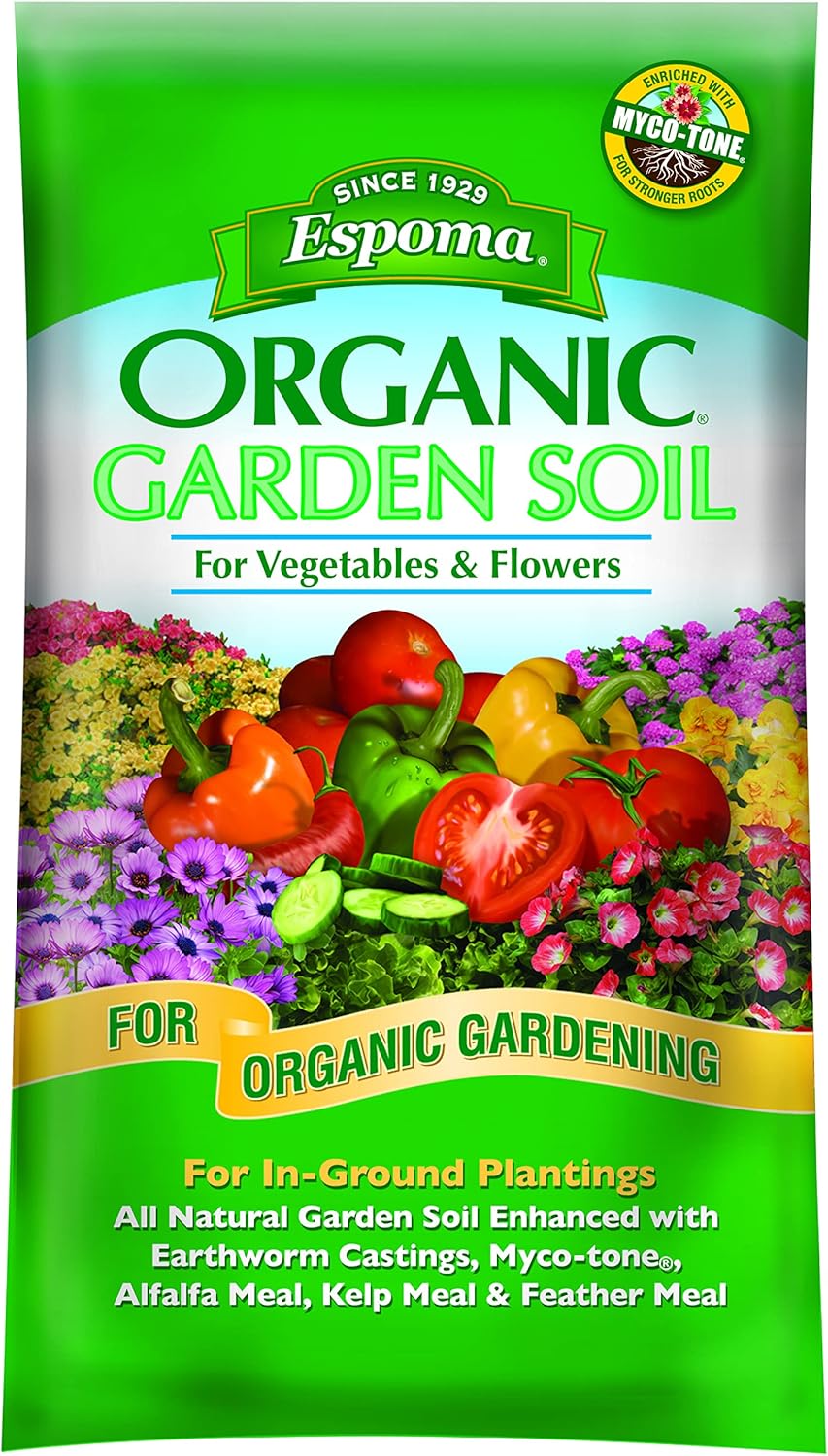
Espoma Organic Vegetable & Flower Garden Soil Mix, 1 cu ft
| Volume | 1 cubic feet |
|---|---|
| Style Name | Peat Moss |
| Unit Count | 1536 Ounce |
Espoma Organic Vegetable & Flower Garden Soil is a 1 cubic foot, peat-based planting mix designed to be blended into native garden soil at planting or transplanting. It contains Canadian sphagnum peat moss, earthworm castings, alfalfa meal, kelp meal, feather meal, limestone for pH adjustment, and a mycorrhizal blend to help root establishment. In practice you work a few inches of this mix into planting holes or rows to loosen dense soil, add organic matter, and give young squash transplants a nutrient-rich root zone. The organic amendments supply slow-release nutrients and biological activity that support early growth, while the mycorrhizae improve water and nutrient uptake. Limitations to note are the peat-heavy base, which dries faster than compost-rich mixes and may require more frequent watering, and the small 1 cu ft bag size that means multiple bags are needed for larger beds. For gardeners who prefer organic inputs and want an easy-to-use planting mix to boost transplant success, this product is straightforward and effective.
Best for: Gardeners who prioritize organic inputs and want a convenient planting mix to boost transplant success for vegetables like squash in established beds.
Less Ideal for: Large-scale landscapers or gardeners needing bulk soil amendments for entire raised beds who prefer compost-rich mixes or peat-free alternatives.
- Formulated with organic amendments like earthworm castings, alfalfa meal, kelp meal, and feather meal for slow-release nutrients
- Contains a mycorrhizal blend to support root establishment and improved nutrient uptake
- pH adjusted with limestone to better suit common garden plants
- Ready-to-use planting mix that blends easily with native soil when transplanting
- Peat-heavy base can dry out faster than compost-rich mixes, increasing watering frequency
- Small 1 cubic foot bag requires many bags for larger squash beds
Verdict: A compact, organic planting mix that makes transplanting squash easier by giving young roots nutrient-rich, biologically active soil.
Choosing the Right Soil for Ground Garden: Key Factors to Consider
Soil Texture and Porosity
Texture determines how water moves through your ground garden and how easily roots penetrate the bed. Sandy soils drain quickly but can struggle to hold nutrients and moisture, while clay-rich soils retain water and nutrients but may impede root growth if compacted. A loam-like balance of sand, silt, and clay gives the best compromise for most beds because it holds moisture without becoming waterlogged.
Porosity changes with organic matter. Adding compost or coarse organic materials increases pore space and improves aeration. For gardeners, assessing texture by feel and observing how the bed drains after a rain gives a practical sense of whether a soil will support the plants you want to grow.
Nutrient Content and Retention
Soil that arrives with usable nutrient levels reduces early feeding needs, but retention matters more over the season. Soils high in organic matter and with fine mineral fractions hold nutrients against leaching and release them slowly as microbes break down organic compounds. Conversely, sandy ground soils often require more frequent feeding because nutrients wash away with irrigation or heavy rain.
Think about the plant types you will grow. Heavy feeders demand soils with better retention and supply, while many native or drought-tolerant plants do fine in lower-fertility, well-drained ground soils. A soil test helps define baseline fertility so you can plan targeted amendments.
Organic Matter and Biological Health
Organic matter is the engine of a healthy ground garden soil. It feeds microbes that cycle nutrients, improves structure, and buffers moisture extremes. Soils with visible compost, decomposed humus, or active biological activity tend to establish plants faster and resist disease pressure because beneficial organisms occupy ecological niches.
Over time, adding compost or mulch maintains this biological health. For initial bed building, choosing a soil with a substantial organic fraction reduces the quantity of additional amendments required and accelerates the development of a biologically active planting medium.
Ease of Amendment and In-Place Workability
Most ground gardens are amended rather than replaced, so a soil that mixes well with existing topsoil saves time and effort. Workability covers how the soil tills, how well compost or sand incorporates, and whether the bed responds predictably to raking and leveling. Soils that clump severely when wet or harden into blocks when dry are more difficult to correct and slow to accept plants.
Consider your tools and access. If you will be turning beds by hand, prioritize soils that loosen with modest effort. If mechanized tilling is available, heavier clays can be managed but often still require organic inputs to improve long-term structure.
Drainage Behavior and Seasonal Wetness
How a soil handles storm events and irrigation cycles affects root health and planting windows. Excessively slow-draining soils can cause root rot and limit cropping choices, while overly fast-draining soils can stress plants between waterings. Observe your site through a rain event if possible, and choose a soil whose drainage characteristics suit your climate and irrigation plan.
For sites that stay wet in winter, favor soils with better structure and added coarse amendments to improve vertical drainage. In hot, arid climates, choose soils with higher water-holding capacity so plants endure dry spells with fewer supplemental irrigations.
Compaction Resistance and Traffic Tolerance
Ground gardens often see foot traffic during planting and maintenance, so soils that resist compaction preserve pore space for roots and oxygen. Soils with balanced texture and good organic matter are less prone to compaction, while heavy clays compress more easily under weight. Persistent compaction reduces drainage and increases disease risk.
If your bed is in a high-traffic area, plan for protective measures such as stepping stones or wider paths and select a soil that maintains structure under use. Regularly incorporating organic matter and avoiding working the soil when it is overly wet will also reduce long-term compaction issues.
Assessing Your Existing Ground Soil
Before choosing a soil product to add or mix in, evaluate what you already have. Dig a spadeful to look at color, root presence, and layering. Note whether water pools on the surface after rain or runs straight through.
A simple ribbon test helps estimate texture: moisten a pinch and press it between your fingers. A long ribbon that holds together suggests higher clay content, while a crumbly feel indicates sandier texture. Use these observations to decide how much amendment is needed and what type will best correct the site.
- Check for existing organic matter and root channels as signs of biological activity
- Observe drainage after a moderate rain to assess wetness and leaching risk
- Use the ribbon test to gauge sand, silt, and clay proportions
How to Amend Ground Garden Soil Effectively
Amend ground garden soil gradually and mix amendments thoroughly into the top 6 to 12 inches where most roots grow. Compost is the most versatile amendment, improving structure, nutrient availability, and microbial life in a single input. Coarse sand or grit can help open heavy clay but must be used carefully to avoid creating a concrete-like mixture.
Apply organic amendments in thin layers and incorporate rather than piling on. Over-amendment with uncomposted materials can create pockets that settle unevenly. For large beds, work in compost over a season, rotating areas to avoid excessive disturbance.
- Spread compost at 1 to 3 inches and blend into topsoil for most improvements
- Use coarse materials only when addressing specific drainage problems
- Avoid working very wet soil to reduce compaction risk
Managing Soil Across Different Plant Types
Vegetables, perennials, shrubs, and native plantings each prefer different soil regimes. Heavy feeders like many annual vegetables thrive in richer, higher-retention soils with steady nutrient supply. Bulbs and drought-tolerant perennials often prefer freer-draining mixes even if that means lower nutrient retention.
When designing beds for multiple plant types, create microzones or amend in planting-specific pockets. This lets you provide richer soil where needed without altering the entire bed's drainage behavior.
- Plan richer planting holes for nutrient-demanding crops
- Reserve well-draining strips for plants that dislike wet feet
- Mixing small amounts of tailored amendments at planting time is often more efficient than wholesale changes
Seasonal Care and Long-Term Soil Building
Soil is a living system that improves over time with regular organic inputs and sensible management. Top-dress beds with compost each fall and use mulch to reduce erosion and moisture loss. Over several seasons, these practices increase organic matter and stabilize structure, reducing the need for major renovations.
Rotate crops in vegetable ground gardens to manage nutrient drawdown and disease pressure. For ornamental beds, occasional deep mulching and targeted organic amendments maintain fertility and biological diversity.
- Top-dress with compost annually to build long-term fertility
- Use mulch to protect surface soil and support moisture retention
- Rotate or diversify plantings to maintain soil health
Testing and Interpreting Soil Results
A basic soil test provides pH, nutrient levels, and sometimes organic matter estimates. Use the results to correct imbalances such as low phosphorus or acidic pH that affect fertilizer efficiency. Testing also helps you avoid unnecessary amendments and target the right soil choice for your ground garden.
Combine test results with field observations. A test indicating low organic matter combined with poor structure suggests a priority of compost addition. Interpret results relative to the plants you intend to grow rather than aiming for a single universal standard.
- Test every few years or before major bed renovations
- Adjust pH and nutrients based on test recommendations and plant needs
- Use test data to plan amendment types and schedules
How We Chose the Best Soil for Ground Garden
We shortlisted soils by focusing on characteristics that directly affect plant performance in ground gardens. Primary evaluation criteria included soil texture and structure because they determine drainage and root penetration; nutrient retention and fertility delivery since that supports growth; organic matter content and biological activity for long-term soil health; and ease of in-place amendment because most ground gardens are improved rather than replaced. We also considered the soil silt and clay balance to judge compaction risk under typical garden traffic, and leaching tendency for wetter climates. Excluded items included potting mixes and lightweight container blends that are formulated for above-ground use, and specialty substrates designed solely for hydroponics or indoor planting. We favored soils intended for in-ground use or those easily mixed into existing beds. Where product labels lacked clear composition information, we deprioritized those entries. The result is a list of soils likely to perform well for gardeners preparing or repairing ground-level planting areas, with an emphasis on measurable, garden-relevant attributes aligned to the scoring criteria below.
FAQ
Can I use bagged potting soil in a ground garden?
Potting soils are formulated for containers and often contain lightweight ingredients and water-retaining additives that do not integrate well into ground beds. For ground gardens, choose soils or amendments designed for in-ground use or mix potting soil sparingly into planting pockets rather than bulk replacement.
How much compost should I add to my ground garden?
A common approach is to spread 1 to 3 inches of mature compost and incorporate it into the top 6 to 12 inches of soil. The exact amount depends on current soil quality: poorer or compacted soils benefit from more frequent additions until structure and fertility improve.
When is the best time to renovate ground garden soil?
Renovate in early fall or spring when the soil is workable and not waterlogged. Fall renovations let biological activity continue through the cooler months, while spring work gives beds time to settle before planting. Avoid heavy tilling when soils are very wet to prevent compaction.
How do I improve drainage in a soggy ground garden?
Improve drainage by adding coarse organic matter and by raising beds or installing shallow channels where appropriate. Avoid adding only fine sand to clay soils because that can create a dense mixture. Establishing deep-rooted plants and increasing organic matter over time also helps break up heavy layers.
Will adding too much organic matter cause problems?
Excess uncomposted organic material can temporarily immobilize nitrogen as microbes decompose it, which may stress young plants. Use well-rotted compost for bulk additions and avoid burying large amounts of fresh yard waste directly in planting zones.
How often should I retest my ground garden soil?
Every two to four years is adequate for most home gardens unless you notice specific nutrient deficiencies or pH issues. Retesting after major amendments or crop rotations helps measure progress and refine your amendment plan.
Final Verdict
Choosing soil for a ground garden is about balancing drainage, nutrient retention, and long-term biological health. Prioritize a loamy texture with ample organic matter if you want a broadly useful bed that supports vegetables and ornamentals. If you face specific issues such as poor drainage or very sandy ground, tailor amendments to correct those limitations rather than applying a generic fix. Focus on workable soils that mix well with existing beds and commit to seasonal organic inputs to maintain structure and fertility. With realistic expectations about tradeoffs and a plan for steady improvement, you can pick a soil that sets plants up for reliable growth in your ground garden.
