

Note: This article contains affiliate links. If you click on these links and make a purchase, I may earn a small commission at no extra cost to you. This helps support my research and content. Read my full affiliate disclosure here.
Indoor palms need a potting medium that balances quick drainage with enough moisture retention to feed shallow, fibrous roots. The wrong soil can lead to waterlogged crowns, slow growth, or nutrient deficiencies in a home environment where air and light conditions vary. This guide covers six shortlisted soils selected for indoor palm use and explains how each mix addresses texture, moisture control, and nutrient balance. We also outline the practical criteria used to evaluate mixes so you can pick the right option for your space and watering style.
Top Picks at a Glance
| Best Overall The best all-around choice for most situations | Miracle-Gro Indoor Potting Mix for All Plants, 16 qt. |  |
| Best Quality Built to a higher standard if you want something more solid | Wekiva Foliage Palm Tree Soil Mix, 10 Quarts |  |
| Best Value The sweet spot between price and what you get | Espoma Organic Cactus Potting Soil Mix, 4 qt |  |
| Best Budget The cheapest option that still gets the job done reliably | Gardenera Palm Tree Potting Mix (1 Quart) |  |
| Highest Rated A top-rated pick with lots of positive feedback | E.B. Stone Organics Citrus & Palm Mix Potting Soil, 1.5 cu ft |  |
| Most Popular A crowd favorite that many people choose with confidence | Miracle-Gro Cactus, Palm & Citrus Potting Mix, 8 qt. |  |
Miracle-Gro Indoor Potting Mix for All Plants, 16 qt.

| Unit Count | 128 Ounce |
|---|---|
| Item Type Name | Soil |
| Item Highlight | Feeds for up to 6 Months |
| Style Name | All Purpose Indoor Potting Mix |
| Volume | 16 quarts |
Miracle-Gro Indoor Potting Mix is a lightweight, ready-to-use soil designed for common houseplants, herbs, tropicals, foliage plants, and flowering indoor containers. It blends sphagnum peat moss, coconut coir, and perlite to retain moisture while allowing excess water to drain, so roots stay aerated and less prone to rot. The formula is bark- and compost-free, which helps reduce habitat for fungus gnats. Use it straight from the bag to repot plants or to fill new containers; one 16 qt. bag is sized to refill multiple 8-inch pots. The mix includes nutrients meant to feed plants for up to six months, but you will want to start a regular feeding schedule after that period for actively growing specimens. Practical gardeners will appreciate the consistent texture and the ease of use, though heavy feeders or plants with specialized needs may still require custom amendments or more frequent fertilizing.
Best for: Houseplant owners who want a low-effort, reliable potting mix for everyday repotting and container refreshes and prefer a product that minimizes common indoor pest issues.
Less Ideal for: Growers who manage high-demand vegetables, orchids, or carnivorous plants that require specialized media or precise nutrient and pH management should choose a purpose-made substrate.
- Ready-to-use balanced blend suitable for a wide variety of indoor plants
- Contains peat moss, coir, and perlite for good water retention and drainage
- Bark- and compost-free formula that helps reduce fungus gnat habitat
- Feeds plants for up to six months, reducing immediate need for fertilizer
- Nutrient boost lasts about six months so additional feeding is required afterward
- Not formulated for specialty crops that need very high nutrient levels or specific pH
Verdict: A convenient, all-purpose indoor potting mix that makes repotting and maintaining healthy houseplants quick and low effort.
Wekiva Foliage Palm Tree Soil Mix, 10 Quarts

| Brand | Wekiva Foliage |
|---|---|
| Unit Count | 10 Count |
| Volume | 1 quarts |
| Ingredients | Peat Moss, Perlite, Lime, Gypsum, Nitroform, HydraFiber |
This palm-specific potting mix is designed to give indoor palms the root environment they need to grow vigorously. You can use it straight from the bag for repotting potted Areca, Majesty, Parlor, and Kentia palms or as a top-up mix for container-grown specimens. The peat and HydraFiber hold moisture without becoming soggy while perlite and HydraFiber improve aeration and drainage to reduce the risk of root rot. Lime and gypsum help stabilize pH and supply calcium, and the included Nitroform provides an initial nutrient boost so newly potted plants establish faster. For growers focused on performance, the mix simplifies potting by combining moisture management, aeration, and starter nutrition in one product. Expect healthier root development and more consistent foliage when used correctly, but you will still need to follow a regular fertilizing schedule for long-term nutrient needs and monitor watering since indoor conditions vary.
Best for: Indoor plant owners who prioritize fast, healthy growth and want a ready-made soil that balances drainage, moisture retention, and initial nutrition for palms.
Less Ideal for: People who prefer to customize their own potting blends or who need a large-volume landscape soil for outdoor planting projects.
- Formulated specifically for common indoor palm varieties to support their root and foliage needs
- Balanced mix of peat and HydraFiber for moisture retention without waterlogging
- Perlite and HydraFiber improve aeration and drainage to reduce root rot risk
- Includes lime, gypsum, and Nitroform for initial pH balance and starter nutrients
- Unit is small (10 quarts) which may require multiple bags for larger or multiple plants
- Contains starter nutrients only so periodic fertilization is still necessary
Verdict: A ready-to-use, performance-focused potting mix that speeds establishment and improves root health in indoor palm varieties.
Espoma Organic Cactus Potting Soil Mix, 4 qt

| Brand | Espoma |
|---|---|
| Volume | 4 quarts |
| Unit Count | 128 Ounce |
| Contains | Peat moss, humus, perlite, mycorrhizae |
Espoma Organic Cactus Potting Soil Mix is a lightweight, peat-based blend designed to improve drainage and root aeration for container plants. Typical uses include repotting succulents, cacti, and smaller container palms and citrus where fast drainage is important. The mix contains sphagnum peat moss, humus and perlite, plus a mycorrhizal inoculant to support root establishment. In practice this means soil that dries out more quickly than all-purpose mixes, reducing the risk of root rot in drought-tolerant species and helping young palms settle after repotting. Because it is organic and free of synthetic fertilizers, gardeners who prefer natural inputs can use it without adding immediate chemical feeds. Limitations are its small 4 quart volume and peat-heavy base, which may require mixing with coarser materials or regular feeding for larger palms or long-term container culture.
Best for: Buyers looking for an organic, fast-draining potting mix to repot succulents or small container palms and who prefer natural ingredients over synthetic additives.
Less Ideal for: Gardeners needing large volumes for big specimen palms or long-term container culture should choose a coarser, larger-volume mix or blend this with chunky amendments.
- Formulated for drainage and aeration with peat moss and perlite
- Includes mycorrhizae to encourage root growth and establishment
- Organic blend with no synthetic fertilizers or chemicals
- Suitable for repotting succulents, cacti and smaller container palms
- Small 4 quart bag may not be cost-effective for large pots or multiple palms
- Peat-heavy mix can compress over time and may need amendment for long-term container use
Verdict: A compact, organic, fast-draining mix that helps establish roots in succulents and small container palms when you need a natural potting medium.
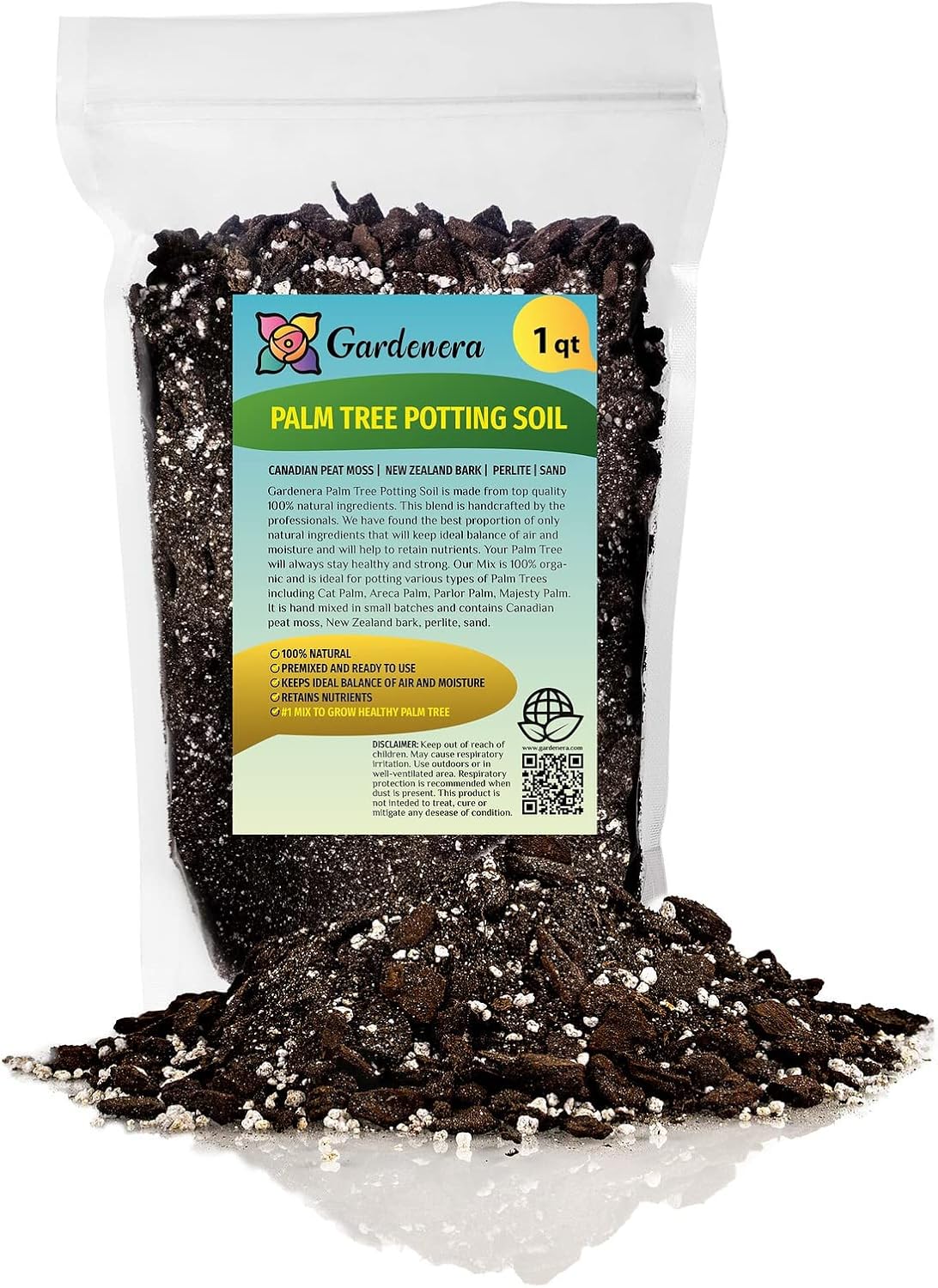
Gardenera Palm Tree Potting Mix (1 Quart)
| Unit Count | 1 Count |
|---|---|
| Item Type Name | Palm Tree Potting Mix |
| Volume | 1 quarts |
| Brand Name | Gardenera |
This Gardenera Palm Tree Potting Mix is a ready-to-use blend formulated for palm trees, combining Canadian peat moss, New Zealand bark, Ukrainian perlite, and sand to give a balance of moisture retention and drainage. It is typically used when repotting indoor or container palms or refreshing potting media for established potted specimens. The peat and bark add organic matter and structure while the perlite and sand increase aeration and reduce the risk of waterlogging. In practice this mix makes repotting straightforward: loosen roots, fill the new container, position the palm at the right height, and water to settle the soil. Because the bag is only 1 quart, it is best for single small pots, seedlings, or as a topdressing rather than filling large containers. The product notes safety precautions for handling dusty components, so wear a mask and gloves when working with it. If you want a palm-tailored, easy-to-use small bag for potting or small refreshes, this mix covers the bases; for larger jobs you will need multiple bags or a larger size option.
Best for: Buyers who need a small, palm-focused potting mix for repotting seedlings, small potted palms, or for topping up containers and who prioritize a product designed for palm root health.
Less Ideal for: Gardeners needing to fill large containers, multiple palm pots, or outdoor planting holes should avoid this size and choose bulk or larger-volume mixes instead.
- Formulated specifically for palms with peat, bark, perlite, and sand for balanced moisture and drainage
- Good aeration that helps prevent root rot in container palms
- Ready-to-use mix simplifies repotting and small pot top-ups
- Very small 1 quart volume limits use to seedlings or small pots
- Contains dusty components requiring gloves and a mask during handling
Verdict: A compact, palm-tailored potting mix that makes small repots and top-ups simple and effective.
E.B. Stone Organics Citrus & Palm Mix Potting Soil, 1.5 cu ft

| Brand Name | E.B. Stone Organics |
|---|---|
| Unit Count | 1536 Ounce |
| Volume | 1.5 cubic feet |
| Style Name | Potting Soil |
E.B. Stone Organics Citrus & Palm Mix is a ready-to-use organic soil blend designed for container and in-ground planting of citrus, palms, avocados and tropical foliage. The mix pairs aged fir bark and pumice to keep the root zone well aerated and fast-draining so plants that dislike soggy feet avoid root rot, while added mycorrhizae improve nutrient and water uptake. It is intended to be used straight from the bag for potting or worked into beds when planting, which simplifies planting and repotting tasks. For gardeners seeking reliability, this blend delivers consistent structure and moisture retention without heavy amendments, and the organic base supports longer-term soil biology. Limitations are the single bag volume of 1.5 cubic feet, which means larger projects will require multiple bags and mixing on site, and it does not list N-P-K numbers or slow-release fertilizer content so supplemental feeding may be needed for heavy-feeding specimens.
Best for: Gardeners who prioritize reliable, low-maintenance potting media for citrus and tropical plants and want a ready-made organic blend that supports healthy roots.
Less Ideal for: People who need large volumes for landscaping projects or who prefer a potting mix with specified fertilizer content and tailored nutrient ratios.
- Formulated specifically for citrus, palms and tropicals to match their root needs.
- Aged fir bark and pumice provide good drainage and aeration to reduce risk of root rot.
- Contains beneficial mycorrhizae to enhance root nutrient and water uptake.
- Ready-to-use bag simplifies repotting or planting without on-site blending.
- Single bag is only 1.5 cubic feet so multiple bags are required for larger trees or beds.
- No detailed fertilizer analysis provided so additional feeding may be necessary for heavy feeders.
Verdict: Choose this mix when you want a consistent, ready-to-use organic soil that promotes healthy, well-aerated roots for citrus and tropical plants.
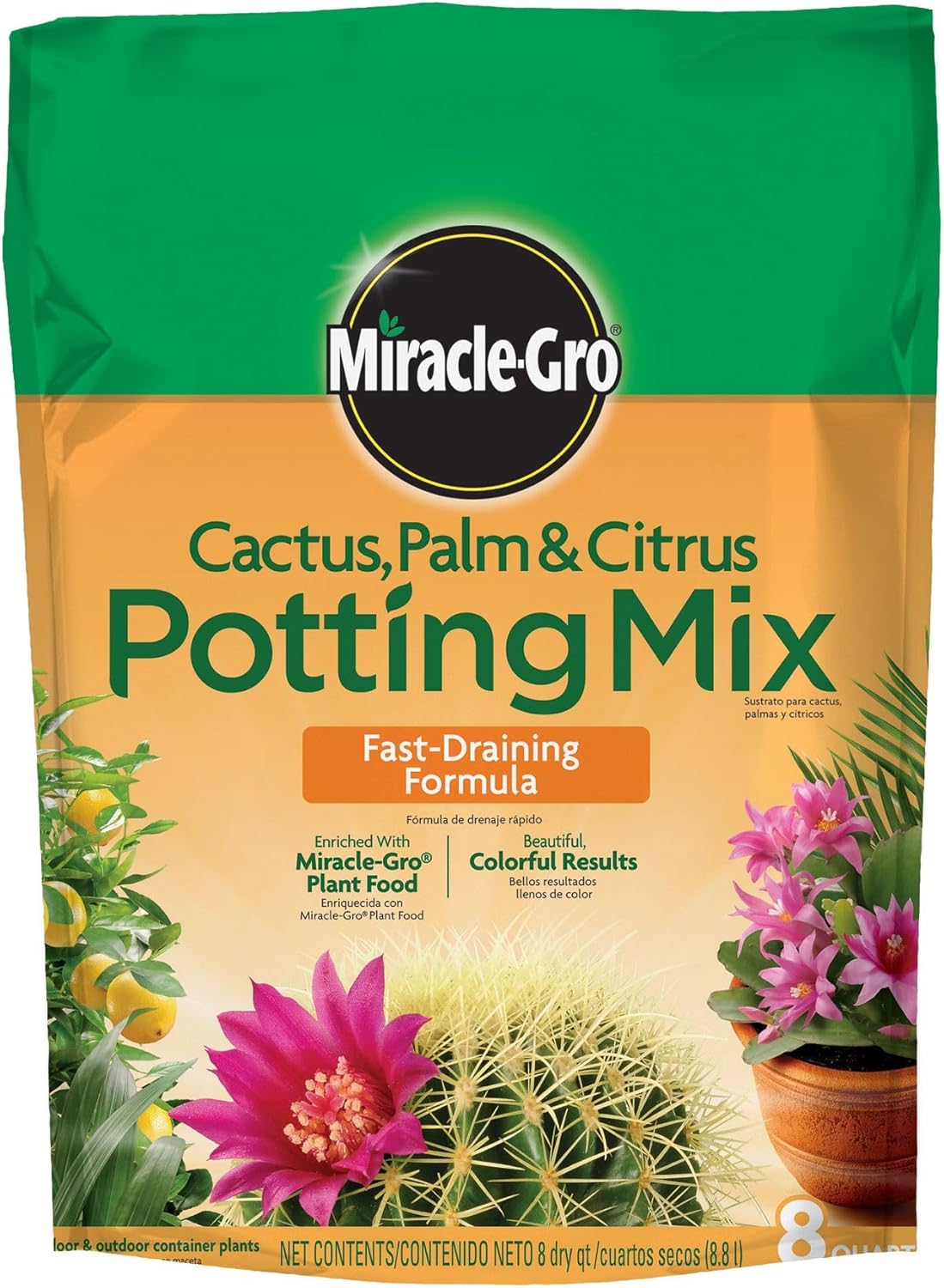
Miracle-Gro Cactus, Palm & Citrus Potting Mix, 8 qt.
| Brand Name | Miracle-Gro |
|---|---|
| Volume | 8 quarts |
| Unit Count | 1 Count |
This 8-quart Miracle-Gro potting mix is designed for container-grown cacti, palms, and citrus and combines peat moss, sand, perlite, and forest products for faster drainage and reduced compaction. It arrives ready to use and is enriched with Miracle-Gro plant food so newly potted citrus get an initial nutrient boost without immediate fertilizing. Typical use is straightforward: choose a pot with drainage, fill about one third, set the root ball and top up, then water and allow to drain. The formula helps soil dry between waterings, which is important for citrus root health in containers, and one bag is enough for two 8-inch pots. Limitations are the small volume for larger trees and the presence of peat moss if you prefer peat-free mixes; heavier or older citrus will need larger volumes and eventual repotting. For growers wanting a quick, reliable container medium that balances moisture retention with drainage, this mix performs as expected.
Best for: Growers who repot or maintain container citrus and want a ready-to-use mix that balances drainage and initial feeding for healthier root development.
Less Ideal for: Gardeners potting mature or large citrus specimens that need large volumes of soil or those seeking a peat-free or custom mineral-heavy citrus bonsai substrate.
- Fast-draining blend reduces risk of waterlogged roots for container citrus
- Pre-enriched with plant food to give newly potted plants an initial nutrient boost
- Contains perlite and sand to resist compaction and maintain aeration
- Formulated for indoor or outdoor containers so it works across sites
- 8-quart bag is small for larger or multiple citrus containers
- Contains peat moss which some buyers avoid for sustainability reasons
Verdict: A convenient, fast-draining, plant-food–enriched container mix that makes repotting small to medium citrus trees quick and reliable.
Choosing the Right Soil for Indoor Palm: Key Factors to Consider
Particle Size and Texture
Particle size affects how quickly water moves through the potting mix and how much air remains around roots. Coarse components such as pine bark fines, perlite, or coarse sand create macropores that help drainage and prevent the dense layering that causes root suffocation. Finer particles like peat or coconut coir retain moisture but can compact over time if they dominate the mix.
For indoor palms, aim for a mix where coarse and fine particles are balanced so water moves freely but the root zone stays evenly moist. Very fine, dusty mixes often lead to slow drainage and should be avoided unless amended with aerating components.
Drainage Versus Water Holding
Indoor palms need soil that dries slightly between waterings but does not become bone dry. A mix that drains too quickly forces more frequent watering and stresses the plant, while a mix that holds too much water invites root rot. The ideal soil has both macropores to shed excess water and mesopores that retain available moisture for roots.
Consider how often you water indoors and the pot size when evaluating mixes. Larger pots with more soil volume will stay moist longer, so a slightly more free-draining mix suits them. Small pots benefit from materials that keep some moisture available without staying waterlogged.
pH and Nutrient Availability
pH influences how palms access essential nutrients. Most indoor palms do best in near-neutral to mildly acidic soil. If a mix is very alkaline or overly acidic, micronutrients like iron and manganese may become unavailable or excessive, causing yellowing or leaf issues.
Choose mixes with a stated pH range near neutral and a balanced starter nutrient charge that is gentle, not excessive. Avoid mixes that rely on high salt fertilizers in the bag, since they can build up in closed indoor environments and harm sensitive roots.
Organic Content and Long-Term Structure
Organic components such as composted bark, coconut coir, or peat provide nutrients and help retain moisture, but some break down faster than others. Fast-decomposing organics can cause the soil to compact, reducing aeration over time and necessitating repotting or mixing in fresh material.
Look for mixes that combine stable organics with inert aeration materials. Longevity of structure matters because indoor palms are often grown in the same pot for months or years.
Sterility and Pest/Disease Risk
Soils that are not clean or that contain untreated manures and fresh compost can introduce pests, fungal spores, or weed seeds into the home. A sterile, well-processed potting mix reduces the chance of soil-borne problems and helps maintain a healthy root environment.
Select mixes labeled as processed for container use or intended for houseplants, and be cautious with homemade blends unless you can pasteurize components. Good hygiene reduces the need for reactive treatments later.
How Indoor Conditions Change Soil Behavior
Indoor air humidity, stable temperatures, and lower light levels alter evaporation and nutrient uptake compared with outdoor gardens. Because evapotranspiration is often lower indoors, soil tends to stay wetter for longer after watering. That makes drainage and aeration even more important than in outdoor potting situations.
Pots with poor airflow around drainage holes or those sitting on saucers without occasional drainage will hold extra moisture. When choosing a soil for indoor palms, consider how the pot, drainage setup, and your apartment or home humidity interact with the mix.
- Lower indoor light reduces water use, so soils that dry slowly can lead to overwatering issues.
- Warm indoor temperatures speed organic breakdown and can compact some mixes faster.
- Use a tray or riser to prevent pots from sitting in standing water.
Amending Store Mixes for Palms
Many commercial potting soils are made for general houseplants and benefit from simple amendments to suit palms. Adding coarse perlite, pumice, or small bark chips increases aeration and reduces compaction. A handful of horticultural charcoal can improve drainage and reduce odors in older mixes.
If a mix seems too light and dries fast, incorporate more fine organic material like coconut coir to hold moisture. Make adjustments based on your pot size, watering frequency, and the palm species you grow.
- Add perlite or pumice for better oxygen around roots.
- Mix in coir or a little peat for increased moisture retention.
- Stabilize structure with coarse bark to prevent the surface from sinking over time.
Repotting and Refreshing Soil
Repotting frequency affects soil choice. If you prefer to repot infrequently, pick a mix with stable organics and inert aeration that resists compaction. For gardeners who repot annually, a lighter, faster-draining mix that refreshes regularly can work well.
When refreshing soil, remove the outer layer of spent mix and replace it with a fresh top dressing or partially repot to avoid disturbing roots unnecessarily. Always water thoroughly after repotting to settle the new mix around roots.
- Check root condition at repotting to decide how much soil to replace.
- Topdress with fresh mix rather than fully repotting if roots are healthy and space is limited.
Watering Practices to Match Your Mix
Adjust watering technique to the soil chosen. For fast-draining mixes, water thoroughly until runoff and let the top inch or two dry before the next watering. For mixes with more water-holding content, allow a longer drying interval and check moisture with a finger test or moisture meter.
Consistent but moderate watering beats erratic soaking. Overhead misting can raise foliage humidity but does not replace deep pot watering to encourage healthy root systems.
- Use the finger test to gauge moisture in the root zone rather than relying on surface dryness.
- Water slowly to allow even wetting in denser mixes.
Fertilizing When Using Potting Mixes
Many potting mixes include a starter nutrient charge that lasts a few weeks to months. After that, indoor palms benefit from regular, low-strength feedings during the active growing season. Match fertilizer frequency to the soil's nutrient retention: fast-leaching mixes need more frequent, light feedings.
Avoid heavy-feeding regimens that overload a contained pot. Slow-release formulations or diluted liquid fertilizers provide steady nutrition without the spikes that can stress palms indoors.
- Flush containers occasionally to prevent salt buildup if using regular fertilizers.
- Reduce feeding in winter when growth slows.
How We Chose the Best Soil for Indoor Palm
We focused on characteristics that influence palm health in indoor settings and excluded mixes intended only for outdoor beds or acid-loving plants. Primary evaluation criteria included drainage and aeration because palms are highly susceptible to crown rot when soil stays soggy. Water retention balance was considered to ensure mixes hold enough moisture between infrequent indoor waterings yet release excess quickly. Nutrient profile and feeding compatibility mattered because many palms prefer steady, moderate feeding rather than heavy, short-lived bursts. pH stability was checked since indoor palms favor near-neutral to slightly acidic conditions. Physical stability and resistance to compaction were assessed so the soil maintains structure over months in a pot. We also screened out mixes with obvious high salt residues or packaging that lacked clear ingredient lists. The result is a set of soils that perform well for indoor palms across moisture management, root oxygenation, nutrition, pH, and long-term structure.
FAQ
Can I use regular potting soil for indoor palms?
Often regular potting soil can work if amended for drainage. Many general mixes retain too much moisture on their own, so adding perlite, pumice, or coarse bark helps create the aeration indoor palms need.
How often should I water palms in indoor potting mixes?
It depends on the mix and pot size, but a good rule is to water when the top one to two inches of soil feel dry. Fast-draining mixes may need more frequent watering, while moisture-retentive mixes will allow longer intervals.
Is coconut coir a good base for indoor palm soil?
Coconut coir is a good moisture-holding but airy organic that can form an excellent base when balanced with coarse materials. It holds water without the acidity of peat and resists compaction better when mixed with perlite or bark.
What pH should indoor palm soil be?
Most indoor palms prefer a near-neutral to slightly acidic pH. Choose mixes that state a pH close to neutral, as extremes make some micronutrients less available and can lead to leaf discoloration.
How do I reduce the chance of root rot with indoor palms?
Use a fast-draining, well-aerated mix and ensure pots have clear drainage. Allow the top portion of the soil to dry between waterings and avoid letting pots sit in standing water on saucers.
Should I sterilize homemade soil mixes?
Often yes. Sterilizing components reduces the risk of introducing pests, fungal spores, or weed seeds. Pasteurizing or using commercially processed container mixes minimizes those risks in indoor environments.
Final Verdict
Choose a potting mix that balances fast drainage with enough moisture retention to support steady root function in an indoor environment. Prioritize particle size, aeration, and stable organic content so the soil resists compaction and gives roots oxygen even between waterings. Match the mix to your pot size and watering rhythm, and be prepared to amend or refresh soil over time. With attention to these tradeoffs, you can select a soil for indoor palm that reduces rot risk and supports steady, healthy growth.
