

Note: This article contains affiliate links. If you click on these links and make a purchase, I may earn a small commission at no extra cost to you. This helps support my research and content. Read my full affiliate disclosure here.
Choosing the right soil for a lemon tree grown in a pot changes how the tree drinks, breathes, and produces fruit. In containers, roots have limited space and soil must balance quick drainage with enough water and nutrients between feedings. The wrong mix can stay waterlogged, stress roots, or fail to supply magnesium and other micronutrients lemon trees often need. This guide covers seven shortlisted soils suited to lemon trees in pots. We evaluate mixes based on drainage, nutrient retention, texture for root growth, and ease of feeding so you can pick a container soil that supports steady growth and consistent fruiting. Read on for practical guidance before you repot or topdress your citrus.
Top Picks at a Glance
| Best Overall The best all-around choice for most situations | Soil Sunrise Citrus Tree Potting Soil Mix (12 Quarts) |  |
| Best Quality Built to a higher standard if you want something more solid | GARDENWISE Organic Lemon Tree Soil (3 quarts) |  |
| Best Value The sweet spot between price and what you get | Duspro Pre-Mixed 4‑in‑1 Citrus Tree Potting Soil Mix, 6 Quarts |  |
| Best Budget The cheapest option that still gets the job done reliably | Doter Citrus Tree Potting Soil Mix (1 qt) |  |
| Highest Rated A top-rated pick with lots of positive feedback | Wekiva Foliage Meyer Lemon Tree Soil Mix (4 Quarts) |  |
| Most Popular A crowd favorite that many people choose with confidence | Miracle-Gro Cactus, Palm & Citrus Potting Mix, 8 qt. |  |
| Best Seller A high-volume bestseller chosen again and again | Back to the Roots Organic Indoor Potting Mix, 6 Quart |  |
Soil Sunrise Citrus Tree Potting Soil Mix (12 Quarts)

| Volume | 12 quarts |
|---|---|
| Ingredients | Peat moss, perlite, sand, worm castings, lime |
| Unit Count | 1 Count |
| Style Name | Peat Moss,Potting Soil Mix |
Soil Sunrise Citrus Tree Potting Soil is a 100% natural, hand-blended mix intended for growing potted citrus like Meyer lemons, key limes, and dwarf mandarins. The formula combines peat moss for moisture retention, perlite and sand for improved drainage and aeration, worm castings for gentle nutrients, and lime to stabilize pH—ingredients gardeners typically mix themselves but pre-blended here. In practice this makes repotting or starting citrus in containers simpler and reduces the risk of soggy roots that cause rot. The resealable 12-quart bag is sized for several small repots or one larger container, and the absence of fillers means you get a predictable texture. Limitations are that peat-based mixes compress over time and will need occasional refreshing or adding organic amendments, and it does not include slow-release fertilizer so planned feeding is still required for fruit production. For buyers who prefer a ready-to-use citrus blend, this delivers appropriate drainage and pH control but expect to supplement nutrients seasonally for best yields.
Best for: Home growers who want a ready-made, citrus-focused potting mix to simplify repotting and container growing of lemon and lime trees and who value proven ingredient combinations backed by other buyers.
Less Ideal for: Growers seeking an all-in-one fertilized potting media or those who avoid peat for environmental reasons should look at alternatives.
- Custom blend targeted to citrus with peat, perlite, sand and lime for balanced drainage and pH.
- Includes worm castings to provide natural, mild nutrient support.
- Hand-blended, all-natural formula without fillers or synthetic additives.
- Resealable 12-quart bag suitable for multiple small repots or one larger container.
- Peat-based mix can compact or settle over time and may require refreshing.
- Does not contain built-in slow-release fertilizer so regular feeding is still necessary.
Verdict: Choose this mix if you want a ready-to-use, citrus-specific potting soil that improves drainage and pH control for healthier potted lemon trees.
GARDENWISE Organic Lemon Tree Soil (3 quarts)

| Unit Count | 96 Fluid Ounces |
|---|---|
| Included Components | Perlite, coarse sand, coconut coir, vermiculite, garden compost, peat moss, dolomite, organic fertilizer |
| Item Type Name | Lemon Tree Soil |
| Volume | 3 quarts |
This citrus-specific potting mix is designed to give potted lemon trees the acidic, well-draining root zone they prefer. The blend combines perlite, coarse sand, coconut coir, vermiculite, compost, peat moss and dolomite with organic fertilizer and mycorrhizal fungi to improve aeration, moisture retention and nutrient uptake. It is typically used for repotting or topping up containers for Meyer lemons and other citrus where good drainage and slightly acidic pH matter. The included organic fertilizer claims up to six months of feeding, which reduces the need for frequent fertilizing early on. Notable features are the optimized pH range of 5.5 to 6.5 and the extra coarse particles that help prevent waterlogging and root rot. Because the product comes in a small 3 quart volume, it suits small potted trees, starter plants, or targeted soil amendments rather than full repots of large containers. Expect to supplement with additional soil if you are filling larger pots or planning long-term container culture.
Best for: Buyers who want a ready-made, citrus-focused potting mix that simplifies feeding and improves drainage for potted lemon or Meyer lemon trees.
Less Ideal for: Gardeners needing large volumes for in-ground planting or repotting very large containers should look for bulk mixes or larger bags.
- Formulated pH of 5.5–6.5 ideal for citrus health
- Contains a mix of drainage materials (perlite and coarse sand) to reduce overwatering issues
- Includes organic fertilizer that supplies nutrients for up to six months
- Lightweight, breathable texture that promotes strong root development
- Small 3 quart volume means multiple bags are required for repotting larger containers
Verdict: A ready-to-use, citrus-tuned potting mix that gives potted lemon trees the acidic pH and drainage they need with built-in organic feeding.
Duspro Pre-Mixed 4‑in‑1 Citrus Tree Potting Soil Mix, 6 Quarts

| Style Name | 6 Quarts |
|---|---|
| Brand Name | Duspro |
| Item Highlight | Indoor Fruit Tree Mix for Potted Lemon Tree, Oranges & Other Citrus Trees |
This Duspro 4-in-1 citrus potting mix is built for repotting potted lemon, lime and other citrus trees without the need to measure or blend ingredients yourself. The pre-mixed formula pairs coco coir and coco fiber with vermiculite to help retain balanced moisture while perlite increases drainage and root aeration, which reduces the risk of waterlogged roots in containers. It is easy to use: pour into a pot with drainage, center the tree, fill around roots and water. The product is double-screened for a consistent texture that pours cleanly and is available in sizes suitable for one to several 8-inch pots. Practical benefits include saving time, avoiding mixing errors, and a formulation tailored to the moisture and airflow needs of container citrus. Limitations to note are that the bag can be dusty when opened so some caution is needed during handling and the smallest 6-quart size only covers a limited number of repots for larger trees.
Best for: Buyers who want a reliable, no-mix potting medium for indoor or patio citrus trees and prefer a ready-made blend that reduces repotting guesswork and effort.
Less Ideal for: Growers who need very large volumes for multiple mature trees or who prefer to custom-blend their own media with specific amendments.
- Pre-mixed 4-in-1 formula (coco coir, coco fiber, perlite, vermiculite) tailored for container citrus
- Double-screened texture for cleaner pouring and more consistent repotting
- Promotes balanced moisture retention while improving drainage and root aeration
- Available in multiple sizes to match small to medium container needs
- Dusty when opened, requiring a mask or careful handling to avoid inhaling particles
- 6-quart size covers only a small number of repots for larger citrus trees
Verdict: A convenient, professionally blended potting mix that takes the guesswork out of repotting potted citrus trees.
Doter Citrus Tree Potting Soil Mix (1 qt)
| Brand Name | Doter |
|---|---|
| Item Type Name | Garden soil |
| Volume | 1 quarts |
| Item Weight | 224 g |
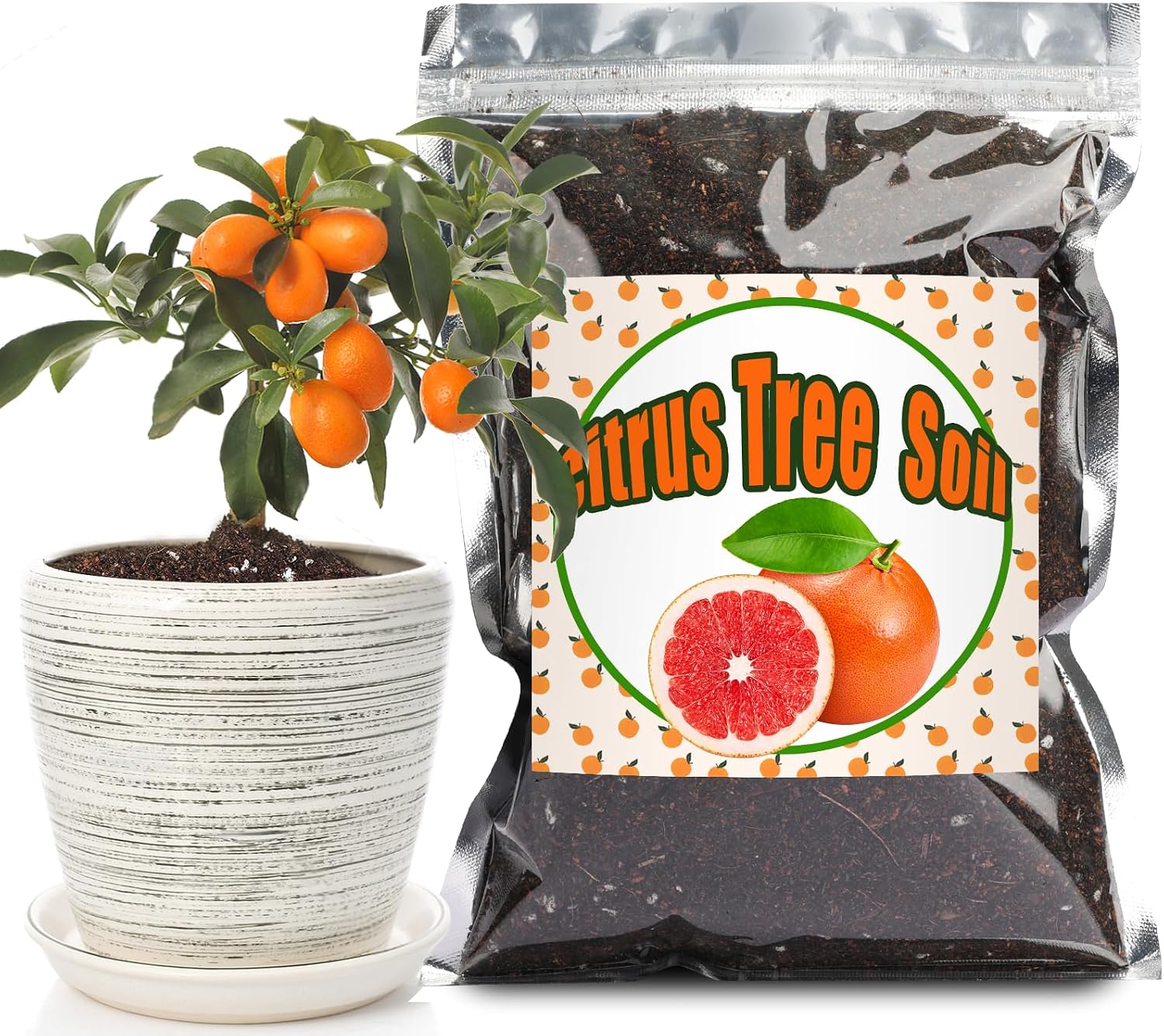
This Doter citrus potting mix is a small, 1-quart, ready-to-use soil blend designed for container-grown lemon, lime, orange and other citrus trees. It mixes organic and mineral components to deliver a balanced nutrient profile and claims an ideal pH between 6.0 and 7.1, which helps citrus roots access nutrients. The formulation emphasizes drainage and aeration so pots do not stay waterlogged, and the bagged format makes it convenient for repotting seedlings or refreshing the top layer in containers. For budget-conscious gardeners the single-quart size is useful for small projects, trial runs, or blending into larger mixes, but you will likely need multiple bags for a single mature container tree. The product works best as a component or short-term potting medium rather than a sole long-term planting substrate for large trees. Expect good seedling establishment and faster drainage compared with generic garden soil, but plan to supplement with larger volumes or slow-release fertilizer for sustained feeding on mature citrus.
Best for: Gardeners looking for an inexpensive, small-batch citrus-specific soil to repot seedlings, top-dress containers, or trial a citrus blend before committing to larger quantities.
Less Ideal for: Growers with mature potted citrus or those who need large volumes for in-ground planting should choose bulk soils or custom mixes instead.
- Formulated pH between 6.0 and 7.1, suitable for citrus nutrient uptake
- Designed for improved drainage and aeration to reduce root rot risk
- Nutrient-rich blend of organic and mineral components to support growth
- Ready-to-use bag convenient for repotting seedlings and small containers
- Small 1-quart volume means multiple bags are required for larger pots or trees
- Not marketed as a long-term complete potting substrate for mature trees
Verdict: A convenient, budget-friendly small bag of citrus-specific potting mix ideal for repotting seedlings and topping up container citrus plants.
Wekiva Foliage Meyer Lemon Tree Soil Mix (4 Quarts)

| Brand Name | Wekiva Foliage |
|---|---|
| Unit Count | 4 Count |
| Volume | 1 quarts |
This Meyer Lemon Tree Soil Mix is a ready-to-use potting medium tailored to potted Meyer lemons and other container citrus. It combines coarse perlite for open drainage with coarse peat and hydra fiber to hold moisture without waterlogging, and lime to help stabilize pH for citrus uptake. In practice it makes repotting and top-dressing simpler: the blend encourages quick root establishment, reduces the risk of root rot in containers, and supplies an immediately hospitable environment for flowering and fruit set. The mix is lightweight and easy to work with, so it is convenient for indoor and patio use and for growers who repot annually. Limitations are its small 4 quart size, which means multiple bags are needed for larger containers or for multiple trees, and it does not list specific fertilizer analysis or long-term nutrient release, so growers who want multi-season fertility may need to supplement with slow-release fertilizer or regular feedings.
Best for: Serious home growers or performance-oriented gardeners repotting or top-dressing potted Meyer lemon trees who prioritize fast root establishment and reliable drainage.
Less Ideal for: Casual gardeners with many large containers or those who want an all-in-one fertilized soil for multiple seasons without additional feeding.
- Formulated specifically for Meyer lemons with lime for pH balance
- Coarse perlite improves drainage and reduces risk of root rot in pots
- Hydra fiber and peat components retain moisture while maintaining aeration
- Ready-to-use mix suitable for indoor and patio container use
- Sold in a small 4 quart bag that is insufficient for large pots or multiple trees
- No listed N-P-K or fertilizer longevity information for multi-season feeding
Verdict: Choose this mix if you want a citrus-focused potting medium that promotes strong roots and dependable drainage for potted Meyer lemon trees.
Miracle-Gro Cactus, Palm & Citrus Potting Mix, 8 qt.
| Brand Name | Miracle-Gro |
|---|---|
| Volume | 8 quarts |
| Unit Count | 1 Count |
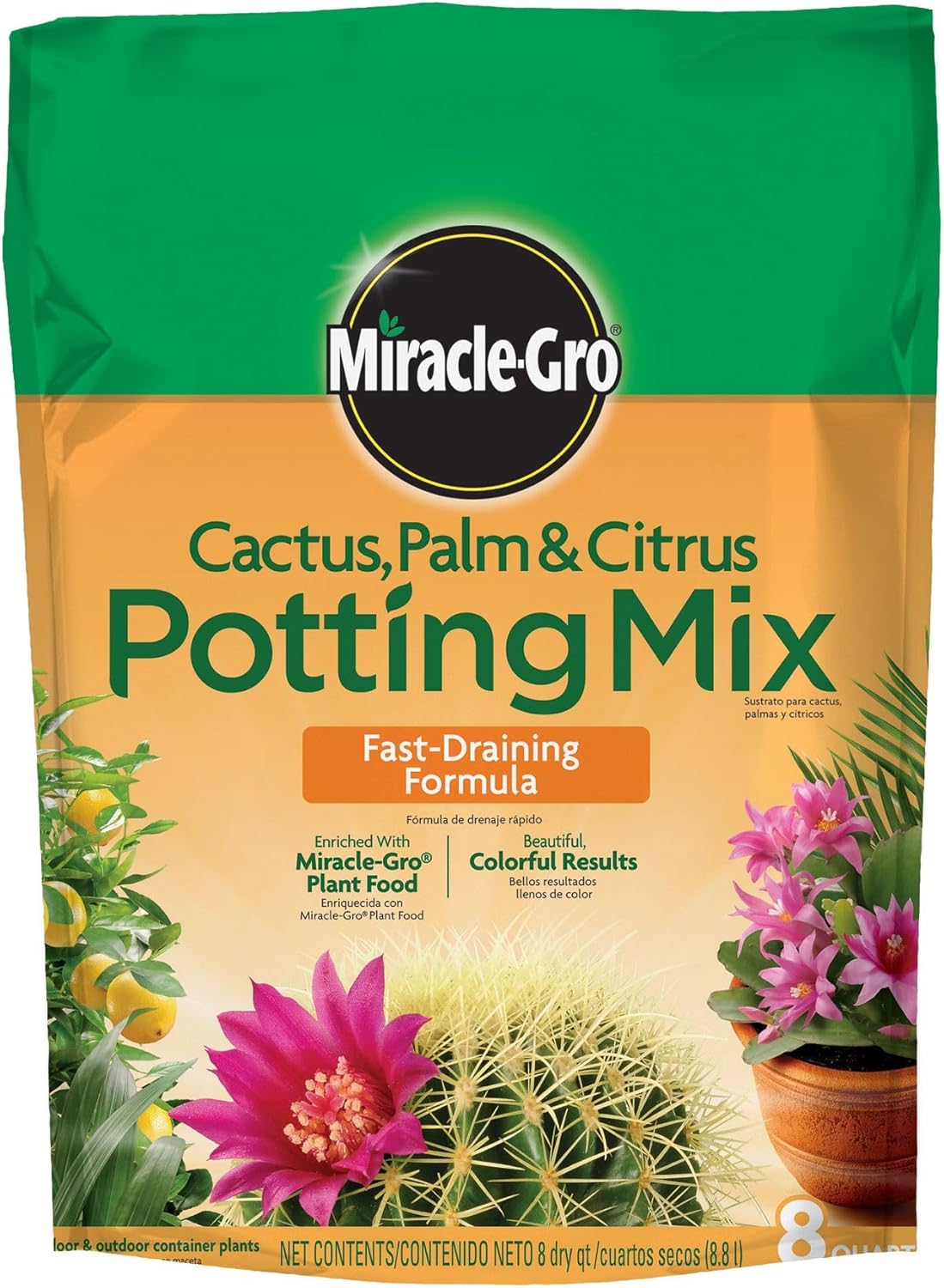
This 8-quart Miracle-Gro potting mix is designed for container-grown cacti, palms, and citrus and combines peat moss, sand, perlite, and forest products for faster drainage and reduced compaction. It arrives ready to use and is enriched with Miracle-Gro plant food so newly potted citrus get an initial nutrient boost without immediate fertilizing. Typical use is straightforward: choose a pot with drainage, fill about one third, set the root ball and top up, then water and allow to drain. The formula helps soil dry between waterings, which is important for citrus root health in containers, and one bag is enough for two 8-inch pots. Limitations are the small volume for larger trees and the presence of peat moss if you prefer peat-free mixes; heavier or older citrus will need larger volumes and eventual repotting. For growers wanting a quick, reliable container medium that balances moisture retention with drainage, this mix performs as expected.
Best for: Growers who repot or maintain container citrus and want a ready-to-use mix that balances drainage and initial feeding for healthier root development.
Less Ideal for: Gardeners potting mature or large citrus specimens that need large volumes of soil or those seeking a peat-free or custom mineral-heavy citrus bonsai substrate.
- Fast-draining blend reduces risk of waterlogged roots for container citrus
- Pre-enriched with plant food to give newly potted plants an initial nutrient boost
- Contains perlite and sand to resist compaction and maintain aeration
- Formulated for indoor or outdoor containers so it works across sites
- 8-quart bag is small for larger or multiple citrus containers
- Contains peat moss which some buyers avoid for sustainability reasons
Verdict: A convenient, fast-draining, plant-food–enriched container mix that makes repotting small to medium citrus trees quick and reliable.
Back to the Roots Organic Indoor Potting Mix, 6 Quart

| Unit Count | 192 Fluid Ounces |
|---|---|
| Item Type Name | Indoor Potting Mix 6qt |
| Item Highlight | Peat-free, 100% organic, made in the USA |
| Ingredients | Coconut Coir, Yucca, Mycorrhizae, Perlite, Horticultural Sand |
This Back to the Roots indoor potting mix is a ready-to-use, 6-quart blend designed for common houseplants such as pothos, monstera and ferns. It combines coconut coir, yucca extract, mycorrhizae, perlite and horticultural sand to improve moisture retention, drainage and root development without peat. In practice it feels light and friable, so it is easy to pot seedlings or repot mature plants and it reduces compaction that can suffocate roots. The added mycorrhizae helps young roots establish and take up nutrients more efficiently while yucca extract helps the mix hold water between waterings, which is convenient for forgetful or busy plant owners. Because it is peat-free and made in the USA, it is a more sustainable choice versus traditional peat-based mixes. Limitations are the small 6-quart size, which means frequent repurchasing for larger collections, and the bag does not include fertilizer so you will need to feed plants separately as they grow.
Best for: Buyers who prioritize low-risk, easy-care houseplant solutions and want an organic, ready-to-use potting mix that reduces watering hassles and supports healthy root growth.
Less Ideal for: Not ideal for gardeners who need large-volume soil for many pots or for those expecting a mix that includes built-in fertilizer for long-term feeding.
- Peat-free organic formula that reduces environmental impact
- Yucca extract improves moisture retention between waterings
- Contains mycorrhizae to support root development and nutrient uptake
- Light, well-draining texture suitable for repotting seedlings and houseplants
- Small 6-quart volume may require frequent repurchasing for larger plant collections
- Does not include fertilizer so additional feeding is necessary
Verdict: A compact, peat-free potting mix that simplifies indoor plant care by holding moisture and boosting root establishment.
Choosing the Right Soil for Lemon Tree in a Pot: Key Factors to Consider
Drainage Versus Water Holding
Potted lemon trees need soil that drains excess water quickly to prevent root rot while still holding enough moisture between waterings. In a container, water cannot disperse sideways into surrounding soil, so the mix must let gravity and air pores remove surplus moisture. Materials like perlite, pumice, or coarse sand increase pore space and prevent soggy conditions.
At the same time, a total lack of water-holding particles means you will need to water more frequently and risk nutrient fluctuations. Components such as coconut coir or aged compost provide a buffer that releases moisture slowly. The ideal balance reduces the risk of overwatering but keeps small root hairs supplied during hot weather.
Nutrient Retention and Feeding Frequency
Container soils with higher organic content retain and slowly release nutrients, reducing the need for constant fertilizing. However, organic-rich mixes can also break down faster and alter drainage over time. For lemon trees, look for mixes that combine stable inorganic components with measured organic matter so nutrients are available without rapidly compacting the soil.
How long a mix holds nutrients determines your feeding schedule. A very inert mix will require more frequent fertilization, while a richer mix can support a steadier supply. Consider how often you are willing to fertilize and choose a soil that complements that routine.
Soil pH and Citrus Preferences
Lemon trees prefer slightly acidic conditions, typically in the range that allows good micronutrient uptake such as iron and magnesium. The base pH of the potting mix affects how easily those nutrients are absorbed. Many ready-to-use container mixes are formulated near neutral, so check if a mix is labeled as acid-balanced for acid-loving plants when possible.
If the soil trends too alkaline, you may see yellowing between leaf veins and reduced vigor. Some mixes include sulfur or acidic organic matter to help maintain an appropriate pH for citrus grown in pots.
Physical Texture and Root Development
Root architecture in a pot depends on how easily fine roots can grow through the medium. A soil that is too dense or clay-like inhibits new root formation and reduces oxygen exchange. Conversely, a very chunky medium can leave roots searching for moisture.
Aim for a crumbly, open texture that allows young feeder roots to expand while providing enough contact with moisture-retaining particles. This supports steady uptake of water and nutrients and reduces stress during hot or windy periods when potted roots are more exposed.
Longevity and Resistance to Compaction
Over successive wetting and drying cycles, many organic components compress and lose pore space, reducing drainage. For a potted lemon tree you want a mix that keeps its structure for at least a couple of growing seasons to avoid frequent repotting.
Look for mixes that include stable aeration components such as pumice, perlite, or expanded clay. These materials help the soil retain macropores as organic matter decomposes. Longevity also influences nutrient dynamics and how often you must refresh or amend the potting mix.
Salt Buildup and Leaching
Fertilizers and tap water can gradually raise soluble salt levels in a container, which can harm citrus roots. A soil that lets you flush salts with occasional deep watering without losing all its nutrients is valuable. Free-draining mixes make leaching easier, but excessively leaky soils may also wash away fertilizer too quickly.
Practices such as periodic leaching and using slow-release fertilizers interact with the soil choice. Consider how the mix balances retention with the ability to be flushed to prevent buildup.
Repotting Tips for Potted Lemon Trees
When you move a lemon tree into fresh soil, inspect and prune circling roots and remove any compacted old mix clinging to the root ball. Use a pot only slightly larger than the previous one to discourage excessive vegetative growth at the expense of fruiting.
Position the tree so the graft union sits above the soil level if grafted. Fill with the chosen soil and water thoroughly to settle the mix, checking drain holes to ensure water runs freely. Wait a few weeks before heavy fertilization to allow roots to reestablish.
- Avoid burying the trunk deeply; keep the original soil line visible
- Use a container with adequate drainage holes and a saucer to catch excess
- Water deeply after repotting, then allow the top inch to dry before the next irrigation
Adjusting Watering Schedule by Season
Potted lemons typically need more water in warm months and less during cooler, slower growth periods. Soil choice affects how quickly the pot dries, so adjust irrigation based on moisture depth rather than a fixed schedule.
Check the soil with a finger probe or moisture meter down a few inches. If the chosen mix dries quickly, expect to water more often during heat spells; if it retains moisture longer, lengthen intervals to avoid root saturation.
- Summer: monitor moisture twice weekly in fast-draining mixes
- Winter: water sparingly, allowing the top 2 inches to dry for slower mixes
Topdressing and Midseason Amendments
As organic components break down, topdressing with compost or a small amount of fresh potting mix restores nutrients and improves surface structure. Lightly scratch the top inch before adding new material to integrate it with the old soil.
If a mix shows signs of compaction, consider removing the top 2 to 3 inches and replacing it with a blend that restores aeration. This approach avoids full repotting while correcting short-term drainage issues.
- Topdress annually with a thin layer of well-aged compost or citrus-appropriate fertilizer
- Avoid adding too much fresh organic matter that could temporarily bind up nitrogen
Using Amendments to Tailor a Ready Mix
You can modify an off-the-shelf potting mix to better suit potted lemon trees. Add pumice or horticultural perlite to improve aeration, and mix in some coconut coir if the base dries too quickly. For improved nutrient retention, blend in a small portion of well-aged compost.
If pH adjustments are needed, elemental sulfur can gradually lower pH while dolomitic lime can raise it. Make changes slowly and test soil pH after several weeks to avoid overcorrection.
- Increase aeration with 10 to 30 percent pumice or perlite by volume
- Add 5 to 10 percent aged compost for gentle nutrient buffering
Container Choice and Its Interaction with Soil
The pot material influences how quickly soil dries. Unglazed terracotta wicks moisture and speeds drying, which pairs well with richer, moisture-retentive mixes. Plastic or glazed ceramic retains moisture longer and is better with freer-draining blends.
Consider pot depth and width: deeper containers support larger root systems and provide more buffer against rapid moisture swings. Ensure every container has adequate drainage to prevent water pooling at the base.
- Terracotta speeds evaporation; choose it if you need faster drying
- Use deeper pots to increase total soil volume and reduce watering frequency
How We Chose the Best Soil for Lemon Tree in a Pot
We selected soils that suit lemon trees kept in containers by focusing on horticultural traits that affect root health and fruit production. Priority criteria included drainage behavior in a pot environment, nutrient-holding capacity of the mix, physical texture for root penetration, pH stability appropriate for citrus, and how the soil interacts with common feeding schedules. We also considered long-term structural stability to avoid mixes that compact or break down rapidly. Exclusions included garden soil that is not formulated for containers, mixes designed only for succulents or orchids, and products lacking clear ingredient transparency. We favored mixes with recognized components such as peat or coir for water retention, inert aeration materials like perlite or pumice, and some buffering minerals. Tests focused on real-world pot constraints: limited volume, exposure to drying and wetting cycles, and the need for predictable feeding intervals.
FAQ
How often should I repot a lemon tree in a pot?
Repotting is usually needed every 2 to 4 years depending on growth rate and how the soil holds structure. If the mix compacts, drains poorly, or roots become pot-bound, repot sooner.
Can I use garden soil for a potted lemon tree?
Garden soil is not ideal for containers because it can compact and limit drainage. Container mixes are formulated to balance aeration and water retention in the limited volume of a pot.
Should I add fertilizer to the potting soil when I repot?
It depends on the mix. Some precharged mixes contain long-release nutrients, while inert mixes require immediate feeding. If the mix lacks nutrients, apply a balanced citrus fertilizer after the tree has settled.
How do I check if the soil pH is right for citrus?
Use a simple soil pH test kit or meter to measure the container soil. Aim for slightly acidic conditions; if pH is too high, consider acidifying amendments and retest after a few weeks.
What signs show the soil is retaining too much water?
Yellowing leaves, a musty smell from the pot, and a consistently wet surface are signs of poor drainage. Reduced root growth and leaf drop can follow if conditions persist.
Can I mix my own potting medium for a lemon tree?
Yes. A good homemade mix combines a moisture-retentive component like coir or aged compost with aeration materials such as perlite or pumice and a small amount of mineral grit. Balance is key to avoid soggy or overly dry conditions.
Final Verdict
For lemon trees grown in containers, prioritize a potting mix that balances fast drainage with reliable nutrient retention and a slightly acidic pH. Focus on a crumbly texture that supports fine-root growth and includes stable aeration components so the mix keeps its structure over multiple seasons. Weigh tradeoffs between how often you want to water and fertilize. Choose a soil that matches your container type and watering routine, and plan periodic topdressing or partial soil refreshes to maintain root health and consistent fruiting over time.
