

Note: This article contains affiliate links. If you click on these links and make a purchase, I may earn a small commission at no extra cost to you. This helps support my research and content. Read my full affiliate disclosure here.
Picking the right soil for palms in pots changes how well the plant establishes, how often you water, and how resistant roots are to rot or salt buildup. Potted palms need a mix that drains fast enough to prevent standing water but still holds enough moisture and nutrients between feedings. This guide covers seven top soils shortlisted for palms grown in containers and explains the key properties gardeners should weigh. We evaluate mixes for drainage, moisture retention, nutrient content, and ease of repotting so you can choose a potting medium that fits your container, climate, and maintenance style. Read on for practical guidance before you repot or topdress your potted palm.
Top Picks at a Glance
| Best Overall The best all-around choice for most situations | LGM Cactus & Succulent Soil Mix, 0.5 cu ft |  |
| Best Quality Built to a higher standard if you want something more solid | Gary's Best Top Pot Premium Potting Soil – 1 cu ft |  |
| Best Value The sweet spot between price and what you get | Espoma Organic Cactus Potting Soil Mix (4 qt, Pack of 2) |  |
| Best Budget The cheapest option that still gets the job done reliably | Miracle-Gro Organic Outdoor Potting Mix, 16 qt. |  |
| Highest Rated A top-rated pick with lots of positive feedback | E.B. Stone Organics Citrus & Palm Mix Potting Soil, 1.5 cu ft |  |
| Most Popular A crowd favorite that many people choose with confidence | Miracle-Gro Cactus, Palm & Citrus Potting Mix, 8 qt. |  |
| Best Seller A high-volume bestseller chosen again and again | Back to the Roots Organic Indoor Potting Mix, 6 Quart |  |
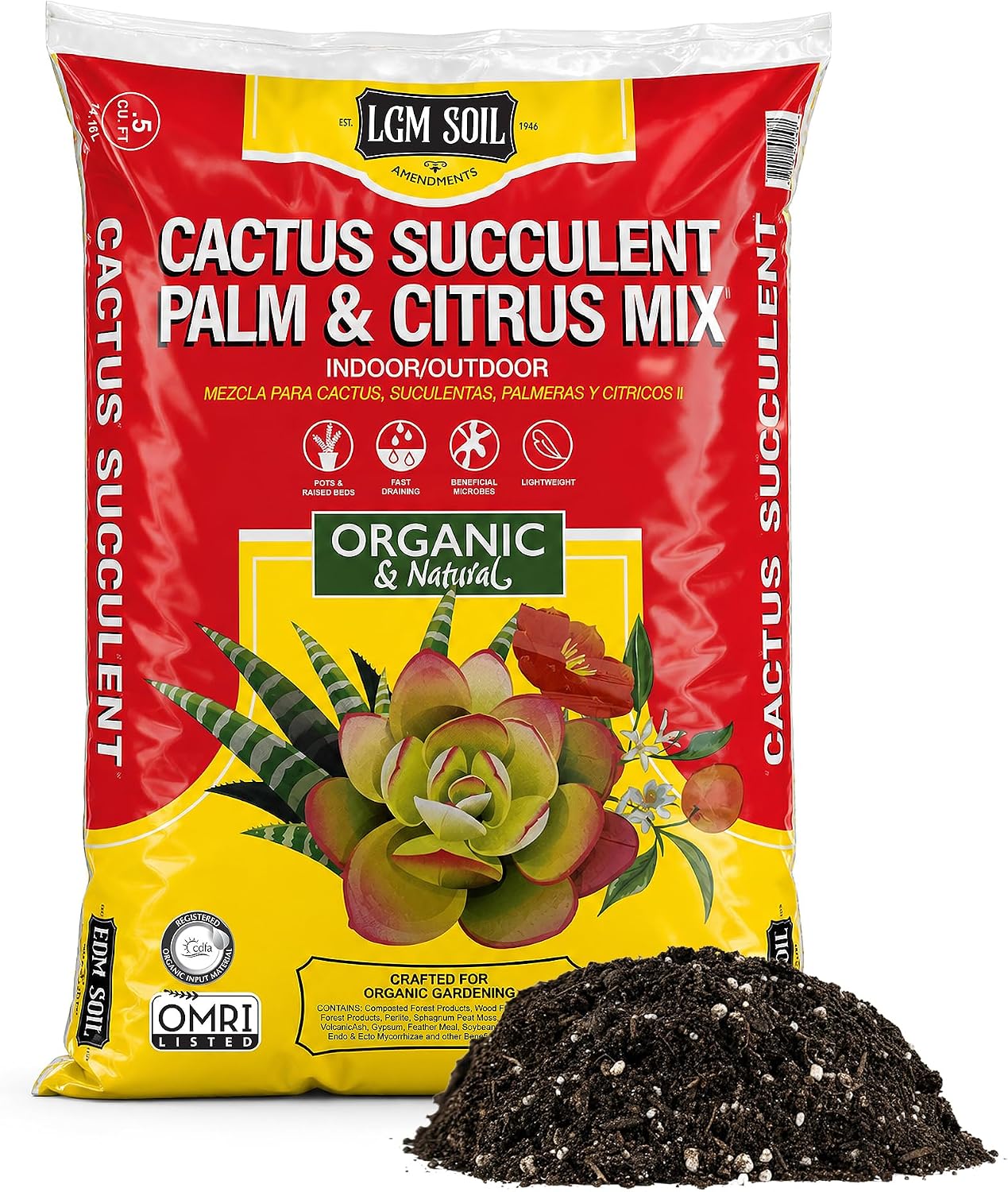
LGM Cactus & Succulent Soil Mix, 0.5 cu ft
| Unit Count | 475 Ounce |
|---|---|
| Item Type Name | Cactus Succulent Palm & Citrus Mix |
| Item Highlight | Root Support | Volcanic Ash | Chicken Manure | Fast Draining | Organic | OMRI Listed |
| Manufacturer | LGM Soil |
This half-cubic-foot bag supplies a fast-draining, nutrient-bearing potting mix meant for potted succulents, cacti and other container plants that dislike waterlogged roots. The formula combines volcanic ash and perlite for airy structure so water moves through quickly, while chicken manure, kelp meal and iron sulfate provide slow-release organic nutrition. It is OMRI-listed and designed to be used straight from the bag without additional amendments, which makes repotting, propagation and small container top-ups simple and low-effort. Practical features include root-supporting components that help establish stable plants and a blend that also suits citrus and palms when extra drainage is needed. Limitations are the small bag size, which is geared toward hobby collections rather than landscape-scale projects, and the absence of specific texture ratios or exact nutrient analysis for growers who need precise mixes. Also, because it relies on organic nutrient sources, heavier-feeding plants may still require supplemental fertilization over time.
Best for: Gardeners who want a low-fuss, organic potting mix that promotes fast drainage and steady growth for container succulents, cacti, and other drought-tolerant or drainage-sensitive plants.
Less Ideal for: Growers planning to pot many large dragon fruit plants or undertake large containers should look for larger-volume or custom mixes tailored to heavy feeders and vine support needs.
- Fast, well-aerated drainage from volcanic ash and perlite for fewer root rot problems
- Organic nutrient sources (chicken manure, kelp meal, iron sulfate) that feed plants gradually
- Ready-to-use mix suitable for indoor and outdoor containers with no additional blending
- OMRI-listed formulation for gardeners who prefer certified organic inputs
- Small 0.5 cu ft volume is insufficient for large pots or multiple repots
- No detailed N-P-K or particle-size breakdown provided for precision mixing
Verdict: A ready-to-use, organic fast-draining mix that makes repotting and small-container drainage management simple and reliable.
Gary's Best Top Pot Premium Potting Soil – 1 cu ft

| Brand Name | UF URBAN FARM D & S GARDEN SUPPLIES |
|---|---|
| Unit Count | 1 Count |
| Manufacturer | Laguna Hills Nursery |
| Volume | 1725 cubic inches |
Gary's Best Top Pot is a ready-to-use potting mix formulated to keep container plants healthy for months without frequent repotting. Its mix of volcanic pumice and charcoal improves drainage and air exchange while retaining moisture and nutrients near the root zone, which makes it useful for potted palms that need good aeration but cannot tolerate constant wet feet. Use it to fill nursery pots or refresh containers at repotting time; the porous pumice helps prevent compaction and supports root development, and the charcoal helps hold nutrients available to plants. Practical benefits include reduced need for frequent soil replacement, improved root health in warm, compact soils, and easier management of watering cycles. Limits to consider are that this is a standard bagged potting soil with no specific palm-tailored fertilizer or salt-management additives, so palms with special nutrient or salinity needs will still require targeted feeding and occasional flushes.
Best for: Gardeners who prioritize strong, reliable container performance and want a durable potting mix that supports healthy root development in potted palms without frequent soil changes.
Less Ideal for: Growers who need a complete, palm-specific fertilization or salt-management solution should consider mixes or amendments that include targeted nutrients or additives.
- Volcanic pumice improves drainage and prevents soil compaction in pots
- Charcoal helps retain and release nutrients close to roots
- Formulation is long-lasting and maintains effectiveness for over six months
- Balanced water retention and aeration reduces risk of root rot
- Does not include palm-specific fertilizer or micronutrient program
- Bagged mix requires supplemental feeding for long-term container growth
Verdict: Choose this mix when you want a durable, well-aerated potting soil that promotes healthy root growth and reduces how often you need to replace soil in potted palms.
Espoma Organic Cactus Potting Soil Mix (4 qt, Pack of 2)

| Number of Packs | 2 |
|---|---|
| Unit Count | 256 Ounce |
| Style Name | Peat Moss,Potting Soil |
| Volume | 4 quarts |
Espoma Organic Cactus Potting Soil is a ready-to-use mix designed to give container-grown succulents, cacti and citrus good drainage and root aeration. The blend of sphagnum peat moss, humus and perlite produces a lighter, faster-draining medium that helps prevent waterlogged roots and reduces the risk of root rot when repotting or planting in pots. It also contains Espoma’s Myco-tone mycorrhizal inoculant to support early root establishment. Typical uses are repotting small to medium citrus trees in containers, refreshing topsoil when plants become rootbound, or starting new container plantings where quick drainage is important. The 4 quart bags are convenient for spot re-potting but mean multiple bags are needed for larger pots. This is an organic, chemical-free mix well suited to gardeners who prioritize plant health and root performance, though heavy feeders or large citrus in very big containers may need additional fertility and more volume of soil than these two small bags provide.
Best for: Gardeners who want a performance-focused, ready-made organic mix to improve root health and drainage when potting citrus trees in containers.
Less Ideal for: Growers who need a high-volume base for very large pots or who prefer a long-term, moisture-retentive soil without periodic fertilization.
- Formulated for good aeration and drainage to reduce root rot risk in containers
- Contains sphagnum peat moss, humus and perlite for a light, well-draining texture
- Includes Myco-tone mycorrhizae to aid early root establishment
- Organic blend without synthetic chemical additives
- Small 4 quart bag size means multiple bags are required for larger citrus containers
- Peat-based mix holds less moisture than heavier soils so more frequent watering may be needed
Verdict: Choose this mix when you need a light, organic potting soil that prioritizes drainage and root establishment for potted citrus.
Miracle-Gro Organic Outdoor Potting Mix, 16 qt.

| Volume | 16 qt. |
|---|---|
| Item Highlight | Plant Soil For Outdoor Container Plants, Contains Quick-Release Natural Fertilizer, OMRI Listed |
| Manufacturer | Scotts Miracle Gro |
This 16 qt. Miracle-Gro Organic Outdoor Potting Mix is designed specifically for outdoor container plants and is useful for planting strawberries in pots. The mix contains responsibly sourced peat and upcycled green waste and includes a quick-release natural fertilizer that feeds for up to two months, which helps young strawberry plants establish and start producing. It is OMRI listed so it fits an organic container-gardening approach. Typical use is to partially fill a 12-inch pot, set the plant with a loosened root ball, add more mix, and water thoroughly; a single bag is sized to fill about one 12-inch container. Practical benefits include moisture retention suitable for exposed pots and a built-in starter nutrient charge so you may not need immediate additional feeding. Important limitations are that nutrients last about two months so plan a feeding schedule for fruiting plants and that peat-based mixes can compact over time, so repotting or refreshing the soil biannually is recommended for continued vigor.
Best for: Gardeners who want an organic-ready potting mix for outdoor container strawberries and prefer a product that gives an initial nutrient boost while simplifying first-season care.
Less Ideal for: Growers who need a long-term, self-sustaining soil blend for mature strawberry beds or those who avoid peat entirely should consider alternatives.
- OMRI listed and made with responsibly sourced peat suitable for organic container gardening
- Includes quick-release natural fertilizer that feeds plants for up to two months
- Formulated to retain moisture for outdoor containers exposed to sun and wind
- Contains upcycled green waste and is locally crafted to reduce transport distance
- Fertilizer effect is limited to about two months so additional feeding is needed for ongoing fruiting
- Peat-based mix can compact over time and requires bi-annual repotting to refresh structure
Verdict: A convenient OMRI-listed container potting mix that gives outdoor strawberry starters an organic nutrient boost and good moisture retention for the first months.
E.B. Stone Organics Citrus & Palm Mix Potting Soil, 1.5 cu ft

| Brand Name | E.B. Stone Organics |
|---|---|
| Unit Count | 1536 Ounce |
| Volume | 1.5 cubic feet |
| Style Name | Potting Soil |
E.B. Stone Organics Citrus & Palm Mix is a ready-to-use organic soil blend designed for container and in-ground planting of citrus, palms, avocados and tropical foliage. The mix pairs aged fir bark and pumice to keep the root zone well aerated and fast-draining so plants that dislike soggy feet avoid root rot, while added mycorrhizae improve nutrient and water uptake. It is intended to be used straight from the bag for potting or worked into beds when planting, which simplifies planting and repotting tasks. For gardeners seeking reliability, this blend delivers consistent structure and moisture retention without heavy amendments, and the organic base supports longer-term soil biology. Limitations are the single bag volume of 1.5 cubic feet, which means larger projects will require multiple bags and mixing on site, and it does not list N-P-K numbers or slow-release fertilizer content so supplemental feeding may be needed for heavy-feeding specimens.
Best for: Gardeners who prioritize reliable, low-maintenance potting media for citrus and tropical plants and want a ready-made organic blend that supports healthy roots.
Less Ideal for: People who need large volumes for landscaping projects or who prefer a potting mix with specified fertilizer content and tailored nutrient ratios.
- Formulated specifically for citrus, palms and tropicals to match their root needs.
- Aged fir bark and pumice provide good drainage and aeration to reduce risk of root rot.
- Contains beneficial mycorrhizae to enhance root nutrient and water uptake.
- Ready-to-use bag simplifies repotting or planting without on-site blending.
- Single bag is only 1.5 cubic feet so multiple bags are required for larger trees or beds.
- No detailed fertilizer analysis provided so additional feeding may be necessary for heavy feeders.
Verdict: Choose this mix when you want a consistent, ready-to-use organic soil that promotes healthy, well-aerated roots for citrus and tropical plants.
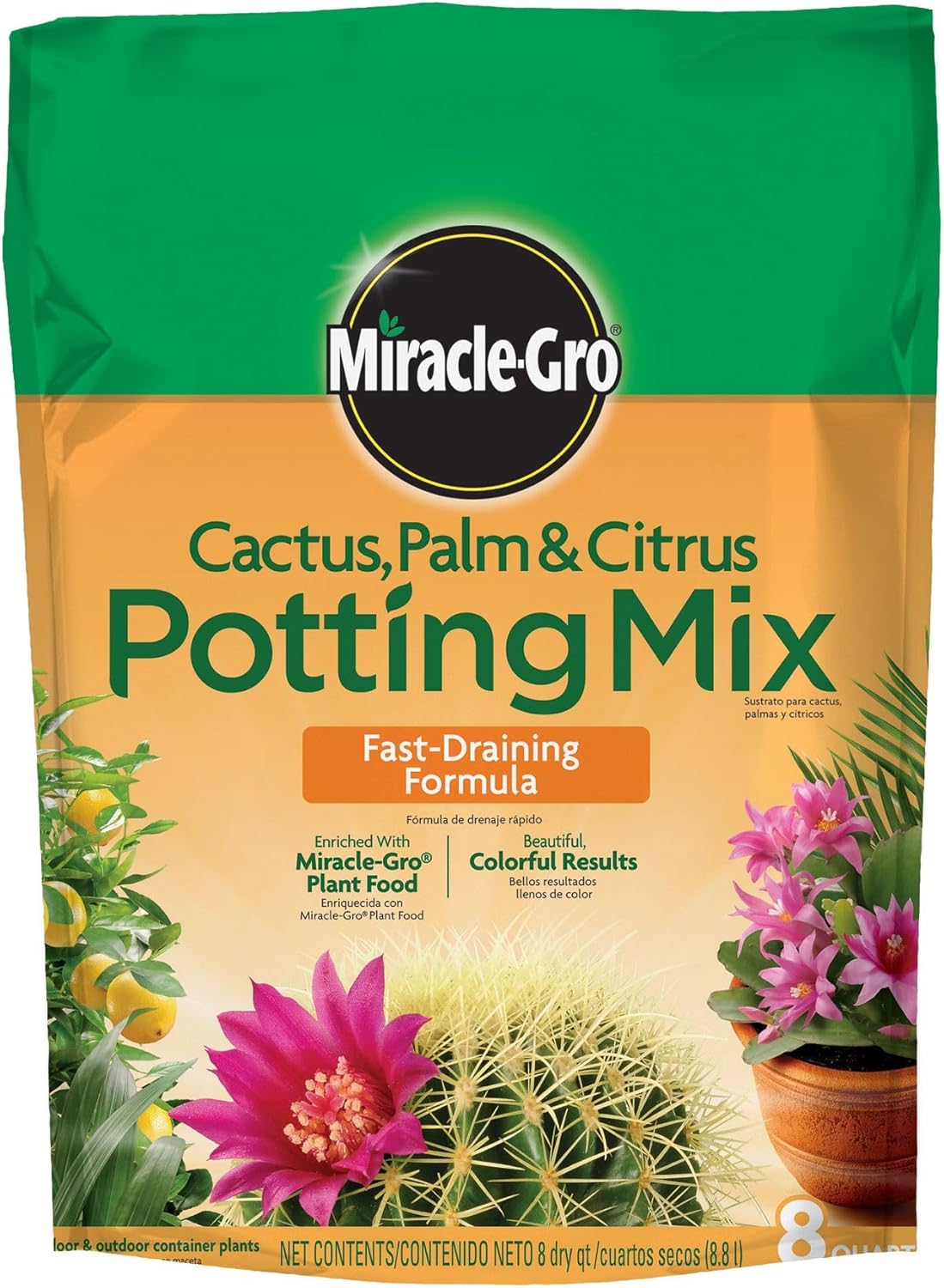
Miracle-Gro Cactus, Palm & Citrus Potting Mix, 8 qt.
| Brand Name | Miracle-Gro |
|---|---|
| Volume | 8 quarts |
| Unit Count | 1 Count |
This 8-quart Miracle-Gro potting mix is designed for container-grown cacti, palms, and citrus and combines peat moss, sand, perlite, and forest products for faster drainage and reduced compaction. It arrives ready to use and is enriched with Miracle-Gro plant food so newly potted citrus get an initial nutrient boost without immediate fertilizing. Typical use is straightforward: choose a pot with drainage, fill about one third, set the root ball and top up, then water and allow to drain. The formula helps soil dry between waterings, which is important for citrus root health in containers, and one bag is enough for two 8-inch pots. Limitations are the small volume for larger trees and the presence of peat moss if you prefer peat-free mixes; heavier or older citrus will need larger volumes and eventual repotting. For growers wanting a quick, reliable container medium that balances moisture retention with drainage, this mix performs as expected.
Best for: Growers who repot or maintain container citrus and want a ready-to-use mix that balances drainage and initial feeding for healthier root development.
Less Ideal for: Gardeners potting mature or large citrus specimens that need large volumes of soil or those seeking a peat-free or custom mineral-heavy citrus bonsai substrate.
- Fast-draining blend reduces risk of waterlogged roots for container citrus
- Pre-enriched with plant food to give newly potted plants an initial nutrient boost
- Contains perlite and sand to resist compaction and maintain aeration
- Formulated for indoor or outdoor containers so it works across sites
- 8-quart bag is small for larger or multiple citrus containers
- Contains peat moss which some buyers avoid for sustainability reasons
Verdict: A convenient, fast-draining, plant-food–enriched container mix that makes repotting small to medium citrus trees quick and reliable.
Back to the Roots Organic Indoor Potting Mix, 6 Quart

| Unit Count | 192 Fluid Ounces |
|---|---|
| Item Type Name | Indoor Potting Mix 6qt |
| Item Highlight | Peat-free, 100% organic, made in the USA |
| Ingredients | Coconut Coir, Yucca, Mycorrhizae, Perlite, Horticultural Sand |
This Back to the Roots indoor potting mix is a ready-to-use, 6-quart blend designed for common houseplants such as pothos, monstera and ferns. It combines coconut coir, yucca extract, mycorrhizae, perlite and horticultural sand to improve moisture retention, drainage and root development without peat. In practice it feels light and friable, so it is easy to pot seedlings or repot mature plants and it reduces compaction that can suffocate roots. The added mycorrhizae helps young roots establish and take up nutrients more efficiently while yucca extract helps the mix hold water between waterings, which is convenient for forgetful or busy plant owners. Because it is peat-free and made in the USA, it is a more sustainable choice versus traditional peat-based mixes. Limitations are the small 6-quart size, which means frequent repurchasing for larger collections, and the bag does not include fertilizer so you will need to feed plants separately as they grow.
Best for: Buyers who prioritize low-risk, easy-care houseplant solutions and want an organic, ready-to-use potting mix that reduces watering hassles and supports healthy root growth.
Less Ideal for: Not ideal for gardeners who need large-volume soil for many pots or for those expecting a mix that includes built-in fertilizer for long-term feeding.
- Peat-free organic formula that reduces environmental impact
- Yucca extract improves moisture retention between waterings
- Contains mycorrhizae to support root development and nutrient uptake
- Light, well-draining texture suitable for repotting seedlings and houseplants
- Small 6-quart volume may require frequent repurchasing for larger plant collections
- Does not include fertilizer so additional feeding is necessary
Verdict: A compact, peat-free potting mix that simplifies indoor plant care by holding moisture and boosting root establishment.
Choosing the Right Soil for Palms in Pots: Key Factors to Consider
Drainage and Aeration
Palms in pots need soil that drains quickly to keep roots oxygenated. Poor drainage causes water to pool at the bottom of the container, which leads to root rot and yellowing fronds.
Look for mixes with coarse components such as coarse sand, perlite, or pine bark to create air pockets. Particle size matters because fine-textured soils compact faster and lock out air. For taller or larger palms, increased porosity helps support a healthy root system and reduces the frequency of disruptive repotting.
Moisture Retention Balance
While drainage is essential, palms also require steady moisture between waterings. A completely fast-draining mix will dry out too quickly, stressing the plant and causing brown leaf tips.
Good palm soils blend moisture-retaining ingredients such as coir or well-aged compost with draining components so the medium holds moisture near the root zone without becoming soggy. The ideal mix matches your watering routine, pot size, and local climate so you do not have to water multiple times per day.
Nutrient Content and pH Buffering
Container palms rely entirely on the potting medium and fertilizer for nutrients. A soil with some slow-release organic matter provides steady nutrition, while buffering materials help prevent rapid pH shifts that can lock out essential elements like iron and manganese.
Avoid mixes with excessively high soluble salts or uncertain nutrient profiles. Materials such as composted bark and well-composted humus deliver nutrients gradually and help maintain a stable chemical environment for palm roots.
Salt Management and Water Quality
Many palms are sensitive to salt accumulation from fertilizers and tap water. In containers, salts build up over time and can burn roots and leaf margins if not managed.
Choose a soil with good leaching properties so excess salts can be flushed through without disturbing structure. Also consider mixes that include materials that do not bind salts tightly, making it easier to correct buildup with periodic deep watering or substrate replacement.
Structure and Texture for Root Development
The physical structure of the potting medium affects how roots grow and explore the container. A stable, open texture encourages fibrous root development and prevents circling or matting that can stress the palm when repotted.
Long-lasting components like coarse bark and pumice maintain structure over time better than fines that collapse. Texture also influences how evenly water and fertilizer move through the pot, so choose a mix that supports both root spreading and straightforward maintenance.
Ease of Repotting and Longevity
Replacing or refreshing soil in containers is a routine part of palm care. A mix that compacts or breaks down quickly will necessitate earlier repotting and increase plant stress.
Prefer soils that retain usable structure for multiple seasons, making repotting less frequent. Ease of handling at repotting time matters too: a dusty, crumbly mix can be messy and harder to work with, while a consistent coarse blend simplifies root inspection and transplanting.
Choosing the Right Mix for Indoor Versus Outdoor Containers
Indoor and outdoor potted palms face different water and temperature regimes. Indoor pots typically dry more slowly and have lower light levels, so a slightly more moisture-retentive mix helps prevent chronic underwatering. Outdoor containers exposed to sun and wind dry faster and benefit from higher porosity and larger particle sizes.
Match the mix density and organic content to the environment. For indoor palms prioritize mixes that retain moisture without compressing, while outdoor pots should emphasize coarse materials that shed excess water during heavy rain.
- Indoor: more coir or compost, moderate perlite for aeration
- Outdoor: higher proportion of bark, pumice, or coarse sand
- Adjust fertilizer schedule rather than relying on high-organic mixes outdoors
Adapting Soil to Pot Size and Material
Small pots dry out faster than large ones and often require a wetter-friendly mix to avoid rapid stress. Conversely, large containers can stay soggy near the drain hole if the mix does not allow water to move through.
The pot material also matters: unglazed terracotta increases evaporation from the sides and can be paired with mixes that hold a touch more moisture. Plastic pots retain moisture longer and often work better with more porous blends.
- Small pots: add moisture-holding components
- Large pots: prioritize drainage and structure
- Terracotta: slightly more water retention recommended
- Plastic: favor airy, porous mixes
Topdressing, Refreshing, and Reusing Potting Soil
You can often extend the life of potting soil by topdressing with fresh mix and adding a slow-release fertilizer rather than repotting annually. Topdressing replaces the nutrient-rich upper layer lost to watering and feeding while preserving the root environment below.
When soils become compacted or show salt crusts, a partial replacement or thorough rinse can restore function. For heavily compacted mixes consider repotting into a refreshed blend to avoid long-term decline.
- Topdress annually for potted palms in stable containers
- Leach salts with deep watering when crusting appears
- Replace compacted soil every few years depending on breakdown
Watering Practices That Complement the Soil
Soil choice and watering schedule work together. With a free-draining mix you will water more frequently but with thorough saturation; with a moisture-retentive mix you will water less often but still thoroughly. Check moisture by feeling the root zone rather than relying solely on surface dryness.
Always water until a little drains from the pot to flush salts. Allow the top portion of the soil to dry slightly between deep waterings to encourage healthy root oxygenation and prevent root disease.
- Use the finger test or moisture meter at root depth
- Water thoroughly, then drain excess
- Adjust frequency seasonally and by pot location
Fertilization and Supplementing Nutrients in Container Palms
Because potting soil has limited nutrient reserves, regular feeding is important. Choose a fertilizer program that matches the soil's nutrient-holding capacity. Slow-release formulations work well with mixes that leach easily, while soluble feeds are useful when soil components retain nutrients tightly.
Monitor for deficiency symptoms such as yellowing between leaf veins and adjust feeding cadence rather than switching soil mid-season. Periodic soil testing or close observation helps refine both fertilizer type and frequency.
- Slow-release feeds suit leaky soils
- Soluble feeds give quick corrections for deficiencies
- Reduce feeding in winter when growth slows
How We Chose the Best Soil for Palms in Pots
We focused on blends that meet common needs for palms grown in containers. Our filters favored mixes with a clear balance between rapid drainage and sufficient moisture retention, because palms need oxygen at the roots but cannot tolerate persistent waterlogging. We also prioritized nutrient profile and buffering ability, since palms respond poorly to sudden shifts in pH and soluble salt levels. Texture and structure were assessed for ease of repotting and root penetration, plus the presence of stable organic components that break down slowly. Additional criteria included consistency of particle size to prevent compaction, suitability for indoor and outdoor container use, and compatibility with regular fertilization schedules. We excluded plain garden soil, heavy clay blends, and mixes intended only for acid-loving shrubs that would not support typical palm nutrient needs. The final picks balance drainage, moisture-holding additives, nutrient content, and container handling characteristics that matter in everyday pot culture.
FAQ
Can I use regular potting mix for palms in pots?
Often regular potting mixes work partially but may be too dense or retain too much moisture for many palm species. If using general potting soil, amend it with coarse material like perlite or bark to improve aeration and drainage.
How often should I repot a palm in a container?
Repotting frequency depends on species and mix breakdown but usually every two to four years for most container palms. Repot sooner if the soil compacts, roots circle the pot, or you see persistent drainage problems.
Is sand a good addition to palm potting soil?
Coarse horticultural sand can improve drainage when used sparingly, but too much fine sand makes a heavy, compacting mix. Use coarse sand or other gritty materials combined with organic components for the best structure.
How can I reduce salt buildup in potting soil?
Leach salts periodically by watering thoroughly until water drains from the pot and repeating. Use lower-salt fertilizers and flush more often if using hard tap water. Replace the topsoil layer or refresh the entire mix if crusting or root damage appears.
Should I adjust soil for palm species that prefer more acidic conditions?
Some palm species like slightly acid conditions, but most container palms do well near neutral pH. If your species prefers acidity, select materials and fertilizers that support that range and monitor nutrient availability to avoid deficiencies.
Final Verdict
Prioritize a potting soil that balances quick drainage with enough moisture retention to match your watering routine and container conditions. Focus on structure, nutrient buffering, and salt management to keep roots healthy and reduce repotting frequency. Weigh the tradeoffs: faster-draining mixes lower rot risk but require more frequent watering, while denser mixes hold water but need careful salt and oxygen management. Choose the soil that fits your pot size, exposure, and maintenance habits for the most reliable results.
