

Note: This article contains affiliate links. If you click on these links and make a purchase, I may earn a small commission at no extra cost to you. This helps support my research and content. Read my full affiliate disclosure here.
Picking the right soil for raised planters matters more than many gardeners expect. With limited root volume and shallower profiles than in-ground beds, raised planters need a mix that balances drainage, water-holding capacity, and nutrients so plants can establish quickly and stay productive. This guide covers the top shortlisted soils for raised planters and explains how each performs in real gardening situations. We evaluated formulas for texture, nutrient retention, and how they behave across seasons so you can pick the blend that suits your crops and maintenance style.
Top Picks at a Glance
| Best Overall The best all-around choice for most situations | Coast of Maine Castine Blend Organic Raised Bed Soil (2 cu ft) |  |
| Best Quality Built to a higher standard if you want something more solid | FoxFarm Raised Bed Planting Mix, 1.5 cu ft |  |
| Best Budget The cheapest option that still gets the job done reliably | Office Roast 3 qt All-Purpose Potting Mix |  |
| Highest Rated A top-rated pick with lots of positive feedback | Minute Soil Compressed Coco Coir Bricks, 24-Pack (Expands to 36 Gal) |  |
| Most Popular A crowd favorite that many people choose with confidence | Miracle-Gro Potting Mix, 16 qt. (2-Pack) |  |
| Best Seller A high-volume bestseller chosen again and again | Back to the Roots Premium Organic Potting Mix, 6 Quart |  |
Coast of Maine Castine Blend Organic Raised Bed Soil (2 cu ft)

| Volume | 2 cubic feet |
|---|---|
| Included components | Compost, peat moss, worm castings, mycorrhizae, biochar, greensand, kelp meal, shell meal |
Castine Blend is a premium, ready-to-use raised bed soil designed to give home gardeners a biologically rich planting medium without extra mixing. The bagged blend combines fully cured compost, sphagnum peat, worm castings, biochar, greensand, kelp and shell meals plus mycorrhizae to supply slow-release nutrients and beneficial microbes. In practice it is used straight from the bag to fill raised beds, planters or container gardens where good drainage and water retention are both needed. Notable features are the inclusion of mycorrhizae for root colonization and biochar for improved aeration and long-term soil structure. Benefits include stronger seedling establishment, improved moisture balance for vegetables and herbs, and a foundation for building living soil over time. Limitations are typical for organic bagged mixes: nutrient release is gradual so heavy feeders may need supplemental fertility later, and peat-containing mixes may not suit gardeners avoiding peat for sustainability reasons. Bags are convenient but lifting and handling 2 cu ft at a time can be bulky for some users.
Best for: Buyers who prioritize proven, biologically active soil for raised beds and want a convenient, low-effort solution backed by many positive reviews; ideal for gardeners focused on vegetables, herbs and flowers.
Less Ideal for: Gardeners who need an immediate high-N fertilizer solution or those strictly avoiding peat-based products should consider specialized amendments or peat-free mixes instead.
- Ready-to-use formula requires no on-site mixing
- Includes mycorrhizae and worm castings to support soil biology
- Biochar and greensand improve aeration and long-term structure
- Formulated to balance water retention and drainage for vegetables and herbs
- Contains peat moss which some gardeners avoid for sustainability reasons
- Nutrient supply is gradual so heavy-feeding crops may need additional fertilizer
Verdict: A biologically rich, ready-to-use raised bed mix that simplifies establishing healthy vegetable and herb beds with long-term soil-building ingredients.
FoxFarm Raised Bed Planting Mix, 1.5 cu ft

| Brand Name | FoxFarm |
|---|---|
| Volume | 1.5 cubic feet |
| Style Name | Raised Bed |
| Ingredients | Aged forest products, sphagnum peat moss, earthworm castings, oyster shell, dolomite lime |
This FoxFarm Raised Bed Planting Mix is a premixed soil blend intended for filling raised beds and containers without additional amendments. It mixes aged forest products and sphagnum peat moss for moisture retention and aeration, with earthworm castings, oyster shell, and dolomite lime supplying slow-release nutrients and pH buffering. Typical use is simple: fill your raised bed or pot, plant seedlings or transplants, and water; the mix is designed to hold moisture while still draining to avoid waterlogging. The clear benefits are convenience and a balanced starting environment for vegetables and herbs, which can reduce the need for immediate fertilizing and heavy soil amendments. Limitations include the small 1.5 cubic foot bag size for larger beds and the presence of peat which may concern gardeners favoring peat-free or fully organic-certified media. Also, heavier-feeding crops may still require supplemental fertilization later in the season.
Best for: Gardeners who want a convenient, plant-ready soil that gives vegetable beds and containers a balanced, nutrient-holding foundation without extra mixing or complex preparation.
Less Ideal for: Large-scale growers or those filling full-size raised beds who need bulk soil or prefer peat-free mixes should look for bigger-volume or alternative formulations.
- Ready-to-use blend eliminates mixing and speeds planting
- Formulated for raised beds and containers to balance moisture retention and drainage
- Includes earthworm castings and oyster shell for slow-release nutrients and mineral support
- Contains dolomite lime to help stabilize pH for many vegetable crops
- Small 1.5 cu ft bag requires multiple bags for typical raised beds
- Contains sphagnum peat moss, which some gardeners avoid for environmental reasons
Verdict: Buy this if you want a convenient, nutrient-rich, ready-to-use soil that jumpstarts raised bed vegetable and container gardens.
Office Roast 3 qt All-Purpose Potting Mix

| Brand Name | Office Roast |
|---|---|
| Unit Count | 16 Ounce |
| Volume | 3 quarts |
| Style Name | Potting Mix |
This 3-quart Office Roast potting mix is a lightweight, pre-mixed soil for pots, seed trays, and container-grown plants. It is formulated to retain moisture while still draining well, which helps prevent waterlogged roots in containers and supports seed germination and early root development. Typical uses include repotting houseplants, filling small containers for herbs or annuals, and starting seeds in trays. The product is convenient out of the bag with no amendments required for basic planting and is sized for small projects or trial pots. Notable features described by the maker are seed-starter readiness, indoor and outdoor versatility, and a balance of moisture retention and drainage. Limitations are the small 3-quart volume, which means you will need multiple bags for larger containers or several hydrangea pots, and there is no listed fertilizer analysis or long-term nutrient profile, so heavier feeders will need additional feeding. The mix is best for short-term potting and starting plants rather than large-scale or nutrient-hungry container plantings.
Best for: Buyers looking for an inexpensive, ready-made potting mix to fill small containers, start seeds, or trial new plants and who prioritize convenience over bulk supply.
Less Ideal for: Gardeners needing larger volumes for multiple large pots or long-term nutrient-rich mixes for heavy-feeding plants should look for bulk or fertilized potting soils instead.
- Ready-to-use out of the bag for quick potting and seed starting
- Balanced moisture retention with fast drainage to reduce risk of root rot in containers
- Lightweight formulation suited to small pots and seed trays
- Versatile for indoor and outdoor container use
- Small 3-quart volume requires multiple bags for medium to large pots or several hydrangeas
- No listed fertilizer content or N-P-K values for long-term feeding planning
Verdict: A convenient, budget-friendly 3-quart potting mix that works well for seed starting and small hydrangea pots when you need a ready-to-use soil.
Minute Soil Compressed Coco Coir Bricks, 24-Pack (Expands to 36 Gal)
| Number of Packs | 24 |
|---|---|
| Volume | 36 gallons |
| Brand Name | Mountain Valley Seed Company |
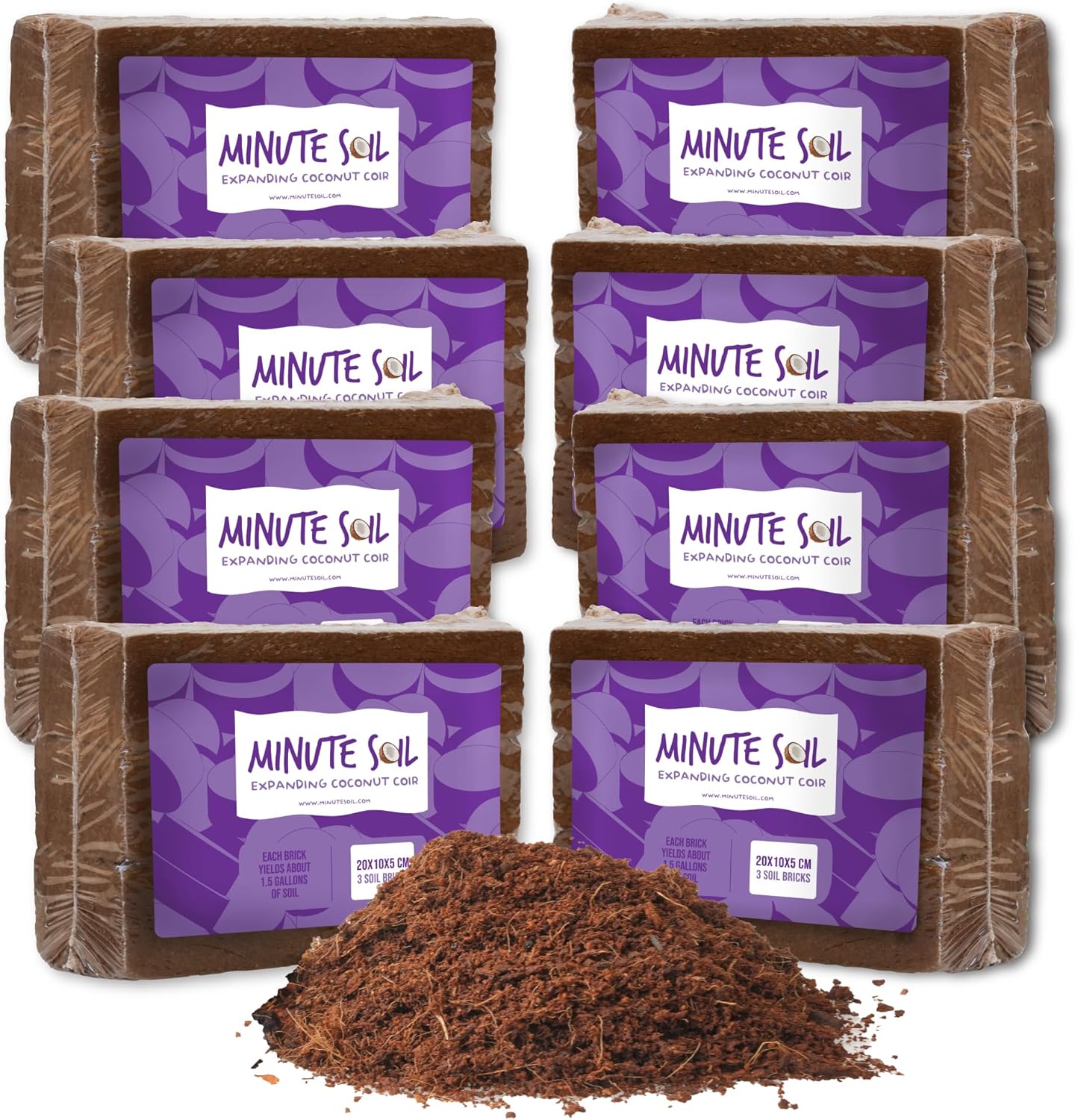
These compressed coco coir bricks are a reliable, peat-free growing medium that expand with water to yield about 36 gallons from the 24-pack. They are made from sustainable coconut husk fiber and are OMRI-listed, so they work well as a base soil or amendment in raised planters, seed trays, and containers. In practice you rehydrate the bricks, fluff the coir to restore air pockets, then use it alone for propagation or blend it with compost and perlite to tailor drainage and nutrition for vegetables and herbs. The material holds moisture while remaining well draining, which helps roots avoid waterlogging yet stay consistently damp between waterings. Because it is an inert, clean medium, it is pest- and weed-light and stores compactly before use. The main limitations are that coco coir is low in nutrients on its own and benefits from added compost or fertilizer for long-term planter use, and you must rehydrate and mix it thoroughly to avoid dense spots. For gardeners who value predictable, repeatable results in raised beds, this is a solid, low-maintenance option.
Best for: Gardeners who prioritize consistent, low-mess growing media for raised planters and seedlings and want a sustainable, predictable base to blend with compost and amendments.
Less Ideal for: Buyers who want an all-in-one, nutrient-rich potting mix out of the bag or those who prefer to rely solely on native garden soil without amendments.
- Compact, lightweight bricks expand to a large volume, saving storage space before use
- OMRI-listed coconut coir offers a peat-free, sustainable growing medium
- Good water retention with adequate drainage to support seed starting and planter use
- Clean and inert medium reduces pests and weed seeds compared with garden soil
- Inert material contains little to no nutrients and requires compost or fertilizer for sustained plant growth
- Requires full rehydration and fluffing to avoid dense, poorly aerated spots
Verdict: A compact, sustainable coco coir supply that reliably expands into a clean, moisture-retentive base ideal for prepping raised planters and starting seedlings.
Miracle-Gro Potting Mix, 16 qt. (2-Pack)

| Feeds Plants | Up to 6 months |
|---|---|
| Volume | 16 quarts |
| Number of Packs | 2 |
| Intended Use | Outdoor containers |
| Ingredients | Sphagnum Peat Moss, Peat, Perlite, Compost, Fertilizer |
Miracle-Gro Potting Mix is a general-purpose container soil designed for outdoor pots, planters, and hanging baskets. It combines peat-based media, perlite, compost, and built-in fertilizer so you can pot vegetables, herbs, annuals, perennials, and shrubs without blending amendments. Typical use is straightforward: fill a pot about one third, set the plant at nursery depth, top off, and water until excess drains. Notable features are fast drainage to prevent root rot, an all-purpose nutrient charge that feeds plants for up to six months, and a texture that helps roots establish quickly. In practice this means less upfront prep and fewer immediate feedings compared with plain soil, and it is handy for seasonal repotting and new container plantings. Important limitations are that it is formulated for containers only (not in-ground beds) and the nutrient boost will diminish after the stated feeding period so you will need to supplement or repot for long-term specimens. Also peat-based mixes can compress over time and require refreshing each season.
Best for: Gardeners who want a low-effort, dependable potting soil for seasonal container planting and quick repots, especially those optimizing time and results across many pots.
Less Ideal for: Those wanting a soil to amend in raised beds or long-term in-ground planting should choose a garden soil formulated for in-ground use instead.
- Ready-to-use mix with built-in fertilizer that feeds up to six months
- Formulated for fast drainage to reduce risk of overwatering and root rot in containers
- Versatile for a wide range of outdoor container plants including vegetables, herbs, and flowers
- Not intended for in-ground garden beds
- Fertilizer effect is temporary and requires refeeding or repotting after about six months
Verdict: A convenient, fast-draining potting mix that simplifies container planting while providing up to six months of built-in nutrition.
Back to the Roots Premium Organic Potting Mix, 6 Quart

| Unit Count | 192 Fluid Ounces |
|---|---|
| Volume | 6 quarts |
| Item Highlight | Peat-free potting soil for outdoor plants, indoor plants, vegetables, herbs and flowers |
| Made in | USA |
Back to the Roots Premium Organic Potting Mix is a small-batch, all-purpose soil designed for indoor and outdoor container plants, including flowers, herbs, and vegetables. The 6 quart bag contains a peat-free blend made from upcycled plant matter and wood fines, with added organic plant food, yucca extract to help retain and regulate moisture, and dolomitic limestone to stabilize pH. In practice this mix is easy to use straight from the bag for potting annuals and bedding plants or for refreshing topsoil in containers. Its light, well-draining texture helps roots establish without becoming waterlogged while still holding enough moisture for frequent flowering plants. Because it is organic and made in the USA, it suits growers who want a lower-carbon-footprint option. Limitations are the small bag size for larger projects and that very heavy feeders or long-term container plantings may need periodic fertilization or larger volumes of soil to maintain vigor.
Best for: Buyers who want a safe, organic, ready-to-use potting mix for potted flowers and small container gardens and prefer products with predictable performance and lower environmental impact.
Less Ideal for: Gardeners planning large-scale repotting, heavy-feeding perennials, or long-term container plantings that require bulk soil or extended nutrient release.
- Peat-free organic formula made from upcycled plant matter and wood fines
- Includes yucca extract for improved moisture retention and control
- Dolomitic limestone added to help balance soil pH for flowering plants
- Light, well-draining texture suitable for container-grown flowers and annuals
- Small 6 quart bag is not economical for large pots or multiple containers
- Does not include slow-release fertilizer strong enough for long-term heavy feeders
Verdict: A reliable, peat-free organic potting mix that delivers predictable moisture control and pH balance for potted flowers and small container gardens.
Choosing the Right Soil for Raised Planters: Key Factors to Consider
Particle Size and Drainage
Particle size determines how freely water moves through the soil and how easily roots penetrate. In raised planters you want a mix with a range of particle sizes: fine enough to retain moisture and contact roots, but coarse enough to prevent waterlogging and compaction. Avoid heavy, clay-dominant soils that sit wet after rain or irrigation because shallow beds dry from the sides and surface faster than deep beds. A good balance will let excess water drain through while holding enough moisture for plant roots.
Well-graded aggregates such as composted bark, coarse sand, or perlite can be part of a raised- planter mix to improve aeration. Over time, organic fines will break down and reduce drainage, so gardeners should plan on light seasonal reworking or adding coarse material when needed.
Water-Holding Capacity
Water-holding is critical in raised planters because they have less soil volume to store moisture for plants. A mix that loses water too quickly forces more frequent irrigation and increases stress on shallow-rooted crops. Look for soils that include moisture-holding components such as well-aged compost, coconut coir, or peat alternatives that swell with water.
However, high water-holding capacity should not come at the cost of poor drainage. The ideal raised-planter soil holds a reserve of plant-available water while still allowing excess to escape after heavy rain or deep watering. That balance reduces watering chores and prevents root rot in warm weather.
Nutrient Retention and Release
Raised-planter mixes should supply a steady stream of nutrients between feedings because soil volume limits total nutrient reserves. Organic matter acts as a nutrient bank, slowly releasing nitrogen, phosphorus, and potassium as it decomposes. Soils with higher cation exchange capacity retain applied fertilizers and compost-derived nutrients better than inert mixes.
For vegetable beds, choose a soil that holds nutrients but also responds predictably to top dressings and liquid feeds. Too much rapid-release fertilizer risks salt buildup in a contained planter, while too little retention means you are constantly fertilizing to maintain yields.
Organic Matter Quality
Not all organic matter is equal. Well-composted material contributes structure, microbial life, and nutrients without tying up nitrogen. Fresh, unfinished amendments can cause temporary nitrogen drawdown as microbes decompose them, which can stress seedlings. In raised planters you want stable, mature compost or aged organic components that provide steady benefits without causing imbalances.
Quality organic matter also supports beneficial soil biology, which improves nutrient availability and disease suppression. Regular additions of compost or mulch will maintain organic content in a raised planter, but starting with a high-quality base makes that maintenance easier.
pH and Salt Levels
Soil pH affects nutrient availability and root function. Many vegetables prefer a slightly acidic to neutral pH range. A mix that is too alkaline or acidic can lock up nutrients even if organic matter is high. Raised-planter soils should be pH-balanced or easily adjustable with common garden amendments.
Salt levels matter in contained systems because salts can accumulate from irrigation water and fertilizers. Avoid soils with high soluble salt content and monitor fertilizer applications. If salt buildup becomes an issue, flushing the planter with extra water or replacing a portion of the mix can restore plant health.
Weight and Handling
Weight matters if you move planters or install them on decks and balconies with load limits. Heavy, compacted soils can be difficult to handle and may stress container edges or supports. Lightweight components like coir, pumice, or perlite reduce bulk without sacrificing drainage or moisture retention.
Also consider how easy the soil is to work. Fine, friable mixes make planting, root inspection, and transplanting less disruptive. For larger raised beds that stay in place, weight is less critical than for mobile or rooftop planters, but handling effort still influences how often you will refresh the mix.
Preparing Existing Raised Planters for New Soil
Before adding new soil, inspect the planter for drainage outlets and remove any compacted or waterlogged material. If the planter has been in continuous use, it may contain root masses and built-up salts that reduce performance. Remove the top 2 to 4 inches of old mix, loosen the remaining soil, and test for compaction.
If drainage is poor, add a layer of coarse material such as broken clay pots or coarse grit at the bottom, or incorporate coarse amendments into the replacement soil. When you add fresh soil, grade it slightly below the planter rim to leave room for mulch and to prevent overflow during watering.
- Check planter drainage holes and clear any blockages
- Remove old, compacted soil or debris before refilling
- Top off with fresh soil and allow a settling period before planting
Amending Soil in Place Without Full Replacement
If you prefer not to replace the entire planting mix, you can rejuvenate raised-planter soil with targeted amendments. Work well-aged compost or worm castings into the top 3 to 4 inches, and apply slow-release organic fertilizer according to crop needs. This approach preserves soil biology while replenishing nutrients.
Core aeration with a narrow trowel or garden fork loosens compacted channels and improves root access to deeper moisture. For persistent drainage issues, incorporate coarse sand or pumice in small amounts rather than large quantities that could create layering problems.
- Top-dress with mature compost annually
- Lightly fork or core-aerate to relieve compaction
- Avoid layering fine and coarse materials directly on each other
Best Soil Practices by Crop Type
Different plants stress planter soil differently. Leafy greens and herbs tolerate lighter, well-draining mixes but benefit from steady moisture and fertility. Root crops need looser, deeper friable soil to allow straight growth. Fruiting crops such as tomatoes and peppers require higher nutrient reserves and regular feeding.
Plan your soil composition around the dominant crop type in each planter. For mixed plantings, aim for a balanced all-purpose raised-planter soil and supplement with crop-specific top dressings during the growing season.
- Leafy greens: steady moisture, moderate fertility
- Roots: loose, deep friable texture
- Fruiting crops: richer organic matter and regular feeding
Seasonal Maintenance and Top-Dressing
Raised planters lose organic matter faster than in-ground beds. Schedule a light top-dressing of compost or well-rotted manure each season to rebuild fertility. Mulch the surface to conserve moisture and prevent crusting from sun and rain.
In spring, check texture and drainage after winter wet. In late summer, add organic material and feed heavy-feeding crops to support fall production. Plan for a partial soil replacement every few years if the mix becomes compacted or depleted.
- Top-dress with 1 to 2 inches of compost annually
- Mulch to reduce evaporation and surface crusting
- Replace portions of soil every 2 to 4 years as needed
Testing and Adjusting Soil Health
Regular testing gives you objective data on pH, nutrient levels, and salinity. Use a simple soil test kit or send a sample to a local extension to learn what adjustments are needed. pH corrections and targeted nutrient applications are more effective when based on test results.
Observe plant growth for nutrient deficiency signs such as yellowing leaves or poor vigor. Combine observational cues with periodic tests to keep a proactive maintenance schedule for raised planters.
- Test pH and nutrients every 1 to 3 years
- Address persistent deficiencies with specific amendments
- Monitor plant symptoms between tests
How We Chose the Best Soil for Raised Planters
We screened soils on attributes that directly affect plant health in raised planters. Priority criteria included particle texture and drainage, because excess water or compaction is a common issue in shallow raised beds. Nutrient retention and organic matter content were next, since raised-planter mixes must supply fertility between top-ups. Water-holding capacity and amendment compatibility mattered for gardeners who prefer lower-frequency irrigation or seasonal topdressing. We also considered pH buffering and the presence of inert fillers that reduce long-term plant performance. We excluded mixes designed specifically for container ornamentals, seed-starting-only mixes, and raw unblended topsoil that lacks amendment. The resulting list focuses on ready-to-use garden soils formulated for raised beds and planters, and on blends that gardeners can amend easily for vegetables, herbs, and flowers. These filters ensured the picks work in real raised-planter conditions rather than in deep in-ground gardens.
FAQ
How deep should soil be in a raised planter?
Depth depends on the crop. Most vegetables do well in 8 to 12 inches of quality soil, while larger root crops and tomatoes prefer 12 to 18 inches. Shallow planters can grow herbs and salad greens if the mix has good water retention and nutrients.
Can I use garden soil in raised planters?
Garden soil alone often compacts and drains poorly in a raised planter. It is usually better to blend garden soil with compost and coarse amendments or use a purpose-made raised- planter mix to ensure structure and fertility.
How often should I replace or refresh planter soil?
Light top-dressing with compost is helpful every season, while partial replacement or major refresh is typically needed every 2 to 4 years depending on crop intensity and decomposition rate. Heavy vegetable use accelerates nutrient depletion.
What is the best way to improve drainage in an existing planter?
Improve drainage by loosening compacted soil, adding coarse amendments such as pumice or coarse sand, and ensuring drainage holes are clear. Avoid creating hard layers by mixing rather than layering coarse material beneath fine soil.
Should I worry about soil-borne pests and diseases in raised planters?
Raised planters reduce some pest pressures but are not immune to soil-borne issues. Use clean, well-composted organic matter, rotate crops, and remove diseased plants promptly to lower risk. Solarizing or replacing contaminated soil may be necessary for persistent problems.
Final Verdict
Choose a raised-planter soil that balances drainage, water-holding, and nutrient retention based on the crops you plan to grow and how often you want to water or amend. Expect to top-dress annually and refresh or replace soil every few years for sustained productivity. Prioritize texture and organic matter quality over bulk so the planter supports vigorous roots and steady yields.
