

Note: This article contains affiliate links. If you click on these links and make a purchase, I may earn a small commission at no extra cost to you. This helps support my research and content. Read my full affiliate disclosure here.
Getting the right soil mix for peppers changes how plants set fruit, tolerate heat, and resist rot. Peppers need a medium that drains well yet holds enough moisture and nutrients for steady growth. This guide looks at seven shortlisted soil mixes for peppers, each chosen for how it behaves in containers, raised beds, or in-ground rows. We evaluate mixes on drainage, nutrient retention, and how they support root development and transplanting. Read on to understand which properties matter most for your pepper patch and why these mixes made the list.
Top Picks at a Glance
| Best Overall The best all-around choice for most situations | Rosy Soil Garden Mix Biochar Potting Soil, 8 Quart |  |
| Best Quality Built to a higher standard if you want something more solid | FoxFarm Ocean Forest Potting Soil, 12 Quart |  |
| Best Value The sweet spot between price and what you get | Miracle-Gro Indoor Potting Mix for Seed Starting, 8 qt. (2-Pack) |  |
| Best Budget The cheapest option that still gets the job done reliably | Doter Organic Vegetable Potting Soil Mix, 1 qt |  |
| Highest Rated A top-rated pick with lots of positive feedback | FoxFarm Happy Frog Potting Soil, Container Garden, 2 cu ft (with 2 Plant Tags) |  |
| Most Popular A crowd favorite that many people choose with confidence | Burpee Premium Organic Potting Mix with Coco Coir (9 Quart) |  |
| Best Seller A high-volume bestseller chosen again and again | Back to the Roots Organic Expanding Coco Coir Potting Soil Brick (10 lb) |  |
Rosy Soil Garden Mix Biochar Potting Soil, 8 Quart

| Brand Name | Rosy Soil |
|---|---|
| Item Highlight | Organic Garden Soil with Worm Castings for Vegetables, Herbs, and Flowers, Peat-free Outdoor Potting Mix, Made in USA |
| Volume | 8 quarts |
Rosy Soil Garden Mix is a ready-to-use organic potting soil designed for outdoor vegetables, herbs, and container-grown plants. The formula combines biochar, compost, worm castings, mycorrhizae, and pine bark fines to create a loose, well-aerated medium that holds moisture and supports beneficial microbes. In practice you can use it straight from the resealable 8 quart bag to fill patio planters, raised beds, or large tomato containers, or blend it into existing soil to improve drainage and structure. Biochar helps the mix retain water and nutrients between waterings while resisting compaction that can lead to root rot. The inclusion of mycorrhizae and worm castings supplies biological activity that benefits young tomato roots and helps with nutrient uptake. Limitations are the small bag size for larger plantings and that specific nutrient levels are not listed, so heavier-feeding tomatoes may still need additional fertilizer later in the season.
Best for: Gardeners who prioritize consistent, biologically active, peat-free soil for container-grown tomatoes and want a low-maintenance mix that resists compaction and holds moisture.
Less Ideal for: Growers planting large numbers of tomato plants or filling big raised beds who need bulk soil or a pre-fertilized mix for heavy-feeding varieties.
- Peat-free organic blend with biochar that improves moisture retention and soil structure
- Includes worm castings and mycorrhizae to boost microbial activity and root health
- Pine bark fines keep the mix well drained and resistant to compaction
- Resealable 8 quart bag keeps unused mix fresh and is easy to store
- 8 quart volume is small for multiple or large tomato containers
- No guaranteed NPK or specific fertilizer analysis provided
Verdict: A compact, peat-free garden mix built with biochar and microbial amendments to give container tomatoes reliable drainage, moisture retention, and root support.
FoxFarm Ocean Forest Potting Soil, 12 Quart

| Item Form | Granules |
|---|---|
| Specific Uses For Product | Dry Fertilizer |
| Coverage | 4.8 sq ft |
| Mixing Ratio | 1:1 |
FoxFarm Ocean Forest is a pre-mixed potting soil that combines aged forest products, sandy loam and sphagnum peat moss with organic amendments like fish meal, crab meal and earthworm castings. It is sold ready to use straight from the bag for planting in containers, seed starting or top dressing; the manufacturer recommends no additional nitrogen fertilizer for the first 30 days. The mix has a light, aerated texture that promotes drainage while still retaining moisture, and the built-in micronutrients make it practical for growers who want strong early growth without immediate feeding. Practical benefits include easy pot filling, good root zone aeration for roses in containers, and built-in organic fertility to support blooms. Limitations to consider are that the bag is best for containers or small beds only and heavier feeders may need supplemental feeding after the initial month; users should also follow handling precautions to avoid skin or eye irritation.
Best for: Gardeners who want a high-quality, nutrient-rich potting medium to get container roses or plant starts off to a strong, flowering start and prefer a ready-made organic blend.
Less Ideal for: Large in-ground rose beds or landscapers needing bulk soil amendments should look for bulk garden soil or custom rose mixes instead.
- Ready-to-use out of the bag so you can pot immediately
- Organic amendments (fish meal, crab meal, earthworm castings) supply early nutrients
- Light, aerated texture that supports drainage and root development
- pH adjusted for optimal nutrient uptake per product description
- Pack size (12 qt) covers a small area and may require multiple bags for several roses
- No long-term feeding provided after the first 30 days so additional fertilizer is needed for sustained heavy bloom
Verdict: Choose this soil if you want a ready-made, organically amended potting mix that jump-starts container roses and seedlings with good drainage and early fertility.
Miracle-Gro Indoor Potting Mix for Seed Starting, 8 qt. (2-Pack)
| Brand Name | Miracle-Gro |
|---|---|
| Item Type Name | Potting Mix |
| Number of Packs | 2 |
| Volume | 8 quarts |
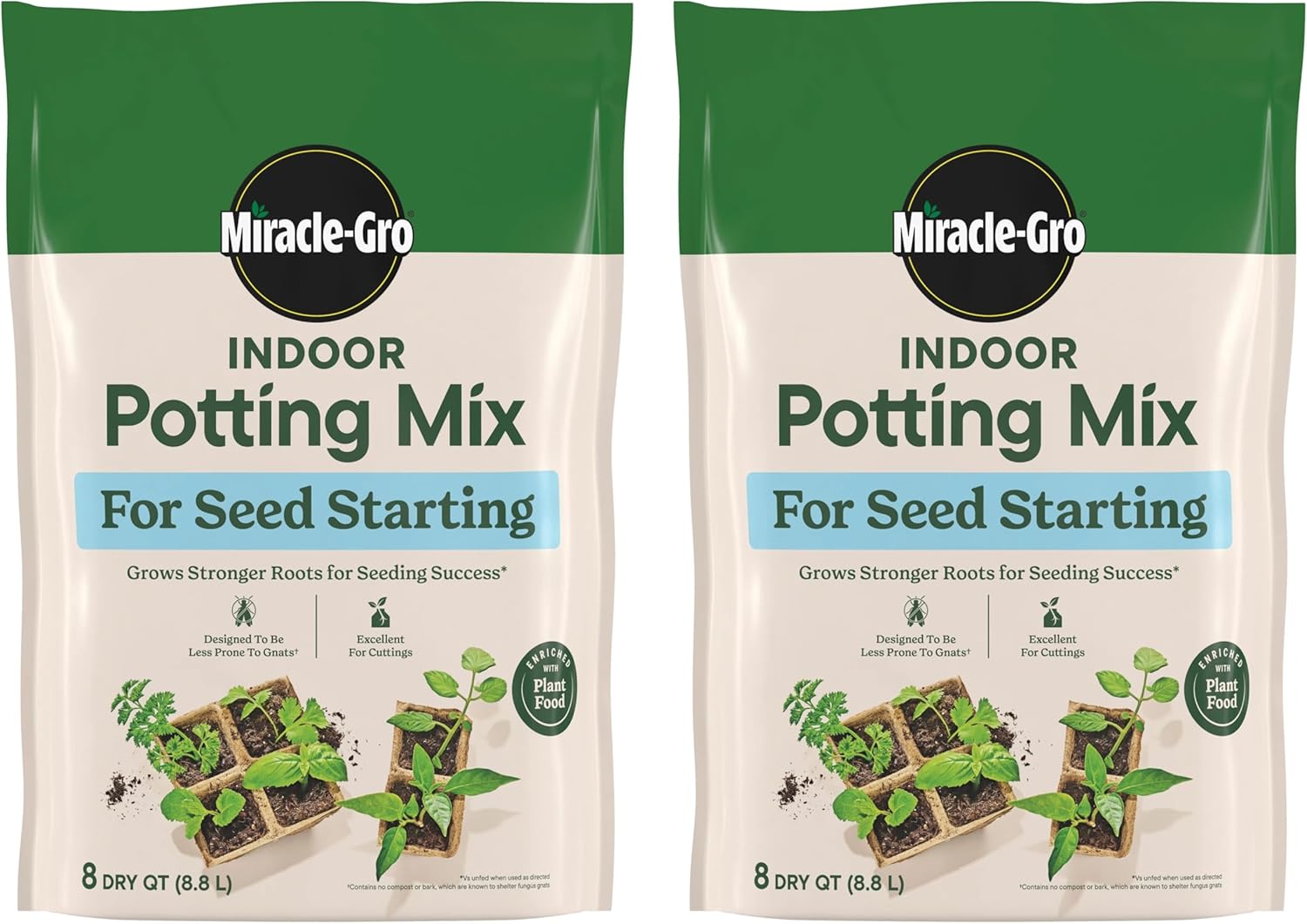
This two-pack of Miracle-Gro Indoor Potting Mix is designed specifically for starting seeds and rooting cuttings indoors. The blend is lightweight and pre-enriched with plant food so seedlings get a nutrient boost during early root development, and the manufacturer says it yields stronger roots compared with unfed mixes when used as directed. It is intended for vegetables, flowers, and herbs and works well in cell trays and small containers; one 8 qt. bag will fill roughly three 72-cell trays. Notably, the formula omits compost and bark, which helps lower the chance of fungus gnat infestations in damp seed-starting setups. Use it by filling trays or pots, keeping the mix evenly moist, and shielding newly sown seeds from direct sun until germination. Important limitations are standard for enriched mixes: it contains fertilizer (so handle carefully) and it is a seed-starting medium rather than an all-purpose potting soil for mature plants, so you will likely transplant seedlings into a different mix or amend soil later.
Best for: Buyers who want a low-effort, indoor seed-starting medium that supports faster root development and reduces common pest risks while following proven seed-starting practices.
Less Ideal for: Gardeners who need a permanent potting soil for mature container plants or who prefer fully organic, compost-rich mixes should consider alternatives.
- Lightweight, ready-to-use formula tailored for seed germination and cuttings
- Pre-enriched with plant food to support early root and seedling growth
- Excludes compost and bark to reduce habitat for fungus gnats
- Comes as a two-pack so you have enough mix for multiple trays
- Contains fertilizer which requires careful handling and storage
- Intended for seed starting so not formulated as long-term potting soil for mature plants
Verdict: A practical, low-risk seed-starting mix that boosts early root growth and reduces fungus gnat risk, making it a reliable choice for indoor vegetable seedlings.
Doter Organic Vegetable Potting Soil Mix, 1 qt

| Brand | Doter |
|---|---|
| Item Type Name | Garden soil |
| Volume | 1 quarts |
This 1 quart Doter vegetable potting mix is a ready-to-use, nutrient-rich media aimed at container vegetable growing. It is formulated to improve drainage and aeration while maintaining balanced pH and added organic matter so seedlings and small pepper plants can establish healthy roots. Typical use is for starting transplants, top-dressing small pots, or refreshing the soil in 1 to 3 quart containers for peppers, lettuce, herbs and similar crops. The mix’s emphasis on aeration and nutrient content helps reduce transplant shock and supports steady early growth, but the small 1 qt volume means you will need multiple bags for larger pots or entire pepper beds. Because it is a blended product rather than a single amendment, performance will depend on pot size and watering habits; heavy feeders or mature pepper plants will need additional fertilizer and larger volumes of soil. For budget-minded gardeners this pack is useful for trialing the brand or for small-scale container pepper production where convenience and a balanced starter mix matter more than bulk quantity.
Best for: Gardeners growing peppers or other vegetables in small containers who want a ready-made, plant-focused starter mix and prefer buying small quantities to control budget and waste.
Less Ideal for: Growers planning to fill large containers, raised beds, or to support mature, high-yield pepper plants who need bulk soil or a long-term nutrient plan.
- Formulated for vegetables with balanced nutrients and pH for better early growth
- Improves drainage and aeration to promote healthy root development
- Convenient ready-to-use 1 qt size ideal for starting transplants or small pots
- Organic components and added organic matter suitable for edible container crops
- Small 1 quart volume requires many bags for larger pots or multiple pepper plants
- Not a complete long-term growing medium for mature heavy-feeding peppers without extra fertilizer
Verdict: A convenient, nutrient-balanced 1 qt organic potting mix that is a practical choice for starting peppers and small container vegetable projects.
FoxFarm Happy Frog Potting Soil, Container Garden, 2 cu ft (with 2 Plant Tags)

| Brand | FoxFarm |
|---|---|
| Style Name | Container Garden |
| Unit Count | 600 Ounce |
| Volume | 2 cubic feet |
FoxFarm Happy Frog Potting Soil is a premixed container blend made to nourish potted plants without additional amendments. It comes ready to use and is formulated with beneficial microbes and mycorrhizal fungi alongside organic inputs such as earthworm castings, bat guano, and aged forest humus to support root development and nutrient uptake. For growing hot peppers in containers this mix offers a nutrient-rich, well-amended medium that encourages strong vegetative growth and flowering when paired with proper watering and feeding. The included plant tags make keeping track of varieties and planting dates convenient. Practical limits to note are that this is a potting soil designed for containers rather than field beds, so peppers in ground or very large planters may still need different soil or additional bulk amendments. Also, while the mix is nutrient-dense at planting, active growers should plan a feeding schedule because high-demand fruiting crops benefit from supplemental fertilizer over the season.
Best for: Growers who want a dependable, ready-made potting medium for container-grown hot peppers and prefer a product that supports root health out of the bag.
Less Ideal for: Gardeners planting directly in raised beds or open ground who need large volumes of soil or want to custom-blend base soil at scale.
- Pre-amended with earthworm castings, bat guano, and aged forest products for immediate nutrient availability
- Contains beneficial microbes and mycorrhizal fungi to improve root health and nutrient uptake
- Ready to use straight from the bag for quick potting and repotting
- Includes plant tags to track varieties and planting dates
- Formulated specifically for containers so may not be ideal for in-ground garden beds
- Nutrient levels diminish over time for heavy-feeding crops and require supplemental fertilization
Verdict: A reliable, microbe-rich potting mix that simplifies container pepper growing by delivering immediate nutrients and strong root support.
Burpee Premium Organic Potting Mix with Coco Coir (9 Quart)

| Item Form | Powder |
|---|---|
| Specific Uses For Product | Plant Growth, Root Development, Seed Development, Soil Conditioning |
| Coverage | 9 Qt Container |
| Liquid Volume | 9 quarts |
Burpee Premium Organic Potting Mix is a ready-to-use container soil designed for indoor and outdoor pots, seed starting, and raised bed containers. The mix combines coco coir for improved aeration and moisture retention with a nutrient blend that feeds plants for up to three months, making it useful for establishing seedlings or repotting established vegetables, herbs, and ornamentals. It is OMRI listed, which suits organic growers, and the bag is sold in a convenient 9-quart size that fits most small to medium containers. Practical benefits include reduced watering frequency thanks to the coir component and a balanced medium that promotes root development and germination. Limitations are the small bag size for larger projects and that it supplies nutrients for only a limited period, so longer-term containers will need supplemental fertilizer. The mix is powdery and light, so it is easy to handle but may compress over time in deep pots and benefit from occasional loosening.
Best for: Gardeners who want a compact, ready-made organic potting mix that reduces maintenance and supports reliable seed starting and container growth.
Less Ideal for: Those establishing large beds or filling many large containers at once should choose bulk soil or larger bags instead.
- OMRI listed organic blend suitable for organic container gardening
- Coco coir improves moisture retention while maintaining good aeration
- Includes slow-release nutrients that feed plants for up to three months
- Light, easy-to-handle texture ideal for seed starting and repotting
- 9-quart bag is small for larger containers or multiple pots
- Nutrient supply is temporary so additional fertilizer is required for long-season crops
Verdict: A compact OMRI-listed potting mix with coco coir that simplifies seed starting and short-term container growing by improving moisture balance and early root development.
Back to the Roots Organic Expanding Coco Coir Potting Soil Brick (10 lb)

| Item Highlight | 10 lb compressed coco coir brick; peat-free; OMRI Listed |
|---|---|
| Item Type Name | Coconut Coir |
| Volume | 2 cubic feet |
| Ingredients | Coconut Coir |
| Style Name | Expanding Potting Soil |
This compressed coco coir brick provides a lightweight, peat-free potting medium that expands when you add water to create loose, airy substrate for containers and seed flats. It is typically used by hydrating the 10 lb block to about 2 cubic feet of coir and then using it alone for potted plants, mixing it into garden soil to improve drainage and aeration, or blending with compost for starting seeds. Notable features include OMRI listing for organic use, a balanced pH suited to a wide range of plants, and compact storage before expansion which saves space. Practical benefits are improved root aeration and water retention compared with heavy garden loam, easier handling than bulky bags, and versatility across vegetables, herbs, and ornamentals. Important limitations are that coco coir is a soilless substrate and does not supply significant nutrients on its own so you will need to add fertilizer or compost for long-term potted herbs like rosemary, and the product requires time and a water source to expand before use.
Best for: Buyers who prioritize low-risk, easy-to-handle, organic potting media and want a versatile base for container herbs and seed starting without dealing with heavy bags.
Less Ideal for: Gardeners who want a ready-to-plant, nutrient-rich potting mix out of the box or those who prefer soil with built-in slow-release fertilizer.
- Peat-free OMRI listed organic coco coir suitable for organic growing
- Expands from a compact brick to about 2 cubic feet for easy storage and transport
- pH balanced and airy texture that improves drainage and root aeration
- Versatile use: can be used alone, for seed starting, or mixed into existing soil
- Provides little inherent fertility so supplemental feeding or compost is needed for nutrient-hungry plants
Verdict: A compact, peat-free coco coir brick that expands into an airy, pH-balanced base ideal for low-risk organic container gardening and seed starting when paired with fertilizer or compost.
Choosing the Right Soil Mix for Peppers: Key Factors to Consider
Drainage and Aeration
Peppers do not tolerate sitting in water. Good drainage prevents root rot and allows oxygen to reach root tissues. A mix that combines coarse components like perlite, pumice, or coarse sand with finer organic matter creates pore space for air while letting excess water drain away.
Aeration also affects root temperature and microbial activity. Compact, heavy mixes can suffocate roots and encourage fungal problems. For container-grown peppers, aim for a mix that drains freely but still holds a thin film of moisture on organic particles.
Nutrient Retention and Release
Peppers are moderate feeders that benefit from steady nutrient availability across the season. Organic matter such as compost or well-aged leaf mold supplies slow-release nutrients and supports soil life. Mixes with too little organic content will need more frequent feeding.
Look for mixes with a blend of fast-acting and slow-release nutrient sources so plants receive immediate support after transplanting and ongoing nutrition as they set fruit. Balanced nutrient release helps avoid blossom drop and uneven ripening.
Texture and Structure for Root Development
Root architecture affects water uptake and plant stability. A crumbly, friable texture encourages roots to branch and explore the soil profile. Very fine, silty mixes can compact and restrict root growth, while excessively coarse mixes can leave roots struggling to find moisture.
The best mixes for peppers strike a middle ground: enough firmness to support the plant and anchor stems, yet loose enough to allow roots to expand. Consider how the mix behaves when rewetted and how it holds together around the root ball during transplanting.
pH and Salt Levels
Peppers prefer a slightly acidic to neutral pH, typically in the 6.0 to 7.0 range. A mix that is too alkaline or too acidic can lock up nutrients and cause deficiency symptoms. Similarly, high soluble salt levels from fresh manures or some amendments can burn young roots and reduce germination rates.
Check the source of organic amendments and avoid mixes with unbalanced mineral additions that push pH or salts outside the ideal range. If you garden in containers, occasional flushing and monitoring will keep salts in check.
Rewetting Behavior and Moisture Buffering
Some mixes dry out quickly and repel water when fully dry, while others retain water but become waterlogged. For busy gardeners or warm climates, a mix that rewets reliably after drying is essential. Components like coco coir and well-aged compost can improve rewetting compared with hydrophobic peat-only blends.
Moisture buffering also affects how often you need to water. A mix with good water-holding components reduces daily watering without compromising aeration. Think about your watering routine and local climate when choosing a formulation.
Suitability for Containers Versus In-ground Use
Container peppers have different needs than in-ground plants. Pots require a lighter, faster-draining mix to avoid waterlogging, whereas in-ground beds can use heavier mixes that retain more moisture. The mix you choose should be appropriate for the chosen planting site to avoid overcompensating with added amendments.
If you plan to reuse potting mix across seasons, select components that maintain structure and resist compaction. For raised beds, aim for mixes that integrate well with existing soil without creating a hard boundary that roots will not cross.
How Mix Components Affect Pepper Performance
Different ingredients change how a soil mix behaves once planted. Coarse mineral additives improve drainage and aeration but contribute little in the way of nutrients. Organic materials hold moisture and slowly release nutrients but can compact if too fine or decomposed.
Consider what each component does in situ. Perlite and pumice keep pores open. Compost provides biology and food for roots. Coconut coir improves rewetting and holds a moderate amount of water without becoming soggy. A balanced recipe uses each to solve a specific problem.
- Perlite or pumice increases drainage and reduces compaction
- Compost supplies slow-release nutrients and microbial life
- Coco coir improves water retention and rewetting compared with dry peat
- Coarse sand adjusts weight and drainage in larger containers
Adjusting Mixes for Hot or Dry Climates
In hotter regions, mixes that retain a bit more moisture will reduce stress during heat waves. Increase the proportion of water-holding organic material slightly, and consider mulching the pot surface to reduce evaporation. However, do not sacrifice aeration; maintain coarse components so roots still get oxygen.
For very dry sites, look for mixes that include organic materials with good moisture buffering and that rewet easily after drying. Also factor in more frequent feeding since higher temperatures increase nutrient uptake and loss.
- Increase organic fraction modestly to improve moisture retention
- Use light-colored mulches to lower surface temperatures
- Ensure enough coarse particles so drainage is not compromised
Preparing Mix for Seedlings and Transplants
Seedlings and newly transplanted peppers need a gentler mix with finer texture and available nutrients. A lighter seed-starting blend with added compost or diluted organic fertilizer helps young roots establish without being overwhelmed by heavy feeding.
When moving seedlings to larger containers or the garden, gradually transition them to the target pepper mix to avoid shock. Backfill around the root ball with a similar structure to prevent air pockets and to ensure immediate moisture contact.
- Use a finer, well-structured mix for germination
- Amend transplant holes with a small amount of the chosen pepper mix
- Avoid overpacking soil around the root ball to keep aeration intact
Maintaining Mix Fertility Through the Season
A single potting charge rarely supplies all the nutrients a productive pepper plant needs. Plan to supplement with regular feedings: liquid fertilizers, diluted compost teas, or slow-release organic granules depending on the mix's initial nutrient content.
Top-dress containers midseason with a thin layer of compost or well-balanced granular amendments to sustain fruiting. Watch foliage for signs of deficiencies and adjust feeding frequency rather than changing the entire mix midseason.
- Use tailored feeding schedules based on mix nutrient profile
- Top-dress and lightly work in compost for sustained nutrition
- Monitor plant tissue for deficiency signs before increasing fertilizer
Common Mistakes When Choosing a Pepper Mix
A frequent error is selecting a mix marketed for general use without considering drainage needs. Heavy, moisture-retentive mixes can suffocate pepper roots, while extremely coarse mixes may require constant watering.
Another mistake is ignoring rewetting behavior. Some peat-heavy mixes repel water once they dry out, making container-grown peppers vulnerable. Choose a mix with components that rehydrate easily or amend with materials that improve wetting.
- Avoid mixes that remain soggy or that compact quickly
- Do not use unaged manure-heavy mixes that can be high in salts
- Match the mix to container size and garden conditions
How We Chose the Best Soil Mix for Peppers
We started by focusing on factors that directly affect pepper health in typical garden situations: drainage and aeration, nutrient retention and release, texture and structure for root growth, compatibility with containers and raised beds, and ease of rewetting after dry spells. We prioritized mixes that provide consistent moisture without waterlogging and that support steady, even feeding over the season. Products were excluded if they relied solely on heavy clay, retained water indefinitely, or lacked an adequate organic component to support beneficial microbes. We also filtered out mixes formulated only for seedlings or only for acid-loving plants, since peppers prefer a neutral to slightly acidic pH. The final list reflects items that balance porosity, organic matter, and nutrient sources while remaining adaptable to common pepper varieties and growing situations. Evaluation emphasized measurable properties such as particle size distribution, organic content, and drainage rate rather than brand claims or packaging language. Practical gardener considerations like rewetting behavior, suitability for containers versus in-ground beds, and how the mix affects transplant shock were also part of the selection filters.
FAQ
What is the ideal pH for a soil mix used to grow peppers?
Peppers prefer a slightly acidic to neutral pH, typically around 6.0 to 7.0. Maintaining pH in this range helps ensure nutrients like calcium and magnesium remain available and reduces the risk of blossom-end rot.
Can I use garden soil mixed with compost in pots for peppers?
Garden soil can be used in larger containers when well-structured and blended with generous organic matter and coarse materials for drainage. Avoid using raw compacted soil alone in pots because it often compacts and holds too much water.
How often should I fertilize peppers growing in a potting mix?
Frequency depends on the initial nutrient content of the mix and plant size, but typically every two to four weeks with a balanced, diluted fertilizer keeps fruiting steady. Slow-release granules can reduce the need for frequent liquid feeds.
How can I tell if my mix is holding too much water?
Signs include yellowing lower leaves, a sour or musty odor from the soil, and stagnant surface water after watering. Check the root zone for mushy roots and improve drainage by adding coarser materials if necessary.
Is coco coir a good substitute for peat in pepper mixes?
Coco coir is a suitable alternative to peat because it retains moisture and rewets more reliably while offering better sustainability. It should be balanced with coarse particles and compost to provide both aeration and nutrients.
Final Verdict
Choose a soil mix for peppers that balances drainage, moisture retention, and steady nutrient release. Prioritize mixes that maintain good pore space so roots get oxygen while organic components supply ongoing fertility. Tradeoffs are inevitable: mixes that hold more water reduce watering frequency but require careful aeration management, while fast-draining blends need more frequent feeding. Base your choice on container size, climate, and how hands-on you want to be with watering and feeding to get the best pepper harvest.
