

Note: This article contains affiliate links. If you click on these links and make a purchase, I may earn a small commission at no extra cost to you. This helps support my research and content. Read my full affiliate disclosure here.
If you cut standing timber or remove medium to large trees, the right felling chainsaw makes the work faster and safer. A dedicated felling saw combines higher power, longer bars, and features that help control large-diameter cuts and reduce kickback risk. This guide covers six top shortlisted felling chainsaws chosen for different felling tasks and skill levels. We evaluate practical items gardeners and landowners care about: engine torque and cutting power, bar and chain durability, handling and anti-kickback features, and serviceability in the field. Read on to see which models match the size of trees and the working conditions you expect.
Top Picks at a Glance
| Best Overall The best all-around choice for most situations | DongCheng 40V Brushless 16-Inch Cordless Chainsaw with 2×4.0Ah Batteries |  |
| Best Quality Built to a higher standard if you want something more solid | Greenworks 40V 16" Brushless Cordless Chainsaw with 4.0Ah Battery and Charger |  |
| Best Value The sweet spot between price and what you get | DEWALT 20V MAX 12" Cordless Brushless Chainsaw (Bare Tool) |  |
| Best Budget The cheapest option that still gets the job done reliably | NAZEAOB 20-Inch 58cc Gas Chainsaw (2-Stroke) |  |
| Highest Rated A top-rated pick with lots of positive feedback | Milwaukee M18 Fuel 2727-21HD 16" Cordless Chainsaw Kit |  |
| Best Seller A high-volume bestseller chosen again and again | SEESII 12-Inch Cordless Brushless Chainsaw |  |
DongCheng 40V Brushless 16-Inch Cordless Chainsaw with 2×4.0Ah Batteries

| Power Source | Battery Powered |
|---|---|
| Horsepower | 550 watts |
| Chain Speed | 14 m/s Max |
| Chain Length | 16 inches |
This DongCheng cordless chainsaw pairs a brushless high-torque motor with two 20V batteries (40V total) to give gas-like cutting performance without fumes or engine maintenance. It is intended for felling medium trees, cutting firewood, and storm cleanup where portability and instant starts matter. Notable features include a 16-inch Oregon-equipped bar and chain, tool-free chain tensioning for quick field adjustments, an automatic oiler to reduce wear, and an inertia-activated chain brake plus a safety lock-out switch for kickback protection. The manufacturer claims up to 120 cuts through 4×4 lumber per charge when both 4.0Ah batteries are used, which makes it suitable for multi-hour yard projects with spare batteries. Practical limitations to expect are battery runtime falling with heavier, continuous felling and the usual need to manage battery charge cycles and oil supply. Compared with a gas saw this model trades raw long-duration output for quieter operation, simpler maintenance, and easier starting, making it a strong choice for homeowners and pros wanting cordless convenience for most felling jobs.
Best for: Buyers who want a capable, low-maintenance cordless saw for regular felling, firewood cutting, and storm cleanup and prefer quieter, easier-to-start equipment over gas engines.
Less Ideal for: Commercial users who need uninterrupted multi-day runtime or the maximum continuous power of large gas chainsaws should consider heavier-duty gas models instead.
- Brushless motor with dual 20V batteries delivers strong, gas-like cutting performance
- 16-inch Oregon bar and chain suitable for typical felling and firewood tasks
- Tool-free chain tensioning for fast on-site adjustments
- Automatic oiler reduces wear and maintenance frequency
- Inertia-activated chain brake and lock-out switch for improved safety
- Runtime depends on battery capacity and will decrease under heavy continuous felling
- Not as long-running as a full-size gasoline chainsaw for extended professional use
Verdict: Choose this kit if you want gas-like felling performance from a cordless, low-maintenance chainsaw that balances power, safety, and convenience.
Greenworks 40V 16" Brushless Cordless Chainsaw with 4.0Ah Battery and Charger
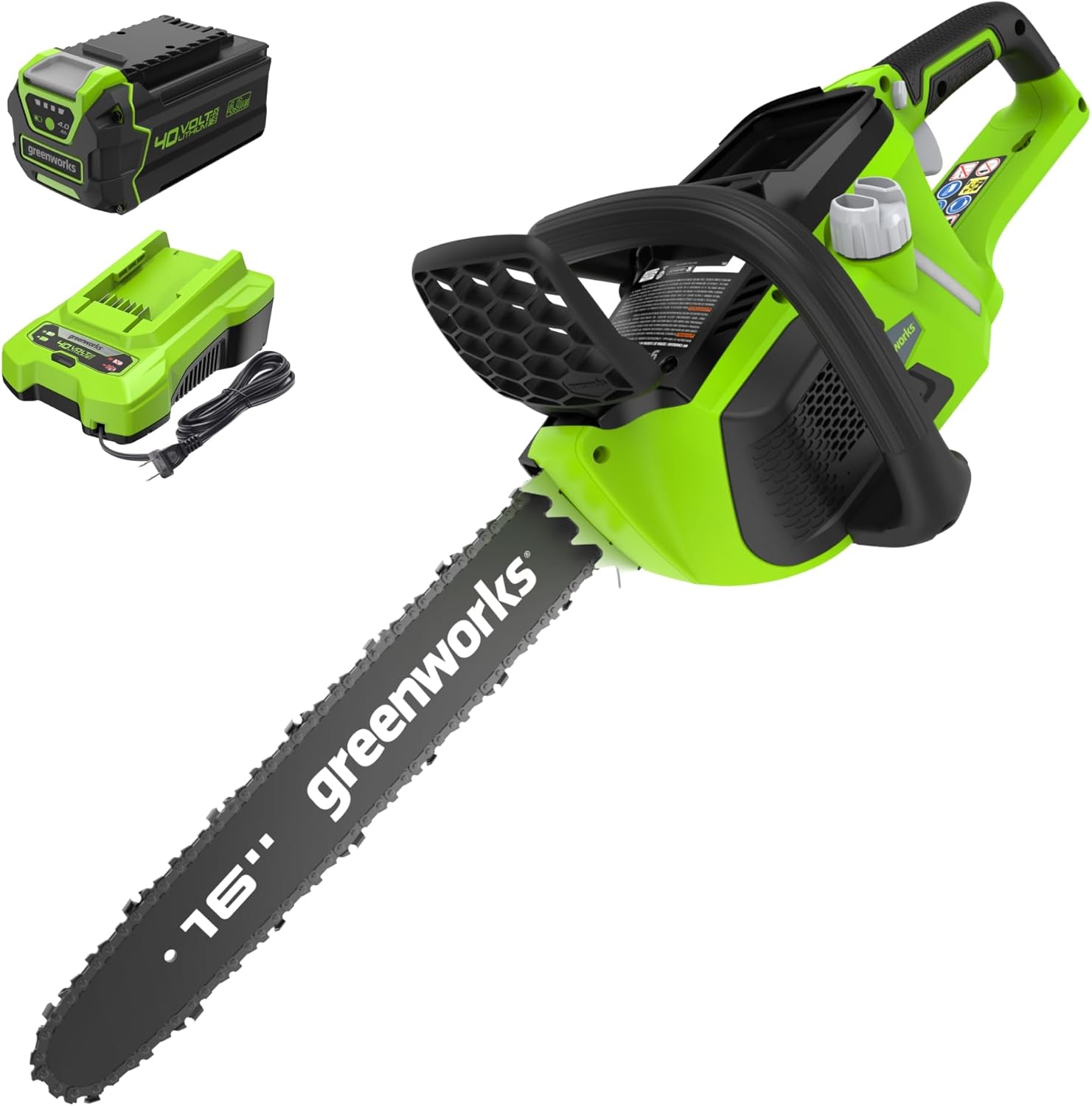
| Power Source | Battery Powered |
|---|---|
| Horsepower | 160 |
| Chain Length | 16 inches |
| Included Components | Chainsaw, Battery, Charger, Manual |
| Manufacturer Warranty Description | 3 Year |
The Greenworks 40V 16" brushless chainsaw delivers gas-comparable cutting power in a cordless package, aimed at homeowners who need a capable tool for felling, limb work, storm cleanup, and firewood cutting. Its brushless motor and 16-inch Oregon bar let it bite through large branches and trees up to roughly 28 inches in diameter while producing less noise and vibration than a small gas saw. The kit includes a 4.0Ah battery and charger for immediate use and the automatic oiler, tool-free chain tensioning, and safety chain brake reduce routine fuss and downtime. Practical benefits include easier starts with no pull cord, lower maintenance without mixing fuel, and compatibility with other Greenworks 40V tools. Limitations to consider are runtime constraints on extended heavy felling sessions—you may need spare batteries for long jobs—and some user reports note mixed experiences with the auto-oiler consistency. The saw is lightweight for its class, but serious commercial users will still prefer gas models for uninterrupted long-duration cutting.
Best for: Buyers who prioritize high cutting performance in a low-maintenance, gas-free tool for frequent homeowner felling, storm cleanup, and firewood tasks and who value quieter, easier starts.
Less Ideal for: Professionals or users who need uninterrupted all-day cutting without swapping batteries should consider full-size gas chainsaws instead.
- Brushless 40V motor provides strong, gas-like torque with reduced vibration and longer motor life
- 16" Oregon bar and chain suitable for felling medium trees and cutting firewood
- Includes 4.0Ah battery and charger so it is ready to use out of the box
- Automatic oiler and tool-free chain tensioning reduce maintenance and keep cutting smooth
- Chain brake and ergonomic grip improve user safety and comfort during extended use
- Battery runtime can limit continuous felling without additional batteries
- Some customers report inconsistent auto-oiler performance
Verdict: If you want gas-like felling power from a quieter, low-maintenance cordless system, this Greenworks 40V 16" brushless chainsaw is the homeowner-focused choice.
DEWALT 20V MAX 12" Cordless Brushless Chainsaw (Bare Tool)

| Power Source | ac_dc |
|---|---|
| Horsepower | 0.7 hp |
| Chain Length | 12 inches |
This DEWALT 20V MAX 12 in. cordless chainsaw is a compact, battery-powered saw aimed at general-purpose cutting around the yard and on job sites. Its brushless motor provides stronger runtime and longer motor life compared with brushed models, while the 12-inch bar and low-kickback chain make it suitable for trimming limbs, cutting small logs, pruning and light demolition. The lightweight design helps with control during one-handed or overhead tasks and the included sheath protects the bar in storage. Because it is a bare tool, you will need a compatible DEWALT 20V battery and charger to use it, which keeps the initial purchase smaller but requires owning the platform or buying batteries separately. The saw eliminates gas maintenance and fumes, but a 12-inch chain limits it to smaller diameter cuts compared with larger gas or corded models. For buyers who already have 20V DEWALT batteries this is a practical, low-maintenance option; buyers starting from scratch should factor in the additional battery and charger cost and expected runtime for heavier work.
Best for: Buyers who want a portable, low-maintenance chainsaw for yard work or light construction and who already own or plan to use DEWALT 20V batteries.
Less Ideal for: Anyone who needs to fell large trees, make long continuous cuts, or who does not want to buy batteries and a charger separately.
- Brushless motor for improved runtime and motor longevity
- Low-kickback 12-inch chain suitable for pruning and small log cutting
- Lightweight design improves control and maneuverability
- Sold as a bare tool so existing 20V battery owners can expand their toolset without duplicate chargers
- Battery and charger are not included so you must already own or purchase DEWALT 20V batteries separately
- 12-inch bar limits cutting capacity for larger trees or heavy-duty felling
Verdict: A compact, brushless 12-inch cordless saw that gives existing DEWALT 20V users a powerful, low-maintenance option for pruning and light cutting.
NAZEAOB 20-Inch 58cc Gas Chainsaw (2-Stroke)

| Power Source | Gas Powered |
|---|---|
| Horsepower | 3.6 hp |
| Chain Length | 20 inches |
This NAZEAOB 58cc gas chainsaw is a budget-oriented felling tool that pairs a 3.6 hp two-stroke engine with a 20-inch chain for cutting medium trees and large limbs. Typical use is on small-to-medium acreage where portability and raw power matter more than professional refinements. Notable features include a pull-start gas engine, air-cooling system, and a full 20-inch chain that gives reach for felling and bucking. In practice it delivers respectable cutting power for the price and is suitable for storm cleanup, firewood cutting, and occasional timber work, though expect more vibration, louder operation, and a steeper learning curve than quieter electric models. Assembly and first starts may require basic tuning and familiarization with two-stroke mixing and maintenance. Owners should plan for routine chain sharpening, bar maintenance, and safe PPE because this is a straightforward gas tool rather than a low-maintenance pro model. For buyers on a tight budget who need a conventional gas saw, it provides useful capability at an entry-level cost.
Best for: Buyers who need an affordable gas felling saw for occasional to seasonal use and prioritize cutting power over professional features or low noise.
Less Ideal for: Professional arborists, full-time loggers, or anyone who needs a low-vibration, low-maintenance saw for daily heavy use.
- 58cc 2-stroke engine with 3.6 hp offers strong cutting power for its price class
- 20-inch chain provides reach for felling medium-sized trees and larger limbs
- Air-cooling system helps during extended cutting sessions
- Single-unit kit includes the chainsaw ready for basic use out of the box
- Basic build and entry-level components mean more vibration and louder operation than premium saws
- Requires two-stroke fuel mixing and routine maintenance to keep performance
- Limited manufacturer information and sparse support details
Verdict: A capable budget gas chainsaw for felling medium trees when cutting power and affordability are the priority.
Milwaukee M18 Fuel 2727-21HD 16" Cordless Chainsaw Kit

| Power Source | Battery Powered |
|---|---|
| Horsepower | 5.3 hp |
| Chain Length | 16 inches |
The Milwaukee M18 Fuel 2727-21HD is a battery-powered 16-inch chainsaw kit built to deliver pro-level cutting without a gas engine. It is intended for heavy yard work such as limb removal, cutting firewood, and routine tree care where portability and reduced vibration matter. Notable features include the M18 Fuel platform for strong brushless-motor performance and a 5.3 horsepower equivalent output that lets the saw handle medium to large cutting tasks. As a cordless system it eliminates fuel mixing and offers quieter starts and easier maintenance than gas models, but run time depends on battery capacity and is not listed with the kit details. The saw’s 16-inch chain balances cutting reach with maneuverability for most property maintenance, and the kit format typically includes the saw and necessary components for immediate use on M18 batteries. Expect solid build quality and pro-grade power in a package that trades the longer runtime of gas saws for cleaner operation and simpler upkeep.
Best for: Buyers who want near-professional cutting power in a cleaner, lower-maintenance cordless package for regular property and yard tasks and who already use or plan to use Milwaukee M18 batteries.
Less Ideal for: Users who need long, continuous runtime for heavy forestry or remote work far from charging options should consider gas-powered alternatives or carrying multiple high-capacity batteries.
- Cordless M18 Fuel brushless system for strong, gas-like power without a gas engine
- 16-inch chain provides a practical balance of reach and control for property maintenance
- Kit format supplies a ready-to-use unit compatible with Milwaukee M18 ecosystem
- Cleaner operation and simpler maintenance compared with gas chainsaws
- Actual battery runtime and which batteries are included are not specified in the product details
- Less continuous runtime than comparable gas chainsaws for extended remote work
Verdict: Choose this Milwaukee M18 Fuel 16" cordless kit when you want professional-grade cutting power in a cleaner, low-maintenance battery platform.
SEESII 12-Inch Cordless Brushless Chainsaw

| Power Source | Battery Powered |
|---|---|
| Horsepower | 1200 watts |
| Chain Length | 12 inches |
| Included Components | chainsaw |
The SEESII 12-inch cordless chainsaw is designed for homeowners and pros who need portable, high-power cutting without a generator. It pairs a 1200W brushless motor with two 4.0Ah batteries to deliver sustained cutting power for pruning, cutting storm debris, and working on small to medium logs. The tool-free chain tension system and automatic lubrication reduce downtime and routine maintenance, and the 60 mL oil tank helps keep the chain running smoothly during longer sessions. Because it is cordless and relatively lightweight for its class, it is easy to move around the yard or use at remote sites where cords are impractical. Important limits to note are the 12-inch bar, which constrains maximum log diameter compared with full-size saws, and battery reliance for very long jobs where alternating charged packs or a backup power source is needed. For straightforward woodcutting tasks this model balances cutting performance, convenience, and low maintenance.
Best for: Buyers who prioritize efficient, portable wood cutting for yard cleanup, pruning, and medium DIY projects and want a low-maintenance cordless saw they can move around the property easily.
Less Ideal for: Contractors or users who regularly need to fell large trees or process large-diameter logs should choose a full-size gas or professional electric chainsaw instead.
- 1200W brushless motor provides strong, efficient cutting power for hardwood and storm debris
- Two 4.0Ah batteries extend runtime for longer jobs and include a built-in charge indicator
- Automatic oiling with a 60 mL tank reduces frequent stops for lubrication
- Tool-free chain tensioning simplifies on-the-job adjustments
- Cordless, relatively lightweight design improves portability and use at remote sites
- 12-inch bar limits the maximum log diameter compared with larger professional chainsaws
- Runtime depends on battery swapping for extended heavy-duty cutting sessions
Verdict: A powerful, low-maintenance cordless 12-inch saw that maximizes portable cutting performance for homeowners and weekend woodworkers.
Choosing the Right Felling Chainsaw: Key Factors to Consider
Engine Torque and Continuous Power
Engine torque determines how a saw performs under sustained load during felling cuts. Higher torque at lower RPMs helps the chain bite and maintain speed when cutting through large-diameter trunks. For falling medium to large trees you will want an engine whose torque curve resists bogging when the chain meets heavy green wood.
Fuel type and engine displacement matter for continuous work. Two-stroke petrol engines remain the common choice for mobility and power, but expect more vibration and routine maintenance. Consider how much continuous cutting you plan to do each day and choose an engine size that leaves some power reserve so the saw does not stall under load.
Bar Length, Chain Gauge, and Cut Capacity
Bar length dictates the maximum single-pass diameter you can safely cut. For felling, longer bars let you handle larger trees without repeated back-and-forth sawing, but they also add weight and increase leverage on the operator. Match bar length to the typical trunk sizes you encounter and to your ability to control the saw during full-depth cuts.
Chain type and gauge influence cut speed and durability. Thicker gauge chains and heavier-duty bars stand up better to long, abrasive cuts. Pay attention to the saw's recommended chain pitch and gauge and whether the drive sprocket and clutch support heavier-duty chains.
Safety Features and Anti-Kickback Design
Kickback risk increases with larger bars and more aggressive chains. Effective anti-kickback measures include reduced-kickback chain designs, chain brakes that engage quickly, and guide bars with reduced nose profiles. Brake activation force and brake engagement speed are practical differences that affect how reliably the system stops a runaway chain.
Good ergonomics also reduce the chance of losing control during a cut. A saw with predictable response, clear sightlines to the cut, and well-placed controls helps you manage dangerous situations and reduces operator fatigue that can lead to mistakes.
Handling, Balance, and Weight
Balance matters more than raw weight for long felling jobs. A lightly front-heavy saw can feel unwieldy on long bars, while a compact, well-balanced saw is easier to position for precise felling cuts and bore cuts at the hinge. Consider both dry weight and how the saw balances with a full fuel tank and a long bar installed.
Handle design and vibration damping influence control and comfort. Look for anti-vibration mounts, comfortable front and rear grips, and an overall layout that leaves both thumbs and fingers in safe positions for quick access to the chain brake and throttle.
Durability, Materials, and Wear Parts
Felling work subjects bars and chains to heavy wear and potential damage. Bars with reinforced rails and quality hardening resist bending and wear across many seasons. Robust chain materials and heat-treated cutters hold sharpness longer and reduce the time you spend re-sharpening between cuts.
Also consider the availability and cost of replacement bars, chains, sprockets, and air-cleaning components. A saw that accepts widely available wear parts reduces downtime and keeps long-term operating costs manageable.
Serviceability and Field Maintenance
Chainsaws used for felling are often working far from a workshop, so easy field serviceability is essential. Quick-access air filters, on-tool chain tensioners, and simple spark plug access speed routine maintenance and reduce time out of service. Tools that require special fixtures or long disassembly for basic adjustments complicate field repairs.
Consider whether common wear items can be swapped with basic hand tools and whether the saw's adjustment points are reachable without removing major components. Easy-to-read owner documentation and clear markings for fuel and oil mixture help maintain consistent performance.
Matching Bar Length to Tree Size and Technique
A practical approach is to choose a bar that is slightly longer than the largest trunk you expect to fell so you can cut through in one pass or comfortably perform bore cuts and back cuts. For very large trunks, consider planning cuts and using saddled bore techniques rather than relying on a single oversized bar.
If you frequently work on a variety of tree sizes, a mid-length bar offers a compromise between reach and control. Remember that longer bars require stronger engines and affect saw handling, so practice with the exact bar and chain combination before tackling large trees.
- Short bars improve maneuverability on tight jobs and are lighter for long carry distances
- Mid-length bars suit mixed-size work and easier maintenance
- Long bars let you handle big trunks but increase torque demands and kickback risk
Protecting the Saw and Chain During Felling
Felling exposes the saw to dirt, sap, and irregular cuts that can nick the bar or dull teeth. Start each day with a check of the chain tension and a visual inspection of the bar rail for burrs. Carry a basic sharpening file and a small bar-cleaning tool in the field so you can quickly remove sap buildup and restore cutting performance.
Use a bar guard during transport and avoid dragging the bar over stumps or rocks. Preventive habits reduce the likelihood of sudden failures while high in a ladder or on uneven ground.
- Check chain tension after warming up the engine and after several cuts
- Clear sawdust buildup from the bar groove and oil hole regularly
- Carry spare links or a full spare chain for extended remote work
Felling Techniques That Reduce Strain on the Saw
Proper cutting sequence reduces stress and prevents pinching that can stall the engine. Make a clean face cut, establish a hinge of appropriate thickness, and finish the back cut while watching for hinge failure. For very large trunks, consider progressive bore and back cuts instead of trying to sever the trunk in a single heavy pass.
Feeding the saw at a steady pace without forcing it through the cut keeps the engine in its power band and reduces chain overheating and premature wear.
- Use a bore cut to control where the tree will fall for very large trunks
- Keep the chain sharp to reduce the need to force cuts
- Avoid twisting the bar or levering the saw as the chain cuts
Practical Personal Protective Equipment Notes
Even experienced operators should use appropriate protective gear for every felling job. Chaps rated for chainsaw work, eye and ear protection, a helmet with face shield, and robust gloves reduce the risk of injury from kickback, flying debris, and vibration-related hand fatigue. Boots with good ankle support and non-slip soles help maintain stable footing during cuts.
Consider layering for weather and keeping high-visibility colors if you work with a crew. PPE that fits correctly improves dexterity and reduces distractions that can lead to mistakes.
- Chainsaw chaps or pants rated for chain protection
- Helmet with integrated face shield and hearing protection
- Cut-resistant gloves and sturdy boots with ankle support
Storing and Winterizing Felling Chainsaws
Proper storage extends component life. Clean the saw thoroughly after heavy use, remove the chain for sharpening and inspection if needed, and drain or stabilize fuel before long storage. Store the bar and chain in a dry place and lubricate the bar rails lightly to prevent rust.
In cold climates, choose a winterizing routine that protects carburetor and fuel system components. Regularly check the starter and recoil assembly for smooth operation before the season begins.
- Stabilize or drain fuel if storing longer than a month
- Keep spare chains sharpened and stored in a dry case
- Inspect seals and gaskets for cracking before cold-weather use
How We Chose the Best Felling Chainsaw
We selected candidates that are purpose-built for felling rather than light pruning or small property tasks. Our filters focused on specifications and real-world suitability instead of brand names or marketing claims. Key evaluation dimensions included engine torque and displacement for continuous heavy cuts, bar length and chain gauge compatibility for target log diameters, and chain and bar construction for long-term durability under load. We also assessed handling characteristics that affect control during felling cuts: weight distribution, anti-kickback features, and vibration reduction. Serviceability and parts availability were considered to ensure the saws can be maintained over years of use. Exclusions included models intended only for garden trimming, units with insufficient bar length for typical felling, and saws lacking basic safety design elements. The result is a shortlist of versatile, felling-focused chainsaws that match a range of cutting needs and operator experience levels.
FAQ
What bar length is appropriate for felling large trees?
Bar length should exceed the largest trunk diameter you expect to cut so you can complete cuts safely. For very large trunks, use progressive cutting techniques rather than relying on an extremely long bar that becomes hard to control.
How often should I sharpen the chain during felling work?
Sharpening frequency depends on wood type and duration, but expect to sharpen more often during continuous felling. Check chain bite and cutting speed; if you must force the saw, stop and sharpen. Carry a file for quick touch-ups in the field.
Are two-stroke engines the only practical choice for felling saws?
Two-stroke petrol engines are common because they offer a high power-to-weight ratio. Some four-stroke or battery systems can handle felling in specific setups, but they must provide enough continuous torque and run time for sustained heavy cuts.
How do I reduce kickback risk when using a felling chainsaw?
Use reduced-kickback chains and maintain a sharp chain. Keep a firm grip, use the chain brake when repositioning, and avoid contact between the bar tip and hard objects. Proper stance and clear sight to the cut also reduce risk.
What maintenance should I do daily when felling trees?
Daily maintenance includes checking chain tension and sharpness, cleaning the air filter if conditions are dusty, verifying chain lubrication, and inspecting the bar for burrs or damage. Addressing small issues daily prevents larger failures in the field.
Final Verdict
For felling tasks prioritize engine torque and a bar length that matches the trees you plan to cut. Balance those needs against handling, safety features, and the availability of wear parts and service. If you work on very large trunks often, choose a saw with extra torque and robust bar and chain construction; if you do a mix of sizes, favor balance and ease of maintenance. Focus on real-world tradeoffs between power, control, and upkeep so you can fell trees efficiently and safely.
