

Note: This article contains affiliate links. If you click on these links and make a purchase, I may earn a small commission at no extra cost to you. This helps support my research and content. Read my full affiliate disclosure here.
If you spend long days managing timber, the right forestry chainsaw changes how efficiently and safely you work. A true forestry-grade saw stands up to continuous cutting, resists wear from sap and dirt, and delivers consistent bar speed on large trunks. This guide covers six shortlisted options built for heavy forest use and compares the traits that matter most in the field. You will get a clear sense of cutting performance, durability under continual use, serviceability, vibration and balance, and practical features that reduce downtime. Read on to find the style of forestry chainsaw that matches the scale and rhythm of your work.
Top Picks at a Glance
| Best Overall The best all-around choice for most situations | NEO-TEC NS892V1 92cc Gas Chainsaw with 36-Inch Bar |  |
| Best Quality Built to a higher standard if you want something more solid | Husqvarna 450 Rancher 20" Gas Chainsaw |  |
| Best Value The sweet spot between price and what you get | Husqvarna 445S 18-inch Gas Chainsaw |  |
| Best Budget The cheapest option that still gets the job done reliably | GARWINNER 62cc Gas-Powered Chainsaw with 20-Inch Bar |  |
| Highest Rated A top-rated pick with lots of positive feedback | NEO-TEC NS872 72cc Gas Chainsaw with 28-Inch Bar |  |
| Most Popular A crowd favorite that many people choose with confidence | PROYAMA 68CC Gas Chainsaw with 20" and 24" Bars |  |
NEO-TEC NS892V1 92cc Gas Chainsaw with 36-Inch Bar

| Power Source | Gas Powered |
|---|---|
| Horsepower | 7 |
| Included Components | chainsaw head,36 inch bar and chain |
The NEO-TEC NS892V1 is a heavy-duty, gas-powered chainsaw intended for demanding cutting tasks such as felling large trees, clearing land, and milling larger logs when paired with appropriate milling guides. It uses a 92cc two-stroke engine rated at about 7 horsepower and is supplied with a 36-inch guide bar and full-chisel chain for fast cutting. Notable features include a quick-stop chain brake, magnesium alloy structural parts for better heat dissipation and impact resistance, and a reportedly high-quality carburetor and spark plug for more reliable starting and fuel atomization. For milling, the long bar and powerful engine give the torque needed to slice larger-diameter timber, but expect heavier vibration, higher fuel consumption, and the need for careful chain maintenance and frequent sharpening. The saw is clearly aimed at professional or experienced users who can manage a large 2-stroke engine and follow safe operating and maintenance procedures. Its construction and compatibility with MS660-style components make it serviceable in the field, though absolute beginners should plan for training and protective gear before attempting milling work.
Best for: Experienced homeowners, land managers, or small-scale pros who need a high-power saw capable of cutting and milling large logs and who prioritize serviceability and raw cutting performance.
Less Ideal for: Casual or first-time users who want a low-maintenance, lightweight saw for occasional pruning or small firewood tasks.
- Powerful 92cc, 7 HP engine suitable for heavy-duty cutting and large-diameter milling
- Comes with a 36-inch guide bar and full-chisel chain for rapid long cuts
- Magnesium alloy components improve rigidity and heat dissipation for sustained work
- Quick-stop chain brake and safety switch for reduced kickback risk
- Large two-stroke engine increases vibration, fuel use, and maintenance needs during long milling sessions
- Not optimized for novice users; requires experience with heavy chainsaws and regular chain tuning
Verdict: If you need a high-torque, professional-grade gas saw for milling big logs, the NS892V1 delivers the power and long bar length to get the job done.
Husqvarna 450 Rancher 20" Gas Chainsaw

| Power Source | Gas Powered |
|---|---|
| Chain Length | 20 inches |
| Included Components | Chainsaw, Bar &Chain |
| Manufacturer Warranty Description | 2 Year Warranty |
The Husqvarna 450 Rancher is a workhorse 20-inch gas chainsaw built for homeowners and light pros who need a reliably powerful saw. Its 50.2-cc X-Torq two-stroke engine produces strong cutting power while reducing emissions and improving fuel efficiency, and features such as Smart Start and air purge make starting and routine use straightforward. LowVib anti-vibration design, an ergonomic rear handle with soft inlay, and an inertia-activated chain brake improve comfort and control during extended cutting sessions. The centrifugal Air Injection system helps keep the air filter cleaner for longer, reducing maintenance frequency. It comes with bar and chain and supports standard 18–20 inch bars, so swapping or replacing cutting parts is simple. Expect typical gas-saw maintenance: fuel mixing, periodic filter and spark plug checks, and more vibration and noise than electric alternatives. Its weight and gas engine complexity make it less convenient for casual users who prefer low-maintenance or quieter tools, but for balanced buyers wanting power, durability, and professional features, it is a capable all-rounder.
Best for: For buyers who want a durable, powerful 20-inch chainsaw that balances professional features with homeowner usability for regular pruning, storm cleanup, and firewood cutting.
Less Ideal for: Not a great fit for users who need a near-silent, low-maintenance saw for occasional light yard tasks or who prefer cordless convenience.
- Robust 50.2-cc X-Torq engine delivers strong cutting performance for firewood and tree work
- Smart Start and air purge make starting easier and reduce fuss during use
- LowVib and ergonomic rear handle improve comfort for longer jobs
- Air Injection centrifugal system reduces debris reaching the air filter, extending service intervals
- Compatible with standard 18–20 inch bars and chains for easy parts replacement
- Requires regular gas/oil mixing and routine two-stroke maintenance typical of gas chainsaws
- Heavier and louder than battery or corded electric alternatives
Verdict: Choose the Husqvarna 450 Rancher if you need a powerful, dependable 20-inch gas chainsaw that balances pro-level features with everyday usability.
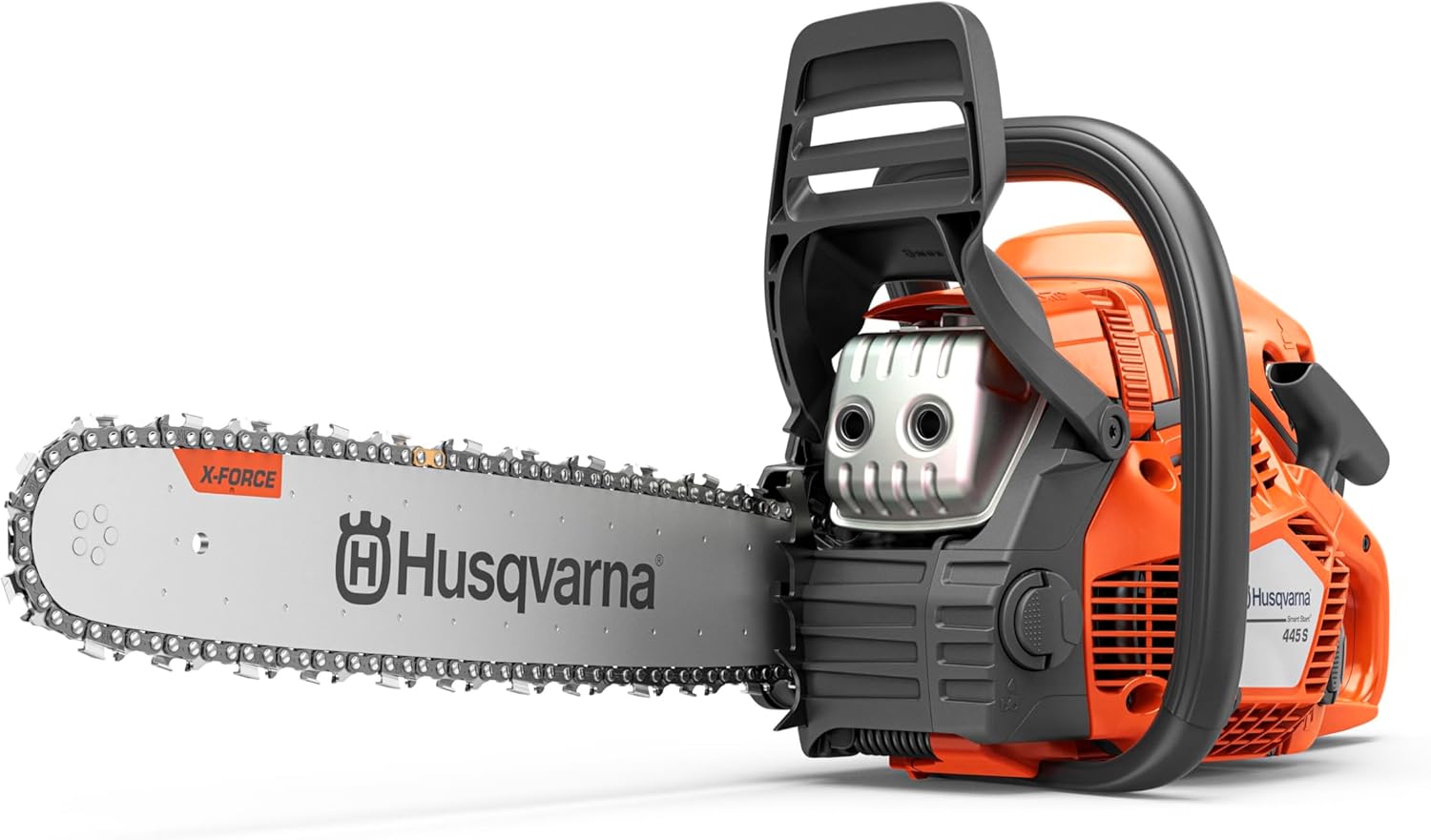
Husqvarna 445S 18-inch Gas Chainsaw
| Power Source | Gas Powered |
|---|---|
| Horsepower | 3 hp |
| Chain Length | 18 inches |
| Model Number | 970709038 |
The Husqvarna 445S is a performance-focused 18-inch gas chainsaw designed for demanding homeowner and light professional tasks. It pairs a 50cc, 3-horsepower X-Torq engine with an 18-inch bar and X-CUT chain to deliver fast, consistent cutting and good low-RPM torque for limbing, firewood and property maintenance. Smart Start and a combined choke/stop control make startup straightforward, while Air Injection and a transparent fuel indicator simplify maintenance and reduce downtime. LowVib dampeners and a slim-body design improve handling during longer sessions, and an automatic oiler keeps the chain lubricated for smoother cuts. Important trade-offs are its gas engine maintenance needs and heavier feel compared with battery models, and users must manage fuel mixing and routine filter care. For buyers prioritizing cutting speed and sustained power over cordless convenience, the 445S is a capable option that balances real-world performance with user-friendly features.
Best for: Buyers who prioritize fast, sustained cutting performance for regular property maintenance or heavier homeowner jobs and who accept gas-engine upkeep for power and runtime.
Less Ideal for: Those who want a low-maintenance, lightweight cordless tool for occasional small tasks or who need quiet operation in noise-restricted areas.
- Strong 50cc X-Torq engine provides sustained cutting power and good low-RPM torque
- Smart Start and combined choke/stop control for easier, more reliable starting
- LowVib anti-vibration system reduces operator fatigue during extended use
- Air Injection centrifugal cleaning helps extend air filter life and reduce maintenance
- Automatic oiler and transparent fuel indicator simplify lubrication and fuel checks
- Requires regular gas and two-stroke oil mixing and more routine maintenance than battery models
- Heavier than comparable battery chainsaws which can increase user fatigue for extended overhead work
Verdict: If you need an 18-inch chainsaw focused on cutting speed and sustained gas-powered performance, the Husqvarna 445S delivers reliable power and pro-oriented features.
GARWINNER 62cc Gas-Powered Chainsaw with 20-Inch Bar

| Power Source | Gas Powered |
|---|---|
| Horsepower | 3.26 |
| Model Number | 6220G |
The GARWINNER 62cc gas chainsaw is built for heavy cutting tasks like tree felling and processing firewood. It uses a 2-stroke 62cc engine that delivers strong power and relatively efficient fuel use for a gas saw, while an automatic oil-injection system keeps the chain lubricated during operation. Safety features include dual-action throttle controls that must be pressed together to start and a brake baffle for quick stops. The saw ships with a basic tool kit and a professional-style cutting chain intended to stay sharp and resist wear. Practical benefits are clear for someone who needs a robust, portable gasoline saw rather than an electric model: high cutting torque, independence from cords or batteries, and easier long-duration use in remote areas. Important limitations are typical of raw gas saws: it requires fuel mixing, routine maintenance, and careful handling to manage noise, vibration, and emissions. If you want a rugged, budget-focused machine for forestry-style work, this model provides strong performance for the price but expects standard upkeep and protective gear when using it.
Best for: Buyers who need a powerful, portable chainsaw for forestry or heavy woodcutting and who prioritize raw cutting performance on a budget.
Less Ideal for: If you prefer low-noise, low-maintenance, or zero-emission tools for light yard work or urban areas, an electric or battery chainsaw would be a better fit.
- High-power 62cc two-stroke engine suitable for heavy cutting and felling
- Automatic oil injection keeps the chain lubricated during continuous use
- Safety-minded controls including dual throttle switch and brake baffle
- Professional-style cutting chain designed for sharpness and wear resistance
- Requires gas and oil mixing plus routine maintenance typical of 2-stroke engines
- Can produce significant noise, vibration, and emissions compared with electric alternatives
Verdict: A budget-focused, high-power gas chainsaw that delivers strong cutting performance for forestry and heavy woodwork needs.
NEO-TEC NS872 72cc Gas Chainsaw with 28-Inch Bar

| Power Source | Gas Powered |
|---|---|
| Horsepower | 4.9 |
| Included Components | Chainsaw head, 28 inch bar and chain |
The NEO-TEC NS872 is a purpose-built large chainsaw that pairs a 72cc two-cycle engine with a 28-inch bar to tackle felling, storm cleanup, and land clearing. In practice it delivers strong cutting power thanks to a 3.6 kW (4.9 HP) engine and a full crank design intended for continuous use. Notable features include an inertia-activated chain brake for immediate stop, LowVib anti-vibration damping, smart start for easier pulls, and a magnesium-alloy body for improved heat dissipation and durability. The included 28-inch bar (3/8" pitch, .063" gauge) and compatibility with 24-inch bars make it flexible for different jobs. Expect professional-level performance and longer run sessions with lower operator fatigue, but also the usual maintenance needs of a gas saw such as fuel mixing, periodic carburetor and spark plug care, and louder operation than electric alternatives. For users who prioritize power and continuous heavy-duty cutting, this model is a solid choice; casual users who want quiet, low-maintenance tools may prefer smaller or electric options.
Best for: Buyers who need a powerful, workhorse saw for regular felling, logging, or large property cleanup and who prioritize cutting performance and uptime over low maintenance.
Less Ideal for: Urban homeowners with occasional light pruning needs or anyone seeking a quiet, low-maintenance electric alternative should consider smaller or battery-powered saws.
- High power 72cc engine delivering 3.6 kW (4.9 HP) for heavy-duty cutting
- Comes with a 28-inch bar suited to felling large trees and processing hardwood
- Inertia-activated chain brake and LowVib damping improve safety and comfort
- Smart start system and quality ignition components for more reliable cold starts
- Magnesium alloy body for better heat dissipation and increased durability
- Requires regular gas and engine maintenance typical of large two-stroke chainsaws
- Louder and heavier to operate compared with electric or smaller saws
Verdict: Choose the NS872 if you want a robust, professional 72cc chainsaw built for heavy felling and continuous cutting work.
PROYAMA 68CC Gas Chainsaw with 20" and 24" Bars

| Power Source | Gas Powered |
|---|---|
| Horsepower | 4.5 hp |
| Chain Length | 24 inches |
The PROYAMA 68CC is a gas-powered chainsaw built to tackle demanding outdoor work like tree felling, storm cleanup, and firewood processing. Its 4.5 hp 2-cycle engine combined with supplied 20" and 24" bars gives plenty of cutting reach for large logs and thick trunks. The magnesium alloy chain brake and case improve impact resistance while keeping the unit relatively light for a high-displacement saw. Practical features include an easy-start system, automatic oiler, quick-release air filter and an anti-vibration handle that reduce operator fatigue during extended use. The design emphasizes durability and lower maintenance for regular jobsite use, but buyers should expect the usual gas-saw requirements such as periodic tune-ups, mixed fuel handling, and louder operation compared with electric models. For someone prioritizing raw cutting power and versatility on larger trees or commercial tasks, this chainsaw delivers strong performance, though it demands basic mechanical familiarity and routine servicing to stay reliable.
Best for: Buyers who need a powerful, low-maintenance-capable saw for commercial or serious homeowner tasks and who prioritize cutting performance over convenience of electric models.
Less Ideal for: Casual users who want a quiet, low-inspection tool for occasional light pruning or those unwilling to perform routine engine maintenance.
- High power 68cc 2-cycle engine (4.5 hp) suitable for heavy-duty cutting
- Includes both 20" and 24" bars for versatile cutting lengths
- Magnesium alloy chain brake and case for improved durability and impact resistance
- Easy-start system, automatic oiler, and quick-release air filter for convenient operation and maintenance
- Requires gas mixing and regular mechanical maintenance typical of large two-cycle engines
- Louder and heavier than comparable electric models which can affect comfort and noise-sensitive sites
Verdict: A robust, high-power gas chainsaw that gives professionals and serious users the bar length options and durability needed for heavy tree work.
Choosing the Right Forestry Chainsaw: Key Factors to Consider
Cutting Capacity and Engine Output
Cutting capacity defines what diameter of trunk you can tackle without bogging the saw. In a forestry setting you will often hit large, dense timbers where torque and sustained RPM matter more than peak top speed. Look for rated power and recommended bar length that match the trees you fell. A saw that is underpowered for the target diameter will overheat or require repeated passes, increasing wear and cutting time.
Engine output also affects acceleration between cuts and the ability to maintain bar speed under load. Two saws with similar displacement can feel different in the field because of carburetion, tuned exhaust, and clutch gearing. Prioritize consistent, usable torque at working revs rather than headline horsepower numbers.
Durability of Major Components
Forestry use exposes saws to sap, grit, moisture, and rough handling. Durable components include a reinforced crankcase, high-quality cylinder finish, reliable crank bearings, and a chain brake/cover assembly that resists impact. Attention to material choice for the bar and chain, plus protective seals on the clutch and starter, prolong service intervals.
Likewise inspect construction features such as heavy-duty sprockets, oil-sealed bearings where practical, and ruggedized mounting points. Durability reduces mission-critical failures in remote locations and lowers long-term maintenance time, which is crucial when you are working away from a workshop.
Serviceability and Parts Access
In-forest repairs and routine maintenance are routine. Serviceability covers how quickly you can change the chain and bar, access the spark plug and air filter, and perform clutch or carburetor adjustments. A saw with tool-free covers for air filters and easy-access spark plugs saves time on the trail.
Availability of replacement parts and a straightforward carburetor adjustment procedure are practical considerations. Consider how often recommended services occur and whether typical adjustments are doable with simple hand tools. Easier serviceability reduces downtime and keeps teams moving during peak cutting seasons.
Ergonomics, Balance, and Vibration Control
You will be holding and guiding a forestry chainsaw for extended periods, frequently in awkward positions. Ergonomics encompasses handle shape, grip placement, control layout, and balance between the bar and engine. A well-balanced saw reduces the physical effort required to control the cut and lowers the risk of repetitive strain.
Vibration damping and anti-vibration mounts are important because they decrease operator fatigue and improve control when making precise cuts. Consider handle insulation, throttle and choke accessibility with gloved hands, and how the saw's center of mass feels during typical cuts.
Bar, Chain, and Oiling Systems
A consistent, adjustable oiling system preserves bar life and chain performance. In forestry conditions the chain accumulates sap and debris, so a reliable automatic oiler and the ability to fine-tune oil flow are valuable. Look for bars built to resist bending and sprocket wear, and for chains designed to shed debris and maintain cutting teeth sharpness.
Chain quality and ease of sharpening affect how long you can operate between tune-ups. A chain that holds its grind reduces downtime and the number of filed passes required. Consider the availability of compatible bars and chains, and whether the oiler can be inspected and adjusted quickly in the field.
Fuel Economy and Runtime
Long workdays in remote stands make fuel efficiency and tank capacity practical constraints. A saw with a more efficient fuel system or a larger usable tank reduces refueling frequency and keeps crews productive. That said, absolute tank size must be balanced against weight; a larger tank may increase carrying fatigue.
Fuel efficiency also affects the logistics of carrying extra fuel into and out of the site. Consider typical runtime at field loads rather than idle figures, and whether the saw maintains consistent performance as fuel level drops.
Preparing a Chainsaw for Forestry Work
Before you head into the woods, perform a short checklist focused on reliability: sharpen and tension the chain, clean or swap the air filter, inspect the bar for burrs and proper sprocket nose engagement, and verify chain oil flow. A pre-shift inspection tailored to forestry conditions prevents many common failures.
Pack a small field kit that contains a spare chain or link, a round and flat file, a multi-tool for adjustments, spare spark plugs, and a small container of bar and chain oil. Storing components in weatherproof containers limits contamination and keeps tools ready for rapid roadside repairs.
- Sharpen and tension the chain at the beginning of the day
- Check air filter and fuel mix before deep entry
- Confirm tool kit and spare parts are accessible
Field Maintenance That Extends Service Intervals
Simple field maintenance goes a long way toward preventing breakdowns. Clean the saw around the clutch, air intake, and cooling fins to prevent overheating. Remove built-up sawdust and sap from the chain brake and tensioning system after heavy cuts.
Monitor chain wear and file teeth as needed rather than waiting for a full resharpen. Regular small adjustments and cleaning keep cutting efficiency higher over long shifts and reduce the chance of a sudden, performance-ending failure.
- Blow debris from cooling air paths after each heavy job
- Wipe sap and oil from moving parts to prevent gumming
- Check chain tension more often when cutting green wood
Safety Practices for Heavy Timber Work
Forestry chainsaw work presents greater hazards than light yard cutting because of larger trees, deadwood hazards, and more complex felling dynamics. Use appropriate personal protective equipment, including cut-resistant chaps, helmet with face and ear protection, and gloves designed for wet and abrasive conditions. Maintain clear escape routes and communicate with crew before making directional cuts.
Adopt conservative cutting plans for large trees. Use established notch and back-cut techniques and step back to assess hinge behavior as you progress. If a tree shows unpredictable lean or hang-ups, consider an alternate approach or mechanical assistance rather than forcing the cut.
- Wear full protective gear and check equipment before cutting
- Plan and clear escape paths before the final back-cut
- Avoid cutting overhead hazards alone
Matching Bar Length to the Job
Bar length influences reach, control, and the saw's balance. For large-diameter trunks, longer bars reduce the need for multiple passes but increase the weight and leverage on the operator. Shorter bars are lighter and easier to manage during limbing and pruning tasks.
Rather than defaulting to the longest bar available, consider the typical tree size and the balance you can comfortably handle for extended periods. A mid-length bar often gives the best compromise between cutting capability and manageable weight.
- Choose bar length based on average trunk diameter you will encounter
- Consider carrying a spare shorter bar for limbing and tight work
- Inspect bar nose and groove wear regularly
Transport and Storage Tips for Forestry Saws
Transport chainsaws with the bar covered, chain tension relieved slightly, and the fuel tank at a safe level to reduce leakage risk. For multi-day trips, secure saws in a way that prevents impact damage to the bar and sprocket area.
In storage, keep saws dry and lightly oiled, drain carburetor bowls if storing for long periods, and store chains either on the bar or separately in protective sleeves. Good storage habits prevent corrosion and make the first shift after storage trouble free.
- Use a rigid case or lockable rack when transporting multiple saws
- Drain or stabilize fuel for long storage to prevent gum buildup
- Keep spare chains in labeled, sealed containers
How We Chose the Best Forestry Chainsaw
We focused on tools commonly used for sustained, professional forest work and filtered candidates by specifications and real-world durability indicators rather than marketing claims. Selection emphasized engine and bar performance that maintain cut speed on large-diameter wood, robust construction that tolerates sap, grit, and moisture, and ergonomic design for long shifting hours. We also prioritized ease of service and parts access, since field repairs and routine maintenance determine uptime for forestry operations. Safety features and vibration management were considered because they reduce fatigue and accident risk during prolonged use. Weight and balance were evaluated to ensure manageable handling during felling and limb work. Exclusions included light-duty homeowner saws, units sized only for yard cleanup, and models without documented serviceability or robust component materials. The resulting list reflects practical forestry priorities: cutting capacity, mechanical durability, field serviceability, operator comfort, and safety functionality.
FAQ
What bar length is typical for forestry chainsaw work?
Typical forestry bar lengths run longer than homeowner saws because they need to cut large-diameter trunks. The ideal length depends on the largest diameter you plan to cut, but many forestry applications use mid-to-long bars to reduce multiple passes. Balance and operator strength should guide final selection.
How often should I service a forestry chainsaw during a heavy season?
Service frequency depends on workload and conditions, but expect more frequent air filter cleaning, daily chain inspection, and periodic spark plug and carburetor checks. High-dust or sap-heavy environments require shorter service intervals to maintain performance.
Are anti-vibration systems worth having in professional saws?
Yes. Anti-vibration features reduce operator fatigue over long shifts and improve control during precision cuts. While they do not eliminate exposure, they contribute meaningfully to comfort and safety, especially for repetitive tasks.
Can fuel mix and oiling settings affect saw longevity?
They can. Correct fuel-oil ratios and a properly adjusted oiler keep internal parts lubricated and prevent overheating or premature wear. Inadequate oiling or incorrect fuel mix accelerates component stress and shortens service life.
What basic kit should I carry on remote forestry jobs?
Carry a spare chain link, a round and flat file for sharpening, a multi-tool for tension and carb adjustments, spare spark plugs, a small container of bar and chain oil, and basic protective gear. These items fix most common issues encountered in the field.
Final Verdict
For forestry work prioritize cutting capacity and component durability first, because they determine what you can cut and how long the saw will remain dependable under rough conditions. Serviceability, vibration control, and a reliable oiler are the next most important considerations since they affect uptime, operator comfort, and maintenance time. Balance these priorities against weight and handling so the saw you choose fits the practical realities of your crew and terrain. Focus on matching engine and bar capability to the wood sizes you work most often, and plan for straightforward field servicing to keep saws productive when it matters most.
