

Note: This article contains affiliate links. If you click on these links and make a purchase, I may earn a small commission at no extra cost to you. This helps support my research and content. Read my full affiliate disclosure here.
If you heat with wood or split logs for backyard projects, choosing the right homeowner chainsaw for firewood matters more than brand hype. The right saw will cut through seasoned and green wood efficiently, be straightforward to maintain between uses, and feel safe and predictable in typical yard conditions. This guide shortlists the top homeowner chainsaws for firewood and explains the practical tradeoffs that matter in a real garden or woodlot. We assess cutting power, bar length suitability, chain durability, and routine serviceability so you can pick a saw that matches your workload and skill level.
Top Picks at a Glance
| Best Overall The best all-around choice for most situations | EGO POWER+ CS1611 16" Cordless Chainsaw with 56V 2.5Ah Battery and Charger |  |
| Best Quality Built to a higher standard if you want something more solid | Husqvarna 450 Rancher 20" Gas Chainsaw (50.2 cc, 3.2 HP) |  |
| Best Value The sweet spot between price and what you get | DongCheng 40V 16-Inch Brushless Cordless Chainsaw with 2×4.0Ah Batteries |  |
| Best Budget The cheapest option that still gets the job done reliably | SUPMIXTOOLS 62cc 20" Gas Chainsaw (2-Cycle) |  |
| Highest Rated A top-rated pick with lots of positive feedback | NEO-TEC NH843 43cc Gas Chainsaw with 16" Bar |  |
| Most Popular A crowd favorite that many people choose with confidence | SEESII 40V Cordless Electric Chainsaw, 16-Inch (Includes 2×40V Batteries & Chargers) |  |
EGO POWER+ CS1611 16" Cordless Chainsaw with 56V 2.5Ah Battery and Charger
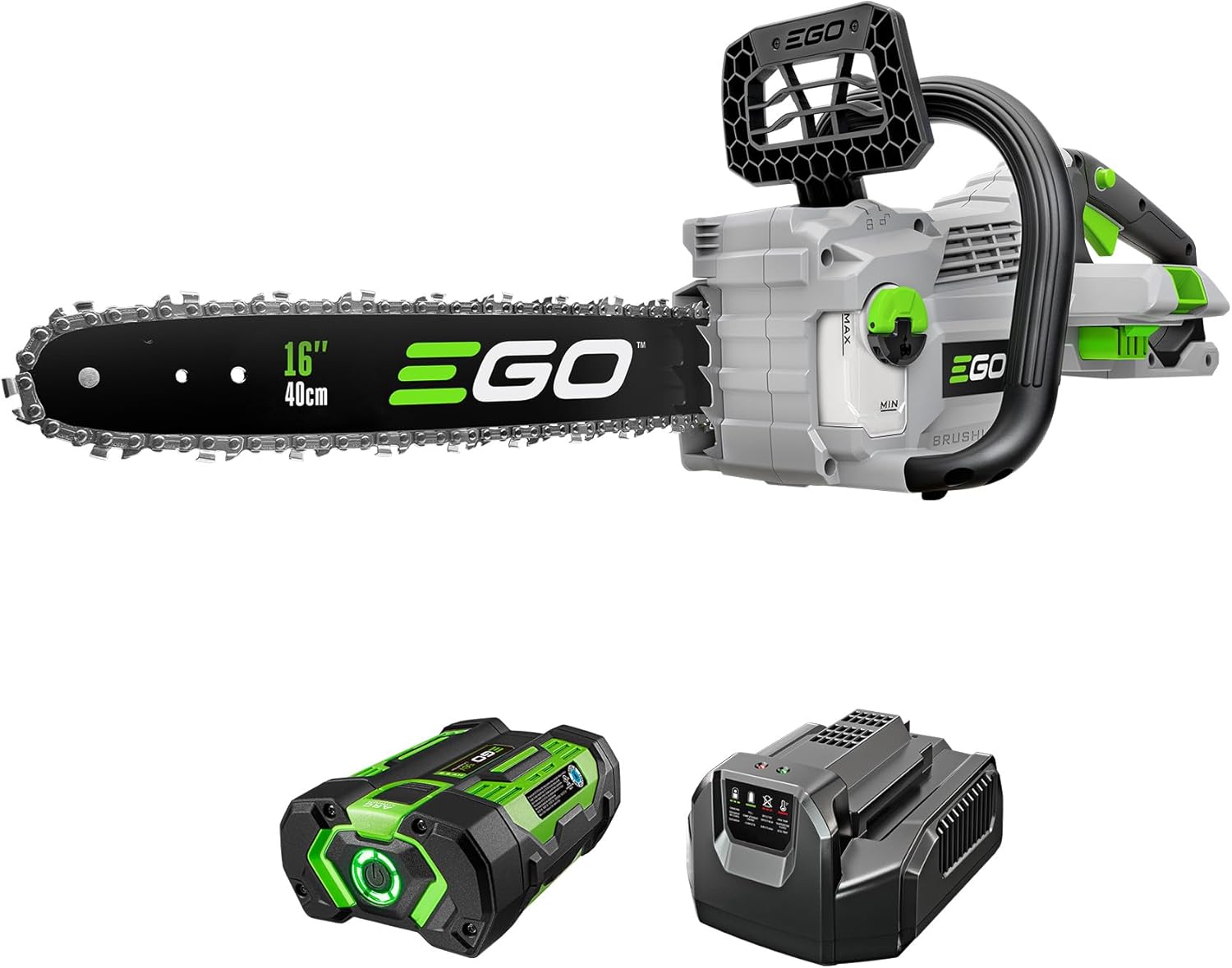
| Power Source | Battery Powered |
|---|---|
| Horsepower | 2.3 |
| Chain Length | 16 inches |
| Included Components | 2.5Ah Battery and Standard Charger |
| Chain Speed | 20 m/s |
The EGO POWER+ CS1611 is a battery-powered 16-inch chainsaw built to give prosumer-level cutting performance without gas. It uses a high-efficiency brushless motor rated as a 40CC equivalent and runs on the included 56V 2.5Ah ARC Lithium battery, which the manufacturer says delivers up to about 130 cuts through a 4×4 on a single charge. Notable features include a 20 m/s chain speed for efficient cuts, a tool-free chain-tensioning dial for quick on-the-job adjustments, automatic oiling with a spill-free reservoir, metal bucking spikes for secure cutting, and an IPX4 weather resistance rating. In real use this means quieter, low-maintenance operation compared with gas saws, fast setup between cuts, and enough runtime for routine property work like limb removal, small tree felling, and firewood prep. Limitations are battery runtime for very heavy or continuous commercial use and the saw’s 16-inch bar, which restricts maximum cut diameter compared with larger pro gas models.
Best for: Buyers wanting a low-maintenance, gas-free alternative that still delivers near-gas power for regular property maintenance, pruning, and medium-duty cutting tasks.
Less Ideal for: Users who need long uninterrupted runtime for commercial logging or must cut very large-diameter timber should consider larger gas or higher-capacity battery systems.
- Brushless motor with 40CC gas-equivalent power for strong cutting performance
- Includes 56V 2.5Ah battery and charger so it is ready to use out of the box
- Tool-free chain tensioning lets you adjust the chain quickly on site
- Automatic oiling with a spill-free reservoir keeps the chain lubricated during work
- IPX4 weather resistance and metal bucking spikes add durability and control in outdoor conditions
- 16-inch bar limits maximum cut diameter compared with larger pro chainsaws
- Runtime depends on battery capacity and may be insufficient for long, continuous heavy-duty jobs
Verdict: A ready-to-use cordless chainsaw that gives near-gas power and easy on-the-job adjustments, ideal for homeowners and pros doing regular medium-duty cutting.
Husqvarna 450 Rancher 20" Gas Chainsaw (50.2 cc, 3.2 HP)

| Power Source | Gas Powered |
|---|---|
| Horsepower | 3.2 hp |
| Chain Length | 20 inches |
The Husqvarna 450 Rancher is a workhorse gas chainsaw aimed at users who need reliable power for pruning, yard cleanup, and firewood cutting. It pairs a 50.2-cc X-Torq two-stroke engine with a 20-inch bar to deliver strong cutting performance and steady torque under load. Practical features include Smart Start and an air purge for easier, quicker startups and an Air Injection centrifugal pre-cleaning system that reduces debris reaching the air filter to help engine longevity. LowVib technology, an ergonomic rear handle and soft inlay improve comfort during extended use, and an inertia-activated chain brake adds a safety layer against kickback. Expect robust power and professional handling, but also the usual maintenance needs of a gas saw such as fuel mixing, routine filter and spark plug service, and higher noise and emissions compared with battery models. For buyers wanting consistent heavy-duty cutting and proven engine performance, this model is a solid choice; for very light occasional jobs, it may be more saw than necessary.
Best for: Experienced homeowners and semi-pro users who prioritize sustained cutting power and durability for frequent tree work, firewood cutting, and heavy yard cleanup.
Less Ideal for: Casual users with only occasional light trimming needs or those who prefer low-noise, low-maintenance battery tools.
- Powerful 50.2-cc X-Torq engine delivers strong cutting performance for heavy tasks
- Smart Start and air purge make starting quicker and less finicky
- Air Injection centrifugal system reduces debris in the air filter for longer service intervals
- Ergonomic design with LowVib and soft inlay improves comfort during extended use
- Requires regular gas and two-stroke oil mixing and routine maintenance inherent to gas engines
- Heavier and louder than cordless electric alternatives
Verdict: Choose the Husqvarna 450 Rancher when you need a durable, high‑power gas chainsaw for frequent heavy cutting tasks.
DongCheng 40V 16-Inch Brushless Cordless Chainsaw with 2×4.0Ah Batteries

| Power Source | Battery Powered |
|---|---|
| Horsepower | 550 watts |
| Chain Speed | 14 m/s Max |
| Chain Length | 16 inches |
This DongCheng cordless chainsaw pairs a brushless motor with two 4.0Ah 20V batteries (40V total) to deliver gas-like cutting power for common homeowner jobs like firewood, storm cleanup, and small tree felling. The 16-inch Oregon-equipped bar and a claimed 14 m/s chain speed make it capable of cleanly cutting 4×4 lumber, and the kit is designed to do roughly 120 cuts per charge under the stated test conditions. Practical user-friendly touches include tool-free chain tensioning for fast adjustments, an automatic oiler that keeps the bar lubricated during use, and an inertia-activated chain brake plus a lock-out safety switch. Battery compatibility with DongCheng 20V tools means the batteries can be reused across other yard tools. Expect quieter, fume-free operation compared with a gas saw and much less routine maintenance. Limitations: runtime will vary with cut size and operator technique so heavy professional workloads may need spare batteries, and actual performance depends on battery conditioning and charging practices.
Best for: Homeowners who want a low-maintenance, battery-powered chainsaw for regular firewood cutting and seasonal storm cleanup and who prioritize cross-compatible batteries and easy upkeep.
Less Ideal for: Commercial users or landscapers who need extended continuous runtime and the highest duty-cycle performance should consider professional gas or high-capacity battery systems instead.
- Brushless motor with dual 20V batteries provides strong, consistent torque for homeowner cutting tasks
- Tool-free chain tensioning speeds maintenance and reduces downtime
- Automatic oiler helps extend bar and chain life with continuous lubrication
- Safety features include inertia-activated chain brake and lock-out switch for kickback protection
- Runtime claims depend on test conditions so heavy or continuous cutting may require extra batteries
Verdict: A practical, low-maintenance cordless chainsaw that gives homeowners near-gas power and easy upkeep for cutting firewood and routine yard cleanup.
SUPMIXTOOLS 62cc 20" Gas Chainsaw (2-Cycle)

| Power Source | Gas Powered |
|---|---|
| Horsepower | 4.2 hp |
| Chain Speed | 8500 Rpm/Min |
| Chain Length | 20 inches |
The SUPMIXTOOLS 62cc 20-inch gas chainsaw is a powerful 2-cycle saw built for homeowners and light pros who need strong cutting performance. It uses a 62cc 2-stroke engine that delivers high chain speed and roughly 4.2 horsepower, making it capable of cutting larger logs, limbing, and routine tree work. The saw ships with a 20-inch guide bar, low-kickback chain, basic toolkit, spare spark plug, and a fuel mixing bottle so you can get started after assembly. Practical benefits include strong cutting power for firewood and felling medium trees, an ergonomic balance that helps reduce fatigue during longer sessions, and a chain brake and safety switch for added protection. Note that it is a carbureted gas engine so you should expect routine maintenance such as mixing fuel, sharpening/adjusting the chain, and periodic tuneups; it is also heavier and louder than electric alternatives. If you need dependable, high-power cutting in areas without electricity, this model supplies the necessary performance but requires careful handling and upkeep.
Best for: Buyers who need a traditionally powered saw with strong cutting ability for firewood, tree trimming, and occasional felling and who prefer established gas-engine reliability over battery alternatives.
Less Ideal for: People who want the quietest, lowest-maintenance option or who primarily work in small yards with easy access to electricity should consider electric or battery chainsaws instead.
- Powerful 62cc 2-stroke engine suitable for demanding cutting tasks
- 20-inch guide bar and low-kickback chain for efficient cutting of larger logs
- Includes starter kit items useful for first-time setup (toolkit, spark plug, fuel bottle)
- Chain brake and safety switch for added operator protection
- Requires regular gas mixing, maintenance, and tuning typical of carbureted 2-stroke engines
- Heavier and louder than battery or electric chainsaws, which affects transport and noise
Verdict: Choose this saw if you need a robust gas-powered 20-inch chainsaw that delivers real cutting power for demanding outdoor jobs.
NEO-TEC NH843 43cc Gas Chainsaw with 16" Bar

| Power Source | Gas Powered |
|---|---|
| Horsepower | 2.9 hp |
| Chain Length | 16 inches |
| Engine Displacement | 43CC |
| Fuel Tank Capacity | 494ml |
The NEO-TEC NH843 is a compact 43cc gas chainsaw built to deliver strong cutting performance for firewood and routine property work. Its 2.95 HP two-stroke engine, magnesium crankcase and 16-inch bar make it easier to handle for extended cutting sessions while still offering the power to fell small to medium trees and slice rounds for firewood. Notable features that help in the yard include an air purge for easier starting, a double-spring starter and a digital igniter for more reliable cold starts, plus a side-mounted chain tensioner for quick adjustments in the field. The saw ships with basic PPE and a tool kit so you can begin cutting right away. Expect decent fuel economy from the engine's stratified scavenging design but keep in mind this is a gas two-stroke so it requires proper fuel mixing and regular maintenance. The magnesium crankcase reduces weight but may require careful handling and servicing compared with heavier-duty professional units.
Best for: A homeowner or weekend woodcutter who needs a reliable, maneuverable gas saw for cutting and splitting firewood and general property maintenance.
Less Ideal for: Professional arborists or users who need a heavy-duty saw for continuous commercial logging should consider higher-displacement, industrial-grade models.
- High power-to-weight ratio from a 43cc, 2.95 HP engine for effective firewood cutting
- Magnesium crankcase and compact design make the saw easier to maneuver during long sessions
- Starting aids (air purge, double spring starter, digital igniter) improve cold-start reliability
- Side-mounted chain tensioner and included tool kit simplify on-site adjustments
- Requires two-stroke fuel mixing and routine maintenance common to gas chainsaws
- Less robust than heavy professional models for continuous commercial use
Verdict: A lightweight, reliably starting 43cc gas chainsaw well suited to homeowners and firewood cutters who want a balance of power and maneuverability.
SEESII 40V Cordless Electric Chainsaw, 16-Inch (Includes 2×40V Batteries & Chargers)

| Power Source | Battery Powered |
|---|---|
| Horsepower | 2000 watts |
| Chain Speed | 35FT/S |
| Number of Batteries | 2 x 40V 4000mAh |
| Chain Length | 16 inches |
The SEESII 40V 16-inch cordless chainsaw is a battery-powered alternative to small gas saws that aims to deliver sustained cutting power without fumes or pull starts. It uses a native 40V brushless 2000W motor and ships with two 40V 4.0Ah batteries plus a dual fast charger so you can swap batteries for extended runtime on large jobs like storm cleanup or firewood cutting. Notable features include an automatic chain oiler with a 150ml reservoir, tool-free chain tensioning for quick on-the-job adjustments, and three-layer safety protections including a chain brake and safety lock. In practice this makes the saw easy to start, maintain, and keep running for multiple cuts before needing to recharge. The kit also includes goggles and gloves for immediate use. Important limitations are that true heavy professional forestry work may exceed a 16-inch bar and battery runtime despite the dual batteries will vary with cut size and operator technique. For homeowners and weekend woodcutters who want gas-like cutting power without engine maintenance this is a very capable, user-friendly choice.
Best for: Homeowners, DIYers, and weekend woodcutters who want near-gas performance without fumes or engine upkeep for yard maintenance, firewood, and storm cleanup.
Less Ideal for: Professional arborists or contractors who need larger bars, continuous all-day use, or the indefinite runtime of gasoline-powered chainsaws.
- Native 40V brushless 2000W motor provides sustained high torque comparable to small gas saws
- Includes two 40V 4.0Ah batteries and a dual fast charger for extended runtime and quick swaps
- Automatic chain oiler with 150ml reservoir reduces friction and routine maintenance
- Tool-free chain tensioning enables fast adjustments without extra tools
- Triple safety protections plus included goggles and gloves for out-of-the-box safety
- 16-inch bar limits capacity for larger professional or commercial tree work
- Actual runtime depends on cutting conditions and may be shorter than advertised under heavy load
Verdict: This 16-inch 40V kit delivers near-gas cutting power and convenient battery swapping for homeowners who need serious cordless performance without the fuss of gasoline.
Choosing the Right Homeowner Chainsaw for Firewood: Key Factors to Consider
Cutting Power Relative to Log Size
Cutting power determines how quickly a chainsaw slices through both green and seasoned wood. For firewood work you will frequently encounter a mix of species and moisture content; a saw with modest torque may stall on dense hardwoods while a higher-torque unit keeps the chain feeding smoothly.
Consider the saw's engine or motor output and how that translates to real-world cutting. Power interacts with bar length too: a shorter bar concentrates available power and can cut faster through small-to-medium rounds, while longer bars need more torque to maintain cutting speed on big logs.
Bar Length and Compatibility
Bar length affects the maximum log diameter you can cut safely in a single pass and influences maneuverability. Homeowners splitting firewood usually get the most use from bars in the short to mid range because they handle common log sizes without being awkward when lifting or turning the saw.
Also check that the saw accepts common chain types and that replacement bars or chains are readily available. Interchangeability matters because you may choose to swap bar lengths later or need an easy-to-find replacement chain after heavy use.
Chain Longevity and Ease of Sharpening
Chains wear out with use, especially when they contact dirt or sand near the bark. A durable chain reduces downtime and cost, but when it does dull the easier it is to sharpen the better. Some chains accept common file sizes and are simple to tension, which keeps maintenance quick between cutting sessions.
Think about how comfortable you are with sharpening and whether you prefer a chain that keeps its edge longer versus one that is very easy to file at home. If you frequently hit dirty wood, expect to sharpen more often and plan accordingly.
Starting Reliability and User Comfort
A saw that starts reliably and feels balanced reduces frustration and safety risks in the middle of a cutting job. For gas models, pull-start systems, choke design, and primer bulbs influence first-pull starts. For electric options, battery run time and quick recharge matter for uninterrupted work.
Ergonomics such as handle shape, anti-vibration features, and overall weight distribution affect how long you can cut without fatigue. Comfortable controls and predictable throttle response also make repetitive cuts safer for the homeowner.
Routine Maintenance and Access
Simple maintenance keeps a saw dependable season after season. Look for accessible air filters, tool-free chain tensioners, and easy bar removal so routine cleaning and chain service do not become a hassle. Clear maintenance access encourages owners to perform required checks like cleaning debris from the clutch cover and checking sprocket wear.
Consider whether spare parts and consumables like chains, bar nuts, and spark plugs are easy to source locally. If something needs a shop visit to perform a basic service, that adds time and cost to ownership.
Gas Vs Battery Options for Home Firewood Use
Gas chainsaws typically deliver higher continuous power useful for large logs and extended sessions, while battery models offer quieter operation and lower maintenance. For occasional firewood splitting around the yard a battery saw can be convenient, but for regular weekend cutting you may prefer the sustained torque of a small gas engine.
Battery saws have the advantage of simpler cold starts and less routine engine service. Gas saws require fuel management and spark plug and carburetor checks. Match your choice to how often you will be cutting and how large the logs typically are.
- Gas: stronger sustained torque, needs fuel care
- Battery: lower maintenance, limited by run time
- Both: consider noise, vibration, and local restrictions
Safety Practices When Cutting Firewood
Safe cutting starts with personal protective gear: chainsaw chaps or pants, eye and ear protection, gloves, and sturdy boots. Keep bystanders well clear when you are felling or bucking logs.
Plan cuts to avoid pinching the bar, and use wedges or a sawbuck to stabilize rounds. Be mindful of kickback zones near the tip of the bar and always maintain a secure two-handed grip. If you feel the saw lug or stall, set the saw down and evaluate rather than forcing a cut.
- Wear chainsaw-rated protective clothing
- Stabilize logs and avoid cutting on the ground
- Practice a controlled stance and two-handed grip
Preparing Logs and Workflows to Reduce Wear
Removing dirt and rocks from wood before cutting prevents premature chain wear. Knock off excess debris, trim exposed roots, and avoid cutting into metal objects like nails. Organize logs by size so you can use the appropriate bar length for each batch.
Work in short sessions with periodic chain checks and sharpening breaks. A tidy workflow that staggers sharpening and refueling or battery swaps keeps cutting efficient and reduces stress on the saw.
- Clean bark debris before cutting
- Sort rounds by diameter for consistent bar choice
- Inspect chain and sprocket every few hours of use
Storage and Off-Season Care
Proper storage extends a chainsaw's life. For gas saws, run the engine until it is out of fuel or stabilize fuel with an approved treatment, then clean the saw and remove the chain and bar for inspection. For battery saws, store batteries in a cool, dry place at partial charge to preserve longevity.
Regularly clean the bar groove and oil ports to prevent gumming. Replace worn chains and check for rust on the bar. A winterized saw that is clean and dry will be ready when the next season's cutting begins.
- Empty or stabilize fuel before long storage
- Store batteries cool and partially charged
- Inspect and lightly oil metal parts before shelving
Accessory Tools That Make Firewood Work Easier
A good file or a sharpening kit, a quality pair of gloves, a sawbuck or log cradle, and wedges are simple accessories that speed work and protect equipment. A small bench vise and depth gauge guide help keep chains sharpened to consistent angles.
Consider a spare chain or a second battery to avoid downtime during a long cutting day. A compact, dedicated chain lubricant and an easy-to-use oiler system keep the chain running cooler and reduce wear.
- Carry a sharpening kit and spare chain
- Use a sawbuck to stabilize logs
- Keep dedicated chain lubricant on hand
How We Chose the Best Homeowner Chainsaw for Firewood
We focused on attributes that actually affect how a homeowner chainsaw for firewood performs in home use. Primary evaluation criteria included cutting power and torque for dealing with varied log sizes; bar and chain compatibility so the saw handles typical firewood lengths; chain durability and ease of sharpening since maintenance frequency affects long-term utility; starting reliability and ergonomics for safe repeated operation; and routine serviceability such as accessible air filters and tool-free tensioning. We excluded professional-grade saws intended for full-time logging and models that require complex commercial servicing. We also filtered out tools with bar lengths or power ratings unsuitable for typical homeowner firewood tasks. Final selections favored saws that balance manageable weight with enough power for hardwoods, simple maintenance steps, and predictable safety features.
FAQ
What bar length is best for homeowner firewood use?
Mid-length bars often provide the best balance for homeowners. They let you cut common log sizes without excessive weight or compromised handling. Very long bars are useful only if you regularly run large-diameter rounds.
How often will I need to sharpen the chain when cutting firewood?
Sharpening frequency depends on wood type and how often you hit dirt or grit. Expect to touch up the chain after a few hours of cutting in clean wood and more frequently if the chain encounters soil or sand.
Are battery chainsaws powerful enough for hardwood firewood?
Modern battery saws can handle many hardwood jobs, especially smaller rounds, but their run time and sustained torque are limited compared with gas. For extended sessions or large hardwood logs a gas option may be more practical.
How do I reduce the chance of bar pinching in a log?
Use wedges to keep a kerf open when bucking larger rounds and plan cuts so the log settles predictably. Cutting from the top and then opening the kerf with wedging reduces pinching and protects the chain.
What maintenance matters most between cutting days?
Clean bar grooves and oil ports, check chain tension, and inspect the sprocket and chain for wear. For gas saws also check the air filter and remove sawdust buildup from the clutch cover area.
Final Verdict
Choosing a homeowner chainsaw for firewood is a balance between power, handling, and how much maintenance you want to do. Prioritize enough cutting torque and an appropriate bar length for the logs you cut most often, and pick a model with chains and parts that are easy to service or replace. Remember that workflow, sharpening habits, and safe practices influence long-term satisfaction as much as the initial spec sheet. Focus on the tradeoffs that fit your rhythm: battery convenience and low upkeep versus gas endurance for heavier work. With the right balance you will spend less time troubleshooting and more time turning rounds into stacked, usable firewood.
