

Note: This article contains affiliate links. If you click on these links and make a purchase, I may earn a small commission at no extra cost to you. This helps support my research and content. Read my full affiliate disclosure here.
Blueberry bushes need acidic, well-structured soil and steady organic nutrition to set abundant fruit. Choosing the right compost matters because it affects soil pH, nutrient release rate, and root health in the top few inches where blueberries feed. This guide narrows the choices to five strong options that suit blueberry planting, potted specimens, and established beds. Each recommended compost was shortlisted for factors gardeners care about: acidity or acid-friendly amendments, organic matter content, texture for root contact, and weed or contaminant control. Below you will find practical guidance for using these composts and the evaluation criteria we applied.
Top Picks at a Glance
| Best Quality Built to a higher standard if you want something more solid | Blue Ribbon Organics OMRI-Certified Organic Compost (Bag) |  |
| Best Value The sweet spot between price and what you get | Wiggle Worm 100% Pure Worm Castings Organic Fertilizer, 15 lb |  |
| Highest Rated A top-rated pick with lots of positive feedback | DEEP ROOTS Living Soil Soil Reviver All-in-One Soil Amendment, 2 qt |  |
| Most Popular A crowd favorite that many people choose with confidence | Brut Organic Worm Castings, 5 lb |  |
| Best Seller A high-volume bestseller chosen again and again | Wiggle Worm 100% Pure Organic Worm Castings Fertilizer, 30 lb |  |
Blue Ribbon Organics OMRI-Certified Organic Compost (Bag)

| Brand | Blue Ribbon Organics |
|---|---|
| Included Components | Compost |
| Item Type Name | Organic Compost |
| Volume | 7.48 gallons |
Blue Ribbon Organics OMRI-Certified Compost is a bagged, fully processed organic compost designed to be worked into beds, used as a topdressing on lawns, or applied as a mulch around trees and shrubs. It is made from recycled food and yard residuals, monitored for maturity and contaminants, and certified for organic use so you can add it directly to vegetable, flower, and landscape plantings. Typical applications include incorporating 3–4 inches into new beds, adding a light 1/4–1 inch replenishment to established beds, or topdressing lawns at 1/4–1/2 inch in fall. The product claims improved aeration, increased water retention, pH buffering, and a boost of key nutrients such as nitrogen, phosphorus, and potassium. Because it is a natural material, moisture variation can affect bag weight and handling, and a single bag covers a modest area, so larger projects will require multiple bags or bulk compost. For gardeners focused on measurable soil improvement and organic certification, this compost delivers an easy, safe way to rebuild soil health without synthetic inputs.
Best for: Gardeners who prioritize measurable soil improvement and organic certification and want a ready-made compost to reliably boost planting beds, lawns, and established landscapes.
Less Ideal for: Large-scale landscapers or gardeners needing to amend many beds quickly should consider bulk compost options rather than repeated bag purchases.
- OMRI certified and meets US Composting Council standards so it is suitable for organic vegetable and flower gardens
- Processed and tested for maturity, pathogens, and weed seed to reduce risk of introducing problems
- Versatile use: can be tilled into new beds, used as a topdressing for lawns, or applied as mulch around trees and shrubs
- Contains a balanced mix of organic nutrients and improves soil aeration and water retention
- Bag size/volume is modest so several bags are needed for large beds or multiple trees
- Moisture variation in a natural product can make individual bag weights inconsistent
Verdict: Choose this bagged OMRI-certified compost when you want a tested, organic-ready product that reliably improves soil structure and supports performance-oriented gardening.
Wiggle Worm 100% Pure Worm Castings Organic Fertilizer, 15 lb

| Item Form | Granules |
|---|---|
| Specific Uses For Product | Soil Conditioning |
| Coverage | Vegetable gardens, lawns and turf grasses, houseplants and indoor gardens |
| Unit Count | 240 Ounce |
Wiggle Worm Pure Worm Castings is a straightforward organic soil amendment that supplies nutrient-rich, water-soluble humus and beneficial microbes without burning roots. Typical uses include mixing into potting mixes for containers, top-dressing established plants, amending planting holes for perennials and blueberry transplants, and brewing casting tea for regular liquid feeds. Notable features are its 100% pure castings composition and OMRI listing for organic use, which means it can be used in certified organic gardens and will not introduce inert bedding or worm eggs. Practically, a little goes a long way: the product can be worked into soil when planting, lightly top-dressed between seasons, or blended with compost to boost microbial activity and water retention. Limitations to note are that it is not a complete NPK fertilizer on its own for heavy feeders and that application rates vary by crop so you may still need supplemental fertilization or soil testing for pH-sensitive plants like blueberries.
Best for: Gardeners who prioritize improving long-term soil health and want an organic, low-risk amendment for transplanting, container mixes, and top-dressing blueberry beds.
Less Ideal for: Gardeners seeking a single fast-acting, complete synthetic fertilizer for heavy nitrogen-demand crops or those who need to dramatically lower soil pH quickly should consider alternatives.
- OMRI listed pure worm castings safe for organic gardens
- Adds beneficial microbes and improves soil aeration and water retention
- Versatile application: planting mix, top-dress, side-dress, or make casting tea
- Odorless and non-burning so safe for seedlings and established roots
- Not a balanced synthetic NPK fertilizer so heavy-feeding crops may need extra nutrients
- Bagged product requires measuring for consistent application rates
Verdict: Choose this OMRI-listed pure worm casting if you want a reliable organic amendment that builds soil biology and structure for healthier blueberry planting and ongoing care.
DEEP ROOTS Living Soil Soil Reviver All-in-One Soil Amendment, 2 qt

| Net volume | 2 qt |
|---|
Soil Reviver is designed as a ready-to-use soil conditioner you can mix into beds or use as a top-dressing to rebuild tired planting media. It combines living compost and worm castings to add organic matter and slow-release nutrients, biochar and humic substances to help soils hold water and move nutrients, plus mycorrhizal fungi to boost root access to moisture and nutrients. In practice this product is most useful when working into rose beds or renewing container mixes where improved structure and microbial activity are priorities. Because it targets biology and moisture retention rather than fast-release fertilizer, you should expect gradual improvements over weeks to months rather than immediate leaf greening. The 2 qt size is convenient for spot applications or small beds but may require multiple bags for larger gardens. Easy to apply and versatile, it is a practical choice for gardeners who want a single organic amendment to support longer term soil health in rose plantings.
Best for: Gardeners who prioritize building reliable, long‑term soil health for roses and want a single organic amendment to improve structure, moisture retention, and root function.
Less Ideal for: Growers needing a quick, high‑nitrogen boost for rapid top growth or those managing large beds who prefer bulk commercial amendments.
- Contains living compost and worm castings to increase organic matter and slow‑release nutrients
- Includes biochar and humic acids to improve water retention and nutrient availability
- Contains mycorrhizal fungi to support stronger root development and nutrient uptake
- Versatile for garden beds, containers, or as a top‑dressing
- Small 2 qt package means multiple purchases for larger rose beds
- Formulated to improve soil biology slowly so plants may not show immediate nutrient responses
Verdict: Choose Soil Reviver when you want a compact, organic all‑in‑one amendment to steadily rebuild soil biology and moisture retention for healthier rose roots.
Brut Organic Worm Castings, 5 lb

| Item Form | Granules |
|---|---|
| Specific Uses For Product | Gardening,Organic |
| Target Species | All plants |
| Mixing Ratio | 1:5 |
Brut Organic Worm Castings function as a concentrated, natural soil amendment you mix into potting mixes or top-dress garden beds and raised beds. Typical use is mixing at the recommended 1:5 ratio for new indoor plants, sprinkling a cup around established houseplants, or working into outdoor planting holes and beds according to the brand directions. The product is OMRI/CDFA listed and produced in controlled conditions, which supports consistent nutrient content and beneficial microbial life that help roots establish, improve soil structure, and increase moisture retention without burning plants. Practical benefits for raised garden beds include improved aeration, slow-release nutrients, and a boost in microbial activity that supports long-term fertility. Limitations are that it is not a complete NPK fertilizer for immediate heavy feeding needs and larger beds require significant quantities to hit the suggested per-square-foot rates, so frequent applications or bulk purchases may be needed for big projects.
Best for: Gardeners who prioritize dependable, organic soil improvement for raised beds and container gardens and prefer predictable, low-risk amendments that support long-term soil health.
Less Ideal for: Those needing immediate, high-NPK feeding for heavy-feeding crops or gardeners who want to amend very large beds without buying supplemental bulk material.
- Certified organic and produced indoors for consistent purity
- Rich in beneficial microbes that improve soil structure and plant vigor
- Easy-to-use granular form suitable for mixing or top-dressing
- Not a standalone high-NPK fertilizer for rapid nutrient correction
- Five-pound bag may be small for large raised beds and repeated seasonal use
Verdict: Use this OMRI/CDFA-listed worm castings product to reliably build long-term fertility and microbial health in raised beds and containers.
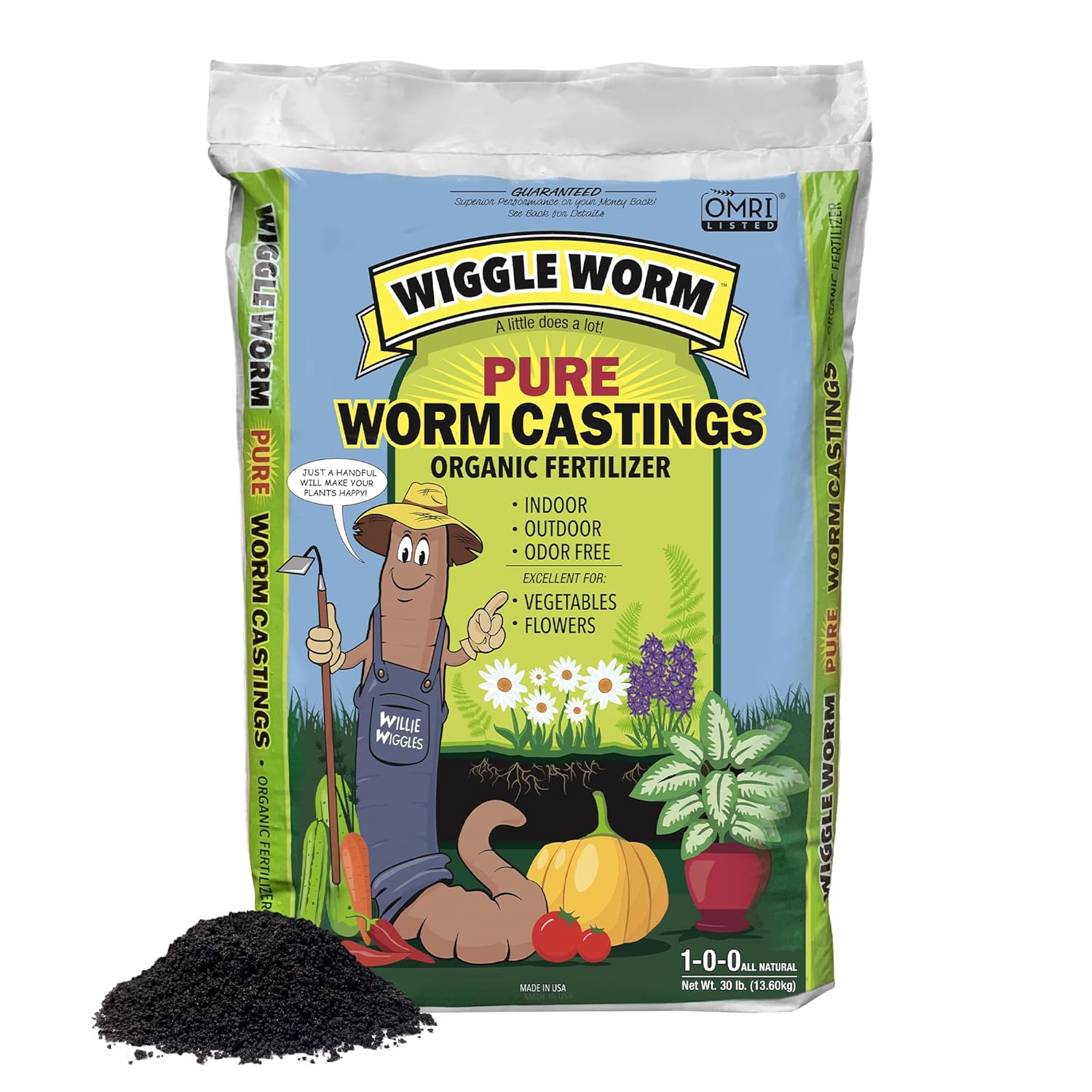
Wiggle Worm 100% Pure Organic Worm Castings Fertilizer, 30 lb
| Item Form | Granules |
|---|---|
| Specific Uses For Product | Soil Conditioning |
| Unit Count | 480 Ounce |
| OMRI Listed | Yes |
Wiggle Worm Pure Worm Castings are a straightforward organic soil amendment designed to strengthen soil biology and feed vegetable beds without risk of burning roots. Typically used as a top dressing, mixed into potting mixes, or added to planting holes, the product supplies water-soluble nutrients plus slow-release minerals and beneficial microbes that support root development and improved water retention. Notable features include OMRI listing for organic use, a screened product free of bedding and eggs, and clear application guidance for containers, raised beds, lawns, and transplanting. Practical benefits for a vegetable garden are faster nutrient uptake, better soil aeration, and reduced need for frequent synthetic feedings. The main limitations are that it is a low-NPK, gentle amendment rather than a complete, high-nitrogen fertilizer and you need to apply periodically or combine with higher-nutrient feeds for heavy-feeding crops. For gardeners focused on building long-term soil health it is a reliable, low-risk addition but expect incremental improvements rather than instant, dramatic growth spurts.
Best for: Gardeners who prioritize dependable, organic soil-building products for vegetables and want a safe, no-risk amendment to improve long-term fertility and plant health.
Less Ideal for: Growers who need a quick, high-nitrogen boost for leafy heavy feeders or those seeking a single-product, complete fertilizer solution should look elsewhere.
- OMRI listed and made from 100% screened worm castings suitable for organic vegetable gardens
- Boosts soil microbial activity and improves aeration and water retention
- Odorless and non-burning so safe for direct use around roots and in containers
- Versatile application: top dress, mix into potting soil, use in planting holes, or brew as tea
- Not a high-NPK fertilizer so may not meet immediate nutrient demands of heavy-feeding crops
Verdict: A reliably safe, OMRI-listed soil builder that steadily improves soil biology and structure for healthier vegetable gardens.
Choosing the Right Compost for Blueberry Bushes: Key Factors to Consider
pH Influence and Acid Compatibility
Blueberries thrive in acidic soils, usually between pH 4.5 and 5.5. Compost can raise, lower, or buffer soil pH depending on its feedstock and processing. Compost made largely from deciduous leaves, pine needles, or sphagnum peat alternatives tends to be more acid-friendly than compost that includes crushed shells, lime, or large volumes of alkaline ash. When selecting compost, consider whether it will slightly acidify the topsoil or at least avoid neutralizing acidity.
Testing compost pH or checking feedstock lists helps you avoid products that will push soil toward neutral. For established blueberry beds, choose composts labeled as suitable for ericaceous plants or those with documented low lime content so you preserve the acidic root environment blueberries need.
Organic Matter and Nutrient Release
High organic matter improves soil structure, water retention, and slow-release nutrition-important for shallow-rooted shrubs like blueberries. Compost adds a reservoir of nitrogen, phosphorus, and micronutrients that release as microbes break down material. Look for compost with a substantial, stable organic fraction rather than mostly fines or almost-finished potting mix.
Consider the nutrient release pattern: very high-nitrogen compost can stimulate leafy growth at the expense of fruit, while balanced, moderately rich compost supports steady fruiting. For long-term beds, repeat light top-dressings of compost each year to maintain organic matter without overwhelming roots.
Texture, Drainage, and Root Contact
Blueberry roots occupy the top 6 to 12 inches of soil and prefer loose, friable conditions with good drainage. Compost texture matters: a fine, crumbly compost mixes into native soil to improve aeration while still retaining moisture. Very coarse compost with large wood chunks reduces root contact and can create dry pockets.
When using compost as a bed amendment or top-dressing, aim for a texture that blends with your existing soil and avoids compaction. In containers, choose a compost or mix that promotes quick drainage while holding enough moisture to keep roots evenly damp between watering.
Weed Seed and Contaminant Screening
Compost quality varies in processing rigor. Poorly processed compost can contain viable weed seeds, perennial roots, or contaminants that introduce problems to a blueberry patch. Compost that has gone through controlled high-temperature phases is less likely to carry live weed seeds or pathogens.
Ask whether the compost supplier screens for heavy metals or persistent herbicide residues if those risks are local concerns. For fruiting shrubs, choose compost with clear testing or certification statements and avoid materials taken from unknown waste streams or treated landscaping debris.
Suitability for Containers and Raised Beds
Blueberries are commonly grown in containers, raised beds, and directly in the landscape. Compost that works well in-ground may be too dense or too wet for containers if used alone. For pots, favor compost blends designed to be light and fast-draining or mix garden compost with pine bark and perlite. In raised beds, deeper layers of compost mixed with ericaceous amendments can create an ideal root zone.
Consider how you will use the compost: as a planting medium, a seasonal top-dress, or a soil amendment. Each use has different texture and nutrient requirements, so pick compost formulated or processed to suit that specific application.
Salt Levels and Fertilizer Residues
Some composts, especially those made from manure or certain food wastes, can have elevated salt levels or carry residual fertilizer salts. High soluble salts can stress blueberry roots and reduce fruit set. Compost labeled for edible gardens or tested for electrical conductivity is safer for fruiting shrubs.
If you are unsure about salt content, use compost conservatively, combine it with low-salt materials like pine fines or bark, and monitor plant response. For container blueberries, leach the container with extra water occasionally to reduce any salt buildup.
Preparing Soil Before Planting Blueberries
Start by testing the existing soil pH and texture across the planting area. If pH is above the acid range, address that first with acidifying amendments and select compost that will not neutralize acidity.
Dig or double-dig the planting area to incorporate compost into the top 8 to 12 inches where blueberry roots will grow. Aim for a modest fraction of compost by volume so the native soil is still present to provide structure and drainage.
For new beds, create a layered root zone: a blended mix of native soil, compost, and coarse organic matter such as pine bark to make a well-draining, acidic environment.
- Test pH before and after major amendments
- Incorporate compost to the depth of active roots
- Avoid over-amending with high-nutrient compost at planting
Using Compost as a Top-Dress or Mulch
Top-dressing with a thin layer of compost each spring feeds soil life and slowly adds organic matter without disturbing roots. Keep the layer shallow-about 1 to 2 inches-so it blends into the soil surface and avoids forming a crust.
Combine compost with an acidic mulch, such as pine needles or shredded bark, to preserve low pH and suppress weeds. Avoid using compost alone as a long-term surface mulch if it tends to compact in your climate.
- Apply 1 to 2 inches of compost in spring
- Refresh acidic mulch annually to maintain pH
- Rake lightly to blend compost into the topsoil
Amending Container Mixes for Potted Blueberries
Containers call for a lighter, fast-draining mix than in-ground beds. Use compost as part of a blend with pine bark, peat alternatives, and an inert drainage element to avoid waterlogging.
When repotting or refreshing containers, remove old media that has compacted and mix in fresh compost at 20 to 30 percent of the new container volume. This provides nutrients without sacrificing aeration.
- Use compost at 20 to 30 percent of container mix
- Prioritize light, chunky bark for drainage
- Repot every 2 to 4 years to renew organic matter
Managing pH Over Time
Compost changes soil gradually, so monitor pH yearly. If soil drifts toward neutral, incorporate acidifying materials such as sulfur, sulfur-coated amendments, or acid-forming mulches to restore the range blueberry roots prefer.
Be cautious with fertilizer choices; some can raise pH or contribute to salt buildup. Use formulations designed for ericaceous plants or acid-loving shrubs when supplementing compost.
- Test soil pH annually
- Use acidifying amendments if pH climbs
- Choose fertilizers labeled for acid-loving plants
Seasonal Timing and Application Rates
Apply compost in early spring when soil life is active so nutrients mineralize through the growing season. Avoid major soil additions in late fall when cold soils slow microbial activity and release.
For established plants, light annual top-dressings are better than deep yearly incorporation. Over-application can change drainage and pH unintentionally.
- Top-dress in early spring
- Limit deep amendments to planting or major bed renovation
- Use lighter applications on mature plants
How We Chose the Best Compost for Blueberry Bushes
We focused on attributes that actually influence blueberry health rather than vague reputation. The shortlist includes composts that demonstrate an acid-friendly profile or that can be safely used with acid-loving shrubs. Evaluation criteria emphasized measurable soil effects and garden practicality: pH influence and buffering capacity; organic matter percentage and nutrient profile; texture and moisture-holding ability; weed seed and contaminant screening; and suitability for in-ground planting versus container growing. Products were excluded if they contained known lime-based neutralizers or high amounts of crushed shell, or if manufacturer information lacked clear organic content or contaminant testing. We also deprioritized composts with very coarse woody fragments that hinder fine root contact. The result is a set of composts that fit blueberry cultural needs while offering options for different planting situations and budgets.
FAQ
Can I use any garden compost for blueberries?
Often garden compost will work, but not all are ideal. Choose compost without lime or crushed shell and with a low or neutral effect on pH. Compost made from leaf litter or woody acidic feedstocks is usually a safer match.
How much compost should I add when planting blueberry bushes?
Mix a modest amount of compost into the top 8 to 12 inches of planting soil-enough to improve structure and organic matter without overwhelming native soil. A planting mix of roughly 20 to 30 percent compost by volume is a common guideline.
Will compost lower my soil pH enough for blueberries?
Compost alone rarely produces dramatic pH shifts. It can help maintain or slightly favor acidity depending on feedstock, but strongly alkaline soils usually need targeted acidifying amendments to reach blueberry-friendly ranges.
Is compost safe to use in containers for blueberries?
Yes, when the compost is part of a well-draining container mix. Use compost at a lower proportion, combine with pine bark and perlite, and avoid dense, water-retentive composts that may cause root rot in pots.
How often should I top-dress with compost?
A light top-dressing each spring is often sufficient to maintain organic matter and nutrient supply. Heavy or frequent applications can alter the soil profile and should be avoided unless you are rebuilding a bed.
Final Verdict
Prioritize composts that support acidic, well-drained root zones and that add stable organic matter without introducing weeds or high salts. Match texture to the planting situation: lighter, chunkier mixes for containers and finer, crumbly compost for in-ground beds. Keep pH monitoring and modest annual top-dressings part of your routine so blueberry roots remain in the preferred acid range. A pragmatic approach-testing soil, choosing acid-compatible composts, and applying them at recommended rates-will give you healthy shrubs and better fruit production over time.
