

Note: This article contains affiliate links. If you click on these links and make a purchase, I may earn a small commission at no extra cost to you. This helps support my research and content. Read my full affiliate disclosure here.
Choosing the right compost for flower pots changes how well your container plants establish, bloom, and survive dry spells. In pots the root zone is small and conditions change faster than in garden beds, so a compost that controls moisture, supplies steady nutrients, and resists compaction matters more than in-ground mixes. This guide covers six shortlisted composts suited specifically for flower pots and explains the practical tradeoffs you will face. We evaluated mixes for moisture management, nutrient profile, and texture so you can match a compost to your pot size, plant type, and watering routine. Read on to understand what to expect from container composts and which features to prioritize for healthy potted flowers.
Top Picks at a Glance
| Best Overall The best all-around choice for most situations | BuildASoil Build-A-Flower Organic Top Soil Amendment (Half Cubic Foot) |  |
| Best Quality Built to a higher standard if you want something more solid | Blue Ribbon Organics OMRI-Certified Organic Compost (Bag) |  |
| Best Value The sweet spot between price and what you get | True Organic Worm Castings Natural Granules, 64 oz |  |
| Best Budget The cheapest option that still gets the job done reliably | Life Cycle Organics 100% Organic Worm Castings, 20 oz |  |
| Highest Rated A top-rated pick with lots of positive feedback | Earth Science Premium Earthworm Castings, 3 lb |  |
| Most Popular A crowd favorite that many people choose with confidence | Brut Organic Worm Castings, 5 lb |  |
BuildASoil Build-A-Flower Organic Top Soil Amendment (Half Cubic Foot)

| Item Form | Granules |
|---|---|
| Application Method | Top dressing |
| Coverage | Flowering plants |
| Item Weight | 20 pounds |
BuildASoil Build-A-Flower is a packaged organic topsoil amendment designed for top-dressing flowering plants in pots, raised beds, and in-ground garden beds. It arrives as granules that you sprinkle a few handfuls of around the plant crown during the flowering stage and then water in to release nutrients. The mix blends composts, worm castings, biochar, rice bran and kelp meal, so it both supplies phosphorus and potassium important for blooms and feeds soil biology to improve nutrient availability over time. Because it is sold as a concentrated top dress, there is no measuring or mixing required, which makes it convenient for container gardeners and busy flower growers. Limitations are that this is an amendment not a complete potting mix, so potted plants still need a well-draining base potting soil and regular watering, and the bag size is geared toward spot applications rather than re-potting many large containers at once. Follow the directions to avoid inhaling dust when applying.
Best for: Gardeners who want an easy organic boost to increase blooms in pots and flower beds without changing their existing potting soil, especially those who prefer natural, biology-forward products.
Less Ideal for: People who need an all-in-one potting soil for repotting many large containers or who require a sterilized, synthetic-fertilizer-based feed plan.
- Formulated specifically to support flowering with added phosphorus and potassium
- Contains diverse organic ingredients that boost beneficial soil microbes
- Ready-to-use top dress application requires no mixing or measuring
- Sustainably sourced with no synthetic fertilizers
- Not a standalone potting mix so it cannot replace base container soil for repotting
- Bag size is intended for top-dressing rather than large-scale soil replacement
Verdict: A convenient organic top-dress that reliably feeds soil biology and adds the bloom-building nutrients flowering plants need.
Blue Ribbon Organics OMRI-Certified Organic Compost (Bag)

| Brand | Blue Ribbon Organics |
|---|---|
| Included Components | Compost |
| Item Type Name | Organic Compost |
| Volume | 7.48 gallons |
Blue Ribbon Organics OMRI-Certified Compost is a bagged, fully processed organic compost designed to be worked into beds, used as a topdressing on lawns, or applied as a mulch around trees and shrubs. It is made from recycled food and yard residuals, monitored for maturity and contaminants, and certified for organic use so you can add it directly to vegetable, flower, and landscape plantings. Typical applications include incorporating 3–4 inches into new beds, adding a light 1/4–1 inch replenishment to established beds, or topdressing lawns at 1/4–1/2 inch in fall. The product claims improved aeration, increased water retention, pH buffering, and a boost of key nutrients such as nitrogen, phosphorus, and potassium. Because it is a natural material, moisture variation can affect bag weight and handling, and a single bag covers a modest area, so larger projects will require multiple bags or bulk compost. For gardeners focused on measurable soil improvement and organic certification, this compost delivers an easy, safe way to rebuild soil health without synthetic inputs.
Best for: Gardeners who prioritize measurable soil improvement and organic certification and want a ready-made compost to reliably boost planting beds, lawns, and established landscapes.
Less Ideal for: Large-scale landscapers or gardeners needing to amend many beds quickly should consider bulk compost options rather than repeated bag purchases.
- OMRI certified and meets US Composting Council standards so it is suitable for organic vegetable and flower gardens
- Processed and tested for maturity, pathogens, and weed seed to reduce risk of introducing problems
- Versatile use: can be tilled into new beds, used as a topdressing for lawns, or applied as mulch around trees and shrubs
- Contains a balanced mix of organic nutrients and improves soil aeration and water retention
- Bag size/volume is modest so several bags are needed for large beds or multiple trees
- Moisture variation in a natural product can make individual bag weights inconsistent
Verdict: Choose this bagged OMRI-certified compost when you want a tested, organic-ready product that reliably improves soil structure and supports performance-oriented gardening.
True Organic Worm Castings Natural Granules, 64 oz

| Item Form | Granules |
|---|---|
| Specific Uses For Product | Gardening, Root Development, Seed Development |
| Application Method | Mix into soil, use for seeding and transplants |
| Unit Count | 64 Ounce |
| Ingredients | Nitrogen and Worm Castings |
True Organic Worm Castings are a ready-to-use granular soil amendment designed to improve soil health and support stronger root growth in container and garden settings. You sprinkle or mix the granules into potting mixes, topdress flower pots, or blend them into seed and transplant soils to increase microbial activity and enhance nutrient availability. The product is pure worm castings with about 1% total nitrogen and 0.95% slow-release nitrogen, so it supplies a gentle, steady nutrient boost without harsh salts or synthetic inputs. Practical benefits for potted flowers include improved water retention and soil structure that help roots establish and reduce watering frequency. Because it is an amendment rather than a complete fertilizer, you may still need a balanced feed for high-demand flowering plants during peak bloom. The granular form is easy to handle and mixes evenly, but expect modest immediate nutrient effects compared with concentrated synthetic feeds. For gardeners focused on healthier potting media and long-term soil biology, this is a convenient organic option.
Best for: Gardeners who prioritize healthier potting media and long-term soil biology for container flowers and want a simple organic amendment to mix or topdress their pots.
Less Ideal for: Growers who need fast, high-nitrogen feeds for aggressive flowering or for quickly correcting nutrient deficiencies should choose a concentrated fertilizer instead.
- Improves soil structure, aeration, and water retention for better root health in pots
- Boosts beneficial microbial activity to increase nutrient availability over time
- Contains low, slow-release nitrogen for a gentle, sustained nutrient supply
- Granular form mixes easily into potting mixes and can be used for topdressing
- Not a complete fertilizer so high-feeding flowering plants may need supplemental nutrients
- Nutrient levels are modest so visible effects can be gradual rather than immediate
Verdict: A simple organic soil amendment that strengthens potting mixes and encourages healthier roots for container-grown flowers.
Life Cycle Organics 100% Organic Worm Castings, 20 oz

| Unit Count | 20 Ounce |
|---|---|
| OMRI listed | Yes |
| pH | Neutral (7) |
| Style Name | Traditional |
Life Cycle Organics worm castings are a ready-to-use organic soil amendment sold in a resealable 20 oz pouch for potting, seed starting, and top-dressing established plants. Use by mixing about 20 oz into 1 to 2 gallons of potting mix for seed starts or by sprinkling a thin layer around the base of potted plants, garden vegetables, herbs, flowers, and shrubs. The product is OMRI listed and claims a neutral pH, making it safe for repeated applications without risk of burning plants. Practical benefits include improved root development, more vigorous growth, and a natural source of micronutrients such as nitrogen, phosphorus, and potassium. The small pouch is convenient for container gardeners and those trying worm castings for the first time, and the resealable bag helps keep material fresh between uses. Limitations are the modest 20 oz quantity, which is fine for pots and small beds but will require frequent repurchasing or larger sizes for bigger gardens and heavier feeding schedules.
Best for: Gardeners on a tight budget who want to try an organic soil booster for containers, seed starting, or small garden patches and prefer a ready-to-use, easy-to-store pouch.
Less Ideal for: Large-scale gardeners, market growers, or anyone who needs a bulk amendment for multiple raised beds or large lawns should choose gallon-sized or bulk options instead.
- Certified OMRI listed and suitable for organic growing
- Resealable pouch that is easy to store and measure
- Neutral pH and non-toxic so it can be applied repeatedly without burning plants
- Versatile use for seed starting, potting mixes, top-dressing, and indoor or outdoor plants
- Small 20 oz size is not economical for large beds or heavy feeders
Verdict: A convenient, OMRI-listed 20 oz pouch that makes trying organic worm castings affordable and simple for container gardeners and small plots.
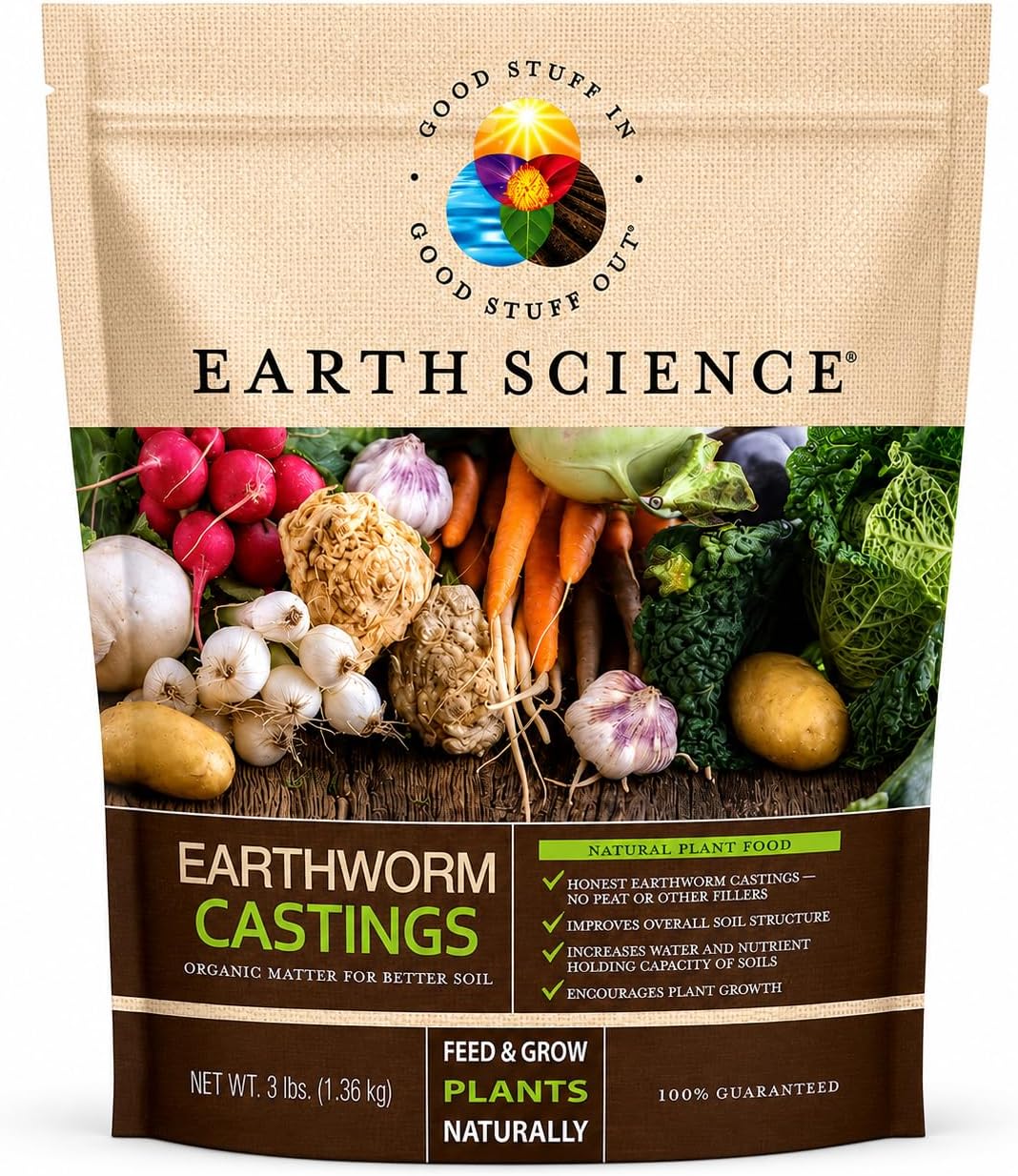
Earth Science Premium Earthworm Castings, 3 lb
| Item Form | Granules |
|---|---|
| Specific Uses For Product | Organic,Plant Food,Plant Growth |
| Coverage | Medium |
| Target Species | gardens, flower beds, fruits, trees, shrubs |
| Mixing Ratio | 1:4 |
Earth Science Premium Earthworm Castings are a pure vermicompost product intended to enrich garden and potting soils. Gardeners typically use it as a top dressing, mixed into potting mixes at about 1:4 castings to soil, or incorporated into garden beds at 1/4 to 1/2 inch and watered in; it can also be brewed as compost tea. The castings add organic matter that helps soil retain moisture, supports beneficial microbes, and can reduce compaction by improving aggregation. Practical benefits include a straightforward application for vegetables, flower beds, trees, and shrubs and the flexibility to use in pots, compost piles, or on lawns. The product is free of fillers and presented as a slow-release, natural fertilizer rather than a quick synthetic boost, so expect gradual improvements over weeks to months rather than immediate greening. Because this is a small, concentrated pouch, frequent reapplication during the growing season is recommended for larger beds or heavy-feeding crops.
Best for: Gardeners who prioritize dependable, natural soil improvement for organic vegetable beds and potted edibles and prefer steady, biology-driven results over quick chemical fixes.
Less Ideal for: Growers who need rapid, high-N fertilizer responses for a single fast-growing crop or who require large-volume amendments for extensive beds without frequent reapplication.
- 100% vermicompost with no peat or fillers
- Versatile uses: top dressing, potting mix amendment, compost tea, and compost layering
- Improves soil structure and water retention while feeding beneficial microbes
- Slow-acting nutrient release not suited for immediate greening or fast corrective feeding
Verdict: Use this pure earthworm castings product when you want a reliable, natural soil conditioner that builds long-term fertility for an organic vegetable garden.
Brut Organic Worm Castings, 5 lb

| Item Form | Granules |
|---|---|
| Specific Uses For Product | Gardening,Organic |
| Target Species | All plants |
| Mixing Ratio | 1:5 |
Brut Organic Worm Castings function as a concentrated, natural soil amendment you mix into potting mixes or top-dress garden beds and raised beds. Typical use is mixing at the recommended 1:5 ratio for new indoor plants, sprinkling a cup around established houseplants, or working into outdoor planting holes and beds according to the brand directions. The product is OMRI/CDFA listed and produced in controlled conditions, which supports consistent nutrient content and beneficial microbial life that help roots establish, improve soil structure, and increase moisture retention without burning plants. Practical benefits for raised garden beds include improved aeration, slow-release nutrients, and a boost in microbial activity that supports long-term fertility. Limitations are that it is not a complete NPK fertilizer for immediate heavy feeding needs and larger beds require significant quantities to hit the suggested per-square-foot rates, so frequent applications or bulk purchases may be needed for big projects.
Best for: Gardeners who prioritize dependable, organic soil improvement for raised beds and container gardens and prefer predictable, low-risk amendments that support long-term soil health.
Less Ideal for: Those needing immediate, high-NPK feeding for heavy-feeding crops or gardeners who want to amend very large beds without buying supplemental bulk material.
- Certified organic and produced indoors for consistent purity
- Rich in beneficial microbes that improve soil structure and plant vigor
- Easy-to-use granular form suitable for mixing or top-dressing
- Not a standalone high-NPK fertilizer for rapid nutrient correction
- Five-pound bag may be small for large raised beds and repeated seasonal use
Verdict: Use this OMRI/CDFA-listed worm castings product to reliably build long-term fertility and microbial health in raised beds and containers.
Choosing the Right Compost for Flower Pots: Key Factors to Consider
Moisture Balance
Flower pots need a compost that holds enough water to supply roots between waterings but also drains freely to avoid anaerobic conditions. A mix that retains moisture through fine organic particles or water-absorbing components reduces frequent watering, which is useful on patios or for hanging baskets.
Too much retention without drainage leads to soggy roots and root rot, while a very fast-draining mix will dry out quickly and stress flowering plants. Consider your local climate and how often you can water when choosing a moisture balance.
Drainage and Aeration
Good container compost maintains pore space so roots receive oxygen and excess water moves away. Coarse components such as perlite, coarse bark, or coarse horticultural grit improve aeration and help prevent the mix from becoming dense over time.
Aeration matters for vigorous root growth and for avoiding compaction after repeated wet-dry cycles. If you use smaller pots or clay containers, prioritize mixes with extra coarse material to counteract reduced natural airflow.
Nutrient Content and Release
Flowering plants need a steady supply of nitrogen, phosphorus, and potassium plus micronutrients to set and support blooms. Compost can supply both immediate available nutrients and slower-release organic forms that sustain plants between fertilizations.
Assess whether the compost is already enriched or if it is an inert, structural blend that will need routine feeding. In containers, nutrients leach with frequent watering, so a compost with some built-in fertility or stable organic matter reduces the frequency of supplemental feeding.
Texture and Resistance to Compaction
Texture affects how easy it is to transplant and how roots spread. A crumbly, open texture encourages fine root growth and makes repotting less stressful. Over a season, some composts collapse and compact, reducing pore space and causing poor drainage.
Look for components that retain structure, such as well-aged compost, woody fibers, or crushed coir. Mixes that are too fine will compact faster and require refreshing or re-potting more often.
Salt Levels and pH
Many container plants are sensitive to excess soluble salts and to pH extremes. High salt levels from manures or unbalanced amendments can harm young roots and inhibit plant water uptake. pH affects nutrient availability, especially for iron and phosphorus.
Choose a compost with moderate salt readings when possible and a pH in the slightly acidic to neutral range unless you are growing plants that prefer other conditions. If you suspect salt buildup from frequent fertilizing, periodic flushing of pots helps mitigate the issue.
Practical Handling and Cleanliness
Compost for pots should be easy to handle when filling many containers. Low-dust mixes reduce mess on patios and minimize inhalation risk during bag opening. Particle size should suit your pot sizes; very coarse blends are harder to pack into small cells or tiny pots.
Also consider whether the compost contains weed seeds or incompletely composted material that could introduce pests or rob nitrogen. Clean, screened compost saves time and keeps container displays tidy.
Matching Compost Texture to Pot Size
Small pots and hanging baskets need a finer but stable texture that still drains well. Very coarse components make packing into small containers difficult and create uneven moisture pockets. For larger decorative pots you can afford a coarser mix with more structural material to maintain aeration over a longer root zone.
When repotting, test the mix by squeezing a handful. It should hold together loosely without forming a dense ribbon. If the mix compacts under light pressure, it will likely restrict roots in smaller pots and should be amended with coarser material.
- Small pots: finer crumbly mix with some coarse particles for drainage
- Large pots: include more chunky components for long-term structure
- Hanging baskets: prioritize lightweight mixes with water-holding granules if you cannot water daily
When to Choose Enriched Versus Neutral Compost
Enriched composts contain added slow-release fertilizers or higher nutrient content and are helpful when you want fewer feedings during the season. Neutral or structural composts are better if you prefer to control feeding yourself or use a liquid program.
If you grow heavy-feeding annuals or repeat-blooming varieties, an enriched mix reduces the need for frequent fertilizer applications. For seasonal or drought-prone locations, a neutral, moisture-retentive compost combined with a timed feed schedule can be more flexible.
- Enriched mixes: fewer feedings, good for heavy bloomers
- Neutral mixes: greater control over fertilizer type and timing
- Consider liquid feeds for immediate nutrient needs mid-season
Preparing Pots Before Adding Compost
Ensure your pot has adequate drainage holes and a loose layer at the bottom if needed. Avoid using gravel to 'improve drainage' as that can create perched water tables; instead use a free-draining compost and, if required, coarse grit in the mix itself.
Clean old pots to remove salts or pathogens before refilling. When using a fresh compost, fill so there is room at the top for watering and a light mulch to reduce evaporation. For large containers, position root balls centrally and backfill with compost, firming only lightly to avoid compacting the mix.
- Check and clear drainage holes
- Skip gravel layers; prefer a well-draining mix
- Leave space at the rim for watering
Managing Watering and Fertility Through the Season
Containers need consistent monitoring because they dry and leach nutrients faster than garden soil. Water deeply until excess drains from the bottom, then let the surface dry slightly before the next watering to encourage root exploration. Adjust frequency based on temperature, pot material, and sun exposure.
Supplement compost fertility with a balanced liquid feed or timed-release granules according to the compost's nutrient profile. Flush containers occasionally to prevent salt buildup if you use chemical feeds or live in an area with hard water.
- Water deeply, then allow slight surface drying
- Match feed schedule to compost's built-in fertility
- Flush occasionally to prevent salt accumulation
Storage and Shelf Life of Bagged Compost
Store unopened bags in a dry, cool place away from direct sunlight to prevent the organic material from breaking down prematurely or becoming anaerobic. Once opened, reseal or transfer to a covered container to keep the mix stable and free from pests.
Compost can lose structure if left exposed and may dry into hard clumps. Old compost may also have reduced microbial activity and nutrient availability, so use older bags first and refresh with new mix when repotting each season.
- Keep bags dry and sealed
- Use older mixes first when repotting
- Avoid storing in extreme heat or prolonged wetness
How We Chose the Best Compost for Flower Pots
We focused on features that directly affect plant health in confined container environments. Evaluation prioritized moisture retention versus drainage balance, because pots need a mix that holds water long enough without becoming waterlogged. Nutrient content and release rate were assessed to determine how long a compost will feed flowering plants before supplemental fertilizer is necessary. Texture and structure were examined for root aeration and resistance to compaction over a growing season. We also considered organic matter sources and their stability, since immature materials can rob nitrogen or cause uneven breakdown. Practical handling factors such as ease of filling pots, dust levels, and suitability for small versus large containers were part of the review. Excluded items included straight topsoil or pure peat that are not intended for container flowering use, and specialty mixes designed only for vegetables or houseplants. The final list favors mixes that strike a balance between moisture control, steady nutrients, and a loose texture suited to typical outdoor flower pots.
FAQ
Can I use garden compost in flower pots?
Garden compost can work if it is well-aged and screened to remove large particles. Fresh or incompletely composted material can tie up nitrogen and introduce pests, so only use mature compost that is crumbly and stable.
How often should I replace the compost in my pots?
Top off pots annually and fully replace the root zone compost every one to three years depending on plant vigor and mix stability. Heavy-feeding plants may need fresher compost sooner to maintain nutrient levels and structure.
Is coir or peat better for flower pots?
Coir is a renewable, airy alternative to peat and retains water while providing structure. Peat holds water well but is denser and less sustainable. Either can be part of a good potting compost when balanced with drainage components.
Do I need to add fertilizer to compost-filled pots?
Often yes. Many composts provide some nutrients but in containers these leach quickly. Use a balanced liquid feed or slow-release granules according to the compost's initial fertility and the needs of your plants.
How can I prevent compost from compacting in pots?
Choose mixes with coarse fibers or grit and avoid overwatering. Periodically loosen the surface, repot into a refreshed mix when roots become crowded, and include components that resist breakdown such as aged wood fiber or coarse bark.
Final Verdict
For container flowers, prioritize a compost that balances moisture retention with free drainage and that maintains an open texture over time. Decide whether you prefer an enriched mix that reduces feeding or a neutral structure you can fertilize on a schedule. Pay attention to pot size, watering routine, and how long you want a mix to last before repotting. Choosing based on these tradeoffs will help your potted flowers establish strong roots, bloom reliably, and require less emergency intervention through the season. Match the compost to your planting style and you will get healthier, more consistent results in flower pots.
