

Note: This article contains affiliate links. If you click on these links and make a purchase, I may earn a small commission at no extra cost to you. This helps support my research and content. Read my full affiliate disclosure here.
Picking the right compost for garden vegetables changes how your soil retains water, feeds plants, and resists disease. The best choices balance nutrients, texture, and maturity so you get steady growth from seedlings through harvest. This guide covers six shortlisted compost options chosen for vegetable gardens of different sizes and styles. We evaluate each pick on the gut-level things that matter most to gardeners: nutrient profile, texture and drainage, and how easy the material is to work into beds and containers. Read on to see which compost qualities match your garden and growing approach.
Top Picks at a Glance
| Best Overall The best all-around choice for most situations | Espoma Organic Land and Sea Gourmet Compost with Lobster & Crab Meal, 1 cu ft |  |
| Best Quality Built to a higher standard if you want something more solid | R&M Organics Cow Manure Compost Soil Amendment (10 lb) |  |
| Best Value The sweet spot between price and what you get | Wiggle Worm Pure Worm Castings Organic Fertilizer, 15 lb |  |
| Best Budget The cheapest option that still gets the job done reliably | Gantessa Stone Premium Organic Compost, 2 lb |  |
| Highest Rated A top-rated pick with lots of positive feedback | Earth Science Premium Earthworm Castings, 3 lb |  |
| Most Popular A crowd favorite that many people choose with confidence | Brut Organic Worm Castings, 5 lb |  |
Espoma Organic Land and Sea Gourmet Compost with Lobster & Crab Meal, 1 cu ft

| Item Form | Granules |
|---|---|
| Specific Uses For Product | Soil Conditioning, Plant Growth, Seed Development, Root Development |
| Included Components | Lobster and crab meal |
| Ingredients | Aged forest products, sphagnum peat moss, humus, limestone, lobster meal & crab meal |
Espoma Organic Land and Sea is a premium, ready-to-use compost intended for amending garden beds, planters, and transplant holes. The mix combines aged forest products, sphagnum peat moss, humus, limestone for pH adjustment, and lobster and crab meal to deliver organic nutrients and slow-release nitrogen. It also includes a mycorrhizae blend to help root establishment and nutrient uptake. In practice this product is mixed into native soil when planting or used to refresh container mixes, and it noticeably improves moisture retention and soil texture while adding a food source for vegetables, flowers, trees, and shrubs. Because it is a finished compost you do not need to wait for further decomposition before planting. Limitations are typical of peat-containing mixes: it is somewhat bulky to handle and not a concentrated fertilizer for rapid greening, so heavy feeders may still need supplemental feedings during the season. Overall it is a convenient, performance-focused soil amendment for gardeners who want an organic, biologically active boost at planting time.
Best for: Gardeners who prioritize reliable, organic soil improvement at planting time and want a biologically active amendment that supports root development and steady plant performance.
Less Ideal for: Buyers seeking an instant, high-nitrogen fertilizer or those who strictly avoid peat-based products should consider alternatives.
- Finished, ready-to-use compost suitable for immediate planting
- Contains lobster and crab meal for slow-release organic nutrients
- Includes endo and ecto mycorrhizae to support root growth and nutrient uptake
- Improves soil texture and moisture retention for containers and beds
- Contains peat moss which some gardeners avoid for sustainability reasons
- Not formulated as a high-concentration fertilizer for rapid greening
Verdict: A ready-to-use organic compost that boosts soil biology and root performance at planting for gardeners focused on steady, long-term results.
R&M Organics Cow Manure Compost Soil Amendment (10 lb)

| Item Form | Solid |
|---|---|
| Specific Uses For Product | Organic |
| Application Method | Apply a thin layer around plants or mix into soil |
| Coverage | All-purpose |
| Target Species | fruits, vegetables, flowers, lawns, trees |
This 10 lb bag of R&M Organics compost is a straightforward, all-purpose soil amendment aimed at improving soil health in garden beds, containers, and raised beds. Made from cured cow manure and fully composted, it is low-odor and easy to work with — apply a thin quarter-inch layer around established plants or mix into planting soil at the recommended 5:1 ratio for new beds. The compost enhances moisture retention, aeration, and organic matter, which helps roots establish and reduces watering frequency. Its small bag size and modest weight make it convenient for small to medium projects and for gardeners who prefer incremental soil improvements. Because the product is pure compost rather than a balanced fertilizer, it is best used as a long-term soil builder rather than a quick nutrient fix; you may still need targeted fertilizers for heavy-feeding vegetables or to correct specific nutrient deficiencies. The simplicity and low odor make it a practical choice for backyard growers who want a reliable organic amendment without handling fresh manure or bulk deliveries.
Best for: Gardeners who prefer incremental, low-effort soil improvement for beds and containers and who prioritize organic, low-odor amendments for everyday maintenance.
Less Ideal for: Large-scale gardeners or landscapers who need bulk amendments or immediate corrective fertilizers for specific nutrient deficiencies should look for bulk compost or formulated plant foods.
- Fully composted cow manure reduces pathogens and minimizes odor compared with raw manure
- Improves soil structure and moisture retention for beds, containers, and raised beds
- Small 10 lb bag is easy to carry, store, and apply for small to medium gardens
- Versatile all-purpose amendment suitable for fruits, vegetables, flowers, lawns, and trees
- Not a formulated fertilizer so it may not supply immediately available nutrients for heavy feeders
- Bag size is small for larger beds or bulk soil rebuilding projects
Verdict: A convenient, low-odor organic compost that steadily improves soil structure and moisture retention for small to medium garden beds.
Wiggle Worm Pure Worm Castings Organic Fertilizer, 15 lb

| Item Form | Pure earthworm castings |
|---|---|
| Specific Uses For Product | Soil Conditioning |
| Unit Count | 240 Ounce |
| OMRI Listed | Yes |
Wiggle Worm Pure Worm Castings is a straightforward organic soil amendment that supplies water-soluble nutrients and a boost of beneficial microbes to garden beds, containers, and lawns. It is used by mixing a portion into potting mixes, adding a thin top dressing to established plants, working into planting holes for transplants, or brewing into a quick casting tea for fast uptake. Notable features include its pure castings formulation with screening to remove debris and worm eggs and an OMRI listing that makes it suitable for organic gardens. Practical benefits are improved soil aeration and water retention, enhanced root development, and slow-release nutrition that reduces the need for frequent feeding. The product is non-burning and odorless, so it is safe for use around seedlings and mature plants. Limitations are that a single 15 lb bag covers a modest area so larger lawns or multiple raised beds will require multiple bags, and because it is an amendment rather than a complete fertilizer you may still need to supplement specific nutrients depending on soil test results.
Best for: Gardeners seeking an all-purpose organic soil builder to improve soil health and root development across flower beds, vegetables, and containers who prefer low-risk, easy-to-use amendments.
Less Ideal for: People who need large-scale bulk fertilizer for extensive lawns or those looking for a single product to meet precise N-P-K requirements without soil testing.
- 100% pure worm castings that add beneficial microbes and plant-ready nutrients
- OMRI listed for organic use and safe around seedlings due to non-burning formula
- Versatile application methods: top dressing, soil mix-in, planting hole amendment, or tea
- Improves soil aeration and water retention to support stronger root growth
- 15 lb bag provides only modest coverage for larger gardens or lawns
- Not a complete fertilizer so specific nutrient gaps may still require testing and supplementation
Verdict: A safe, OMRI-listed organic soil amendment that reliably improves soil structure and root health for gardeners who want an easy, low-risk way to boost plant vigor.
Gantessa Stone Premium Organic Compost, 2 lb

| Item Form | Solid |
|---|---|
| Application Method | Soil Amendment, Top Dressing, Compost Tea |
| Coverage | Medium |
| Target Species | flowers, vegetables, herbs, and more |
| Unit Count | 32 Ounce |
This 2 lb bag of Gantessa Stone premium organic compost is a screened, manure-based amendment meant to boost soil structure and moisture retention in small vegetable garden beds or containers. Typical uses are mixing into potting mixes at the recommended 1:2 ratio, top-dressing established beds, or brewing compost tea. The product emphasizes improved porosity and water holding capacity and supplies a range of organic nutrients and beneficial microbes rather than concentrated NPK values. Because it is screened and sold in a compact unit, it is handy for hobby gardeners, balcony growers, and patch repairs where hauling large bags is impractical. Limitations are the small unit size and lack of guaranteed nutrient analysis, so it is best used to build organic matter rather than as a primary fertilizer for heavy-feeding crops. For larger beds you will need multiple bags or a bulk compost source, but for spot applications and seedling mixes this is a convenient, low-effort option.
Best for: Gardeners working on small vegetable beds, containers, or seedlings who want an easy-to-use organic amendment without hauling bulk compost.
Less Ideal for: Large-scale vegetable gardeners or those who need a measured fertilizer program for heavy-feeding crops should choose bulk compost or a product with a guaranteed nutrient analysis.
- Screened organic compost improves soil structure and water retention
- Suitable for multiple application methods: soil amendment, top dressing, or compost tea
- Compact 2 lb bag is convenient for container gardeners and small repairs
- Small 2 lb unit requires buying multiple bags for larger vegetable beds
- No detailed NPK or guaranteed nutrient analysis provided
Verdict: A handy screened organic compost for small vegetable gardens and containers when you want to quickly add organic matter without buying bulk.
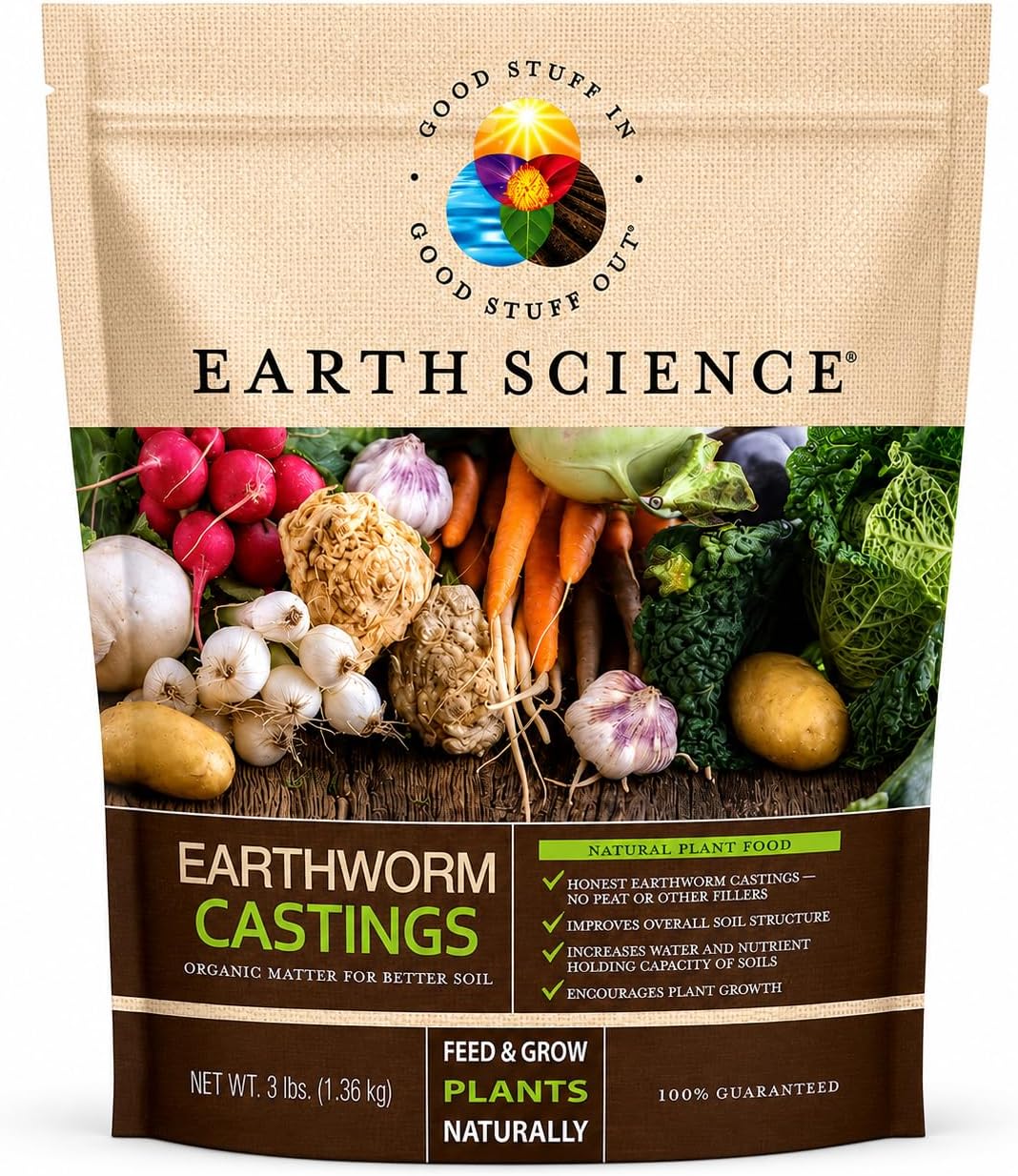
Earth Science Premium Earthworm Castings, 3 lb
| Item Form | Granules |
|---|---|
| Specific Uses For Product | Organic,Plant Food,Plant Growth |
| Coverage | Medium |
| Target Species | gardens, flower beds, fruits, trees, shrubs |
| Mixing Ratio | 1:4 |
Earth Science Premium Earthworm Castings are a pure vermicompost product intended to enrich garden and potting soils. Gardeners typically use it as a top dressing, mixed into potting mixes at about 1:4 castings to soil, or incorporated into garden beds at 1/4 to 1/2 inch and watered in; it can also be brewed as compost tea. The castings add organic matter that helps soil retain moisture, supports beneficial microbes, and can reduce compaction by improving aggregation. Practical benefits include a straightforward application for vegetables, flower beds, trees, and shrubs and the flexibility to use in pots, compost piles, or on lawns. The product is free of fillers and presented as a slow-release, natural fertilizer rather than a quick synthetic boost, so expect gradual improvements over weeks to months rather than immediate greening. Because this is a small, concentrated pouch, frequent reapplication during the growing season is recommended for larger beds or heavy-feeding crops.
Best for: Gardeners who prioritize dependable, natural soil improvement for organic vegetable beds and potted edibles and prefer steady, biology-driven results over quick chemical fixes.
Less Ideal for: Growers who need rapid, high-N fertilizer responses for a single fast-growing crop or who require large-volume amendments for extensive beds without frequent reapplication.
- 100% vermicompost with no peat or fillers
- Versatile uses: top dressing, potting mix amendment, compost tea, and compost layering
- Improves soil structure and water retention while feeding beneficial microbes
- Slow-acting nutrient release not suited for immediate greening or fast corrective feeding
Verdict: Use this pure earthworm castings product when you want a reliable, natural soil conditioner that builds long-term fertility for an organic vegetable garden.
Brut Organic Worm Castings, 5 lb

| Item Form | Granules |
|---|---|
| Specific Uses For Product | Gardening,Organic |
| Target Species | All plants |
| Mixing Ratio | 1:5 |
Brut Organic Worm Castings function as a concentrated, natural soil amendment you mix into potting mixes or top-dress garden beds and raised beds. Typical use is mixing at the recommended 1:5 ratio for new indoor plants, sprinkling a cup around established houseplants, or working into outdoor planting holes and beds according to the brand directions. The product is OMRI/CDFA listed and produced in controlled conditions, which supports consistent nutrient content and beneficial microbial life that help roots establish, improve soil structure, and increase moisture retention without burning plants. Practical benefits for raised garden beds include improved aeration, slow-release nutrients, and a boost in microbial activity that supports long-term fertility. Limitations are that it is not a complete NPK fertilizer for immediate heavy feeding needs and larger beds require significant quantities to hit the suggested per-square-foot rates, so frequent applications or bulk purchases may be needed for big projects.
Best for: Gardeners who prioritize dependable, organic soil improvement for raised beds and container gardens and prefer predictable, low-risk amendments that support long-term soil health.
Less Ideal for: Those needing immediate, high-NPK feeding for heavy-feeding crops or gardeners who want to amend very large beds without buying supplemental bulk material.
- Certified organic and produced indoors for consistent purity
- Rich in beneficial microbes that improve soil structure and plant vigor
- Easy-to-use granular form suitable for mixing or top-dressing
- Not a standalone high-NPK fertilizer for rapid nutrient correction
- Five-pound bag may be small for large raised beds and repeated seasonal use
Verdict: Use this OMRI/CDFA-listed worm castings product to reliably build long-term fertility and microbial health in raised beds and containers.
Choosing the Right Compost for Garden Vegetables: Key Factors to Consider
Nutrient Balance and Availability
Vegetables respond to reliable, accessible nutrients. Compost that has a measured or consistent nutrient profile supplies nitrogen for leaf growth, phosphorus for root and fruit set, and potassium for plant vigor. Knowing whether a compost is nitrogen-rich or has more carbon-heavy material helps you plan supplemental feeding and side-dressing through the season.
Availability matters because freshly turned or immature compost can lock up nitrogen while microbes digest carbon. Choosing compost that is mature and has an indicated nutrient analysis reduces the risk of early-season nitrogen deficiency and makes feeding schedules more predictable.
Organic Matter Content and Soil Building
High organic matter improves water-holding capacity, cation exchange, and microbial life, all of which benefit vegetable growth over multiple seasons. Compost with substantial organic content can gradually increase tilth so heavy clay breaks up and sandy soil holds moisture better.
Consider how much long-term soil-building you need. Light top-dressing each season helps maintain structure, while deeper incorporation when preparing beds accelerates improvement. Compost that is reasonably stable will contribute to humus rather than decompose rapidly and require frequent top-ups.
Texture and Drainage
Texture affects how water and roots move through the root zone. Fine, well-aged compost blends easily into seedbeds and container mixes, while coarser compost with woody fragments is better for improving drainage in heavy soils. Excessively fine compost can compact if used in deep layers without coarse material mixed in.
Match texture to the job: surface mulching benefits from lighter, fluffier compost, while structural amendments for heavy beds usually need a balance of coarse and fine particles to keep pores open and prevent anaerobic pockets.
Maturity and Stability
Immature compost can produce heat, continue decomposing, and temporarily reduce available nitrogen. Mature compost is dark, crumbly, and has an earthy smell, indicating that biological activity has slowed and the material will not harm plant roots.
Always consider maturity for vegetable use. Immature products may necessitate waiting before planting or supplementing with soluble nutrients. Stability also affects storage and longevity; stable compost stores without significant odor or large temperature swings.
Weed Seed and Contaminant Risk
Vegetable gardens demand low weed pressure and safe inputs. Compost made at insufficient temperatures or from mixed, unverified feedstocks can contain viable weed seeds or persistent herbicide residues that harm sensitive plants. Heavy metals and other contaminants are rare in small-scale sources but still a concern in some urban or industrial feedstocks.
Prioritize compost with clear source information and documented treatment processes. For high-value vegetable beds and containers, using compost with low weed seed counts and tested feedstocks reduces maintenance and crop losses.
Application Rate and Compatibility with Other Amendments
How much compost you add and how you mix it with native soil determines short- and long-term effects. Shallow top-dressing every year is different from incorporating several inches when creating new beds. Compost that is high in salts or very rich in soluble nutrients should be used more sparingly in seedlings and containers.
Compatibility with fertilizers, lime, or other soil amendments matters. Some composts already supply substantial nutrients and buffering capacity, reducing the need for additional inputs. Understanding typical application rates helps you plan seasonal feeding and avoid nutrient imbalances.
How to Use Compost in Vegetable Beds
Apply compost differently depending on whether you are preparing new beds, maintaining established beds, or filling containers. For new beds, incorporate a 2 to 3 inch layer into the top 6 to 8 inches of soil to quickly improve structure and nutrient availability. For ongoing maintenance, a 1 inch top-dressing in spring helps sustain organic matter and microbial activity without burying seedlings.
When working with containers, blend compost with lighter materials such as coarse sand or perlite to maintain drainage. Always avoid using thick layers of pure compost in containers because it can hold too much moisture and become anaerobic around roots.
- Incorporate 2-3 inches for new bed creation
- Use 1 inch top-dressings annually for maintenance
- Blend with coarse material for containers to preserve drainage
Testing Compost and Your Garden Soil
A simple nutrient or salt test on compost helps you match it to your crop needs and avoid unexpected imbalances. Many community labs accept compost samples for analysis and can report nitrogen, phosphorus, potassium, pH, and soluble salts.
Pair compost testing with a soil test from your beds. Compost will affect pH and nutrient holding capacity over time, and knowing both profiles helps you plan lime or fertilizer applications more precisely.
- Test compost for N-P-K, pH, and salts when available
- Use a soil test to guide how much compost to incorporate
Compost for Different Vegetable Types
Leafy greens and brassicas appreciate compost that supplies accessible nitrogen and retains moisture, so a higher-nitrogen, fine-textured compost works well. Root crops prefer looser, well-draining mixes; avoid heavy, compacting compost in row beds for carrots and beets.
Fruiting vegetables like tomatoes and peppers benefit from compost that adds organic matter and a steady supply of phosphorus and potassium. For heavy feeders, plan on combining compost with periodic sidedresses of soluble nutrients during the fruiting period.
- Leafy crops: nitrogen-rich, moisture-retentive compost
- Root crops: loose, well-draining amendment
- Fruiting crops: organic matter plus available P and K
Storing and Handling Compost Safely
Store compost in a dry, shaded spot on a raised pallet or plastic to avoid leaching and contamination. Keep bags or piles covered to prevent excess rainwater from compacting the material and raising salt concentrations in the most soluble products.
When handling large volumes, use gloves and a dust mask if the compost is dry and dusty. Avoid using visibly anaerobic or odorous compost until it has been aged and aerated; such materials can harm seedlings and reduce oxygen in the root zone.
- Keep compost dry and shaded; avoid direct ground contact where runoff is an issue
- Aerate and age suspect batches before using in sensitive seedbeds
Seasonal Timing and Application Tips
Apply compost in spring before planting to supply early-season nutrients and improve moisture retention. A fall application helps incorporate organic matter over winter and supports soil biology heading into spring growth. Avoid heavy fresh applications immediately before transplanting tender seedlings unless the compost is fully mature.
Adjust application rate to seasonal needs. In drought-prone summers, a slightly higher organic matter content helps retain moisture. In wet climates, favor composts with coarser texture to prevent soggy soils.
- Spring incorporation for early nutrient availability
- Fall applications build soil biology over winter
- Match application to climate and planting schedule
How We Chose the Best Compost for Garden Vegetables
We selected composts that suit vegetable gardens by emphasizing measurable, garden-relevant characteristics. Primary evaluation criteria included nutrient balance and availability, because vegetables need predictable nitrogen, phosphorus, and potassium levels plus micronutrients. Texture and drainage were assessed to ensure compost improves soil structure without creating waterlogging. Organic matter content and maturity were used to judge long-term soil-building potential and to avoid immature compost that can tie up nitrogen or burn plants. Contaminant screening and source transparency were considered to minimize weed seeds, persistent herbicides, or heavy metals. Lastly, ease of use and versatility were noted for how readily a compost can be incorporated into raised beds, in-ground rows, and containers. We excluded materials clearly marketed for non-edible landscapes, mixes with unknown feedstocks, and raw manures that had not been composted to maturity. The final picks reflect composts that perform across those concrete dimensions and are appropriate for vegetable production at home.
FAQ
Can I use any compost in vegetable beds?
Often you can, but not all composts are equally suitable. Choose compost that is mature, low in weed seeds, and sourced from appropriate feedstocks. Avoid compost with unknown history or signs of immaturity for edible gardens.
How much compost should I mix into a new vegetable bed?
A common recommendation is to incorporate 2 to 3 inches of compost into the top 6 to 8 inches of soil when creating new beds. Adjust based on existing soil texture and the compost's texture.
Is compost enough fertilizer for heavy-feeding vegetables?
Compost contributes nutrients and builds soil, but heavy feeders may still need targeted supplements during the season. Use compost to reduce overall fertilizer needs, then monitor plant vigor and add sidedressing when foliage or fruit set indicates deficiency.
Will compost change my soil pH?
Compost often buffers soil pH and moves it slowly rather than causing rapid shifts. The effect depends on the feedstocks; testing both compost and soil helps you predict and manage pH adjustments if needed.
How do I avoid introducing weed seeds with compost?
Use compost produced at temperatures sufficient to kill weed seeds and look for source transparency. If unsure, screen and age the compost or use it in areas where additional weeding is acceptable until potential seeds are controlled.
Final Verdict
Choose compost for garden vegetables based on the balance between nutrient availability, organic matter contribution, and texture. Prioritize mature, low-contaminant materials for seedbeds and containers, and select coarser or finer textures according to crop type and soil condition. Weigh the tradeoffs: rapid nutrient release versus long-term soil building, and moisture retention versus drainage. With those priorities in mind, pick a compost that fits your planting schedule and amend rates, and you will steadily improve yields and soil health over seasons.
