

Note: This article contains affiliate links. If you click on these links and make a purchase, I may earn a small commission at no extra cost to you. This helps support my research and content. Read my full affiliate disclosure here.
Picking the right fertilizer for agave matters because these succulent rosettes need a different nutrient balance and application rhythm than common garden plants. Too much nitrogen encourages soft, floppy growth and increases rot risk, while insufficient potassium and micronutrients stunt vigor and slow recovery from stress. This guide covers a shortlist of top fertilizers suited for agave and similar succulents, explaining how each option fits specific growing situations. We evaluate products on nutrient ratios, ease of use, and suitability for potted or in-ground agaves to help you choose confidently.
Top Picks at a Glance
| Best Overall The best all-around choice for most situations | Miracle-Gro Indoor Plant Food for Cactus & Succulent, 8 fl. oz. (2-Pack) |  |
| Best Quality Built to a higher standard if you want something more solid | Grow More Cactus Juice Liquid Fertilizer (1-7-6), 16 oz |  |
| Best Value The sweet spot between price and what you get | The Grow Co Succulent & Cactus Slow-Release Fertilizer, 5 oz |  |
| Best Budget The cheapest option that still gets the job done reliably | Schultz Cactus Plus Liquid Plant Food (2-7-7), 4 fl oz |  |
| Highest Rated A top-rated pick with lots of positive feedback | Cute Farms Succulent Slow Release Fertilizer Pellets (6 oz) |  |
| Most Popular A crowd favorite that many people choose with confidence | TPS NUTRIENTS Succulent Fertilizer Liquid Plant Food, 8 oz |  |
Miracle-Gro Indoor Plant Food for Cactus & Succulent, 8 fl. oz. (2-Pack)

| Item Form | Liquid |
|---|---|
| Application Method | Directly to soil or mixed with water |
| Target Species | Cactus and Succulents |
| Mixing Ratio | 8 pumps:1 quart of water |
| Unit Count | 16 Fluid Ounces |
This two-pack of Miracle-Gro Indoor Plant Food for Cactus & Succulent is a liquid fertilizer designed to give indoor succulents an easy, regular nutrient boost. It is formulated with phosphorus and potassium and can be applied directly to soil or mixed with water (mixing ratio 8 pumps per quart) so you can either feed while watering or spot-treat small pots. Typical use is every two weeks for active growth or to help plants recover from stress. The pump dosing and small 8 fl. oz. bottles make it convenient for desktop collections and for targeting individual containers. Practical benefits include fast uptake compared with granular feeds and a formulation tailored for sun-loving succulents and cacti. Important limitations are that it provides low coverage per bottle so frequent repurchasing may be necessary for larger collections, and liquid feeding requires regular application on a schedule rather than a set-and-forget spike. Also it does not list a specific NPK breakdown on the label beyond key elements, so growers wanting precise ratios may prefer a product with full NPK percentages.
Best for: A practical indoor plant owner who manages a small to medium collection of cacti and succulents and values easy, regular liquid feeding to keep plants resilient and actively growing.
Less Ideal for: Gardeners with large collections or outdoor cactus beds who prefer low-maintenance, slow-release fertilizers or precise NPK control should consider other options.
- Formulated specifically for cacti and succulents with phosphorus and potassium to support resiliency
- Flexible application: pump directly into soil or mix 8 pumps per quart to feed while watering
- Small bottles and pump dispensing make it easy to dose for small pots and desktop collections
- Feeds instantly as a liquid, so plants receive nutrients more quickly than slow-release granules
- Low coverage per 8 fl. oz. bottle means frequent purchases for larger collections
- No full NPK percentages listed in the product details for growers who want exact ratios
Verdict: A convenient liquid feed that makes regular, targeted nutrition for indoor cacti and succulents simple and fast.
Grow More Cactus Juice Liquid Fertilizer (1-7-6), 16 oz

| Item Form | Liquid |
|---|---|
| Specific Uses For Product | Plant Growth |
| Target Species | Cactus |
| Mixing Ratio | 1 teaspoon per gallon |
| Liquid Volume | 16 fluid ounces |
Grow More Cactus Juice is a water-soluble liquid fertilizer designed for cacti, agave, and other succulents. Mixed at the listed ratio, it supplies a higher middle number phosphorus emphasis (1-7-6) and added calcium to encourage root development, stronger tissue, and better flowering in nutrient-poor potting media. Typical use is as a periodic feed during the active growing season diluted in irrigation water or applied as a light drench to containers and in-ground specimens. The liquid format makes accurate dosing and even distribution simple, and the low nitrogen content reduces the risk of overly lush, weak growth that succulents dislike. Because it is medium coverage and concentrated in phosphorus and potassium, it is particularly useful when you want to stimulate root establishment after potting or encourage bloom without forcing soft growth. Limitations include the small 16 oz bottle for larger collections and the need to follow dilution guidance closely since succulents are sensitive to overfeeding.
Best for: Buyers who prioritize measured performance for agave and other succulents and want a fertilizer that promotes roots and bloom without encouraging soft, leggy growth.
Less Ideal for: Gardeners seeking a general high-nitrogen houseplant fertilizer or those with very large collections who prefer bulk concentrates or granular slow-release options.
- Succulent-focused NPK (1-7-6) targets root and bloom development rather than excessive foliage growth.
- Includes calcium to support stronger tissues and reduce common succulent deficiencies.
- Liquid, water-soluble form allows precise dosing and even application.
- Mixing ratio is straightforward for easy use in pots and small beds.
- 16 oz volume may require frequent repurchase for growers with many plants.
- Not formulated for feeding high-nitrogen needs of leafy or fast-growing ornamental plants.
Verdict: Pick this if you want a calcium-enriched, low-nitrogen liquid fertilizer that promotes root strength and flowering in agave and other succulents.
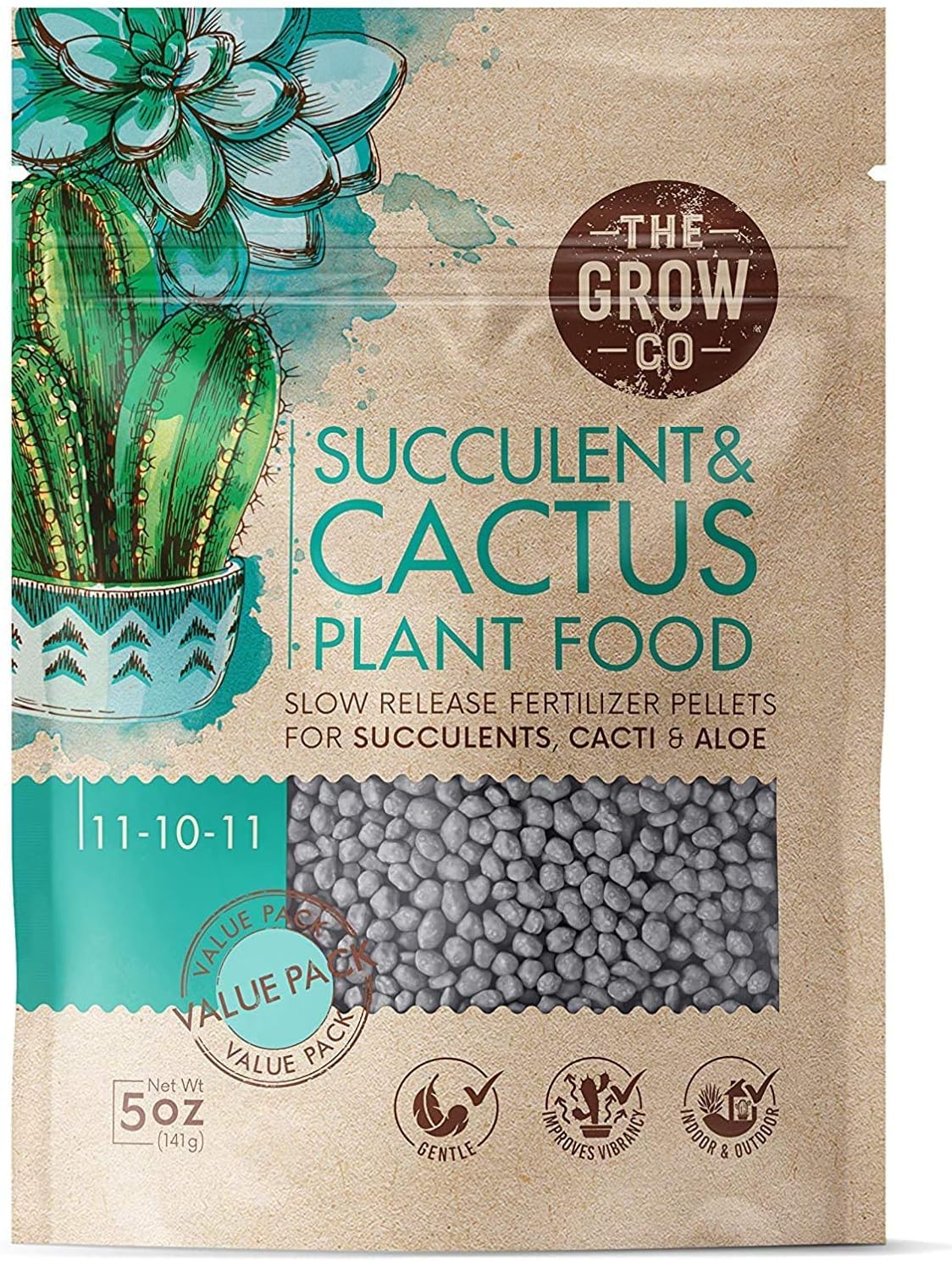
The Grow Co Succulent & Cactus Slow-Release Fertilizer, 5 oz
| Item Form | Granules |
|---|---|
| Specific Uses For Product | Plant Food,Root Development |
| Application Method | Sprinkle or Poke Holes |
| Target Species | Cactus |
| Unit Count | 5 Ounce |
This slow-release granular formula is designed to give succulents and cacti steady nutrition with minimal fuss. You sprinkle or poke the granules into the top layer of potting mix and water; the coating releases nutrients gradually so you do not need frequent applications. The low NPK approach is gentle on drought-tolerant plants and helps support root development, color and occasional blooms without encouraging excessive leafy growth. It is convenient for both indoor pots and outdoor containers and works in coarse, well-draining mixes that agave and other succulents prefer. Practical benefits include long duration between feedings, easy measured application, and a reduced risk of fertilizer burn compared with straight liquid doses. Important limitations are the small 5 ounce size, which means frequent repurchase for larger collections, and that granular slow-release timing can vary with watering and temperature so results are less immediate than a liquid feed when rapid correction is needed.
Best for: Buyers who want a low-maintenance, gentle fertilizer to keep potted agave and other succulents healthy without regular dosing or complex mixing.
Less Ideal for: Not a good choice for growers who need fast correction of nutrient deficiencies or who maintain large outdoor agave plantings that require bulk feeding.
- Slow-release coating provides up to nine months of gradual feeding
- Low NPK ratio formulated to be gentle on succulents and cacti
- Ready-to-use granules that are easy to apply without mixing
- Suitable for indoor and outdoor potted succulents in well-draining mixes
- Small 5 ounce unit may not cover many pots or larger agave specimens
- Nutrient release speed depends on watering and temperature so effects are not immediate
Verdict: A convenient, low-maintenance slow-release granule that keeps potted agave and succulents fed for months with minimal effort.
Schultz Cactus Plus Liquid Plant Food (2-7-7), 4 fl oz

| Item Form | Liquid |
|---|---|
| Specific Uses For Product | Plant Food |
| Coverage | Medium |
| Target Species | Cacti, Succulents |
| Unit Count | 4 Fluid Ounces |
Schultz Cactus Plus is a small, concentrated liquid plant food designed specifically for cacti, aloe, jade and other succulents. You add just a few drops to your watering can each time you water, so it feeds through the roots and fits into a regular watering routine. The 2-7-7 formula supplies higher phosphorus and potassium relative to nitrogen, which supports flowering and root strength in slow-growing succulents without promoting excessive leafy growth. Because it is liquid and highly concentrated, measurements are simple and distribution is even in pots. The bottle size is compact, making it easy to store, but that also means it will be used up faster if you have many plants. It is not a slow-release product, so you need to remember to dose each watering. Safety guidance is straightforward: keep away from children and pets and rinse off skin or eyes if contact occurs. For basic, reliable feeding of cacti and succulents this is a practical, low-effort option for everyday use.
Best for: Best for gardeners who want a simple, low-effort feeding routine for a small collection of cacti or succulents and prioritize convenience and predictable results.
Less Ideal for: Not ideal for someone managing a large collection who prefers less frequent, slow-release fertilizing or wants a multi-season bulk supply.
- Formulated specifically for cacti and succulents so nutrients match their needs
- Highly concentrated liquid allows easy, even dosing with only a few drops
- Supports flowering and root development with higher phosphorus and potassium
- Compact 4 fl oz bottle is easy to store and carry
- Small bottle size may require frequent repurchase for larger collections
- Not a slow-release formula so it must be applied consistently with watering
Verdict: A concentrated, easy-to-use liquid fertilizer tailored to cacti and succulents for simple regular feeding.
Cute Farms Succulent Slow Release Fertilizer Pellets (6 oz)

| Item Form | Granules |
|---|---|
| Specific Uses For Product | Plant Growth, Root Development, Soil Conditioning |
| Coverage | 2 square feet |
| Target Species | Succulents |
| Mixing Ratio | 1/2 teaspoon for every 4 inches of pot width |
This is a simple, no‑fuss slow release pellet fertilizer made specifically for succulents and similar xerophytes. You apply about 1/2 teaspoon per 4 inches of pot width, distribute the pellets on the soil surface, then water to activate them; each application is intended to feed a plant for 7 to 8 months. The granular form and resealable bag make dosing tidy and convenient for potted agave and other drought‑tolerant plants, and the manufacturer emphasizes root development, color and steady growth rather than a quick flush of foliage. Because it is slow release, you will not need to remember monthly feedings and the steady nutrient supply reduces risk of overfertilizing. Limitations are the small 6 oz size and coverage listed as roughly 2 square feet per package, so larger agave or multiple plants will need additional product; the formula is also presented as a general succulent mix rather than an agave‑specific NPK tailored for heavy feeders. For someone who values a reliable, low‑maintenance feed schedule for potted agave, this pellet fertilizer is practical and easy to use.
Best for: Buyers who want a low‑maintenance, dependable feeding routine for potted agave and other succulents and prefer measured, slow‑release nutrition over frequent liquid feedings.
Less Ideal for: Growers with large outdoor agave beds or multiple mature plants that need bulk fertilizer and a tailored NPK blend should consider larger or specialty products instead.
- Slow release pellets provide steady nutrients for 7 to 8 months after one application
- Clear, simple dosing: 1/2 teaspoon per 4 inches of pot width
- Resealable 6 oz bag keeps pellets fresh and is convenient for small collections
- Granular form is tidy to apply on potted agave and other succulents
- Small 6 oz size limits coverage for larger agave or multiple plants
Verdict: A convenient slow‑release pellet fertilizer that delivers reliable, long‑lasting nutrition for potted agave and other succulents with minimal upkeep.
TPS NUTRIENTS Succulent Fertilizer Liquid Plant Food, 8 oz

| Brand | TPS NUTRIENTS |
|---|---|
| Item Form | Liquid |
| Target Species | Cactus |
| Unit Count | 8 Fluid Ounces |
| Mixing Ratio | 1 teaspoon per gallon |
This 8 ounce liquid succulent fertilizer from TPS Nutrients is designed to feed potted succulents and cacti without encouraging leggy, stretched growth. It mixes at a very dilute rate (about 1 teaspoon per gallon) so you can feed small indoor or outdoor containers safely and avoid nutrient buildup. The product promotes firmer leaves, compact habit, and better root development, which is useful for Echeveria, Jade, and other common cacti and succulents. It is a liquid formula, so it dissolves quickly and is easy to apply with routine watering. Practical benefits include a gentle NPK balance targeted at preventing overvigorous top growth and a coverage level suited to medium-sized collections. Limitations are the small bottle size if you have many plants and the need to follow safety warnings to keep it away from children and pets. For gardeners who prefer low-risk, easy-to-control feeding, this is a straightforward option that supports steady, compact growth.
Best for: For cautious plant owners who want a mild, easy-to-control fertilizer to maintain compact, healthy succulents and cacti without risking overgrowth.
Less Ideal for: Not the best choice for gardeners with large outdoor beds or commercial growers who need bulk quantities or higher-strength formulations.
- Formulated specifically to prevent leggy growth and encourage compact succulent form
- Easy-to-mix liquid formula with a very dilute mixing ratio for safe container feeding
- Supports root development and nutrient uptake for healthier plants
- Suitable for indoor and outdoor use on common succulents and cacti
- Small 8 oz bottle may require frequent repurchasing for larger collections
- Not intended for edible food crops and requires careful storage away from children and pets
Verdict: A gentle, easy-to-use liquid fertilizer ideal for risk-averse succulent and cactus owners who want compact, healthy plants.
Choosing the Right Fertilizer for Agave: Key Factors to Consider
Nutrient Ratio and Timing
Agaves are succulents that prefer a low-to-moderate nitrogen level relative to potassium and phosphorus. Excess nitrogen drives rapid, weak leaf growth and increases susceptibility to pests and rot. Look for balanced or lower-N formulas and consider applying fertilizer only during the active growth season in your climate.
Timing matters because many agaves have a distinct growth period after winter dormancy. Applying fertilizer at the wrong time can cause a flush of tender tissue that will not harden before heat or cold stress. Slow-release formats or light, infrequent liquid feeds help maintain steady nutrient availability without shocking the plant.
Salt Content and Watering Patterns
Many fertilizers contain salts that concentrate in soil between waterings. Agaves are often grown with infrequent irrigation, so high-salt fertilizers can cause root burn if salts accumulate. Choose low-salt or controlled-release formulations when you water rarely or use potting mixes with limited drainage.
If you grow agaves in containers, periodic leaching with generous water will flush built-up salts, but outdoor in-ground plants rely on rainfall. Consider local rainfall patterns and adjust fertilizer concentration and frequency to avoid salt stress that shows as marginal browning or stunted growth.
Formulation Type and Ease of Application
Fertilizers come as granules, slow-release spikes, water-soluble powders, and liquid concentrates. Each behaves differently in potting media and garden soils. Granules and slow-release pellets offer steady feeding with minimal effort, while water-soluble and liquid feeds give rapid correction but require careful dosing.
For gardeners who prefer low maintenance, a slow-release or granular low-N formula reduces the risk of overfeeding. If you want quick results to recover a stressed plant, a diluted liquid feed applied sparingly can help. Match the formulation to how often you check and water your agaves.
Micronutrients and Soil pH
Beyond N-P-K, micronutrients like magnesium, iron, and manganese influence leaf color and strength. Agaves growing in alkaline soils may show iron chlorosis, producing pale leaves. Selecting a fertilizer that includes or complements necessary micronutrients can prevent chronic deficiencies.
Check your soil pH and amend if needed, because micronutrient uptake is pH-sensitive. If testing is not possible, choose a balanced fertilizer with chelated micronutrients to improve availability across a wider pH range.
Pot Vs Ground Use
Container-grown agaves experience faster changes in nutrient availability and salt buildup than in-ground specimens. Pots dry and concentrate salts more quickly, so dosing must be more conservative. Slow-release pellets designed for containers or frequent, very dilute liquid feeds work well in pots.
In-ground agaves benefit from deeper soil buffering and more natural leaching. You can use slightly stronger applications outdoors, but be mindful of runoff and surrounding plants. Adjust the feeding schedule according to container size and local rainfall.
Storage, Shelf Life, and Handling
Some formulations degrade or clump with humidity, altering application rates. Granular fertilizers can cake if stored in damp conditions, and liquid concentrates may separate over time. Choose products with clear storage instructions and usable shelf life to avoid variable dosing.
Also consider packaging that protects from moisture and provides measured dosing tools. Consistent handling reduces the chance of accidental over-application, which is especially risky with sensitive succulents like agave.
Fertilizing Frequency for Different Climates
How often to feed agave depends on your climate and the plant's growth rhythm. In temperate regions with a defined warm season, a light feeding once or twice during active growth is typically sufficient. In mild winter climates where growth is year-round, reduce frequency to avoid continuous soft growth.
Containers need more frequent attention than in-ground plants because nutrients wash out with watering and salts concentrate between waterings. When in doubt, err on the side of underfeeding; agaves tolerate lean soils better than nutrient excess.
- Temperate climates: feed once in spring and once midseason
- Warm climates: reduce to a single light feeding or dilute regular feeds
- Containers: use slow-release or very dilute liquid feeds more often
Common Nutrient Deficiencies and Visual Signs
Yellowing between leaf veins often signals iron or magnesium deficiency, while overall pale leaves can indicate nitrogen shortage. Brown margins and tip burn may be salt-related or due to potassium deficiency. Observing the pattern and location of symptoms helps diagnose the cause.
Correcting deficiencies requires identifying the underlying feeding practice and adjusting fertilizer type or application. Flushing potted soil with water can correct salt-related browning, whereas micronutrient shortages respond to targeted supplements or a balanced fertilizer with chelated trace elements.
- Interveinal chlorosis: likely iron or magnesium issues
- Marginal browning: possible salt build-up or potassium shortfall
- Stunted, pale growth: could be low nitrogen or root stress
Using Fertilizer with Succulent Potting Mixes
Succulent mixes are coarse and fast-draining, which means nutrients move through more quickly than in heavy garden soil. That favors low-dose, more frequent applications or slow-release pellets formulated for succulents. Heavy feeding in coarse mixes raises the risk of salts collecting on the pot surface.
When repotting, incorporate a balanced, low-N slow-release granule or plan a light liquid feeding schedule after the plant has settled. Avoid high-organic amendments that retain too much moisture, as they increase fertilizer mineralization and salt concentration near roots.
- Prefer low-dose slow-release or dilute liquid feeds
- Avoid heavy organic meals in succulent mixes
- Repot in spring and delay strong feeding until roots reestablish
Safe Dilution and Application Tips
Follow label rates but consider reducing concentration by half for container-grown agave to reduce burn risk. Apply liquid feeds after watering or when soil is moist to minimize root stress. For granules, scatter evenly and avoid contact with the crown to prevent leaf burn.
When applying any fertilizer, water deeply afterward to move nutrients into the root zone and reduce surface salt accumulation. Keep a calendar or note of applications so you do not overlap slow-release and regular feeds.
- Dilute liquids for containers and newly repotted plants
- Keep granules away from the plant crown
- Water after application to flush nutrients into the root zone
Organic Versus Synthetic Options
Organic fertilizers release nutrients more slowly and improve soil structure, but they may not supply micronutrients in immediately available forms for correction. They are gentler against salt buildup and often a good long-term choice for in-ground agaves.
Synthetic fertilizers provide predictable nutrient ratios and rapid correction when needed, but they carry a higher risk of salt accumulation if overapplied. Choose based on your maintenance style: low-maintenance gardeners often prefer slow-release organics, while those treating specific deficiencies may reach for targeted synthetic feeds.
- Organics: slower release, lower salt risk, soil-building benefits
- Synthetics: precise ratios, quick correction, monitor salt load
How We Chose the Best Fertilizer for Agave
We focused on traits that directly affect how agave plants grow and survive in garden, patio, and container settings. Primary evaluation criteria were nutrient ratio suitability for succulents, method of application and dosing clarity, salt load and suitability for infrequent watering, formulation stability for storage, and availability of micronutrients critical to leaf health. We also assessed fertilizer granule or solution behavior in potting mixes and soil to avoid root scorch and accumulation. Exclusions included fertilizers formulated specifically for high-nitrogen lawn care, products that require complex mixing beyond typical home-gardener ability, and blends intended only for flowering annuals. We prioritized products that gardeners can use reliably with common irrigation patterns and that support compact, firm agave growth rather than excessive leafy stretch. Where relevant, we noted tradeoffs between ease of use and flexibility in dosing.
FAQ
How often should I fertilize agave in a pot?
Usually once every 6 to 12 weeks with a low-dose, balanced or low-nitrogen feed works well for potted agave. Slow-release pellets applied at repotting or very dilute liquid feeds between repottings help avoid salt buildup.
Can agave be over-fertilized?
Yes. Over-fertilizing produces soft, weak leaves and raises rot and pest risks. Symptoms include leaf tip burn, rapid floppy growth, and marginal browning. If you suspect overfeeding, flush the soil with water and pause further applications.
Do agaves need micronutrients?
They often benefit from micronutrients such as iron and magnesium, especially in alkaline soils where uptake is limited. A balanced fertilizer with chelated trace elements or occasional targeted supplements can prevent yellowing and improve leaf color.
Is slow-release fertilizer better for outdoor agave?
Slow-release formulas are convenient for outdoor agaves because they provide steady nutrition with less risk of salt spikes between rain events. However, in areas with heavy rainfall you may need to reapply according to the product schedule.
When is the best time of year to fertilize agave?
Apply fertilizer at the start of the plant's active growth period, typically in spring or early warm season. Avoid feeding during dormancy or right before expected cold snaps to prevent producing tender new growth that could be damaged.
Final Verdict
Choose an agave fertilizer by prioritizing a nutrient ratio suited to succulents, low salt load, and a formulation that matches your watering and care routine. Containers need gentler, more frequent or slow-release approaches, while in-ground agaves tolerate slightly stronger schedules because of natural leaching. Balance convenience and precision: slow-release or organic options reduce maintenance and salt risk, while diluted liquid feeds let you correct deficiencies quickly. Focus on timing and conservative dosing to encourage compact, healthy rosettes rather than excessive leafy growth.
