

Note: This article contains affiliate links. If you click on these links and make a purchase, I may earn a small commission at no extra cost to you. This helps support my research and content. Read my full affiliate disclosure here.
Picking the right fertilizer for a perennial garden makes a big difference in bloom longevity, root health, and seasonal vigor. Perennials have different needs than annuals or vegetables: they need steady nutrition that supports long-term root systems, encourages repeat flowering, and avoids salt buildup in established beds. This guide shortlists the top seven fertilizers suited for perennial-focused plantings and explains the key differences in nutrient ratios, release methods, and soil impact. Read on for a practical review of features gardeners should weigh when choosing a fertilizer for perennial garden and a preview of the evaluation criteria used.
Top Picks at a Glance
| Best Overall The best all-around choice for most situations | True Organic Annuals & Perennials Granular Plant Food, 4 lb |  |
| Best Quality Built to a higher standard if you want something more solid | Espoma Flower-Tone Organic Fertilizer, 4 lb. Bag, 2-Pack |  |
| Best Value The sweet spot between price and what you get | Osmocote Smart-Release Plant Food Flower & Vegetable, 1 lb. |  |
| Best Budget The cheapest option that still gets the job done reliably | Scotts All Purpose Flower & Vegetable Continuous Release Plant Food, 3 lb |  |
| Highest Rated A top-rated pick with lots of positive feedback | Miracle-Gro Water Soluble All Purpose Plant Food, 1.5 lb |  |
| Most Popular A crowd favorite that many people choose with confidence | Miracle-Gro Water Soluble Bloom Booster Flower Food, 5.5 lb |  |
| Best Seller A high-volume bestseller chosen again and again | Miracle-Gro Watering Can Singles All Purpose Plant Food, 24 Packets | 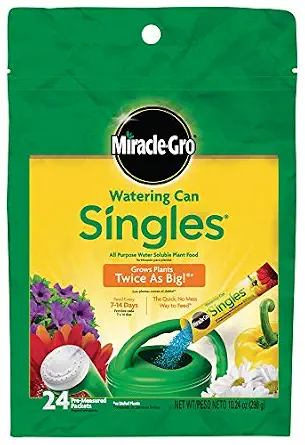 |
True Organic Annuals & Perennials Granular Plant Food, 4 lb

| Form | Granules |
|---|---|
| NPK | 5-4-6 |
| Calcium | 4% |
| Coverage | 4 lb covers 70 sq ft |
| Unit Count | 64 Ounce |
This True Organic granular plant food is designed to feed flowering annuals and perennials with a balanced organic NPK blend (5-4-6) and slow-release, farm-grade inputs. You apply it monthly during the growing season either to beds or containers; the 4 lb bag is sized to cover roughly 70 sq ft. Notable features include an all-organic ingredient list—poultry manure, seabird guano, fish bone meal, crab and shrimp shell meals—and 4% calcium which helps reduce blossom end rot on fruiting plants. Because it is granular and made from natural materials it improves soil biology over time and is safer around people and pets than many synthetic options. Expect gentler, steadier feeding rather than quick green-up from chemical fertilizers, and allow time for microbial activity to release nutrients. If you need very fast correction of a specific deficiency or an exact, water-soluble feed for foliar work, this product is less suitable than a synthetic or concentrated liquid feed.
Best for: Gardeners who want an all-purpose organic fertilizer that improves soil health and supports steady, long-term bloom and foliage performance in a perennial-focused garden.
Less Ideal for: Growers who need rapid, targeted corrections, precise water-soluble dosing, or large-volume coverage for extensive gardens should consider concentrated or larger-format alternatives.
- Certified organic, made from recognizable natural inputs that support soil biology
- Balanced NPK (5-4-6) suitable for blooms and foliage on flowering plants
- 4% calcium included to help prevent blossom end rot on fruiting varieties
- Works for both in-ground beds and container plantings with monthly application
- Granular, slow-release formula is not ideal for quick corrective feeding or immediate nutrient boosts
- 4 lb bag covers about 70 sq ft which may be small for larger gardens
Verdict: Choose this if you want a gentle, soil-building organic feed that reliably encourages blooms and healthy foliage in a perennial garden.
Espoma Flower-Tone Organic Fertilizer, 4 lb. Bag, 2-Pack
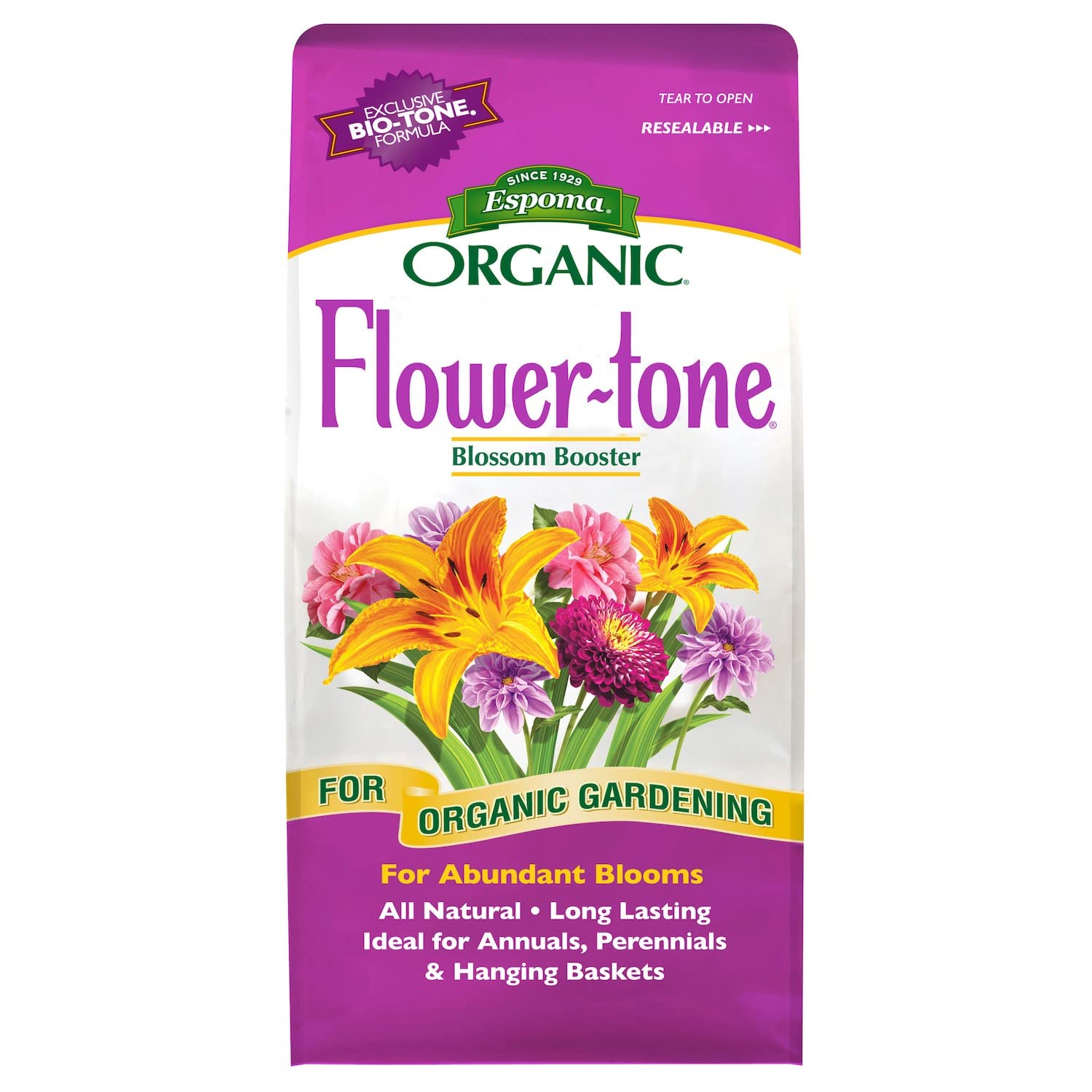
| Item Form | Granules |
|---|---|
| Specific Uses For Product | Gardening,Organic,Plant Food |
| Coverage | Medium |
| Target Species | flowers, annuals, perennials, roses |
| Mixing Ratio | 3:4:5 |
Espoma Flower-Tone is an organic granular plant food designed to promote abundant blooms in flowers, perennials, annuals and roses. It is applied directly to the soil around the plant drip line and watered in, with a recommended monthly application during the growing season. The 3-4-5 nutrient ratio with added calcium and the Bio-tone biological formula supply a balanced feed that supports flowering without high nitrogen that would favor foliage over blooms. Because it is granular and labeled for organic gardening, it works well for mixed perennial beds where you want steady, natural nutrient release and compatibility with organic practices. The product comes in convenient 4 pound bags sold as a two-pack for repeat applications. Limitations are that it is a medium-coverage granular feed rather than a fast-acting liquid, so results accumulate over weeks, and you must follow monthly repeat applications for sustained bloom performance.
Best for: Gardeners who want an easy, organic monthly feed to boost blooms in mixed perennial and flower beds and prefer a product that supports soil biology.
Less Ideal for: Growers who need immediate, fast-acting nutrient results or who are managing very large beds where concentrated coverage per application is the priority.
- Organic formula approved for organic gardening and safe for use around flowers and perennials
- Balanced 3-4-5 NPK with added calcium supports bloom production rather than excess leaf growth
- Granular form is easy to apply around drip lines and provides steady nutrient release
- Includes Espoma's Bio-tone biological formula to support soil biology and root health
- Medium coverage means larger beds will require multiple bags for full-season feeding
- Slower to show results compared with liquid or soluble fertilizers
Verdict: A dependable organic granular fertilizer that steadily promotes bigger, healthier blooms in perennial and flower beds when used as a monthly feed.
Osmocote Smart-Release Plant Food Flower & Vegetable, 1 lb.

| Item Form | Granules |
|---|---|
| Specific Uses For Product | Root Development |
| Application Method | Mix into soil |
| Target Species | vegetables and perennials |
| Unit Count | 16 Ounce |
Osmocote Smart-Release Flower & Vegetable is a granular, slow-release fertilizer with a balanced 14-14-14 NPK designed to support both root development and vigorous top growth. Typical use is mixing the granules into the top 1–3 inches of soil or incorporating into raised-bed mix before planting; one pound covers about 40 sq ft and feeds for up to four months based on soil temperature. The included applicator and mistake-proof slow-release formulation make it easy to apply without frequent refeeding, and the product is intended for edible gardens, perennials, and ornamentals. For rhubarb specifically, the balanced nutrients support leafy growth and steady root development without sharp spikes of soluble fertilizer. Limitations are that this is a general-purpose, season-long feed rather than a rhubarb-specific formula and nutrient release depends on soil temperature, so uptake can be slower in cool conditions early in the season.
Best for: Gardeners who want a low-maintenance, season-long feed for vegetable beds and perennials and prefer a straightforward, mistake-resistant product that reduces repeat applications.
Less Ideal for: Growers seeking a specialty fertilizer formulated specifically for rhubarb or those who need quick-release nutrient boosts during cool weather should consider alternative products.
- Balanced 14-14-14 NPK supports both roots and leafy growth
- Slow-release formula feeds up to four months, reducing reapplications
- Granular form and included applicator make soil mixing straightforward
- Mistake-proof release that is unlikely to burn plants if slightly overapplied
- Release rate is temperature dependent and may be slow in cool soils
- Not tailored specifically to rhubarb or high-potassium needs that some growers prefer
Verdict: A simple, low-maintenance slow-release fertilizer that supplies balanced nutrients for a full season, ideal for gardeners wanting steady growth without frequent feeding.
Scotts All Purpose Flower & Vegetable Continuous Release Plant Food, 3 lb

| Item Form | Granules |
|---|---|
| Application Method | Sprinkle on soil and rake into top 1-3 inches |
| Target Species | All Purpose Flower & Vegetable Continuous Release Plant Food |
| Unit Count | 48 Ounce |
Scotts All Purpose Flower & Vegetable Continuous Release Plant Food is a simple granular fertilizer intended for in-ground flower and vegetable gardens. You apply it by sprinkling the granules around plants, raking them into the top 1 to 3 inches of soil, and watering to start nutrient release. Formulated to feed for up to two months, it supplies steady nitrogen to support root growth and foliage and is recommended for common garden crops including peppers. The bag covers roughly 150 sq. ft., so a single 3 lb package is convenient for small beds or a few pepper plants. Key practical benefits are ease of use, predictable feeding intervals, and reduced need for frequent applications during the growing season. Limitations are that it is an all-purpose formula rather than a pepper-specific mix and its N-P-K profile is not listed on the label data here, so you may want to monitor fruiting and supplement with a bloom-boost fertilizer if you need higher phosphorus for heavy fruit set. Follow label rates to avoid overapplication near crowns.
Best for: Gardeners who want an inexpensive, low-effort fertilizer to maintain steady growth for a few jalapeno plants or a small vegetable bed without frequent feeding.
Less Ideal for: Growers who manage large vegetable plots or who need a nutrient program tailored specifically to maximize pepper fruit set and yield.
- Continuous-release granules feed plants for up to two months, reducing application frequency
- Easy application: sprinkle, rake into topsoil, and water
- Suitable for a wide range of garden plants including vegetables and peppers
- 3 lb bag covers about 150 sq. ft., practical for small gardens or container groups
- All-purpose formula may not provide the specific N-P-K balance jalapenos need for maximum fruiting
- Small bag size means frequent repurchases for larger gardens
Verdict: A budget-friendly, easy-to-use continuous-release fertilizer that keeps jalapeno plants fed for up to two months with minimal fuss.
Miracle-Gro Water Soluble All Purpose Plant Food, 1.5 lb

| Item Form | Powder |
|---|---|
| Application Method | Watering Can |
| Target Species | For all flowers, vegetables, trees, shrubs and houseplants |
| Mixing Ratio | 24-8-16 |
Miracle-Gro Water Soluble All Purpose Plant Food is a powder concentrate you mix with water to give a quick nutrient boost to flowers, vegetables, houseplants, shrubs and trees. It is typically dissolved in a watering can or used with a compatible garden feeder to soak soil at the base of plants, delivering nitrogen-heavy nutrition that shows effects faster than granular fertilizers. Notable features include an easy scooping method for indoor and outdoor dosing, compatibility with containers and in-ground planting, and clear directions for feeding every one to two weeks. In practice this makes the product a convenient option when you want visible growth and greener foliage quickly, and the 1.5 lb container covers roughly 600 sq. ft. Important limitations are that it is a fast-release, high-nitrogen formula best used as a regular quick feed rather than a long-term slow-release solution, and it requires careful measuring to avoid overfeeding. For routine maintenance combine with good watering and follow the label to avoid nutrient imbalance.
Best for: Buyers who prefer proven, easy-to-use feeding routines and want noticeable growth quickly for a variety of garden and houseplants, guided by established usage directions and broad user experience.
Less Ideal for: Gardeners seeking a single, long-term slow-release solution or those who prefer organic or low-nitrogen fertilizers for sensitive plantings should consider alternative products.
- Water-soluble powder starts working quickly at the roots when mixed and applied
- Clear, simple dosing for indoor and outdoor use with included scoop guidance
- Suitable for a wide range of plants including vegetables, flowers, shrubs and houseplants
- Covers a large area from a small container (about 600 sq. ft. per 1.5 lb)
- Fast-release formula means benefits are short-term compared with slow-release granular fertilizers
- Requires precise measuring and regular reapplication to avoid overfeeding
Verdict: A reliable, fast-acting water-soluble plant food for gardeners who want easy, repeatable feeding and quick visible results.
Miracle-Gro Water Soluble Bloom Booster Flower Food, 5.5 lb

| Item Form | Powder |
|---|---|
| Application Method | Mix with water |
| Target Species | Flower |
| Mixing Ratio | 1:Water |
Miracle‑Gro Water Soluble Bloom Booster is a powdered, water‑mix fertilizer designed to be dissolved and applied every 7 to 14 days to flowering plants. It carries a high middle number NPK (10‑52‑10) so it delivers an extra boost of phosphorus to encourage bud set and larger blooms, and it can be used for in‑ground beds, containers and indoor flowering plants when diluted to the package directions. The included mixing guidance and scoop make it straightforward to dose for small containers or larger garden areas, and one 5.5 lb container covers a substantial area. Practical benefits include fast uptake when watered in at the base of plants and compatibility with common feeders or a watering can. Limitations are that the concentrated phosphorus focus is for flowering performance rather than overall foliage growth and it requires regular reapplication through the blooming season rather than a single slow‑release feed. Also users should follow safety directions when handling and avoid overfeeding sensitive or newly transplanted plants.
Best for: Gardeners who prioritize showy, frequent blooms and want a product they can apply regularly to flower beds and containers during the flowering season.
Less Ideal for: People looking for an all‑season, low‑maintenance slow‑release fertilizer or those who need a balanced feed for foliage and establishment of new transplants.
- High phosphorus NPK (10-52-10) targets bud set and bloom production
- Water‑soluble powder mixes quickly for fast feeding and easy use in a watering can or garden feeder
- Suitable for both in‑ground beds and container flowering plants including roses and hydrangeas
- Covers a large area from a single 5.5 lb container when used to label directions
- Requires frequent applications during bloom period rather than providing long‑term slow release
- Formulation focuses on flowering so it is less balanced for leafy growth or general maintenance
Verdict: Choose this bloom booster if your goal is bigger, more frequent flowers by feeding a high‑phosphorus, fast‑acting soluble fertilizer during bloom season.
Miracle-Gro Watering Can Singles All Purpose Plant Food, 24 Packets

| Number of Packs | 24 |
|---|---|
| Unit Count | 10.24 Ounce |
| Item Form | SOLID |
| Application Method | watering can |
| Mixing Ratio | 1 teaspoon per 1 gallon of water |
Miracle-Gro Watering Can Singles are single-use, pre-measured fertilizer packets intended to make feeding roses and other garden plants simple and reliable. To use, tear a packet into a watering can, add the specified amount of water, then apply the solution while watering; the manufacturer recommends feeding every 7 to 14 days during active growth. The packets remove measuring errors and mess, which helps prevent accidental overfeeding. Because the formula is labeled for all flowers, vegetables, trees and shrubs, it fits into regular rose care routines for bloom and bush development. Practical benefits include instant solubility, clear application instructions for outdoor and indoor containers, and consistent coverage per packet for about 10 sq. ft. of garden. Limitations are that you must keep up with the every-1–2-week schedule for best results and that the product is sold as a general-purpose feed rather than a rose-specific bloom booster, so dedicated rosarians seeking targeted NPK ratios might prefer a specialized rose fertilizer.
Best for: Gardeners who want a low-risk, no-mess way to feed roses and mixed flower beds as part of routine watering and prefer simple, foolproof dosing.
Less Ideal for: Specialist rose growers seeking a targeted bloom-boosting formula or those who want a single, slow-release application instead of frequent liquid feedings.
- Pre-measured packets eliminate measuring and reduce mess and dosing errors
- Water-soluble formula mixes quickly in a watering can for immediate application
- Labeled for use on flowers, roses, shrubs, trees and vegetables so it suits mixed beds
- Clear directions for indoor and outdoor application and coverage per packet
- General all-purpose formula rather than a rose-specific NPK for bloom boosting
- Requires regular reapplication every 7–14 days to maintain results
Verdict: If you want a safe, fuss-free way to feed roses while you water, these pre-measured soluble packets make regular feeding simple and consistent.
Choosing the Right Fertilizer for Perennial Garden: Key Factors to Consider
Nutrient Ratio and Plant Stage
Nutrients are listed as N-P-K and indicate nitrogen for foliage, phosphorus for roots and blooms, and potassium for overall stress tolerance. Perennials benefit from formulations that support root development in spring and promote blooms without encouraging excessive leafy growth that can weaken stems.
Consider how the ratio aligns with the season and the specific perennial types in your garden. Low-to-moderate nitrogen blends are usually preferable for flowering perennials, while higher phosphorus can help with flower set. Always match the feeding schedule to plant growth stages rather than applying uniformly throughout the year.
Release Method and Timing
Fertilizers come as quick-release, slow-release, liquid feeds, or organic granular forms. Slow-release and controlled-release products provide steady nutrition over weeks to months, reducing the risk of nutrient spikes and root burn in established perennials.
Quick-release or soluble feeds give an immediate response and are useful when plants need a rapid boost, but repeated use can build salts in the root zone. For perennial beds that remain in place year after year, a predictable release profile helps maintain balanced growth without frequent interventions.
Soil Health and Salt Index
Perennials rely on a stable root environment; high-salt fertilizers can damage fine feeder roots and reduce water uptake. Look for products with low salt index or formulations designed to minimize soluble salts.
Also consider how the fertilizer affects soil biology. Some organic or biologically active options support microbial life, which improves nutrient cycling and long-term soil structure. Synthetic quick-feeding salts can be effective short term but may require periodic soil testing and remedial organic matter additions.
Trace Elements and Micronutrients
Beyond N-P-K, micronutrients like iron, magnesium, manganese, and boron support enzymatic functions, color, and stress resilience. Perennials grown in depleted or high pH soils often show deficiency symptoms that targeted micronutrients can correct.
A balanced product will list important trace elements and their concentrations. If your soil test shows specific deficiencies, choose a fertilizer with those micronutrients or plan supplemental applications. Over-application of some trace elements can be harmful, so follow label guidance closely.
Application Practicality
Consider how the fertilizer will be applied across your perennial beds. Granular broadcast spreaders, drop spreaders, hand-applied granules, and liquid sprayers all have different labor requirements and precision. Ease of application matters for gardeners with many beds or irregularly shaped borders.
Also think about storage, odor, dust control, and compatibility with mulches and drip irrigation. A product that is simple to measure and apply correctly reduces the chance of uneven feeding and localized burn spots.
Environmental Impact and Residues
Perennial beds are often near pollinator habitats and water features, so runoff potential and residual persistence are relevant. Products with controlled-release technologies tend to reduce leaching risk, while some synthetic materials can be more mobile in heavy rain events.
Choose formulations with minimal persistent synthetic additives if runoff into lawn or water is a concern. Consider how application timing and buffer zones can reduce environmental impact as much as product selection.
When to Feed Perennials
Timing fertilizer applications to plant growth cycles improves uptake and avoids wasted nutrients. For many temperate garden perennials, a light feed in early spring as growth resumes helps root and shoot development, while a follow-up application after peak bloom can support recovery and future bud set.
Avoid heavy late-season feeding that stimulates tender new growth vulnerable to frost. Use soil temperature and local frost dates as guides for application windows rather than strict calendar dates.
- Early spring for root establishment and new shoots
- After peak bloom to replenish reserves
- Avoid high-nitrogen late in the season
Organic Versus Synthetic Options
Organic fertilizers release nutrients more slowly and often contribute organic matter and microbial food to the soil. They can improve long-term soil structure and are generally lower in soluble salts, making them gentle on established perennial roots.
Synthetic formulations provide predictable N-P-K values and rapid availability. They can be useful for correcting specific deficiencies or giving a quick boost before important display periods. Many gardeners use a hybrid approach: base feeds with organics and spot treatments with synthetics when needed.
- Organics: slower release, soil-building benefits
- Synthetics: precise nutrient dosing, faster response
- Consider a combined program for best results
Using Soil Tests to Guide Feeding
A simple soil test clarifies pH and nutrient availability so you can pick a fertilizer that addresses actual needs. Perennials in alkaline soils may need chelated iron or specific micronutrient blends, while acidic soils can alter phosphorus availability.
Apply fertilizers based on test results and retest every few years for established beds. This prevents over-application and keeps nutrient levels within a healthy range for perennial growth.
- Test pH and macro/micronutrients before major applications
- Adjust fertilizer choice to correct measured deficiencies
- Retest periodically to track changes over time
Application Methods for Different Bed Types
Formal borders, mixed cottage beds, and pollinator-friendly plantings require different application precision. Use granular broadcast spreaders for large, uniform beds and hand application or banding for small or irregular beds to avoid shampooing adjacent plants with too much fertilizer.
For beds with drip irrigation, consider fertigation-capable fertilizers or soluble feeds designed for injectors. Foliar feeds can address acute deficiencies quickly but should not replace correct soil-based nutrition for long-term perennial health.
- Use spreaders for large, even areas
- Hand apply or band near root zones for small beds
- Match fertilizer form to irrigation method where possible
Managing Mulch and Fertilizer Interactions
Mulch affects how fertilizers move into the soil. Thick organic mulch layers can slow the movement of granules to the root zone but also help retain moisture and reduce leaching. Apply granular products either under the mulch or in narrow bands through it to ensure nutrients reach feeder roots.
Liquid feeds and fertigation bypass mulch more easily but may need calibration to avoid runoff. When top-dressing with organic materials, allow time for breakdown before applying concentrated synthetic feeds to prevent inconsistent nutrient availability.
- Apply granules under or through mulch for best uptake
- Liquid feeds move past mulch but require correct dosing
- Top-dress organics well before concentrated synthetic applications
How We Chose the Best Fertilizer for Perennial Garden
We prioritized products that respond well to the long-term needs of perennial beds rather than fast-acting treatments intended for annual blooms or lawns. Selection was based on measurable formulation characteristics and real garden performance indicators. Key evaluation criteria included nutrient ratio and trace elements, release method and longevity, soil and root safety including salt index, and ease of application for landscape-scale and small beds. We excluded formulas designed solely for lawns, houseplants, or edible production where the nutrient mix and application timing differ substantially from ornamental perennials. Products that relied on vague labeling without clear N-P-K values or unclear release claims were not considered. We also filtered out fertilizers with ingredients commonly associated with heavy salt buildup or persistent chemicals unsuitable for mixed perennial beds. During evaluation we examined label transparency, expected feeding schedule, compatibility with typical garden soils and mulches, and practical handling factors like dust, odor, and application equipment needs. These criteria reflect the everyday decisions gardeners make when choosing a fertilizer for perennial garden care.
FAQ
How often should I fertilize perennial beds?
Frequency depends on fertilizer type and soil fertility. Slow-release granulars often need one to two applications per growing season, while liquid feeds may be applied more frequently in diluted doses. Use soil tests and plant response to guide exact timing.
Can I use a lawn fertilizer on perennial borders?
Many lawn fertilizers are high in nitrogen and designed for grass growth, which can encourage leafy growth at the expense of blooms in perennials. If using lawn products, choose low-nitrogen formulations and apply carefully to avoid overfeeding ornamental plants.
Are organic fertilizers strong enough for established perennials?
Organic fertilizers release nutrients more slowly but often supply sufficient nutrition when combined with regular applications of compost or organic matter. For rapid corrective action, some gardeners supplement organics with targeted soluble feeds.
Will fertilizers harm pollinators visiting my perennials?
Most fertilizers applied to soil pose little direct risk to pollinators if used correctly. Avoid foliar sprays on open flowers and follow label timing to minimize exposure. Choosing low-salt and low-residue products further reduces indirect risks.
How do I fix nutrient deficiencies that show in foliage?
Confirm the issue with a soil test before treating. Mild deficiencies can respond to targeted micronutrient applications or foliar sprays, while persistent problems may require pH adjustment or a balanced fertilizer tailored to the deficiency.
Can I apply fertilizer when perennials are dormant?
Dormant-season applications are generally focused on slow-release products or organic amendments applied in late fall to break down over winter. Avoid high-nitrogen feeds during dormancy as they can prompt unwanted early growth.
Final Verdict
Choose a fertilizer for perennial garden based on the plants' growth stage, soil test results, and the release profile you prefer. Prioritize products with appropriate N-P-K ratios and micronutrient lists that match your soil and floral goals. Balance convenience of application against long-term soil health and environmental considerations. Ultimately, steady, measured feeding and periodic soil testing will deliver the most consistent bloom performance and root vigor. Focus on predictable nutrient delivery and low salt impact to keep perennial beds healthy season after season.
