

Note: This article contains affiliate links. If you click on these links and make a purchase, I may earn a small commission at no extra cost to you. This helps support my research and content. Read my full affiliate disclosure here.
Portulaca thrives in hot, sunny spots and rewards light feeding with abundant, long-lasting blooms. Choosing the right fertilizer for Portulaca matters because too much nitrogen will produce lush foliage at the expense of flowers, while the wrong application schedule can burn shallow roots in poor soil. This guide looks at six top fertilizer options suited for portulaca growing conditions, from container plantings to garden beds. We shortlist products that deliver an appropriate nutrient balance, simple application, and predictable bloom responses. Read on to see the criteria we used and how each type of fertilizer behaves in a real garden.
Top Picks at a Glance
| Best Overall The best all-around choice for most situations | Miracle-Gro Pour & Feed Liquid Plant Food, 32 fl. oz. | 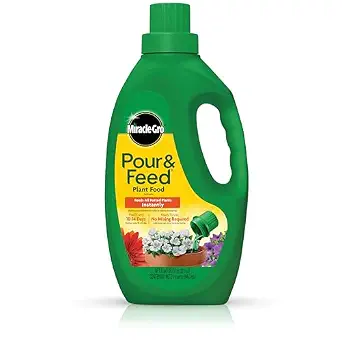 |
| Best Quality Built to a higher standard if you want something more solid | Espoma Organic Bloom! Liquid Concentrate Plant Food (16 fl oz) |  |
| Best Value The sweet spot between price and what you get | Purived All-Purpose Liquid Houseplant Fertilizer, 16 fl oz (Makes 50 Gallons) |  |
| Best Budget The cheapest option that still gets the job done reliably | Jobe's Organics Houseplant Fertilizer Spikes, 50 Count |  |
| Highest Rated A top-rated pick with lots of positive feedback | FoxFarm Tiger Bloom Liquid Plant Food (1 pint) |  |
| Most Popular A crowd favorite that many people choose with confidence | Miracle-Gro Water Soluble All Purpose Plant Food, 1.5 lb |  |
Miracle-Gro Pour & Feed Liquid Plant Food, 32 fl. oz.

| Item Form | Liquid |
|---|---|
| Application Method | Directly to the soil |
| Target Species | potted plants |
| Unit Count | 32 Fluid Ounces |
Miracle-Gro Pour & Feed is a ready-to-use liquid fertilizer designed for container plants and houseplants. You apply it by measuring with the bottle cap and pouring the recommended amount directly onto the soil around each pot, so no mixing or watering-can prep is required. Its convenience makes it easy to maintain a regular 10–14 day feeding schedule for bedding plants like petunias in containers. The product is formulated for potted plants only, and the liquid form gives fairly quick nutrient availability compared with slow-release granules. Practical benefits include simple dosing with the cap, suitability for indoor and outdoor use, and a clearly stated application rhythm that helps keep flowering plants vigorous. Important limitations are that it is not intended for in-ground beds and that frequent applications mean you need to remember regular feedings; it is also a general all-purpose formula rather than a petunia-specific bloom booster.
Best for: A plant owner who prefers simple, low-effort care for container flowers and wants a dependable, easy-to-measure fertilizer to keep petunias and other potted ornamentals blooming.
Less Ideal for: Gardeners seeking a long-term, in-ground soil amendment or those who prefer an infrequent, slow-release feeding schedule should consider other products.
- Ready-to-use liquid requires no mixing so application is fast and low-effort
- Cap-measure dosing makes it easy to apply the correct amount for each container
- Suitable for both indoor and outdoor container plants so one product covers many uses
- Feeds on a 10–14 day schedule for consistent nutrient supply to flowering containers
- Not formulated for in-ground planting so unsuitable for garden beds
- Requires frequent application compared with slow-release fertilizers
Verdict: Use this if you want a no-mix, easy-to-measure liquid fertilizer to keep container petunias fed and blooming on a regular schedule.
Espoma Organic Bloom! Liquid Concentrate Plant Food (16 fl oz)

| Item Form | Liquid |
|---|---|
| Specific Uses For Product | Organic,Plant Food |
| Application Method | water |
| Target Species | flowering plants, annuals & perennials |
| Liquid Volume | 16 fluid ounces |
Espoma Organic Bloom! is a low-analysis liquid concentrate designed specifically to encourage prolific flowering in ornamentals, hanging baskets and garden beds. It mixes with water for routine feedings every 2 to 4 weeks and contains natural proteins, kelp extracts and humic acids in a 1-3-1 NPK balance to support bloom development rather than leafy growth. Because it is a concentrated liquid, small measured doses make it easy to apply through a watering can or hose-end applicator for medium coverage areas. The organic certification means it can be used in certified organic production and avoids synthetic fertilizers, but its low nitrogen content means it will not drive rapid vegetative growth if that is desired. Practical benefits include simple dilution instructions, suitability for containers and in-ground plantings, and a formulation aimed at improving flower size and frequency. Expect steady improvements in bloom performance over the season rather than an immediate dramatic change.
Best for: Gardeners focused on boosting flower production in containers, hanging baskets, and garden beds who prefer an organic, easy-to-mix liquid feed applied on a regular schedule.
Less Ideal for: Growers who need a high-nitrogen feed for rapid leafy growth or those managing very large landscapes where bulk granular fertilizers are more economical.
- Organic certified formulation suitable for organic gardening
- Concentrated liquid mixes with water for convenient routine feedings
- 1-3-1 formulation targets flowering and bud development
- Contains kelp extracts and humic acids to support overall plant vigor
- Low nitrogen ratio so it will not significantly increase leafy growth
- 16 fl oz bottle is best for small to medium gardens and may require repurchasing for larger areas
Verdict: Use this organic liquid concentrate every few weeks to reliably increase bloom size and frequency on flowers and container plants.
Purived All-Purpose Liquid Houseplant Fertilizer, 16 fl oz (Makes 50 Gallons)

| Item Form | Liquid |
|---|---|
| Application Method | soil drench, foliar feed, full & semi hydroponics |
| Target Species | Houseplants |
| Mixing Ratio | 320:1 |
Purived All-Purpose Liquid Houseplant Fertilizer is a concentrated 16 fl oz bottle that mixes 1 cap per gallon to treat up to 50 gallons of water. It is formulated for indoor potted plants and supports multiple application methods including soil drench, foliar spray, and full or semi-hydroponics, so you can use the same product whether you water, mist, or run nutrient solutions. The formula lists primary macronutrients and a range of micronutrients, which helps correct common deficiencies and supports steady growth when used at the recommended dilution. Practical benefits include an easy-to-follow mixing ratio, an odorless solution that is simple to store, and broad compatibility with different feeding routines. Important limits are that the label gives no N-P-K percentages, so precise nutrient planning for sensitive seedlings or specialty plants is not possible, and safety precautions mean you must handle and store it carefully. For new plants, start at or below the recommended dilution and observe growth before increasing frequency.
Best for: Buyers who want a versatile, no-fuss fertilizer for establishing and maintaining new houseplants and who value a single product that works across watering, misting, and basic hydroponic setups.
Less Ideal for: Growers who need exact N-P-K formulations for seedlings, specialty plants, or strict hydroponic nutrient regimens should consider a product with full nutrient breakdown and concentration details.
- Very concentrated so one bottle treats up to 50 gallons, reducing repurchase frequency
- Suitable for multiple application methods: soil drench, foliar feed, and hydroponics
- Includes a range of micronutrients in addition to primary NPK components
- Simple, clear mixing ratio (320:1) that is easy to follow
- No N-P-K ratio listed on the product information, limiting precise nutrient management
- Requires careful handling and storage due to safety warnings
Verdict: A concentrated, easy-to-use all-purpose fertilizer that covers feeding, foliar, and basic hydroponic needs for new houseplants.
Jobe's Organics Houseplant Fertilizer Spikes, 50 Count

| Unit Count | 50 Count |
|---|---|
| Application Method | Insert spikes into soil |
| Item Form | Granules, Liquid, Sticks |
| Target Species | Houseplant |
| Mixing Ratio | 13-4-5 |
Jobe's Organics fertilizer spikes are pre-measured, slow-release sticks you insert directly into potting soil to feed indoor flowering and foliage houseplants. Each pack includes 50 spikes formulated at 13-4-5 NPK, designed to supply nutrients at the roots for roughly 60 days before replacement. Use is straightforward: push the recommended number of spikes into the soil around the root zone and forget them until the next application. The spikes eliminate mixing, reduce mess and runoff, and help prevent accidental overfeeding because each spike contains a set dose. For small pots and casual plant owners this delivers consistent feeding with minimal effort, especially where you want steady bloom and leaf color without daily attention. Limitations are the fixed nutrient ratio and dosing schedule so you cannot fine-tune feeding for specific species or correct nutrient imbalances quickly, and spikes may be less practical for very large containers or heavy feeders that need more frequent or soluble feeding.
Best for: A practical, budget-minded houseplant owner who prefers low-effort, scheduled feeding and wants reliable bloom and foliage maintenance without mixing fertilizers.
Less Ideal for: Enthusiasts who need customizable nutrient ratios, rapid corrective feeding, or who primarily care for very large or heavy-feeding plants.
- Pre-measured slow-release spikes remove mixing and reduce mess
- Continuous root-zone feeding for about 60 days per application
- Formulated 13-4-5 NPK suited to flowering and foliage development
- Pack of 50 provides multiple applications for several small plants
- Fixed NPK ratio and dose cannot be adjusted for individual plant needs
- Not ideal for very large pots or plants requiring frequent soluble feeding
Verdict: If you want an inexpensive, no-mess way to provide steady root-zone nutrition to multiple houseplants, these pre-measured spikes are a simple and reliable choice.
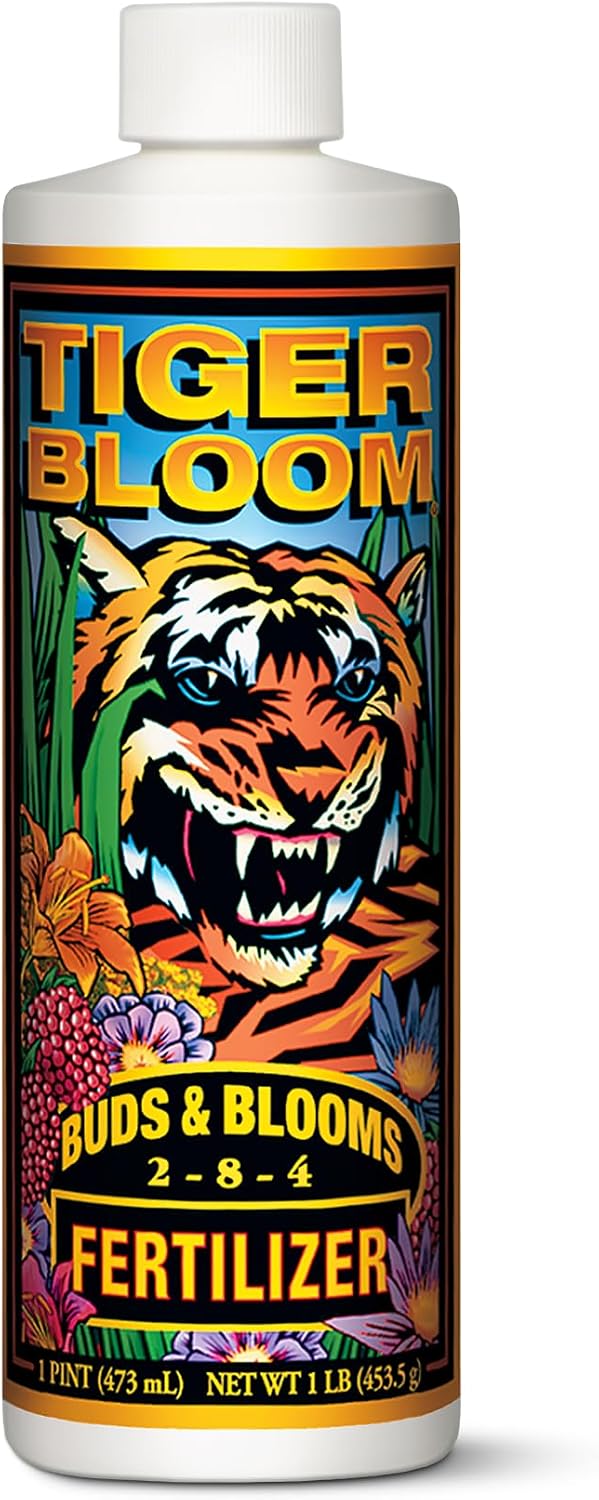
FoxFarm Tiger Bloom Liquid Plant Food (1 pint)
| Item Form | Liquid |
|---|---|
| Specific Uses For Product | Hydroponic |
| Application Method | Watering; Foliar spraying |
| Target Species | Flowering Plants |
| Mixing Ratio | 1:200 or 1:300 |
Tiger Bloom is a liquid, high-phosphorus fertilizer designed to push plants into a strong flowering and fruiting phase. You mix a small amount into the irrigation water or use it as a foliar spray and apply from first signs of flowering through harvest. The 2-8-4 formula and included micronutrients support bud set and larger blooms, and the concentrate mixes at 1:200 to 1:300 for routine feeding or 2 to 4 teaspoons per gallon for heavier feeding. It works in both soil and hydroponic setups and is formulated for quick nutrient uptake and stable micronutrient availability during storage. Practical benefits include flexible application methods, suitability for intensive flowering cycles, and a small bottle that lasts when used at recommended dilutions. Important limitations are that it is bloom-focused rather than an all-purpose feed so it may not meet vegetative needs, and the phosphorus content means users near waterways should follow local regulations to avoid runoff issues.
Best for: Serious growers who prioritize maximizing flower and bloom performance and want a concentrated, fast-acting bloom booster for soil or hydroponic environments.
Less Ideal for: Casual gardeners seeking a single all-purpose fertilizer for every growth stage or those managing turf or non-flowering lawns where phosphorus restrictions apply.
- High phosphorus NPK (2-8-4) concentrated for stronger bud development
- Works in soil and hydroponic systems for versatile use
- Liquid concentrate mixes easily for foliar or watering applications
- Formulated for quick nutrient uptake and stable micronutrient availability
- Focused on flowering so it is not a balanced all-stage fertilizer
- Contains phosphorus which may be restricted near waterways
Verdict: Choose Tiger Bloom when you need a concentrated, fast-acting bloom booster to maximize flower and fruit production.
Miracle-Gro Water Soluble All Purpose Plant Food, 1.5 lb

| Item Form | Powder |
|---|---|
| Application Method | Watering Can |
| Target Species | For all flowers, vegetables, trees, shrubs and houseplants |
| Mixing Ratio | 24-8-16 |
Miracle-Gro Water Soluble All Purpose Plant Food is a powdered, water-soluble fertilizer formulated to deliver fast nutrition to a broad mix of plants. You mix the powder into a watering can or a garden feeder and apply every 1 to 2 weeks depending on whether plants are indoors or out. The 24-8-16 NPK ratio supplies a strong nitrogen boost for leafy growth along with phosphorus and potassium to support flowering and fruit set. For pepper growers this means it can help produce vigorous plants and encourage fruit development when used at the recommended strengths. Notable features include clear mixing guidance for both indoor and outdoor use and compatibility with container and in-ground plantings. Practical benefits are quick uptake by roots and flexible application options. Important limitations are the high nitrogen proportion, which can favor foliage over fruit if overused, and the need to follow dilution instructions to avoid nutrient burn. This product is best used as a regular boost within a balanced feeding plan rather than the only fertility source for long-term soil health.
Best for: Home gardeners looking for an affordable, easy-to-use boost to support vigorous pepper plant growth and quick results in both containers and garden beds.
Less Ideal for: Growers who want a low-nitrogen or slow-release fertility plan for long-term soil building should consider specialized or organic alternatives.
- Water-soluble powder that feeds plants quickly through the roots
- Clear mixing instructions for indoor and outdoor applications
- Broadly labeled for use on flowers, vegetables, trees, shrubs and houseplants
- Feeds approximately 600 sq. ft. from the 1.5 lb container
- High nitrogen ratio may encourage foliage more than fruit if used too frequently
Verdict: A budget-friendly, fast-acting soluble fertilizer that gives bell pepper plants a regular nitrogen-rich boost to promote vigorous growth and quicker results.
Choosing the Right Fertilizer for Portulaca: Key Factors to Consider
Nutrient Ratio
Portulaca responds best to a fertilizer that encourages flowering rather than foliage growth. A balanced formula with slightly higher phosphorus relative to nitrogen helps set and sustain blooms. High nitrogen feeds can cause soft, leggy growth and fewer flowers, so look for labels that indicate bloom or flowering formulations.
Understanding the N-P-K numbers helps you match feeding to garden conditions. In poor, sandy soil a more balanced feed may be appropriate, while in richer soils a bloom-focused ratio prevents excessive vegetative growth. Regular, light feeding is often better than heavy, infrequent applications for consistent bloom production.
Application Method
How you apply fertilizer affects both convenience and plant response. Granular controlled-release products reduce the number of applications and are easy to mix into potting media or top-dress garden beds. Water-soluble fertilizers allow precise, frequent feeding and quick correction of nutrient deficiencies, but they require a more regular schedule.
Foliar sprays can deliver quick uptake during stress or cool periods, but are not a long-term substitute for proper root feeding. Choose an application method that fits your maintenance routine and the planting type-containers usually benefit from soluble feeds or diluted liquid feeds more than from raw granular forms unless the granules are slow-release.
Salt Index and Root Safety
Portulaca has a shallow, sensitive root system that can be damaged by high-salt fertilizers or concentrated applications. Products with a lower salt index or those labeled safe for containers reduce the risk of root burn. When using any concentrated feed, always dilute according to instructions and avoid applying to dry soil, which increases burn risk.
If you use a granular product, incorporate it lightly and water thoroughly after application to move nutrients into the root zone. Periodic flushing of container media during hot weather helps prevent salt buildup from repeated weekly feedings.
Feeding Frequency and Longevity
Consider how often you want to treat plants. Controlled-release granular fertilizers can feed for several weeks to months with a single application, which is helpful for large beds or low-maintenance situations. Liquid and water-soluble feeds produce faster results but require a steady schedule, often every one to two weeks during active bloom.
If you prefer set-and-forget care for containers on hot patios, choose a longer-lasting formulation. For gardeners who monitor bloom response closely, soluble feeds give more control to fine-tune flowering and foliage balance through the season.
Compatibility With Containers and Soil Types
Portulaca is commonly grown in containers, hanging baskets, and well-drained garden beds. The fertilizer should be compatible with the potting mix or native soil. Some slow-release granules work poorly in very coarse, fast-draining media because nutrients may leach before being absorbed. Conversely, high organic or heavy soils can hold nutrients longer, reducing the need for frequent feeding.
Match the product to the growing environment: choose soluble feeds for small pots and quick response, and select controlled-release products for larger planters or in-ground beds where fewer applications are desired.
Bloom Longevity and Color Intensity
Fertilizers that emphasize bloom support help flowers stay open longer and maintain color intensity through heat stress. Look for formulations with micronutrients like magnesium and iron that support pigment and overall plant health. Consistent feeding helps avoid mid-season declines in bloom quality that often come from nutrient depletion in poor media.
Avoid excessive nitrogen, which can dull flower production even if foliage looks lush. Regular, moderate feeding timed for the active growing season usually yields the best bloom longevity and vibrancy.
Feeding Portulaca in Containers
Containers dry out and lose nutrients faster than garden soil, so choose a fertilizer that suits frequent but light applications. Water-soluble feeds applied at half the recommended strength once a week are a common approach for hanging baskets and small pots, keeping salts low while providing steady nutrition.
Top-dressing with a slow-release granular product can work for larger planters, but make sure the granules are rated for container use and that you water well after application to move nutrients into the root zone.
- Use diluted liquid feeds for quick correction
- Select container-safe slow-release granules for low maintenance
- Flush containers occasionally to prevent salt buildup
Timing Feeding for Peak Bloom
Start feeding when new growth begins and flowers are appearing. During the main bloom period, maintain a consistent schedule rather than increasing dose size, which risks foliage-heavy growth. Reduce or stop feeding as temperatures cool and flowering slows to avoid stressing the plants in fall.
- Begin light feeding at transplant or after spring growth resumes
- Maintain steady schedule through peak heat and bloom
- Scale back feeding as daylight shortens or blooms decline
Adjusting Feed for Soil Conditions
Test or assess your soil or potting mix before selecting the feed strength. Sandy, low-organic soils will need more frequent nutrition than rich, loamy beds. If soil is naturally fertile, favor bloom-focused, lower-nitrogen formulas to prevent excessive vegetative growth.
In heavy soils, ensure good drainage before adding fertilizer, since poor drainage plus feeding can lead to root stress and lower bloom counts.
- Increase frequency in fast-draining soils
- Prefer bloom-focused ratios in fertile soils
- Improve drainage in heavy soils before regular feeding
Organic Versus Synthetic Options
Organic fertilizers release nutrients more slowly and can improve soil structure over time, which is helpful in garden beds. They tend to have lower immediate salt risk but may not correct deficiencies quickly. Synthetic feeds provide a predictable, fast nutrient supply and are useful for short-term bloom boosts in containers and displays.
Many gardeners use a combination approach: organic amendments to build the soil and targeted synthetic or soluble feeds during peak bloom periods for reliable flower production.
- Organics improve long-term soil health
- Synthetics give faster, more predictable results
- Combine approaches for soil building and timely bloom support
Dealing With Overfeeding and Burn
If plants show yellowing leaf margins, scorched tips, or dieback after feeding, reduce concentration and flush soil with water to leach excess salts. For shallow-rooted portulaca, even modest overfeeding can cause stress, so err on the side of weaker solutions applied more often rather than strong, infrequent doses.
Replace heavily contaminated potting mix if flushing does not restore healthy growth, and begin again with a gentler feeding regimen once plants recover.
- Flush containers to remove built-up salts
- Use weaker, more frequent applications to reduce burn risk
- Replace media if severe salt damage occurs
How We Chose the Best Fertilizer for Portulaca
We focused on the factors that matter to gardeners who grow portulaca in sunny beds, rock gardens, and containers. First, nutrient balance was a primary filter: fertilizers that favor a moderate to higher phosphorus ratio relative to nitrogen help encourage flowering without encouraging excessive leafy growth. Second, application method mattered; we prioritized options that are simple to apply in containers and garden soil, including granular formulations with controlled release and water-soluble formulas for frequent feeding. Third, salt index and burn risk were considered, since portulaca has a relatively shallow root system and can be damaged by high-salt feeds. Fourth, longevity of feeding and maintenance frequency were weighed to favor products that reduce fuss during peak bloom. Finally, formula compatibility with common garden soils and minimal need for supplemental adjustments was part of the selection. We excluded specialty mixes designed only for heavy feeders or acid-loving plants because they do not match portulaca needs. The final list emphasizes nutrient ratios, application convenience, burn risk, feeding duration, and compatibility with typical garden and container soils.
FAQ
How often should I feed portulaca in containers?
Usually feed weekly with a diluted water-soluble fertilizer during active bloom, or apply a container-rated slow-release formula every 8 to 12 weeks. Frequency depends on pot size and media; smaller pots need more frequent feeding.
Can I use a general-purpose fertilizer on portulaca?
A general-purpose feed can work if it has a balanced N-P-K, but choose one with moderate nitrogen and adequate phosphorus to encourage flowers. Avoid heavy high-nitrogen formulations that favor foliage over blooms.
Will organic fertilizers produce fewer blooms than synthetic ones?
Organics release nutrients more slowly and may not provide the immediate bloom boost that synthetic soluble feeds do. However, organic amendments improve soil health over time and can support steady flowering once soils are built up.
What should I do if my portulaca shows leaf burn after fertilizing?
Stop feeding and thoroughly water the soil to flush excess salts. If container media remains damaged, consider replacing the potting mix and resuming with a weaker feeding schedule to avoid repeat burn.
Is a bloom-boost fertilizer necessary for good flower color?
Not always. A balanced fertilizer with adequate phosphorus and micronutrients often maintains color intensity. Targeted bloom formulations can help if you notice fading or lower flower counts.
Can I apply fertilizer to portulaca during extreme heat?
Avoid heavy feeding during extreme heat. Apply diluted feeds in the cooler parts of the day and prioritize watering to reduce stress. Overfeeding when plants are heat-stressed increases risk of damage.
Final Verdict
Choose a fertilizer strategy for portulaca based on your planting type and how much maintenance you want. For containers and hanging baskets, diluted water-soluble feeds applied regularly give precise control over bloom response. For low-maintenance beds, container-rated slow-release granules provide longer coverage with less fuss. Prioritize a nutrient balance that favors flowering, keep salt buildup low, and match feeding frequency to soil drainage and pot size. With the right approach you will maintain steady blooms without encouraging excessive foliage or risking root burn.
