

Note: This article contains affiliate links. If you click on these links and make a purchase, I may earn a small commission at no extra cost to you. This helps support my research and content. Read my full affiliate disclosure here.
Picking the right flowering stage fertilizer matters because it directly affects blossom retention, fruit set, and the eventual size and flavor of your tomatoes. At bloom time plants shift from leaf-building to reproductive growth, so nutrient balance and application method change what you need from a fertilizer. This guide covers seven top flowering stage fertilizers shortlisted for tomato use. We explain the gardening performance traits that matter, outline practical pros and cons for typical garden situations, and summarize the evaluation criteria used to pick these options. Read on to find a flowering fertilizer that fits your garden style and goals.
Top Picks at a Glance
| Best Overall The best all-around choice for most situations | FoxFarm Tiger Bloom Liquid Plant Food (1 pint) |  |
| Best Quality Built to a higher standard if you want something more solid | Element Nutrients Flower Fuel 1-34-32 Powder (1000 g) |  |
| Best Value The sweet spot between price and what you get | Farmer's Secret Fruit & Bloom Booster Liquid Fertilizer (32 oz) |  |
| Best Budget The cheapest option that still gets the job done reliably | Jobe's Tomato Fertilizer Spikes, 18 Count |  |
| Highest Rated A top-rated pick with lots of positive feedback | FoxFarm Tiger Bloom Liquid Plant Food (1 qt) |  |
| Most Popular A crowd favorite that many people choose with confidence | Miracle-Gro Water Soluble Tomato Plant Food, 1.5 lb |  |
| Best Seller A high-volume bestseller chosen again and again | Miracle-Gro Shake 'N Feed Tomato, Fruit & Vegetable Plant Food, 4.5 lb |  |
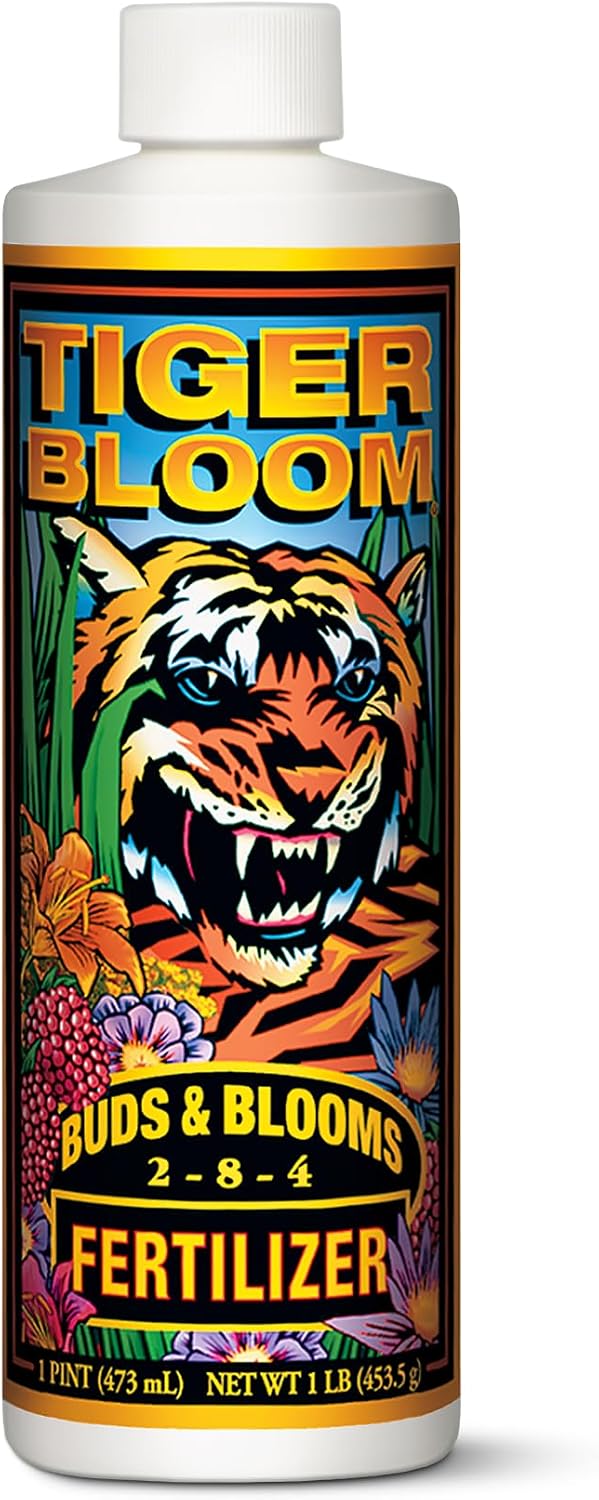
FoxFarm Tiger Bloom Liquid Plant Food (1 pint)
| Item Form | Liquid |
|---|---|
| Specific Uses For Product | Hydroponic |
| Application Method | Watering; Foliar spraying |
| Target Species | Flowering Plants |
| Mixing Ratio | 1:200 or 1:300 |
Tiger Bloom is a liquid, high-phosphorus fertilizer designed to push plants into a strong flowering and fruiting phase. You mix a small amount into the irrigation water or use it as a foliar spray and apply from first signs of flowering through harvest. The 2-8-4 formula and included micronutrients support bud set and larger blooms, and the concentrate mixes at 1:200 to 1:300 for routine feeding or 2 to 4 teaspoons per gallon for heavier feeding. It works in both soil and hydroponic setups and is formulated for quick nutrient uptake and stable micronutrient availability during storage. Practical benefits include flexible application methods, suitability for intensive flowering cycles, and a small bottle that lasts when used at recommended dilutions. Important limitations are that it is bloom-focused rather than an all-purpose feed so it may not meet vegetative needs, and the phosphorus content means users near waterways should follow local regulations to avoid runoff issues.
Best for: Serious growers who prioritize maximizing flower and bloom performance and want a concentrated, fast-acting bloom booster for soil or hydroponic environments.
Less Ideal for: Casual gardeners seeking a single all-purpose fertilizer for every growth stage or those managing turf or non-flowering lawns where phosphorus restrictions apply.
- High phosphorus NPK (2-8-4) concentrated for stronger bud development
- Works in soil and hydroponic systems for versatile use
- Liquid concentrate mixes easily for foliar or watering applications
- Formulated for quick nutrient uptake and stable micronutrient availability
- Focused on flowering so it is not a balanced all-stage fertilizer
- Contains phosphorus which may be restricted near waterways
Verdict: Choose Tiger Bloom when you need a concentrated, fast-acting bloom booster to maximize flower and fruit production.
Element Nutrients Flower Fuel 1-34-32 Powder (1000 g)

| Item Form | Powder |
|---|---|
| Specific Uses For Product | Hydroponic-grade |
| Coverage | Large |
| Target Species | flowers |
| Mixing Ratio | 1/4 teaspoon per gallon |
Element Nutrients Flower Fuel is a high-phosphorus powdered bloom booster intended to be added to a base nutrient during the flowering stage. It is used by mixing the recommended 1/4 teaspoon per gallon into irrigation or feed water to supply a 1-34-32 N-P-K ratio that supports larger, denser flowers and increased resin or oil production. The powder format treats a large volume of water from a single jar, and the product includes measuring scoops for consistent dosing. Practical benefits include easy storage compared with liquids, clear dosing for small-scale feeds, and suitability for hydroponic or soil-fed systems when paired with a complete base nutrient. Important limitations are that this is an additive rather than a complete fertilizer so it must be used alongside a balanced base nutrient, and precise dosing is required to avoid nutrient imbalance. Safety precautions are needed when handling the concentrated powder to avoid skin or eye contact.
Best for: Growers focused on maximizing flower and fruit development who already use a complete base nutrient and want a concentrated additive to boost bloom performance.
Less Ideal for: Beginners seeking an all-in-one fertilizer or gardeners who prefer ready-to-use liquid feeds should consider complete bloom fertilizers instead.
- High phosphorus and potassium formulation aimed at boosting bloom size and density
- Powder form stores compactly and treats a large volume of water from one jar
- Includes measuring scoops and a clear 1/4 teaspoon per gallon mixing ratio for repeatable dosing
- Not a complete nutrient solution and requires pairing with a base feed nutrient
- Requires careful measuring to avoid overconcentration and potential nutrient imbalance
Verdict: If you want a concentrated, easy-to-store bloom booster to push flower and fruit size when used with your base nutrient, this product delivers focused flowering results.
Farmer's Secret Fruit & Bloom Booster Liquid Fertilizer (32 oz)

| Item Form | Liquid |
|---|---|
| Specific Uses For Product | Root Development, Seed Development |
| Application Method | pour or spray |
| Target Species | Fruit, vegetable, and flower producing plants |
| Mixing Ratio | 1 teaspoon:2 gallons |
Farmer's Secret Fruit & Bloom Booster is a super-concentrated liquid fertilizer designed for the bloom and fruiting stages of garden plants. You dilute it at the recommended rate and apply by watering can, sprayer, or through irrigation for either soil feeding or foliar feeding; the brand suggests starting applications when buds form and repeating every 1 to 2 weeks. The formula emphasizes higher phosphorus and potassium to encourage blooms and fruit set while supplying nitrogen and trace minerals that support root health and general vigor. Because it is liquid and concentrated, nutrients are immediately available to plants, which can produce visible improvements faster than granular feeds. Practical benefits include flexible application methods, suitability for a wide range of fruiting plants, and a long shelf life. Important limitations are that it requires careful dilution to avoid overfeeding and that optimal timing and results vary by crop and climate, so some trialing on a small number of plants is wise.
Best for: Home gardeners seeking a simple, proven boost for flowering and fruiting plants who prefer an easy-to-use, professional-style liquid feed and play it safe by following dilution instructions.
Less Ideal for: Gardeners who want dry granular feeds, slow-release long-season feeding, or need exact NPK ratios for fine-tuned fertilization plans.
- High phosphorus and potassium focus to support flowering and fruit set.
- Concentrated liquid formula makes nutrients immediately available and extends number of applications per bottle.
- Versatile application: pour, spray, foliar feed, or use with irrigation systems.
- Contains macronutrients plus trace minerals for balanced plant support.
- Long practical shelf life so unopened product can be stored for years.
- Requires precise dilution and schedule to avoid overfeeding sensitive plants.
- No guaranteed NPK numbers listed on the provided details for exact nutrient breakdown.
Verdict: A concentrated liquid bloom booster that reliably supports stronger roots and bigger yields for fruiting plants when used as directed.
Jobe's Tomato Fertilizer Spikes, 18 Count

| Unit Count | 18 Count |
|---|---|
| NPK | 6-18-6 |
| Application Method | Insert spikes around the plants |
| Target Species | Tomato |
Jobe's Tomato Fertilizer Spikes are simple root-feeding sticks designed to deliver balanced nutrients directly to tomato roots over several weeks. Use one or more spikes inserted into the soil around each plant at planting or early in the season and the slow-release formula releases phosphate-heavy nutrition aimed at supporting flowering and fruit set. The pre-measured spikes eliminate guesswork and reduce mess compared with granular or liquid feeds, and the waterproof pouch helps keep leftovers dry. Practical benefits include targeted feeding that is less likely to wash away and an easy schedule—reapply roughly every eight weeks during the growing season. Limitations are that spikes provide a fixed NPK (6-18-6) so you cannot fine-tune ratios mid-season, and the fixed dose may not match very large or very small plants exactly. Also phosphorus-containing fertilizers are regulated in some areas, so check local guidance before use.
Best for: Gardeners who want a low-effort, no-mess way to support tomato flowering and fruiting and who prefer simple, periodic feeding over frequent applications.
Less Ideal for: Growers who need precise control over nutrient ratios, those managing large-scale production, or gardeners in jurisdictions restricting phosphorus use.
- Slow-release spikes deliver nutrients directly to the root zone for up to eight weeks
- Pre-measured sticks remove mixing and measuring errors and reduce mess
- High phosphorus (18) supports flower development and fruit set
- Waterproof resealable packaging keeps unused spikes dry
- Fixed 6-18-6 formula does not allow adjusting nutrient ratios for specific plant needs
- Single-dose spikes may be too strong or too weak for unusually large or small plants
Verdict: An easy, budget-friendly root-feeding option that reliably boosts tomato flowering and fruit set with pre-measured slow-release spikes.
FoxFarm Tiger Bloom Liquid Plant Food (1 qt)

| Item Form | Liquid |
|---|---|
| Specific Uses For Product | Hydroponic |
| Coverage | Medium |
| Mixing Ratio | 100:2 or 100:3 |
FoxFarm Tiger Bloom is a concentrated liquid bloom booster designed for use from the first signs of flowering through harvest. With a 2-8-4 N-P-K ratio and a low pH formulation, it supplies extra phosphorus and micronutrients that encourage larger flowers and better fruit set. Typical use is dilute feeding at 2 to 3 teaspoons per gallon every other watering, or foliar sprays applied early in the morning. Its liquid form makes it fast-acting and easy to mix for both soil and hydroponic setups, and the mixing ratio options let you adjust strength for heavier feeding. Important limitations are that it contains phosphorus, which may be restricted for lawn use in some areas, and that overuse can risk nutrient imbalance, so careful measuring is required. Safety precautions are recommended for handling and storage because it is a concentrated solution.
Best for: Growers focused on maximizing flower and fruit production who want a fast-acting, easy-to-dose bloom fertilizer for soil or hydroponic setups.
Less Ideal for: Casual gardeners who do not need high-phosphorus feedings or users who prefer slow-release granular fertilizers for low-maintenance lawns and beds.
- Phosphorus-rich 2-8-4 formula targets bud and bloom development
- Liquid concentrate mixes quickly for fast nutrient uptake
- Suitable for both soil and hydroponic systems
- Flexible mixing ratios allow light to heavy feeding schedules
- Contains phosphorus which may be restricted for non-agricultural turf in some jurisdictions
Verdict: Choose Tiger Bloom when you want a concentrated, phosphorus-focused liquid fertilizer to quickly boost buds and blooms.
Miracle-Gro Water Soluble Tomato Plant Food, 1.5 lb

| Item Form | Liquid |
|---|---|
| Application Method | Water Soluble |
| Target Species | Great for tomatoes and vegetables |
| Mixing Ratio | 18-18-21 |
Miracle-Gro Water Soluble Tomato Plant Food is a water-soluble fertilizer intended to boost vegetable growth by delivering nutrients quickly through a watering can or Miracle-Gro Garden Feeder. Its 18-18-21 mixing ratio supplies balanced nitrogen, phosphorus, and potassium so plants get a steady supply of the elements they need for leafy growth, flowering, and fruit set. Use it by mixing the recommended dose into a watering can for outdoor containers or in-ground beds and apply every 7 to 14 days during the growing season. The product works fast because it dissolves completely and can be applied directly to the root zone, which is useful for impatient gardeners trying to push tuber and foliage development in potatoes. On the downside it is a concentrated chemical fertilizer rather than an organic option and requires careful measuring to avoid overfeeding. Coverage notes from the brand indicate a small 1.5 lb package is meant to feed a modest area when used with the Garden Feeder, so larger plots will need multiple containers.
Best for: Ideal for gardeners on a budget who want a straightforward, fast-acting fertilizer to boost potato foliage and tuber development without complicated application methods.
Less Ideal for: Not the best choice for growers seeking organic or slow-release nutrition or for those managing large acreages who need bulk, long-lasting supplies.
- Water-soluble formula mixes easily for quick nutrient uptake
- Balanced NPK (18-18-21) supports foliage, flowers, and fruit development
- Designed for use with watering cans or the Miracle-Gro Garden Feeder for convenient application
- Feeds quickly when applied every 7 to 14 days during the growing season
- Concentrated synthetic formula, not an organic fertilizer
- 1.5 lb package is small for larger vegetable plots and will require frequent repurchasing
Verdict: A simple, fast-acting water-soluble fertilizer that gives budget-minded vegetable growers an easy way to boost potato growth and yields.
Miracle-Gro Shake 'N Feed Tomato, Fruit & Vegetable Plant Food, 4.5 lb

| Item Form | Granules |
|---|---|
| Specific Uses For Product | Growing tomatoes, fruits, and vegetables |
| Application Method | Dry application |
| Mixing Ratio | 10:5:15 |
Miracle‑Gro Shake 'N Feed Tomato, Fruit & Vegetable is a granular, dry‑apply fertilizer designed for in‑ground beds and container vegetables. You sprinkle or shake the granules onto the soil and either work them into the top inch or three of soil or mix them into potting mix when planting, then water to activate feeding. The 10-5-15 NPK formula supplies balanced nitrogen for leafy growth and higher potassium for fruit development while added calcium helps reduce common blossom and fruit disorders. Because it feeds for up to three months, it cuts down on frequent applications and is convenient for busy gardeners. It is targeted specifically at tomatoes, peppers, berries and similar crops and is suitable for both established plants and new transplants. Limitations are that it must be applied to soil rather than foliar‑sprayed, and gardeners who prefer slow micronutrient tailoring or organic certified inputs may prefer other options. Follow label rates closely to avoid overapplication in small container setups.
Best for: A gardener who wants a low‑maintenance, reliable fertilizer for tomato and vegetable beds and containers and values fewer applications and straightforward instructions.
Less Ideal for: Growers seeking certified organic fertilizers, those who rely on foliar or liquid feeding programs, or gardeners wanting to precisely blend micro‑nutrients should consider other products.
- Long residual feeding up to three months reduces reapplication frequency
- Includes calcium to help prevent blossom and fruit disorders and improve fruit quality
- Ready‑to‑use granular form is simple to apply to in‑ground beds or mixed into potting soil
- NPK 10-5-15 balances vegetative growth with fruit development for vegetables and tomatoes
- Not suitable for foliar feeding or direct mixing into irrigation systems
- Contains conventional ingredients so it is not an organic‑certified product
Verdict: Choose this if you want an easy, long‑lasting granular fertilizer that reliably feeds vegetable and tomato plants for an entire season with minimal upkeep.
Choosing the Right Flowering Stage Fertilizer for Tomatoes: Key Factors to Consider
Nutrient Ratio for Bloom and Fruit
The ratio of nitrogen to phosphorus and potassium shifts in the flowering stage. Too much nitrogen encourages leafy growth at the expense of flowers, while adequate phosphorus supports bloom formation and potassium helps with fruit development and sugar translocation.
When choosing a fertilizer for flowering tomatoes, look for a formula with moderate to lower nitrogen and increased phosphorus and potassium relative to vegetative feeds. Understanding label N-P-K numbers helps you match the product to what your plants actually need at this stage.
Application Method and Frequency
Fertilizers come as granular, water-soluble, liquid concentrates, or spike/slow-release forms. Water-soluble and liquid feeds give faster uptake and easier correction of deficiencies during flowering, which is useful if blossoms show signs of drop. Granular and slow-release options are lower maintenance and reduce risk of overfeeding but deliver nutrients more slowly.
Consider how often you want to feed and the time you have for garden chores. Frequent light applications can be gentler on blooms than infrequent heavy doses.
Solubility and Uptake Speed
How quickly a fertilizer dissolves and becomes available to roots or leaves matters during the flowering window. Water-soluble and foliar-applied products provide immediate nutrients that can influence blossom retention and early fruit set. Insoluble or slow-release materials supply steady nutrition but may not correct an urgent deficiency.
Match solubility to the problem you are addressing: use faster-acting formats if blooms are dropping or fruits are developing poorly, and use slower-release feeds for routine, steady support.
Compatibility with Soil and Potting Mix
Tomato rooting environments vary widely between heavy garden soil and soilless container mixes. The existing fertility, organic matter level, and pH will change how a flowering fertilizer behaves. For example, fertilizers that rely on microbial mineralization may be less effective in sterile potting mixes without added microbes.
Assess your soil or mix before choosing a product. If you garden in containers, prefer formulations labeled for containers or with clear dilution rates for small pots. For soil beds, consider how the fertilizer integrates with compost and existing amendments.
Risk of Salt Buildup and Plant Safety
High-salt fertilizers or incorrect application can cause root burn, reduced water uptake, and blossom drop. During flowering, tomatoes are sensitive to overfertilization because excessive salts interfere with water relations and reproductive development.
Choose products with clear dosing guidance and consider periodic soil or pot flushes if you feed frequently. Look for formulations or application instructions that minimize the risk of salt accumulation in containers and raised beds.
Formulation Transparency and Additives
Some flowering fertilizers include secondary nutrients and micronutrients like calcium, magnesium, and boron that influence blossom health and reduce disorders like blossom end rot. Others may contain growth stimulants or proprietary blends with limited ingredient disclosure.
Prefer fertilizers that list complete nutrient analyses so you can judge whether they supply the trace elements your tomatoes need. If your soil tests show specific deficiencies, choose a product that addresses those gaps rather than relying on vague 'all-in-one' claims.
When To Start Feeding for Flowering
Begin using a flowering-stage fertilizer once the plant shifts from producing mainly leaves to forming consistent blossoms. For many tomato varieties this is a few weeks after transplanting when multiple flower clusters form and the plant has a strong root system.
Avoid switching too early; if plants are still focused on vegetative growth they will use additional phosphorus and potassium less efficiently. Conversely, start feeding at the first signs of consistent bloom to support fruit set rather than waiting until small fruits appear.
- Watch for multiple open blooms per truss as a practical sign to begin flowering feeds.
- In containers you may need earlier, lighter feeding because potting mixes leach quickly.
- If plants are struggling vegetatively, correct that before pushing excess bloom nutrients.
Foliar Feeding Vs Root Feeding
Foliar sprays can deliver quick micronutrients and are useful for short-term corrections or when soil uptake is restricted. They are not a substitute for balanced root feeding but can rescue plants showing early deficiency symptoms during bloom.
Root feeding through soil or solution culture remains the primary way tomatoes receive macronutrients. Choose foliar applications sparingly and follow recommended concentrations to avoid leaf burn.
- Use foliar sprays for boron or calcium corrections in small doses.
- Always apply foliar feeds in cooler parts of the day to prevent scorch.
- Combine foliar and root feeds when a rapid response is needed but maintain overall nutrient balance.
Adjusting Feed Strength by Growing Setup
Container-grown tomatoes and plants in raised beds generally need different feed strengths. Containers drain faster and can concentrate salts; use lower-strength, more frequent feedings. In-ground plants with compost-rich soil often require less frequent, higher-volume applications.
Monitor plants closely after changing feed strength. Leaves that yellow between veins, blossom drop, or marginal leaf scorch are signs you may need to alter concentration or frequency.
- Reduce concentration for small pots and increase frequency rather than giving heavier single doses.
- In well-amended garden soil, rely more on granular or organic options combined with occasional soluble boosts.
- Keep a feeding log for the season to track responses by setup and variety.
Micronutrients and Blossom Disorders
Calcium and boron play outsized roles in preventing blossom end rot and ensuring consistent fruit quality. Even when macronutrients look balanced, micronutrient shortages can limit fruit development and cause deformities.
If you see early blossom end rot or misshapen fruits, check both calcium availability and watering consistency before assuming a macronutrient problem. Targeted supplements or foliar applications can help while longer-term soil corrections take effect.
- Ensure steady moisture to aid calcium movement into developing fruit.
- Consider a calcium-rich foliar application at early fruit set if soils are low in available calcium.
- Test soil or mix for pH and micronutrient levels if disorders recur.
Environmental and Watering Interactions
Temperature, humidity, and watering frequency interact with fertilizer performance during flowering. High temperatures can increase blossom drop even with proper nutrition, while erratic watering interferes with nutrient uptake and fruit set.
Keep irrigation consistent and adjust feeding when environmental stress occurs. During heat spikes, lighter feeds and extra water can preserve blooms better than heavy fertilization.
- Feed lightly during heat waves to avoid stressing plants.
- Mulch to stabilize soil moisture and reduce salt buildup in surface layers.
- Observe blossom retention after irrigation changes to judge adjustments.
How We Chose the Best Flowering Stage Fertilizer for Tomatoes
We looked for fertilizers formulated specifically for the flowering and fruiting phase of tomatoes and evaluated each option against concrete, gardener-focused criteria. Priority was given to the nutrient profile relevant to flowers and fruit, especially phosphorus and potassium levels relative to nitrogen, because that balance influences blossom development and fruit set. We also assessed application format and dosing clarity since how you feed plants affects uptake and the risk of burn or imbalance. Additional filters included ingredient transparency, suitability for container and in-ground planting, and compatibility with common organic or conventional garden practices. Products lacking clear nutrient analysis or those intended only for vegetative growth were excluded. Final selection favored fertilizers with straightforward directions, reliable nutrient ratios for flowering, and flexible application methods that work in home vegetable gardens and small-scale production.
FAQ
How often should I feed tomatoes during flowering?
Frequency depends on formulation and growing conditions. Water-soluble feeds are often applied every 7 to 14 days at a diluted rate, while slow-release or granular products may be used once every 4 to 8 weeks. Containers usually need more frequent, lighter feedings.
Can I use a general vegetable fertilizer for flowering tomatoes?
General vegetable fertilizers can work but may be higher in nitrogen than ideal for flowering. If using a general feed, reduce nitrogen frequency or supplement with a bloom-focused product to improve phosphorus and potassium during fruit set.
Will foliar feeding prevent blossom end rot?
Foliar calcium sprays can help reduce blossom end rot in the short term, but consistent soil calcium and even moisture are the long-term solutions. Foliar applications are a useful corrective tool but do not replace proper watering practices and soil management.
Is organic flowering fertilizer as effective as synthetic options?
Organic fertilizers can support flowering tomatoes but they often release nutrients more slowly and rely on microbial activity. They are effective when soil biology is healthy, but may not correct acute deficiencies as quickly as soluble synthetic feeds.
Should I change my fertilizer when fruiting begins?
Continue a flowering-stage approach through early fruit development, then gradually shift to a maintenance feeding that supports fruit ripening if needed. The exact timing depends on variety and how aggressively you want to push fruit size versus flavor.
How do I avoid overfertilizing during bloom?
Follow label dilution rates, err on the side of weaker solutions for containers, and space applications so you can observe plant response. Flush pots occasionally if salts build up and adjust frequency rather than concentration when plants show stress.
Final Verdict
Choose a flowering-stage fertilizer for tomatoes by prioritizing the nutrient balance that favors blossom and fruit development, easy-to-follow application instructions, and compatibility with your planting method. Expect tradeoffs between quick-acting soluble feeds that correct deficiencies fast and slow-release options that reduce maintenance. Make adjustments based on plant response and environmental conditions. With the right feed strategy and attention to water and micronutrients, you can improve blossom retention and produce healthier, better-formed tomatoes.
