

Note: This article contains affiliate links. If you click on these links and make a purchase, I may earn a small commission at no extra cost to you. This helps support my research and content. Read my full affiliate disclosure here.
Flower beds and container blooms respond differently to fertilizers than lawns or vegetables. Choosing the right granular fertilizer for flowers affects bloom count, flower size, and how often you need to reapply. In this guide we shortlist seven top-performing granular options and explain the practical tradeoffs gardeners face with nutrient ratios, release speed, and soil compatibility. You will find straightforward evaluation points used across our picks so you can match a product to your planting situation, whether you grow annuals, perennials, or mixed containers. Next up are the featured products, followed by focused guidance to help you pick the best fit for your flower garden.
Top Picks at a Glance
| Best Overall The best all-around choice for most situations | Osmocote Smart-Release Plant Food Flower & Vegetable, 8 lb. |  |
| Best Quality Built to a higher standard if you want something more solid | Osmocote Smart‑Release Plant Food Plus Outdoor & Indoor, 2 lb |  |
| Best Value The sweet spot between price and what you get | Jobe's Organics All-Purpose Granular Fertilizer (16 lb) |  |
| Best Budget The cheapest option that still gets the job done reliably | Jobe's Organics Granular Fertilizer for Annuals and Perennials, 4 lb |  |
| Highest Rated A top-rated pick with lots of positive feedback | Espoma Bulb-Tone Granular Plant Food, 4 lb (BT4) |  |
| Most Popular A crowd favorite that many people choose with confidence | Miracle-Gro Shake 'N Feed All Purpose Plant Food, 4.5 lb |  |
| Best Seller A high-volume bestseller chosen again and again | Miracle-Gro Shake 'N Feed Rose & Bloom Plant Food, 4.5 lb |  |
Osmocote Smart-Release Plant Food Flower & Vegetable, 8 lb.

| Item Form | Granules |
|---|---|
| Specific Uses For Product | Root Development |
| Target Species | Perennials |
| Mixing Ratio | 1:22 (1 lb.:1 cubic foot) |
Osmocote Smart-Release Flower & Vegetable is a granular slow-release fertilizer designed to provide steady nutrition to vegetable beds, raised beds, and perennial planting areas for up to four months. It is applied by mixing the measured scoop into the top 1 to 3 inches of soil or broadcasting over mulched areas, with 1 lb treating roughly 40 sq ft. The balanced 14-14-14 NPK formula supports root development and consistent above-ground growth without frequent reapplication. Notable practical benefits include the no-burn reputation that makes it forgiving if you misapply, and the temperature-responsive release that aligns feeding with plant uptake. It comes with an applicator and clear coverage guidance, so it is straightforward to use for typical home gardeners. Limitations are that release rate depends on soil temperature so feeding timing can vary between climates, and as a granular product it requires incorporation into the soil rather than being foliar or water-soluble for quick correction of deficiencies. For gardeners seeking a low-maintenance, season-long feed for edible and ornamental plantings, this performs predictably and safely.
Best for: Home gardeners who want a reliable, low-maintenance fertilizer for vegetable plots, raised beds, and perennial borders and prefer a product that reduces the need for frequent feeding.
Less Ideal for: Growers who need fast corrective feeding or who prefer liquid or foliar fertilizers for immediate nutrient delivery should consider other options.
- Balanced 14-14-14 NPK supports both root and top growth across vegetables and flowers
- Slow-release formula feeds up to four months, reducing reapplication frequency
- Included scoop and clear coverage guidance make application easy and consistent
- Formulation is forgiving and unlikely to burn plants even if over-applied
- Nutrient release depends on soil temperature so timing can vary by climate
- Granular form must be mixed into soil and cannot correct nutrient deficiencies quickly
Verdict: Choose this if you want a dependable, mistake-proof slow-release fertilizer that feeds vegetables and flowers for an entire season.
Osmocote Smart‑Release Plant Food Plus Outdoor & Indoor, 2 lb

| Item Form | Granules |
|---|---|
| Application Method | Sprinkle |
| Target Species | All plants |
| Mixing Ratio | 1 capful (3 tablespoons) per 2 gallons soil or per 4 sq. ft. |
| Unit Count | 32 Ounce |
Osmocote Smart‑Release Plant Food Plus is a granular, resin‑coated fertilizer designed to feed flowers and other plants steadily for up to six months with 11 essential nutrients. You apply it by sprinkling the recommended amount into the top inch or two of potting mix or garden soil, watering it in, and reapplying every six months; indoor plants use about half the outdoor rate. The resin coating times nutrient release to moisture and temperature, which reduces the need for frequent feedings and lowers the risk of fertilizer burn when used as directed. It works across containers, raised beds, and in‑ground flower beds and covers up to roughly 75 square feet per 2 lb container. Limitations are that a single 2 lb container is only enough for small gardens or several pots, and the slow‑release formula is not suitable when an immediate corrective boost is needed for acute nutrient deficiencies. For gardeners focused on steady, maintenance feeding for flowering plants this is an easy, low‑effort option.
Best for: Gardeners who want reliable, low‑maintenance feeding for flowers and mixed plantings and prefer a consistent supply of nutrients over months rather than frequent liquid feedings.
Less Ideal for: Growers who need fast corrective feeding for visible nutrient deficiencies or those managing very large beds who want bulk fertilizer options to reduce trips to reapply.
- Feeds continuously up to six months with a single application
- Resin coating times nutrient release to plant needs based on moisture and temperature
- Formulated with 11 essential nutrients suitable for a wide range of flowering plants
- No-burn pledge when used as directed reduces risk of overfeeding
- 2 lb container only covers about 75 sq. ft., so frequent repurchase is needed for larger gardens
- Slow‑release formulation does not provide a rapid corrective nutrient boost
Verdict: Choose this product if you want a hands-off, long‑lasting fertilizer that keeps flowering plants fed for months with a single application.
Jobe's Organics All-Purpose Granular Fertilizer (16 lb)

| Item Form | Granules |
|---|---|
| Specific Uses For Product | Plant Growth, Root Development, Seed Development, Soil Conditioning |
| Mixing Ratio | 4-4-4 |
| Coverage | Resealable |
This is a straightforward organic granular fertilizer designed for regular feeding of vegetable gardens and other ornamentals. With an NPK of 4-4-4 and ingredients like feather meal, bone meal, and processed poultry manure, it supplies balanced nutrients and some calcium and sulfur for steady growth and improved root development. You apply it to soil every 2 to 3 weeks during the growing season; as a slow-to-release granular it reduces the need for daily attention and lowers the risk of burning when used as directed. The product is OMRI listed for organic gardening and is presented in a resealable bag for tidy storage. Limitations to be aware of are the modest NPK numbers, which mean it is best for maintenance feeding rather than rapidly correcting severe nutrient deficiencies, and the need to reapply frequently compared with longer-term slow-release formulations. For growers wanting an easy, certified-organic feed for vegetables and mixed beds, this covers most bases without complex application methods.
Best for: Home vegetable gardeners and practical growers who prioritize organic inputs and want a simple, repeatable feeding routine to maintain steady plant growth.
Less Ideal for: Growers who need a high-concentration or targeted corrective fertilizer for severe nutrient deficiencies or for single-crop intensive production should consider specialized formulas instead.
- OMRI listed and made from organic-derived sources suitable for certified organic vegetable production
- Balanced 4-4-4 NPK supports foliage, flowers, and fruit development without strong spikes
- Granular, slow-to-release form reduces immediate burn risk and simplifies feeding schedule
- Resealable packaging helps keep product dry and minimizes mess during storage
- Lower nutrient concentrations mean more frequent application or higher volumes are needed for nutrient-poor soils
- Not formulated for a single crop nutrient correction so may be insufficient for plants with specific high-demand deficiencies
Verdict: A reliable, OMRI-listed all-purpose granular fertilizer that gives practical, balanced organic feeding for vegetable gardens with minimal fuss.
Jobe's Organics Granular Fertilizer for Annuals and Perennials, 4 lb

| NPK | 3-5-4 |
|---|---|
| Form | Granules |
| Coverage | Resealable |
| Unit Count | 64 Ounce |
This granular fertilizer is designed to feed flowering annuals and perennials throughout the season using an organic 3-5-4 NPK formula. You sprinkle the granules around the root zone every 4 to 8 weeks during the growing season; the slow-release nature of the ingredients such as feather meal and bone meal helps provide steady nutrients for more blooms without frequent reapplication. The bag is resealable and sized for small beds, containers, or starter perennial plantings, and the OMRI listing makes it a fit for organic gardens and those who want pet- and people-safe products. Because it is a balanced, general-purpose flower formula, it works well as a low-effort fertilizer for mixed beds rather than for correcting specific nutrient deficiencies. It does not include concentrated quick-release nutrients for an instant green-up, so gardeners who need rapid correction or large-scale feeding may prefer a different product or a larger format for economy.
Best for: Gardeners who want an affordable, low-effort organic fertilizer for flower beds, mixed borders, or container perennials and prefer steady seasonal feeding over quick fixes.
Less Ideal for: Large-scale landscapers or growers who need fast-acting fertilizers or large-volume packaging for frequent heavy applications.
- OMRI-listed organic formula safe for use around people and pets
- Balanced 3-5-4 NPK tailored for bloom production in annuals and perennials
- Slow-release granulars provide steady feeding every 4 to 8 weeks
- Resealable 4 lb bag is convenient for small beds and container gardening
- Small 4 lb size may not be economical for large gardens
- Not formulated for rapid correction of specific nutrient deficiencies
Verdict: A budget-friendly organic granular fertilizer that reliably boosts blooms in small perennial and annual plantings with low maintenance feeding.
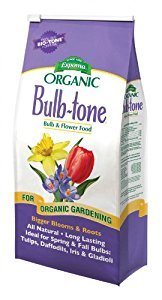
Espoma Bulb-Tone Granular Plant Food, 4 lb (BT4)
| Item Form | Granules |
|---|---|
| Application Method | Spread evenly |
| Target Species | Bulbs |
| Unit Count | 688 Ounce |
Espoma Bulb-Tone is a granular, slow-release plant food designed for bulbs and general garden use. You spread the granules evenly around planting areas or established beds to deliver balanced nutrients that support root development and flowering. The product comes in multiple resealable bags inside a 43 lb package, which is convenient for gardeners who need coverage for large beds or repeated seasonal feedings. The granule form makes application straightforward and helps provide steady feeding for weeks, reducing how often you need to reapply. Practical benefits include predictable nutrition for bulbs and many flowering plants and easy storage thanks to the resealable packaging. Limitations to note are that the listing emphasizes bulbs as the target species, so growers with very specific formula needs for vegetables or acid-loving ornamentals may want to confirm suitability, and a large multi-bag package can be bulky to handle for small-space gardeners.
Best for: Gardeners who prioritize dependable, low-maintenance feeding for flower beds and bulbs and who need a product that provides steady results over several weeks.
Less Ideal for: People managing only a few container plants or those seeking a fertilizer tailored to a very specific crop nutrient profile should consider smaller or specialized options.
- Slow-release granular formula provides continuous feeding for several weeks
- Resealable individual bags help keep unused fertilizer fresh and dry
- Large 43 lb multi-pack supplies enough product for extensive beds or multiple applications
- Granules are easy to spread for even coverage across flower beds
- Pack size may be cumbersome for gardeners with only a few containers or small beds
- Product description targets bulbs specifically, so it may not match specialized nutrient needs for every plant type
Verdict: Choose this product if you want a reliable slow-release granular fertilizer that makes feeding bulbs and flower beds simple and low-effort.
Miracle-Gro Shake 'N Feed All Purpose Plant Food, 4.5 lb

| Item Form | Granules |
|---|---|
| Application Method | Shake onto soil and work into top 1-3 inches |
| Target Species | flowers, vegetables, herbs |
| Unit Count | 72 Ounce |
| Feeds For | up to 3 Months |
Miracle-Gro Shake 'N Feed All Purpose is a granular, continuous-release fertilizer you sprinkle onto soil and lightly work into the top inch or three before watering. It is typically used on in-ground garden beds, raised beds and established container plants to provide slow feeding across the season; the label recommends reapplying every three months. Notable features include natural ingredients that feed soil microbes, added micronutrients, and an easy shake-on application that requires no mixing. In practice this product is convenient for routine garden maintenance because one application supports steady nutrient availability without frequent dosing. For garden beds it helps promote root strength and consistent growth while reducing the need to remember weekly feedings. The main limitations are that it is a general-purpose formula rather than a crop-specific blend and that application rates must be followed to avoid overfeeding; it also provides broad coverage but not the fast boost of a water-soluble feed if plants need immediate recovery.
Best for: Gardeners who want a low-maintenance, reliable feeding method for flower and vegetable beds and containers and prefer scheduled, less frequent fertilizing over weekly applications.
Less Ideal for: Growers seeking fast corrective feeding, precise NPK ratios for fruiting crops, or specialty blends for roses or acid-loving plants should consider targeted fertilizers instead.
- Continuous-release formula feeds plants for up to three months per application
- Granular shake-on application is simple and requires no mixing
- Contains micronutrients and ingredients that support soil microbes and root health
- Suitable for both in-ground garden beds and container plants
- All-purpose formula may not match nutrient ratios for specific crops or problems
- Slower acting than water-soluble fertilizers when immediate nutrient correction is needed
Verdict: Use this granular, three-month continuous-release fertilizer when you want a simple, low-maintenance feed that keeps garden beds and containers nourished through the season.
Miracle-Gro Shake 'N Feed Rose & Bloom Plant Food, 4.5 lb

| Item Form | Granules |
|---|---|
| Specific Uses For Product | Plant Food |
| Coverage | 4.5 pounds |
| Target Species | roses and flowering plants |
Miracle-Gro Shake 'N Feed Rose & Bloom is a granular, slow‑release plant food designed to encourage bigger blooms and sustained flowering with minimal upkeep. You apply it by shaking the granules onto dry soil around the plant, working them in, and watering to start the release; one application is meant to feed for up to three months. The formula contains organic ingredients such as kelp, feather meal, bone meal, and earthworm castings that support soil microbes and root development, which can improve water efficiency and bloom production. For ranunculus growers seeking reliable bloom performance without frequent feedings, this product offers convenient, season‑long nutrition for both in‑ground beds and containers. Limitations to consider are that it is a general rose/flower formula rather than a ranunculus‑specific NPK balance and results will depend on proper soil preparation and watering; heavy feeders or growers wanting very precise nutrient ratios may prefer a specialty bulb or bloom booster fertilizer. Pack size and the granular format make it easy to apply to small beds but do require occasional incorporation into the topsoil.
Best for: Gardeners who prioritize reliable, low‑maintenance bloom feeding and want season‑long results with minimal reapplication for their flowering borders or containers.
Less Ideal for: Specialists who need a fertilizer matched precisely to ranunculus tuber requirements or growers who prefer water‑soluble feeds and exact NPK control.
- Slow‑release formula feeds up to three months from one application
- Contains natural, soil‑building ingredients that support microbes and root health
- Easy granular application for beds and containers
- Suitable for both in‑ground and container flowering plants
- Not formulated specifically for ranunculus so NPK is not tailored to bulb/tuber needs
- Granules must be worked into soil surface for best effect rather than delivered directly to the crown
Verdict: Provides convenient, long‑lasting nutrition to boost blooms with one easy granular application every three months.
Choosing the Right Granular Fertilizer for Flowers: Key Factors to Consider
Nutrient Ratio and Bloom Focus
The proportions of nitrogen, phosphorus, and potassium determine whether a fertilizer promotes foliage, roots, or flower production. For most flowering beds and containers, a formula with moderate nitrogen, higher phosphorus relative to nitrogen, and adequate potassium encourages bud formation and strong petals. Micronutrients like magnesium, iron, and boron also support color intensity and petal health.
Understanding the label allows you to match a product to your garden goals: choose a bloom-focused ratio for heavy-flowering annuals, or a balanced formula for mixed plantings where foliage and flowers both matter. Over-applying nitrogen-rich formulas can cause lush foliage at the expense of blooms, so follow label rates for flower-specific feeding.
Release Rate and Feeding Schedule
Granular fertilizers vary from quick-release salts that feed immediately to controlled-release granules that release nutrients over weeks or months. Quick-release products give a fast visible response and are useful when plants need an immediate boost before an event or to correct deficiencies. Controlled-release options reduce the need for frequent reapplications and lower the risk of root burn when used correctly.
Consider your maintenance rhythm: choose faster-release granules if you check pots daily and can water frequently, or pick multiweek controlled-release granules for low-maintenance beds where consistent feeding is preferred. Also consider seasonal timing so that release patterns align with flowering peaks rather than dormancy periods.
Soil Type and pH Compatibility
Soil texture and pH influence nutrient availability and how quickly granules break down. Sandy soils drain rapidly and may require more frequent feeding or a slower-release product to prevent leaching. Heavy clay holds nutrients longer but can tie up certain elements unless pH is managed. Most flower fertilizers list pH compatibility and recommended soil types on the label.
Before selecting a granular fertilizer, test your soil or use a simple pH kit. Adjust your choice to match local soil conditions and consider combining fertilization with organic matter or conditioners that improve nutrient retention and root access.
Application Practicalities and Spread Uniformity
How easy a granular fertilizer is to measure, broadcast, and incorporate affects real-world results. Uniform spreading avoids hot spots that can scorch roots or create uneven growth. Granules should be consistent in size to allow even application with a hand spreader or by hand for small beds.
Look for clear application rates for beds and containers, directions for watering-in, and guidance on how to handle overlap between applications. For patios and tight spaces, a product that dissolves predictably with standard watering practices reduces the chance of localized damage.
Salt Index and Plant Safety
Some granular fertilizers have a higher salt index, which increases the risk of osmotic stress and root burn, especially in containers and recently transplanted flowers. High-salt formulas can cause leaf tip burn, stunted growth, or reduced flowering if applied too heavily or without adequate irrigation.
Choose lower-salt or slow-release formulations for potted plants and new transplants. When using higher-salt products, follow dilution and watering recommendations closely, and avoid application during drought stress or extreme heat to protect tender roots.
Timing Fertilizer Applications for Peak Bloom
Plan feedings to support the natural bloom cycle of your plants. Many perennials and annuals benefit from an initial spring application as new growth emerges, then a follow-up feeding timed to bud set. Controlled-release granules applied at planting can cover several weeks of growth, while quick-release options are best reserved for targeted boosts midseason.
- Apply at planting or early spring for perennials to build root reserves.
- Use a phosphorus-leaning boost at bud set to encourage more flowers.
- Avoid late-season high-nitrogen feedings that delay dormancy.
Granular Fertilizer Use in Containers Vs In-Ground Beds
Containers have shallower root zones and higher leaching, so they often need a fertilizer with a gentler release profile and lower salt index. In-ground beds buffer nutrients better but still benefit from even distribution and occasional top-dressing. Adjust application rates downward for containers and increase frequency with quick-release products if needed.
- Reduce recommended rate for small pots and hanging baskets.
- Work granules lightly into the top inch of soil for in-ground plantings.
- Water thoroughly after applying to activate nutrients.
Combining Granular Fertilizers with Organic Soil Amendments
Organic matter improves soil structure, water retention, and microbial activity, which in turn affect how granular fertilizers behave. Compost and well-rotted manure provide slow nutrient release and help reduce the need for synthetic feeds. When using both granular fertilizers and organic amendments, stagger applications and monitor plant response to avoid overfeeding.
- Add compost at planting to improve nutrient-holding capacity.
- Space synthetic granular applications several weeks apart from heavy organic top-dressings.
- Watch for signs of nutrient excess, like overly dark foliage or reduced flowering.
Safe Handling and Storage Practices
Keep granules dry and sealed in a cool place away from children and pets. Use gloves or a scoop to measure product accurately, and avoid inhaling dust. Dispose of empty bags according to local guidance and never store fertilizers near food or seed stocks.
- Label containers after decanting to avoid confusion.
- Clean spreaders after use to prevent cross-contamination.
- Store products off the ground and away from moisture.
Adjusting Rates for Different Flower Types
Heavy bloomers and trophy annuals often need higher phosphorus and potassium to support repeated flowering, while foliage-focused ornamentals do better with balanced formulas. Slow-growing perennials require lighter feeding to avoid soft growth that is susceptible to frost or pests. Check plant growth habit and adjust the granule rate accordingly to match vigor and bloom expectations.
- Decrease rate for young transplants until established.
- Increase feeding for repeat-blooming annuals during peak season.
- Use lighter applications for drought-tolerant or low-maintenance perennials.
How We Chose the Best Granular Fertilizer for Flowers
We selected products based on criteria that matter in real flower gardens and on patios. First, nutrient formulation was critical: we prioritized granular fertilizers with N-P-K ratios and micronutrient blends that support bud set, petal development, and foliage health without encouraging excessive leafy growth over blooms. Second, release behavior was evaluated, preferring options with clearly stated controlled-release or quick-release characteristics so gardeners can predict feeding frequency. Third, application practicality influenced picks: ease of measuring, spreading uniformity, compatibility with common watering schedules, and clear label instructions were required. Fourth, soil and planting situation suitability mattered; we favored formulas appropriate for acid- and neutral-pH soils and for both in-ground beds and container-grown flowers. Finally, safety and environmental notes such as salt index and runoff risk were considered to reduce stress on roots and nearby plants. We excluded any product without transparent nutrient labeling or without guidance for flower-specific use. The labels above correspond to the measurable dimensions used in our evaluation and scoring.
FAQ
How often should I apply granular fertilizer to flowering containers?
It depends on the product type. Quick-release granules often need feeding every 3 to 4 weeks, while controlled-release granules can last 8 to 12 weeks. Always follow label rates and reduce the rate for small pots to avoid root burn.
Can I use the same granular fertilizer for bulbs and bedding plants?
Often you can, but bulbs typically appreciate higher phosphorus at planting to aid root and flower development. Bedding plants may need more balanced feeding during the growing season. Select a formula appropriate for both or adjust timing and rate when treating bulbs.
Will granular fertilizer change my soil pH?
Most granular fertilizers have minimal short-term effect on soil pH, but repeated use can influence acidity depending on the product. If pH is a concern, test soil periodically and amend with lime or sulfur as needed rather than relying solely on fertilizer choices.
Is it safe to apply granular fertilizer in hot, dry weather?
Applying during extreme heat or drought increases the risk of root stress and burn. If you must apply, water thoroughly afterward and consider spreading a lighter rate or using a controlled-release product to reduce salt shock.
How do I avoid overfeeding flowers with granules?
Use the lower end of the recommended rate for small beds and containers, follow the product schedule, and monitor plant response. Signs of overfeeding include brown leaf edges, stunted growth, or fewer blooms. Flush the soil with water if symptoms appear.
Final Verdict
Prioritize matching nutrient balance and release pattern to how you grow flowers. Choose a granular fertilizer with an N-P-K profile and micronutrient package that supports bud set and petal health, and pick a release speed that fits your watering and maintenance habits. Account for soil type, container versus in-ground use, and salt sensitivity when setting application rates. If you focus on those tradeoffs and follow label instructions, you can confidently select a granular fertilizer that keeps blooms abundant and minimizes maintenance. Tailor the formula and timing to your specific flower types for the best results.
