

Note: This article contains affiliate links. If you click on these links and make a purchase, I may earn a small commission at no extra cost to you. This helps support my research and content. Read my full affiliate disclosure here.
Picking the right fertilizer changes how frangipani behave in your garden. The right formulation supports abundant flowers, thicker woody stems, and better recovery after pruning or transplanting. In this guide we shortlisted seven top options suited to frangipani growing situations and feeding routines. We evaluated candidates for nutrient balance, ease of use, and how they perform in common garden soils and containers. Read on to see which fertilizers match your planting situation and maintenance style before moving to the product shortlist.
Top Picks at a Glance
| Best Overall The best all-around choice for most situations | TPS Nutrients Plumeria Liquid Fertilizer, 8 oz |  |
| Best Quality Built to a higher standard if you want something more solid | Exotica Tropicals Professional Nursery Plumeria Fertilizer, 4 lb Slow-Release |  |
| Best Value The sweet spot between price and what you get | Cz Garden BloomBiscus Hibiscus Plant Food 10-4-12 (4 lb) |  |
| Best Budget The cheapest option that still gets the job done reliably | Leaves and Soul Plumeria Liquid Fertilizer, 3-5-4, 8 oz |  |
| Highest Rated A top-rated pick with lots of positive feedback | Exotica Tropicals Professional Nursery Plumeria Fertilizer, 4 lb Slow‑Release | |
| Most Popular A crowd favorite that many people choose with confidence | Nelson Plumeria & Tropical Plant Food Granular Fertilizer NutriStar 5-30-5 (4 lb) |  |
| Best Seller A high-volume bestseller chosen again and again | TPS Nutrients Plumeria Liquid Fertilizer, 1 Gallon |  |
TPS Nutrients Plumeria Liquid Fertilizer, 8 oz

| Brand Name | TPS NUTRIENTS |
|---|---|
| Unit Count | 8 Fluid Ounces |
| Item Highlight | Supports Root Development, Encourages Flowering, Mixes Easily with Water |
This 8 oz TPS Nutrients Plumeria liquid fertilizer is designed for regular feeding of plumeria and similar tropical ornamentals. It mixes with water (manufacturer directions: 2 tablespoons per gallon) and is applied to container or garden plants to encourage stronger roots, fuller foliage, and more abundant blooms. Key benefits are a formulation targeted to flowering and root development and a small concentrated size that is easy to store and use for seasonal feeding. In practice it works well for potted plumeria and patio specimens where controlled, repeat applications are helpful. Limitations include the small bottle size, which means frequent repurchases for larger collections, and the lack of detailed N-P-K numbers on the product page for buyers who want exact nutrient ratios. It is best used as part of a seasonal feeding routine rather than a one-time fix, and gardeners should follow dilution instructions to avoid overfeeding young cuttings or stressed plants.
Best for: Gardeners who want a targeted, ready-to-mix feed to boost flowering and root health in plumeria and other tropical container or patio plants and who prefer products with positive user feedback.
Less Ideal for: Large-scale growers or those who need a bulk fertilizer solution for many trees or beds should consider larger-volume or granular options.
- Formulated specifically for plumeria and tropical flowering plants to encourage blooms and foliage
- Concentrated liquid that mixes easily with water for straightforward application
- Supports root development which helps uptake of water and nutrients
- Compact 8 oz bottle is easy to store and convenient for patio or container growers
- Small 8 oz volume can require frequent repurchase for multiple or large plants
- Product listing does not display explicit N-P-K ratios for precise nutrient planning
Verdict: A convenient, plumeria-focused liquid feed that makes regular seasonal feeding simple for patio and container growers.
Exotica Tropicals Professional Nursery Plumeria Fertilizer, 4 lb Slow-Release

| Mixing Ratio | 18:5:12 |
|---|---|
| Item Form | Granules |
| Specific Uses For Product | Fertilization of Plumeria Plants, both Potted and in Landscape |
| Coverage | Medium |
| Target Species | Plumeria |
This granular fertilizer is formulated for plumeria and designed for nursery-level performance with a high nitrogen 18-5-12 analysis and coated slow-release pellets that feed for roughly 5 to 6 months. Use it worked into potting mix or applied around landscape plants at the recommended rates; it also includes a small instant-release fraction for a quick green-up after application. Notable features are the professional nursery formulation, added micronutrients such as magnesium, iron, and manganese, and directions for both potted and landscape use. In practical terms you get sustained growth and less frequent applications compared with quick-release box-store fertilizers, which is convenient for busy growers or multiple specimens. Limitations are that the product is a general high-nitrogen feed tuned to vegetative growth so it may require pairing with a bloom-boosting program if you want heavier flowering, and granules mean you must measure and apply carefully to avoid overfeeding young plants.
Best for: Growers who prioritize strong, sustained vegetative growth and want a professional-strength, low-frequency feeding for plumeria in pots or garden beds.
Less Ideal for: Growers primarily seeking a bloom-focused or low-nitrogen maintenance feed for mature flowering specimens should consider a different formulation.
- Professional nursery-grade formula with slow-release coated pellets for 5–6 month feeding
- High nitrogen ratio (18) for strong vegetative growth and quick green-up
- Includes essential micronutrients like magnesium, iron, and manganese
- Suitable instructions for both potted plumeria and landscape use
- High nitrogen formulation favors foliage which may not maximize flowering without supplemental bloom fertilizer
- Granular form requires measuring and correct application to avoid overfeeding
Verdict: Choose this if you want a professional nursery-strength, slow-release fertilizer that promotes robust, low-maintenance vegetative growth in plumeria.
Cz Garden BloomBiscus Hibiscus Plant Food 10-4-12 (4 lb)
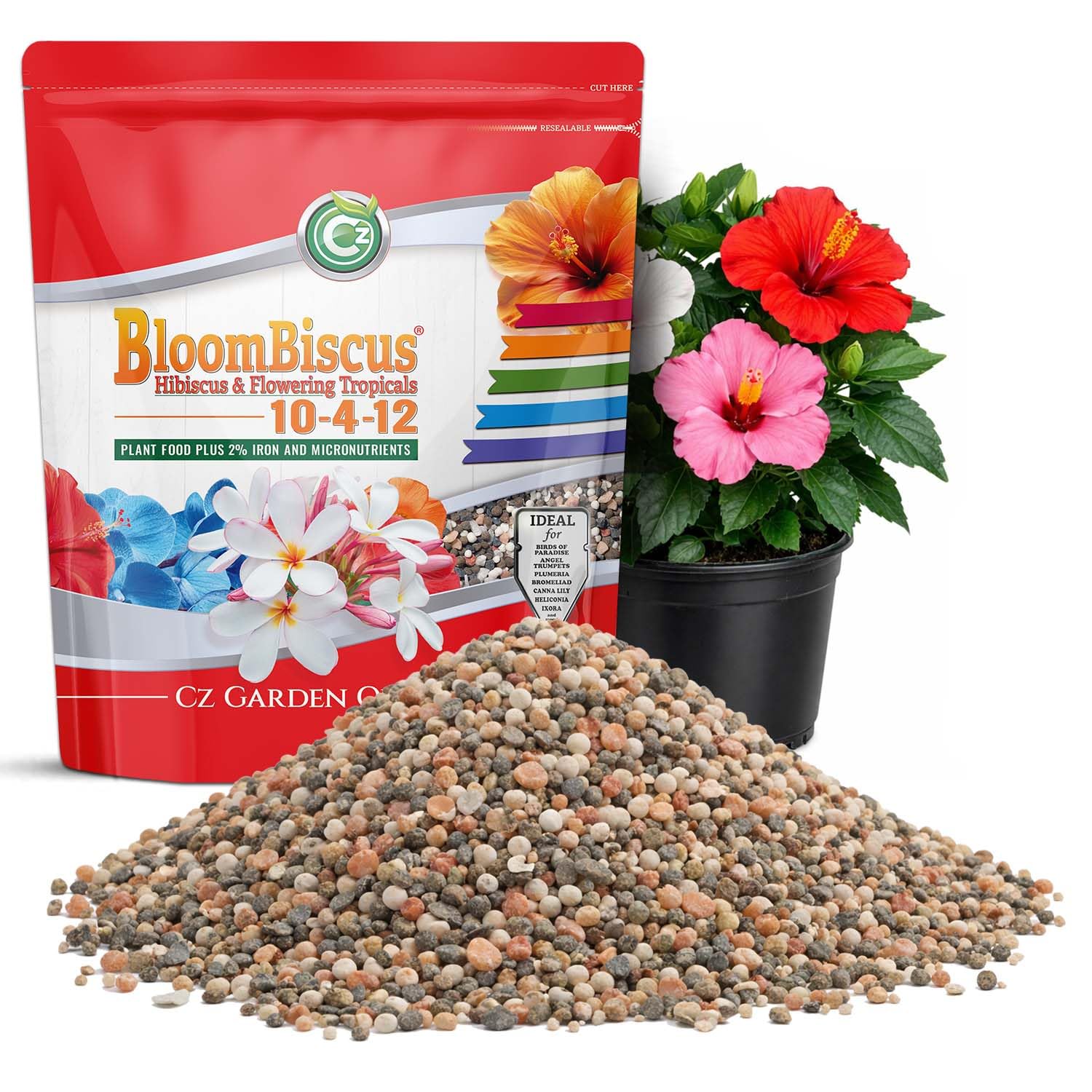
| Item Form | Granules |
|---|---|
| Specific Uses For Product | Plant Growth, Root Development, Seed Development, Soil Conditioning |
| Target Species | Flowering Tropicals |
| Unit Count | 64 Ounce |
| Mixing Ratio | 10-4-12 |
This granular BloomBiscus formula is designed to boost blooms and overall vigor in hibiscus and similar tropical flowering plants. It is typically worked into potting mix or applied around the root zone and watered in according to package directions. The 10-4-12 NPK delivers higher potassium for flowering and fruiting while the modest nitrogen supports leaf growth without excessive lushness that can reduce blooms. The added 2% iron and micronutrients help correct common deficiencies that dull flower color. Packaging comes in a resealable pouch for easy pouring and storage. Practical benefits include targeted nutrition for bloom production, broad suitability across many tropical species, and US-made ingredient sourcing. Limitations are that the product is a general granular feed rather than a slow-release or time-release formula so it may require regular reapplication and careful dosing for container-grown plants. Directions are brief on the label so growers who want a feeding schedule may need to follow common hibiscus fertilizing guidelines or consult extension recommendations.
Best for: A gardener focused on getting bigger, more consistent blooms from hibiscus and other tropical flowering plants who prefers a targeted, performance-oriented fertilizer.
Less Ideal for: Those who want a long-term slow-release feed or a liquid program for weekly foliar feeding should consider alternative formulations.
- NPK ratio (10-4-12) concentrated toward flowering and fruiting
- Includes 2% iron plus micronutrients to address common deficiencies
- Resealable heavy-duty pouch for easy pouring and storage
- Formulated specifically for hibiscus and other flowering tropicals
- Not specified as slow-release so it may need more frequent reapplication
Verdict: Choose this 10-4-12 granular with 2% iron when your main goal is stronger, more reliable hibiscus blooms.
Leaves and Soul Plumeria Liquid Fertilizer, 3-5-4, 8 oz

| Item Form | Liquid |
|---|---|
| Unit Count | 8 Fluid Ounces |
| Mixing Ratio | 3-5-4 |
| Specific Uses For Product | Plant Growth |
This liquid plumeria fertilizer uses a 3-5-4 formula to prioritize flowering and root development for both potted and in-ground plumeria. It arrives as an 8 oz concentrated bottle that you dilute with water and apply during regular watering, which makes it quick to absorb and suited to gardeners who want faster visible results than slow-release pellets. The higher middle number means it supplies extra phosphorus to encourage buds and blooms while still supporting foliage and plant vigor. In practice it is easy to mix and distributes evenly in the root zone, so you can use it for container-grown plumeria on patios or landscape specimens. Because it is a concentrate, a small amount stretches across multiple feedings, which helps control ongoing costs. Important limitations are that the bottle is relatively small for larger trees and you must follow dilution directions to avoid overfeeding; it does not include timed-release benefits and requires regular applications to maintain flowering.
Best for: Buyers who want a simple, fast-acting bloom booster for plumeria and prefer a concentrated liquid they can add to routine watering to get quicker flowering results on a modest budget.
Less Ideal for: Gardeners who want a one-time, long-duration slow-release feed for large specimens or who prefer bulk, low-frequency fertilizers for heavy-feeding landscapes.
- Balanced 3-5-4 N-P-K ratio tailored to encourage plumeria blooms and root growth
- Liquid concentrate is fast-absorbing for quicker visible results than granular fertilizers
- Small concentrated bottle means a little product goes a long way for multiple feedings
- Suitable for both potted and in-ground plumeria, indoors or outdoors
- 8 oz bottle may be small for large trees or frequent feed schedules
- Requires regular dilution and repeated applications since it is not slow-release
Verdict: A compact, budget-friendly liquid concentrate that speeds up flowering and root development in plumeria when added to regular watering.
Exotica Tropicals Professional Nursery Plumeria Fertilizer, 4 lb Slow‑Release
| Item Form | Granules |
|---|---|
| Target Species | Plumeria |
| Mixing Ratio | 18:5:12 |
| Coverage | Full |
This is a nursery-grade granular fertilizer designed specifically for plumeria (frangipani). It combines an 18-5-12 slow-release formula that feeds plants over roughly five to six months with a small instant-release portion for an early green-up. You typically apply it evenly around the root zone in full sun, water it in, and repeat roughly twice a year per the directions. Notable features include the targeted NPK ratio for bloom and foliage balance and added micronutrients such as magnesium, iron, manganese, and zinc that support color and overall health. Practical benefits are longer intervals between applications compared with quick-release products and a formulation that mirrors what professional nurseries use, which can simplify care and produce stronger, more consistent growth and blooms. Important limitations are that it is a chemical granular fertilizer so it requires careful handling and measured application to avoid overfeeding, and it is tailored to plumeria so gardeners seeking a one-product-for-all solution may prefer a more general-purpose formula.
Best for: Gardeners who want a reliable, low-maintenance feeding schedule for plumeria and prefer a professional nursery formulation to keep plants healthy and blooming with fewer applications.
Less Ideal for: People seeking an all-purpose or organic fertilizer for a wide range of garden plants or gardeners who prefer liquid or foliar feeding methods.
- Professional 18-5-12 slow-release formula suited for plumeria bloom and foliage balance
- Includes micronutrients (Mg, Fe, Mn, Zn) that support color and plant health
- Slow-release pellets provide feeding for about five to six months, reducing application frequency
- Small instant-feed component gives an initial green-up after application
- Requires careful handling and protective gear as noted in safety guidance
- Formulation is specific to plumeria and may not be optimal for all plant types
Verdict: Choose this product if you want a professional, slow‑release plumeria fertilizer that reliably feeds plants for around six months with added micronutrients.
Nelson Plumeria & Tropical Plant Food Granular Fertilizer NutriStar 5-30-5 (4 lb)

| Item Form | Granules |
|---|---|
| Specific Uses For Product | Plant Food |
| Target Species | Fern |
| Mixing Ratio | 5:30:5 |
| Directions | Apply every 14 days during the growing season |
This granular Nelson Plumeria and Tropical Plant Food (5-30-5) is designed to boost blooms and overall plant vigor for flowering tropicals used in containers or in-ground. You broadcast or top-dress the granules around the root zone and water them in; the manufacturer recommends applying every 14 days during the growing season. The high phosphorus ratio and added micronutrients make it suited to push flowering and regrowth after pruning, while multiple nitrogen sources provide a steady feed rather than a short spike. It is easy to use, stores as dry granules, and works with soil biology to deliver both an immediate boost and ongoing feeding. Important practical limits are its specific formulation for bloom promotion rather than balanced all-season feeding and the need to follow safety directions like keeping it away from children and pets and wearing protection during application. For users wanting very slow release or a low-phosphorus general fertilizer, this product may not be the best match.
Best for: For gardeners who prioritize bigger, more frequent blooms on tropical flowering plants and want an easy granular feed that gives predictable two-week results.
Less Ideal for: Not the best choice for growers seeking a low-phosphorus all-purpose fertilizer or those who prefer a single-season slow-release product.
- High phosphorus (30%) profile promotes heavier and more frequent blooms.
- Granular formula feeds for about two weeks per application for low-maintenance intervals.
- Multiple nitrogen sources and added micronutrients support regrowth and overall plant health.
- Works for both container and in-ground tropicals, including indoor use when appropriate.
- Formulation is bloom-focused and may be too high in phosphorus for plants that need balanced maintenance feeding.
- Requires regular fortnightly application during the growing season rather than a long-term slow-release schedule.
Verdict: Choose this granular 5-30-5 formula when you want an easy, two-week feeding that reliably increases blooms on tropical flowering plants.
TPS Nutrients Plumeria Liquid Fertilizer, 1 Gallon

| Item Form | Liquid |
|---|---|
| Application Method | Water |
| Target Species | Plumeria and Tropical Flowering Plants |
| Liquid Volume | 128 fluid ounces |
| Mixing Ratio | 2 tbsp:1 gallon |
This 1-gallon liquid fertilizer from TPS Nutrients is designed specifically for plumeria and tropical flowering plants and is mixed with water at 2 tablespoons per gallon for routine feeding. In use you dilute it and water plants as usual, which makes it straightforward for container and garden applications on patios or beds. The formula is advertised to support root development, encourage colorful blooms, and promote fresh leaf and branch growth, so expect fuller plants and improved flower production with regular applications. Because it is liquid, nutrients are available quickly compared with slow-release granules, which is useful when recovering cuttings or boosting bloom periods. The packaging and mixing ratio are clear, but as with any concentrated feed you need to measure accurately to avoid overfeeding; it does not list an NPK ratio on the provided details so you may want to patch-test on a few plants first. Overall the product suits growers who want a ready-to-mix, plant-specific liquid feed for plumeria and similar tropicals.
Best for: Buyers who want a straightforward, plant-focused liquid feed to encourage blooms and healthy growth in plumeria and other tropical ornamentals and prefer simple water-based application.
Less Ideal for: Gardeners who need a complete macronutrient breakdown for precision fertilizing or who prefer slow-release granular fertilizers for low-maintenance feeding.
- Formulated specifically for plumeria and tropical flowering plants
- Liquid concentrate mixes easily with water for quick nutrient uptake
- 1 gallon volume supports multiple feeding cycles for several plants
- Clear mixing ratio (2 tbsp per gallon) simplifies application
- NPK numbers and full nutrient breakdown are not provided in the product details
- Concentrated liquid requires careful measuring to avoid overfeeding
Verdict: A ready-to-mix, plumeria-specific liquid fertilizer that makes it easy to boost blooms and root health across containers and garden plantings.
Choosing the Right Frangipani Fertilizer: Key Factors to Consider
Nutrient Ratio and Release Type
Frangipani respond to specific ratios of nitrogen, phosphorus, and potassium. Too much nitrogen in a fast-release formula produces leafy growth at the expense of flowers. A balanced ratio geared toward bloom promotion, often with moderate phosphorus and potassium, encourages repeated flowering. Also consider whether the fertilizer is slow-release granules, controlled-release coated prills, or a water-soluble feed. Slow-release options reduce risk of overfeeding and provide steadier nutrient delivery across the growing season. Water-soluble feeds give quick correction when trees are weak or after pruning but require more frequent applications and careful dosing.
Release type affects application frequency and the risk of salt build-up in container soils. In pots, choose lower-salt, slow-release formulas or leach potting mix occasionally to avoid root burn. For in-ground specimens, controlled-release granules are often more forgiving and reduce the number of times you need to handle the tree.
Flowering Support and Micronutrients
Promoting bud set and vibrant blooms depends on more than N-P-K. Trace elements such as iron, manganese, zinc, and magnesium play supporting roles in photosynthesis and flower pigmentation. Calcium contributes to cell wall strength, which helps branch and trunk integrity as frangipani develop woody growth. Look for fertilizers that list micronutrients or pair a base N-P-K feed with a periodic micronutrient supplement.
A program that times higher phosphorus or bloom-boosting feeds shortly before the flowering flush can increase bud production. However, overuse of bloom boosters can unbalance overall plant nutrition, so use them as part of a planned feeding schedule rather than continuously.
Soil Type and pH Considerations
Soil structure and pH influence nutrient availability. Frangipani prefer well-draining soils; heavy clay holds moisture and can reduce oxygen around roots, increasing rot risk when combined with regular feeding. In container culture, use a free-draining potting mix with added grit or perlite to maintain aeration.
Soil pH affects micronutrient uptake. If blooms or new growth show discoloration, a soil test can reveal deficiencies related to pH. Many fertilizers include chelated micronutrients to improve uptake across a wider pH range, which is helpful when you cannot easily rework existing garden beds.
Application Method and Timing
How you apply fertilizer matters as much as what you apply. Granular feeds should be spread in the drip zone or incorporated lightly into the surface soil; avoid placing granules against the trunk. Water-soluble feeds are applied with watering cans or hose-end feeders and reach roots quickly. Foliar sprays can correct specific deficiencies fast but will not replace a balanced root feed.
Timing should follow the plant's growth cycle. Apply regular feeds during active growth and stop or reduce feeding during dormancy or cool-season slowdowns. After fertilizing, water thoroughly to move nutrients into the root zone and reduce the chance of leaf or root burn.
Container Versus In-Ground Needs
Potted frangipani need different feeding strategies than in-ground trees. Containers have limited soil volume and nutrients are used up faster, so more frequent, lighter feedings or a tailored slow-release product for pots is often best. Check that the fertilizer's salt index is low to reduce buildup; flush containers periodically.
In-ground trees can tolerate less frequent feeding if the soil is enriched with organic matter. For larger specimens, targeted applications around the root zone and mulching with composted material can maintain nutrient levels over the season without excessive fertilizer use.
Safety, Storage, and Environmental Considerations
Fertilizers are concentrated chemistry and require safe handling and storage. Choose products with clear dosing instructions and child-proof packaging if needed. Store dry granules in a cool, dry place to preserve release coatings; keep liquid concentrates sealed to prevent spills.
Consider environmental impact when applying near waterways or in heavy rain. Excess fertilizer can leach into drains and damage aquatic ecosystems. Use the minimum effective dose and follow label guidance on application rates and buffer zones.
Feeding Schedules for Different Climates
Frangipani growth and flowering cycles shift with climate. In warm, frost-free areas they grow and flower for longer stretches, so a lighter continuous feeding program or a long-term controlled release product works well. In regions with a pronounced cool season, concentrate feeding in the warm months and reduce or stop when the tree enters dormancy.
Adjust frequency based on observed vigor. If you see lush leaf growth but few flowers, reduce nitrogen or switch to a bloom-focused schedule. For containers, shorten intervals and monitor soil moisture since pots dry out faster than garden beds.
- Warm climates: lower-concentration, extended-release or monthly soluble feeds
- Cool seasons: feed only during active growth months
- Containers: more frequent, dilute applications or pot-specific slow-release formulas
How to Apply Fertilizer to Established Trees
For larger, established frangipani, apply granular or slow-release fertilizers around the drip line rather than next to the trunk. This targets the feeder roots where nutrient uptake is highest. Lightly scratch or rake the product into the topsoil and water in to move nutrients down to the root zone.
Divide the recommended dose into two applications spaced a month apart during the active season to reduce leaching and encourage steady uptake. For foliar feeds, spray in the early morning or late afternoon to reduce leaf scorch and improve absorption.
- Place granules in the drip zone, avoiding trunk contact
- Water after application to help nutrient movement
- Split total season dose into multiple smaller applications
Managing Common Feeding Problems
Leaf yellowing, poor flowering, and burnt leaf edges are common signs of nutrient imbalance or over-application. First, confirm watering practices and soil drainage before changing fertilizer. Excessive nitrogen from repeated high-nitrogen feeds causes lush foliage and fewer flowers. Reduce nitrogen and add a bloom-supporting feed if flowering is inadequate.
If fertilizer burn occurs, flush the root zone with plenty of water to dilute salts and halt further applications until the plant recovers. For persistent deficiency signs, conduct a soil or tissue test to target missing nutrients rather than guessing with additional products.
- Yellow leaves may indicate iron or manganese deficiency or wrong pH
- Burnt edges suggest overfeeding or high salt buildup
- Soil testing helps diagnose recurring problems
Organic Versus Synthetic Options
Organic fertilizers supply both nutrients and organic matter, improving soil structure over time. They tend to release nutrients more slowly and are gentler in containers. However, they can be bulkier and sometimes lower in available phosphorus for immediate bloom response.
Synthetic feeds deliver predictable nutrient doses and quicker correction of deficiencies. They are useful when rapid response is needed but require careful dosing to avoid salt buildup. Many gardeners combine both approaches: use organic amendments to improve soil health and apply targeted synthetic feeds during peak flowering periods.
- Organics improve soil life and structure over time
- Synthetics offer fast, measurable nutrient correction
- Combining both can balance soil health with flowering needs
Special Considerations for Newly Planted Frangipani
Newly planted frangipani need careful handling. Avoid high-dose feeds at planting time; instead incorporate a modest amount of balanced starter fertilizer or slow-release granules into the planting hole to support root establishment. Excess fertilizer near new roots can cause burn and inhibit root growth.
Wait until the plant shows steady new growth before applying more aggressive bloom-promoting feeds. During the first season, focus on root development and consistent watering rather than heavy feeding to reduce transplant shock.
- Use low-dose starter nutrients at planting
- Delay bloom boosters until after establishment
- Prioritize watering and drainage for root growth
How We Chose the Best Frangipani Fertilizer
We focused on criteria that reflect how frangipani behave in actual gardens and patios. Primary evaluation factors included nutrient ratio and release type, because frangipani need the right balance of nitrogen, phosphorus, and potassium and a predictable release to encourage blooms without excess leaf growth. Application method and dosing clarity were assessed to favor options gardeners can apply accurately around trunks and in pots. Soil and root health impacts were checked, including the presence of beneficial microbes or calcium and magnesium that support woody growth. Safety and foliar tolerance were considered so feeder roots and leaves are not scorched during warm-season applications. Ease of sourcing and storage stability were reviewed to ensure a product remains usable across seasons. We excluded items geared only toward general houseplants or crops that lack guidance for frangipani-specific feeding. Products that passed these filters offered clear nutrient labeling, a fit-for-purpose release profile, and practical application instructions for both in-ground and potted frangipani. We prioritized options providing documented support for flowering and trunk development over generic all-purpose blends.
FAQ
How often should I feed frangipani in pots?
Usually feed potted frangipani every 4 to 6 weeks with a balanced, low-salt fertilizer or use a pot-safe slow-release product. Frequency depends on pot size and mix; smaller pots need more frequent, lighter feeds.
Can I use general-purpose fertilizer on frangipani?
Often you can, but choose a general-purpose feed with a lower nitrogen ratio or complement it with a bloom-focused supplement. Avoid products with very high nitrogen that encourage leaf growth over flowers.
When is the best time of year to apply frangipani fertilizer?
Apply primarily during the warm active growth months. Reduce or stop feeding during cool, dormant periods. Timing should align with your local climate and the plant's visible growth patterns.
What signs show my tree is overfertilized?
Signs include leaf scorch, brown leaf edges, stunted roots, and lush foliage with poor flowering. If these appear, flush the soil with water and pause feeding until the plant recovers.
Are foliar feeds useful for correcting deficiencies quickly?
Yes, foliar sprays can correct micronutrient deficiencies faster than soil applications because leaves absorb nutrients directly. Use them as a short-term fix while addressing root or soil issues for longer-term health.
Final Verdict
Choose a frangipani fertilizer based on how you grow your plants and what outcome you want most. Prioritize a nutrient ratio and release type that promote flowering without excessive leaf growth, and match the product to your planting situation whether in-ground or in containers. Be mindful of timing, soil pH, and the risk of salt buildup when using synthetic feeds. Follow a consistent, climate-appropriate feeding routine, adjust for signs of deficiency or excess, and use soil testing when problems persist. That approach will give you the best chance of strong trunks and abundant blooms while minimizing common feeding mistakes.
