

Note: This article contains affiliate links. If you click on these links and make a purchase, I may earn a small commission at no extra cost to you. This helps support my research and content. Read my full affiliate disclosure here.
Growing in expanded clay aggregate changes how plants take up water and nutrients. With LECA you do not have soil buffering or microbial nutrient release, so the fertilizer you choose directly controls what reaches roots. The right hydroponic fertilizer for LECA supplies a stable balance of macros and micros, limits salt accumulation, and is easy to dose for your reservoir-based system. This guide covers the seven best options we shortlisted for LECA setups and explains the evaluation criteria we used. You will get practical guidance on nutrient concentration, EC management, and how different formulas behave in hobby and semi-pro setups. Read on for the factors that matter and how to match a formula to your system.
Top Picks at a Glance
| Best Overall The best all-around choice for most situations | General Hydroponics FloraSeries 3-Part Nutrient System, 16 oz Each |  |
| Best Quality Built to a higher standard if you want something more solid | Pretty in Green Leaf LUX Concentrated Liquid Fertilizer, 8 fl oz |  |
| Best Value The sweet spot between price and what you get | ALIINKD A&B Hydroponic Plant Food (1000 ml, 10-pack) |  |
| Best Budget The cheapest option that still gets the job done reliably | Tigvio Hydroponic Nutrients A&B (800 ml) |  |
| Highest Rated A top-rated pick with lots of positive feedback | Growth Technology GT Foliage Focus Liquid Plant Food (250 mL) |  |
| Most Popular A crowd favorite that many people choose with confidence | Purived All-Purpose Liquid Houseplant Fertilizer, 16 fl oz (Makes 50 Gallons) |  |
| Best Seller A high-volume bestseller chosen again and again | Ahopegarden 800ml A&B Hydroponic Nutrients Liquid Plant Food |  |
General Hydroponics FloraSeries 3-Part Nutrient System, 16 oz Each

| Item Form | Liquid |
|---|---|
| Specific Uses For Product | Hydroponics |
| Coverage | Full |
| Liquid Volume | 48 fluid ounces |
| Mixing Ratio | 2:1 |
The General Hydroponics FloraSeries is a classic 3-part liquid nutrient system that gives hydroponic growers precise control over feeding throughout vegetative and flowering stages. You mix FloraMicro into fresh water first, then add FloraGro and FloraBloom as needed to match growth phase and desired strength; the included mixing ratio and feedcharts help you dial in concentration. FloraMicro supplies nitrogen, calcium, and chelated micronutrients for general growth, FloraGro supports structural and leaf development, and FloraBloom boosts phosphorus and potassium for flowering and fruiting. In practice the system is flexible: use all three for a full program or adjust proportions to favor veg or bloom. The 16 oz bottles in this bundle are convenient for small to medium reservoirs, and the liquid form dissolves readily. Limitations are typical of concentrated multi-part feeds: you must follow order and measurements to avoid nutrient lockout and monitor pH and EC separately since the set does not include dosing hardware or testing tools. For growers who want recipe-level control, this remains a dependable, well-documented option.
Best for: Hydroponic growers who want flexible, recipe-style control of feeding across growth stages and who are comfortable measuring and adjusting nutrient concentrations.
Less Ideal for: Casual gardeners who prefer one-part fertilizers or turnkey fertigation systems with automated dosing and included testing equipment.
- Three-part formula lets you tailor nutrient ratios for veg and bloom stages.
- Liquid concentrates dissolve easily for reservoir-based hydroponic systems.
- Includes micronutrients and calcium to support balanced plant development.
- Comes with mixing ratio guidance and feedchart recommendations.
- Requires separate pH and EC monitoring and adjustment; no testing tools included.
- Smaller 16 oz bottles may need frequent refilling for larger systems.
Verdict: Buy this if you want a proven, adjustable three-part nutrient system that lets you fine-tune feeding for all hydroponic growth stages.
Pretty in Green Leaf LUX Concentrated Liquid Fertilizer, 8 fl oz

| Item Form | Liquid |
|---|---|
| Coverage | 40 gallons of nutrient water |
| Mixing Ratio | 1 cap per gallon (soil), 2-3 capfuls per gallon (LECA/semi-hydro) |
| N-P-K | 2.5-1.7-2.3 |
This concentrated 8 fl oz liquid fertilizer is designed to supply a full macro and micronutrient profile for aroids and other houseplants across soil, LECA, semi-hydro and hydroponic systems. You mix one capful per gallon for soil or aroid mixes and 2 to 3 capfuls per gallon for LECA or semi-hydro, producing up to 40 gallons of feed; the formula includes calcium and magnesium so most users will not need a separate CalMag. The product is pH buffered to improve uptake from tap or filtered water and claims to be odorless, which makes routine weekly feeding less messy indoors. Its balanced N-P-K (2.5-1.7-2.3) and listed trace elements mean it covers both growth and leaf health. Important limitations are that it is concentrated and must be diluted correctly to avoid damage, and precise dosing for specific species or advanced hydro setups may require adjustment and monitoring. For growers who want a single, broad-use concentrate that works in LECA, this is a practical, ready-to-mix option.
Best for: Growers focused on strong performance for aroids and other houseplants who want one concentrated feed that works across LECA, semi-hydro, soil, and hydroponic setups and who are comfortable measuring and mixing solutions regularly.
Less Ideal for: Beginners who prefer pre-mixed fertilizers or users who need species-specific, fine-tuned nutrient programs for large-scale hydroponic systems.
- Concentrated formula makes up to 40 gallons of nutrient solution from an 8 fl oz bottle
- pH buffered for better nutrient uptake from tap or filtered water
- Includes calcium, magnesium, and a full suite of micronutrients so separate CalMag is typically unnecessary
- Labeled dosing for both soil and LECA/semi-hydro use makes it versatile across media
- Must be diluted accurately or it can harm plants since it is sold in concentrated form
- Dosing guidance is general and advanced hydroponic systems may require additional monitoring and adjustment
Verdict: A performance-minded, pH-buffered concentrate that delivers a complete nutrient profile for aroids and works well in LECA and other hydro media when diluted correctly.
ALIINKD A&B Hydroponic Plant Food (1000 ml, 10-pack)
| Item Form | Granules |
|---|---|
| Coverage | 1000ml |
| Included Components | A&B Plant Food |
| Mixing Ratio | 1:1 for A and B components mixed with water |
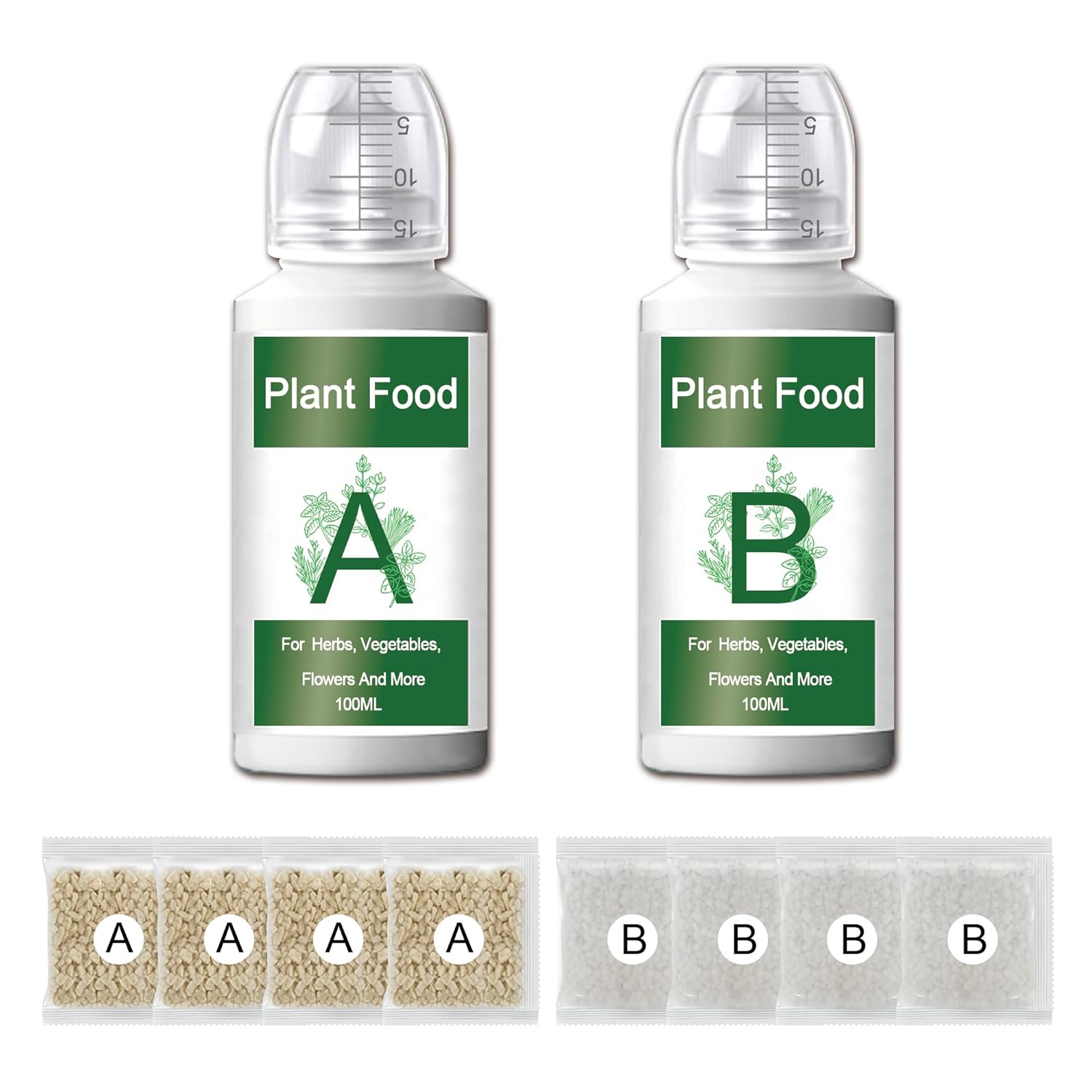
This A&B hydroponic plant food is a straightforward two-part nutrient set intended for regular dosing in hydroponic systems, including media like LECA. It is supplied as concentrates with an included dispensing cup and clear mixing directions: 5 ml of A plus 5 ml of B per liter of water. Typical use is simple dosing into a reservoir or water used for top-feeding potted plants; the product lists essential micronutrients and potassium components to support root development and leafy growth. The practical benefits are ease of measurement, compatibility with most hydroponic setups, and enough volume across the 10-pack to cover many refill cycles. Important limitations are that the listing gives limited detail on N-P-K ratios and specific micronutrient analysis, so precise tailoring for different growth stages will require additional testing or complementary additives. Also the safety guidance means careful handling is required. For growers using LECA, expect to monitor EC and pH and adjust as needed since the mix provides baseline nutrition rather than a stage-specific program.
Best for: Growers who want a simple, ready-to-use nutrient system for steady maintenance feeding in hydroponic setups like LECA and prefer predictable, repeatable dosing.
Less Ideal for: Growers seeking stage-specific formulations or precise nutrient analysis for flowering and vegetative tuning should consider purpose-formulated nutrient lines instead.
- Two-part A and B system suitable for hydroponic dosing
- Includes a dispensing cup and clear mixing directions for repeatable measurements
- Sold as a multi-pack to provide a large total volume for multiple refill cycles
- Compatible with a wide range of hydroponic setups and growing media
- No full N-P-K breakdown or detailed micronutrient concentrations provided
- Requires users to monitor and adjust EC and pH for optimal LECA performance
Verdict: A practical, easy-to-dose two-part nutrient set that provides reliable baseline nutrition for routine feeding in LECA and other hydroponic systems.
Tigvio Hydroponic Nutrients A&B (800 ml)
| Item Form | Liquid |
|---|---|
| Specific Uses For Product | Plant Growth |
| Liquid Volume | 800 ml |
| Mixing Ratio | 1:1 |
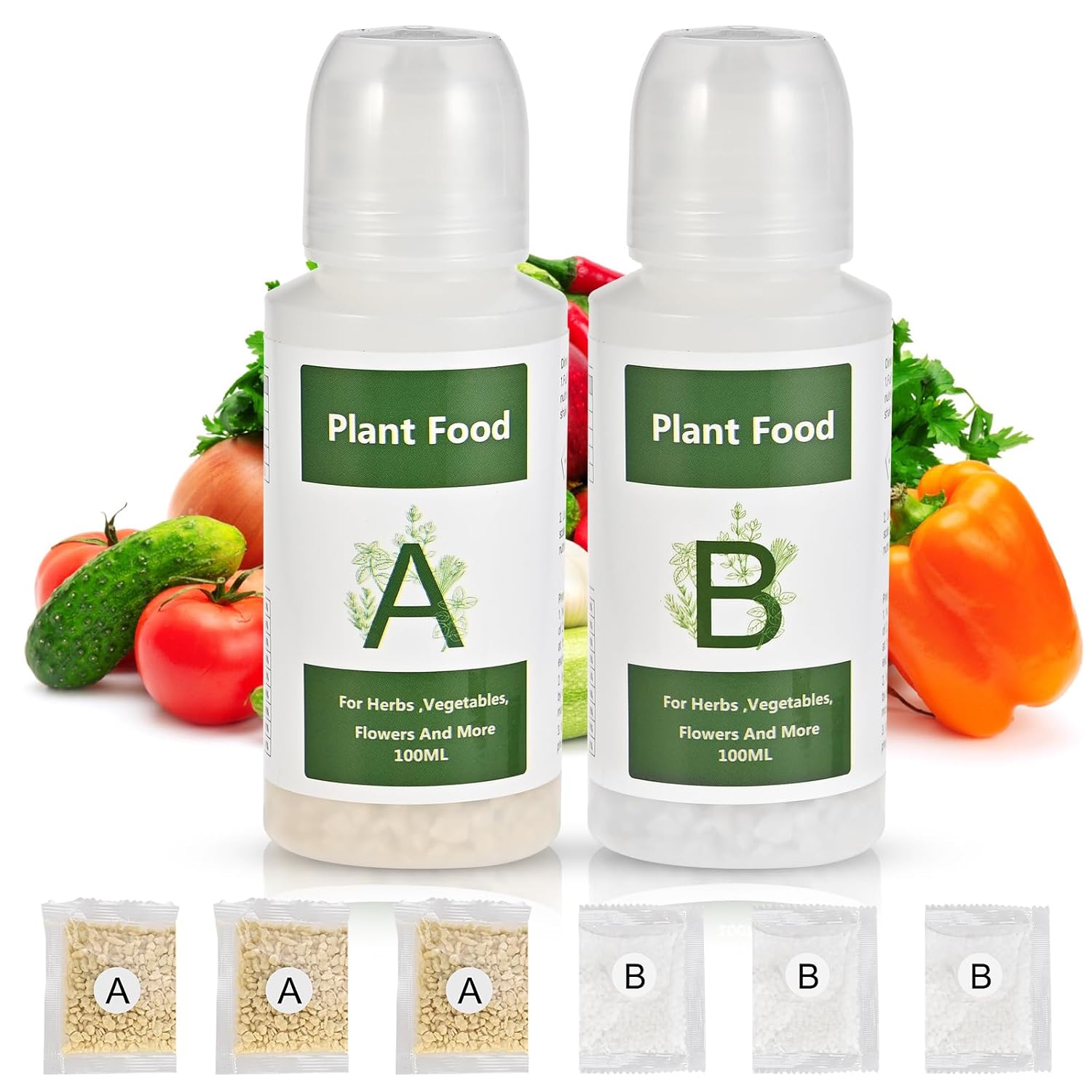
Tigvio Hydroponic Nutrients A&B is a two-bottle liquid feed formulated for indoor hydroponic systems. You mix each concentrate with water at the recommended 1:1 or dosing guidance (5 ml A and 5 ml B per 1 L) and add the solution to your reservoir; it is intended to deliver balanced, water-soluble nutrition for rapid vegetative growth. The product comes as two parts to avoid component interactions before use and is pH-balanced to help plants absorb minerals efficiently. Practical benefits include clear dosing instructions, compatibility with Aerogarden-style systems, and a convenient 800 ml volume that covers multiple refill cycles for small setups. For growers using LECA, the soluble formula is suitable for recirculating reservoirs and will not leave insoluble residues in the clay medium. Important limitations are that this is a general-purpose A&B solution rather than a crop-specific formula, so heavy feeders or flowering crops may need supplemental bloom boosters, and safety precautions are required because the concentrate can irritate skin and eyes.
Best for: Growers running compact hydroponic systems who want an affordable, easy-to-mix A&B nutrient to maintain steady vegetative growth in LECA or similar inert media.
Less Ideal for: Large commercial operations or gardeners seeking stage-specific or high-phosphorus bloom formulas should consider specialized or concentrated alternatives.
- Two-part liquid formula keeps components separate until use for fresher nutrient delivery
- Clear mixing ratio and simple dosing suitable for small hydroponic reservoirs
- pH-balanced, water-soluble formulation that is easy for plants to take up
- Compatibility with Aerogarden and other indoor hydroponic systems
- Not tailored for specific growth stages or bloom enhancement without additional supplements
- Safety precautions required when handling concentrated solution
Verdict: A straightforward, budget-friendly two-part liquid nutrient that makes maintaining healthy hydroponic and LECA setups simple and economical.
Growth Technology GT Foliage Focus Liquid Plant Food (250 mL)

| Item Form | Liquid |
|---|---|
| Specific Uses For Product | Soil / Hydroponics / Semi Hydro / Foliar Spray |
| Application Method | Foliar Spray |
| Target Species | Houseplants, Leafy Tropical |
| Liquid Volume | 250 ml |
Growth Technology GT Foliage Focus is a liquid concentrate designed to support leafy tropicals like monstera by supplying macronutrients and trace elements in an easy-to-use, pH‑buffered solution. It is mixed at low milliliter-per‑liter rates for routine feeding: lower dilutions for soil and potting mixes and slightly stronger mixes for hydroponic or semi‑hydro systems. Typical use is adding the recommended dose to your watering can and feeding with every watering or applying as a foliar spray for faster leaf uptake. The formula lists nitrate‑nitrogen, potassium, calcium, magnesium, and trace elements, so it supports steady chlorophyll production and robust foliage when used consistently. Practical benefits include clear dosing guidelines, compatibility across growing media, and a compact bottle that fits on a shelf or in a small greenhouse. Limitations are the small 250 mL size for growers who feed many plants frequently and the need to flush monthly to avoid salt buildup if used with each watering.
Best for: Buyers who prioritize consistent, reliable feeding routines for monstera and other leafy tropicals and want a single product that works across soil and hydro systems.
Less Ideal for: Large-scale growers or collectors who prefer bulk concentrates or an all-in-one slow-release option should consider larger-volume or alternative delivery formats.
- pH‑buffered, ready-to-dilute liquid formula for straightforward mixing
- Clear dosing guidance for soil, hydroponic, semi‑hydro and foliar use
- Contains macronutrients and trace elements targeted at leafy tropicals
- Small concentrated bottle is convenient for home and small greenhouse setups
- Only 250 mL volume may require frequent repurchasing for larger collections
- Requires monthly flushing to manage mineral salt buildup
Verdict: A reliable, pH‑buffered liquid feed that makes steady, cross‑media nourishment simple for monstera and other leafy indoor plants.
Purived All-Purpose Liquid Houseplant Fertilizer, 16 fl oz (Makes 50 Gallons)

| Item Form | Liquid |
|---|---|
| Application Method | soil drench, foliar feed, full & semi hydroponics |
| Target Species | Houseplants |
| Mixing Ratio | 320:1 |
Purived All-Purpose Liquid Houseplant Fertilizer is a concentrated 16 fl oz bottle that mixes 1 cap per gallon to treat up to 50 gallons of water. It is formulated for indoor potted plants and supports multiple application methods including soil drench, foliar spray, and full or semi-hydroponics, so you can use the same product whether you water, mist, or run nutrient solutions. The formula lists primary macronutrients and a range of micronutrients, which helps correct common deficiencies and supports steady growth when used at the recommended dilution. Practical benefits include an easy-to-follow mixing ratio, an odorless solution that is simple to store, and broad compatibility with different feeding routines. Important limits are that the label gives no N-P-K percentages, so precise nutrient planning for sensitive seedlings or specialty plants is not possible, and safety precautions mean you must handle and store it carefully. For new plants, start at or below the recommended dilution and observe growth before increasing frequency.
Best for: Buyers who want a versatile, no-fuss fertilizer for establishing and maintaining new houseplants and who value a single product that works across watering, misting, and basic hydroponic setups.
Less Ideal for: Growers who need exact N-P-K formulations for seedlings, specialty plants, or strict hydroponic nutrient regimens should consider a product with full nutrient breakdown and concentration details.
- Very concentrated so one bottle treats up to 50 gallons, reducing repurchase frequency
- Suitable for multiple application methods: soil drench, foliar feed, and hydroponics
- Includes a range of micronutrients in addition to primary NPK components
- Simple, clear mixing ratio (320:1) that is easy to follow
- No N-P-K ratio listed on the product information, limiting precise nutrient management
- Requires careful handling and storage due to safety warnings
Verdict: A concentrated, easy-to-use all-purpose fertilizer that covers feeding, foliar, and basic hydroponic needs for new houseplants.
Ahopegarden 800ml A&B Hydroponic Nutrients Liquid Plant Food

| Item Form | Liquid |
|---|---|
| Specific Uses For Product | Hydroponic Nutrients, Plant Growth, Root Development, Seed Development |
| Target Species | Vegetables, Fruits, Flowers |
| Liquid Volume | 800 ml |
| Mixing Ratio | 1:1 (5ml A + 5ml B per 1L then use 1:200) |
This two-part Ahopegarden hydroponic nutrient comes as an 800 ml concentrate intended to feed plants through every growth stage in indoor hydroponic systems. You mix 5 ml of Solution A and 5 ml of Solution B into 1 L of water (a 1:200 working ratio) and dose that solution to your reservoir; the product separates incompatible minerals across two bottles to keep the formula stable and bioavailable. In practice it is easy to use for beginners thanks to clear directions and a marked cap for measuring, and the complete A&B formula means you do not need multiple specialty bottles for veg versus bloom phases. The concentrate should support many refill cycles, which helps stretch value for budget-minded growers. Limitations are typical of concentrated A&B systems: you must keep the two parts separate until mixing and follow the dosing precisely to avoid nutrient imbalance, and no N-P-K breakdown or micronutrient list is provided on the label for fine-tuning advanced nutrient programs.
Best for: Growers who want an affordable, all-in-one hydroponic nutrient that is easy to measure and stretches across multiple refill cycles for year-round indoor vegetables and herbs.
Less Ideal for: Advanced hobbyists who need exact N-P-K and micronutrient specifications or growers running specialized nutrient regimens will want a product with full analytical data.
- Large 800 ml concentrate provides enough solution for multiple grow cycles
- Two-part A&B formulation keeps incompatible minerals separate for stable potency
- Simple, marked cap and clear mixing instructions make it beginner-friendly
- Marketed as complete full-cycle feed suitable for vegetables, fruits, and flowers
- Label does not list a detailed N-P-K or full micronutrient breakdown for precision feeding
- Requires careful mixing of two parts and accurate dosing to avoid imbalance
Verdict: Ahopegarden's 800 ml A&B concentrate is a budget-friendly, easy-to-use complete feed that stretches across many hydroponic cycles for reliable full-cycle indoor growing.
Choosing the Right Hydroponic Fertilizer for Leca: Key Factors to Consider
Nutrient Balance and Completeness
LECA is an inert medium that provides no nutrients on its own, so the fertilizer must supply a complete profile of macronutrients and micronutrients. That means adequate nitrogen, phosphorus, and potassium ratios for the plant type you grow, plus iron, manganese, zinc, copper, boron, molybdenum, and sometimes calcium and magnesium depending on water hardness.
If a formula lacks key micros or relies on supplemental products, you will need to add those routinely. For sensitive plants, chelated micronutrients are often preferable because they remain available at the reservoir pH range typical of hydroponics.
Salt Buildup and Electrical Conductivity
Because LECA holds water in its pores and roots are bathed in the nutrient solution, salts can concentrate over time. A fertilizer that causes rapid EC creep will stress roots and can cause tip burn, wilting, or nutrient lockout.
Consider formulas that emphasize low salt index or are designed for recirculating systems. Regular EC monitoring and scheduled reservoir changes are still necessary, but a lower-salt formulation reduces frequency and risk.
Solubility and Ease of Mixing
Fully soluble concentrates are essential for clean reservoirs and even distribution through drippers or pumps. Powders that clump or oil-based concentrates that separate make dosing inaccurate and can clog tubing.
Look for fertilizers that dissolve quickly in warm water, provide clear mixing ratios, and recommend order of mixing if paired with cal-mag or pH adjusters. Clear instructions reduce mistakes that show up as nutrient deficiency or toxicities in foliage.
pH Behavior and Buffering Compatibility
Hydroponic nutrient availability depends strongly on pH. Some fertilizers push reservoir pH in predictable directions; others are formulated to be pH-neutral. When growing in LECA you must choose a fertilizer that works with your pH control plan, whether you adjust with pH down/up chemicals or use buffered nutrient solutions.
A formula that destabilizes pH will require more frequent corrections and can stress plants. Check how a fertilizer affects pH at target EC and what pH range it is optimized for.
Dosing Flexibility for Different Growth Stages
Plants need different nutrient ratios during veg and bloom. A fertilizer that offers clear stage-specific concentrations or complementary veg/bloom mixes makes it easier to tailor feeding. Concentrates that allow fine adjustment at low doses are helpful for small reservoirs and seedlings.
If a product only targets heavy-feeding ornamentals or fruiting crops, it may be less suitable for seedlings or maintenance watering. Flexible dosing saves material and reduces the risk of overfeeding in LECA systems.
Compatibility With Supplemental Additives
Gardeners often add cal-mag, beneficial microbes, bloom boosters, or organic extracts to their reservoirs. Some fertilizers precipitate with calcium or phosphate or interact poorly with organic additives, causing cloudiness or clogging.
Choosing a formula known to work alongside common supplements prevents surprises and extra maintenance. If you plan to use additives, verify solubility and any recommended mixing sequences.
How Reservoir Type Changes Fertilizer Choices
Recirculating reservoirs, drip systems, and simple top-water setups all expose roots in LECA to different flow and oxygenation patterns. High-flow, aerated reservoirs tolerate slightly higher EC because the roots stay oxygenated, while stagnant or small reservoirs need gentler concentrations to avoid stress.
Match fertilizer concentration guidance to your reservoir volume and turnover. In small reservoirs change frequency and conservative EC targets matter more than absolute nutrient strength.
- Recirculating systems: can use slightly higher EC with regular monitoring
- Small hobby reservoirs: lower EC and more frequent partial changes
- Ebb-and-flow: monitor EC after flood cycles to track salt accumulation
Managing EC and When To Flush LECA
Measure EC weekly and track changes after top-ups. A slow rise in EC is normal, but a sharp increase after feeding indicates inadequate flushing or buildup in the medium. Flushing the LECA with clean water or a low-EC solution restores balance and prevents root burn.
Plan regular reservoir changes based on crop size and system type. For heavy feeders you may need more frequent flushing; for ornamentals, scheduled partial replacements keep salts in check without discarding all nutrients.
- Target EC ranges depend on plant type but watch trends rather than single readings
- Flush LECA when EC drifts upward consistently over several days
Adjusting pH in an Inert Medium
Because LECA does not buffer pH, the reservoir chemistry dictates nutrient availability. Test pH at the reservoir and at the root zone if possible. Adjust gradually and re-test after a few hours, because some fertilizers change pH as they stabilize.
Use pH adjusters sparingly and follow fertilizer guidance. Some formulas are designed to remain stable in a typical hydroponic pH window and reduce the need for frequent correction.
- Keep pH in the target range for your crop, usually mid-5 to low-6 for many species
- Avoid rapid swings by making small pH adjustments and allowing the system to equilibrate
When to Add Cal-Mag and Micronutrients
Water source chemistry influences whether you need supplemental calcium and magnesium. Soft water often lacks these cations, so adding cal-mag prevents tip burn and blossom-end disorders in fruiting plants. In LECA, lack of these elements shows quickly because there is no soil reserve.
Micronutrient shortages show as specific leaf symptoms. Use chelated micros if your water or reservoir pH makes unchelated forms less available. Add supplements according to crop stage and monitor plant response rather than relying on fixed schedules.
- Test source water for hardness before assuming cal-mag is unnecessary
- Introduce supplements gradually and observe foliage for signs of deficiency
Practical Mixing and Storage Tips
Dissolve concentrates in warm water in the recommended order to avoid precipitation. For two-part systems, mix each part separately before combining in the reservoir and follow manufacturer ratios relevant to reservoir volume.
Store concentrates in a cool, dark place and keep lids tightly closed. Old or contaminated stock can introduce microbes or reduce solubility, so rotating supplies and keeping mixing tools clean reduces issues in LECA setups.
- Label stock solutions with date and mix ratio
- Rinse measuring tools to avoid cross-contamination between additives
How We Chose the Best Hydroponic Fertilizer for Leca
We prioritized fertilizers that perform reliably in inert media where chemical balance and electrical conductivity are the gardener's main controls. Key evaluation dimensions were nutrient completeness, salt and pH stability, and formulation suitability for reservoir and ebb-and-flow systems. We also considered dosing flexibility and clarity of mixing instructions so gardeners can maintain consistent concentrations without guesswork. Practical handling factors such as solubility, shelf stability, and how concentrates behave in common garden reservoirs were included. Finally, we checked for compatibility notes about micronutrient chelation and whether a fertilizer is explicitly suitable for inert media rather than soil-specific blends. Excluded items included products designed for soil with slow-release granules, unformulated compost extracts, or mixes that require additional amendments to correct pH or micronutrient gaps. Our list favors formulas that let gardeners control EC and pH with minimal extra additives.
FAQ
Can I use a general-purpose hydroponic fertilizer with LECA?
Often you can, but not all general-purpose blends are optimized for inert media. Look for complete nutrient profiles and clear dosing that allow low-EC concentrations. Avoid soil concentrates with slow-release components or heavy organics that can clog reservoirs.
How often should I change the reservoir when using LECA?
Frequency depends on crop load and system size. Many hobbyists do partial changes weekly and full changes every 2 to 4 weeks. Monitor EC and plant vigor; rising EC or nutrient imbalances signal the need for a change sooner.
Is it necessary to use a two-part nutrient in LECA systems?
Two-part nutrients help prevent precipitation between calcium and phosphate and allow tailored feeding for veg and bloom. They are not strictly necessary for all crops but are useful in recirculating or high-calcium water systems.
What EC range should I aim for with LECA?
Target EC varies by species, but a common approach is conservative starting ranges and incremental increases as plants grow. Focus on consistency and watch for stress signs rather than chasing a single number.
Do I need to add beneficial microbes to LECA setups?
Beneficial microbes can help root health but behave differently in inert media. If you use them, choose formulations designed for hydroponic reservoirs and monitor for cloudiness or clogging. They are often optional rather than required.
Final Verdict
Choosing a hydroponic fertilizer for LECA means prioritizing nutrient completeness, low salt behavior, and predictable pH interaction. Match your choice to reservoir type and crop stage, and plan a maintenance routine of EC monitoring and scheduled flushes. Start with conservative EC targets, add supplements like cal-mag only when water tests or plant symptoms indicate need, and favor soluble, clearly labeled concentrates that make dosing straightforward. With attention to these tradeoffs, you can maintain healthy roots and steady growth in LECA systems.
