

Note: This article contains affiliate links. If you click on these links and make a purchase, I may earn a small commission at no extra cost to you. This helps support my research and content. Read my full affiliate disclosure here.
Picking the right liquid fertilizer for annual flowers changes how quickly plants recover from transplanting, how often you need to feed, and how abundant the blooms will be through the season. You want a formula that feeds fast, is easy to apply, and supports steady flowering without causing foliage to overgrow at the expense of blooms. This guide covers six top liquid fertilizer options shortlisted for use on annual flower beds, containers, and hanging baskets. We evaluated each choice for nutrient balance, application convenience, and how it performs across different soils and watering routines. Read on to see which feeding characteristics match your planting style and maintenance schedule.
Top Picks at a Glance
| Best Overall The best all-around choice for most situations | Farmer's Secret Fruit & Bloom Booster Liquid Fertilizer (32 oz) |  |
| Best Quality Built to a higher standard if you want something more solid | FoxFarm Big Bloom Liquid Plant Food, 32 fl oz |  |
| Best Value The sweet spot between price and what you get | Miracle-Gro Pour & Feed Liquid Plant Food, 32 fl. oz. | 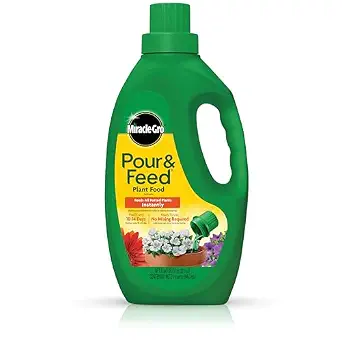 |
| Best Budget The cheapest option that still gets the job done reliably | Miracle-Gro Liquid All Purpose Plant Food Concentrate, 32 oz |  |
| Highest Rated A top-rated pick with lots of positive feedback | Schultz Liquid Plant Food, 8 fl oz (3-pack) |  |
| Most Popular A crowd favorite that many people choose with confidence | Miracle-Gro Indoor Plant Food for All Plants, Liquid, 8 fl. oz. (2-Pack) |  |
Farmer's Secret Fruit & Bloom Booster Liquid Fertilizer (32 oz)

| Item Form | Liquid |
|---|---|
| Specific Uses For Product | Root Development, Seed Development |
| Application Method | pour or spray |
| Target Species | Fruit, vegetable, and flower producing plants |
| Mixing Ratio | 1 teaspoon:2 gallons |
Farmer's Secret Fruit & Bloom Booster is a super-concentrated liquid fertilizer designed for the bloom and fruiting stages of garden plants. You dilute it at the recommended rate and apply by watering can, sprayer, or through irrigation for either soil feeding or foliar feeding; the brand suggests starting applications when buds form and repeating every 1 to 2 weeks. The formula emphasizes higher phosphorus and potassium to encourage blooms and fruit set while supplying nitrogen and trace minerals that support root health and general vigor. Because it is liquid and concentrated, nutrients are immediately available to plants, which can produce visible improvements faster than granular feeds. Practical benefits include flexible application methods, suitability for a wide range of fruiting plants, and a long shelf life. Important limitations are that it requires careful dilution to avoid overfeeding and that optimal timing and results vary by crop and climate, so some trialing on a small number of plants is wise.
Best for: Home gardeners seeking a simple, proven boost for flowering and fruiting plants who prefer an easy-to-use, professional-style liquid feed and play it safe by following dilution instructions.
Less Ideal for: Gardeners who want dry granular feeds, slow-release long-season feeding, or need exact NPK ratios for fine-tuned fertilization plans.
- High phosphorus and potassium focus to support flowering and fruit set.
- Concentrated liquid formula makes nutrients immediately available and extends number of applications per bottle.
- Versatile application: pour, spray, foliar feed, or use with irrigation systems.
- Contains macronutrients plus trace minerals for balanced plant support.
- Long practical shelf life so unopened product can be stored for years.
- Requires precise dilution and schedule to avoid overfeeding sensitive plants.
- No guaranteed NPK numbers listed on the provided details for exact nutrient breakdown.
Verdict: A concentrated liquid bloom booster that reliably supports stronger roots and bigger yields for fruiting plants when used as directed.
FoxFarm Big Bloom Liquid Plant Food, 32 fl oz

| Item Form | Liquid |
|---|---|
| Specific Uses For Product | Plant Food |
| Coverage | Medium |
| Liquid Volume | 32 fluid ounces |
| Mixing Ratio | 4 tbsp per gallon of water |
FoxFarm Big Bloom is a concentrated liquid plant food designed to boost flowering and fruit development. It is typically mixed at 4 tablespoons per gallon of water and applied every other watering, or delivered via hose-end sprayer or drip systems for regular feeding. The formula relies on organic inputs such as earthworm castings and bat guano, which promote quick nutrient uptake and encourage bigger blooms, stronger seed set, and improved flavor in fruits and vegetables. Practical benefits include easy mixing, compatibility with common irrigation setups, and a medium coverage suitable for garden beds, containers, and small orchards. Because it is low in NPK numbers, Big Bloom performs best as a bloom/fruit booster rather than a complete base fertilizer, so gardeners should pair it with a higher-nitrogen feed during vigorous vegetative growth. Users should also observe local regulations about phosphorus use and take care to avoid runoff. For growers focused on enhancing flower size and fruit quality, this product provides a reliable, easy-to-use organic bloom feed.
Best for: Gardeners aiming to maximize flower size and fruit quality who want an easy-to-apply organic bloom booster for regular feeding.
Less Ideal for: Those seeking an all-in-one primary fertilizer for rapid vegetative growth or users in areas where phosphorus-containing fertilizers are restricted.
- Concentrated liquid that's easy to mix and apply with watering systems
- Contains organic inputs like earthworm castings and bat guano for nutrient-rich feeding
- Formulated specifically to support flowering and fruit development
- Suitable for use across beds, containers, and irrigation systems
- Low NPK numbers mean it is not a complete feed for heavy vegetative growth
- Contains phosphorus which may be restricted by some local regulations
Verdict: Choose Big Bloom when your priority is bigger, more abundant flowers and better-tasting fruit delivered in an easy-to-use organic liquid feed.
Miracle-Gro Pour & Feed Liquid Plant Food, 32 fl. oz.

| Item Form | Liquid |
|---|---|
| Application Method | Directly to the soil |
| Target Species | potted plants |
| Unit Count | 32 Fluid Ounces |
Miracle-Gro Pour & Feed is a ready-to-use liquid fertilizer designed for container plants and houseplants. You apply it by measuring with the bottle cap and pouring the recommended amount directly onto the soil around each pot, so no mixing or watering-can prep is required. Its convenience makes it easy to maintain a regular 10–14 day feeding schedule for bedding plants like petunias in containers. The product is formulated for potted plants only, and the liquid form gives fairly quick nutrient availability compared with slow-release granules. Practical benefits include simple dosing with the cap, suitability for indoor and outdoor use, and a clearly stated application rhythm that helps keep flowering plants vigorous. Important limitations are that it is not intended for in-ground beds and that frequent applications mean you need to remember regular feedings; it is also a general all-purpose formula rather than a petunia-specific bloom booster.
Best for: A plant owner who prefers simple, low-effort care for container flowers and wants a dependable, easy-to-measure fertilizer to keep petunias and other potted ornamentals blooming.
Less Ideal for: Gardeners seeking a long-term, in-ground soil amendment or those who prefer an infrequent, slow-release feeding schedule should consider other products.
- Ready-to-use liquid requires no mixing so application is fast and low-effort
- Cap-measure dosing makes it easy to apply the correct amount for each container
- Suitable for both indoor and outdoor container plants so one product covers many uses
- Feeds on a 10–14 day schedule for consistent nutrient supply to flowering containers
- Not formulated for in-ground planting so unsuitable for garden beds
- Requires frequent application compared with slow-release fertilizers
Verdict: Use this if you want a no-mix, easy-to-measure liquid fertilizer to keep container petunias fed and blooming on a regular schedule.
Miracle-Gro Liquid All Purpose Plant Food Concentrate, 32 oz

| Item Form | Liquid |
|---|---|
| Specific Uses For Product | Plant Growth, Root Development |
| Application Method | Mix with water in a watering can |
| Mixing Ratio | 1:10 (concentrate to water, estimate) |
Miracle-Gro Liquid All Purpose is a water-soluble concentrate you mix into a watering can and apply every 1 to 2 weeks to container and in-ground plants. It is formulated for general plant growth and root development and is marketed for flowers, vegetables, shrubs and houseplants, so it works as a straightforward feed for flowering bulbs like calla lilies. The bottle’s mixing guidance (cap measures for garden application and 1 teaspoon per gallon for containers) makes it easy to dose for pots or small beds. Practical benefits include fast uptake through the soil when applied as directed and compatibility with routine watering schedules. Limitations to note are that it is an all-purpose formula rather than a bloom-focused or calcium-rich fertilizer tailored specifically to calla lilies, so growers seeking targeted bloom enhancement or specialty nutrition may want a supplement. Also, frequent use at higher-than-recommended strength can risk fertilizer burn, so follow the mixing directions and schedule.
Best for: Buyers who want an affordable, easy-to-use liquid fertilizer to keep calla lilies and other flowering plants regularly fed without fuss.
Less Ideal for: Growers seeking a specialist bloom-boost or a fertilizer formulated for specific micronutrient needs should consider a targeted or bloom-specific product instead.
- Concentrated liquid mixes easily with water for quick application
- Clear dosing instructions for both garden beds and container plants
- Suitable for a wide range of plant types including flowering bulbs and houseplants
- General all-purpose formula not specifically formulated for enhancing blooms of calla lilies
Verdict: A budget-friendly, easy-to-use liquid concentrate that reliably feeds calla lilies and other common garden plants on a regular schedule.
Schultz Liquid Plant Food, 8 fl oz (3-pack)

| Item Form | Liquid |
|---|---|
| Application Method | Mix 7 drops per quart of water |
| Unit Count | 8 Fluid Ounces |
| Specific Uses For Product | Plant Food |
| Target Species | flowers, tomatoes, roses, vegetables, fruits, trees, shrubs, annuals, perennials, houseplants |
This liquid plant food is a simple, no-frills concentrate intended for regular feeding of annual flowers and other garden and houseplants. You mix seven drops per quart of water, which makes it easy to dose for individual pots, hanging baskets, and small garden beds. The liquid form is fast-acting so nutrients are available quickly to roots and foliage, and the product is labeled for use on flowers, vegetables, roses, and houseplants so it fits seasonal feeding routines. Packaging comes as three 8 fl oz bottles, providing enough feedings for repeated applications across a season for small-plot plantings. Limitations to note are the very small mixing volume per dose, which requires careful measuring to avoid over- or under-feeding, and the product does not list an N-P-K ratio on the provided details so you cannot compare exact nutrient balance against specialty bloom formulas. For gardeners who want a dependable, easy-to-use liquid for routine feeding of annuals, this delivers predictable, versatile nutrition when used as directed.
Best for: Gardeners who want a straightforward, reliable liquid fertilizer for regular feeding of annual flowers and mixed container plantings and prefer an easy drop-per-quart dosing routine.
Less Ideal for: Growers who need precise nutrient ratios for bloom boosting, large-scale beds, or automated fertigation systems should consider a product with a listed N-P-K and higher-volume packaging.
- Concentrated liquid form for quick nutrient uptake and easy mixing
- Simple, repeatable dosing at seven drops per quart works well for small pots and baskets
- Labeled for a wide range of plants including annual flowers, vegetables, and houseplants
- Sold in three 8 fl oz bottles so you have multiple feedings in a season
- No N-P-K or specific nutrient breakdown provided for comparing bloom-focused feeds
Verdict: A low-effort, concentrated liquid feed that reliably supports regular fertilizing of annual flowers and mixed container plantings.
Miracle-Gro Indoor Plant Food for All Plants, Liquid, 8 fl. oz. (2-Pack)

| Item Form | Liquid |
|---|---|
| Application Method | Apply directly to soil or mix with water |
| Target Species | Houseplants |
| Liquid Volume | 8 fluid ounces |
| Mixing Ratio | 4 pumps per 1 quart of water |
Miracle-Gro Indoor Plant Food is a ready-to-use liquid fertilizer for indoor potted plants that you apply either directly to soil or diluted in water. It is typically used every two weeks by mixing the recommended number of pumps into a quart of water or by applying a few pumps for larger pots, making it easy to add to a regular watering routine. The product feeds quickly because nutrients are water-soluble and the pump dispenser gives repeatable doses without measuring spoons. Practical benefits include broad compatibility with most houseplants and a compact bottle size that is convenient for small indoor gardens. Limitations are that the label lists only N, P, K without a full nutrient breakdown, so growers wanting precise NPK ratios or micronutrient profiles may prefer a more detailed formula. Also the 8 fl. oz. bottles are best for hobbyists or small collections rather than large indoor plantings because frequent repurchasing will be necessary for heavy users.
Best for: Buyers who want a simple, low-effort fertilizer to add to a regular watering routine and who prioritize straightforward dosing and broad houseplant compatibility.
Less Ideal for: Specialist growers who need exact NPK ratios, detailed micronutrient information, or bulk quantities for many plants should consider a different product.
- Liquid formula feeds instantly when mixed with water or applied to soil
- Pump dispenser provides simple, repeatable dosing without measuring
- Designed for use with a wide range of indoor plants including herbs, flowers and vegetables
- Full NPK ratio and micronutrient details are not shown on the product summary
- Small 8 fl. oz. bottle size may require frequent replacement for larger collections
Verdict: A convenient, pump-dosed liquid fertilizer that makes fortnightly feeding simple for casual indoor plant owners.
Choosing the Right Liquid Fertilizer for Annual Flowers: Key Factors to Consider
Nutrient Ratio and Timing
The balance of nitrogen, phosphorus, and potassium dictates whether a fertilizer encourages leafy growth or abundant flowering. Annual flowers typically benefit from a moderate nitrogen level to maintain healthy foliage and slightly higher phosphorus and potassium to support bud formation and stress resistance. Understanding label N-P-K numbers helps you pick a feed that favors blooms rather than just green growth.
Timing matters too. Because liquid fertilizers deliver nutrients quickly, they are best used to correct deficiencies, jump-start blooms after transplanting, or provide a boost during peak flowering. Frequent low-dose applications and periodic stronger feeds are both viable strategies; choose a product that supports your chosen schedule without causing salt accumulation.
Solubility and Residue
High solubility ensures the solution mixes evenly and moves into the root zone rather than leaving gritty residue on soil or foliage. A product that dissolves cleanly reduces clogging in sprayers and watering devices and lowers the risk of white crusts forming on container rims or soil surfaces.
Residue also affects root health. Fertilizers that leave excessive soluble salts can damage roots in small pots and lead to uneven watering needs. Prefer formulas labeled for complete solubility and follow dilution guidelines to prevent buildup.
Application Method and Compatibility
Liquid fertilizers are applied with watering cans, hose-end sprayers, or injectors. The chosen product should be compatible with the equipment you use and provide clear dilution ratios for each method. Concentrated concentrates offer economy but require careful measuring; pre-diluted or lower-concentration mixes are more forgiving for casual gardeners.
Consider the practicality: products with easy-pour spouts, measuring caps, or clear marking lines reduce dosing mistakes. If you rely on automated irrigation, check compatibility with inline feeders and look for guidance on backflow prevention and filter requirements.
Container and Bedding Safety
Annuals grown in pots and hanging baskets are more sensitive to fertilizer salts and limited root volume. A liquid feed designed for containers will have dilution and frequency recommendations that protect roots and maintain steady moisture. Look for formulations that explicitly mention safety for containers or provide lower-strength feeding schedules for small volumes of potting mix.
In flower beds, soil type and existing fertility alter how often you should apply liquid feeds. In compacted or heavy soils, nutrients move more slowly; in light, fast-draining soils, feeding may need to be more frequent. Choose a fertilizer that gives guidance for both planting situations.
Rate of Uptake and Visible Response
Liquid feeds are valuable because plants can show visible improvement within days if nutrients were limiting. Products that combine fast-available macronutrients with some micronutrients help correct chlorosis and enhance bloom color quickly. Evaluate how quickly a fertilizer produces visible results and whether those responses persist or require repeat applications.
Also consider transplants vs established plants. Newly set annuals benefit from gentler mixes, while established beds under heavy bloom demand may need higher-frequency feeding to sustain flower production.
Labeling, Safety, and Pollinator Guidance
Clear label instructions reduce misuse. Good labels include dilution rates for different container sizes, guidance on frequency, and safety notes about application timing around pollinators. Some fertilizers advise avoiding foliar spray during peak pollinator activity or provide instructions for bloom-safe applications.
Look for explicit storage and handling directions to protect children and pets, and check for any warnings about use on sensitive varieties. Labels that include both horticultural guidance and safety information are easier to apply correctly.
Feeding Strategies for Different Planting Situations
How you feed annuals depends on where they grow. In-ground beds with decent soil structure and organic matter can usually be maintained with lighter liquid feeds every two to four weeks combined with a single granular amendment at planting. Containers and hanging baskets need more regular, low-dose applications because water and nutrients drain away faster.
For mixed beds that include both annuals and perennials, use lower-nitrogen formulas to avoid encouraging perennial competitors. For high-traffic displays where continuous peak bloom is the goal, schedule regular liquid feeds at the manufacturer recommended frequency and monitor for signs of overfertilization.
- Containers: dilute to the lower end of label rates and feed every one to two weeks.
- In-ground beds: feed every two to four weeks or as soil tests indicate.
- New transplants: use half-strength feeds for the first two weeks after planting.
Mixing and Application Best Practices
Always follow label dilution instructions and measure carefully. Start with cleaner water to avoid interaction with hard water minerals that can form precipitates. Add fertilizer to water, not water to fertilizer, unless the label specifies otherwise.
For foliar feeding, choose calm, cool parts of the day and avoid spraying open blooms when pollinators are active. Rinse sprayer parts after use to prevent buildup and store concentrates sealed and upright in a cool place.
- Measure with a dedicated scoop or measuring cap to reduce dosing errors.
- Agitate the solution in the sprayer or watering can to ensure even distribution.
- Record feed dates to track frequency and plant response.
Addressing Common Nutrient Issues in Annuals
Yellowing lower leaves often indicate nitrogen deficiency, while poor bud set can point to inadequate phosphorus or potassium. Micronutrient issues like iron or magnesium deficiency typically show as interveinal chlorosis on new growth. A balanced liquid fertilizer with trace elements can correct many of these issues quickly when applied at appropriate strength.
If nutrient problems persist after feeding, consider a soil test to check pH and existing fertility. pH that is too high or too low can lock out nutrients even when they are present in the soil, so correcting pH may be necessary for long-term bloom health.
- Fast-correcting symptoms: use a quick-soluble liquid feed at labeled strength.
- Persistent deficiencies: test soil and adjust pH or base fertility before continuing frequent feeds.
Environmental and Safety Considerations
Avoid overapplication, which can leach into storm drains and harm waterways. Use targeted feeding on flower beds and containers rather than blanket spraying lawns or borders. Consider timing applications to reduce exposure to pollinators, such as feeding in early morning or late evening.
Store concentrates out of reach of children and pets and clean tools and spills promptly. Organic liquid options may be preferred in pollinator-friendly gardens, but both organic and synthetic liquids require correct dilution to prevent root burn.
- Do not apply before heavy rain to reduce runoff risk.
- Follow local regulations for fertilizer use near water bodies.
Adjusting Feed Schedules Through the Season
Spring transplant and early growth phases usually need gentler feeding to support root establishment and steady shoot development. As annuals move into peak bloom in summer, increase frequency within label limits to sustain flower production. Late in the season taper feeds to let plants finish naturally unless you want to extend bloom for a special display.
Watch plants, not just calendars. Signs like lush foliage with few flowers suggest shifting to a bloom-focused ratio or reducing nitrogen. Conversely, weak stems and pale leaves indicate the need for more balanced feeding.
- Early season: light, frequent feeds to help establishment.
- Peak season: follow recommended higher-frequency schedules for continuous bloom.
- End of season: reduce or stop feeding to allow plant maturation.
How We Chose the Best Liquid Fertilizer for Annual Flowers
We focused on the practical needs of gardeners who grow annual flowers and applied selection filters that matter in the bed, border, container, or hanging basket. Key evaluation dimensions included nutrient ratio and availability to judge bloom support and recovery speed; concentration and dilution flexibility so products suit both frequent light feeds and less frequent stronger feeds; application method and compatibility with common watering tools, from watering cans to hose-end sprayers; solubility and residue to avoid clogging equipment and leaving salt build-up in containers; and safety guidance for use on young transplants and near pollinators. We excluded concentrated granular formulas, slow-release products, and specialty fertilizers aimed at lawns or woody ornamentals because they do not meet the speed and solubility needs of annual bedding plants. We also filtered out products without clear label directions or incomplete nutrient analysis. The remaining items were judged on the five concrete dimensions above plus packaging that supports accurate measuring and repeatable feeding intervals.
FAQ
How often should I feed annual flowers with a liquid fertilizer?
It depends on the concentration and your planting situation. Containers often need feeding every one to two weeks at lower strength, while in-ground beds typically respond well to feeding every two to four weeks. Always follow label dilution guidance and adjust based on plant response.
Can I use liquid fertilizer on newly transplanted annuals?
Yes, but use a gentler approach for new transplants. Apply at half-strength or use the label recommendation for transplanting to avoid root burn and give plants time to establish before regular full-rate feeding.
Will liquid fertilizer damage pollinators visiting my flowers?
When applied correctly to the soil or early in the morning or evening, liquid fertilizers pose minimal risk. Avoid foliar sprays on open blooms during peak pollinator activity and follow label safety recommendations to reduce exposure.
Are organic liquid fertilizers as effective for blooms as synthetic ones?
Organic liquids can be effective but often release nutrients more slowly and may require more frequent applications. Effectiveness depends on formulation and nutrient concentrations, so compare nutrient profiles and application rates rather than assuming one type always outperforms the other.
What signs indicate I am overfeeding my annuals?
Signs of overfeeding include salt crust on container rims, leaf tip burn, wilting despite moist soil, and an excess of leafy growth with few flowers. If you suspect overfeeding, flush containers with water and reduce or pause feeding.
Can I mix liquid fertilizer with fungicides or insecticides?
Mixing depends on both products and should follow label compatibility guidance. When in doubt, perform a small jar test to check for precipitation and consult label directions. Many concentrates recommend separate applications to avoid unexpected chemical interactions.
Final Verdict
Choosing the right liquid fertilizer for annual flowers is about matching nutrient balance, application style, and season-long feeding needs to your planting situation. Prioritize solubility and clear label directions if you use containers, and select bloom-focused nutrient ratios when you want larger, more frequent flowers. Accept tradeoffs: faster-acting liquids require more frequent attention than slow-release options but give quick results. Use the feeding strategies and safety guidance above to set a schedule that keeps beds and containers flowering reliably throughout the season.
