

Note: This article contains affiliate links. If you click on these links and make a purchase, I may earn a small commission at no extra cost to you. This helps support my research and content. Read my full affiliate disclosure here.
Choosing the right liquid fertilizer for dahlias matters because these tuberous perennials respond quickly to soluble nutrients and timing. Feed too weakly and you get sparse flowering. Feed too aggressively and foliage can overwhelm flowers or tubers may suffer. This guide covers seven shortlisted liquid fertilizers suited for dahlias in beds, containers, and cutting gardens, and explains why each made the list. We evaluated options based on nutrient ratios, ease of mixing and application, and how they support bloom production and tuber health. Read on for practical guidance to match a feeding plan to your growing situation before the product picks.
Top Picks at a Glance
| Best Overall The best all-around choice for most situations | TPS NUTRIENTS Dahlia Liquid Fertilizer, 32 oz |  |
| Best Quality Built to a higher standard if you want something more solid | FoxFarm Tiger Bloom Liquid Plant Food (1 pint) |  |
| Best Value The sweet spot between price and what you get | EZ-gro 10-30-20 Blossom Booster Liquid Plant Food (32 fl oz) |  |
| Best Budget The cheapest option that still gets the job done reliably | Miracle-Gro Liquid All Purpose Plant Food Concentrate, 32 oz |  |
| Highest Rated A top-rated pick with lots of positive feedback | Gardenera Liquid Silica Spray for Dahlias, Ready-to-Use 8 oz |  |
| Most Popular A crowd favorite that many people choose with confidence | FoxFarm Big Bloom Liquid Plant Food, 16 fl oz |  |
| Best Seller A high-volume bestseller chosen again and again | Miracle-Gro Pour & Feed Liquid Plant Food, 32 fl. oz. | 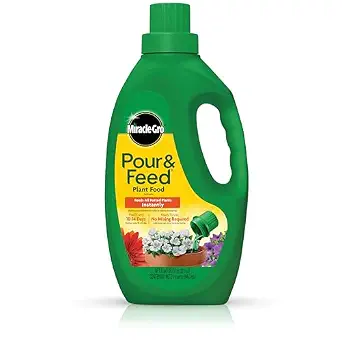 |
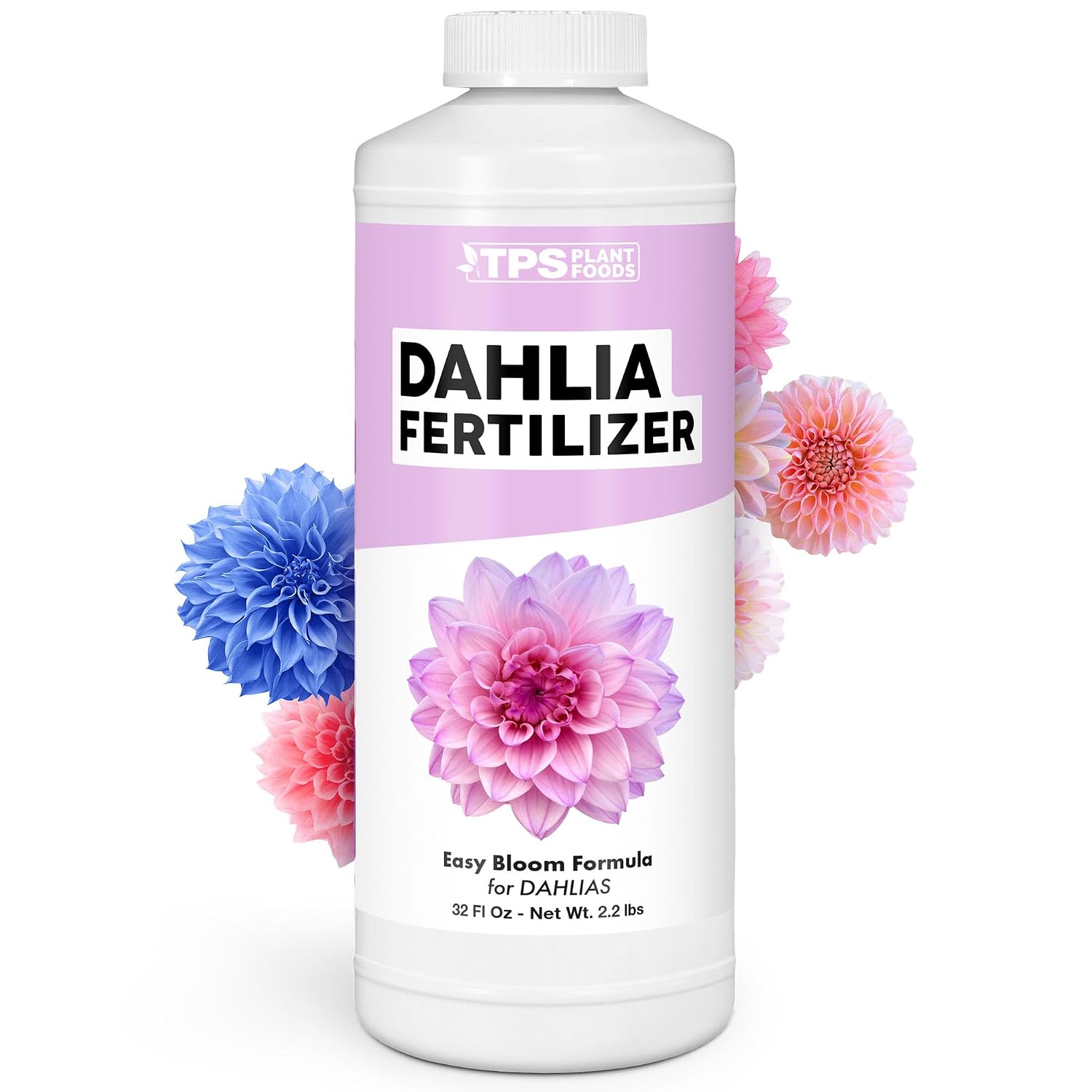
TPS NUTRIENTS Dahlia Liquid Fertilizer, 32 oz
| Item Form | Liquid |
|---|---|
| Specific Uses For Product | Plant Growth |
| Coverage | Low |
| Target Species | Dahlias |
| Liquid Volume | 32 fluid ounces |
This 32 oz liquid fertilizer from TPS Nutrients is designed specifically for dahlias and is used as a regular feed to support stronger stems, tuber development, and more vibrant blooms. It is water-soluble, so you dilute it and apply it to garden beds or containers as part of routine watering. The formulation highlights a higher potassium focus to promote bud set and flower color, which is useful during the active flowering season. Practical benefits include easy mixing and compatibility with container-grown plants as well as in-ground beds, plus clear safety directions and handling guidance. Limitations are that coverage is described as low, so larger plantings will need multiple bottles, and the product requires careful dilution and protective handling since it can irritate skin and eyes. For gardeners who want a targeted, easy-to-use feed for dahlias, it fits well; hobbyists planning to treat large acreage or seeking an all-purpose feed for mixed plantings may need a different product or larger-volume option.
Best for: Gardeners who grow dahlias in beds or containers and want a targeted, easy-to-apply feed to boost flowering and plant vigor throughout the season.
Less Ideal for: People managing very large plantings, mixed-species fertilization plans, or those who prefer dry or bulk fertilizers for economy and lower handling risk.
- Formulated specifically for dahlias to support tuber and bud development
- Water-soluble liquid mixes easily for use in containers and garden beds
- High-potassium focus helps improve bud set and bloom color
- Clear safety and dilution instructions for routine use
- Low coverage per bottle means multiple purchases for larger plantings
- Contains irritants so protective handling and careful dilution are required
Verdict: A simple, dahlia-focused liquid feed that makes it easy to boost blooms and plant vigor in beds and containers.
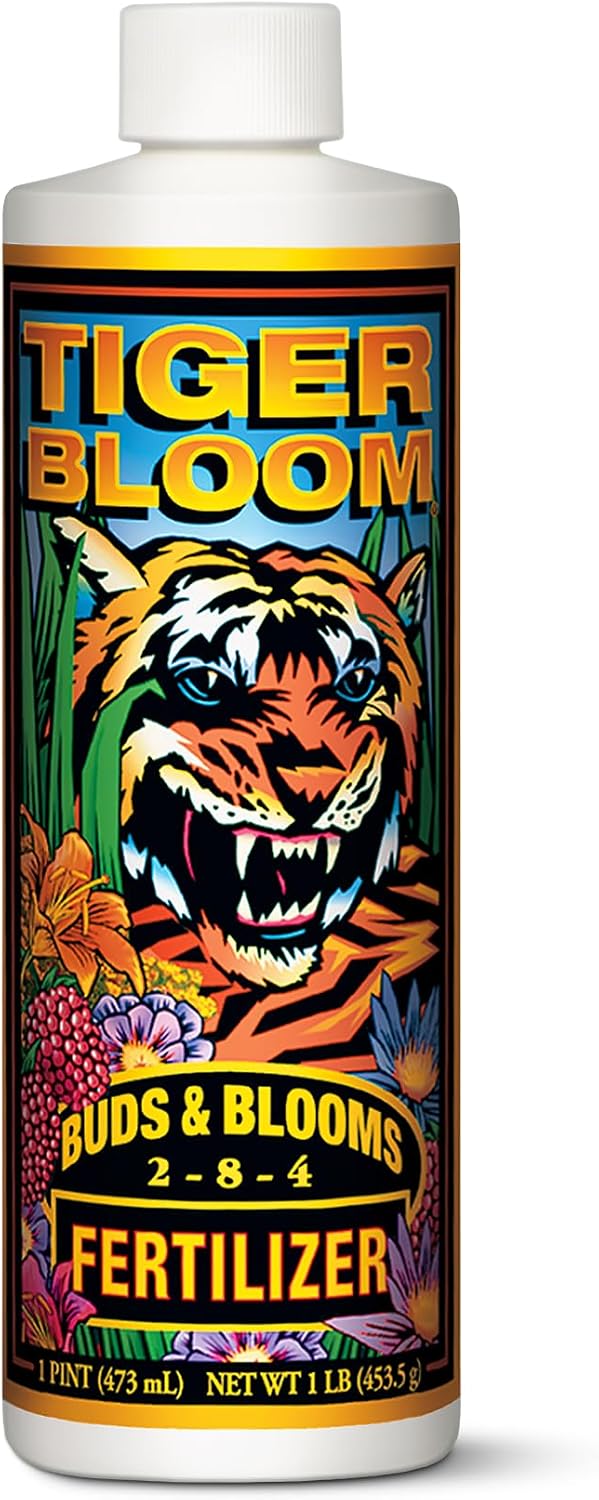
FoxFarm Tiger Bloom Liquid Plant Food (1 pint)
| Item Form | Liquid |
|---|---|
| Specific Uses For Product | Hydroponic |
| Application Method | Watering; Foliar spraying |
| Target Species | Flowering Plants |
| Mixing Ratio | 1:200 or 1:300 |
Tiger Bloom is a liquid, high-phosphorus fertilizer designed to push plants into a strong flowering and fruiting phase. You mix a small amount into the irrigation water or use it as a foliar spray and apply from first signs of flowering through harvest. The 2-8-4 formula and included micronutrients support bud set and larger blooms, and the concentrate mixes at 1:200 to 1:300 for routine feeding or 2 to 4 teaspoons per gallon for heavier feeding. It works in both soil and hydroponic setups and is formulated for quick nutrient uptake and stable micronutrient availability during storage. Practical benefits include flexible application methods, suitability for intensive flowering cycles, and a small bottle that lasts when used at recommended dilutions. Important limitations are that it is bloom-focused rather than an all-purpose feed so it may not meet vegetative needs, and the phosphorus content means users near waterways should follow local regulations to avoid runoff issues.
Best for: Serious growers who prioritize maximizing flower and bloom performance and want a concentrated, fast-acting bloom booster for soil or hydroponic environments.
Less Ideal for: Casual gardeners seeking a single all-purpose fertilizer for every growth stage or those managing turf or non-flowering lawns where phosphorus restrictions apply.
- High phosphorus NPK (2-8-4) concentrated for stronger bud development
- Works in soil and hydroponic systems for versatile use
- Liquid concentrate mixes easily for foliar or watering applications
- Formulated for quick nutrient uptake and stable micronutrient availability
- Focused on flowering so it is not a balanced all-stage fertilizer
- Contains phosphorus which may be restricted near waterways
Verdict: Choose Tiger Bloom when you need a concentrated, fast-acting bloom booster to maximize flower and fruit production.
EZ-gro 10-30-20 Blossom Booster Liquid Plant Food (32 fl oz)

| Item Form | Liquid |
|---|---|
| NPK | 10-30-20 |
| Target Species | Flowers |
| Liquid Volume | 32 fluid ounces |
| Application Method | Dilute with water and apply to plants |
This EZ-gro 10-30-20 is a concentrated liquid bloom booster designed to feed flowering plants directly at the root zone. It is typically diluted with water (label mixing instructions) and applied every other week or with each watering at a lighter dose. The high phosphorus formula shifts plant energy toward bud set while the included potassium helps carry open blooms, and the product also supplies chelated iron, manganese, zinc and copper so micronutrients remain available in diverse soils. Because it is a complete NPK feed rather than a simple supplement, you can use it as the primary fertilizer during the flowering phase for petunias, geraniums, roses and other ornamentals in pots or garden beds. The concentrate yields a large number of gallons from one quart, making it economical for multiple containers. Limitations are that it is tailored for bloom promotion rather than vegetative growth, so it is not ideal when plants need leaf development, and precise dilution is necessary to avoid overfeeding sensitive seedlings.
Best for: Gardeners who want a dependable, concentrated bloom booster for petunias and other flowering containers or beds and who prioritize easy-to-apply liquid feeding during the flowering cycle.
Less Ideal for: Growers seeking an all-purpose or vegetative-stage fertilizer for producing lush foliage or for fertilizing seedlings should consider a balanced or higher-nitrogen product instead.
- High phosphorus 10-30-20 NPK targets bud set and flower production
- Includes chelated micronutrients (Fe, Mn, Zn, Cu) so nutrients stay plant-available
- Concentrated formula makes up to 48 gallons from one quart for economical use
- Liquid form feeds roots immediately without waiting for granules to break down
- Formulated primarily for flowering phase and not suited as a nitrogen-rich growth fertilizer
- Requires careful dilution to avoid overfeeding sensitive or young plants
Verdict: A concentrated liquid bloom booster that reliably increases flower set on petunias and other ornamentals while stretching a little bottle across many containers.
Miracle-Gro Liquid All Purpose Plant Food Concentrate, 32 oz

| Item Form | Liquid |
|---|---|
| Specific Uses For Product | Plant Growth, Root Development |
| Application Method | Mix with water in a watering can |
| Mixing Ratio | 1:10 (concentrate to water, estimate) |
Miracle-Gro Liquid All Purpose is a water-soluble concentrate you mix into a watering can and apply every 1 to 2 weeks to container and in-ground plants. It is formulated for general plant growth and root development and is marketed for flowers, vegetables, shrubs and houseplants, so it works as a straightforward feed for flowering bulbs like calla lilies. The bottle’s mixing guidance (cap measures for garden application and 1 teaspoon per gallon for containers) makes it easy to dose for pots or small beds. Practical benefits include fast uptake through the soil when applied as directed and compatibility with routine watering schedules. Limitations to note are that it is an all-purpose formula rather than a bloom-focused or calcium-rich fertilizer tailored specifically to calla lilies, so growers seeking targeted bloom enhancement or specialty nutrition may want a supplement. Also, frequent use at higher-than-recommended strength can risk fertilizer burn, so follow the mixing directions and schedule.
Best for: Buyers who want an affordable, easy-to-use liquid fertilizer to keep calla lilies and other flowering plants regularly fed without fuss.
Less Ideal for: Growers seeking a specialist bloom-boost or a fertilizer formulated for specific micronutrient needs should consider a targeted or bloom-specific product instead.
- Concentrated liquid mixes easily with water for quick application
- Clear dosing instructions for both garden beds and container plants
- Suitable for a wide range of plant types including flowering bulbs and houseplants
- General all-purpose formula not specifically formulated for enhancing blooms of calla lilies
Verdict: A budget-friendly, easy-to-use liquid concentrate that reliably feeds calla lilies and other common garden plants on a regular schedule.
Gardenera Liquid Silica Spray for Dahlias, Ready-to-Use 8 oz

| Item Form | Liquid |
|---|---|
| Application Method | Spray |
| Coverage | Ready-to-Use Mist Spray |
| Target Species | Dahlia Plants |
| Unit Count | 8 Fluid Ounces |
This ready-to-use liquid silica spray is a foliar supplement meant to be misted directly onto dahlia leaves and stems on a weekly schedule. It supplies plant-available silicon in a low-to-moderate molecular weight form for quick uptake and claims to thicken stems, toughen leaves, and reduce browning from environmental stress. The product is simple to use because it arrives premixed in an 8 ounce spray bottle and is water-soluble and biodegradable, which makes routine applications straightforward for home gardeners. Notable features include a specified available silicon content and trace amounts of humic and fulvic acids that may aid nutrient uptake. Limitations to consider are that it is positioned for dahlias specifically and the benefit profile is primarily structural and stress-related rather than a complete nutrient fertilizer, so you should continue a balanced feeding program for flowering and overall nutrition. The bottle size is modest, so frequent weekly use on larger collections will require repurchasing more often.
Best for: Gardeners who prioritize reliable, easy-to-apply supplements to strengthen dahlia plants and reduce stress damage and who want a product that integrates into a weekly care routine.
Less Ideal for: Growers seeking an all-in-one liquid fertilizer that supplies complete macro nutrition or those managing large beds who prefer bulk concentrate formats.
- Ready-to-use spray format requires no mixing and is easy to apply as a foliar mist
- Contains plant-available silicon (monosilicic acid) for faster uptake to strengthen stems and leaves
- Biodegradable and water-soluble formulation suitable for routine weekly use
- Includes small amounts of humic and fulvic acids which can support nutrient uptake
- Formulated specifically for dahlias so benefits for other plants are not explicitly documented
- Not a complete fertilizer replacement and does not provide primary macro nutrients for flowering
- Limited 8 oz volume may require frequent repurchase for larger gardens
Verdict: A convenient, pre-mixed silica foliar spray that reliably strengthens dahlia stems and leaves and fits easily into a weekly care routine.
FoxFarm Big Bloom Liquid Plant Food, 16 fl oz

| Item Form | Liquid |
|---|---|
| Specific Uses For Product | Organic |
| Application Method | watering can, sprayer, or drip system |
| Liquid Volume | 16 fluid ounces |
| Mixing Ratio | 4 |
Big Bloom is a concentrated liquid bloom fertilizer aimed at boosting flowers and fruit by supplying readily available organic nutrients. It mixes into water (manufacturer recommends 4 tablespoons per gallon) and can be applied with a watering can, sprayer, hose-end siphon, or through drip systems, so you can feed potted plants, beds, or containers without changing your routine. Notable features are its OMRI listing for organic use and the inclusion of bat guano and earthworm castings, which provide phosphorus and organic matter to encourage blooms and seed set. Because it is liquid and fast-acting, you can expect visible perk-up within a short time after feeding, and it is suitable for regular use at watering times to extend flowering. Limitations to consider are the small 16 fl oz size for larger gardens and the presence of phosphorus, which may be restricted in some locales and requires careful application to avoid runoff.
Best for: Gardeners focused on maximizing blooms and fruit who want an organic, fast-acting feed they can add to routine watering for container and bed-grown flowering plants.
Less Ideal for: Large-scale landscapers or very large perennial beds who need bulk fertilizer solutions or want to avoid phosphorus-based products due to local regulations.
- OMRI-listed organic formula with natural inputs like bat guano and earthworm castings
- Liquid concentrate allows fast nutrient uptake and flexible application methods
- Works with watering cans, sprayers, hose-end siphons, and drip systems for easy integration
- Small 16 fl oz bottle may require frequent repurchasing for larger flower beds
- Contains phosphorus so local restrictions on phosphorus fertilizers may apply
Verdict: Choose Big Bloom when you want an OMRI-listed, easy-to-apply liquid fertilizer that delivers fast organic nutrients to boost flowering and fruiting.
Miracle-Gro Pour & Feed Liquid Plant Food, 32 fl. oz.

| Item Form | Liquid |
|---|---|
| Application Method | Directly to the soil |
| Target Species | potted plants |
| Unit Count | 32 Fluid Ounces |
Miracle-Gro Pour & Feed is a ready-to-use liquid fertilizer designed for container plants and houseplants. You apply it by measuring with the bottle cap and pouring the recommended amount directly onto the soil around each pot, so no mixing or watering-can prep is required. Its convenience makes it easy to maintain a regular 10–14 day feeding schedule for bedding plants like petunias in containers. The product is formulated for potted plants only, and the liquid form gives fairly quick nutrient availability compared with slow-release granules. Practical benefits include simple dosing with the cap, suitability for indoor and outdoor use, and a clearly stated application rhythm that helps keep flowering plants vigorous. Important limitations are that it is not intended for in-ground beds and that frequent applications mean you need to remember regular feedings; it is also a general all-purpose formula rather than a petunia-specific bloom booster.
Best for: A plant owner who prefers simple, low-effort care for container flowers and wants a dependable, easy-to-measure fertilizer to keep petunias and other potted ornamentals blooming.
Less Ideal for: Gardeners seeking a long-term, in-ground soil amendment or those who prefer an infrequent, slow-release feeding schedule should consider other products.
- Ready-to-use liquid requires no mixing so application is fast and low-effort
- Cap-measure dosing makes it easy to apply the correct amount for each container
- Suitable for both indoor and outdoor container plants so one product covers many uses
- Feeds on a 10–14 day schedule for consistent nutrient supply to flowering containers
- Not formulated for in-ground planting so unsuitable for garden beds
- Requires frequent application compared with slow-release fertilizers
Verdict: Use this if you want a no-mix, easy-to-measure liquid fertilizer to keep container petunias fed and blooming on a regular schedule.
Choosing the Right Liquid Fertilizer for Dahlias: Key Factors to Consider
Nutrient Ratio and Bloom Focus
Dahlias typically benefit from a fertilizer that favors phosphorus and potassium relative to nitrogen once established, because those elements support flower formation and tuber strength. A liquid fertilizer intended for dahlias should list an N-P-K ratio that helps promote abundant blooms without causing excessive leafy growth. Pay attention to whether the product is labeled for flowering or bloom boost and how often the manufacturer recommends feeding during the season.
Excessive nitrogen can produce lush foliage at the expense of flowers and can make stems floppy. Conversely, too little nitrogen over a whole season will weaken plants and reduce overall vigor. Choosing a fertilizer with a balanced bloom focus helps manage those tradeoffs and supports both flower count and tuber health at season end.
Solubility and Mixing Convenience
Liquid fertilizers must dissolve fully and quickly to deliver predictable nutrient doses. Poorly soluble products leave residue in measuring tools and can clog sprayers or watering devices. Look for formulas that mix clear and provide straightforward dilution ratios for common container sizes and garden beds.
Packaging that offers calibrated measuring caps or clear concentration instructions reduces user error. For gardeners who plan foliar feeding, a product that disperses evenly in water without leaving particles is especially important to avoid nozzle blockages and ensure even coverage.
Application Methods and Timing
Liquid fertilizers can be applied as a soil drench or foliar spray, and the best choices specify both methods. Foliar feeding gives fast uptake of micronutrients and can correct deficiencies quickly, while soil drenches provide steady root uptake and longer-lasting benefits. The product should state recommended frequency-weekly, biweekly, or monthly-and any adjustments for container-grown versus in-ground dahlias.
Timing matters for dahlias: heavier bloom-promoting feeds are most useful during bud formation and peak bloom, whereas gentler maintenance rates are preferable during early growth and late-season tuber swelling. Products with clear timing guidance make it easier to coordinate feedings with the plants' growth stages.
Micronutrients and Chelation
Beyond N-P-K, trace elements like magnesium, calcium, iron, and boron influence flower color intensity, leaf health, and overall vigor. Liquid fertilizers that include a balanced micronutrient package can prevent common backyard deficiencies that show as leaf yellowing or stunted growth. Chelated forms of iron and other elements improve availability in neutral to alkaline soils and during foliar sprays.
If your soil test shows specific deficiencies, choose a formula that supplies those elements or plan to supplement accordingly. Products that list micronutrient concentrations clearly on the label make it easier to tailor applications and avoid over-application of trace elements.
Concentration Control and Safety
Liquid fertilizers vary in concentration and recommended dilution rates. A concentrated product can be economical but raises the risk of root burn or foliar scorch if over-applied. Look for clear dilution instructions for both container and in-ground use and for guidance on maximum application rates during a single feeding.
Safety information matters for household gardens, especially where pets or children access the area. Labels that include cleanup advice, first-aid steps, and storage recommendations help gardeners use the products responsibly while protecting plants from accidental over-application.
When to Start Feeding Dahlias
Begin feeding after shoots are well established and plants show at least a few sets of true leaves. Early growth benefits from a gentler nutrient program to build healthy stems and roots without pushing excessive leafy growth.
Increase feeding frequency as buds form and through the main bloom period, following the product's bloom-rate instructions. Reduce nitrogen-rich applications late in the season to allow tubers to swell and harden for winter storage.
- Start light feeding once shoots are 3 to 4 inches tall
- Shift to bloom-focused rates when buds appear
- Ease off feeding 4 to 6 weeks before frost to prepare tubers
Foliar Spray Versus Soil Drench
Foliar sprays give rapid nutrient uptake and work well for delivering micronutrients or correcting short-term deficiencies. Apply during calm, cool parts of the day to reduce burn risk and ensure good leaf coverage.
Soil drenches feed roots and provide longer-lasting nutrition. They are ideal for routine maintenance and for supporting tuber development. Rotate methods as needed: use foliar sprays for spot correction and drenches for scheduled feeding.
- Use foliar sprays sparingly and avoid peak sun
- Soil drenches are better for steady seasonal nutrition
- Combine methods for balanced short- and long-term feeding
Adapting Feeding for Containers and Small Beds
Container-grown dahlias need more frequent feeding because potting mix holds less reserve nutrients and flushes salts faster with regular watering. Choose liquid formulas with clear low-rate dilutions suitable for small volumes and follow a more frequent schedule at reduced strength.
In small beds, consider using liquid feeds as a supplement to soil amendments. Heavy applications in confined soil can lead to salt buildup, so monitor plant response and flush containers periodically with plain water to avoid concentration build-up.
- Reduce dilution strength for 1- to 5-gallon pots
- Feed containers on a schedule rather than ad hoc
- Flush pots every few weeks if using concentrated feeds
Monitoring Plant Response
Watch for signs that your fertilizing approach is working: increased bud set, fuller flower heads, and steady foliage color without scorch. Conversely, pale leaves, stunted growth, or leaf-edge burn indicate nutrient imbalance or over-application.
Keep a simple log of products used, dilution rates, and dates. This record helps you correlate fertilizer routines with bloom performance and tuber health and makes it easier to adjust future feedings.
- Track bloom count and flower size as success metrics
- Note any leaf symptoms and adjust accordingly
- Record feeding dates and concentrations for repeatability
Compatibility with Pest and Disease Management
Some foliar sprays can interact poorly with insecticidal soaps or fungicides, causing leaf burn or reduced effectiveness. Check label compatibility and avoid combining applications unless the product specifically allows tank mixing.
When disease pressure is high, prioritize plant health actions such as sanitation and correct watering. Liquid fertilizers support recovery by supplying nutrients but are not substitutes for targeted pest or disease controls.
- Avoid mixing feeds with other sprays unless label-approved
- Space nutrient and pesticide applications by at least 24 hours when unsure
- Use fertilizers to support vigor, not as a disease fix
How We Chose the Best Liquid Fertilizer for Dahlias
We focused on factors that directly affect dahlia growth and practical use in home gardens. Nutrient balance was primary: options needed an N-P-K ratio appropriate for promoting blooms while supporting healthy foliage and tuber development. Solubility and mixing clarity were next, since liquid fertilizers that dissolve easily reduce clogging in sprayers and ensure even feeding. Application flexibility mattered: products that work for foliar spray and soil drench, and that offer clear dilution guidance, earned higher consideration. Nutrient form and supplemental micronutrients were evaluated for their role in preventing deficiencies common to dahlias, such as magnesium and iron issues. Safety and label clarity were assessed to ensure realistic backyard use, covering recommended concentrations and frequency. We excluded dry feeds, slow-release granules, and organic amendments that are not designed for immediate soluble feeding because the list is focused on liquid solutions. Also excluded were products lacking clear dilution instructions or with nutrient profiles unsuitable for promoting dahlia blooms. The final selection emphasizes readily soluble liquids with appropriate bloom-focused nutrient ratios, practical application instructions, and useful micronutrient support.
FAQ
How often should I apply liquid fertilizer to dahlias?
Frequency depends on concentration and product instructions. Many gardeners use a lighter dilution weekly or a recommended-strength feed every two weeks during the bloom period. Containers typically need more frequent, lower-strength feedings.
Can I use foliar feeding instead of soil drenches for dahlias?
Foliar feeding is useful for quick micronutrient correction and temporary boosts, but soil drenches are better for sustained nutrition and tuber development. Use foliar sprays as a supplement rather than the sole method for long-term feeding.
Will feeding more often give me bigger flowers?
Not necessarily. Too-frequent or too-concentrated feeding can create excess foliage and stress plants. Bigger flowers come from the right balance of nutrients, proper timing, and overall plant care rather than simply increasing frequency.
Should I change my feeding plan for potted dahlias?
Yes. Potted dahlias need gentler, more frequent feeding because potting mix holds fewer nutrients and salts can build up. Use lower dilution rates and monitor plant response closely, flushing pots periodically if salts accumulate.
Do liquid fertilizers affect tuber storage?
Liquid feeding influences tuber size and health through the growing season. Avoid high-nitrogen applications late in the season to allow tubers to harden. Proper timing of feed reduction helps produce tubers that store better over winter.
Are micronutrients necessary in a liquid feed for dahlias?
Micronutrients often matter, especially if your soil lacks certain trace elements. Magnesium and iron can influence leaf color and vitality. Liquid formulas that include chelated micronutrients provide more reliable uptake, particularly in alkaline soils.
Final Verdict
Prioritize a liquid fertilizer that matches dahlia growth stages: gentler feeds during early development, bloom-focused formulations during bud set and flowering, and reduced feeding as tubers mature. Balance bloom-promoting nutrients with adequate micronutrients and use application methods that suit your planting style, whether containers, cut-flower beds, or mixed borders. Accept tradeoffs: higher bloom-promoting ratios can risk leafy growth if misapplied, while undersupplying nutrients limits flower production. By matching concentration, timing, and application method to your garden conditions, you will choose a liquid fertilizer that reliably supports bigger blooms and healthy tubers.
