

Note: This article contains affiliate links. If you click on these links and make a purchase, I may earn a small commission at no extra cost to you. This helps support my research and content. Read my full affiliate disclosure here.
Getting roses to produce more and better blooms starts with the soil and the right feeding plan. The correct organic fertilizer supplies usable nutrients, supports beneficial soil organisms, and encourages steady bud development without forcing weak, leggy growth. This guide covers our seven shortlisted organic options for roses to bloom, chosen because they suit common rose types and typical garden conditions. We evaluated each option for nutrient balance, ease of application, and how they deliver food over the season. Read on to see which formulations match different feeding schedules, soil situations, and bloom goals.
Top Picks at a Glance
| Best Overall The best all-around choice for most situations | BUILD A SOIL Vegan Bloom Booster Powder Fertilizer, 1 lb |  |
| Best Quality Built to a higher standard if you want something more solid | Dr. Earth Total Advantage Rose & Flower Fertilizer, 4 lb |  |
| Best Value The sweet spot between price and what you get | Espoma Rose-tone Organic Rose and Flower Fertilizer, 4 lb |  |
| Best Budget The cheapest option that still gets the job done reliably | Burpee Organic Rose + Bloom Granular Plant Food, 4 lb |  |
| Highest Rated A top-rated pick with lots of positive feedback | Espoma Organic Rose-Tone 4-3-2 Organic Fertilizer, 18 lb. Bag (2-Pack) |  |
| Most Popular A crowd favorite that many people choose with confidence | Jobe's Organics Granular Rose & Flower Fertilizer, 4 lb |  |
| Best Seller A high-volume bestseller chosen again and again | Jobes Organic Rose Fertilizer Spikes, 10 Pack |  |
BUILD A SOIL Vegan Bloom Booster Powder Fertilizer, 1 lb

| Item Form | Powder |
|---|---|
| Specific Uses For Product | Plant Growth |
| Target Species | Flowers |
| Mixing Ratio | 1 tsp/gal (living soil); 1-2 tbsp/gal (soilless/hydro) |
Build A Soil Vegan Bloom Booster is a powdered, organic-focused fertilizer designed to push flowering performance on hydrangeas, roses, hibiscus and other ornamentals. It is mixed into water (very low rates for living soil, higher for soilless or hydroponics) and applied as a feed to encourage fuller bud set, richer color and extended bloom periods. Notable features include a high-phosphorus leaning formula described as low in nitrogen, a powdered form that stores easily and manufacturer mixing guidelines for a range of uses from container plants to acreage. In practice this product benefits flowering shrubs and container hydrangeas by directing nutrition toward blooms rather than excessive leaf growth, and the powder format makes measuring and customizing strength straightforward. Important limitations are a need to follow protective handling advice when mixing and the requirement to adjust concentration depending on whether you use living soil or soilless media, which adds a small learning step for new users.
Best for: Gardeners who prioritize bloom performance and want a targeted feed to increase flower size and color on Endless Summer hydrangeas and other ornamentals, especially those willing to adjust feed strength by media type.
Less Ideal for: Beginners who prefer one-step granular fertilizers or those looking for an all-purpose feed for foliage-dominant growth rather than bloom-focused results.
- Formulated to boost flowering with a nutrient balance that favors bud formation and color
- Powder form stores compactly and allows precise mixing for different growing systems
- Clear mixing ratios provided for living soil, soilless, hydroponic and acreage applications
- Marketed as vegan and organic-focused, suitable for gardeners avoiding animal-derived inputs
- Requires careful dilution and different rates by growing method, which can be confusing initially
- Contains handling precautions such as avoiding skin and eye contact during mixing
Verdict: Choose this bloom booster when you want a focused, vegan powder fertilizer that pushes fuller, more colorful blooms on Endless Summer hydrangeas.
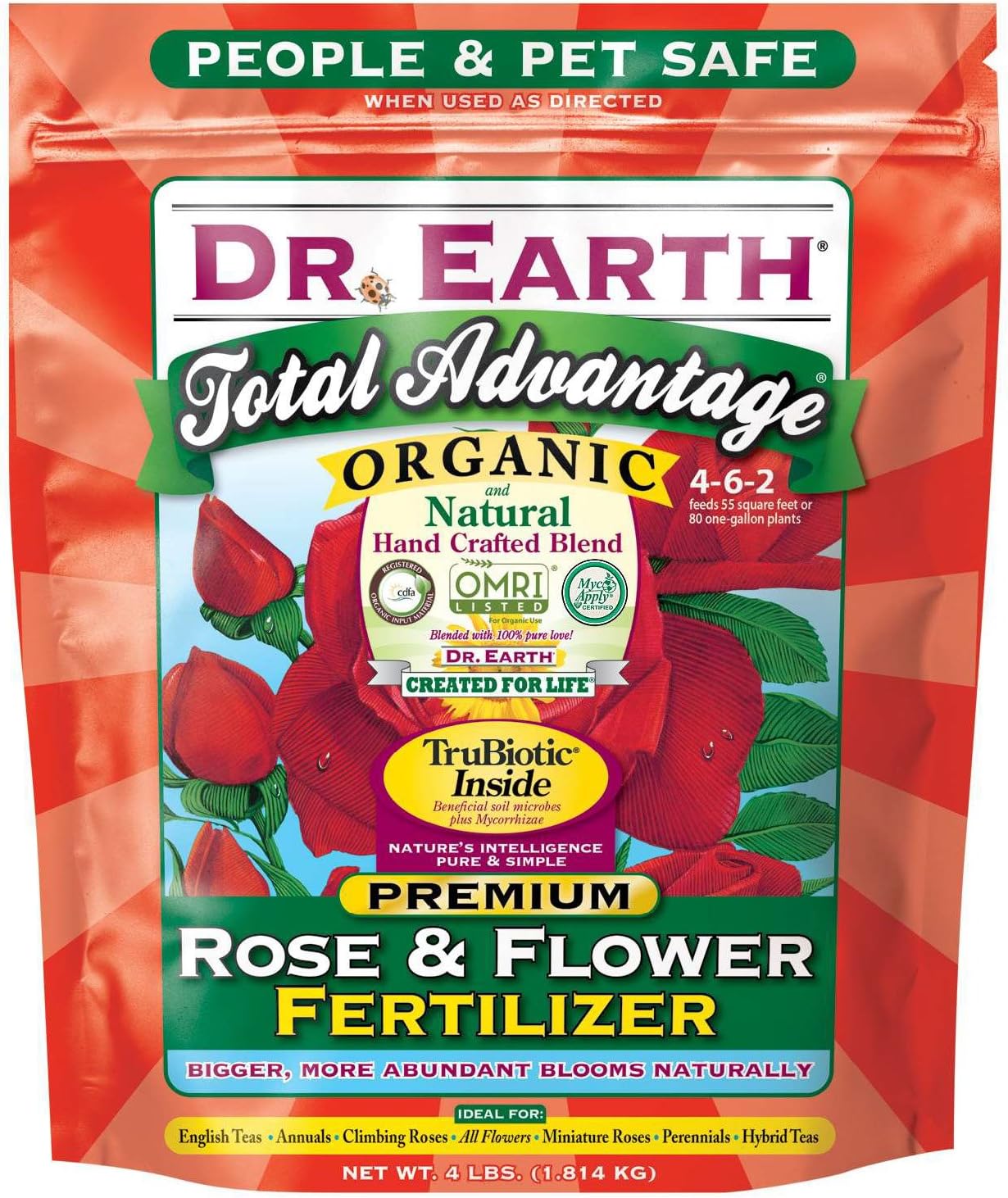
Dr. Earth Total Advantage Rose & Flower Fertilizer, 4 lb
| Item Form | Granules |
|---|---|
| Specific Uses For Product | Organic |
| Coverage | Medium |
| Target Species | flowers, roses, flowering trees, shrubs, annuals & perennials |
| Unit Count | 64 Ounce |
This Dr. Earth granular fertilizer is formulated specifically for roses and flowering plants and is intended to encourage larger, more frequent blooms by supplying a steady organic nutrient source. Typical use is sprinkling or incorporating into beds at planting, adding mid-season feeds, or using as a compost-tea drench or foliar spray; the product notes container feeding every six weeks. Notable features include an organic ingredient list with added humic acids, trace minerals and proteins, Non-GMO Project verification and multiple organic certifications that support clean, soil-building nutrition. Practically, it promotes healthier soil biology rather than quick synthetic feeding so results appear over weeks as plants respond with fuller growth and improved bloom set. Limitations are that it is not a fast-release synthetic fertilizer so gardeners seeking immediate, dramatic color boosts or rapid green-up will see slower changes, and application near water sources should be avoided to prevent runoff. Follow the package directions for timing and mixing ratios to get the intended steady feeding effect.
Best for: Roses and flower gardeners who prioritize organic, soil-building nutrition and steady bloom improvement over rapid synthetic results.
Less Ideal for: Gardeners who need quick, immediate feeding responses or instant visual changes after application should consider faster-acting alternatives.
- Formulated specifically for roses and flowering plants to promote bigger blooms
- Certified organic and Non-GMO Project verified for clean inputs
- Contains humic acids and trace minerals to support soil health and microbial activity
- Versatile application methods including broadcast, compost tea drench, foliar spray and container feeding
- Slow-release organic formula produces gradual results rather than immediate color or growth spikes
- Instructions caution against applying near water sources to avoid runoff
Verdict: Choose this product when you want a certified organic, soil-focused fertilizer built to improve rose blooms through steady, long-term nourishment.
Espoma Rose-tone Organic Rose and Flower Fertilizer, 4 lb

| Item Form | Granules |
|---|---|
| Specific Uses For Product | Gardening, Organic, Plant Food |
| Coverage | Medium |
| Target Species | Roses, Flowering Plants |
| Unit Count | 64 Ounce |
Espoma Rose-tone is an organic granular fertilizer formulated specifically for roses and other flowering ornamentals. It is applied around the plant drip line and watered in, and is intended for monthly use through the growing season to support leaf vigor and more prolific blooms. The 4-3-2 N-P-K formula with added calcium and Espoma’s Bio-tone mix uses natural ingredients and requires no mixing, so it is straightforward for routine maintenance feeding. Because it is an organic registered input, it fits gardeners who prefer natural fertility and steady nutrient release rather than fast-release synthetic boosts. Expect gradual improvements in color, flower set, and overall plant health over several weeks rather than instant greening. The product comes in a manageable 4 lb bag suited to medium coverage and is labeled for roses and other flowering shrubs. If you need a quick corrective for a specific deficiency or want a high-phosphorus bloom booster, this steady-release organic option may not replace targeted treatments.
Best for: Gardeners who prioritize organic, low-maintenance feeding schedules for roses and flowering shrubs and want a reliable monthly fertilizer during the growing season.
Less Ideal for: Growers who need fast-acting corrections, concentrated bloom boosters, or who manage very large rose plantings where bulk packaging would be more economical.
- Organic formulation approved for organic gardening
- Ready-to-use granular form requires no mixing and is easy to apply
- Balanced 4-3-2 N-P-K with added calcium supports foliage and bloom development
- Designed specifically for roses and other flowering plants
- Provides slow, steady nutrient release rather than rapid correction of deficiencies
- Sold in a single 4 lb bag which may be small for large rose gardens
Verdict: A dependable organic monthly fertilizer that steadily improves rose vigor and bloom production without mixing or synthetic inputs.
Burpee Organic Rose + Bloom Granular Plant Food, 4 lb

| Item Form | Granules |
|---|---|
| Specific Uses For Product | Plant Food |
| Coverage | 213 Square Feet |
| Target Species | roses and other flowering plants |
Burpee Organic Rose + Bloom is a granular organic fertilizer designed to support growth and floral production in roses and other flowering plants. You spread the fine granules around container plants, established beds, or individual bushes and water in; the formula delivers an initial flush of nutrients and slow-release feeding that can continue for up to three months. The package highlights included beneficial microbes to support root health and stronger blooms, and the coverage figure (about 213 sq ft) makes it straightforward to plan applications across a small garden. It is OMRI-listed so it fits into organic routines and the mixing ratio and application frequency (every two months during the growing season) are simple to follow. Expect healthier-looking plants and more consistent bloom cycles when used as directed, but note the 4 lb bag is aimed at small to medium plantings, so larger beds will require multiple bags. Also it is a granular-only product so it is not a quick foliar fix for nutrient-crisis situations.
Best for: Gardeners who want an affordable, certified organic granular fertilizer to support regular bloom production on roses and other flowering plants in small to medium beds or containers.
Less Ideal for: Large-scale rose plantings or landscapers who need bulk quantities or a fast-acting liquid fertilizer for急 recovery are better served by larger or different-format products.
- OMRI-listed organic formula suitable for organic rose care
- Fine granules are easy to spread in containers, beds, or around individual bushes
- Provides both immediate nutrients and slow-release feeding for up to three months
- Includes beneficial microbes to support root health and bloom production
- 4 lb bag provides limited coverage for larger gardens
- Not formulated for foliar feeding or instant corrective treatments
Verdict: A practical organic granular fertilizer that delivers immediate and slow-release nutrition to produce better blooms in small to medium rose plantings.
Espoma Organic Rose-Tone 4-3-2 Organic Fertilizer, 18 lb. Bag (2-Pack)

| Item Form | Granules |
|---|---|
| Specific Uses For Product | Organic Plant Food for flowers |
| Coverage | Medium |
| Target Species | roses |
| Mixing Ratio | 4-3-2 |
Espoma Rose-Tone is a ready-to-use granular organic fertilizer designed for roses and other flowering shrubs like viburnum. You apply it around the plant drip line and water in monthly during the growing season to encourage green growth and abundant blooms. The 4-3-2 N-P-K balance with added calcium and the company s Bio-tone blend provides gentle, slow-release nutrition suited to established shrubs and repeat feeding without mixing. Being an approved organic input makes it a dependable choice for gardeners who want predictable, soil-friendly feeding that supports long-term plant health. The product is medium coverage per bag and comes in a large unit suited to multiple plants or repeat monthly applications. It does not dissolve instantly like a liquid feed, so results build over weeks rather than days, and it requires correct placement and watering to be effective. For reliability-focused gardeners this fertilizer reduces guesswork by using a proven formula, but those needing rapid correction of severe deficiencies may prefer a soluble supplement.
Best for: Gardeners who prioritize consistent, low-risk feeding for flowering shrubs and want an organic, easy-to-apply fertilizer they can use monthly through the growing season.
Less Ideal for: Growers who need a fast corrective feed for acute nutrient deficiencies or who prefer liquid concentrates for quick uptake should consider alternative products.
- Organic formulation approved for organic gardening and soil-friendly feeding
- Balanced 4-3-2 N-P-K with added calcium supports flowering and overall plant vigor
- Ready-to-use granular form that requires no mixing and is easy to apply around the drip line
- Suitable for repeat monthly applications through the growing season for steady nutrition
- Slow-acting granular formula means results accumulate over weeks rather than delivering an immediate boost
- Coverage is described as medium so very large plantings may require multiple bags
Verdict: A reliable, organic granular fertilizer that delivers steady monthly nutrition to support flowering shrubs like viburnum and roses.
Jobe's Organics Granular Rose & Flower Fertilizer, 4 lb

| Item Form | Granules |
|---|---|
| Specific Uses For Product | Plant Growth,Root Development,Seed Developmen,tSoil Conditioning |
| Target Species | roses, hydrangeas, hibiscus, azaleas, and other flowering shrubs |
| Mixing Ratio | 3-5-3 |
| Unit Count | 64 Ounce |
This granular organic fertilizer is designed for roses, hydrangeas and other flowering shrubs and supplies balanced nutrients in a 3-5-3 NPK formula. It is OMRI listed so it can be used in organic gardens and is supplied as easy-to-scatter granules that you work into the soil or apply around the drip line every six weeks during the blooming season. Key ingredients listed include nitrogen, phosphate, potash and essential secondary nutrients like calcium and magnesium, which help blooms and overall plant vigor. The packaging size and medium coverage make it practical for small to medium beds or several container hydrangeas, and the granular form reduces mess and runoff compared with liquid feeds. Limitations are that the bag is only 4 pounds so larger hydrangea plantings will require frequent repurchase, and the fixed 3-5-3 ratio may not match specialty needs for acid-loving hydrangea color manipulation. Follow the product directions and wear gloves when handling.
Best for: Gardeners who want a straightforward, organically approved granular feed for hydrangeas and other flowering shrubs and prefer simple, scheduled applications during the bloom season.
Less Ideal for: Growers managing large beds or commercial plantings who need bulk fertilizer or gardeners seeking a product specifically formulated to alter hydrangea flower color.
- OMRI listed and suitable for certified organic gardening
- Balanced 3-5-3 NPK tailored to promote flowering and root development
- Granular form is easy to measure and apply with reduced runoff and mess
- Contains secondary nutrients like calcium and magnesium to support plant vigor
- 4 lb bag provides limited coverage for larger gardens
- Fixed NPK ratio limits flexibility for gardeners who need different nutrient balances
Verdict: A small, OMRI-listed granular fertilizer that reliably feeds hydrangeas and other flowering shrubs with a bloom-focused 3-5-3 formula for easy, organic seasonal applications.
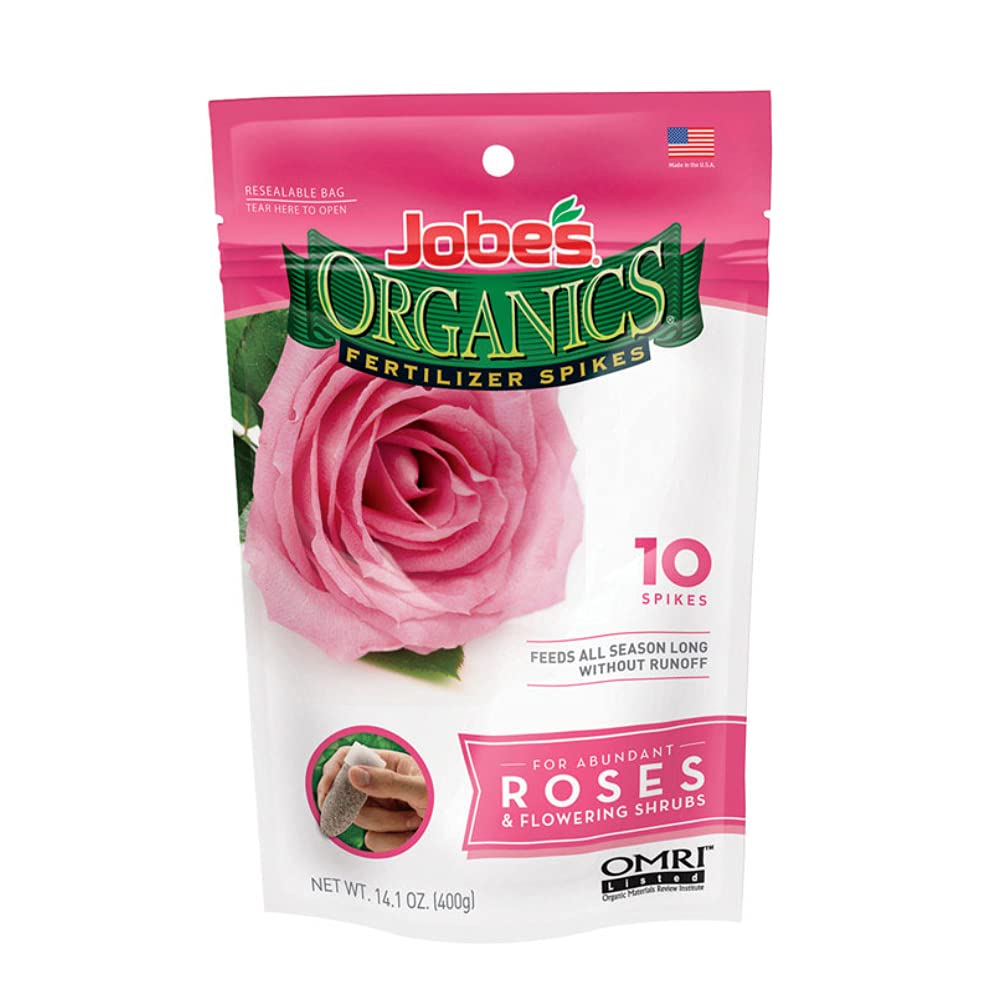
Jobes Organic Rose Fertilizer Spikes, 10 Pack
| Item Form | Sticks |
|---|---|
| Application Method | Insert into soil |
| Target Species | Roses and Flowering Shrubs |
| Unit Count | 10 Count |
| Mixing Ratio | 3-5-3 |
These Jobes organic fertilizer spikes are a low-effort way to feed roses and other flowering shrubs during the growing season. You push the premeasured sticks into the root zone and they release nutrients slowly, following a 3-5-3 NPK ratio intended for blooming plants. The stick format makes application fast and eliminates measuring or mixing liquid fertilizers, so they are convenient for regular upkeep and for gardeners who want a tidy, no-mess solution. The product is labeled organic and comes in a ten-count pack that covers a medium area, which suits small beds or a few Knock Out roses. Limitations to expect are coverage and frequency: spikes cover a moderate area so dense plantings will need multiple sticks, and larger shrubs may require repeat applications. The simple design also means there is no granular spreading option for broader lawns or beds.
Best for: Budget-minded gardeners who want a simple, low-effort way to feed a few Knock Out roses or other flowering shrubs without measuring or mixing fertilizers.
Less Ideal for: Those managing large rose borders, mass plantings, or lawns who need broad coverage or a product that can be broadcast over many plants.
- Premeasured spikes for easy, no-mess application
- Slow-release 3-5-3 formula targeted for blooms
- Organic formulation suitable for gardeners preferring organic inputs
- Ten spikes per pack works well for small beds or a few shrubs
- Medium coverage means multiple spikes required for larger or dense plantings
- Not suitable for treating large areas quickly since there is no broadcast option
Verdict: A simple, affordable organic spike fertilizer that takes the guesswork out of feeding a few Knock Out roses.
Choosing the Right Organic Fertilizer for Roses to Bloom: Key Factors to Consider
Nutrient Ratio Focused on Flowering
Roses need a balance of nitrogen, phosphorus, and potassium, but for better blooms the ratio often tilts toward phosphorus and potassium while keeping nitrogen moderate. Too much readily available nitrogen drives leafy growth at the expense of flowers. Slow-release nitrogen sources and steady phosphorus availability encourage bud formation without causing surges of soft tissue.
Look at guaranteed analysis numbers and the form of each nutrient. Organic fertilizers typically list plant-available phosphate as well as whole-food sources that mineralize over time. Understanding the ratio helps you match a product to whether you want more frequent light feeding or fewer, longer-lasting applications.
Release Rate and Feeding Schedule
How quickly nutrients become available determines both plant response and how often you need to apply fertilizer. Fast-release inputs can trigger a quick flush of growth and blooms, but that may be short-lived and require repeated feeding. Slow-release and microbially mediated fertilizers feed roses more consistently, supporting multiple flushes across the season.
Consider seasonal timing: early spring needs steady nitrogen for leaf-out, while pre-bloom and bloom periods benefit from bloom-promoting formulations. Match product release rates to your garden routine so you avoid overfeeding or nutrient gaps.
Soil Building and Microbial Support
Organic fertilizers often contribute organic matter and microbes that improve soil structure, water retention, and nutrient cycling. For long-term flowering success, products that feed soil life help roses access nutrients over successive seasons and reduce reliance on repeat feeding.
Prefer sources that list composted materials, humic substances, or beneficial microbes. These inputs help break down organic nutrients into plant-available forms and can improve root health, which is crucial for strong, repeat blooming in mature shrubs.
Salt Content and Root Safety
High soluble salt levels can damage tender feeder roots, especially in containers and compacted beds. Salt buildup reduces water uptake and stresses roses, which reduces bloom quality. Organic options tend to be lower in soluble salts, but formulations vary.
If you grow roses in containers or have sensitive soil, choose low-salt products and flush soil periodically with water to prevent accumulation. Monitoring plant response after application helps detect any root stress early.
Form and Application Method
Fertilizers come as granular top-dress, water-soluble concentrates, or slow-release spikes and stakes. Granular top-dress is easy for beds, while liquid feeds give quicker uptake and are useful for foliar or drench feeding during bloom. Spikes offer convenience but can supply uneven distribution if roots are not nearby.
Pick a form that matches how you care for roses. If you prefer seasonal top-dressing, a granular slow-release is practical. For targeted bloom boosts, a liquid feed timed before bud set can be effective.
Compatibility with Pruning and Pest Management
Feeding interacts with pruning and pest control. Heavy feeding immediately before a major pruning can encourage vigorous regrowth that requires additional shaping. Similarly, some organic amendments can temporarily change soil moisture or texture, which influences susceptibility to fungal problems.
Plan fertilizer timing around pruning and spray schedules. Choose products that do not interfere with pest management practices and that support resilient, well-structured growth rather than excessive softness that attracts pests.
When to Feed Roses for Best Blooming Results
Timing feeds to the rose growth cycle improves bloom quantity and quality. Start with a soil-rebuilding application in early spring as growth resumes, follow with a targeted feed before the first major bud set, and maintain light, steady feeding through the bloom season rather than heavy, infrequent doses.
Avoid high-nitrogen boosts late in the season, which can delay dormancy and make plants vulnerable to cold. For repeat-blooming varieties, lighter periodic applications help sustain multiple flushes without exhausting the plant.
- Early spring: soil amendment and slow-release feeding
- Pre-bloom: apply bloom-focused nutrients
- During bloom: lighter maintenance feeds every few weeks
- Late season: reduce feed to let plants harden off
Feeding Roses in Containers Vs In-Ground Beds
Container roses need more frequent attention because potting mix holds less nutrient and can leach quickly. Use lower-salt, water-soluble organics or frequent light top-dressings and monitor moisture and salt buildup. Flush containers periodically to prevent accumulation.
In-ground roses benefit more from soil-building inputs that improve long-term fertility. Granular or compost-based organics that slowly release nutrients and improve structure are often best for beds and long-term plant health.
- Containers: frequent light feeds, low-salt products, regular flushing
- Beds: emphasis on organic matter, deeper incorporation, less frequent feeding
Combining Organic Fertilizers with Mulch and Compost
Mulch and compost complement fertilizer by conserving moisture, moderating soil temperature, and slowly releasing nutrients. A layer of organic mulch helps maintain the conditions that beneficial microbes need to convert organic fertilizer into plant-available forms.
Apply compost or a light top-dressing of mulch after fertilizer to reduce surface runoff and improve nutrient retention. Avoid piling mulch directly against canes to prevent rot.
- Use compost to raise baseline fertility and soil life
- Mulch after applying granular supplements to lock in moisture
- Keep mulch away from the crown to prevent collar rot
How to Adjust Feeding for Different Rose Types
Hybrid teas and floribundas that are bred for large single blooms often respond to slightly higher phosphorus and potassium relative to nitrogen, which supports flower size and stem strength. Shrub and old garden roses tend to be less demanding and benefit more from soil-building feeds that maintain steady supply.
Repeat-blooming modern varieties need consistent, moderate feeding through the season, while once-blooming types get most benefit from a rich spring feeding and milder maintenance thereafter.
- Large-flower types: targeted bloom nutrients during bud set
- Shrub and heritage roses: focus on soil health and steady supply
- Repeat bloomers: regular maintenance feeding for multiple flushes
Common Application Mistakes and How to Avoid Them
Overapplication is a frequent error that leads to lush foliage but fewer blooms, or to root stress from salt buildup. Follow label rates or typical organic dosing guidelines and err on the side of lighter applications if you are unsure.
Applying at the wrong time, such as during extreme heat or immediately after pruning, can reduce effectiveness or stress plants. Water in granular applications when recommended to move nutrients into the root zone.
- Do not exceed recommended rates
- Avoid feeding during heat waves or drought stress
- Water when required to activate granular feeds
How We Chose the Best Organic Fertilizer for Roses to Bloom
We focused on attributes that actually affect flowering in roses rather than vague marketing claims. Selection prioritized nutrient ratios tailored to bloom promotion and the form of nitrogen and phosphorus, since gentle, plant-available forms encourage steady bud set without excess vegetative growth. Release behavior was key; slow-release and microbially mediated sources that feed over several weeks reduce flush-and-crash growth cycles. Soil-building benefits such as organic matter content and compatibility with beneficial microbes were included because healthy soil supports repeated bloom cycles. Application practicality mattered: granular, liquid, and top-dress formats were assessed for ease of use, dosing accuracy, and fit with common rose care routines. We also considered environmental impact, favoring low-salt, low-runoff options suitable for beds and containers. Products were excluded if they relied primarily on synthetic quick-release salts, lacked transparent ingredient information, or were formulated for general turf rather than flowering shrubs. The final list reflects options that balance bloom-focused nutrition, soil health, and gardener-friendly application. Scoring emphasized nutrient balance for flowering, release rate, soil benefits, ease of use, and environmental compatibility.
FAQ
How often should I feed roses with organic fertilizer?
It depends on the product form. Slow-release granular organics often feed for several weeks to months, so a spring application and a midseason top-up may suffice. Liquid organic feeds are usually applied every two to four weeks during active growth.
Can I use organic fertilizer on newly planted roses?
Yes, but use a lighter application at planting to avoid overwhelming young roots. Focus on soil improvement with compost and a gentle starter feed that encourages root establishment rather than heavy bloom stimulation.
Will organic fertilizers make my roses bloom faster?
Organic fertilizers provide steady, plant-available nutrients and improve soil biology, which supports regular flowering. They do not force an immediate bloom the way some high-salt quick-release products might, but they promote healthier, more sustained bloom cycles.
Are organic fertilizers safe for roses in containers?
Many organic options are suitable for containers, but choose low-salt, water-soluble or frequent light top-dress formulations. Monitor for salt buildup and flush containers occasionally to maintain healthy root function.
Can I combine organic fertilizer with foliar sprays?
Often yes. Foliar sprays can deliver quick nutrients or micronutrients, while soil-applied organics build longer-term fertility. Avoid applying foliar feeds during midday heat and check compatibility if using concentrated amendments.
Final Verdict
Choose an organic fertilizer that matches your rose type, planting situation, and preferred feeding rhythm. Prioritize bloom-focused nutrient balance and a release rate that fits your maintenance schedule. Also consider soil-building benefits and low salt content to protect roots and support repeat flowering. The right choice balances steady nutrition with improved soil life. Feed thoughtfully and time applications around pruning and bloom cycles to encourage fuller, longer-lasting displays of roses.
