

Note: This article contains affiliate links. If you click on these links and make a purchase, I may earn a small commission at no extra cost to you. This helps support my research and content. Read my full affiliate disclosure here.
Roses respond quickly to the right feeding plan, but the wrong fertilizer can burn roots or produce lush leaves with few flowers. You want a product that supplies the nutrients roses need for strong canes, abundant blooms, and disease resilience without creating maintenance headaches. This guide covers seven shortlisted plant growth fertilizers for roses chosen for real garden performance. We evaluated nutrient formulation, how the product behaves in soil or containers, ease of use, and seasonal feeding needs to help you pick the right option for your rose bed or patio containers.
Top Picks at a Glance
| Best Overall The best all-around choice for most situations | Miracle-Gro Shake 'N Feed Rose & Bloom Plant Food, 4.5 lb |  |
| Best Quality Built to a higher standard if you want something more solid | Espoma Rose-tone Organic Rose and Flower Fertilizer, 4 lb |  |
| Best Value The sweet spot between price and what you get | Jobe's Organics Granular Rose & Flower Fertilizer, 4 lb |  |
| Best Budget The cheapest option that still gets the job done reliably | Scotts Rose & Bloom Continuous Release Plant Food, 3 lb |  |
| Highest Rated A top-rated pick with lots of positive feedback | Miracle-Gro Water Soluble All Purpose Plant Food, 1.5 lb |  |
| Most Popular A crowd favorite that many people choose with confidence | BioAdvanced All-in-One Rose & Flower Care Granules, 64 oz |  |
| Best Seller A high-volume bestseller chosen again and again | Miracle-Gro Water Soluble All Purpose Plant Food, 5 lb |  |
Miracle-Gro Shake 'N Feed Rose & Bloom Plant Food, 4.5 lb

| Item Form | Granules |
|---|---|
| Specific Uses For Product | Plant Food |
| Coverage | 4.5 pounds |
| Target Species | roses and flowering plants |
Miracle-Gro Shake 'N Feed Rose & Bloom is a granular, slow‑release plant food designed to encourage bigger blooms and sustained flowering with minimal upkeep. You apply it by shaking the granules onto dry soil around the plant, working them in, and watering to start the release; one application is meant to feed for up to three months. The formula contains organic ingredients such as kelp, feather meal, bone meal, and earthworm castings that support soil microbes and root development, which can improve water efficiency and bloom production. For ranunculus growers seeking reliable bloom performance without frequent feedings, this product offers convenient, season‑long nutrition for both in‑ground beds and containers. Limitations to consider are that it is a general rose/flower formula rather than a ranunculus‑specific NPK balance and results will depend on proper soil preparation and watering; heavy feeders or growers wanting very precise nutrient ratios may prefer a specialty bulb or bloom booster fertilizer. Pack size and the granular format make it easy to apply to small beds but do require occasional incorporation into the topsoil.
Best for: Gardeners who prioritize reliable, low‑maintenance bloom feeding and want season‑long results with minimal reapplication for their flowering borders or containers.
Less Ideal for: Specialists who need a fertilizer matched precisely to ranunculus tuber requirements or growers who prefer water‑soluble feeds and exact NPK control.
- Slow‑release formula feeds up to three months from one application
- Contains natural, soil‑building ingredients that support microbes and root health
- Easy granular application for beds and containers
- Suitable for both in‑ground and container flowering plants
- Not formulated specifically for ranunculus so NPK is not tailored to bulb/tuber needs
- Granules must be worked into soil surface for best effect rather than delivered directly to the crown
Verdict: Provides convenient, long‑lasting nutrition to boost blooms with one easy granular application every three months.
Espoma Rose-tone Organic Rose and Flower Fertilizer, 4 lb

| Item Form | Granules |
|---|---|
| Specific Uses For Product | Gardening, Organic, Plant Food |
| Coverage | Medium |
| Target Species | Roses, Flowering Plants |
| Unit Count | 64 Ounce |
Espoma Rose-tone is an organic granular fertilizer formulated specifically for roses and other flowering ornamentals. It is applied around the plant drip line and watered in, and is intended for monthly use through the growing season to support leaf vigor and more prolific blooms. The 4-3-2 N-P-K formula with added calcium and Espoma’s Bio-tone mix uses natural ingredients and requires no mixing, so it is straightforward for routine maintenance feeding. Because it is an organic registered input, it fits gardeners who prefer natural fertility and steady nutrient release rather than fast-release synthetic boosts. Expect gradual improvements in color, flower set, and overall plant health over several weeks rather than instant greening. The product comes in a manageable 4 lb bag suited to medium coverage and is labeled for roses and other flowering shrubs. If you need a quick corrective for a specific deficiency or want a high-phosphorus bloom booster, this steady-release organic option may not replace targeted treatments.
Best for: Gardeners who prioritize organic, low-maintenance feeding schedules for roses and flowering shrubs and want a reliable monthly fertilizer during the growing season.
Less Ideal for: Growers who need fast-acting corrections, concentrated bloom boosters, or who manage very large rose plantings where bulk packaging would be more economical.
- Organic formulation approved for organic gardening
- Ready-to-use granular form requires no mixing and is easy to apply
- Balanced 4-3-2 N-P-K with added calcium supports foliage and bloom development
- Designed specifically for roses and other flowering plants
- Provides slow, steady nutrient release rather than rapid correction of deficiencies
- Sold in a single 4 lb bag which may be small for large rose gardens
Verdict: A dependable organic monthly fertilizer that steadily improves rose vigor and bloom production without mixing or synthetic inputs.
Jobe's Organics Granular Rose & Flower Fertilizer, 4 lb

| Item Form | Granules |
|---|---|
| Specific Uses For Product | Plant Growth,Root Development,Seed Developmen,tSoil Conditioning |
| Target Species | roses, hydrangeas, hibiscus, azaleas, and other flowering shrubs |
| Mixing Ratio | 3-5-3 |
| Unit Count | 64 Ounce |
This granular organic fertilizer is designed for roses, hydrangeas and other flowering shrubs and supplies balanced nutrients in a 3-5-3 NPK formula. It is OMRI listed so it can be used in organic gardens and is supplied as easy-to-scatter granules that you work into the soil or apply around the drip line every six weeks during the blooming season. Key ingredients listed include nitrogen, phosphate, potash and essential secondary nutrients like calcium and magnesium, which help blooms and overall plant vigor. The packaging size and medium coverage make it practical for small to medium beds or several container hydrangeas, and the granular form reduces mess and runoff compared with liquid feeds. Limitations are that the bag is only 4 pounds so larger hydrangea plantings will require frequent repurchase, and the fixed 3-5-3 ratio may not match specialty needs for acid-loving hydrangea color manipulation. Follow the product directions and wear gloves when handling.
Best for: Gardeners who want a straightforward, organically approved granular feed for hydrangeas and other flowering shrubs and prefer simple, scheduled applications during the bloom season.
Less Ideal for: Growers managing large beds or commercial plantings who need bulk fertilizer or gardeners seeking a product specifically formulated to alter hydrangea flower color.
- OMRI listed and suitable for certified organic gardening
- Balanced 3-5-3 NPK tailored to promote flowering and root development
- Granular form is easy to measure and apply with reduced runoff and mess
- Contains secondary nutrients like calcium and magnesium to support plant vigor
- 4 lb bag provides limited coverage for larger gardens
- Fixed NPK ratio limits flexibility for gardeners who need different nutrient balances
Verdict: A small, OMRI-listed granular fertilizer that reliably feeds hydrangeas and other flowering shrubs with a bloom-focused 3-5-3 formula for easy, organic seasonal applications.
Scotts Rose & Bloom Continuous Release Plant Food, 3 lb

| Item Form | Granules |
|---|---|
| Coverage | Medium |
| Target Species | Roses, annuals, perennials |
| Mixing Ratio | 12-4-8 |
| Unit Count | 48 Ounce |
This Scotts Rose & Bloom formula is a simple, no-frills granular fertilizer made to encourage flowering on roses, annuals and perennials. You apply it directly to soil, lightly rake it into the top 1–3 inches, water in, and it releases nutrients steadily for about two months. The N-P-K analysis (12-4-8) and emphasis on phosphorus means it favors bloom production over leafy growth, so it is useful during the flowering season. Its strengths are ease of use and predictable, slow feeding that reduces how often you need to treat beds. Because it is a granular continuous-release product, results appear over weeks rather than instantly like a liquid feed. Users should follow label rates to avoid overapplication and wear gloves to avoid skin or eye contact. For gardeners wanting a budget-friendly, low-maintenance way to increase bloom set, this product delivers reliable performance, but those who need rapid corrective feeding or precise soluble nutrition may prefer a water-soluble alternative.
Best for: Gardeners who want an affordable, low-maintenance fertilizer to increase flowering with fewer applications during the growing season.
Less Ideal for: Growers who need fast-acting, soluble feeds for quick correction or precise nutrient control should consider a water-soluble fertilizer instead.
- Continuous-release granules feed plants for up to two months, cutting application frequency
- Formulated to promote blooms on roses, annuals and perennials
- Easy application: sprinkle, rake into topsoil and water in
- Widely suitable for outdoor beds and containers when used as directed
- Not water-soluble so it does not provide an immediate nutrient boost
- Contains chemicals that require safe handling and temporary area reentry restrictions
Verdict: A budget-friendly, easy-to-use continuous-release fertilizer that reliably boosts blooms with only occasional applications.
Miracle-Gro Water Soluble All Purpose Plant Food, 1.5 lb

| Item Form | Powder |
|---|---|
| Application Method | Watering Can |
| Target Species | For all flowers, vegetables, trees, shrubs and houseplants |
| Mixing Ratio | 24-8-16 |
Miracle-Gro Water Soluble All Purpose Plant Food is a powder concentrate you mix with water to give a quick nutrient boost to flowers, vegetables, houseplants, shrubs and trees. It is typically dissolved in a watering can or used with a compatible garden feeder to soak soil at the base of plants, delivering nitrogen-heavy nutrition that shows effects faster than granular fertilizers. Notable features include an easy scooping method for indoor and outdoor dosing, compatibility with containers and in-ground planting, and clear directions for feeding every one to two weeks. In practice this makes the product a convenient option when you want visible growth and greener foliage quickly, and the 1.5 lb container covers roughly 600 sq. ft. Important limitations are that it is a fast-release, high-nitrogen formula best used as a regular quick feed rather than a long-term slow-release solution, and it requires careful measuring to avoid overfeeding. For routine maintenance combine with good watering and follow the label to avoid nutrient imbalance.
Best for: Buyers who prefer proven, easy-to-use feeding routines and want noticeable growth quickly for a variety of garden and houseplants, guided by established usage directions and broad user experience.
Less Ideal for: Gardeners seeking a single, long-term slow-release solution or those who prefer organic or low-nitrogen fertilizers for sensitive plantings should consider alternative products.
- Water-soluble powder starts working quickly at the roots when mixed and applied
- Clear, simple dosing for indoor and outdoor use with included scoop guidance
- Suitable for a wide range of plants including vegetables, flowers, shrubs and houseplants
- Covers a large area from a small container (about 600 sq. ft. per 1.5 lb)
- Fast-release formula means benefits are short-term compared with slow-release granular fertilizers
- Requires precise measuring and regular reapplication to avoid overfeeding
Verdict: A reliable, fast-acting water-soluble plant food for gardeners who want easy, repeatable feeding and quick visible results.
BioAdvanced All-in-One Rose & Flower Care Granules, 64 oz

| Unit Count | 64 Ounce |
|---|---|
| Item Form | Granules |
| Target Species | Insects |
| Specification Met | EPA |
BioAdvanced All-in-One Rose & Flower Care is a granular, three-in-one product that combines fertilizer, insect control, and fungicide into a single application for roses and other flowering shrubs. You apply the granules around the base of the plant, pulling back mulch first, and the systemic formula is taken up by roots so no spraying is required and protection remains effective through rain for up to six weeks. Notable features include a balanced N-P-K analysis and active ingredients (acephate and tebuconazole) that target common pests like aphids and leafhoppers while reducing fungal issues such as black spot and powdery mildew. For a gardener seeking convenience, this simplifies routine rose care by reducing separate feeding and spray steps and helps maintain stronger roots and better blooms. The main limitations are that it contains conventional active ingredients that some gardeners may wish to avoid and it is formulated for listed pests and diseases rather than every possible problem, so you should follow label directions and local regulations when using it.
Best for: Gardeners who want a straightforward, low-effort way to feed roses and reduce common insect and fungal problems with a single seasonal application.
Less Ideal for: People who prioritize organic or all-natural products or who need treatments for pests or diseases not listed on the label.
- Combines fertilizer, insect control, and disease control in one granular application
- Systemic, rainproof formula provides protection for up to six weeks
- Easy to apply around the plant base with no spraying required
- Targets common rose pests and diseases, helping improve blooms and plant health
- Contains conventional pesticides and fungicides that may not suit organic gardeners
- Protection covers only listed pests and diseases and requires correct placement and timing
Verdict: Choose this product when you want a convenient single-product solution to feed roses and provide multiweek, rainproof insect and disease protection.
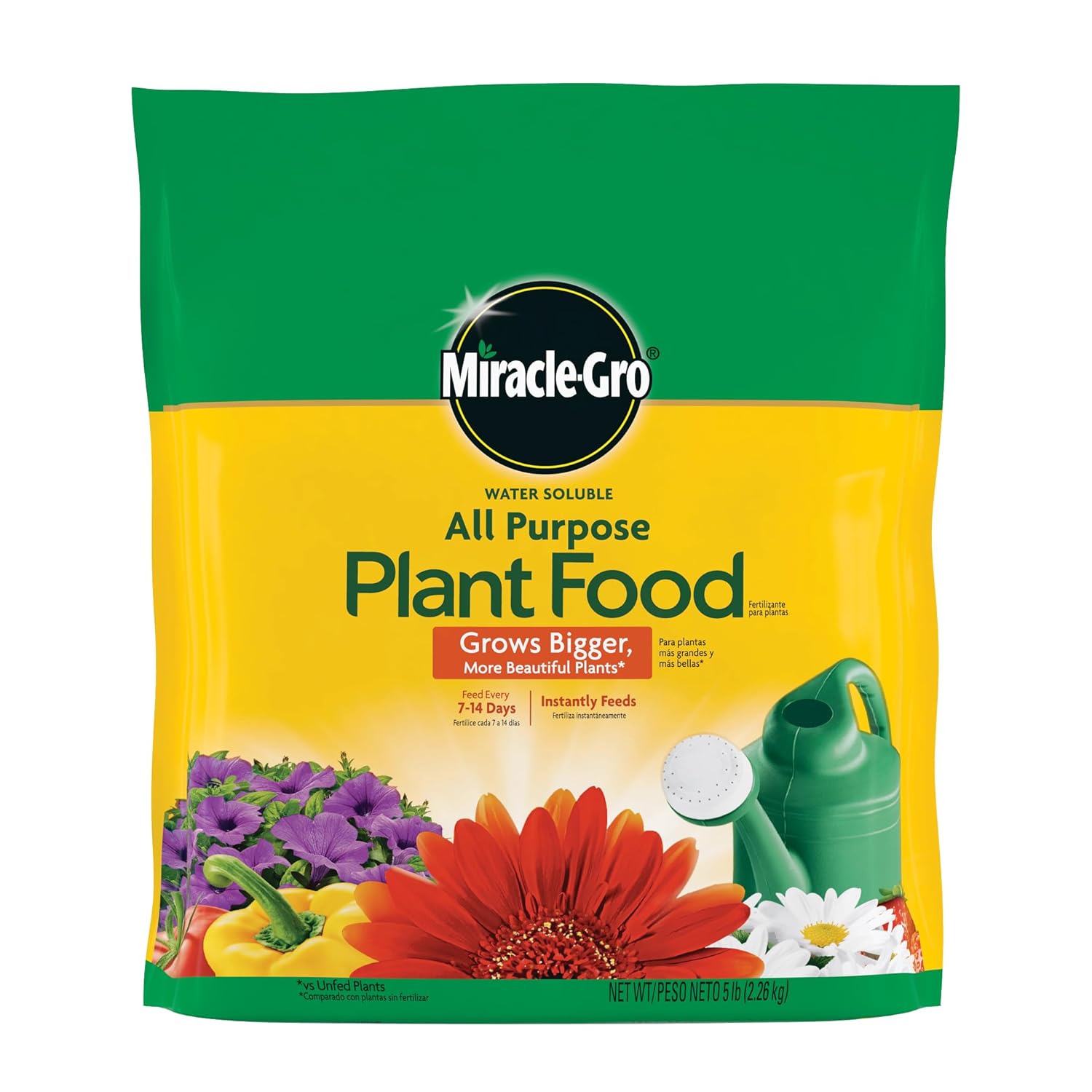
Miracle-Gro Water Soluble All Purpose Plant Food, 5 lb
| Item Form | Powder |
|---|---|
| Application Method | watering can |
| Target Species | all plants |
| Mixing Ratio | 24-8-16 |
| Unit Count | 80 Ounce |
This water-soluble Miracle-Gro formula is designed to give vegetables, flowers and houseplants a quick nutrient boost by dissolving in water and delivering NPK 24-8-16 straight to the root zone. It is typically mixed into a watering can or a garden feeder and applied every 7 to 14 days for outdoor vegetables or every 14 days for indoor plants. The powder format dissolves easily and starts working quickly, which is useful during the active growing season when leafy growth and fruit set matter. A single 5 lb bag covers a large area and the included scoop makes measuring straightforward. Important limitations: because it is a high-nitrogen, fast-release feed it favors quick growth and may need to be balanced with lower-nitrogen or bloom-focused fertilizers if you want more flowers or fruit quality over sheer foliage. Also it requires regular reapplication rather than providing long-term slow release, so plan for repeated treatments during the season.
Best for: Gardeners who want a reliable, quick-acting fertilizer to promote vigorous vegetable growth and who prefer products with broad use and strong customer acceptance.
Less Ideal for: Growers seeking a single application, slow-release fertilizer or those prioritizing low-nitrogen or specialty bloom/fruit formulas for flavor and flowering control.
- Fast-acting water-soluble formula that delivers nutrients quickly to roots
- All-purpose NPK 24-8-16 suitable for a wide range of vegetables and other plants
- Includes a scoop for easy measuring and mixing with a watering can or feeder
- One 5 lb bag feeds a large garden area, reducing the need for frequent purchases
- High-nitrogen formula is not a long-term slow-release feed and requires repeated applications
Verdict: A fast-acting, all-purpose water-soluble fertilizer that reliably boosts vegetable growth when applied regularly.
Choosing the Right Plant Growth Fertilizer for Roses: Key Factors to Consider
Nutrient Ratio and Bloom Focus
Roses need a balance of nitrogen, phosphorus, and potassium that supports both healthy foliage and flowering. Excessive nitrogen encourages leafy growth at the expense of blooms, while too little phosphorus can limit bud set and flower size. Look for formulations described for flowering shrubs or roses, and check the N-P-K numbers to ensure they match a bloom-focused feeding schedule.
Micronutrients such as iron, magnesium, and manganese matter too; deficiencies can cause chlorosis or weak stems that increase disease susceptibility. A fertilizer that includes trace elements or can be paired with a soil amendment to correct deficiencies will give more consistent results across different garden soils.
Release Type and Feeding Frequency
Controlled-release granules, water-soluble blends, and organic slow-release materials feed plants differently and fit different maintenance styles. Fast-release, water-soluble fertilizers give quick visible results and are useful during active bloom, but they require more frequent applications and careful measuring to avoid burn. Granular controlled-release options reduce the number of feedings and are convenient for large beds.
Organic slow-release materials improve soil biology over time and lower the risk of overfeeding, but they act more slowly and may not correct deficiencies quickly. Match release type to your gardening rhythm and how closely you will monitor plants during the season.
Soil and Container Compatibility
Soils vary in pH, organic matter, and drainage, and containers impose different constraints than in-ground beds. Some fertilizers work well in heavy clay or alkaline soils, while others are formulated for acidic mixes. If you grow roses in containers, you need lower salt-load formulations and more frequent light feedings because potting media hold fewer nutrients and salts build up faster.
Consider whether the product is safe to use with common soil amendments like compost, lime, or sulfur, and whether it can be applied without disturbing shallow root systems.
Salt Load and Root Safety
High-salt fertilizers can damage rose roots, especially in dry soils or containers where salts concentrate. Salt build-up causes tip burn, poor water uptake, and stress that invites pests and disease. Products with low water-soluble salt indexes or organic humate-based carriers reduce that risk.
Pay attention to label guidance on watering after application and recommended maximum application rates. If you irrigate infrequently or your soil has poor drainage, choose a gentler formula to protect roots and limit the need for leaching.
Ease of Application and Dosing Clarity
Clear instructions and simple dosing make it more likely you will feed roses correctly. Look for products with straightforward schedules for spring, summer, and fall, clear mixing ratios for foliar and soil feeds, and measurement cues that match common tools such as tablespoons or ounces per gallon.
Packaging that measures a single season dose or comes with a scoop reduces errors. Also consider whether the fertilizer can be applied with common garden sprayers, sprinklers, or as top-dress without intensive prep work.
Long-Term Soil Health and Organic Compatibility
Some fertilizers prioritize immediate bloom response while others help build soil structure and microbial life over multiple seasons. If you practice composting or want to reduce synthetic inputs, choose products compatible with organic amendments and that do not inhibit beneficial soil organisms.
Long-term soil health reduces dependence on frequent feeding and improves drought tolerance and disease resistance in roses. Consider how a fertilizer fits into your overall soil management plan, including compost, mulch, and winter care.
When to Feed Roses During the Season
Timing feeds to the rose growth cycle gets better results than random applications. Start with a gentle feeding at bud break to support new cane growth, then switch to a bloom-focused schedule as buds form. Reduce or stop heavy feeding later in the season to allow plants to harden off ahead of winter.
For container roses, maintain lighter, more frequent feedings because nutrients leach with regular watering. For in-ground beds, a combination of a slow-release granular product in spring followed by targeted soluble feeds during bloom gives steady performance without overloading the soil.
- Early spring: low to moderate nitrogen to encourage canes
- Pre-bloom: increase phosphorus for bud set
- Peak bloom: regular low-dose feeds to sustain flowers
- Late season: taper feeding to prepare for dormancy
Application Methods: Granules, Liquids, and Foliar Sprays
Granular products are convenient for bed applications and provide steady nutrient release; they are ideal for gardeners who prefer fewer visits to the rose bed. Water-soluble liquids act fast and are useful for correcting deficiencies or when an immediate bloom boost is desired. Foliar sprays can deliver micronutrients quickly during stress periods but are not a substitute for root feeding.
Choose a method that fits your watering routine and garden layout. For large informal beds, granules reduce chores. For patio growers with limited space, liquid concentrates measured by cup or tablespoon let you dial in doses precisely.
- Granules: slower, lower-maintenance feeding
- Liquid concentrates: fast response, precise control
- Foliar sprays: targeted micronutrient rescue
Feeding Roses in Containers Versus In-Ground
Containers dry and leach nutrients faster than in-ground planting. Use lower-salt, frequent liquid feeds for pots and consider periodic flushing of the potting mix to avoid salt accumulation. Container roses also benefit from regular root inspections and repotting schedules to refresh media.
In-ground roses tolerate less frequent feeding and can benefit from annual soil amendments like compost or well-rotted manure combined with a season-long fertilizer strategy. Soil testing helps tailor the program if growth is slow or leaves show nutrient deficiency symptoms.
- Containers: lighter, more frequent feeding and occasional flushing
- In-ground: annual soil amendment and fewer targeted feedings
- Soil test: confirms nutrient and pH needs before long-term changes
Combining Fertilizers with Compost and Mulch
Mulch and compost improve moisture retention and feed soil life, which enhances how roses take up fertilizer. Apply fertilizer according to label instructions and keep it clear of direct stem contact to avoid burn. Top-dressing with compost in spring can reduce the synthetic fertilizer load while providing steady nutrients.
If you use a slow-release organic-based product, you can often reduce the amount of supplemental synthetic fertilizer. Conversely, high-performance bloom boosters used with rich compost can push flowering but require careful timing to avoid over-stimulating growth late in the season.
- Apply fertilizers away from stems and water in
- Use compost to build long-term fertility and reduce feed frequency
- Adjust synthetic inputs when heavy organic amendments are present
Interpreting Labels and Nutrient Analysis
N-P-K numbers tell you the percentage of primary nutrients, but labels also list micronutrients and directions for different rose types. Read application rates for both beds and containers and note any warnings about salt-sensitive varieties. When directions are ambiguous, default to conservative, lower application rates.
Manufacturers often provide feeding schedules for different bloom stages. Use those schedules as a baseline but adapt based on plant response and local growing conditions such as rainfall, soil type, and sunlight.
- Check N-P-K and listed micronutrients
- Follow container versus in-ground instructions separately
- Start conservative if label guidance is unclear
How We Chose the Best Plant Growth Fertilizer for Roses
Our selection focused on products that meet gardeners' real-world needs for growing healthy, floriferous roses. We prioritized balanced nutrient profiles formulated for roses, including appropriate nitrogen, phosphorus, and potassium ratios plus micronutrients that support bloom set and cane vigor. Application method and dosing clarity were essential because correct feeding frequency prevents burn and runoff. We also evaluated how fertilizers interact with common garden soils and potting mixes, including soluble release behavior and whether the product is compatible with organic soil-building practices. Long-term soil impact and salt load were considered to avoid products that require extensive leaching or flushes. Ease of sourcing common formulations and straightforward label instructions were used to screen out unclear or overly complex options. Exclusions: we excluded specialty products designed only for greenhouse production or professional nursery systems, and any fertilizers lacking clear nutrient analysis or application rates. The result is a practical shortlist matched to backyard, suburban, and container rose gardeners.
FAQ
How often should I feed roses with a soluble fertilizer?
Often every two to four weeks during the active growing and bloom season is common, but it depends on the product concentration. Follow label directions and start conservatively, increasing frequency only if plants show strong uptake and no burn.
Can I use the same fertilizer on knockout roses and old garden roses?
Usually yes, but older garden varieties and repeat-blooming modern types may have slightly different needs. Use a balanced bloom-focused formula and adjust application rate or frequency based on vigor and flowering performance.
Will feeding more fertilizer increase the number of blooms?
More fertilizer can increase bloom production up to a point, but excess nutrients, especially nitrogen, can produce lush foliage at the expense of flowers. Balanced feeding timed to the bud set phase is more effective than simply increasing quantity.
Is foliar feeding useful for roses?
Foliar feeding can quickly correct micronutrient deficiencies and help during short-term stress, but it should complement rather than replace soil feeding. Use foliar sprays for targeted fixes and follow label safety precautions for dilution and timing.
How do I avoid fertilizer burn on roses?
Avoid applying concentrated feeds to dry soil and do not exceed recommended rates. Water in granular products after application and, for liquid concentrates, always follow dilution instructions. Choosing lower-salt formulations reduces burn risk, especially in containers.
Should I change my feeding plan in hot or dry weather?
Yes. In hot, dry conditions reduce concentration and increase frequency with lighter feeds to prevent stress. Ensure regular watering so roses can take up nutrients and avoid applying heavy doses during heatwaves.
Final Verdict
Prioritize nutrient balance, release type, and soil compatibility when choosing a plant growth fertilizer for roses. Decide first whether you prefer fewer season-long applications with controlled-release granules or faster control with soluble liquids, and factor container needs and salt sensitivity into your choice. Focus on clear dosing guidance and products that fit your season schedule. Matching fertilizer behavior to your soil and maintenance style will give the best combination of bigger blooms, healthier canes, and lower long-term maintenance.
