

Note: This article contains affiliate links. If you click on these links and make a purchase, I may earn a small commission at no extra cost to you. This helps support my research and content. Read my full affiliate disclosure here.
Late blight can wipe out foliage and tubers in a single season, so picking the right fungicide matters for home gardens and small holdings. You need a product that controls active infections, fits your spraying routine, and leaves enough residual protection to cover vulnerable growth stages. This guide looks at five shortlisted fungicides for potato blight chosen for their modes of action, ease of application, and residual performance. We evaluate realistic gardener concerns like how to apply treatments, safety around edible crops, and how often repeat sprays are necessary. Read on for practical guidance to match a product to your disease pressure and cropping schedule.
Top Picks at a Glance
| Best Quality Built to a higher standard if you want something more solid | Bonide Revitalize Biofungicide Concentrate, 16 oz |  |
| Best Budget The cheapest option that still gets the job done reliably | Bonide Fung-onil Multi-Purpose Fungicide Ready-to-Use Spray, 32 oz |  |
| Highest Rated A top-rated pick with lots of positive feedback | Reliant Systemic Fungicide, 1 gallon |  |
| Most Popular A crowd favorite that many people choose with confidence | Bonide Captain Jack Copper Fungicide 16 oz Concentrate |  |
| Best Seller A high-volume bestseller chosen again and again | Bonide Captain Jack's Liquid Copper Fungicide Ready-to-Use, 32 oz |  |
Bonide Revitalize Biofungicide Concentrate, 16 oz
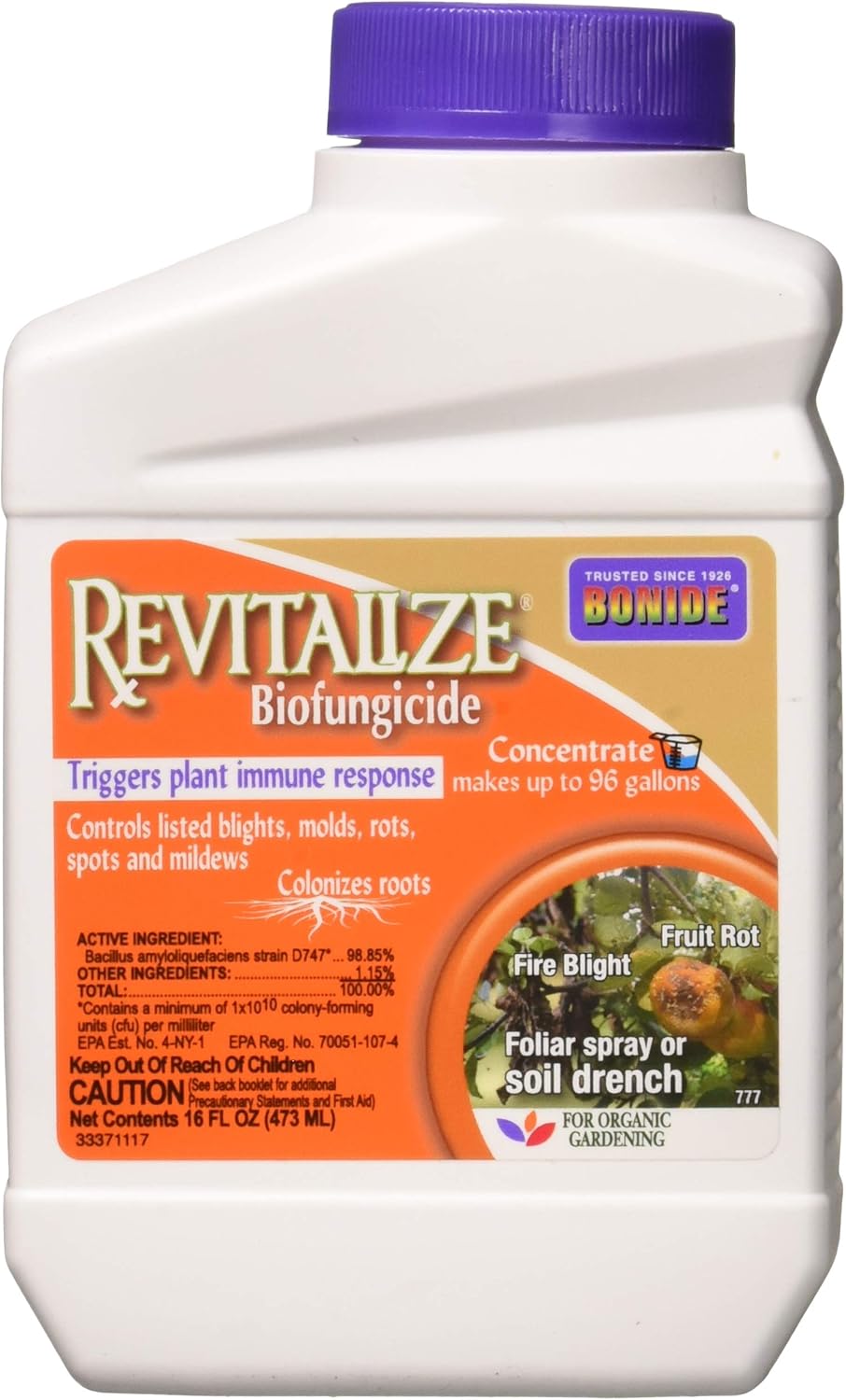
| Unit Count | 16 Ounce |
|---|---|
| Item Form | Spray |
| Target Species | Disease |
| Liquid Volume | 16 fluid ounces |
Bonide Revitalize is a microbial biofungicide concentrate formulated around Bacillus amyloliquefaciens to control and prevent fungal diseases across vegetables, fruit, ornamentals and houseplants. You mix the 16 oz concentrate with water (makes about 24 gallons when mixed as directed) and apply as a foliar spray or soil drench using a hand pump sprayer or other spray equipment. Its main strength is disease prevention and broad-spectrum control of problems such as blight, powdery mildew, spots and rots by stimulating the plant’s natural defenses rather than relying on synthetic chemistry. Because it is approved for organic gardening it can be used up to harvest on edible crops, which is useful when managing late blight on potatoes where repeated applications may be needed. Limitations include the need for repeated, correctly timed applications for disease suppression and reliance on good coverage since it works through biological activity rather than fast knockdown. For growers focused on long-term disease management and organic-compliant programs, Revitalize is a practical tool to add to a blight prevention plan.
Best for: Gardeners and small-scale growers who prioritize effective, organic-compliant disease management and want a preventative biological tool they can use on potatoes and other edible crops.
Less Ideal for: People who need fast-acting chemical curatives for an active, severe outbreak or who prefer a single-application contact fungicide should consider alternative products.
- Contains Bacillus amyloliquefaciens strain approved for organic use
- Can be applied as foliar spray or soil drench for top-to-bottom protection
- Concentrated 16 oz bottle mixes to approximately 24 gallons for many treatments
- Suitable for use on edible crops up to the day of harvest
- Requires repeated, properly timed applications for effective disease suppression
- Works by stimulating plant defenses so it is not an immediate knockdown treatment
Verdict: Use Bonide Revitalize when you want an organic, preventive biofungicide to include in a potato blight management program.
Bonide Fung-onil Multi-Purpose Fungicide Ready-to-Use Spray, 32 oz

| Unit Count | 32 Ounce |
|---|---|
| Item Form | Spray |
| Target Species | Fungicide |
| Active Ingredients | Chlorothalonil |
Bonide Fung-onil Ready-to-Use is a broad-spectrum garden fungicide packaged in a 32 ounce trigger-spray bottle for easy, direct application. It uses chlorothalonil to manage leaf spot, rust, blight, mildew, scab and other listed fungal problems and can be applied to vegetables, fruits, flowers, shrubs and trees. Typical use is shaking the bottle, then thoroughly spraying both tops and undersides of leaves at the first sign of disease and repeating every 7 to 14 days as directed. The ready-to-use format eliminates measuring and mixing, which saves time for casual gardeners and those treating small beds or container groups. Because it is a conventional chemical fungicide it gives reliable, preventive disease control when used as directed, but users must follow safety guidance on the label and avoid application to plants or areas not listed. The product is straightforward to use and convenient for routine garden maintenance, though gardeners seeking organic or completely nonchemical options should consider alternatives.
Best for: Gardeners who want an affordable, no-fuss fungicide for routine prevention and control of common fungal diseases across a variety of plants and prefer a product that is ready to spray.
Less Ideal for: People committed to organic gardening or those who avoid synthetic pesticides should choose an organic-certified or cultural control method instead.
- Ready-to-use trigger bottle requires no mixing or measuring
- Broad-spectrum active ingredient (chlorothalonil) controls many common fungal diseases
- Suitable for a wide range of plants including vegetables, fruits, ornamentals, shrubs and trees
- Clear repeat-application guidance (every 7 to 14 days) for preventive treatment
- Contains a conventional chemical active ingredient that is not organic
- Requires careful adherence to label safety directions and application limits
Verdict: A convenient, budget-friendly ready-to-use fungicide that delivers broad-spectrum control for common garden fungal diseases.
Reliant Systemic Fungicide, 1 gallon

| Item Form | liquid |
|---|---|
| Target Species | Fungus |
| Liquid Volume | 1 gallons |
| Active Ingredients | Mono- and di-potassium salts of Phophorous Acid 45.8% |
Reliant Systemic Fungicide is a 1-gallon liquid concentrate based on mono- and di-potassium salts of phosphorous acid that is designed to control diseases such as Phytophthora, pythium, apple scab and other pathogens while eliciting a systemic acquired resistance response in treated plants. It can be applied multiple ways — foliar spray, soil drench, basal bark spray, irrigation drip tape, root dip or direct injection — which makes it adaptable for field or home-plot use against blights and root diseases. The product is labeled for use on more than 140 plant types and is intended to both suppress active infections and help plants recover faster. Practical benefits include flexible application options for different planting systems and a systemic mode of action that reaches roots and foliage. Important limitations are that it requires careful following of application rates and labeled crops, and it does not replace good cultural practices like crop rotation and sanitation when managing potato blight on a large scale.
Best for: Growers who prioritize consistent disease suppression and want a versatile systemic fungicide they can use across multiple crops and application systems.
Less Ideal for: Casual gardeners who prefer ready-to-use trigger-spray products or those unwilling to follow specific labeled application procedures.
- Systemic active ingredient that moves in plant tissue to protect roots and foliage
- Multiple application methods including foliar, soil drench, drip tape and root dip
- Cleared for use on over 140 plant types, offering broad crop compatibility
- Formulated to elicit systemic acquired resistance to help plants recover faster
- Requires strict adherence to label directions for rates and crop use
- Not a standalone solution for severe outbreaks where integrated measures are needed
Verdict: A versatile systemic fungicide that gives reliable, plant-wide protection and recovery support for managing blight and other fungal diseases.
Bonide Captain Jack Copper Fungicide 16 oz Concentrate

| Unit Count | 16 Ounce |
|---|---|
| Item Form | Liquid |
| Target Species | Fungus |
| Active Ingredients | Copper Octanoate (Copper Soap) |
Bonide Captain Jack Copper Fungicide is a liquid concentrate designed to prevent and treat a broad range of fungal diseases on vegetables, fruits, ornamentals, and turf. Mixed with water per label directions, it is sprayed onto plant surfaces, including tops and undersides of leaves, and can be applied up to the day of harvest, which makes it practical for food crops like tomatoes. The active ingredient copper octanoate provides contact protection against powdery mildew, blight, black spot, rust, peach leaf curl and similar diseases. Application is straightforward and repeatable every 7 to 10 days as needed, and the product is cleared for use in organic gardening. Limitations to consider are that copper is a contact fungicide so it does not systemically move through the plant and works best as a preventative or early-treatment tool rather than curing severe systemic infections. Users should follow safety directions and avoid overuse to reduce copper buildup in soil.
Best for: Gardeners looking for a performance-focused, organic-approved fungicide to include in a preventative disease program for tomatoes and other edibles.
Less Ideal for: Growers seeking a systemic treatment for already advanced internal infections or those who prefer non-copper chemistries to avoid soil accumulation.
- Approved for organic gardening and can be used up to the day of harvest
- Controls a wide range of common diseases affecting tomatoes such as blight and powdery mildew
- Concentrated liquid formula mixes with water for spray application
- Repeatable 7–10 day application schedule makes preventative programs easy to maintain
- Acts as a contact fungicide and does not move systemically within the plant
- Repeated use can contribute to copper accumulation in soil if not managed
Verdict: Use this organic-approved copper concentrate when you want an effective, easy-to-apply preventative spray to protect tomatoes from common fungal diseases.
Bonide Captain Jack's Liquid Copper Fungicide Ready-to-Use, 32 oz

| Unit Count | 32 Ounce |
|---|---|
| Item Form | Spray |
| Active Ingredients | copper |
Bonide Captain Jack’s Liquid Copper Fungicide is a trigger-spray, ready-to-use copper solution designed to prevent and treat common fungal diseases on fruits, vegetables, nuts, herbs and ornamentals. It is applied by shaking the bottle and thoroughly spraying tops and undersides of leaves, with repeat applications every 7 to 10 days or as needed. The product is labeled for organic gardening and can be used up to the day of harvest, making it practical for vegetable beds and fruit trees where residue concerns matter. Notable features include its broad-spectrum activity against powdery mildew, leaf spot, blight and peach leaf curl, and the convenience of a pre-mixed spray bottle that removes measuring or mixing. Limitations are inherent to copper products: it treats fungal problems but does not replace cultural controls like good airflow and sanitation, and overuse of copper can accumulate in soil so following label directions is important. As a ready-to-use option, it is best for gardeners who want a simple, approved solution for recurring fungal issues without handling concentrates.
Best for: Gardeners who prioritize proven, labeled products and want an easy-to-use organic-approved fungicide for edible beds and ornamentals based on real-world effectiveness and peer recommendations.
Less Ideal for: Gardeners seeking an all-in-one pest control product or those who prefer to avoid any copper-based treatments should look at non-copper alternatives or integrated disease-management approaches.
- Ready-to-use trigger spray requires no mixing or measuring
- Approved for organic gardening and can be applied up to day of harvest
- Effective against a broad range of common fungal diseases
- Convenient repeat-application interval (7–10 days) for ongoing control
- Contains copper which can build up in soil with excessive use
- Does not address non-fungal problems like insects or bacterial diseases
Verdict: A convenient, ready-to-use copper fungicide for gardeners who want an effective organic-approved spray to manage common fungal diseases.
Choosing the Right Fungicide for Potato Blight: Key Factors to Consider
Mode of Action and Resistance Management
Potato blight is caused by a fast-evolving pathogen, so the fungicide's biochemical mode of action matters. Products that act on different biochemical targets help reduce the chance the pathogen becomes resistant when used over multiple seasons.
Rotate or tank-mix fungicides with different modes of action according to label guidance. Relying repeatedly on a single-site chemistry increases resistance risk and can make future control much harder. Consider products labeled for resistance management and follow recommended application intervals to maintain efficacy.
Residual Protection and Reapplication Interval
Residual protection describes how long a spray continues to prevent infection after application. Under cool, wet conditions that favor blight, longer residual activity reduces spray frequency and the risk of missed coverage.
Check the stated reapplication interval and look for products that remain effective through typical rainy periods. Short-residual materials can still work if you can reliably reapply on schedule, but frequent sprays are more labor intensive and increase the chance of gaps in protection.
Application Method and Equipment Compatibility
How a fungicide is applied affects effectiveness and convenience. Most home gardeners use handheld or backpack sprayers, so products that mix cleanly, do not clog nozzles, and are labeled for common sprayer types are easier to use.
Consider whether the product is a soluble powder, suspension concentrate, or oil-based formulation. Each behaves differently in mixing, drift, and coverage. Read label directions on spray volume per area and nozzle recommendations to ensure even coverage of the potato canopy.
Safety, Pre-Harvest Interval, and Worker Protection
Safety guidance on the product label determines whether the fungicide is appropriate for edible crops like potatoes. Pre-harvest interval tells you how many days to wait between the last application and tuber harvest to ensure residues are within allowed limits.
Also review personal protective equipment recommendations, re-entry intervals for people entering treated areas, and environmental precautions. For home gardeners, choose products whose safety instructions you can practically follow to protect household members and pollinators.
Rainfastness and Weather Sensitivity
Rain shortly after spraying can wash off contact fungicides, reducing control. Rainfastness is how long a spray needs to dry or be absorbed before rainfall will not remove it.
If your region has frequent showers, favor products with proven rainfast characteristics or systemic activity that penetrates foliage. Timing sprays to avoid imminent rain and using adjuvants only where label permits can improve performance during unsettled weather.
Spectrum Against Different Blight Stages
Different fungicide chemistries may be more effective at preventing infection or suppressing established lesions. Products vary in whether they are best used as protectants applied before spores land or as curatives that halt early infections.
Understand whether you need a protectant, a curative, or a program that combines both approaches. For high disease pressure, integrated programs that alternate products with different strengths give broader seasonal control.
When to Start Spraying
Begin protective sprays when weather conditions favor blight: prolonged leaf wetness, cool nights, and temperatures in the typical range for late blight development. Also start when nearby outbreaks are reported or when your seed potatoes or seedlings show any early symptoms.
Early-season applications protect young foliage and reduce the inoculum load later in the season. In high-risk seasons plan a preventive schedule rather than waiting for visible lesions, because blight can progress very quickly once it appears.
- Monitor weather forecasts for extended periods of leaf wetness.
- Inspect lower foliage regularly for water-soaked spots or rapid collapse.
- Begin applications before the canopy closes and humidity stays high.
Spray Timing and Coverage Tips
Even coverage of the entire canopy is crucial because blight spores land and infect lower leaves first. Use a spray volume and nozzle that produce good leaf wetting without excessive drift. Angle sprays to reach undersides of leaves and the inner canopy.
Follow label instructions for spray intervals and avoid cutting rates. Under heavy pressure shorten intervals as directed by the label rather than increasing dose per spray.
- Use a fine to medium spray for canopy penetration, not a mist that drifts away.
- Check sprayer calibration and clean filters and nozzles between tank mixes.
Integrating Cultural Controls
Fungicides work best as part of an integrated program. Improve air movement by proper plant spacing, remove volunteer potatoes and cull infected foliage promptly, and plant certified seed when possible. Good sanitation reduces inoculum and lowers the number of sprays needed.
Mulch and hilling practices affect tuber exposure; keep tuber-forming areas covered and avoid practices that splash soil onto foliage. Combining cultural measures with an appropriate spray schedule reduces overall disease risk and helps preserve fungicide effectiveness.
- Remove and destroy heavily infected plants rather than composting them in place.
- Rotate crops to reduce pathogen carryover in the soil and surrounding debris.
Mixing and Tank-Mix Considerations
Always follow label directions when mixing products. Some fungicides are not physically compatible with certain adjuvants or other pesticides and may separate, form precipitates, or reduce efficacy.
If planning to rotate or tank-mix chemistries for resistance management, consult labels for compatibility and avoid unauthorized mixtures. Prepare a small jar test before full-tank mixing if compatibility information is unclear.
- Add products to the spray tank in the order recommended on the label.
- Rinse sprayer thoroughly between different chemistries to avoid cross-contamination.
Managing Resistance Over Multiple Seasons
Develop a multi-year plan that alternates fungicide classes and uses nonchemical controls to reduce selection pressure. Track which chemistries you apply each season and avoid overusing single-site actives.
When disease pressure is very high, combine protectant sprays with systemic materials according to label guidance rather than relying solely on one product. Long-term stewardship extends the useful life of effective fungicides.
- Keep records of spray dates, products used, and observed efficacy.
- Consult regional extension resources for alerts about resistant blight strains.
How We Chose the Best Fungicide for Potato Blight
Our selection prioritized fungicides that address the specific biology of potato blight and that are usable by backyard and small-scale growers. We filtered candidates by mode of action to avoid single-site reliance and to support resistance management. Application method and ease were important because many home gardeners mix and spray themselves; products with clear labeling for foliar application on potatoes scored higher. Residual activity and reapplication interval were assessed to reflect real-season coverage needs during wet, cool periods when blight spreads rapidly. Safety on edible tubers, pre-harvest intervals, and label restrictions for potatoes were mandatory filters; any product lacking clear potato-use directions was excluded. Lastly, the practicality of mixing, required spray volume, and compatibility with common spray equipment influenced inclusion. We excluded broad-spectrum fungicides without demonstrated efficacy against the late blight pathogen and products whose labels do not permit use on potatoes.
FAQ
How often do I need to spray to protect potatoes from late blight?
Spray frequency depends on product residual length and weather. Under cool, wet conditions you may need sprays every 5 to 10 days for short-residual protectants; longer-residual materials and systemic products can extend intervals as allowed on the label.
Can I apply fungicides after I see blight on leaves?
Some fungicides have curative activity and can limit lesion expansion if applied early, but late blight spreads rapidly. Apply curatives as soon as you detect symptoms and combine with sanitation; however, preventive timing gives the most reliable control.
Are there safety steps for using fungicides on edible potatoes?
Yes. Always follow the product label for pre-harvest interval, protective equipment, and re-entry intervals. Washing hands and keeping children and pets out of treated areas until the spray dries are basic precautions.
Will rain wash off my spray and make it useless?
Rain can reduce the effectiveness of contact fungicides if it occurs soon after application. Choose products with better rainfastness or systemic uptake when frequent rain is likely, and time sprays to avoid imminent heavy showers.
Can I tank-mix fungicides to save time?
Tank-mixing is possible but only when the labels list compatibility. Some combinations reduce efficacy or create phytotoxic mixes. Do a jar test or follow manufacturer guidance and rinse equipment thoroughly between different chemistries.
Final Verdict
Pick a fungicide program that matches your local disease pressure, spray capacity, and willingness to follow label safety and timing. Prioritize modes of action that support resistance management and choose products with the residual protection you need for your climate. Combine fungicides with cultural practices like good spacing, sanitation, and certified seed to reduce spray needs and maintain long-term control. With a planned program that balances protectant and curative tools, you can reduce blight risk and protect tuber yield.
