

Note: This article contains affiliate links. If you click on these links and make a purchase, I may earn a small commission at no extra cost to you. This helps support my research and content. Read my full affiliate disclosure here.
If red tip photinia in your landscape is showing leaf spots, dark lesions, or thinning new growth, selecting the right fungicide and application approach matters. The wrong treatment can stress already weakened shrubs or fail to reach infection sites on dense hedges. This guide shortlists seven fungicide options suited for managing common fungal issues on Red Tip Photinia and explains how each type performs in real garden conditions. We evaluate practical factors such as coverage and disease spectrum, safety for new growth and nearby plants, and ease of application. Read on for clear decision points to match a product and routine to your planting situation.
Top Picks at a Glance
| Best Overall The best all-around choice for most situations | Gardentech Daconil Fungicide Concentrate, 16 fl oz |  |
| Best Quality Built to a higher standard if you want something more solid | Quali-Pro Propiconazole 14.4 Fungicide, 32 oz |  |
| Best Value The sweet spot between price and what you get | BioAdvanced 3-in-1 Insect, Disease & Mite Control Concentrate, 32 oz |  |
| Best Budget The cheapest option that still gets the job done reliably | Bonide Fung-onil Multi-Purpose Fungicide Ready-to-Use Spray, 32 oz |  |
| Highest Rated A top-rated pick with lots of positive feedback | Monterey Fungi-Max Systemic Fungicide, 16 fl oz |  |
| Most Popular A crowd favorite that many people choose with confidence | Bonide Captain Jack Copper Fungicide 16 oz Concentrate |  |
| Best Seller A high-volume bestseller chosen again and again | Bonide Captain Jack's Liquid Copper Fungicide Ready-to-Use, 32 oz |  |
Gardentech Daconil Fungicide Concentrate, 16 fl oz

| Unit Count | 16 Fluid Ounces |
|---|---|
| Item Form | Liquid |
| Target Species | Insects |
| Active Ingredients | Chlorothalonil |
Daconil Fungicide Concentrate is a chlorothalonil-based liquid concentrate formulated to prevent and control more than 65 fungal diseases such as leaf spots, rusts, blights, fruit rot and mildew on flowers, vegetables, shrubs and shade trees. You mix the measured amount in a hand-held, hose-end or tank sprayer and apply a fine spray to thoroughly wet upper and lower leaf surfaces; the product is rain-proof once dry and can be used as both a curative at first sign of disease and a preventative treatment. Notable features include an easy measuring cap, broad-spectrum disease coverage, and label directions for use on a variety of plant types. Important limitations are that it is for outdoor residential use only, is not labeled for home lawns or many public turf sites, and requires careful protective gear and handling because it can irritate eyes and skin and is harmful if inhaled or swallowed. Follow label dilution rates and pre-harvest intervals for edible crops, avoid application in heat or stress conditions, and keep people and pets off treated areas until dry.
Best for: Gardeners who prioritize reliable, preventative disease control for outdoor ornamentals and edible plants and who follow label safety instructions and protective practices.
Less Ideal for: People who need a fungicide for home lawns, high-contact public turf, or who cannot use products that require respirators and protective clothing.
- Broad-spectrum control of over 65 common foliar diseases including blights, rusts and mildew
- Concentrated formula works with hand-held, hose-end or tank sprayers for flexible application
- Measuring cap and clear label directions simplify mixing and dosing
- Rain-proof protection once spray has dried for reliable residual control
- Contains chlorothalonil which requires protective equipment and careful handling due to irritation and toxicity risks
- Not labeled for lawns or many public turf and high-contact sites
Verdict: Choose this concentrate when you want a proven, broad-spectrum fungicide for dependable outdoor disease prevention and control.
Quali-Pro Propiconazole 14.4 Fungicide, 32 oz

| Unit Count | 32 Fluid Ounces |
|---|---|
| Item Type Name | Fungicide |
| Item Form | Oil |
| Target Species | Fungus |
| Special Features | organic |
This 32-ounce Propiconazole 14.4 product from Quali-Pro is a concentrated fungicide designed for broad-spectrum control of common turf and ornamental diseases. It is a microemulsion formulation that mixes into spray tanks with less odor and improved stability, and its locally systemic activity helps protect treated tissue and reduce reinfection. Typical use is as a preventive or curative spray on lawns, including St. Augustine grass, and on nursery or landscape plants; it is also labeled for trees and golf course turf. Notable strengths are the long-lasting activity against issues like brown patch, gray leaf spot, dollar spot and powdery mildew and the ability to tank-mix with many other fungicides. Limitations are that it is a professional-strength active ingredient requiring careful measurement and adherence to label restrictions, and it does not replace integrated cultural practices like proper mowing and irrigation. Users should follow application rates and safety precautions to avoid phytotoxicity and off-target exposure.
Best for: Homeowners or grounds managers who want a reliable, professional-strength fungicide to manage recurring fungal diseases on St. Augustine turf and surrounding ornamentals and who are comfortable following label directions.
Less Ideal for: Casual gardeners unwilling to follow precise application instructions or those seeking an organic-only option should consider gentler or cultural approaches instead.
- Broad-spectrum control of common turf diseases affecting warm-season grasses
- Microemulsion formula for improved tank stability and lower odor during mixing
- Locally systemic mode of action for longer residual control on treated tissue
- Compatible as a tank-mix partner with many other fungicides for flexible programs
- Contains a potent active ingredient that requires strict adherence to label directions and PPE
- Not a standalone solution for disease prevention because cultural practices are still required
Verdict: A concentrated, long‑lasting propiconazole fungicide that gives dependable control of the major fungal problems on St. Augustine grass when used according to label directions.
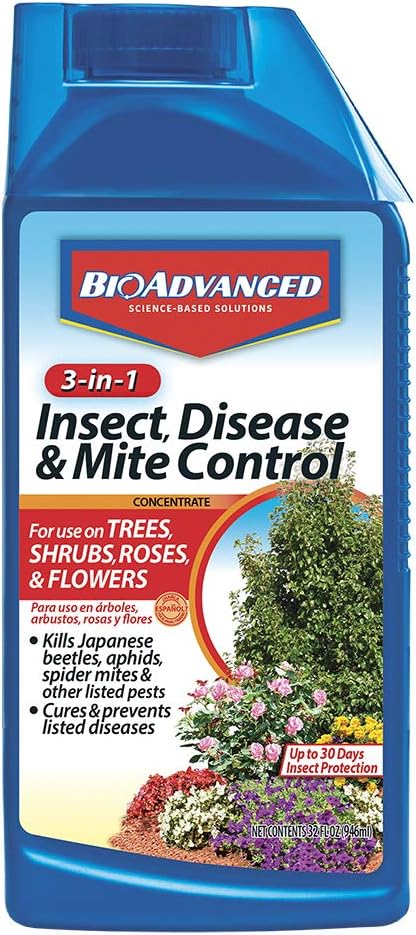
BioAdvanced 3-in-1 Insect, Disease & Mite Control Concentrate, 32 oz
| Unit Count | 32 Fluid Ounces |
|---|---|
| Item Type Name | Concentrate |
| Liquid Volume | 32 fluid ounces |
| Active Ingredients | Imidacloprid, Tau-fluvalinate, Tebuconazole |
| Specification Met | EPA |
This BioAdvanced concentrate is designed as an all-purpose plant treatment that kills listed insects on contact, controls common fungal diseases, and suppresses spider mites in one product. You mix the concentrate with water to make spray solution (it yields up to about 12 gallons), then apply to roses, flowers, shrubs, trees, and other ornamentals. Key active ingredients—imidacloprid, tau-fluvalinate, and tebuconazole—deliver systemic, rainproof protection that the label says can last up to 30 days. For mite control specifically, the miticide component gives both suppression and residual activity, so it is useful for follow-up sprays during an outbreak. Practical benefits include fewer separate products to buy and the convenience of treating multiple problems with one application. Important limitations are regulatory restrictions that make it unavailable in several states and the need to follow label safety precautions because it contains systemic insecticide active ingredients that can affect non-target insects if misused.
Best for: Gardeners who want a single, practical product to manage insect pests, fungal diseases, and spider mites on roses and ornamentals and who prefer a preventive residual treatment.
Less Ideal for: Organic gardeners or those managing pollinator-attractive plantings who avoid systemic insecticides should choose non-systemic or organic miticide and fungicide options instead.
- Combines insecticide, fungicide, and miticide in one concentrate for fewer products to store and apply
- Systemic formulation with rainproof protection that can last up to 30 days after application
- Makes up to 12 gallons of spray from a 32 fl oz bottle, suitable for treating multiple plants or repeat applications
- Active ingredients target a broad list of pests including aphids, spider mites, Japanese beetles and common foliar diseases
- Not available for sale in several U.S. states, limiting where it can be used
- Contains systemic insecticides that require careful adherence to label directions to avoid harming beneficial insects
Verdict: If you want one dependable product to both kill spider mites and prevent common foliar diseases across roses and ornamentals, this 3-in-1 concentrate simplifies treatment with a month-long systemic residual.
Bonide Fung-onil Multi-Purpose Fungicide Ready-to-Use Spray, 32 oz

| Unit Count | 32 Ounce |
|---|---|
| Item Form | Spray |
| Target Species | Fungicide |
| Active Ingredients | Chlorothalonil |
Bonide Fung-onil Ready-to-Use is a broad-spectrum garden fungicide packaged in a 32 ounce trigger-spray bottle for easy, direct application. It uses chlorothalonil to manage leaf spot, rust, blight, mildew, scab and other listed fungal problems and can be applied to vegetables, fruits, flowers, shrubs and trees. Typical use is shaking the bottle, then thoroughly spraying both tops and undersides of leaves at the first sign of disease and repeating every 7 to 14 days as directed. The ready-to-use format eliminates measuring and mixing, which saves time for casual gardeners and those treating small beds or container groups. Because it is a conventional chemical fungicide it gives reliable, preventive disease control when used as directed, but users must follow safety guidance on the label and avoid application to plants or areas not listed. The product is straightforward to use and convenient for routine garden maintenance, though gardeners seeking organic or completely nonchemical options should consider alternatives.
Best for: Gardeners who want an affordable, no-fuss fungicide for routine prevention and control of common fungal diseases across a variety of plants and prefer a product that is ready to spray.
Less Ideal for: People committed to organic gardening or those who avoid synthetic pesticides should choose an organic-certified or cultural control method instead.
- Ready-to-use trigger bottle requires no mixing or measuring
- Broad-spectrum active ingredient (chlorothalonil) controls many common fungal diseases
- Suitable for a wide range of plants including vegetables, fruits, ornamentals, shrubs and trees
- Clear repeat-application guidance (every 7 to 14 days) for preventive treatment
- Contains a conventional chemical active ingredient that is not organic
- Requires careful adherence to label safety directions and application limits
Verdict: A convenient, budget-friendly ready-to-use fungicide that delivers broad-spectrum control for common garden fungal diseases.
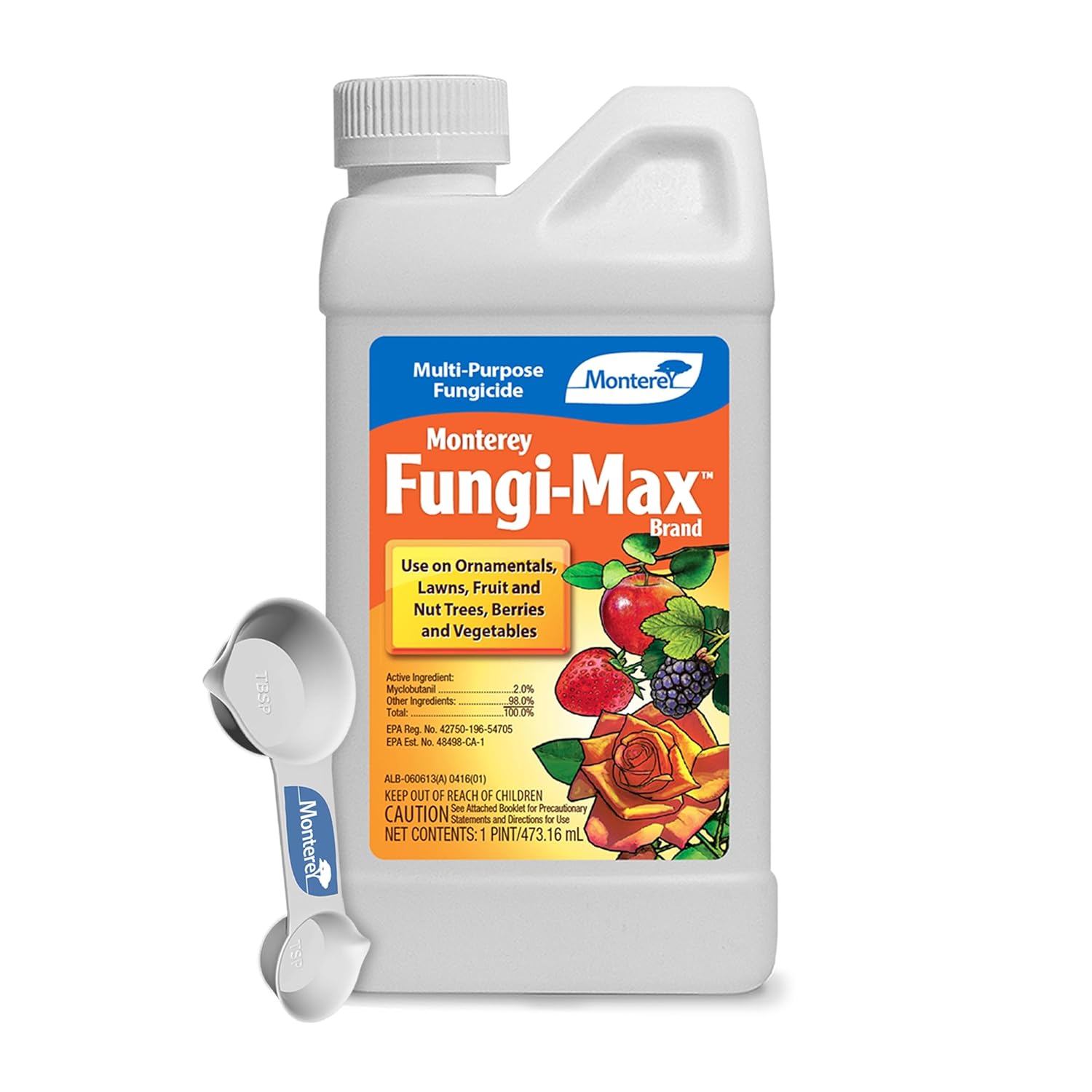
Monterey Fungi-Max Systemic Fungicide, 16 fl oz
| Item Form | Liquid |
|---|---|
| Application Method | Spray |
| Coverage | Wide range of plants and plant types |
| Target Species | Flowers, Vegetables, Trees, Lawn Grass |
| Liquid Volume | 16 fluid ounces |
Monterey Fungi-Max is a concentrated liquid fungicide formulated for home garden and landscape use to prevent and control common fungal diseases. You mix the product with water and apply it with a spray tank or pump sprayer; it works systemically so the active ingredient moves into plant tissue to protect leaves, stems, and roots. The label cites control for problems like powdery mildew, rust, leaf spots, crown rot, and several turf diseases, and the manufacturer says one application can protect plants for up to two weeks. Because it covers flowers, shrubs, fruit and nut trees, vegetables, and lawns, it is useful for mixed gardens where multiple plant types need disease management. Practical benefits include broad-spectrum disease coverage, systemic action that reaches new growth, and straightforward dilution and spray application. Important limitations are the need to follow label directions carefully for timing and mixing, potential incompatibility with certain sprayers or tank mixes, and the fact that repeat applications may be required for ongoing pressure or severe outbreaks.
Best for: Home gardeners and property owners who prioritize dependable, proactive disease control across mixed plantings and want a product that reaches plant tissue rather than only contact protection.
Less Ideal for: Organic gardeners or those seeking a contact-only, ready-to-use spray should consider alternatives designed for certified organic use or simpler ready-mix formulations.
- Systemic action that protects new growth after application
- Broad listed coverage for ornamentals, vegetables, fruit trees and turf
- Suitable for spray-tank or pump-sprayer application for yard-scale use
- One application offers up to two weeks of protection under normal conditions
- Not an organic or OMRI-listed product, so not suited for certified organic production
- Requires careful dilution and label reading to avoid misuse
Verdict: Choose Monterey Fungi-Max when you need a reliable, systemic fungicide that provides broad disease protection across a diverse home garden.
Bonide Captain Jack Copper Fungicide 16 oz Concentrate

| Unit Count | 16 Ounce |
|---|---|
| Item Form | Liquid |
| Target Species | Fungus |
| Active Ingredients | Copper Octanoate (Copper Soap) |
Bonide Captain Jack Copper Fungicide is a liquid concentrate designed to prevent and treat a broad range of fungal diseases on vegetables, fruits, ornamentals, and turf. Mixed with water per label directions, it is sprayed onto plant surfaces, including tops and undersides of leaves, and can be applied up to the day of harvest, which makes it practical for food crops like tomatoes. The active ingredient copper octanoate provides contact protection against powdery mildew, blight, black spot, rust, peach leaf curl and similar diseases. Application is straightforward and repeatable every 7 to 10 days as needed, and the product is cleared for use in organic gardening. Limitations to consider are that copper is a contact fungicide so it does not systemically move through the plant and works best as a preventative or early-treatment tool rather than curing severe systemic infections. Users should follow safety directions and avoid overuse to reduce copper buildup in soil.
Best for: Gardeners looking for a performance-focused, organic-approved fungicide to include in a preventative disease program for tomatoes and other edibles.
Less Ideal for: Growers seeking a systemic treatment for already advanced internal infections or those who prefer non-copper chemistries to avoid soil accumulation.
- Approved for organic gardening and can be used up to the day of harvest
- Controls a wide range of common diseases affecting tomatoes such as blight and powdery mildew
- Concentrated liquid formula mixes with water for spray application
- Repeatable 7–10 day application schedule makes preventative programs easy to maintain
- Acts as a contact fungicide and does not move systemically within the plant
- Repeated use can contribute to copper accumulation in soil if not managed
Verdict: Use this organic-approved copper concentrate when you want an effective, easy-to-apply preventative spray to protect tomatoes from common fungal diseases.
Bonide Captain Jack's Liquid Copper Fungicide Ready-to-Use, 32 oz

| Unit Count | 32 Ounce |
|---|---|
| Item Form | Spray |
| Active Ingredients | copper |
Bonide Captain Jack’s Liquid Copper Fungicide is a trigger-spray, ready-to-use copper solution designed to prevent and treat common fungal diseases on fruits, vegetables, nuts, herbs and ornamentals. It is applied by shaking the bottle and thoroughly spraying tops and undersides of leaves, with repeat applications every 7 to 10 days or as needed. The product is labeled for organic gardening and can be used up to the day of harvest, making it practical for vegetable beds and fruit trees where residue concerns matter. Notable features include its broad-spectrum activity against powdery mildew, leaf spot, blight and peach leaf curl, and the convenience of a pre-mixed spray bottle that removes measuring or mixing. Limitations are inherent to copper products: it treats fungal problems but does not replace cultural controls like good airflow and sanitation, and overuse of copper can accumulate in soil so following label directions is important. As a ready-to-use option, it is best for gardeners who want a simple, approved solution for recurring fungal issues without handling concentrates.
Best for: Gardeners who prioritize proven, labeled products and want an easy-to-use organic-approved fungicide for edible beds and ornamentals based on real-world effectiveness and peer recommendations.
Less Ideal for: Gardeners seeking an all-in-one pest control product or those who prefer to avoid any copper-based treatments should look at non-copper alternatives or integrated disease-management approaches.
- Ready-to-use trigger spray requires no mixing or measuring
- Approved for organic gardening and can be applied up to day of harvest
- Effective against a broad range of common fungal diseases
- Convenient repeat-application interval (7–10 days) for ongoing control
- Contains copper which can build up in soil with excessive use
- Does not address non-fungal problems like insects or bacterial diseases
Verdict: A convenient, ready-to-use copper fungicide for gardeners who want an effective organic-approved spray to manage common fungal diseases.
Choosing the Right Fungicide for Red Tip Photinia: Key Factors to Consider
Disease Spectrum
Know which pathogens are active on Red Tip Photinia in your area and season. Some fungicides target only leaf-spot fungi while others also control blights and mildews. Choosing a product with the right spectrum ensures you are treating the causal organism rather than masking symptoms temporarily.
Matching the disease spectrum reduces wasted applications and improves long-term control. If you are unsure of the pathogen, use a material labeled for multiple common foliar pathogens and combine that with sanitation to limit reinfection.
Timing and Preventive Window
Fungicide timing is critical because many foliar pathogens infect during wet, cool periods and establish quickly. Preventive applications applied before high-risk weather provide much better control than waiting for heavy symptoms. Some products offer short residual activity and need repeat applications on a schedule; others deliver longer protection.
Plan treatments around weather and new flushes of growth. For hedges that produce frequent new leaves, include follow-up sprays during vulnerable leaf expansion to protect tender tissue.
Systemic Vs Contact Action
Contact fungicides coat the leaf surface and protect from new infections but do not move into the plant, so thorough coverage is essential. Systemic or translaminar fungicides penetrate tissue and can protect inner leaves and new growth to varying degrees.
For dense hedges or大型 plants where complete coverage is hard, a systemic component can improve control. However, systemic materials may require careful rotation to avoid resistance. Evaluate which action suits your hedge structure and management willingness.
Application Method and Coverage
How you apply a fungicide influences success. Handheld pump sprayers, backpack sprayers, or hose-end applicators deliver different droplet sizes and reach. Spray technique matters for dense Photinia hedges: aim for both upper and lower leaf surfaces and inner canopy where spores can persist.
Consider ease of mixing, compatibility with existing sprayers, and whether the product requires special nozzles or adjuvants for stickiness and spread. Good coverage reduces the need for excessive repetition.
Plant Safety and Environmental Conditions
Some fungicides can cause phytotoxicity on tender new leaves or under hot, sunny conditions. Read and follow label temperature and application-rate guidance to avoid leaf burn. Also consider the safety profile for nearby ornamentals, pollinators, and pets if sprays drift or runoff.
Timing applications for cooler parts of the day and avoiding blooms will reduce risk. For container-grown or recently transplanted Photinia, use gentler rates until plants reestablish.
Resistance Management and Rotation
Repeated use of a single fungicide class can select for resistant pathogen strains over time. Rotate materials with different modes of action and integrate nonchemical measures such as pruning out infected shoots and improving air circulation to reduce disease pressure.
Maintain a simple rotation plan and avoid back-to-back sprays from the same chemical family. When using systemic fungicides, limit consecutive applications and follow label guidance for resistance management.
Identifying Photinia Leaf Spot Vs Other Issues
Red Tip Photinia commonly shows several similar-looking problems, including fungal leaf spot, bacterial leaf spot, insect damage, and nutrient deficiencies. Inspect leaves carefully for characteristic signs such as dark, round spots with red halos, which often indicate a fungal leaf-spot pathogen, versus irregular chewing or stippling that points to insects.
Also check the timing and pattern. Fungal infections usually appear after prolonged wet weather and begin on older leaves or dense inner canopy, while nutrient issues affect new growth more uniformly. Correct identification helps you pick the right fungicide approach and cultural controls.
- Look for concentric rings, black fruiting structures, or leaf drop after rainy periods
- Note whether symptoms start on inner canopy versus new growing tips
- Consider sending samples to an extension clinic if diagnosis is unclear
Cultural Controls That Complement Fungicide Use
Fungicides work best combined with cultural measures that reduce disease pressure. Prune to open the canopy, increase airflow, and remove severely infected shoots to cut the pathogen load. Avoid overhead irrigation when possible and water early in the day so foliage dries quickly.
Mulch and sanitation matter. Rake and dispose of dropped leaves and keep the base of the hedge free from debris that shelters spores. Healthy plants with balanced fertility and appropriate spacing are less likely to develop severe outbreaks.
- Prune for airflow and remove infected canes during dry weather
- Adjust irrigation to minimize leaf wetness
- Clean up fallen leaves and thin dense growth annually
Mixing, Sprayer Setup, and Safe Application Practices
Follow label instructions for mixing rates and never exceed recommended concentrations. Use a well-maintained sprayer with an appropriate nozzle to achieve even coverage on both leaf surfaces. Wear recommended protective equipment and avoid spraying in wind or when pollinators are active.
Rinse sprayers thoroughly after use and avoid tank-mixing incompatible materials. If treating long hedgerows, work methodically from one end to the other to avoid missed sections and overlapping over-application.
- Calibrate sprayer volume to the size of the shrub to avoid underdosing
- Use full-coverage spray patterns for contact products
- Record application date and conditions for future rotations
Program Planning for Seasonal Protection
Plan a program rather than relying on a single calendar spray. Start preventive treatments ahead of high-risk wet seasons and schedule follow-ups based on product residual and new growth flushes. Incorporate pruning and monitoring into the program to adjust timing as needed.
For heavy infestations, combine an initial curative treatment with follow-up preventive sprays and cultural corrections. Keep a log of disease activity and treatments to evaluate effectiveness and guide future rotations.
- Begin preventive sprays before rainy seasons or during early leaf expansion
- Increase inspection frequency after stormy weather
- Adjust intervals to match product label residual and local conditions
Safety Around Pollinators and Nearby Plants
Many fungicides are low risk to pollinators when used properly, but blooms and foraging activity raise exposure risk. Avoid spraying when plants are flowering or when bees are active. Apply in the early morning or late evening when forager presence is lower.
Also consider drift to sensitive ornamentals or vegetable beds. Use low-drift nozzles and avoid spraying in windy conditions. When treating near water features, follow label restrictions to protect aquatic life.
- Do not spray flowering shrubs or avoid times when pollinators are active
- Use drift-reducing techniques and avoid windy conditions
- Observe buffer distances from water and edible gardens as directed
How We Chose the Best Fungicide for Red Tip Photinia
We shortlisted products based on effectiveness against the fungal pathogens that commonly infect Red Tip Photinia, as well as real-world application practicality for home gardeners and landscape managers. Our evaluation prioritized fungicide modes of action that reduce the risk of resistance when used correctly and materials that provide both curative and preventive activity where possible. Coverage and systemic movement were considered so treatments can reach interior leaves on dense hedges. We also weighed user safety and plant phytotoxicity across common temperatures and application rates, and favored formulations compatible with typical garden sprayers and mixing routines. We excluded experimental compounds and products intended only for agricultural or commercial growers that require specialized licensing. The final list focuses on broad-utility options that suit small to large plantings, hedge maintenance, and repeat-season programs. Criteria that mattered most were disease spectrum, residual protection, ease of application, resistance-management capability, and plant safety under normal home-garden conditions.
FAQ
How often should I spray fungicide on Red Tip Photinia?
Frequency depends on the product residual and disease pressure. Many preventive sprays are applied every 7 to 21 days during high-risk periods. When pressure is low, extend intervals and rely more on inspection and cultural controls.
Can I treat Photinia with a fungicide after symptoms appear?
Yes. Some fungicides have curative activity that can reduce further spread, but treatment is most effective when combined with pruning out heavily infected shoots and improving airflow. Severe infections may need repeated applications to protect new growth.
Will fungicide applications harm new red tips or cause leaf burn?
Some materials can cause phytotoxicity under high temperatures or if applied above recommended rates. Use labeled rates, avoid spraying during hot midday sun, and test a small area if you are concerned about sensitivity on new growth.
Do I need to rotate fungicide types on my Photinia hedge?
Rotating modes of action is recommended to limit resistance development. Alternate products with different active ingredient classes and follow label guidance on maximum consecutive applications for a single mode of action.
Is pruning infected shoots enough to control the disease?
Pruning reduces the pathogen load and improves spray penetration, but it is usually not sufficient alone during active outbreaks. Combine pruning with timely fungicide applications and sanitation for the best results.
Final Verdict
Choose a fungicide strategy for Red Tip Photinia that matches the disease you face, your hedge structure, and how intensively you can manage applications. Prioritize products that cover the likely pathogens, allow good canopy penetration, and fit into a rotation plan to reduce resistance risk. Pair chemical control with pruning, sanitation, and irrigation adjustments to restore healthy growth and reduce repeat outbreaks. In short, focus on correct diagnosis, timing, and coverage. A balanced program that combines preventive timing, proper application technique, and cultural controls will give the most reliable long-term protection for Red Tip Photinia.
