

Note: This article contains affiliate links. If you click on these links and make a purchase, I may earn a small commission at no extra cost to you. This helps support my research and content. Read my full affiliate disclosure here.
If you work with dense, sticky clay, the right spade makes the difference between efficient digging and backbreaking struggle. A garden spade for digging clay needs a blade that can cut through compacted soil and a shaft that lets you apply force without excessive fatigue. This guide shortlists the top choices for heavy soils and explains the practical tradeoffs between blade shape, steel grade, and handle design. We evaluated spades against real gardener needs like digging power, corrosion resistance, and everyday handling to assemble seven top options. Read on for the features that matter and quick guidance to match a spade to your digging chores.
Top Picks at a Glance
| Best Overall The best all-around choice for most situations | Spear Head Spade SHFD3 40" Garden Spade with Fiberglass Handle and Manganese Steel Blade |  |
| Best Quality Built to a higher standard if you want something more solid | DeWit Shark Tine Spade, Lightweight T-handle Garden Spade |  |
| Best Value The sweet spot between price and what you get | Amazon Basics 47-inch Gardening Shovel with D-Handle, Alloy Steel |  |
| Best Budget The cheapest option that still gets the job done reliably | WIKER Drain Spade with Fiberglass Handle |  |
| Highest Rated A top-rated pick with lots of positive feedback | Xinmeto 56-Inch Heavy-Duty Round-Point Digging Shovel with Fiberglass Handle |  |
| Most Popular A crowd favorite that many people choose with confidence | Root Slayer Garden Shovel with Serrated V-Tip |  |
| Best Seller A high-volume bestseller chosen again and again | Root Slayer Nomad Garden Spade (Serrated Edge) |  |
Spear Head Spade SHFD3 40" Garden Spade with Fiberglass Handle and Manganese Steel Blade

| Blade Material | Manganese Steel |
|---|---|
| Handle Material | Fiberglass |
| Grip Type | Padded |
| Item Length | 40 inches |
The Spear Head Spade SHFD3 is a general-purpose garden spade designed for digging, transplanting, and breaking up tougher soil. Its spear-shaped 9" x 11" manganese steel blade is pre-sharpened and designed to cut through compact or rocky ground while the powder-coat finish gradually exposes the edge with use. The steel-reinforced fiberglass handle keeps the tool relatively light without sacrificing durability and resists weathering. A padded D-grip and forward-bent footrests improve control and comfort when levering and scooping soil. In practice this makes the spade easy to use for tasks like planting, dividing perennials, and edging beds without excessive strain. Limitations to note are that the 40" overall length favors standing work but may be less convenient for very tight spaces or for users who prefer a shorter tool, and the spear head shape prioritizes penetration over moving very large volumes of loose soil. For a balanced gardener who needs a durable, comfortable all-round digging spade, this model performs reliably in varied garden conditions.
Best for: Gardeners who want a reliable, comfortable all-purpose spade for digging, planting, and perennial work in typical backyard beds and landscapes.
Less Ideal for: Those who mainly need a short-handled tool for tight spaces or who prioritize shifting large volumes of loose material quickly should consider other shovel types.
- Spear-shaped manganese steel blade cuts into compact or rocky soil effectively
- Steel-reinforced fiberglass handle is lightweight, durable, and weather-resistant
- Padded D-grip and forward-bent footrests improve comfort and control during digging
- Powder-coated, self-sharpening finish helps maintain a sharp edge over time
- Long handle length may be awkward in very tight beds or for close-quarters work
- Spear head design favors penetration over rapidly moving large amounts of loose soil
Verdict: A durable, comfortable all-round spade that excels at penetrating tough soil and handling common garden digging and transplanting tasks.
DeWit Shark Tine Spade, Lightweight T-handle Garden Spade
| Material Type | Alloy Steel, Plastic |
|---|---|
| Handle Material | Wood |
| Blade Material | Alloy Steel |
| Grip Type | Ergonomic |
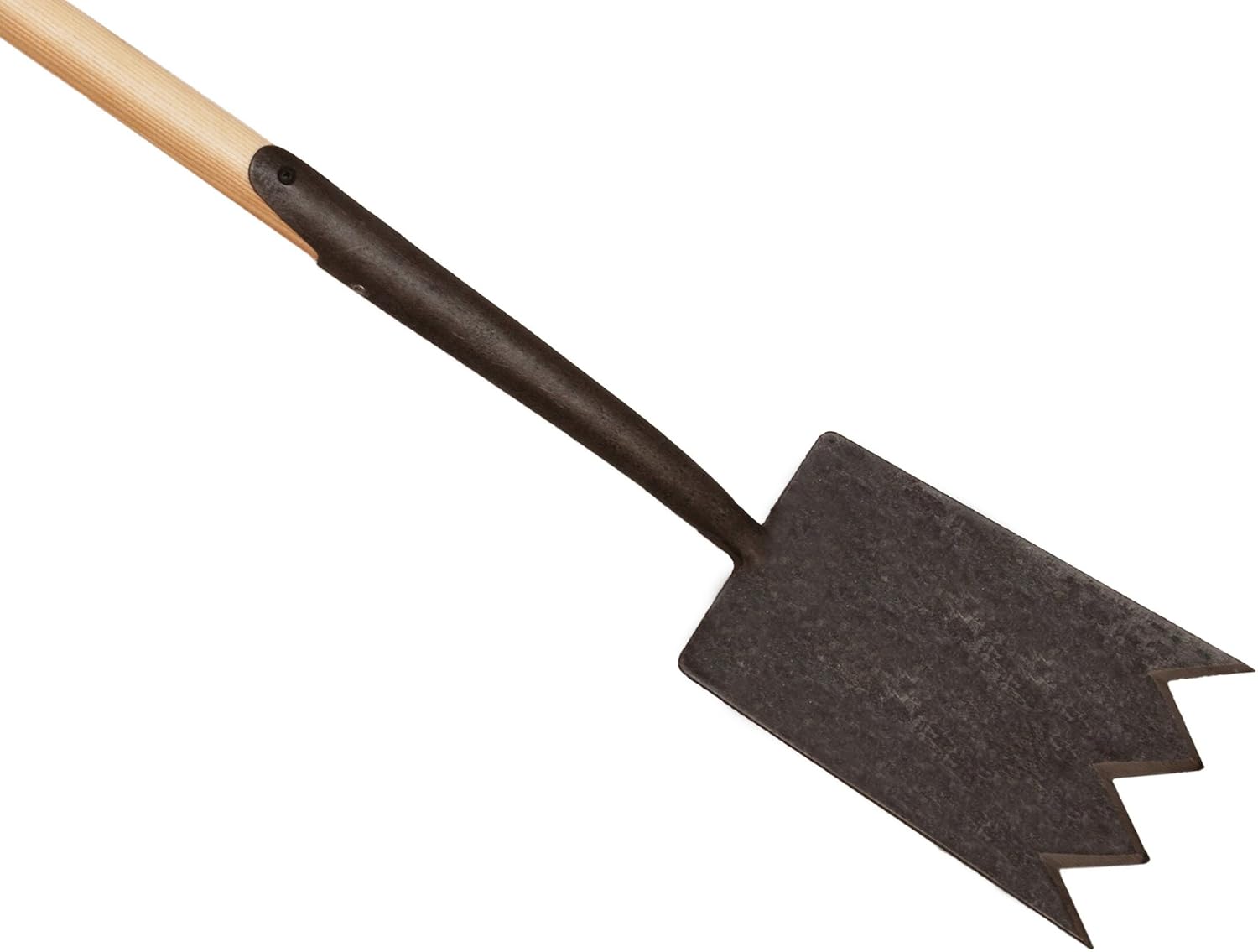
The DeWit Shark Tine Spade is a performance-focused digging tool built to tackle heavy soil and clay. Its one-piece forged alloy steel head has four pronounced teeth that slice into compacted ground and help pry out roots, while the broad sharp edge moves soil efficiently. The long T-handle lets you dig while standing and reduces hand and wrist strain on repeated jobs. A hardwood ash handle offers a comfortable, traditional feel and the hardened, heat-treated steel head stays sharp longer for demanding use. At about 44 inches total length the spade gives good leverage for breaking up clay without needing excessive force. Expect a rugged, long-lived tool that favors power and durability over light packing or multipurpose gardening tasks. It is heavier than a lightweight trowel and is focused on chopping and levering rather than fine planting work, so it is best used for breaking ground, digging trenches, and cutting roots in tough soils.
Best for: Buyers who need a durable, high-performance spade for breaking compacted clay, cutting roots, and heavy digging where power and leverage matter more than finesse.
Less Ideal for: Gardeners who primarily do container planting, fine bed preparation, or frequent lightweight tasks should choose a smaller trowel or transplanting tool instead.
- Forged one-piece alloy steel head for strength and long life
- Four sharp teeth and broad edge designed to break up clay and cut roots
- T-handle reduces wrist strain and provides good leverage for digging
- Hardened, heat-treated steel keeps the teeth sharper longer
- Heavier and bulkier than small digging tools, so less suited to delicate planting
- Not intended for light potting or tasks that require precision
Verdict: Choose the DeWit Shark Tine Spade when you need a tough, leverage-focused tool built to break up clay and cut roots with minimal wrist strain.
Amazon Basics 47-inch Gardening Shovel with D-Handle, Alloy Steel

| Material Type | Alloy Steel |
|---|---|
| Handle Material | TPR overmolded poly D-handle |
| Blade Material | Alloy Steel |
| Blade Length | 7.4 inches |
This 47-inch Amazon Basics gardening shovel is a straightforward, heavy-duty tool for digging holes, edging beds, and breaking up compacted soil. The welded alloy-steel blade and shaft give it rigidity for levering and prying in dense ground, while the powder-coated finish helps resist surface rust and makes cleanup easier after use. The large TPR overmolded poly D-handle provides a comfortable, non-slip grip and an oversized step on the blade lets you drive it with your foot for extra power. In practice it performs like a full-size digging spade rather than a lightweight transplanting shovel, so it is best when you need solid force to cut through roots or form clean borders. It is not a specialty tool for delicate container work or for users who need something very light for long periods of digging. For typical yard tasks that require durability and leverage, this shovel gives reliable performance at a utilitarian value point.
Best for: Best for practical gardeners who prioritize a durable, no-nonsense shovel for digging holes, edging beds, and breaking up compacted soil.
Less Ideal for: Not a good fit for gardeners who need an ultralight tool for extended hand digging or for precise work in small containers or delicate plants.
- Welded alloy-steel construction offers strong rigidity for digging and prying
- Powder-coated blade resists surface rust and is easy to clean
- TPR overmolded D-handle gives a secure, comfortable grip and reduces hand fatigue
- Oversized step allows foot-driven force for cutting into compacted soil
- Heavier than lightweight shovels so it may cause fatigue during long continuous use
- Not designed for delicate potting or fine transplanting tasks
Verdict: A sturdy, full-size digging shovel that delivers durable leverage and clean edges for practical gardeners who need reliable hole-digging performance.
WIKER Drain Spade with Fiberglass Handle

| Blade Material | Metal |
|---|---|
| Handle Material | Fiberglass |
| Grip Type | Ergonomic |
| Blade Length | 14.4 inches |
This WIKER drain spade is a narrow digging shovel built for tasks that need precision and leverage, such as transplanting, trenching for irrigation, and working in compacted soil. The long fiberglass D-handle gives good leverage and resists weathering compared with wood, while the hardened manganese steel blade with anti-corrosion coating is stiff enough to slice through sticky clay and cut around roots. Because the blade is slim it makes neat, deep holes without disturbing adjacent turf, and the ergonomic grip helps reduce hand fatigue during extended use. Expect strong performance on clay and rocky patches, but the narrow profile means moving large volumes of soil will take longer than with a full-size round-point shovel. The spade is practical for home gardeners who need a durable, low-maintenance tool for precise digging rather than bulk excavation.
Best for: Practical home gardeners on a budget who need a durable, low-maintenance tool for digging in heavy or compacted soils and for precise transplanting and trenching tasks.
Less Ideal for: Landscapers or homeowners who frequently move large volumes of soil or install multiple posts should choose a wider, round-point or trenching shovel instead.
- Hardened manganese steel blade with anti-corrosion coating for durability in clay and wet soils
- Fiberglass D-handle resists rot and offers strong leverage for digging and transplanting
- Narrow blade profile creates neat, deep holes and straight trenches for irrigation work
- Ergonomic D-grip reduces hand fatigue during longer jobs
- Narrow blade moves less soil per scoop so large digging or bulk moving is slower than with a full-size shovel
- Blade material is listed generically as metal in some specs so exact alloy details are limited
Verdict: A tough, weather-resistant drain spade that gives budget-minded gardeners reliable, precise digging performance in clay and compacted soils.
Xinmeto 56-Inch Heavy-Duty Round-Point Digging Shovel with Fiberglass Handle

| Blade Material | Manganese Steel |
|---|---|
| Handle Material | Fiberglass |
| Grip Type | Ergonomic non-slip |
| Blade Length | 11 inches |
This Xinmeto 56-inch round-point shovel is designed for everyday garden and landscaping digging where strength and comfort matter. The thick manganese-steel blade with an 11-inch cutting edge is heat-treated and coated to resist rust, so it slices through clay, compacted soil, gravel and roots with less edge rolling. The reinforced fiberglass handle keeps the tool light and resists splitting or rotting that plagues wooden shafts, while rubberized non-slip grip zones improve control in wet or muddy conditions. A wide foot pedal lets you drive the blade with body weight for deeper, less tiring digs, and the 56-inch length keeps most users upright to reduce lower-back strain. It arrives fully assembled and is suited to planting, trenching, transplanting shrubs and light snow removal. Expect a very capable general-purpose shovel, though users who need a specialty tool for heavy rock prying or narrow confined spaces may prefer a different head shape or a shorter shaft.
Best for: Gardeners and homeowners who want a durable, comfortable all-purpose digging shovel for planting, trenching and general yard work and prefer a lightweight, low-maintenance handle.
Less Ideal for: People who primarily work in very tight planting spaces or need a purpose-built pry tool for heavy rock removal should look at shorter or specialized digging tools instead.
- Heat-treated manganese steel blade resists edge rolling and cuts through compacted soil and roots
- Reinforced fiberglass handle stays strong in all seasons and is lighter than traditional wood
- Wide foot pedal lets you use body weight for deeper digs and reduces arm strain
- Rubberized non-slip grip zones improve control in wet or muddy conditions
- Long 56-inch length can be awkward in tight beds or for shorter users
- Not optimized as a specialized rock or pry bar for extremely heavy digging
Verdict: A sturdy, lightweight full-length round-point shovel that balances cutting power and user comfort for everyday garden digging.
Root Slayer Garden Shovel with Serrated V-Tip

| Blade Material | Carbon Steel |
|---|---|
| Handle Material | Carbon Steel |
| Blade Length | 13 inches |
| Grip Type | Ergonomic |
The Root Slayer is a purpose-built digging shovel that combines a sharpened inverted-V tip, sawtooth edges, and a sturdy carbon steel blade so you can cut through roots and packed soil without switching tools. In use it functions as a spade, root saw, and hatchet for tasks like digging planting holes, removing stubborn grasses, and trenching in clay or compacted ground. The resin-encased steel shaft and ergonomic O-handle give good leverage and a comfortable grip during repeated digs, while the powder-coated carbon steel resists rust and holds up to heavy garden work. Because the blade focuses force on a narrow point it penetrates hard-packed areas more easily than a flat shovel, and the serrated sides let you slice roots instead of yanking them. Expect a robust, long-lasting tool suited to regular backyard landscaping, but be mindful it is built for cutting and digging rather than prying or levering large stones, and the heavier construction adds noticeable weight compared with lightweight trowels or fiberglass-handled alternatives.
Best for: Gardeners who need a single robust tool for digging in compacted soil and cutting roots while valuing proven design and positive user feedback.
Less Ideal for: If you mainly need a lightweight transplanting trowel, long-handled pry tool, or a shovel for moving large volumes of loose material, this specialized root-cutting shovel is not the best match.
- V-shaped sharpened tip concentrates force to penetrate compacted soil and break through roots
- Serrated blade edges allow cutting through roots without switching tools
- Powder-coated carbon steel blade offers durability and rust resistance for repeated outdoor use
- Ergonomic O-handle and resin-encased steel shaft provide good leverage and a comfortable grip
- Heavier construction makes it less convenient for prolonged overhead or fine-detail tasks
- Not designed for heavy prying or levering large rocks
Verdict: Buy this if you want a durable, root-cutting shovel that makes digging holes in compacted soil and slicing roots significantly easier than a standard spade.
Root Slayer Nomad Garden Spade (Serrated Edge)

| Material Type | Alloy Steel |
|---|---|
| Blade Material | Carbon Steel |
| Handle Material | Carbon Steel,Polypropylene |
| Grip Type | Ergonomic |
| Unit Count | 1 Count |
The Root Slayer Nomad is a scaled-down version of the award-winning Root Slayer spade built to handle tough digging and root removal in confined spaces. Its serrated, V-shaped tip and ripsaw teeth let you saw through roots and compacted soil while the powder-coated carbon steel blade resists corrosion during repeated use. The shorter head and long shaft make the tool easy to maneuver in raised beds, narrow planting strips, and when camping or trail work requires a compact shovel. A fiberglass shaft with non-latex grips provides leverage and a secure hold for directed digging and prying. Because it is made from robust carbon steel and engineered for heavy-duty tasks, the Nomad is best used for focused garden jobs rather than grave digging or continuous commercial use. Expect a dependable, long-lived tool for home gardeners who need a reliable root-cutting spade in smaller spaces, with the usual requirement of occasional blade cleaning and sharpening to maintain cutting performance.
Best for: Buyers who prioritize a dependable, long-lasting digging tool for home gardens and raised beds and who value root-cutting performance in confined or portable work sites.
Less Ideal for: People who need a full-size spade for large-scale or continuous commercial digging work should consider a larger, heavy-duty model instead.
- Aggressive serrated blade and V-shaped tip that cut through roots and compacted soil.
- Powder-coated carbon steel blade for strength and corrosion resistance.
- Compact head and long shaft for easy maneuvering in raised beds and tight spaces.
- Fiberglass shaft with non-latex grips offers good leverage and a secure hold.
- Smaller, compact design limits leverage and surface area compared with full-size spades for very large digging jobs.
- Requires periodic sharpening and cleaning to keep serrations effective and corrosion minimal.
Verdict: A compact, rugged spade built to reliably cut roots and dig in tight garden spaces, ideal for homeowners who want a durable, long-lasting tool.
Choosing the Right Garden Spade for Digging Clay: Key Factors to Consider
Blade Material and Thickness
Blade material determines how well a spade slices into dense clay and how long the edge stays serviceable. Thicker steel resists bending and edge roll when the spade is used to pry or lever out compacted clods, while harder steel grades maintain a sharper bevel for longer. However, very hard steels can be more brittle, so construction quality and tempering matter.
Also consider heat treatments and whether the blade is stamped or forged. Forged blades typically have a denser grain and better impact resistance, which helps when you are striking through roots and gravel embedded in clay.
Blade Shape and Toe Design
Blade geometry affects penetration, control, and the ability to dig slices through compacted layers. Narrow, pointed blades concentrate force for deeper cuts, useful when breaking dense subsoil. Broader, flatter blades are better for moving scooped clay or levelling after digging. A pronounced toe or reinforced tip helps when using the spade to pry or cut through root masses.
The blade edge profile is also important. A sharper leading bevel cuts into clay more easily but will dull faster. A slightly radiused edge can resist chipping when striking stones in the soil.
Handle Length and Grip Comfort
Handle length influences leverage and back strain. Longer shafts give more mechanical advantage for prying heavy clay but can be harder to control in tight spaces. Shorter handles are more maneuverable but require greater user force. The handle grip material and shape affect hand fatigue and slipping when working with sweaty or muddy hands.
Look for handles with a comfortable D-grip or an ergonomically shaped shaft that reduces wrist twist. Shock-absorbing or slightly cushioned grips reduce jarring when driving the spade into compact soil.
Shaft Construction and Joint Strength
How the blade attaches to the shaft is a frequent failure point when digging clay, where prying and high torque are common. A full-tang or well-reinforced socket joint distributes stress and resists loosening. Composite or fiberglass shafts can flex under load but are often more impact resistant and weatherproof than plain wood.
If a wooden shaft is preferred, consider the wood species and whether it is treated. Hardwood shafts like ash offer good shock absorption but may need periodic inspection for cracks. Replacement availability is also a practical consideration for long-term ownership.
Corrosion Protection and Finish
Clay holds moisture and can be slightly alkaline, which accelerates rust and surface corrosion. Protective finishes, paint, powder coating, or stainless alloy choices will slow corrosion and reduce maintenance. A finish that prevents clay from sticking to the blade also reduces cleaning time after heavy digging sessions.
Regular maintenance matters even with good finishes. Rinsing clay off after use and drying the blade before storage, along with occasional oiling, extends service life significantly.
Why Clay Needs a Different Spade
Clay compacts and binds water differently than loam or sandy soils. It resists penetration and tends to form heavy, sticky clods that put more force through the blade and shaft. A spade optimized for clay addresses those stresses with tougher materials and geometry designed to cut and move dense soil efficiently.
Choosing the right type of edge, tip shape, and handle lets you work longer without excessive fatigue. It also reduces the likelihood of bending, chipping, or breaking when you encounter buried roots, stones, or compacted layers.
- Dense soil puts repeated impact and prying loads on the tool
- Blade shape affects how clay detaches and lifts
- Shaft and joint design determine long-term durability
Using a Spade Effectively in Clay
Technique matters as much as tool selection. Drive the spade straight down with controlled body weight rather than relying on wrist force. After the blade has penetrated, use your foot on the toe and use your legs and hips to leverage the load out of the ground.
When soil is extremely compacted, start with several shallow passes to loosen a plug before levering it out. Keeping the blade clean and slightly sharpened will improve penetration and reduce the effort required for each cut.
- Use foot pressure on the toe for efficient leverage
- Make multiple shallow cuts for very hard ground
- Clean caked clay from the blade periodically during work
Maintaining a Spade That Works in Clay
After digging, remove clay before it dries on the blade. A simple rinse and brush will prevent hard deposits that are harder to remove later. Wipe and oil any exposed steel to slow rust formation; check wooden shafts for checking or splits and treat them with linseed oil if recommended.
For people who use spades frequently in wet clay, consider keeping a basic sharpening stone and a small file in the shed. Light edge maintenance maintains penetration without removing too much metal or altering the blade geometry.
- Rinse and dry the blade after use
- Oil exposed metal and wooden shafts periodically
- Sharpen lightly to retain a cutting edge without thinning the blade excessively
When to Choose a Pointed Blade Versus a Flat Blade
Pointed blades excel at penetrating compacted profiles and cutting through roots. They are a good choice if you need to break ground or dig narrow trenches in hard clay. The concentrated edge reduces the force needed for initial entry.
Flat, square blades are better for moving and levelling scooped clay and for cutting uniform beds. If the main task is shoveling or forming planting areas after you have broken the soil, a broader blade provides more material movement per lift.
- Pointed blade: better for breaking and initial penetration
- Flat blade: better for moving and levelling material
- Match blade type to task for efficiency
Handle Materials Compared: Wood, Fiberglass, and Metal
Wood handles offer natural shock absorption and are relatively easy to replace. Ash and hickory are common choices. They do require occasional inspection and treatment, and they can split if struck at an angle or used as a lever against large rocks.
Fiberglass or composite handles are more weatherproof and resist cracking or rotting. They can flex under load, which some gardeners find reduces shock, but excessive flex can reduce control. Metal shafts are durable but can transmit more shock to the hands without a good grip design.
- Wood: good shock absorption, replaceable, needs maintenance
- Fiberglass: weatherproof, impact resistant, may flex
- Metal: very durable, can be harsh on hands without proper grips
How We Chose the Best Garden Spade for Digging Clay
We prioritized features that directly affect performance in heavy, compacted clay and excluded tools intended primarily for light soil or landscaping detail work. Evaluation focused on measurable, category-specific criteria: blade material and thickness for edge holding and penetration; blade shape and toe design for cutting roots and scooping clay; shaft length and handle ergonomics for leverage and wrist comfort; construction and weld quality for durability under high torque; and corrosion protection and finish for wet, alkaline clay conditions. We also considered ease of maintenance and repairability where parts like handles can be replaced. Products were excluded if they were clearly optimized for soft soil, garden edging, or non-digging uses. Listings that lacked clear specification on blade steel or shaft construction were deprioritized. The final shortlist reflects options that balance digging force, long-term durability, and day-to-day handling for gardeners who regularly break and move clay soils.
FAQ
How often should I sharpen a spade used in clay?
It depends on usage, but for regular clay digging a light sharpening every few weeks of heavy use keeps the edge efficient. Avoid aggressive sharpening that thins the blade; just restore the bevel so it penetrates more easily.
Can I use a regular garden spade for clay if it has a wooden handle?
Often you can, provided the blade material and joint are robust. Hardwood handles absorb shock well, but check the socket and shaft for signs of stress if you frequently pry or lever in compacted clay.
Is a pointed spade better than a flat spade for clay gardens?
Pointed spades are usually better for breaking into compacted clay and cutting roots, while flat spades are better for moving and levelling excavated material. Choose based on whether you need penetration or material handling.
What maintenance is most important after digging wet clay?
Remove caked clay before it dries, rinse and dry the blade, and apply a light coat of oil to exposed metal. Inspect the handle and joint for moisture damage and address any splits or loosening promptly.
Should I pick a heavier spade for clay?
Heavier blades can provide more momentum and resist bending, but they increase fatigue. Balance blade strength with a comfortable handle and proper technique to avoid overexertion.
Final Verdict
When digging clay, prioritize a spade with a strong, appropriately shaped blade and a shaft that provides leverage without excessive weight. Tradeoffs are common: harder steels hold an edge but may be less forgiving on impact, while lighter tools reduce fatigue but may not last as long under heavy prying. Focus on matching blade geometry to the task, choosing a handle material that suits how often you dig, and maintaining the tool to extend its service life. With those priorities in mind, you can confidently pick a garden spade for digging clay that balances durability, comfort, and digging efficiency.
