

Note: This article contains affiliate links. If you click on these links and make a purchase, I may earn a small commission at no extra cost to you. This helps support my research and content. Read my full affiliate disclosure here.
If you hunt coins, relics, or small artifacts in lawns, parks, or beaches, the right garden spade for metal detecting changes how cleanly and quickly you can recover finds. A spade built for this use needs a narrow, durable blade for controlled cuts and a handle that reduces hand fatigue during repeated digs. This guide covers six shortlisted garden spades chosen for typical metal-detecting situations, from compact urban digs to soft-sand beaches. Below we explain what matters when picking a spade for detector work, how the finalists were evaluated, and the tradeoffs you should weigh before choosing. Read on to see which tool characteristics suit your preferred detecting style and terrain.
Top Picks at a Glance
| Best Overall The best all-around choice for most situations | Lesche Digging Tool with Serrated Edge and Belt Sheath (Left-Handed) |  |
| Best Value The sweet spot between price and what you get | CKG Metal Detecting Shovel with Double Serrated Edge and Sheath |  |
| Best Budget The cheapest option that still gets the job done reliably | LRLXE Metal Detecting Shovel with Double Serrated Edge and Belt Sheath |  |
| Highest Rated A top-rated pick with lots of positive feedback | Lesche Sampson Pro-Series T-Handle Shovel with Serrated Blade |  |
| Most Popular A crowd favorite that many people choose with confidence | Root Slayer Nomad Garden Spade (Serrated Edge) |  |
| Best Seller A high-volume bestseller chosen again and again | ROOT ASSASSIN 35" T-Handle Metal Detecting Shovel with Saw Blade |  |
Lesche Digging Tool with Serrated Edge and Belt Sheath (Left-Handed)

| Blade Length | 7 inches |
|---|---|
| Material Type | Chrome-Moly steel |
| Included Components | Cordura belt sheath |
This Lesche digging tool is a short, rugged hand shovel designed for quick plug cutting and light sod removal. The 7-inch blade combines a straight cutting edge and a serrated edge intended to saw through roots and tough grass while the comfortable rubber grip and hand guard make repeated use less tiring. Its short overall length makes it easy to control for precise work in nursery beds, landscaping edges, and when removing small sections of sod. The chrome-moly steel blade is durable and holds up to scraping in compacted soil, and the included Cordura belt sheath keeps the tool handy on the job. Because it is a hand tool with a 12-inch overall length, it is best for small-scale sod removal, spot repairs, and working where a long-handled shovel would be awkward. It will not replace a full-size sod cutter for removing wide strips or large areas, and users should expect more bending and kneeling compared with long-handled options.
Best for: Gardeners who need a durable, easy-to-control hand tool for spot sod removal, nursery work, and landscape edging and who value precision and portability over speed on large areas.
Less Ideal for: Homeowners planning to remove large lawns or continuous strips of sod who should choose a long-handled shovel or a mechanized sod cutter instead.
- Double-edged blade with serrated side for cutting roots and straight edge for slicing sod plugs
- Durable chrome-moly steel construction suitable for scraping and digging in compacted soil
- Comfortable rubber grip with hand guard reduces hand fatigue during repeated use
- Includes Cordura belt sheath for convenient carry and quick access on the job
- Short overall length makes it inefficient for removing large swaths of sod or deep digging
Verdict: A compact, tough hand digging tool that makes precise plug cutting and small-area sod removal faster and more controllable than a standard trowel.
CKG Metal Detecting Shovel with Double Serrated Edge and Sheath

| Material Type | Metal, Rubber, Stainless Steel |
|---|---|
| Handle Material | Rubber |
| Blade Material | Stainless Steel |
| Grip Type | Ergonomic |
This CKG digging shovel is built for metal-detecting use while doubling as a small garden and campsite tool. The heat-treated stainless/alloy blade is reinforced where it meets the handle, so it resists bending during prying and cutting through roots with its double serrated edge. The rubberized ergonomic handle improves grip and reduces hand fatigue during repeated digs. At roughly 10 inches long the shovel is highly portable and ships with a nylon sheath that clips to a belt for hands-free carry. Practical benefits include corrosion-resistant materials for use in damp conditions, a serrated blade that can saw through roots or fabric, and a well-balanced feel that helps control precision digs. Important limitations are its compact size, which reduces leverage for deep or heavy excavation, and the single-piece design that does not telescope into a longer handle for two-handed leverage. For everyday detectorists who want a durable, easy-to-carry tool for precise holes, this hits the mark; users needing larger-scale trenching or heavy digging will want a full-size shovel instead.
Best for: A practical metal-detecting hobbyist who values a durable, easy-to-carry digging tool for precise holes, campsite use, and occasional gardening tasks.
Less Ideal for: People who frequently need to dig deep holes, move large volumes of soil, or perform heavy-duty landscaping should choose a full-size shovel with longer leverage.
- Reinforced heat-treated stainless/alloy blade resists bending and rust
- Double serrated edge allows sawing through roots and tough material
- Ergonomic rubber handle improves grip and reduces hand fatigue
- Compact and lightweight with included nylon sheath and belt loop for easy carry
- Short overall length limits leverage for deep or heavy digging
- Not suitable as a primary tool for trenching or large garden jobs
Verdict: A sturdy, compact metal-detecting shovel that delivers corrosion-resistant durability and a serrated blade for precise, portable digs.
LRLXE Metal Detecting Shovel with Double Serrated Edge and Belt Sheath

| Material Type | Carbon Steel, Metal, Rubber |
|---|---|
| Blade Material | Carbon Steel |
| Handle Material | Rubber |
| Grip Type | Ergonomic |
The LRLXE metal detecting shovel is a small, lightweight hand digger built for beach and field detecting, backpacking, and basic garden tasks. Its pointed tip and double serrated carbon steel blade let you slice through sod plugs and roots and carve clean plugs in sand, while the ergonomic rubber handle reduces wrist strain during repeated digs. It includes a high-density nylon sheath with a belt loop for hands-free carry and edge protection when stored. The alloy steel construction is marketed as rust-resistant and sturdy enough for most soil types, though very rocky ground will still challenge this compact tool. Because it is short and portable it is easy to pack for hikes or stash on a belt, but that compactness also limits leverage compared with full-size shovels so deep or heavy-duty digging takes more effort. For everyday metal detecting, light planting, and campsite use it balances portability, cutting performance, and affordability.
Best for: Buyers who want an affordable, packable digging tool for metal detecting, beach use, light gardening, and camping where portability and clean plug digging matter more than heavy-duty excavation.
Less Ideal for: Gardeners needing a primary digging shovel for large beds, heavy clay, or frequent deep excavation should choose a full-size, heavy-duty spade instead.
- Double serrated carbon steel blade cuts clean plugs and roots for metal detecting and planting
- Ergonomic non-slip rubber handle reduces wrist fatigue during repeated digging
- Lightweight and compact with a nylon sheath and belt loop for easy carry
- Corrosion-resistant alloy steel construction suitable for beach and general soil use
- Short, compact design offers less leverage than full-size shovels for deep or heavy digging
- Not intended for very rocky ground where a heavier-duty tool is preferable
Verdict: A budget-friendly, portable digger that delivers clean plug cutting and easy carry for metal detecting and light garden or camping tasks.
Lesche Sampson Pro-Series T-Handle Shovel with Serrated Blade
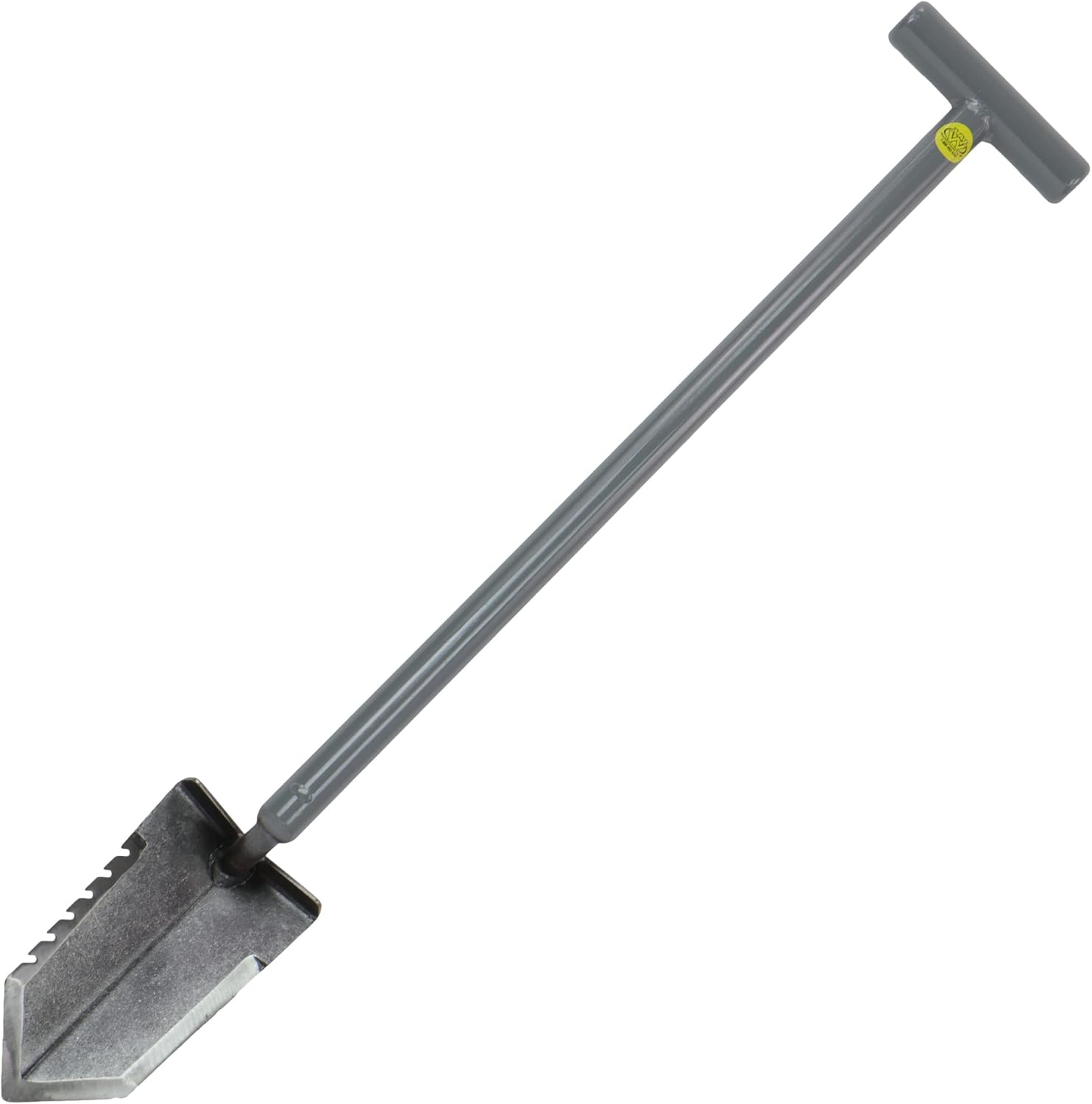
| Material Type | Alloy Steel, Metal |
|---|---|
| Handle Material | Aircraft-quality steel |
| Blade Material | Alloy Steel |
| Blade Style | Serrated and Pre-sharpened edge |
| Manufacturer Warranty Description | 5 year manufacturer |
This Lesche Sampson Pro-Series T-handle shovel is a purpose-built digging tool that pairs a short, robust shaft with a serrated, pre-sharpened alloy-steel blade. At 31 inches overall it is compact enough for precise digging in confined spots that come with metal detecting, while the T-handle gives solid two-handed control for prying roots or levering soil. The serrated edge helps cut through sod and small roots without needing frequent resharpening, and the aircraft-quality steel handle and alloy blade are designed for heavy use and long service life. Practical benefits include a compact length for tight spots, strong materials that reduce bending or breakage, and a sharp serrated lip that speeds cutting. Limitations are the shorter reach compared with full-length spades and the all-steel grip which may be less comfortable on very long digs without gloves. This tool is best treated as a durable, short-handled digging and cutting spade for demanding outdoor use.
Best for: Buyers who prioritize a long-lasting, heavy-use digging tool for close-quarters work such as recovering finds from small holes and root-choked soil while metal detecting.
Less Ideal for: People who need a long-reach spade for deep trenches or who prefer cushioned ergonomic handles for prolonged digging sessions.
- Serrated, pre-sharpened alloy-steel blade speeds cutting through sod and roots
- Aircraft-quality steel T-handle and alloy blade built for heavy-duty use
- Short 31-inch length gives precise control in tight or confined digging spots
- Compact, sturdy design resists bending during prying and levering
- Short reach compared with full-length spades, requiring more stooping for deep holes
- All-steel grip may be uncomfortable on extended digs without padded gloves
Verdict: A compact, heavy-duty serrated spade built for reliable, close-quarters digging and long-term use while metal detecting.
Root Slayer Nomad Garden Spade (Serrated Edge)

| Material Type | Alloy Steel |
|---|---|
| Blade Material | Carbon Steel |
| Handle Material | Carbon Steel,Polypropylene |
| Grip Type | Ergonomic |
| Unit Count | 1 Count |
The Root Slayer Nomad is a scaled-down version of the award-winning Root Slayer spade built to handle tough digging and root removal in confined spaces. Its serrated, V-shaped tip and ripsaw teeth let you saw through roots and compacted soil while the powder-coated carbon steel blade resists corrosion during repeated use. The shorter head and long shaft make the tool easy to maneuver in raised beds, narrow planting strips, and when camping or trail work requires a compact shovel. A fiberglass shaft with non-latex grips provides leverage and a secure hold for directed digging and prying. Because it is made from robust carbon steel and engineered for heavy-duty tasks, the Nomad is best used for focused garden jobs rather than grave digging or continuous commercial use. Expect a dependable, long-lived tool for home gardeners who need a reliable root-cutting spade in smaller spaces, with the usual requirement of occasional blade cleaning and sharpening to maintain cutting performance.
Best for: Buyers who prioritize a dependable, long-lasting digging tool for home gardens and raised beds and who value root-cutting performance in confined or portable work sites.
Less Ideal for: People who need a full-size spade for large-scale or continuous commercial digging work should consider a larger, heavy-duty model instead.
- Aggressive serrated blade and V-shaped tip that cut through roots and compacted soil.
- Powder-coated carbon steel blade for strength and corrosion resistance.
- Compact head and long shaft for easy maneuvering in raised beds and tight spaces.
- Fiberglass shaft with non-latex grips offers good leverage and a secure hold.
- Smaller, compact design limits leverage and surface area compared with full-size spades for very large digging jobs.
- Requires periodic sharpening and cleaning to keep serrations effective and corrosion minimal.
Verdict: A compact, rugged spade built to reliably cut roots and dig in tight garden spaces, ideal for homeowners who want a durable, long-lasting tool.
ROOT ASSASSIN 35" T-Handle Metal Detecting Shovel with Saw Blade

| Material Type | Alloy Steel, Metal |
|---|---|
| Blade Material | Alloy Steel |
| Handle Material | Metal |
| Grip Type | Ergonomic |
This ROOT ASSASSIN 35" metal-detecting shovel is a compact, portable digging tool made for treasure hunters and campers who need a rugged hand shovel that cuts through roots. The alloy steel blade features saw-like teeth and an enhanced bone structure to resist bending when prying or sawing in tough soil. Its metal T-handle and all-metal construction keep the tool simple and durable for repeated field use, and the included blade cover makes it easier to store and transport. Typical use is single-handed or two-handed digging in shallow to moderate soils, cutting through surface roots, and levering small targets free of obstructing dirt. Practical benefits include a lightweight, easy-to-carry profile for long searches and a blade shaped to both dig and saw, reducing the need to carry a separate knife. Important limitations are the short overall length compared with full-size spades, which reduces leverage on very deep or heavy digs, and the all-metal handle can transmit shock to the hands and is heavier than some alloy-handle alternatives.
Best for: Buyers who want a dependable, compact digging tool for metal detecting and light camping tasks and who prioritize durability and simplicity over maximum leverage. Ideal for users who prefer a tool that combines digging and sawing in one portable package.
Less Ideal for: Not a good fit for users who need a long-handle spade for deep trenching or heavy soil removal, or those who require cushioned or vibration-dampening handles for extended digging sessions.
- Saw-tooth blade lets you cut small roots and stubborn sod without a separate saw
- Alloy steel blade and reinforced structure for strength and durability in varied soils
- Compact, portable 35-inch form factor that is easy to carry during long detecting sessions
- Includes blade cover for safer transport and storage
- Short overall length limits leverage for deep or heavy digging
- All-metal handle can transmit shock to hands and may be less comfortable than padded or wooden grips
Verdict: Choose this shovel if you want a durable, portable metal-detecting tool that digs and saws roots without carrying extra gear.
Choosing the Right Garden Spade for Metal Detecting: Key Factors to Consider
Blade Shape and Width
Blade shape determines how cleanly you can cut turf and extract a thin plug. For metal detecting you usually want a narrow, tapered blade or a pointed spade that slices a neat rectangle or wedge rather than a wide scoop. A narrower blade reduces the amount of soil you must sift and makes it easier to close the hole neatly after recovering an object.
Blade width also affects how much backfill you must move and how much disturbance you create at a site. Wider blades speed bulk digging in garden beds but are awkward when you need precision around nails, shallow artifacts, or in compacted turf.
Blade Material and Strength
The steel grade and how the blade is finished control durability. Harder or heat-treated steels resist bending and hold a sharper edge for cleaner cuts, but overly brittle finishes can chip when used as a wedge. Look for blades with full-tang construction or reinforced necks where the blade meets the shaft to prevent twisting or separation during prying.
Corrosion resistance matters if you detect near saltwater or in damp soil. Protective coatings, stainless alloys, or well-sealed finishes slow rusting and maintain structural integrity over many outings.
Tip Geometry and Pointedness
The tip profile determines how well the spade penetrates compacted turf and clay. A sharp, pointed tip allows you to start a cut with minimal force and to work around roots or buried objects without disturbing them. Blunter or rounded tips blunt that control and require more levering or stabbing motions, which can enlarge the hole unnecessarily.
Some detecting spades use a narrow chisel or trenching profile to let you cut a clean plug for easy replacement. Consider how often you face packed soil or sandy conditions and pick a tip that suits your most common terrain.
Handle Length and Grip Comfort
Handle length affects leverage and portability. Longer handles give more leverage for prying in compacted ground but add weight and can be awkward to carry. Short handles or D-grip designs improve control for precise cuts and make the tool easier to stow in a backpack. Choose a length that matches your digging style and the typical depth of finds.
Grip material and shape influence hand fatigue. Textured, shock-absorbing grips reduce blisters and vibration when levering out objects. For detectorists who dig frequently, a comfortable handle can be the difference between an enjoyable outing and sore hands.
Weight, Balance, and Portability
A spade that is too heavy will tire you quickly, especially when you walk long distances with gear. Conversely, an extremely light tool may lack the mass needed to penetrate hard soil. Balance is important because a well-balanced spade transfers force efficiently from the handle to the blade, making cuts cleaner with less effort.
Portability covers foldable or compact designs, removable handles, and tools that slip easily into a pack or onto a belt. If you frequently hike to remote detecting spots, prioritize a compact, lightweight option that still offers adequate blade strength.
Corrosion Protection and Maintenance
Exposure to moisture, brackish environments, and wet soils accelerates corrosion. Spades with protective coatings, stainless components, or easily maintained finishes require less upkeep and last longer in coastal or humid detecting sites. Regular cleaning, drying, and occasional oiling extend service life and preserve edge integrity.
Also consider how easy the spade is to sharpen or repair in the field. Some designs allow blade replacement or simple sharpening, which is useful if you detect in abrasive sandy soils that dull edges quickly.
Best Spade Geometry for Different Terrains
Different soils demand different blade profiles. In compacted clay or hard-packed turf, choose a pointed, narrow blade that concentrates force at the tip so you can start a cut without levering excessively. In sandy or soft soils a wider, thin blade can lift a plug without crumbling it, but it will produce a larger disturbance.
If you split outings between urban lawns and beaches, consider a compromise profile: a relatively narrow blade with a slightly concave face. That shape penetrates and holds soil while still allowing you to extract finds cleanly.
- Pointed narrow blades work best in hard-packed soils.
- Thin, wider blades perform well in sand and loose loam.
- Concave faces help hold a soil plug during extraction.
Maintaining Edge and Preventing Damage
After every detecting trip, remove loose soil and debris from the blade and dry it immediately. For coastal outings rinse salt residue off with fresh water to slow corrosion. Lightly oil metal parts before storage to protect the finish.
When the edge dulls, use a file or a bench stone to restore the tip and leading edge. Avoid aggressive grinding that removes temper from heat-treated steel. Small field touch-ups are often sufficient to restore cutting performance between full resharpenings.
- Rinse salt from blades after beach detecting.
- Dry and oil metal parts before storage.
- Use a file or stone for controlled edge maintenance.
Carrying and Using a Spade in the Field
Think about how you will transport the spade. A compact or short-handled design fits in a daypack and leaves hands free for the detector. Full-length handles give better leverage but may require a tool sleeve or strap for carrying.
When digging, make a controlled cut at the turf edge, lift a narrow plug, and place soil to the side to keep the hole tidy. Use the detector to re-scan the plug and the hole edges to avoid missing small targets. Replace the plug firmly and tamp it down to leave minimal trace.
- Carry a small brush and trowel for delicate extractions.
- Rescan plugs and hole edges to catch nearby targets.
- Store the spade in a dry sleeve to protect blade and hands.
Accessories and Extras That Help Detecting
A few simple accessories make detecting outings more productive. A compact soil scoop or trowel is useful for scraping out the last material from a hole without widening it. A small hand brush or soft pick helps uncover fragile finds without damaging them.
Consider a lightweight blade cover, a sharpening tool in a waterproof pouch, and a strap or clip for attaching the spade to a pack. A basic first-aid kit is also wise when you're prying in rocky soils where slips can cause cuts.
- Carry a small scoop or trowel for fine work.
- Pack a field sharpening tool and blade cover.
- Bring a soft brush for cleaning delicate finds.
Legal and Ethical Digging Practices
Always follow local laws and landowner rules when detecting and digging. Some parks and public lands restrict digging or require permits, and private property requires permission. Respect site rules to avoid fines and preserve access for other detectorists.
Minimize disturbance by making small, neat cuts and fully replacing plugs. If you encounter artifacts of historical importance, follow local reporting procedures rather than keeping them. Ethical detecting protects sites and the hobby's reputation.
- Check local regulations before digging.
- Always obtain landowner permission on private property.
- Restore sites by replacing plugs and leaving minimal trace.
How We Chose the Best Garden Spade for Metal Detecting
We selected tools that match common metal-detecting demands: precise blade geometry, durable steel that resists bending, handle comfort for repetitive digging, and overall portability for fieldwork. Each candidate had to demonstrate a narrow profile or tapered tip suitable for clean cuts and minimal hole repair. We prioritized blade materials and heat treatment or reinforcement that maintain edge shape under wedging, plus shaft materials that absorb shock and resist weathering. Ergonomics and weight were measured for real-world use because many detectorists dig dozens or hundreds of holes per outing; grips and handle length must reduce strain and allow controlled leverage. Portability and storage were factored in for people who carry gear to distant or rough sites. Tools that were exclusively landscaping spades with overly wide blades or those designed only for heavy excavation were excluded. We also excluded implements that lack corrosion resistance for coastal detecting. The result is a list focused on blade strength, handle comfort, digging precision, portability, and corrosion resistance.
FAQ
What blade width is best for metal detecting in lawns?
A narrow blade, typically under 4 inches, is often best for lawns because it produces a smaller plug that is easier to replace. Narrow blades let you isolate targets without excessive turf disturbance.
Can I use a regular garden spade for beach detecting?
You can, but beach detecting benefits from corrosion-resistant materials and a blade profile suited to loose sand. Rinse and dry any tool after saltwater exposure to prolong life.
How do I prevent a spade from bending when prying out roots?
Use a blade with reinforced neck construction and avoid levering at extreme angles. When encountering roots, cut or sever them where possible rather than using the spade as a pry bar to reduce bending risk.
Is a D-handle better than a straight handle for detecting?
D-handles give extra control for short, precise cuts and are comfortable when digging repeatedly. Straight handles provide more reach and leverage, which can help in very compacted soils. Preference depends on digging style and typical terrain.
How should I carry a spade while hiking between detecting spots?
Use a compact or short-handled spade or secure a full-length spade to your pack with a strap. Blade covers protect other gear and prevent accidental cuts while carrying.
Final Verdict
Choose a garden spade for metal detecting by prioritizing blade shape and strength for the soils you usually encounter, then match handle length and grip comfort to your digging frequency and carrying needs. Expect tradeoffs between precision and leverage: narrower, lighter blades give cleaner holes and portability, while sturdier, longer-handled designs ease prying in tough ground. Decide which criteria matter most for your typical outings, then pick a tool that balances tip precision, corrosion protection, and ergonomics so you can dig more efficiently and with less fatigue.
