

Note: This article contains affiliate links. If you click on these links and make a purchase, I may earn a small commission at no extra cost to you. This helps support my research and content. Read my full affiliate disclosure here.
Picking the right garden sprayer matters because small differences in pump pressure, nozzle control, and seal durability change how cleanly you apply water, fertilizers, or pesticides around plants. Whether you tend raised beds, containers, or a mixed border, the right sprayer reduces waste, protects foliage, and speeds routine tasks. This guide walks through seven shortlisted garden sprayers for garden situations and explains the practical strengths that matter in real yards and patios. We evaluate coverage, build durability, and ease of use so you can match a sprayer to your routine and planting layout.
Top Picks at a Glance
| Best Overall The best all-around choice for most situations | Scotts 2 Gallon Lithium‑Ion Battery Powered Pump Zero Sprayer |  |
| Best Quality Built to a higher standard if you want something more solid | PetraTools HD2000-S 2-Gallon Battery-Powered Garden Sprayer |  |
| Best Value The sweet spot between price and what you get | PetraTools HD101 1‑Gallon Garden Pump Sprayer with 52‑in Hose and 2 Nozzles |  |
| Best Budget The cheapest option that still gets the job done reliably | CHAPIN G390 32‑Oz Hose‑End Sprayer |  |
| Highest Rated A top-rated pick with lots of positive feedback | HAWAJOK 2.1 Gallon Battery-Powered Garden Sprayer with Extendable Wand |  |
| Most Popular A crowd favorite that many people choose with confidence | CHAPIN 20004 1-Gallon Pump Sprayer |  |
| Best Seller A high-volume bestseller chosen again and again | Ortho Dial N Spray Hose-End Sprayer |  |
Scotts 2 Gallon Lithium‑Ion Battery Powered Pump Zero Sprayer
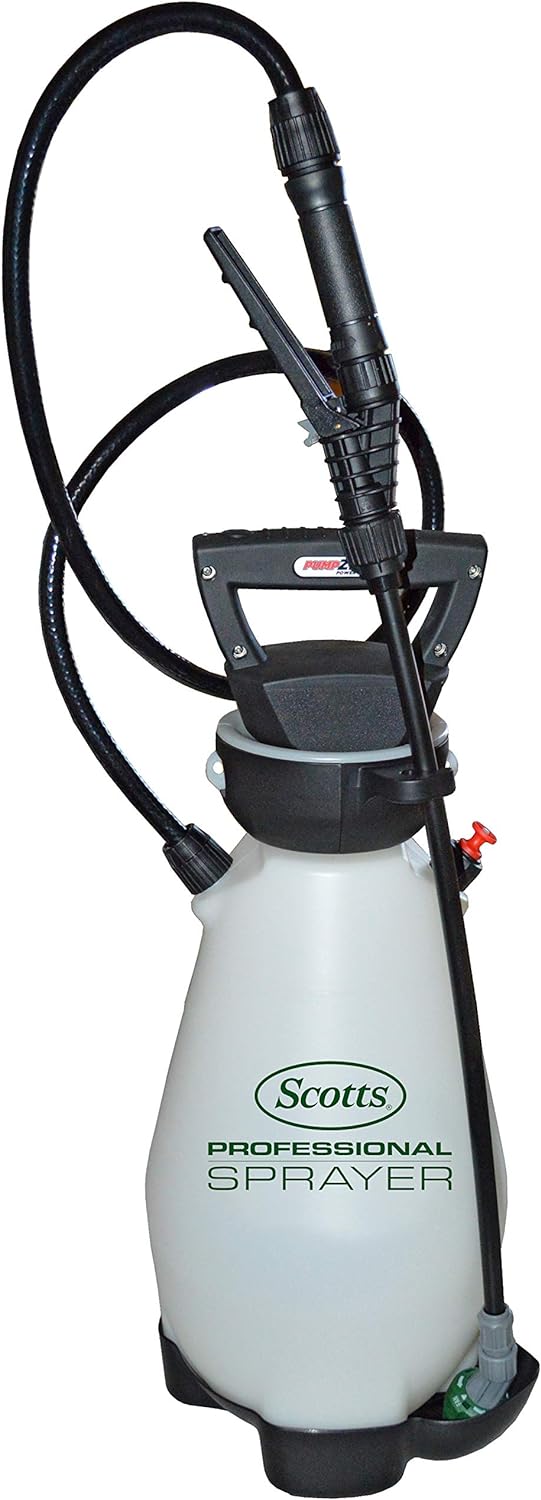
| Tank Volume | 2 gallons |
|---|---|
| Power Source | Battery Powered |
| Maximum Pressure | 21 psi |
| Hose Length | 21 inches |
The Scotts 2‑gallon Pump Zero sprayer replaces hand pumping with an internal lithium‑ion battery and electric air compressor pump to deliver consistent pressure for lawn and garden tasks. You fill the tank with a water‑soluble solution, charge the battery, then use the wand and three‑way nozzle (fan, stream, cone) to cover large surfaces, spot treat weeds, or water plants. Notable features include a lockable commercial‑grade shutoff to reduce hand fatigue, Viton seals for chemical resistance, an in‑line filter, a pressure relief valve for safe opening, and a 21‑inch wand for reach. The unit is built for convenience: the pump reportedly runs multiple tanks per charge and the tank shape and nozzle storage help with stability and transport. Important trade‑offs are the 2‑gallon capacity, which limits continuous runtime for large properties, and the reliance on battery charge versus a manual backup. For homeowners who value consistent spray patterns and less physical effort, it streamlines routine spraying; for heavy commercial use you may want a larger capacity or a spare charged unit.
Best for: Home gardeners who want a cordless sprayer that reduces physical pumping and delivers predictable spray performance for routine weed control, pest treatment, fertilizing, and spot watering.
Less Ideal for: Landscape professionals or users who need long continuous run time and larger tank capacity for treating multiple acres without frequent refills or spare batteries.
- Battery powered pump removes need for manual pumping and delivers consistent pressure
- Three‑way adjustable nozzle (fan, stream, cone) for versatile coverage
- Viton seals and nickel‑plated brass poppet improve chemical resistance and durability
- Lockable commercial‑grade shutoff reduces hand fatigue and allows continuous spraying
- 2‑gallon tank limits continuous coverage on larger properties
- No manual pump backup if battery runs out during use
Verdict: For homeowners who want a no‑pump, cordless sprayer that delivers consistent, adjustable spray patterns for routine garden tasks, this Scotts model is a practical, low‑effort choice.
PetraTools HD2000-S 2-Gallon Battery-Powered Garden Sprayer
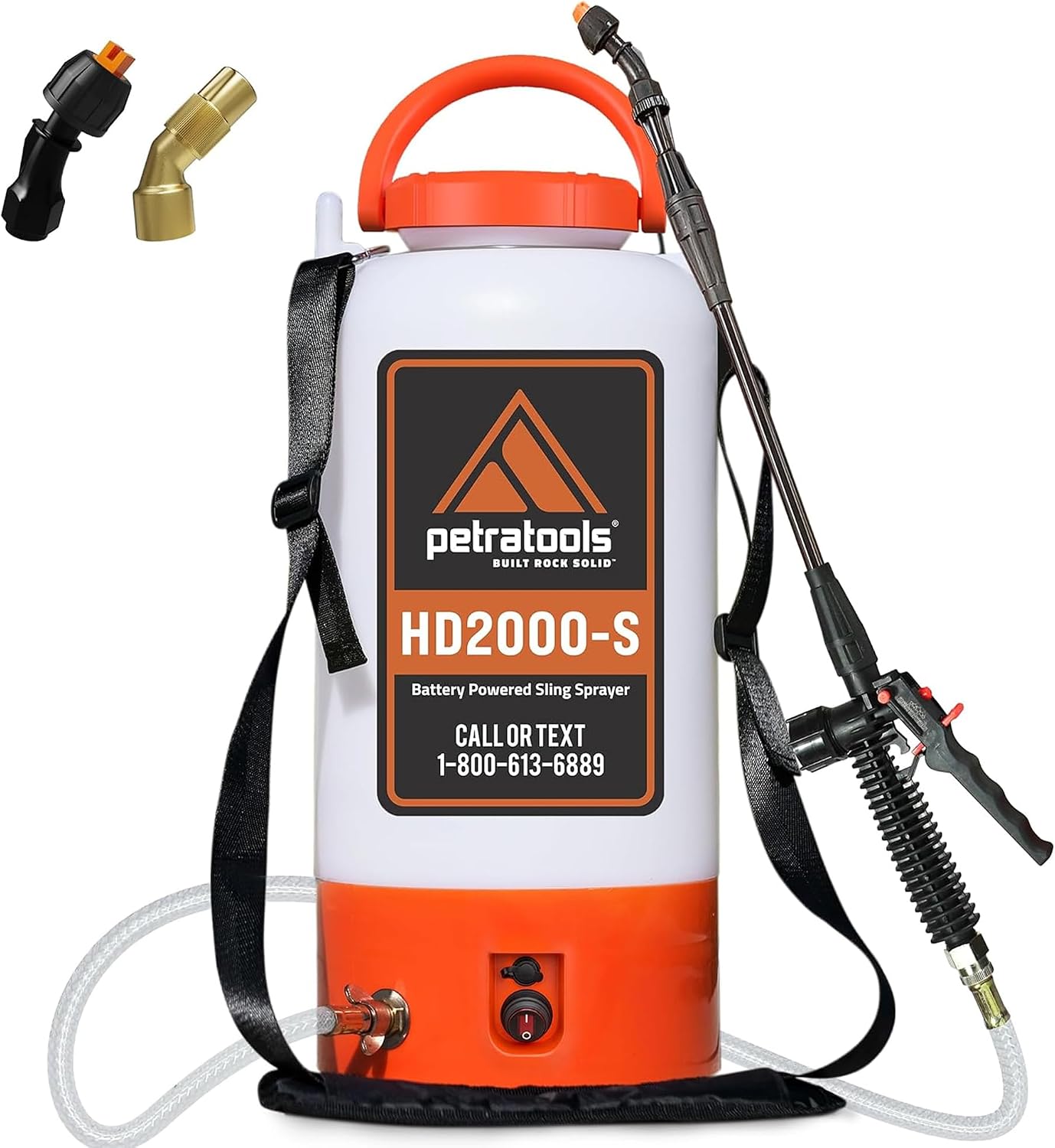
| Tank Volume | 2 gallons |
|---|---|
| Power Source | Battery Powered |
| Hose Length | 48 inches |
| Maximum Pressure | 80 psi |
The PetraTools HD2000-S is a battery-powered 2-gallon garden sprayer built to replace manual pumping for routine lawn and garden tasks. It includes a 12V rechargeable battery and charger that the manufacturer says provides up to two hours of runtime, letting you spray continuously for fences, beds, and around ornamental plantings without repeated effort. The sprayer comes with a 4 foot hose, an extendable wand and two interchangeable nozzles (brass adjustable and fan tip) so you can switch between mist and stream patterns for targeted spot treatment or broader coverage. The shoulder strap and ergonomic handle make it easier to carry when full, and metal hose fittings and an HDPE tank reduce the chance of leaks and chemical-wear issues. Limitations to note are the modest 2-gallon capacity, which means more refills on larger properties, and the specified maximum pressure of 80 psi which is adequate for typical garden chemicals but not for high-pressure commercial tasks.
Best for: Gardeners who want to eliminate hand pumping and finish routine fertilizing, weed control, and pest treatments more efficiently while minimizing physical effort.
Less Ideal for: People managing very large properties or commercial landscaping jobs that need longer runtime, larger capacity, or higher spray pressure.
- Battery-powered operation provides up to two hours of continuous spraying so no manual pumping is required
- Includes rechargeable 12V battery and charger for out-of-box use
- Two nozzles (adjustable brass and fan tip) offer mist and stream patterns for versatile application
- Metal hose fittings and HDPE tank construction reduce leak risk and chemical wear
- 2-gallon tank requires frequent refills on larger lawns
- Maximum 80 psi limits use to typical garden applications rather than heavy-duty commercial spraying
Verdict: If you want a cordless sprayer that removes manual pumping and gives adjustable spray patterns for small to medium yards, this 2-gallon PetraTools unit is a practical, ready-to-use choice.
PetraTools HD101 1‑Gallon Garden Pump Sprayer with 52‑in Hose and 2 Nozzles

| Tank Volume | 1 gallons |
|---|---|
| Hose Length | 52 inches |
| Material Type | Plastic |
| Maximum Pressure | 30 psi |
The PetraTools HD101 is a straightforward, reliability‑oriented 1‑gallon pump sprayer for common garden jobs like weed control, fertilizing, and applying mulch glue. You pressurize the translucent tank by hand and use the 52‑inch hose plus the 14–16‑inch wand to reach borders and under shrubs without moving the tank frequently. It ships with an adjustable nozzle and a fan tip so you can switch between a targeted jet and wider coverage, and built‑in filters help reduce nozzle clogs when using outdoor liquids. The large ergonomic handle, funnel‑style opening, and pressure release valve make filling, carrying, and safe depressurizing easier during routine use. Expect consistent performance for typical liquids if you avoid acidic or highly viscous mixtures and clean the filters after each use. The sprayer is plastic and hand‑powered, so it is best for small jobs and occasional use rather than continuous commercial work or very large areas where a battery or backpack unit would save time.
Best for: Buyers who prioritize a dependable, no‑frills sprayer for routine home gardening and small lawn tasks and who want simple, low‑maintenance gear that performs consistently.
Less Ideal for: People who need high‑capacity or continuous heavy‑duty spraying for large properties or professional landscaping should consider backpack or battery models instead.
- Compact 1‑gallon tank suited to small lawns and garden beds
- Long 52‑inch hose and wand improve reach without moving the tank
- Adjustable nozzle plus fan tip cover both pinpoint and wide applications
- Built‑in filters reduce nozzle clogging with outdoor solutions
- Safety pressure release valve and ergonomic handle simplify filling and transport
- Plastic construction and manual pump limit durability and throughput for heavy professional use
- Not rated for acidic or very thick/creamy solutions
Verdict: A dependable, easy‑to‑use 1‑gallon pump sprayer that delivers reliable, clog‑resistant performance for routine home garden and lawn tasks.
CHAPIN G390 32‑Oz Hose‑End Sprayer

| Tank Volume | 32 fluid ounces |
|---|---|
| Hose Length | 1.5 meters |
| Material Type | Plastic |
| Power Source | manual |
The CHAPIN G390 is a simple, manual hose‑end sprayer that screws onto any standard garden hose and automatically dilutes liquid concentrates as you spray. It is typically used for fertilizing, weed control, and light pest treatments on lawns and garden beds; fill the 32‑ounce tank with concentrate, attach the hose, and use the fingertip on/off control and removable fan nozzle for spot or broadcast applications. Notable features include an anti‑siphon backflow prevention valve for safety, chemical‑resistant polyethylene construction, and a translucent tank that makes fill level checks easy. For gardeners on a budget this sprayer delivers efficient coverage—one fill produces up to about 20 gallons of finished solution—without the complexity of a pump sprayer. Limitations are its manual power source and basic nozzle options, so it is best for routine home tasks rather than large acreage or heavy professional use where higher flow or pressure control are needed.
Best for: Practical home gardeners who want an inexpensive, no‑fuss way to apply fertilizers, herbicides, or pesticides around the yard and prefer quick setup and simple operation.
Less Ideal for: Commercial landscapers or anyone needing high pressure, adjustable flow rates, or large‑area coverage should choose a larger pump or motorized sprayer.
- Automatic mixing lets you spray concentrate without pre‑diluting
- Built‑in anti‑siphon valve prevents backflow into the water supply
- Translucent 32‑oz tank for easy fill level visibility
- Fits any standard garden hose for quick setup
- Manual, hose‑driven design limits pressure and spray control compared with powered sprayers
- Limited nozzle variety and flow adjustment for specialized applications
Verdict: A straightforward, budget‑friendly hose‑end sprayer that automatically mixes concentrate and provides safe, easy coverage for routine home garden tasks.
HAWAJOK 2.1 Gallon Battery-Powered Garden Sprayer with Extendable Wand

| Tank Volume | 2.1 gallons |
|---|---|
| Power Source | Battery Powered |
| Battery Capacity | 2500mAh |
| Handle Protection | IP67 waterproof |
This HAWAJOK sprayer is built for routine garden and lawn tasks where reliability matters. The clear dual-unit tank with reinforced walls and ounce and liter markings makes measuring and mixing easy while the 2.1 gallon capacity reduces how often you need to refill. A 2500mAh battery runs the one-button auto-spray system for roughly 2 to 3 hours of continuous use, which removes the effort of manual pumping for larger jobs. The extendable wand and three interchangeable nozzles provide five spray patterns so you can switch from a targeted jet to a wide fan or mist for pest control, fertilizing, or watering. Practical details such as the IP67-rated waterproof handle, anti-kink nut connections, detachable shoulder strap and an easy-disassemble design simplify cleaning and outdoor use. Expect reliable everyday performance, though heavy professional use may require more frequent charging or a larger tank. The unit balances convenience and durability for typical home garden work.
Best for: Home gardeners who want a dependable, low-effort sprayer for routine tasks like watering, spot weed control, and pesticide or fertilizer application, and who value measured mixing and easy maintenance.
Less Ideal for: People who need a heavy-duty sprayer for commercial landscaping or very large acreage where longer runtime and larger tank capacity are priorities.
- Clear reinforced tank with ounce and liter scales for precise mixing and easy level checks
- 2500mAh battery with one-button auto-spray provides 2–3 hours of continuous operation to avoid manual pumping
- Extendable wand plus three nozzles delivering five spray patterns for versatile coverage
- IP67 waterproof handle and anti-kink fittings increase durability and make outdoor cleaning safe
- 2.1 gallon capacity may still require refills for very large properties
- Battery runtime can be limiting for commercial or very long sessions and requires recharging
Verdict: A reliable, low-effort battery sprayer that simplifies measured mixing and everyday garden spraying without manual pumping.
CHAPIN 20004 1-Gallon Pump Sprayer

| Tank Volume | 1 gallons |
|---|---|
| Hose Length | 34 inches |
| Material Type | Polyethylene (PE) |
| Maximum Pressure | 60 psi |
The CHAPIN 20004 is a straightforward 1-gallon pump sprayer for spot treatments around the yard. You pressurize the translucent polyethylene tank by hand with the ergonomic pump handle, then apply product through an adjustable cone nozzle or the included poly extension wand and 34-inch hose for better reach into flower beds or under shrubs. The funnel-style top and clear tank make filling and monitoring fluid level quick and less messy, and the modular design allows cleaning and seal replacement to reduce leaks over time. It delivers up to 60 psi, which is adequate for fertilizers, pesticides, and general spot-spraying tasks but not for high-pressure commercial work. Because it is manual and lightweight, it is easy to carry for short jobs but requires periodic pumping for sustained spraying. For homeowners wanting a reliable, no-frills sprayer for occasional use, it balances utility with simple maintenance; power users needing longer run time or larger capacity should consider a motorized or larger-capacity model.
Best for: Gardeners who need a dependable, compact sprayer for occasional spot treatments and prefer simple, proven designs supported by broad customer use.
Less Ideal for: Large properties, commercial landscapers, or anyone who wants long continuous spray time without manual pumping should choose a powered or higher-capacity sprayer instead.
- Translucent funnel-top tank for easy, low-mess filling and fluid-level checks
- Ergonomic pump handle reduces fatigue during short jobs
- Adjustable cone nozzle plus 34-inch hose and extension wand for flexible reach and targeted or broad spray
- Modular design that lets you clean and replace seals to help prevent and fix leaks
- Manual operation requires repeated pumping for extended use
- 1-gallon capacity limits continuous coverage for larger lawns
Verdict: A reliable, easy-to-use 1-gallon manual sprayer that is ideal for homeowners doing spot treatments and small garden tasks.
Ortho Dial N Spray Hose-End Sprayer

| Target Species | Insects, Fungi |
|---|---|
| Special Features | adjustable |
| Liquid Volume | 2 gallons |
| Included Components | Spray Bottle, Applicator, 3 Spray Pattern Attachments |
The Ortho Dial N Spray is a hose-end applicator designed to simplify treating lawns and garden beds with concentrates like weed killers, insecticides, fungicides, and fertilizers. You fill the included jar, set one of the 14 dilution settings and the sprayer automatically mixes product with water as you run the hose. Three nozzle patterns—broadcast, jet and shower—cover large lawns, reach higher spots, or gently mist delicate plants. Practical features include an ergonomic trigger and extended grip for comfortable use, a rotating hose connector for easy attachment and an anti-backflow device to protect household water. It dispenses roughly 2 gallons per minute so treatments go quickly, and the secure jar and suction tube make switching products straightforward. Limitations: it only works with liquid concentrates formulated for hose-end application and requires a pressurized hose to function, so it is not a standalone tank sprayer for remote sites. Users should also follow product labels for safe application and rinsing procedure to avoid residue buildup.
Best for: Home gardeners who want a low-effort, reliable way to apply liquid lawn and garden treatments with consistent, label-accurate dilution and minimal measuring or mess.
Less Ideal for: Gardeners who need a standalone pump sprayer for remote areas without hose access or who plan to apply non-liquid formulations.
- Automatic dilution with 14 settings for precise, repeatable mixes
- Three spray patterns (broadcast, jet, shower) for versatile coverage
- Ergonomic trigger, extended grip and rotating hose connector for comfortable use
- Built-in anti-backflow device protects household water supply
- Included jar and suction tube make switching concentrates quick and tidy
- Requires a pressurized garden hose and compatible liquid concentrates to operate
- Not suitable for powdered or ready-to-spray products that cannot be diluted in the jar
Verdict: A simple hose-attached sprayer that gives risk-averse homeowners precise, no-mess dilution and three spray patterns for consistent garden treatments.
Choosing the Right Garden Sprayer for Garden: Key Factors to Consider
Spray Pattern and Nozzle Adjustability
How the sprayer distributes liquid affects coverage, drift, and plant safety. Adjustable nozzles let you switch from a fine mist for foliar feeding to a stream for soil drenching, which matters when treating seedlings versus mature shrubs.
A sprayer that offers multiple built-in patterns or accepts a range of aftermarket nozzles gives you flexibility for different tasks. Fine sprays reduce runoff but increase drift on windy days, so having coarse patterns can be safer around exposed beds. Check whether the nozzle maintains a consistent pattern at the pressures the pump produces because a poor match reduces accuracy.
Pump Mechanism and Effort
Pump design determines how much physical effort is required and how long you can spray before needing a break. Hand-pump sprayers vary from single-action pistons to double-action pumps that pressurize on both strokes, dramatically cutting effort for larger jobs.
Consider the size of the area and how often you will use the sprayer. If you have many containers or a longer border, lower-effort pumps and pressure-holding valves save time and reduce fatigue. Also evaluate how the pump performs with thicker liquids like some organic concentrates, since more viscous mixes require stronger pumps or slower application rates.
Seal Quality and Chemical Resistance
Seals, gaskets, and hose fittings are the parts that most commonly fail when exposed to garden chemicals and sunlight. Materials like EPDM, Viton, or high-quality nitrile resist a wider range of fertilizers, herbicides, and oils than generic rubbers.
Choosing a sprayer with replaceable seals and clearly available spares extends service life. Also look for UV-resistant tank materials and fittings that do not become brittle after a season of sun exposure. Poor seal quality not only shortens the tool's life but can create leaks that waste chemicals and increase the risk of contact with skin.
Tank Size, Shape, and Carry Comfort
Tank capacity affects how often you refill and the overall weight you carry. For small patios or a few container plants, a 1 to 2 liter tank reduces bulk. For larger beds or border work, 3 to 5 liter tanks strike a balance between coverage and manageability.
Beyond raw capacity, tank shape and handle placement influence weight distribution and arm strain. A compact, ergonomic shape with a well-placed shoulder strap or handle keeps the sprayer stable during use. Transparent or translucent fill markings also help you mix concentrates accurately in the field.
Wand Reach and Attachment Options
A wand extends your reach into dense plantings and makes treating the undersides of leaves easier. Telescoping wands or extension pieces reduce bending and allow spot treatment in the back of beds without stepping on soil.
Check compatibility for common accessory fittings so you can add filters, shutoff valves, or specialty nozzles later. Some sprayers include quick-change fittings that speed swapping tips and reduce downtime when a nozzle clogs.
Ease of Maintenance and Spare Parts
Routine maintenance keeps a sprayer working season after season. Models with simple disassembly, easy access to filters, and documented spare parts are easier to maintain at home.
Look for clear cleaning instructions and the ability to flush out residues without tools. A removable tank lid large enough for cleaning prevents buildup that can clog nozzles and pumps. Availability of replacement seals, filters, and wands will extend usable life and reduce waste.
When to Choose a Small Handheld Sprayer
Small handheld sprayers are best when you have a compact patio, a few hanging baskets, or scattered container plantings. Their light weight and low capacity make them simple for quick spot treatments and foliar feeding sessions.
Handheld units are easy to store and often require minimal maintenance. They are not ideal for large beds or repeated whole-plot treatments because frequent refilling and pumping can slow a job.
- Best for quick spot treatments and small container collections
- Low weight reduces fatigue during short sessions
- Limited capacity means more refills for larger areas
Benefits of Pump-Assist and Backpack Options
Pump-assist sprayers and backpack units help cover more ground with less effort. These are useful if you maintain multiple beds, a community plot, or a long border where constant refilling would be inefficient.
Backpack designs distribute weight across the shoulders and back, making larger tank sizes more comfortable for extended use. Pump-assist models with pressure gauges and relief valves add a layer of safety and consistent output during longer jobs.
- Better for medium to large gardens
- Reduce fatigue with improved weight distribution
- Often include safety features like pressure release valves
Mixing and Application Safety
Safe mixing and application protect both plants and the gardener. Always mix concentrates in a well-ventilated area and use protective gloves and eyewear when handling chemical treatments or concentrated organic solutions.
Rinse the sprayer thoroughly between different chemical types to avoid cross-contamination. Use the sprayer's filter and strainers when pouring to prevent nozzle blockages and to keep sediments from wearing pump seals prematurely.
- Wear appropriate PPE when mixing and spraying
- Clean sprayer between chemical types to prevent reactions
- Use strainers to protect pumps and nozzles from debris
Storing and Winterizing Your Sprayer
Proper storage extends service life. After each season, drain the tank, flush with clean water, and run clean water through the pump and nozzle until clear. Remove and dry any detachable rubber parts to prevent mold and degradation.
Store the sprayer in a cool, dry place out of direct sunlight. Replace worn seals and check hoses for cracks before the next season to avoid unexpected leaks or failures during use.
- Flush and dry before long storage periods
- Store away from sunlight to protect plastics and seals
- Inspect and replace worn parts before seasonal use
Matching Sprayer Choice to Plant Types
Different plants tolerate sprays differently. Tender seedlings and flowering annuals benefit from gentle, fine sprays that deliver nutrients without dislodging blooms. Woody shrubs and established perennials may require coarser streams for soil treatments or systemic applications.
Consider whether you will be applying contact treatments that need full leaf coverage or soil drenches that should avoid foliage. A versatile sprayer that covers both use cases reduces the need for multiple tools.
- Fine mist for seedlings and foliar feeds
- Coarser streams for soil drenching and trunk treatments
- Versatile nozzles reduce the number of specialized tools needed
How We Chose the Best Garden Sprayer for Garden
We shortlisted garden sprayers based on features that directly affect day-to-day use in beds, borders, containers, and small lawns. Evaluation focused on spray control and pattern options for precise targeting of foliage and soil; pump effort and pressure retention to reduce fatigue during repeated applications; seal and material durability to resist chemical exposure and sunlight; tank capacity and weight balance to match common garden sizes; and accessory compatibility such as extension wands, adjustable nozzles, and filter screens. We prioritized products with clear maintenance paths like replaceable seals and accessible filters. We excluded tools designed solely for large agricultural or industrial use, backpack-only units for commercial sprayers, and models lacking basic safety features such as pressure release or lockable triggers. The result is a set of sprayers suited to hobby gardeners, small-plot growers, and homeowners who need reliable, repeatable coverage without extra complexity.
FAQ
How often should I clean my garden sprayer?
Clean the sprayer after each use when possible, especially if you applied fertilizers or pesticides. At minimum, flush the tank and run clean water through the pump and nozzle to prevent residues from clogging parts or degrading seals.
Can I use the same sprayer for fertilizers and herbicides?
You can, but you should thoroughly rinse and, ideally, neutralize residues between types to avoid cross-contamination. For strong or persistent chemicals, use a dedicated sprayer when possible or follow strict cleaning steps.
What nozzle type reduces drift in windy conditions?
Use coarser, low-angle spray patterns to reduce drift. Larger droplet sizes fall faster and are less likely to blow away, which is important when spraying near neighboring beds or pathways.
How do I know when seals need replacement?
Signs include loss of pressure, visible cracking, sticky or swollen rubber, or small leaks at fittings. Regular inspection before the season and replacement of worn gaskets will prevent larger failures during use.
Is a pressure gauge necessary on a garden sprayer?
A pressure gauge is a useful feature for repeatable applications because it helps you maintain consistent output. It is not strictly necessary for occasional spot treatments but is valuable for larger or repeat jobs.
Can I store mixed solutions in the sprayer overnight?
It depends on the treatment. Most concentrated chemical mixes should not be stored because they can corrode seals or separate. If you must store a mix briefly, follow the product label and clean the sprayer promptly after use.
Final Verdict
Match sprayer features to the tasks you do most often. Prioritize nozzle versatility and pressure retention for accurate applications, and pick durable seals and accessible spare parts if you will use chemicals regularly. Tank size and carry method should reflect garden area and how long you expect to spray between refills. Take time to maintain the unit and replace wear items as needed. With the right balance of control, durability, and comfort, a garden sprayer becomes a reliable seasonal tool rather than a short-lived convenience.
